Build an ATS-Friendly
Neuroscientist Resume
That Gets Interviews
Neuroscientists investigate the structure and function of the nervous system and brain, employing techniques ranging from molecular biology to advanced imaging technology. Their research often addresses complex neurological disorders and seeks to develop new treatment paradigms. With a strong reliance on experimental…
Neuroscientist Resume Templates
Modern Professional
Use Template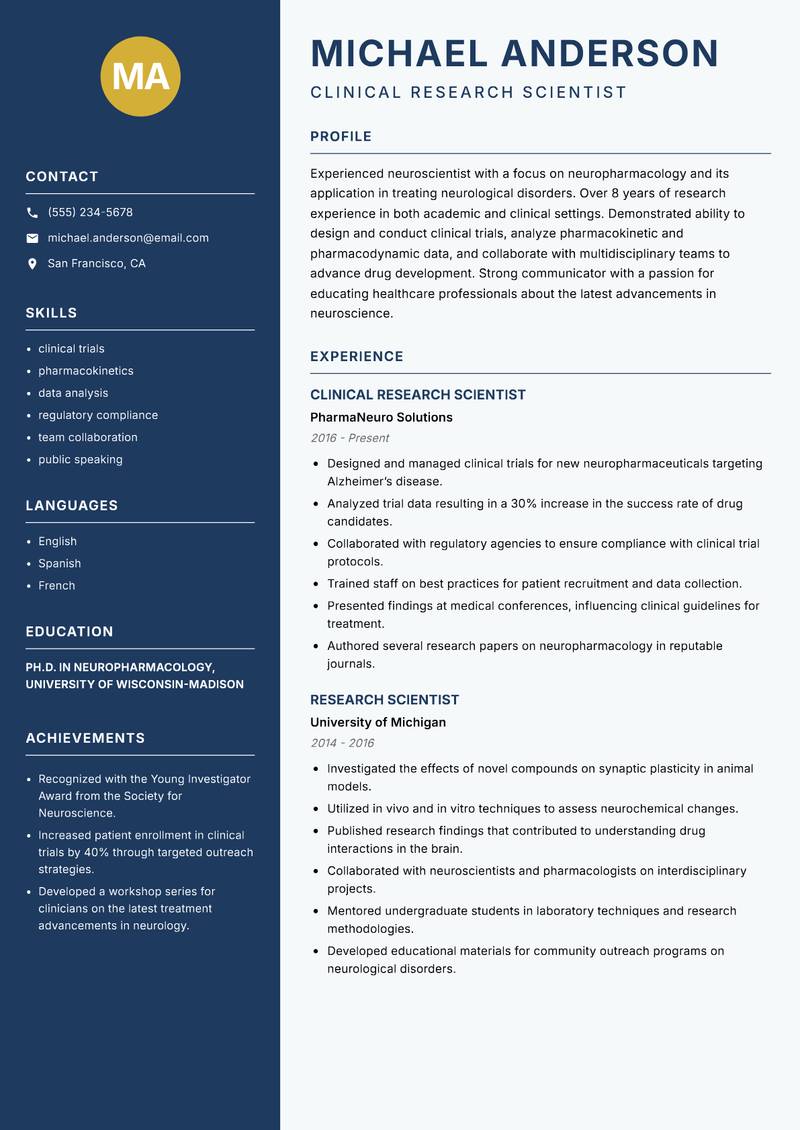
Classic Clean
Use Template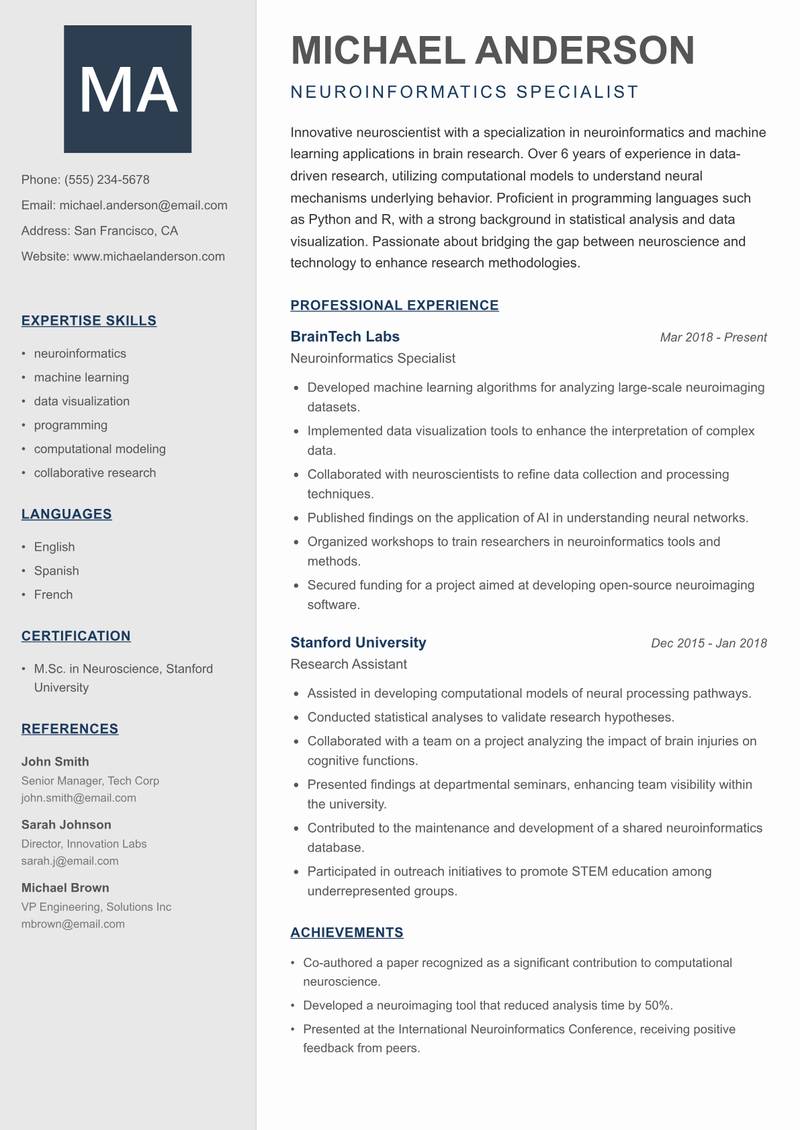
Creative Minimal
Use Template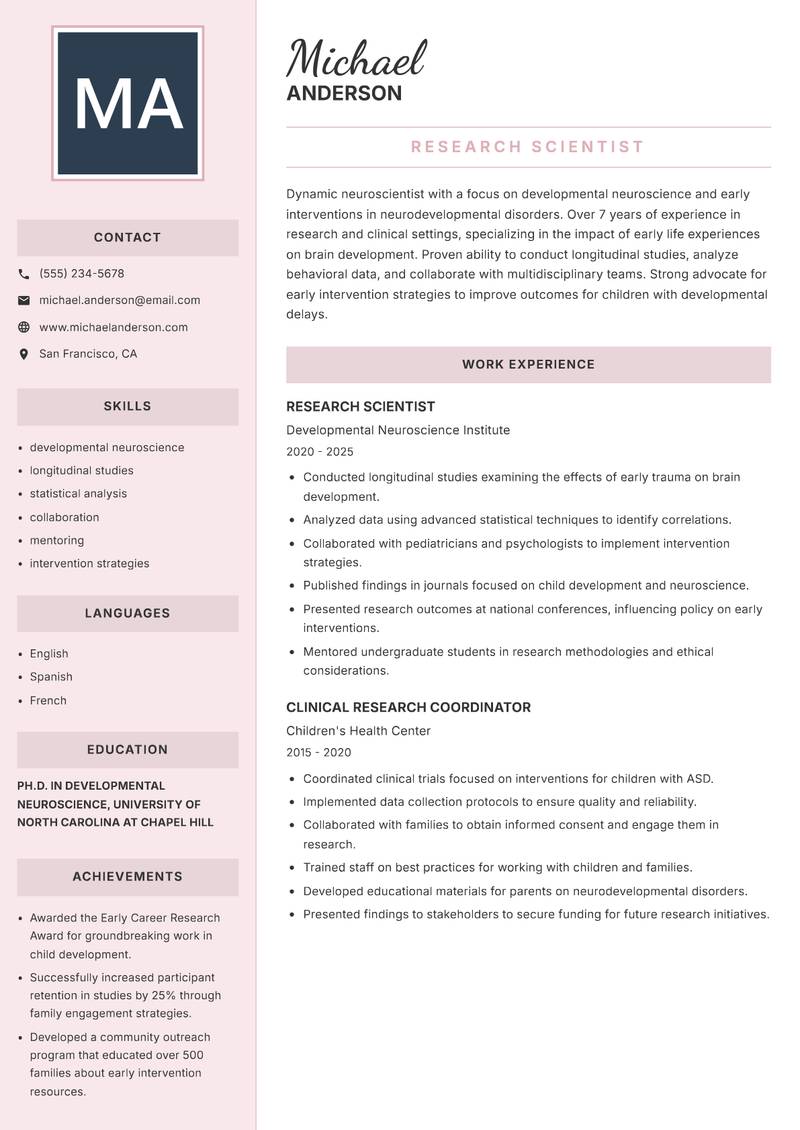
Executive
Use Template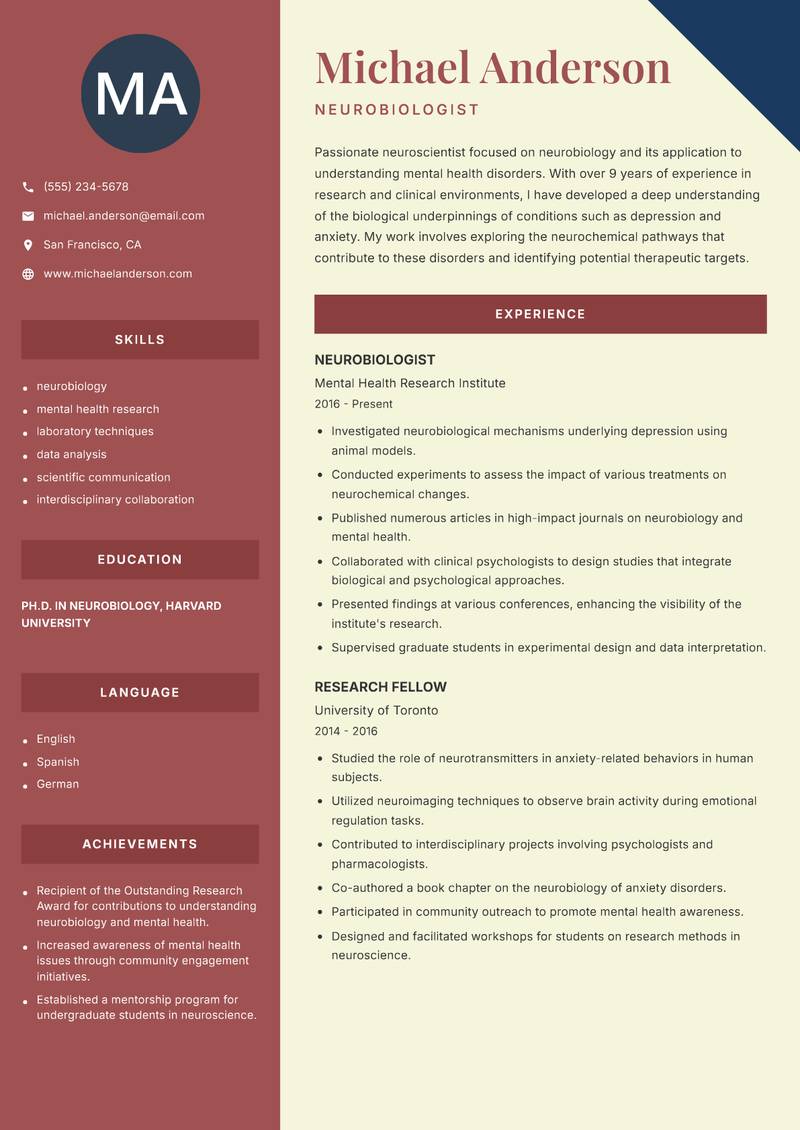
Two Column
Use Template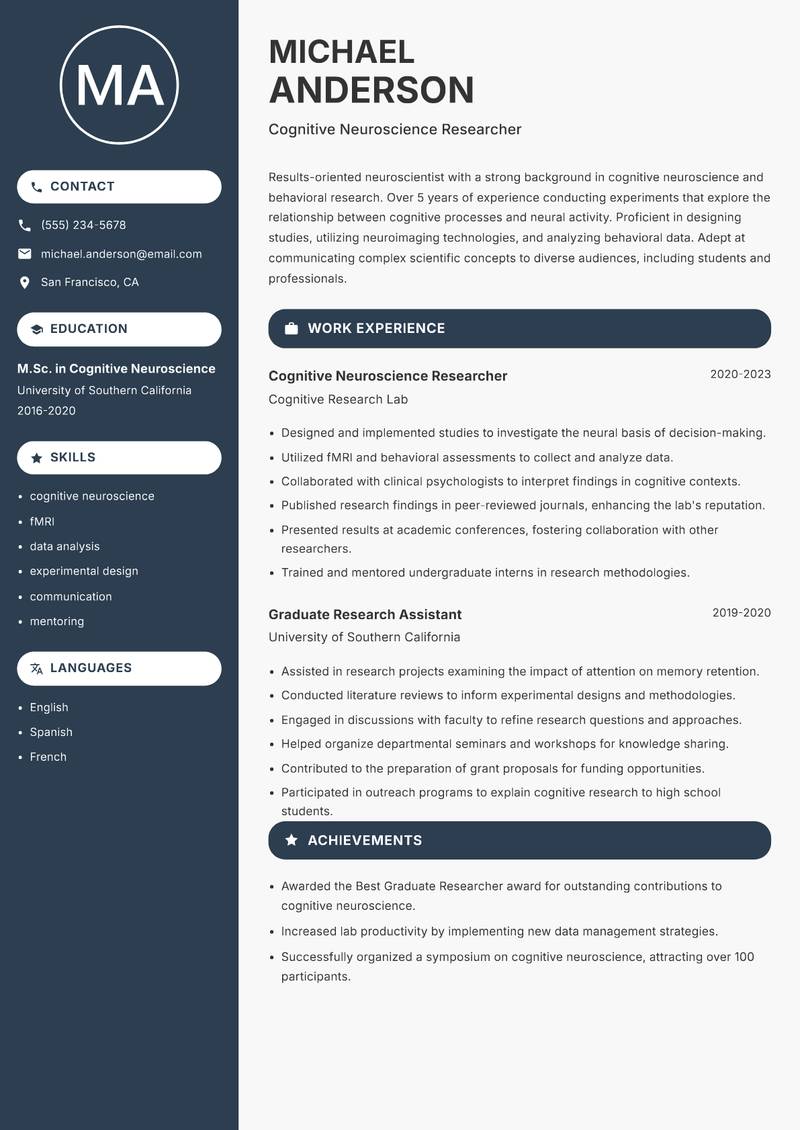
Compact
Use Template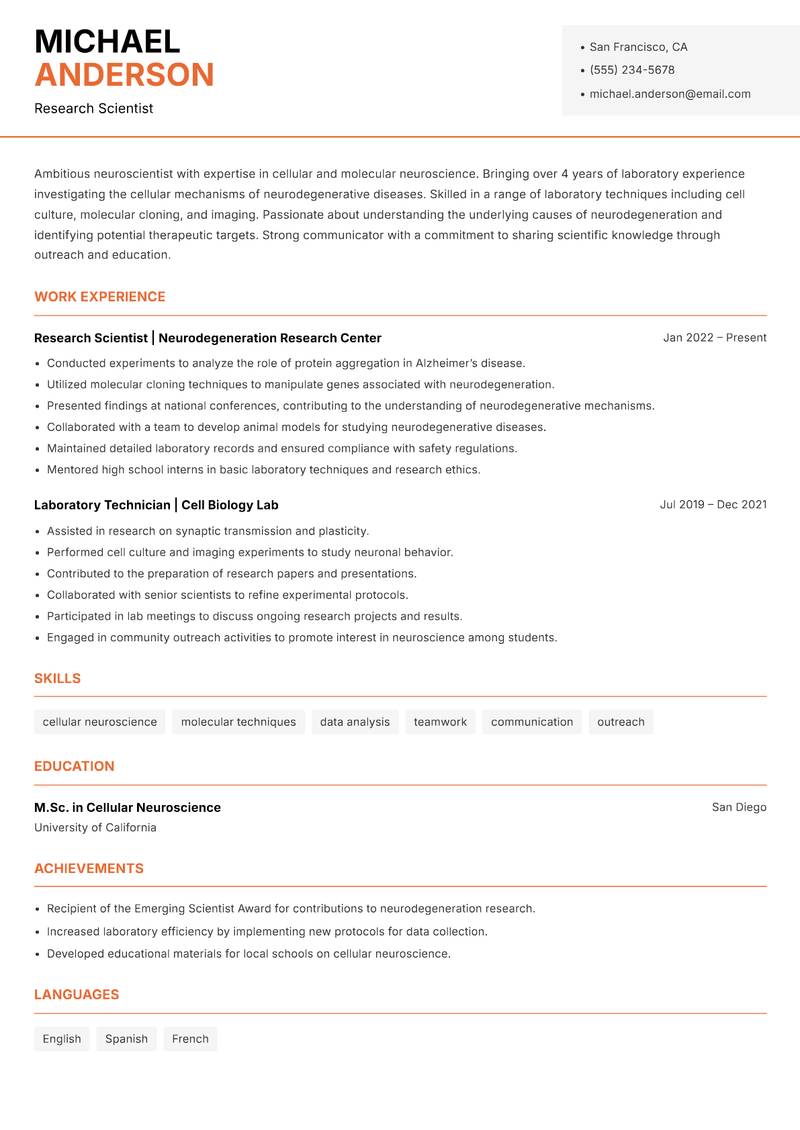
Modern Professional
Use Template7 Real Neuroscientist Resume Examples
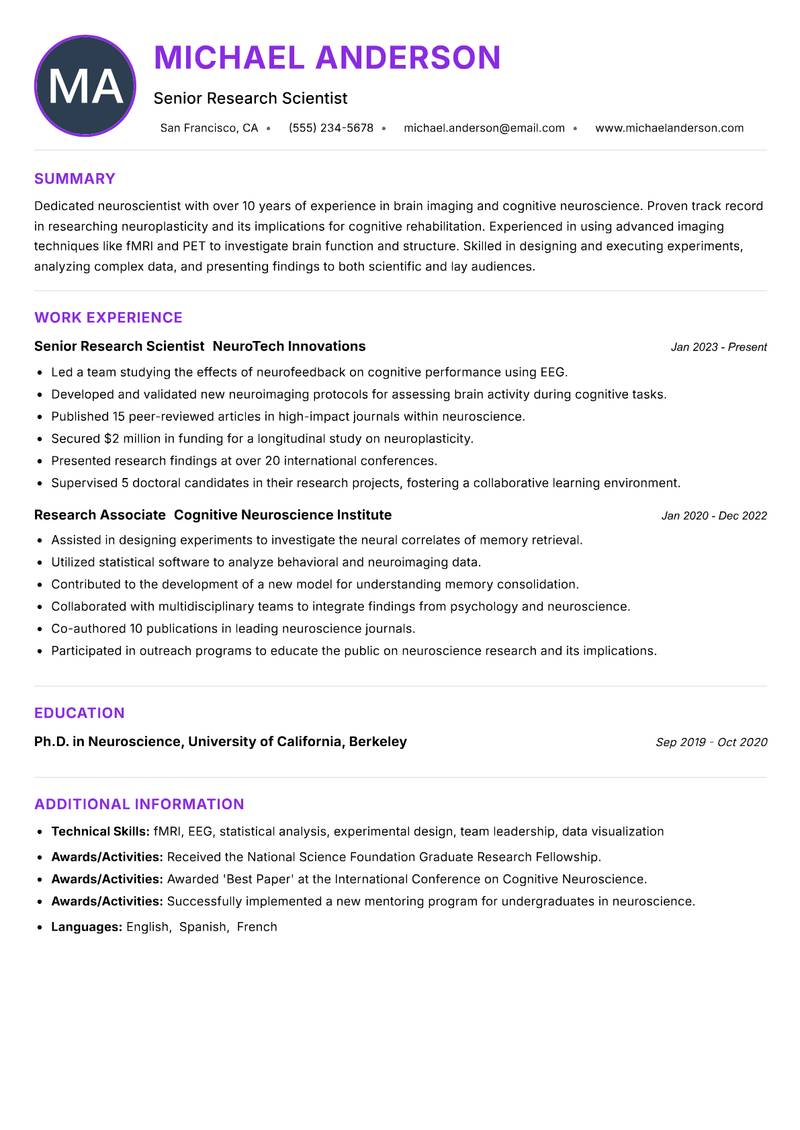
Senior Research Scientist with 10+ Years Experience
Summary: Dedicated neuroscientist with over 10 years of experience in brain imaging and cognitive neuroscience. Proven track record in researching neuroplasticity and its implications for cognitive rehabilitation. Experienced in using advanced imaging techniques like fMRI and PET to investigate brain function and structure. Skilled in designing and executing experiments, analyzing complex data, and presenting findings to both scientific and lay audiences. Passionate about translating research into practical applications, particularly in mental health and rehabilitation. Committed to mentoring the next generation of scientists and fostering collaborative research environments. Looking to leverage my expertise in a cutting-edge research institution focused on neurodevelopmental disorders.
Description:
- Led a team studying the effects of neurofeedback on cognitive performance using EEG.
- Developed and validated new neuroimaging protocols for assessing brain activity during cognitive tasks.
- Published 15 peer-reviewed articles in high-impact journals within neuroscience.
- Secured $2 million in funding for a longitudinal study on neuroplasticity.
- Presented research findings at over 20 international conferences.
- Supervised 5 doctoral candidates in their research projects, fostering a collaborative learning environment.
🏆 Key Achievements
Clinical Research Scientist with 8+ Years Experience
Summary: Experienced neuroscientist with a focus on neuropharmacology and its application in treating neurological disorders. Over 8 years of research experience in both academic and clinical settings. Demonstrated ability to design and conduct clinical trials, analyze pharmacokinetic and pharmacodynamic data, and collaborate with multidisciplinary teams to advance drug development. Strong communicator with a passion for educating healthcare professionals about the latest advancements in neuroscience. Actively engaged in public outreach to promote awareness of neurological conditions and the importance of research. Seeking a position in a pharmaceutical company where I can contribute to innovative treatment solutions for patients.
Description:
- Designed and managed clinical trials for new neuropharmaceuticals targeting Alzheimer’s disease.
- Analyzed trial data resulting in a 30% increase in the success rate of drug candidates.
- Collaborated with regulatory agencies to ensure compliance with clinical trial protocols.
- Trained staff on best practices for patient recruitment and data collection.
- Presented findings at medical conferences, influencing clinical guidelines for treatment.
- Authored several research papers on neuropharmacology in reputable journals.
🏆 Key Achievements
Neuroinformatics Specialist with 6+ Years Experience
Summary: Innovative neuroscientist with a specialization in neuroinformatics and machine learning applications in brain research. Over 6 years of experience in data-driven research, utilizing computational models to understand neural mechanisms underlying behavior. Proficient in programming languages such as Python and R, with a strong background in statistical analysis and data visualization. Passionate about bridging the gap between neuroscience and technology to enhance research methodologies. Committed to advancing the field of computational neuroscience through collaborative efforts and interdisciplinary projects. Seeking a position where I can apply my technical skills to develop tools that facilitate neuroscience research.
Description:
- Developed machine learning algorithms for analyzing large-scale neuroimaging datasets.
- Implemented data visualization tools to enhance the interpretation of complex data.
- Collaborated with neuroscientists to refine data collection and processing techniques.
- Published findings on the application of AI in understanding neural networks.
- Organized workshops to train researchers in neuroinformatics tools and methods.
- Secured funding for a project aimed at developing open-source neuroimaging software.
🏆 Key Achievements
Research Scientist with 7+ Years Experience
Summary: Dynamic neuroscientist with a focus on developmental neuroscience and early interventions in neurodevelopmental disorders. Over 7 years of experience in research and clinical settings, specializing in the impact of early life experiences on brain development. Proven ability to conduct longitudinal studies, analyze behavioral data, and collaborate with multidisciplinary teams. Strong advocate for early intervention strategies to improve outcomes for children with developmental delays. Seeking a role in a research institution or nonprofit organization dedicated to improving the lives of children through neuroscience-based interventions.
Description:
- Conducted longitudinal studies examining the effects of early trauma on brain development.
- Analyzed data using advanced statistical techniques to identify correlations.
- Collaborated with pediatricians and psychologists to implement intervention strategies.
- Published findings in journals focused on child development and neuroscience.
- Presented research outcomes at national conferences, influencing policy on early interventions.
- Mentored undergraduate students in research methodologies and ethical considerations.
🏆 Key Achievements
Neurobiologist with 9+ Years Experience
Summary: Dedicated neuroscientist focused on neurobiology and its application to understanding mental health disorders. With over 9 years of experience in research and clinical environments, I have developed a deep understanding of the biological underpinnings of conditions such as depression and anxiety. My work involves exploring the neurochemical pathways that contribute to these disorders and identifying potential therapeutic targets. Skilled in laboratory techniques, data analysis, and scientific communication, I strive to bridge the gap between research findings and clinical practices. Eager to contribute my expertise in a clinical research team dedicated to improving mental health treatments.
Description:
- Investigated neurobiological mechanisms underlying depression using animal models.
- Conducted experiments to assess the impact of various treatments on neurochemical changes.
- Published numerous articles in high-impact journals on neurobiology and mental health.
- Collaborated with clinical psychologists to design studies that integrate biological and psychological approaches.
- Presented findings at various conferences, enhancing the visibility of the institute's research.
- Supervised graduate students in experimental design and data interpretation.
🏆 Key Achievements
Cognitive Neuroscience Researcher with 5+ Years Experience
Summary: Accomplished neuroscientist with a strong background in cognitive neuroscience and behavioral research. Over 5 years of experience conducting experiments that explore the relationship between cognitive processes and neural activity. Proficient in designing studies, utilizing neuroimaging technologies, and analyzing behavioral data. Adept at communicating complex scientific concepts to diverse audiences, including students and professionals. Committed to fostering an inclusive research environment and collaborating with interdisciplinary teams to enhance research outcomes. Seeking a position in a research lab or academic institution where I can contribute to impactful cognitive neuroscience studies.
Description:
- Designed and implemented studies to investigate the neural basis of decision-making.
- Utilized fMRI and behavioral assessments to collect and analyze data.
- Collaborated with clinical psychologists to interpret findings in cognitive contexts.
- Published research findings in peer-reviewed journals, enhancing the lab's reputation.
- Presented results at academic conferences, fostering collaboration with other researchers.
- Trained and mentored undergraduate interns in research methodologies.
🏆 Key Achievements
Research Scientist with 4+ Years Experience
Summary: Driven neuroscientist with expertise in cellular and molecular neuroscience. Bringing over 4 years of laboratory experience investigating the cellular mechanisms of neurodegenerative diseases. Skilled in a range of laboratory techniques including cell culture, molecular cloning, and imaging. Passionate about understanding the underlying causes of neurodegeneration and identifying potential therapeutic targets. Strong communicator with a commitment to sharing scientific knowledge through outreach and education. Eager to join a research team focused on innovative solutions to neurodegenerative disorders.
Description:
- Conducted experiments to analyze the role of protein aggregation in Alzheimer’s disease.
- Utilized molecular cloning techniques to manipulate genes associated with neurodegeneration.
- Presented findings at national conferences, contributing to the understanding of neurodegenerative mechanisms.
- Collaborated with a team to develop animal models for studying neurodegenerative diseases.
- Maintained detailed laboratory records and ensured compliance with safety regulations.
- Mentored high school interns in basic laboratory techniques and research ethics.
🏆 Key Achievements
Key Skills for Neuroscientist
ATS Optimization Tips
Increase your chances of getting hired
Use Standard Headings
Use common section titles like Experience, Skills, etc.
Include Keywords
Add role-specific keywords from the job description
Keep it Simple
Avoid complex tables, images and graphics
Save in Right Format
Use PDF format unless otherwise specified
Neuroscientist Salary Insights
Average Salary
$100,000
per year
Salary Range
$70,000 - $130,000
per year
Top Paying Cities
Los Angeles, Seattle, Houston, Dallas, Boston
Source: Glassdoor, Payscale, Indeed (Updated April 2025)
Everything you need to write a great Neuroscientist resume
Strong Action Verbs to Use
Resume Writing Tips
- →Tailor your resume to highlight specific methodologies used in your research, such as neuroimaging or behavioral assays.
- →Include technical proficiencies with software and tools relevant to neuroscience, such as MATLAB, SPSS, or electrophysiological equipment.
- →Demonstrate your collaboration on interdisciplinary projects—show how your contributions affected outcomes in broader research initiatives.
- →Showcase publications and presentations at conferences, emphasizing your role in the research narrative.
- →Use action verbs that convey your investigative role, such as 'designed,' 'analyzed,' or 'published' in your resume.
Common Mistakes to Avoid
- ✕Listing generic laboratory skills without specifying neuroscience instruments or techniques you are proficient in.
- ✕Failing to mention relevant research or internships that demonstrate practical experience in neuroscience fields.
- ✕Using a one-size-fits-all resume approach rather than tailoring content for specific neuroscience roles you’re applying for.
- ✕Neglecting to include metrics or outcomes from your research contributions, which can help quantify your impact.
ATS Keywords for Neuroscientist
Neuroscientist Career Path
Relevant Certifications
Career Progression
Entry-Level Neuroscientist
Involves conducting foundational research under supervision, often in a lab setting, focusing on specific aspects of neural activity.
Research Scientist
Responsible for designing and conducting experiments, analyzing data, and publishing findings. May supervise junior researchers.
Senior Neuroscientist
Leads independent research projects, collaborates with interdisciplinary teams, and mentors less experienced staff in complex neurological studies.
Principal Investigator
Oversees large research projects, secures funding, and directs research strategy for a laboratory or research center.
Neuroscience Program Director
Manages major research programs, liaises with funding agencies, and drives innovation in neuroscience research initiatives.
Neuroscientist Interview Questions
Can you describe your experience with electrophysiological recording techniques? +
Highlight specific techniques used, the equipment involved, and findings derived from your work.
What methods do you use to analyze complex neural data sets? +
Discuss software tools and statistical methods you've utilized, and how they contributed to your research outcomes.
Explain a difficult scientific problem you faced in your research and how you overcame it. +
Focus on problem-solving skills, creativity, and the outcome of your approach.
How do you stay updated with the latest developments in neuroscience? +
Mention journals, conferences, or networks you engage with to keep your knowledge current.
Describe a collaborative project you have worked on and your specific contributions. Why was this collaboration important? +
Emphasize your teamwork skills and any cross-disciplinary approaches utilized.
What ethical considerations do you believe are important in neuroscience research? +
Share your views on ethical practices and how they apply to research involving human or animal subjects.
About the Neuroscientist Role
Neuroscientists investigate the structure and function of the nervous system and brain, employing techniques ranging from molecular biology to advanced imaging technology. Their research often addresses complex neurological disorders and seeks to develop new treatment paradigms. With a strong reliance on experimental methods and data analysis, they contribute to groundbreaking studies that enhance our understanding of neural processes and behaviors.
Frequently Asked Questions
What educational background is required to become a neuroscientist? +
Most neuroscientist positions require a Ph.D. in neuroscience, biology, psychology, or related fields, often alongside experience in laboratory environments.
Is a postdoctoral fellowship necessary for a career in neuroscience? +
While not strictly necessary, postdoctoral experience is highly beneficial for gaining expertise and increasing competitiveness for academic and research positions.
What are the typical employers for neuroscientists? +
Neuroscientists commonly work in academia, biotechnology firms, pharmaceutical companies, and government research institutions.
How can I gain practical experience in the field of neuroscience during my studies? +
Engaging in laboratory internships, participating in research projects, and attending relevant workshops or conferences can provide invaluable hands-on experience.
What skills are most important for a neuroscientist? +
Critical thinking, data analysis, proficiency with laboratory techniques, communication skills for collaboration and publishing findings, and adaptability to new research areas.
What roles do neuroscientists play in the pharmaceutical industry? +
They often contribute to drug development processes by conducting preclinical studies and evaluating the effects of new drugs on neurological functions.
More Resume Examples You Might Like
Related Career Paths
Other roles candidates for Neuroscientist positions often also consider.
Will this Neuroscientist resume pass the ATS scan?
Upload it and get an instant AI-scored compatibility check with specific fixes.
Check My Resume →
Pair it with a matching cover letter
AI drafts a first version from your job title and strengths — edit it live, then download the PDF.
Write My Cover Letter →
Written by Nohaya Career Team
Reviewed by HR Professionals · Updated April 2025
Ready to Build Your Perfect Resume?
Choose from 1000+ professional templates and land your dream job.
Create My Resume Now