Build an ATS-Friendly
Cognitive Neuroscientist Resume
That Gets Interviews
Engaging with cognitive neuroscience involves the examination of complex brain mechanisms that underpin cognition, using methodologies such as functional magnetic resonance imaging (fMRI) and electromyography (EMG). Cognitive Neuroscientists design and execute experiments to probe the intricate relationships between…
Cognitive Neuroscientist Resume Templates
Modern Professional
Use Template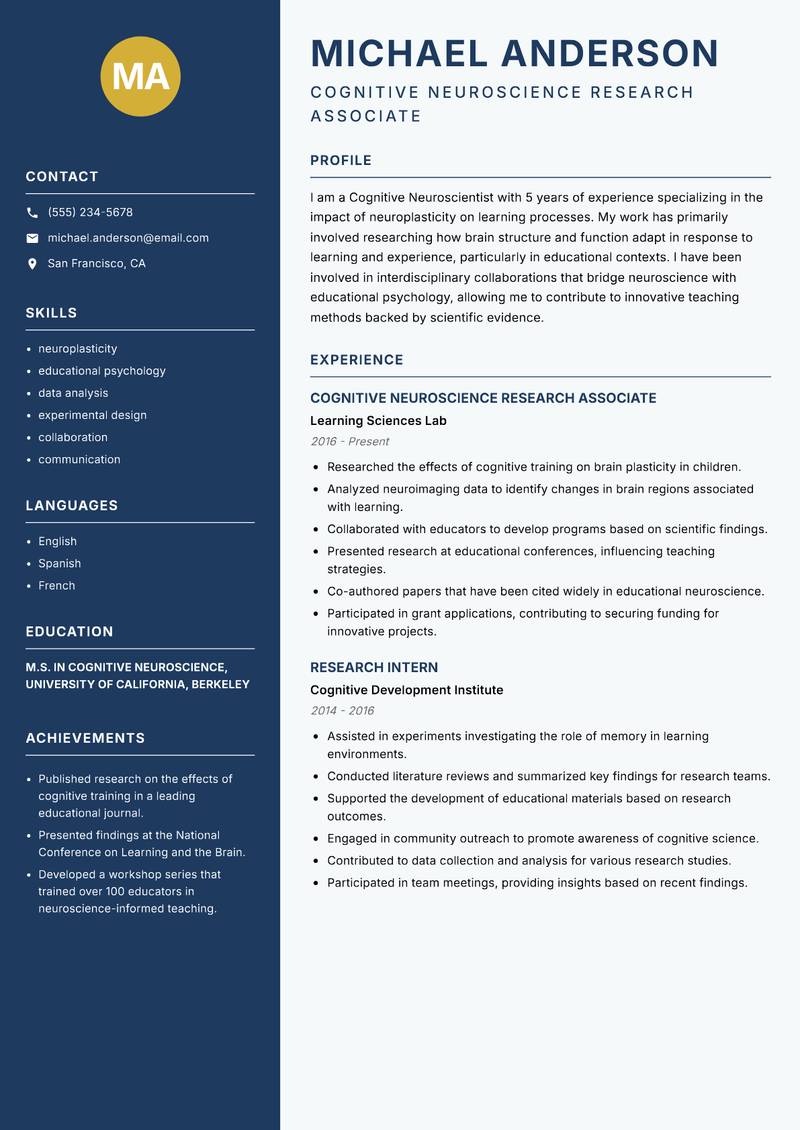
Classic Clean
Use Template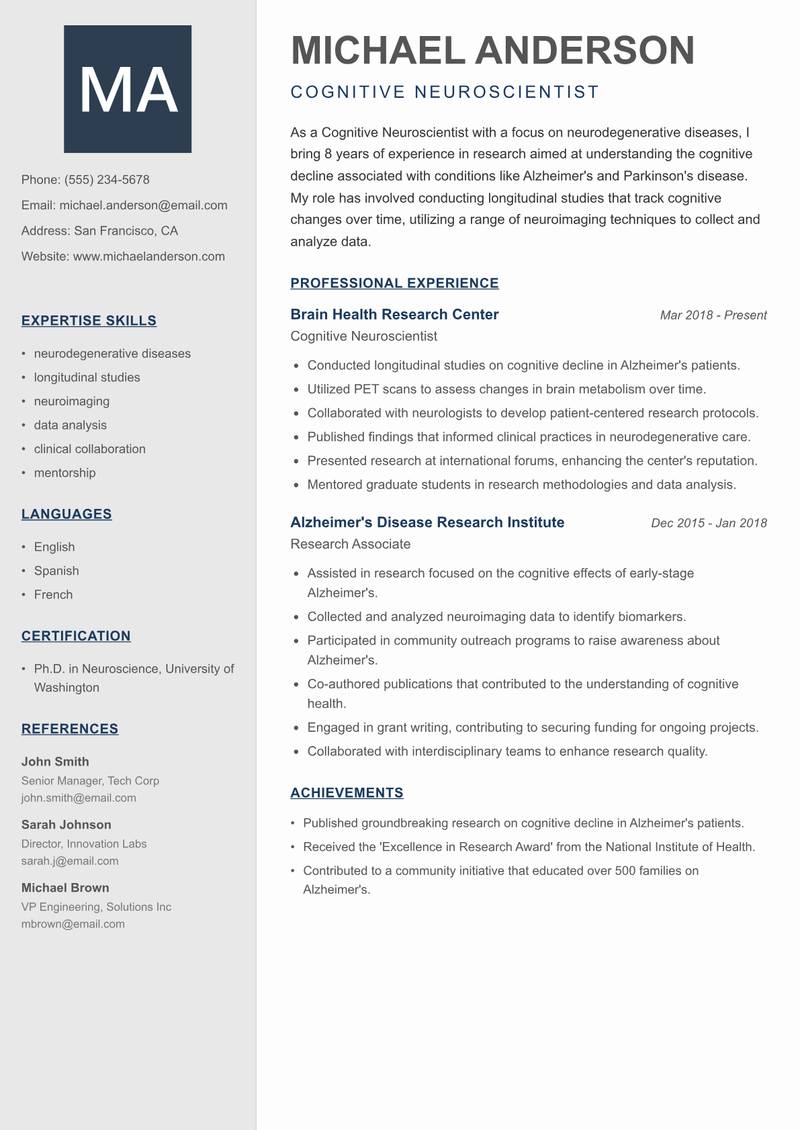
Creative Minimal
Use Template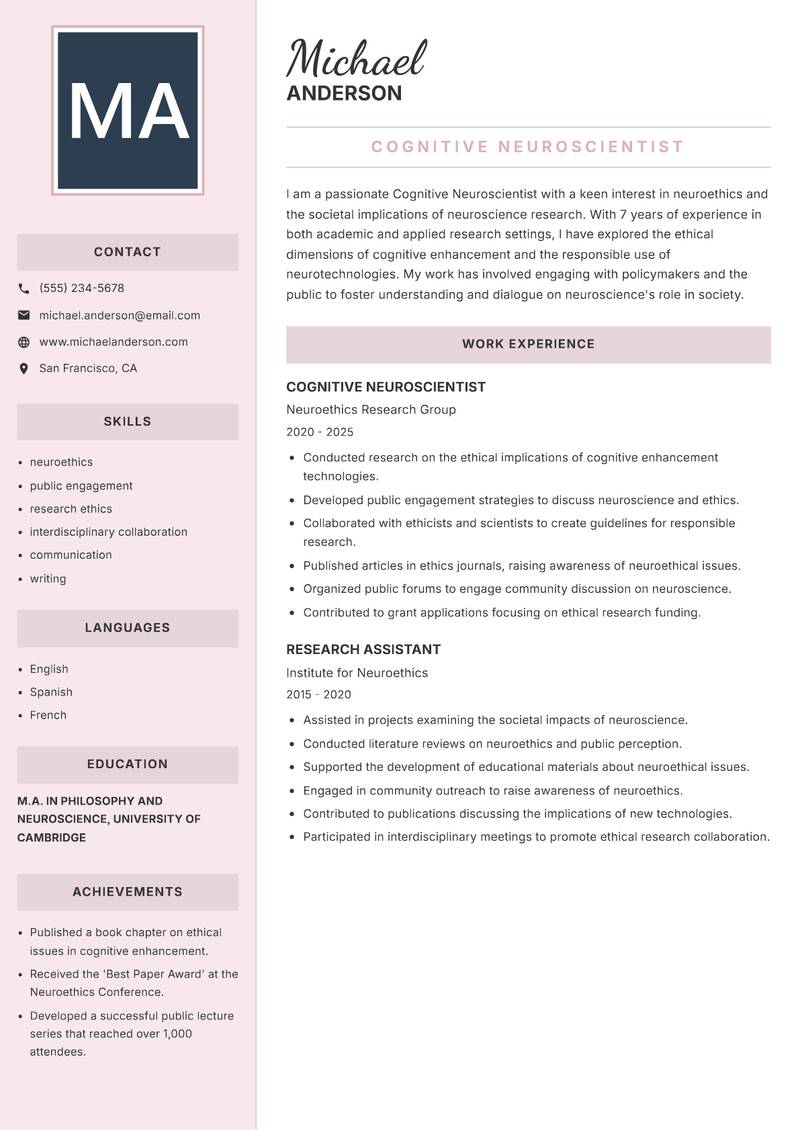
Executive
Use Template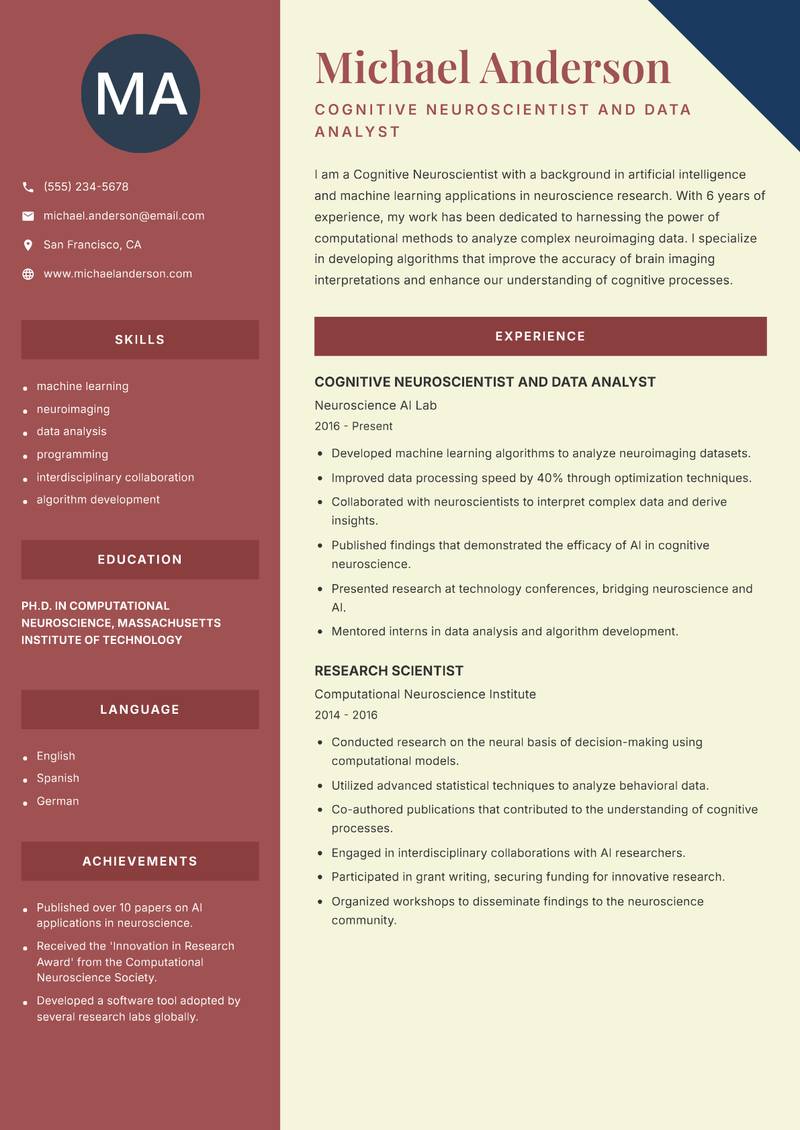
Two Column
Use Template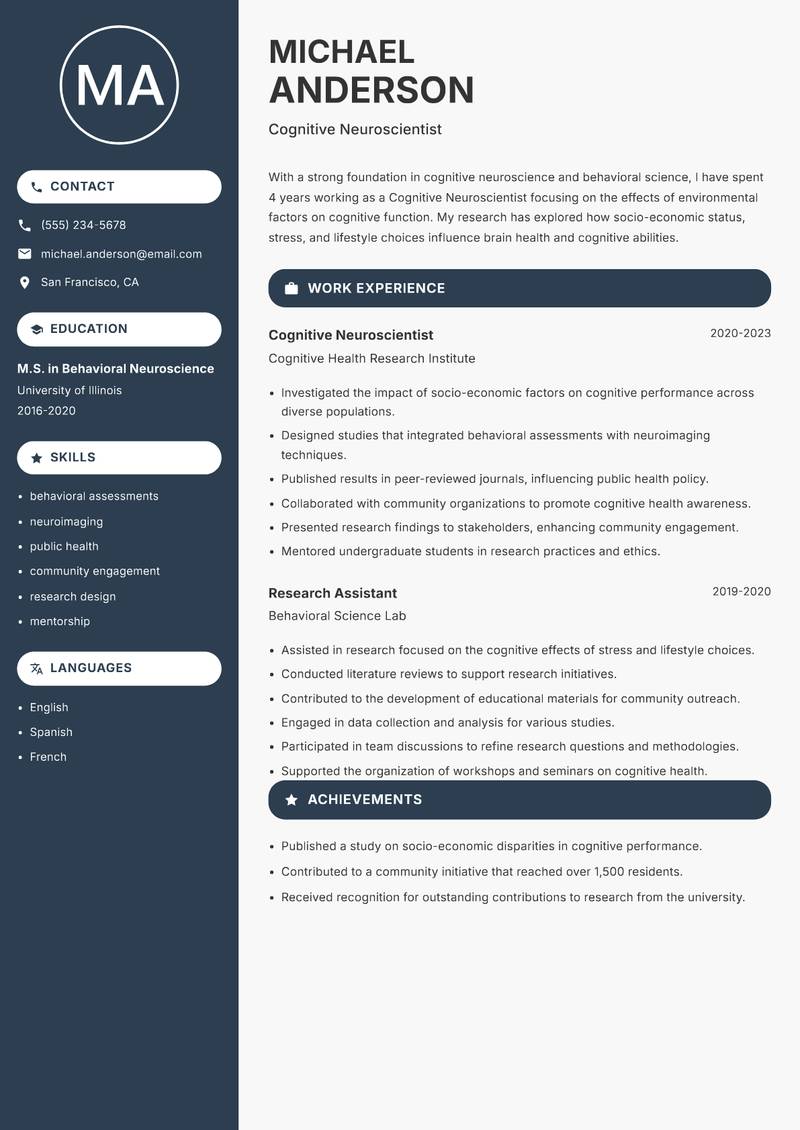
Compact
Use Template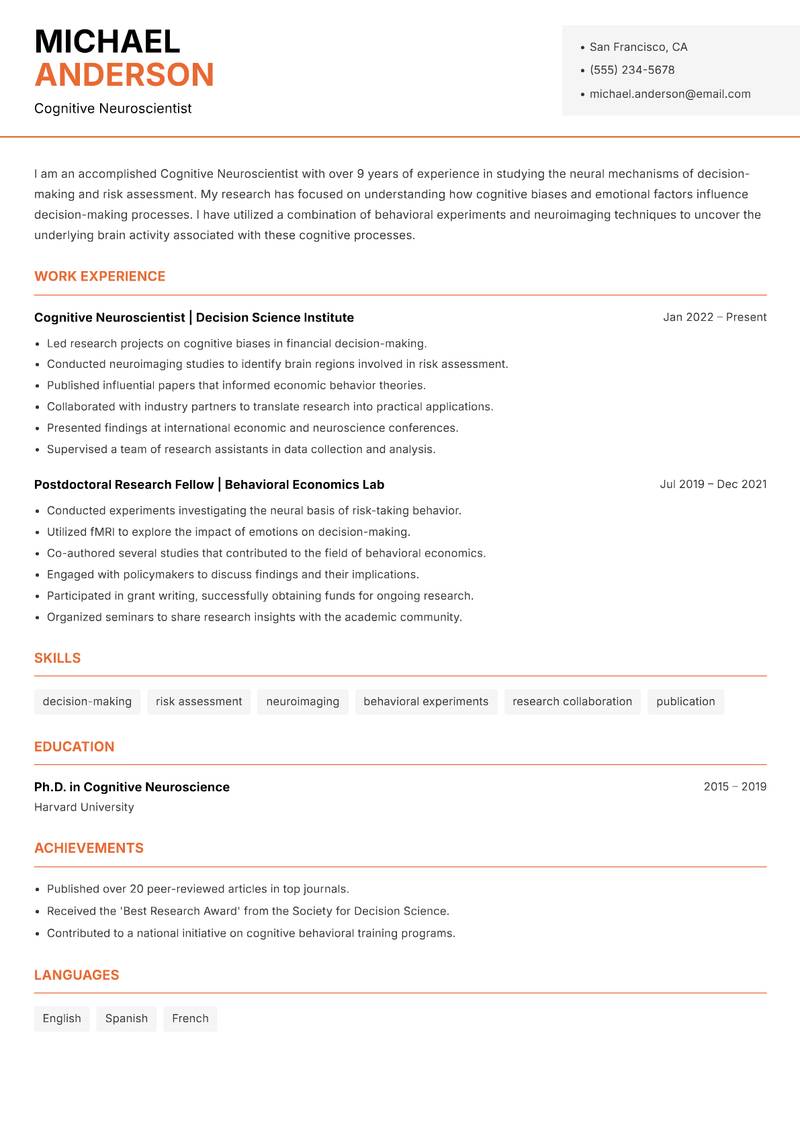
Modern Professional
Use Template7 Real Cognitive Neuroscientist Resume Examples
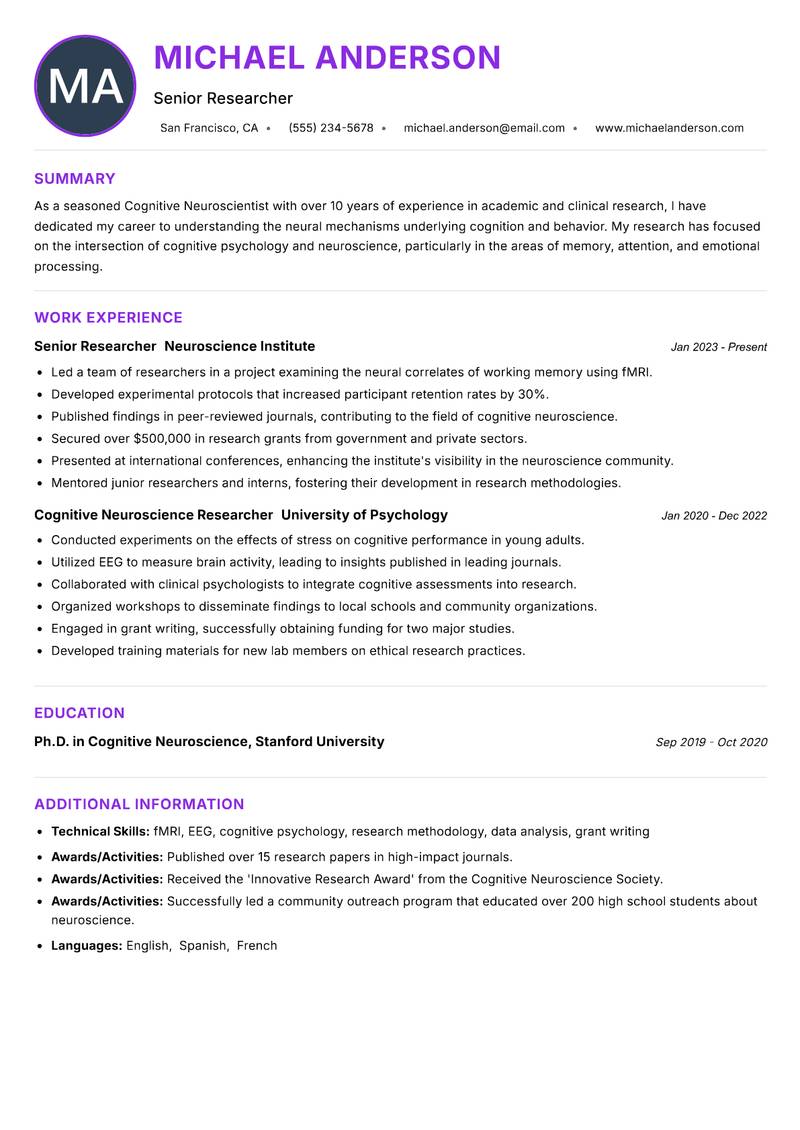
Senior Researcher with 10+ Years Experience
Summary: As a seasoned Cognitive Neuroscientist with over 10 years of experience in academic and clinical research, I have dedicated my career to understanding the neural mechanisms underlying cognition and behavior. My research has focused on the intersection of cognitive psychology and neuroscience, particularly in the areas of memory, attention, and emotional processing. I have successfully led multiple research projects, securing funding from prestigious grants, and have published numerous articles in top-tier journals. My expertise extends to using advanced neuroimaging techniques, such as fMRI and EEG, to investigate brain function in healthy individuals and those with neuropsychological disorders. I am passionate about translating scientific findings into practical applications that can improve mental health outcomes and cognitive performance. My collaborative nature has allowed me to work effectively with interdisciplinary teams, fostering an environment of innovation and creativity. I am now seeking to leverage my experience in a leadership role within a forward-thinking organization that prioritizes research and development in cognitive neuroscience.
Description:
- Led a team of researchers in a project examining the neural correlates of working memory using fMRI.
- Developed experimental protocols that increased participant retention rates by 30%.
- Published findings in peer-reviewed journals, contributing to the field of cognitive neuroscience.
- Secured over $500,000 in research grants from government and private sectors.
- Presented at international conferences, enhancing the institute's visibility in the neuroscience community.
- Mentored junior researchers and interns, fostering their development in research methodologies.
🏆 Key Achievements
Cognitive Neuroscience Research Associate with 5+ Years Experience
Summary: I am a Cognitive Neuroscientist with 5 years of experience specializing in the impact of neuroplasticity on learning processes. My work has primarily involved researching how brain structure and function adapt in response to learning and experience, particularly in educational contexts. I have been involved in interdisciplinary collaborations that bridge neuroscience with educational psychology, allowing me to contribute to innovative teaching methods backed by scientific evidence. My research has been recognized at national conferences, and I have published articles that advocate for integrating neuroscience into educational policy. I am eager to continue my career by applying my expertise in a dynamic organization focused on education and cognitive development.
Description:
- Researched the effects of cognitive training on brain plasticity in children.
- Analyzed neuroimaging data to identify changes in brain regions associated with learning.
- Collaborated with educators to develop programs based on scientific findings.
- Presented research at educational conferences, influencing teaching strategies.
- Co-authored papers that have been cited widely in educational neuroscience.
- Participated in grant applications, contributing to securing funding for innovative projects.
🏆 Key Achievements
Cognitive Neuroscientist with 8+ Years Experience
Summary: As a Cognitive Neuroscientist with a focus on neurodegenerative diseases, I bring 8 years of experience in research aimed at understanding the cognitive decline associated with conditions like Alzheimer's and Parkinson's disease. My role has involved conducting longitudinal studies that track cognitive changes over time, utilizing a range of neuroimaging techniques to collect and analyze data. I have worked closely with clinical teams to translate research findings into treatment strategies, contributing to improved patient care. My passion lies in unraveling the complexities of brain function and advocating for research that addresses urgent health challenges. I am now looking to contribute my expertise to a research institution that prioritizes impactful neuroscience research.
Description:
- Conducted longitudinal studies on cognitive decline in Alzheimer's patients.
- Utilized PET scans to assess changes in brain metabolism over time.
- Collaborated with neurologists to develop patient-centered research protocols.
- Published findings that informed clinical practices in neurodegenerative care.
- Presented research at international forums, enhancing the center's reputation.
- Mentored graduate students in research methodologies and data analysis.
🏆 Key Achievements
Cognitive Neuroscientist with 7+ Years Experience
Summary: I am a passionate Cognitive Neuroscientist with a keen interest in neuroethics and the societal implications of neuroscience research. With 7 years of experience in both academic and applied research settings, I have explored the ethical dimensions of cognitive enhancement and the responsible use of neurotechnologies. My work has involved engaging with policymakers and the public to foster understanding and dialogue on neuroscience's role in society. I have published various articles discussing ethical concerns related to cognitive enhancement and have presented at several conferences emphasizing the need for ethical guidelines in neuroscience. I am eager to bring my expertise to an organization that values ethical considerations in scientific advancement.
Description:
- Conducted research on the ethical implications of cognitive enhancement technologies.
- Developed public engagement strategies to discuss neuroscience and ethics.
- Collaborated with ethicists and scientists to create guidelines for responsible research.
- Published articles in ethics journals, raising awareness of neuroethical issues.
- Organized public forums to engage community discussion on neuroscience.
- Contributed to grant applications focusing on ethical research funding.
🏆 Key Achievements
Cognitive Neuroscientist and Data Analyst with 6+ Years Experience
Summary: I am a Cognitive Neuroscientist with a background in artificial intelligence and machine learning applications in neuroscience research. With 6 years of experience, my work has been dedicated to harnessing the power of computational methods to analyze complex neuroimaging data. I specialize in developing algorithms that improve the accuracy of brain imaging interpretations and enhance our understanding of cognitive processes. My collaborative projects have led to significant advancements in the field, and I have co-authored several publications that highlight the intersection of AI and neuroscience. I am looking for opportunities to apply my skills in a forward-thinking organization that embraces innovation in neuroscience.
Description:
- Developed machine learning algorithms to analyze neuroimaging datasets.
- Improved data processing speed by 40% through optimization techniques.
- Collaborated with neuroscientists to interpret complex data and derive insights.
- Published findings that demonstrated the efficacy of AI in cognitive neuroscience.
- Presented research at technology conferences, bridging neuroscience and AI.
- Mentored interns in data analysis and algorithm development.
🏆 Key Achievements
Cognitive Neuroscientist with 4+ Years Experience
Summary: With a strong foundation in cognitive neuroscience and behavioral science, I have spent 4 years working as a Cognitive Neuroscientist focusing on the effects of environmental factors on cognitive function. My research has explored how socio-economic status, stress, and lifestyle choices influence brain health and cognitive abilities. I have designed and implemented studies that utilize both qualitative and quantitative methodologies, resulting in impactful findings that have been presented at various conferences. I am passionate about using my expertise to inform public health initiatives and policy changes that promote cognitive well-being. I seek to join an organization committed to improving cognitive health through research and community engagement.
Description:
- Investigated the impact of socio-economic factors on cognitive performance across diverse populations.
- Designed studies that integrated behavioral assessments with neuroimaging techniques.
- Published results in peer-reviewed journals, influencing public health policy.
- Collaborated with community organizations to promote cognitive health awareness.
- Presented research findings to stakeholders, enhancing community engagement.
- Mentored undergraduate students in research practices and ethics.
🏆 Key Achievements
Cognitive Neuroscientist with 9+ Years Experience
Summary: I am an accomplished Cognitive Neuroscientist with over 9 years of experience in studying the neural mechanisms of decision-making and risk assessment. My research has focused on understanding how cognitive biases and emotional factors influence decision-making processes. I have utilized a combination of behavioral experiments and neuroimaging techniques to uncover the underlying brain activity associated with these cognitive processes. My work has been published in several high-impact journals and has received accolades for its contribution to the understanding of human behavior. I am eager to bring my expertise to an innovative research team that is dedicated to exploring the cognitive aspects of decision-making in real-world contexts.
Description:
- Led research projects on cognitive biases in financial decision-making.
- Conducted neuroimaging studies to identify brain regions involved in risk assessment.
- Published influential papers that informed economic behavior theories.
- Collaborated with industry partners to translate research into practical applications.
- Presented findings at international economic and neuroscience conferences.
- Supervised a team of research assistants in data collection and analysis.
🏆 Key Achievements
Key Skills for Cognitive Neuroscientist
ATS Optimization Tips
Increase your chances of getting hired
Use Standard Headings
Use common section titles like Experience, Skills, etc.
Include Keywords
Add role-specific keywords from the job description
Keep it Simple
Avoid complex tables, images and graphics
Save in Right Format
Use PDF format unless otherwise specified
Cognitive Neuroscientist Salary Insights
Average Salary
$100,000
per year
Salary Range
$70,000 - $130,000
per year
Top Paying Cities
Los Angeles, Seattle, Houston, Dallas, Boston
Source: Glassdoor, Payscale, Indeed (Updated April 2025)
Everything you need to write a great Cognitive Neuroscientist resume
Strong Action Verbs to Use
Resume Writing Tips
- →Highlight experience with specific neuroscience software and imaging techniques in your skills section.
- →Include collaborative projects and any interdisciplinary approaches you've engaged in within your research.
- →Demonstrate effective communication skills by detailing experiences in presenting complex data to non-specialist audiences.
- →Quantify your research contributions by mentioning publications and citations in your bibliography.
- →Showcase leadership in research initiatives through mentoring experience or project management roles.
Common Mistakes to Avoid
- ✕Focusing solely on research without mentioning applied experiences or practical implications of neuroscience findings.
- ✕Neglecting to include collaborative projects where you've worked with clinicians or other scientists.
- ✕Using overly technical language without clarifying complex concepts for broader audiences.
- ✕Failing to mention your data analysis techniques or tools, which are crucial in cognitive neuroscience.
- ✕Not updating your CV to reflect ongoing research developments or new methodologies you've adopted.
ATS Keywords for Cognitive Neuroscientist
Cognitive Neuroscientist Career Path
Career Progression
Entry-Level Cognitive Neuroscientist
Conducts basic research and assists in larger neuroscience studies, focusing on data collection and analysis.
Mid-Level Cognitive Neuroscientist
Designs and implements experimental studies, oversees research assistants, and analyzes complex datasets.
Senior Cognitive Neuroscientist
Leads independent research projects, collaborates with interdisciplinary teams, and publishes findings in renowned scientific journals.
Principal Investigator
Manages a comprehensive research program, secures grant funding, and mentors junior researchers.
Director of Neuroscience
Oversight of multiple research initiatives, strategic leadership in neuroscience research and development, and direct collaboration with academic and industry partners.
Cognitive Neuroscientist Interview Questions
What experimental techniques do you find most valuable in cognitive neuroscience research? +
Discuss specific methods such as fMRI or EEG and explain your reasoning based on past research.
Can you describe a complex data analysis project you've worked on? +
Detail your role, the tools used, and any significant findings or challenges.
How do you stay current with the latest developments in cognitive neuroscience? +
Mention journals, conferences, and collaborative networks.
What challenges do you foresee in translating cognitive neuroscience findings into practical applications? +
Discuss ethical considerations and future research directions.
Explain how you approach interdisciplinary collaboration in neuroscience projects. +
Provide examples of how working with other fields, like psychology or artificial intelligence, has informed your research.
How do you prioritize projects when managing multiple research initiatives? +
Describe your decision-making process and any tools you use for project management.
About the Cognitive Neuroscientist Role
Engaging with cognitive neuroscience involves the examination of complex brain mechanisms that underpin cognition, using methodologies such as functional magnetic resonance imaging (fMRI) and electromyography (EMG). Cognitive Neuroscientists design and execute experiments to probe the intricate relationships between neural processes and behaviors. Daily tasks can include analyzing brain imagery, preparing grant proposals for funding, and presenting research findings at academic conferences.
Frequently Asked Questions
What types of experiments do Cognitive Neuroscientists conduct? +
Cognitive Neuroscientists conduct experiments that examine how cognitive functions such as memory, attention, and perception relate to neural activity.
Is a PhD necessary to work as a Cognitive Neuroscientist? +
Yes, a PhD is generally required for most research positions, particularly in academia and high-level industry roles.
What industries employ Cognitive Neuroscientists? +
Cognitive Neuroscientists are often found in academic institutions, hospitals, pharmaceutical companies, and research labs.
What is the significance of brain imaging in cognitive neuroscience? +
Brain imaging techniques like fMRI allow researchers to visualize brain activity and understand the neural correlates of cognitive processes.
How can I gain practical experience in cognitive neuroscience? +
Consider internships or research assistantships during your studies, and engage in lab work that focuses on cognitive processing research.
More Resume Examples You Might Like
Related Career Paths
Other roles candidates for Cognitive Neuroscientist positions often also consider.
Will this Cognitive Neuroscientist resume pass the ATS scan?
Upload it and get an instant AI-scored compatibility check with specific fixes.
Check My Resume →
Pair it with a matching cover letter
AI drafts a first version from your job title and strengths — edit it live, then download the PDF.
Write My Cover Letter →
Written by Nohaya Career Team
Reviewed by HR Professionals · Updated April 2025
Ready to Build Your Perfect Resume?
Choose from 1000+ professional templates and land your dream job.
Create My Resume Now