Build an ATS-Friendly
Bioinformatics Scientist Resume
That Gets Interviews
Bioinformatics Scientists bridge the gap between biology and computer science, utilizing computational techniques to manage and analyze biological data. Their work often involves developing algorithms to interpret genomic sequences and employing machine learning tools to uncover patterns in complex datasets.…
Bioinformatics Scientist Resume Templates
Modern Professional
Use Template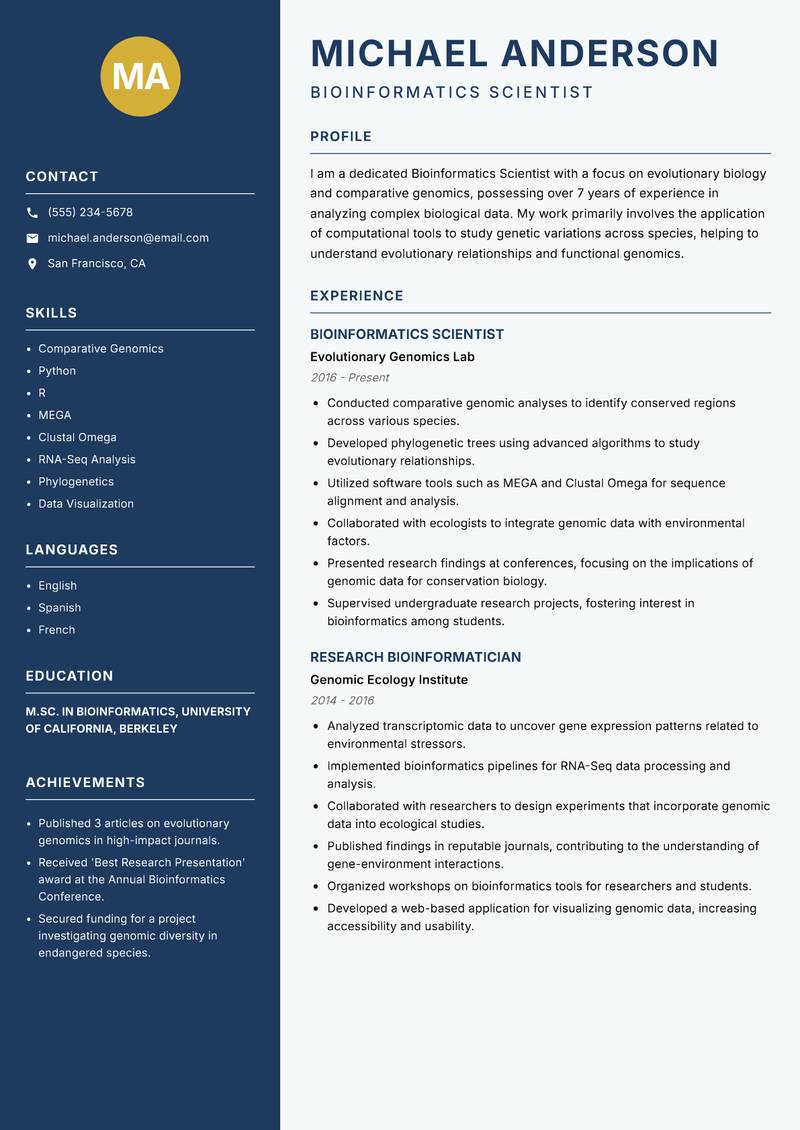
Classic Clean
Use Template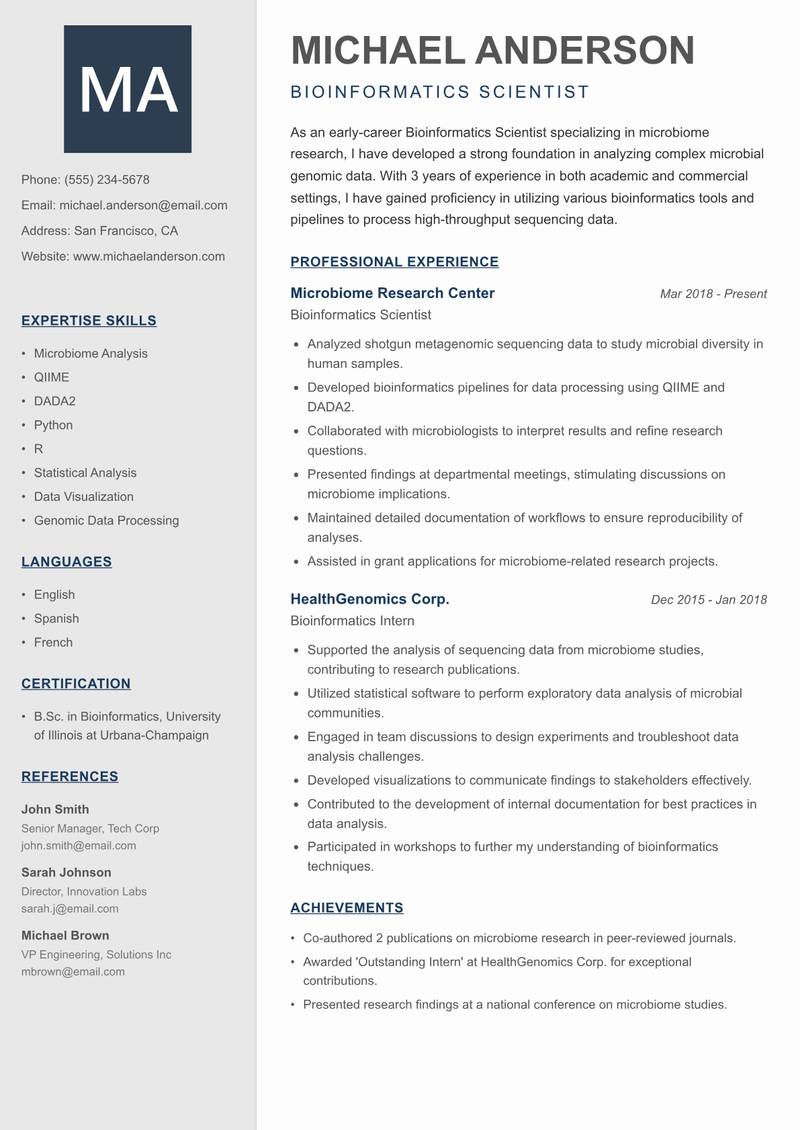
Creative Minimal
Use Template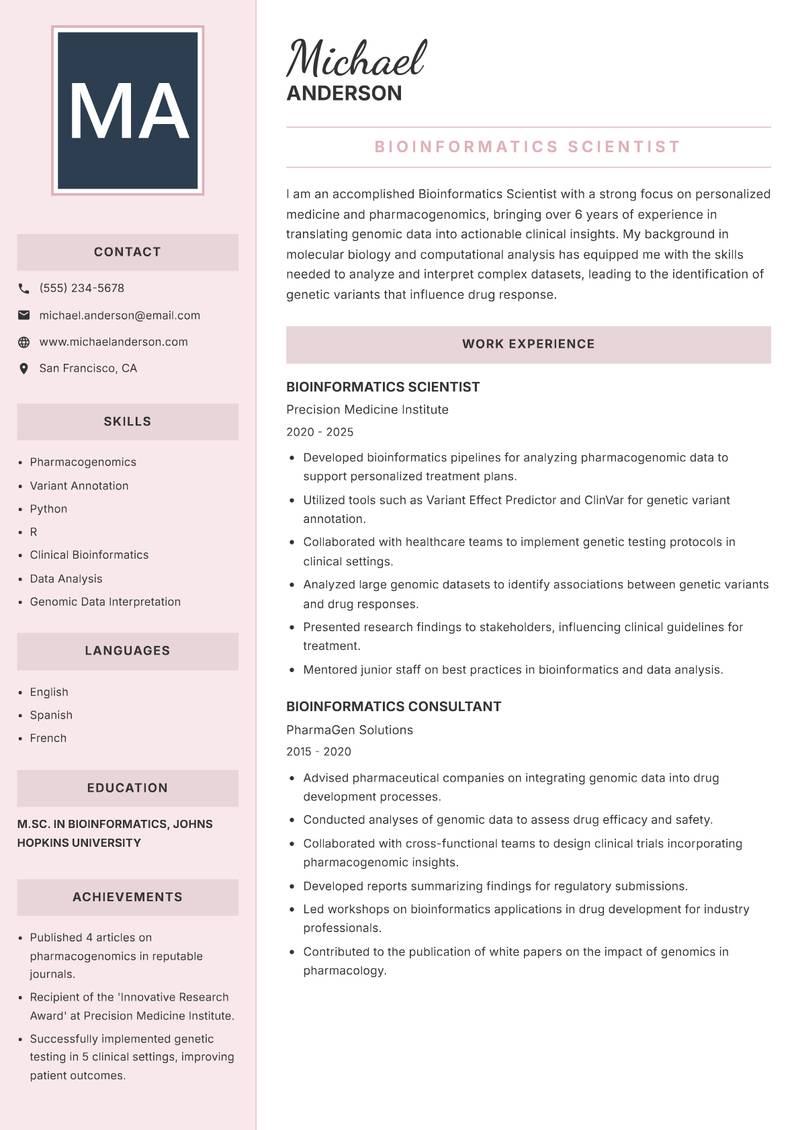
Executive
Use Template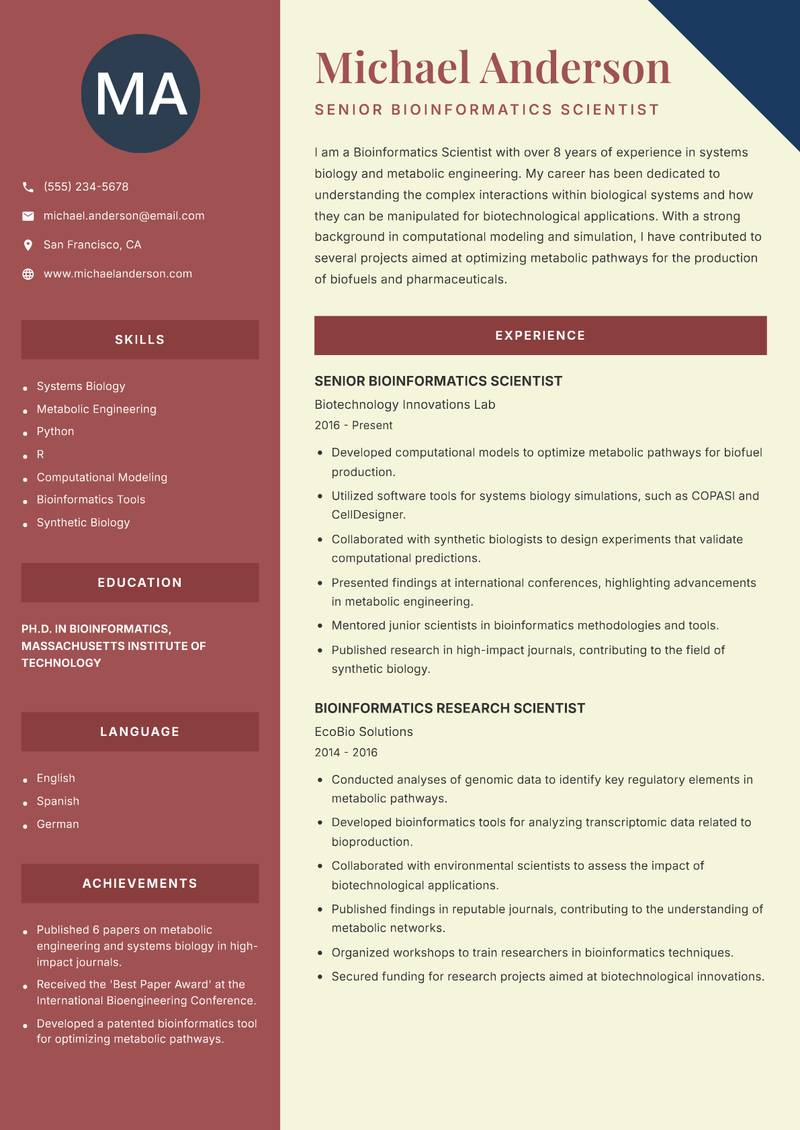
Two Column
Use Template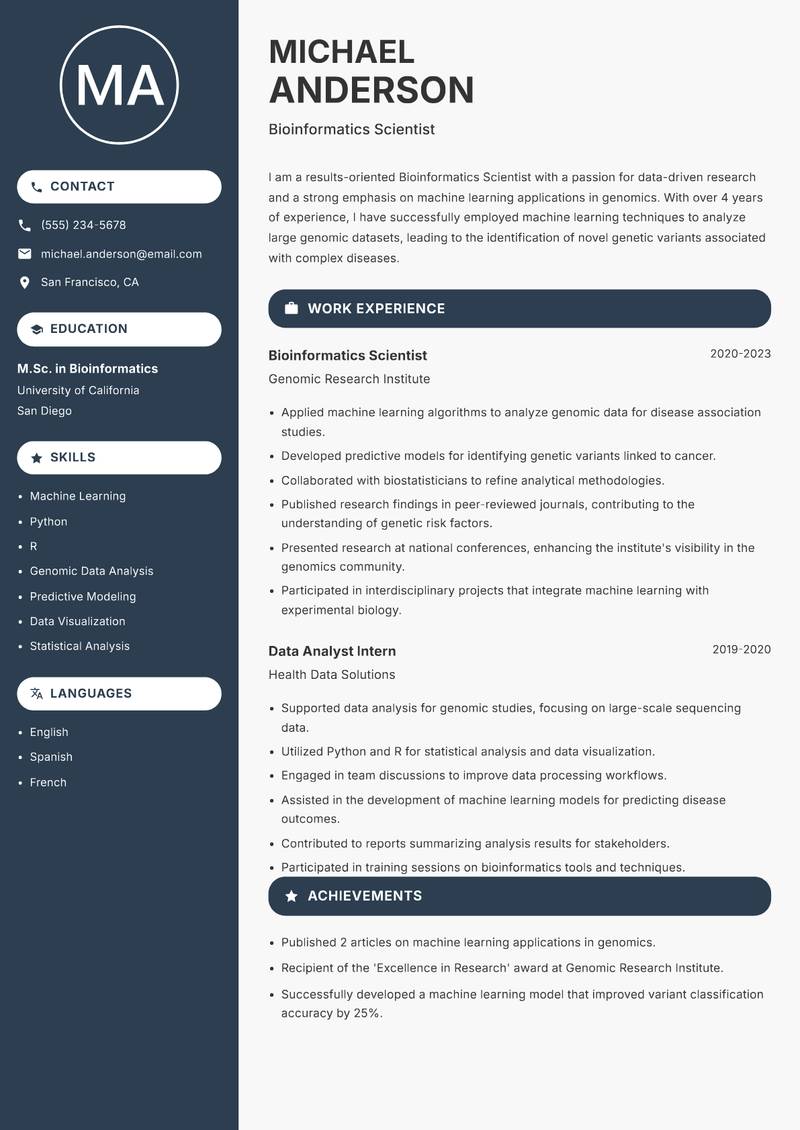
Compact
Use Template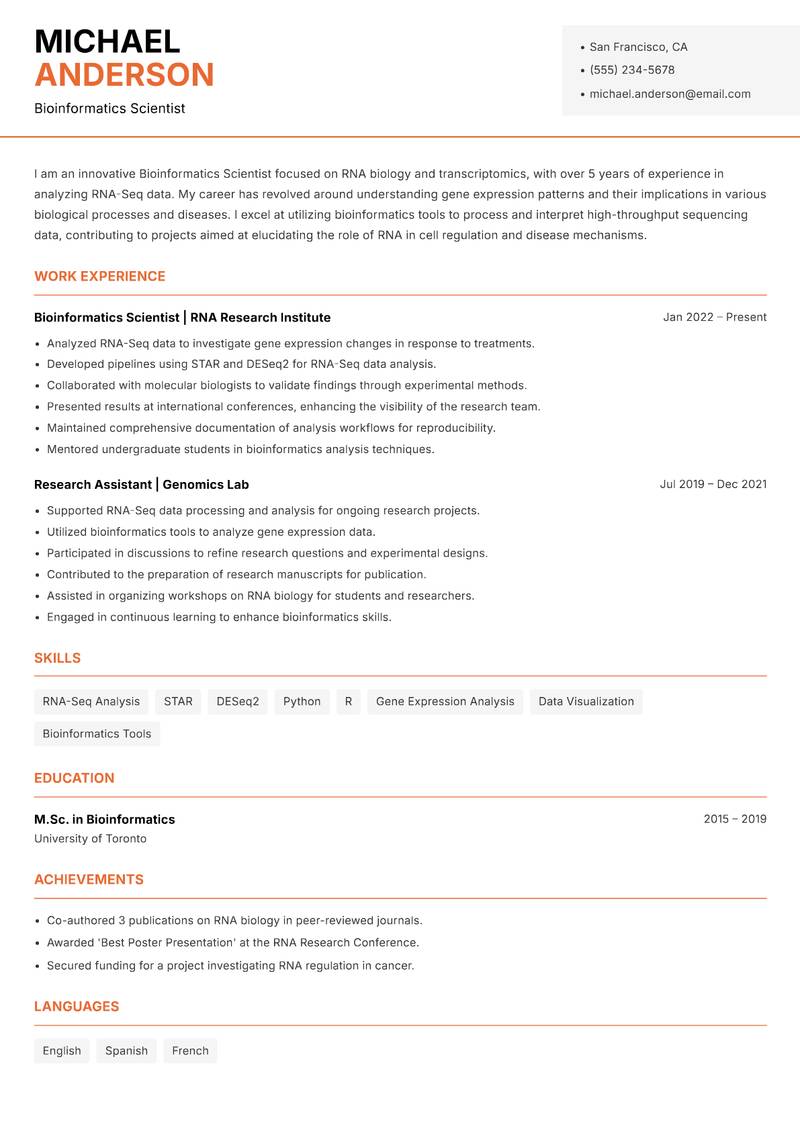
Modern Professional
Use Template7 Real Bioinformatics Scientist Resume Examples
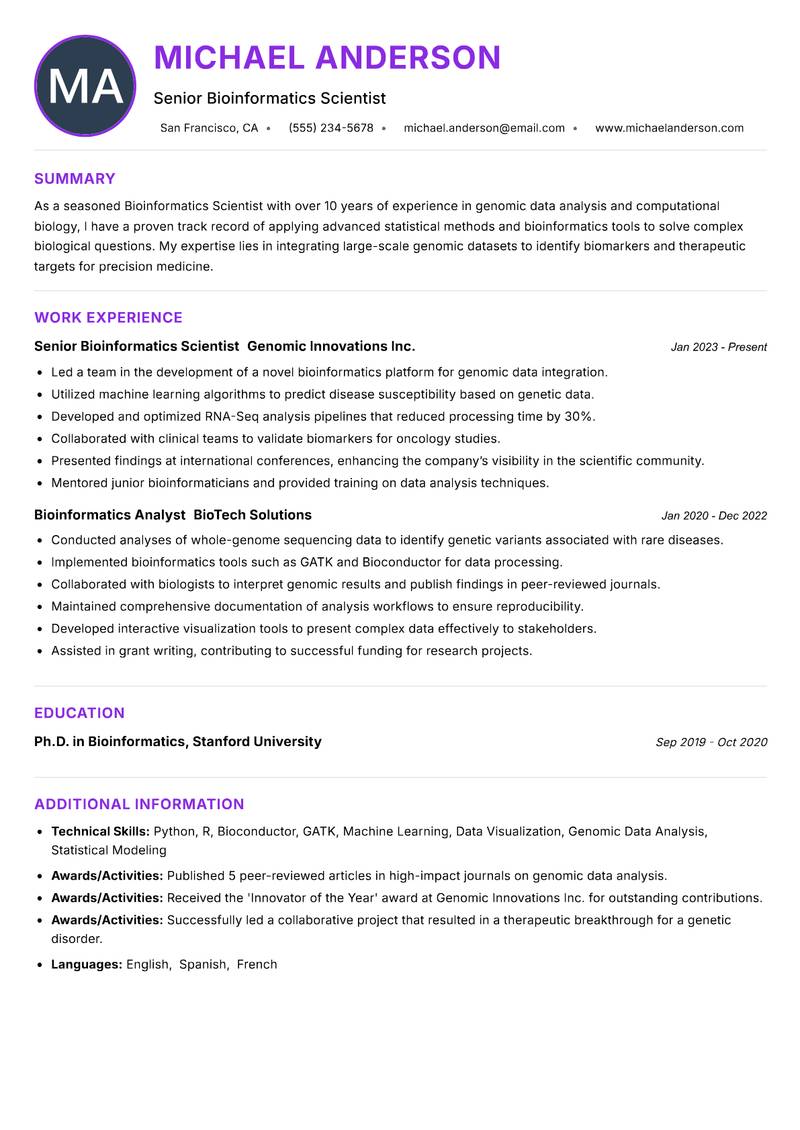
Senior Bioinformatics Scientist with 8+ Years Experience
Summary: As a seasoned Bioinformatics Scientist with over 10 years of experience in genomic data analysis and computational biology, I have a proven track record of applying advanced statistical methods and bioinformatics tools to solve complex biological questions. My expertise lies in integrating large-scale genomic datasets to identify biomarkers and therapeutic targets for precision medicine. I have collaborated with multidisciplinary teams in both academic and industry settings, contributing to significant advancements in personalized drug development. My strong programming skills in Python and R, combined with my knowledge of molecular biology, enable me to develop robust data analysis pipelines that accelerate research timelines. I am passionate about leveraging cutting-edge bioinformatics technologies to enhance our understanding of genetic diseases and improve patient outcomes. I thrive in fast-paced environments and enjoy mentoring junior scientists, fostering a collaborative atmosphere that drives innovation and discovery.
Description:
- Led a team in the development of a novel bioinformatics platform for genomic data integration.
- Utilized machine learning algorithms to predict disease susceptibility based on genetic data.
- Developed and optimized RNA-Seq analysis pipelines that reduced processing time by 30%.
- Collaborated with clinical teams to validate biomarkers for oncology studies.
- Presented findings at international conferences, enhancing the company’s visibility in the scientific community.
- Mentored junior bioinformaticians and provided training on data analysis techniques.
🏆 Key Achievements
Bioinformatics Scientist with 7+ Years Experience
Summary: I am a dedicated Bioinformatics Scientist with a focus on evolutionary biology and comparative genomics, possessing over 7 years of experience in analyzing complex biological data. My work primarily involves the application of computational tools to study genetic variations across species, helping to understand evolutionary relationships and functional genomics. With a solid foundation in both biology and computer science, I excel at utilizing bioinformatics software to interpret large datasets and derive meaningful insights. I have a proven ability to communicate complex scientific concepts to both technical and non-technical audiences, facilitating collaborative projects across various disciplines. My passion for teaching and sharing knowledge drives my commitment to developing innovative educational programs in bioinformatics for students and colleagues alike. I am eager to contribute to research initiatives that aim to unveil the mysteries of genetics and evolution.
Description:
- Conducted comparative genomic analyses to identify conserved regions across various species.
- Developed phylogenetic trees using advanced algorithms to study evolutionary relationships.
- Utilized software tools such as MEGA and Clustal Omega for sequence alignment and analysis.
- Collaborated with ecologists to integrate genomic data with environmental factors.
- Presented research findings at conferences, focusing on the implications of genomic data for conservation biology.
- Supervised undergraduate research projects, fostering interest in bioinformatics among students.
🏆 Key Achievements
Bioinformatics Scientist with 3+ Years Experience
Summary: As an early-career Bioinformatics Scientist specializing in microbiome research, I have developed a strong foundation in analyzing complex microbial genomic data. With 3 years of experience in both academic and commercial settings, I have gained proficiency in utilizing various bioinformatics tools and pipelines to process high-throughput sequencing data. My work has focused on understanding the role of the microbiome in human health and disease, contributing to the identification of potential therapeutic targets. I have collaborated with cross-functional teams to design experiments and analyze results, ensuring that research objectives are met efficiently. My analytical skills, combined with my attention to detail, allow me to derive meaningful insights from large datasets. I am eager to continue advancing my knowledge and skills in bioinformatics while contributing to impactful research in the field of microbiome studies.
Description:
- Analyzed shotgun metagenomic sequencing data to study microbial diversity in human samples.
- Developed bioinformatics pipelines for data processing using QIIME and DADA2.
- Collaborated with microbiologists to interpret results and refine research questions.
- Presented findings at departmental meetings, stimulating discussions on microbiome implications.
- Maintained detailed documentation of workflows to ensure reproducibility of analyses.
- Assisted in grant applications for microbiome-related research projects.
🏆 Key Achievements
Bioinformatics Scientist with 6+ Years Experience
Summary: I am an accomplished Bioinformatics Scientist with a strong focus on personalized medicine and pharmacogenomics, bringing over 6 years of experience in translating genomic data into actionable clinical insights. My background in molecular biology and computational analysis has equipped me with the skills needed to analyze and interpret complex datasets, leading to the identification of genetic variants that influence drug response. I have successfully collaborated with clinicians and researchers to integrate genetic testing into patient care, enhancing treatment outcomes. My expertise in using bioinformatics tools for variant annotation and clinical decision support has been instrumental in advancing precision medicine initiatives. I am dedicated to continuous learning and am passionate about leveraging bioinformatics to improve healthcare and patient outcomes through data-driven decisions.
Description:
- Developed bioinformatics pipelines for analyzing pharmacogenomic data to support personalized treatment plans.
- Utilized tools such as Variant Effect Predictor and ClinVar for genetic variant annotation.
- Collaborated with healthcare teams to implement genetic testing protocols in clinical settings.
- Analyzed large genomic datasets to identify associations between genetic variants and drug responses.
- Presented research findings to stakeholders, influencing clinical guidelines for treatment.
- Mentored junior staff on best practices in bioinformatics and data analysis.
🏆 Key Achievements
Senior Bioinformatics Scientist with 8+ Years Experience
Summary: I am a Bioinformatics Scientist with over 8 years of experience in systems biology and metabolic engineering. My career has been dedicated to understanding the complex interactions within biological systems and how they can be manipulated for biotechnological applications. With a strong background in computational modeling and simulation, I have contributed to several projects aimed at optimizing metabolic pathways for the production of biofuels and pharmaceuticals. My expertise includes the development of computational tools for simulating biological processes, which has enabled me to drive innovation in synthetic biology research. I am adept at collaborating with interdisciplinary teams to design experiments and interpret data, ensuring that research objectives align with industry needs. I am passionate about utilizing bioinformatics to advance sustainable solutions and improve the efficiency of bioproduction systems.
Description:
- Developed computational models to optimize metabolic pathways for biofuel production.
- Utilized software tools for systems biology simulations, such as COPASI and CellDesigner.
- Collaborated with synthetic biologists to design experiments that validate computational predictions.
- Presented findings at international conferences, highlighting advancements in metabolic engineering.
- Mentored junior scientists in bioinformatics methodologies and tools.
- Published research in high-impact journals, contributing to the field of synthetic biology.
🏆 Key Achievements
Bioinformatics Scientist with 4+ Years Experience
Summary: I am a results-oriented Bioinformatics Scientist with a passion for data-driven research and a strong emphasis on machine learning applications in genomics. With over 4 years of experience, I have successfully employed machine learning techniques to analyze large genomic datasets, leading to the identification of novel genetic variants associated with complex diseases. My background in computer science and statistics allows me to create robust analytical models that enhance the understanding of genetic predispositions. I thrive in collaborative environments, working closely with biologists and data scientists to bridge the gap between computational and experimental research. My goal is to leverage my skills in bioinformatics and machine learning to contribute to groundbreaking research that advances the field of genomics and improves healthcare outcomes.
Description:
- Applied machine learning algorithms to analyze genomic data for disease association studies.
- Developed predictive models for identifying genetic variants linked to cancer.
- Collaborated with biostatisticians to refine analytical methodologies.
- Published research findings in peer-reviewed journals, contributing to the understanding of genetic risk factors.
- Presented research at national conferences, enhancing the institute's visibility in the genomics community.
- Participated in interdisciplinary projects that integrate machine learning with experimental biology.
🏆 Key Achievements
Bioinformatics Scientist with 5+ Years Experience
Summary: I am an innovative Bioinformatics Scientist focused on RNA biology and transcriptomics, with over 5 years of experience in analyzing RNA-Seq data. My career has revolved around understanding gene expression patterns and their implications in various biological processes and diseases. I excel at utilizing bioinformatics tools to process and interpret high-throughput sequencing data, contributing to projects aimed at elucidating the role of RNA in cell regulation and disease mechanisms. My collaborative spirit enables me to work effectively with multidisciplinary teams, translating complex data into actionable insights. I am committed to advancing the field of RNA research through innovative data analysis approaches and fostering a deeper understanding of gene regulation. I am enthusiastic about contributing to research that has the potential to lead to novel therapeutic strategies.
Description:
- Analyzed RNA-Seq data to investigate gene expression changes in response to treatments.
- Developed pipelines using STAR and DESeq2 for RNA-Seq data analysis.
- Collaborated with molecular biologists to validate findings through experimental methods.
- Presented results at international conferences, enhancing the visibility of the research team.
- Maintained comprehensive documentation of analysis workflows for reproducibility.
- Mentored undergraduate students in bioinformatics analysis techniques.
🏆 Key Achievements
Key Skills for Bioinformatics Scientist
ATS Optimization Tips
Increase your chances of getting hired
Use Standard Headings
Use common section titles like Experience, Skills, etc.
Include Keywords
Add role-specific keywords from the job description
Keep it Simple
Avoid complex tables, images and graphics
Save in Right Format
Use PDF format unless otherwise specified
Bioinformatics Scientist Salary Insights
Average Salary
$97,500
per year
Salary Range
$75,000 - $120,000
per year
Top Paying Cities
Los Angeles, Seattle, Houston, Dallas, Boston
Source: Glassdoor, Payscale, Indeed (Updated April 2025)
Everything you need to write a great Bioinformatics Scientist resume
Strong Action Verbs to Use
Resume Writing Tips
- →Highlight specific programming languages and tools relevant to bioinformatics, such as R or Python.
- →Detail hands-on experience with data analysis or relevant projects involving genomic datasets.
- →Incorporate metrics to demonstrate the impact of your work, such as efficiency improvements or successful data interpretations.
- →Include collaborative projects with interdisciplinary teams to showcase teamwork skills.
- →Personalize your resume for each application by aligning your experiences with the specific work description.
Common Mistakes to Avoid
- ✕Failing to quantify contributions to projects, which can diminish the perceived impact of your work.
- ✕Using overly technical jargon without explanation, making it hard for non-specialists to understand your capabilities.
- ✕Neglecting to showcase soft skills, such as communication and teamwork, which are vital in collaborative environments.
- ✕Listing skills or tools without providing context on how you've applied them in your work.
- ✕Not tailoring your resume to emphasize experience relevant to the bioinformatics role you are applying for.
ATS Keywords for Bioinformatics Scientist
Bioinformatics Scientist Career Path
Relevant Certifications
Career Progression
Junior Bioinformatics Scientist
Entry-level position focusing on data analysis and basic software development tasks in a supportive research environment.
Bioinformatics Scientist
Mid-level role involving independent project management, data interpretation, and collaboration with biologists to inform research directions.
Senior Bioinformatics Scientist
Advanced position leading research initiatives, integrating complex datasets, and mentoring junior staff members.
Bioinformatics Team Leader
Oversees the bioinformatics division, manages multiple projects, and liaises with stakeholders to align research objectives.
Director of Bioinformatics
Executive role focused on strategic development of bioinformatics capabilities, budget management, and high-level stakeholder engagement.
Bioinformatics Scientist Interview Questions
Can you describe your experience with next-generation sequencing data analysis? +
Highlight specific tools and techniques you used, as well as the outcomes of your analyses.
How do you approach troubleshooting issues in bioinformatics software? +
Share examples of past challenges and how you successfully resolved them.
What workflows do you typically implement for managing biological data? +
Discuss any tools you use and how they improve efficiency and accuracy.
Can you provide an example of a project where you collaborated with biologists? +
Emphasize your role and contributions, as well as the impact of your collaboration.
What experience do you have with creating bioinformatics pipelines? +
Explain your process and any tools you utilized to streamline data processing.
How do you stay updated on the latest developments in bioinformatics? +
Discuss specific journals, conferences, or online platforms you follow.
About the Bioinformatics Scientist Role
Bioinformatics Scientists bridge the gap between biology and computer science, utilizing computational techniques to manage and analyze biological data. Their work often involves developing algorithms to interpret genomic sequences and employing machine learning tools to uncover patterns in complex datasets. Collaboration with researchers is crucial, as Bioinformatics Scientists translate data findings into actionable insights that inform experimental design and biological understanding.
Frequently Asked Questions
What programming languages are crucial for a Bioinformatics Scientist? +
Commonly used programming languages include Python and R, which are essential for data analysis and algorithm development.
What is the typical work setting for a Bioinformatics Scientist? +
Most Bioinformatics Scientists work in research laboratories, academic institutions, or pharmaceutical companies, often in collaborative environments.
How important is collaboration in Bioinformatics? +
Collaboration is vital, as Bioinformatics Scientists frequently work with biologists, clinicians, and data engineers to interpret findings and develop practical applications.
What are some common tools used in the field of bioinformatics? +
Bioinformatics Scientists typically utilize software tools like BLAST, Bioconductor, and various genome browsers for their analyses.
How can I transition into a Bioinformatics Scientist role from another field? +
Gaining proficiency in programming and statistics, along with pursuing relevant certifications, can help facilitate this transition.
What is the future outlook for Bioinformatics Scientists? +
The demand for Bioinformatics Scientists is expected to grow significantly due to advances in genomic technologies and personalized medicine.
More Resume Examples You Might Like
Related Career Paths
Other roles candidates for Bioinformatics Scientist positions often also consider.
Will this Bioinformatics Scientist resume pass the ATS scan?
Upload it and get an instant AI-scored compatibility check with specific fixes.
Check My Resume →
Pair it with a matching cover letter
AI drafts a first version from your job title and strengths — edit it live, then download the PDF.
Write My Cover Letter →
Written by Nohaya Career Team
Reviewed by HR Professionals · Updated April 2025
Ready to Build Your Perfect Resume?
Choose from 1000+ professional templates and land your dream job.
Create My Resume Now