Build an ATS-Friendly
Neurobiologist Resume
That Gets Interviews
Neurobiologists engage in multidisciplinary research to unravel the anatomical and functional complexities of the human nervous system. They employ sophisticated techniques such as optogenetics and in vivo imaging to dissect neural pathways involved in behavior and cognition. This role also involves collaboration…
Neurobiologist Resume Templates
Modern Professional
Use Template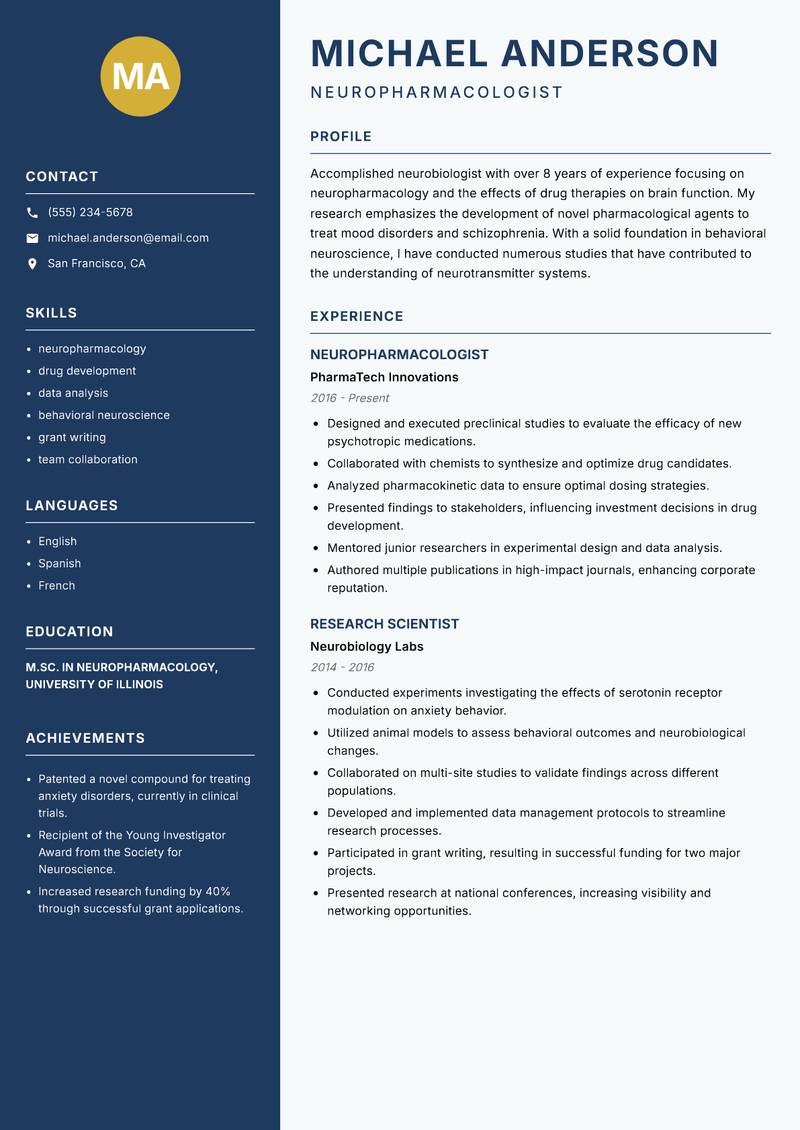
Classic Clean
Use Template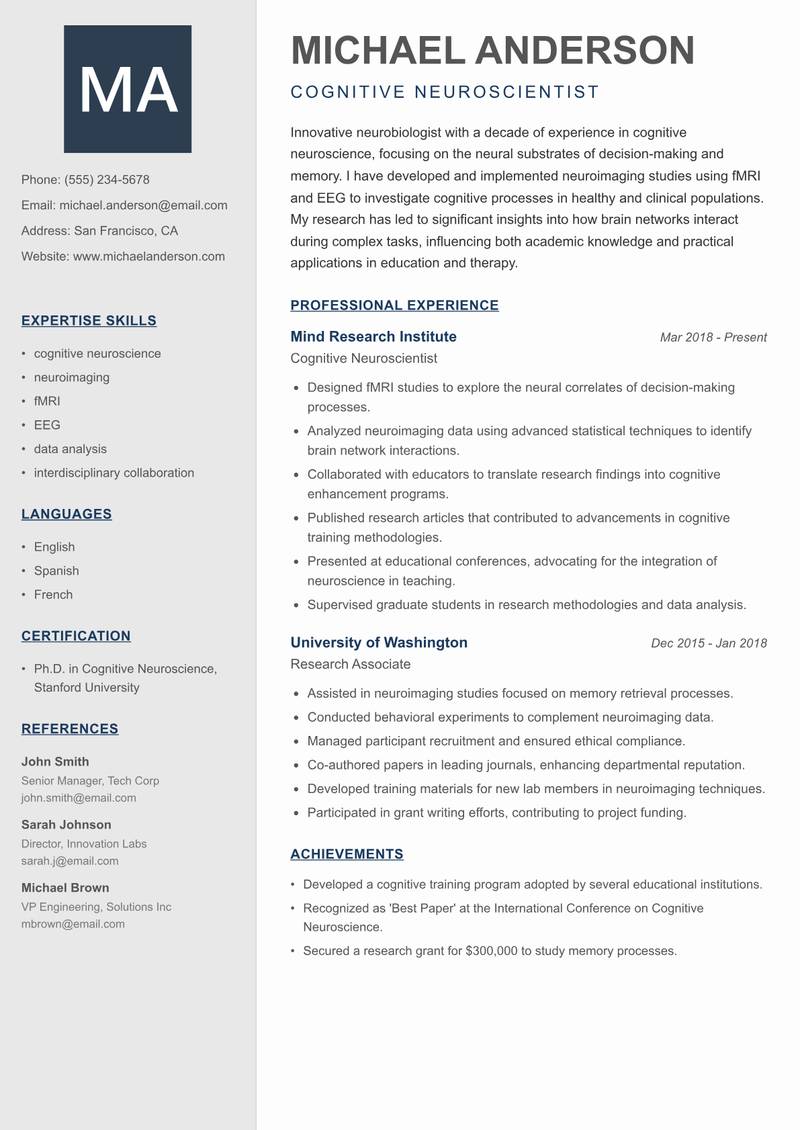
Creative Minimal
Use Template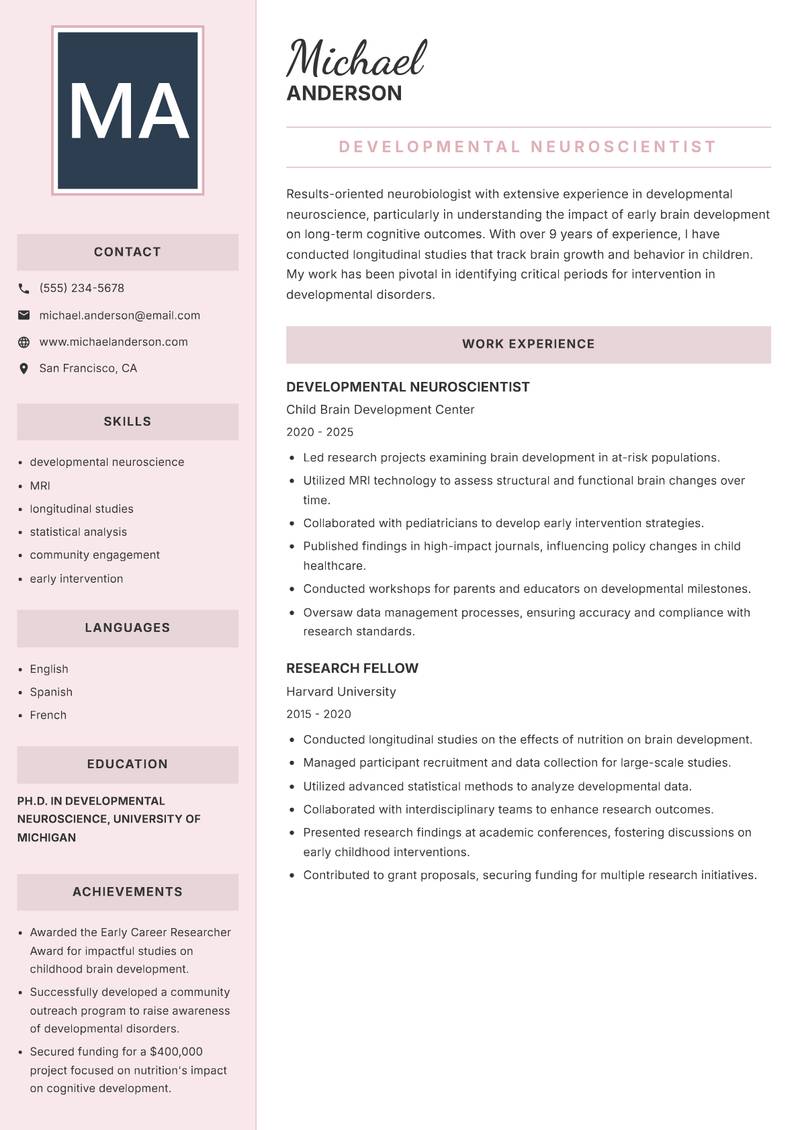
Executive
Use Template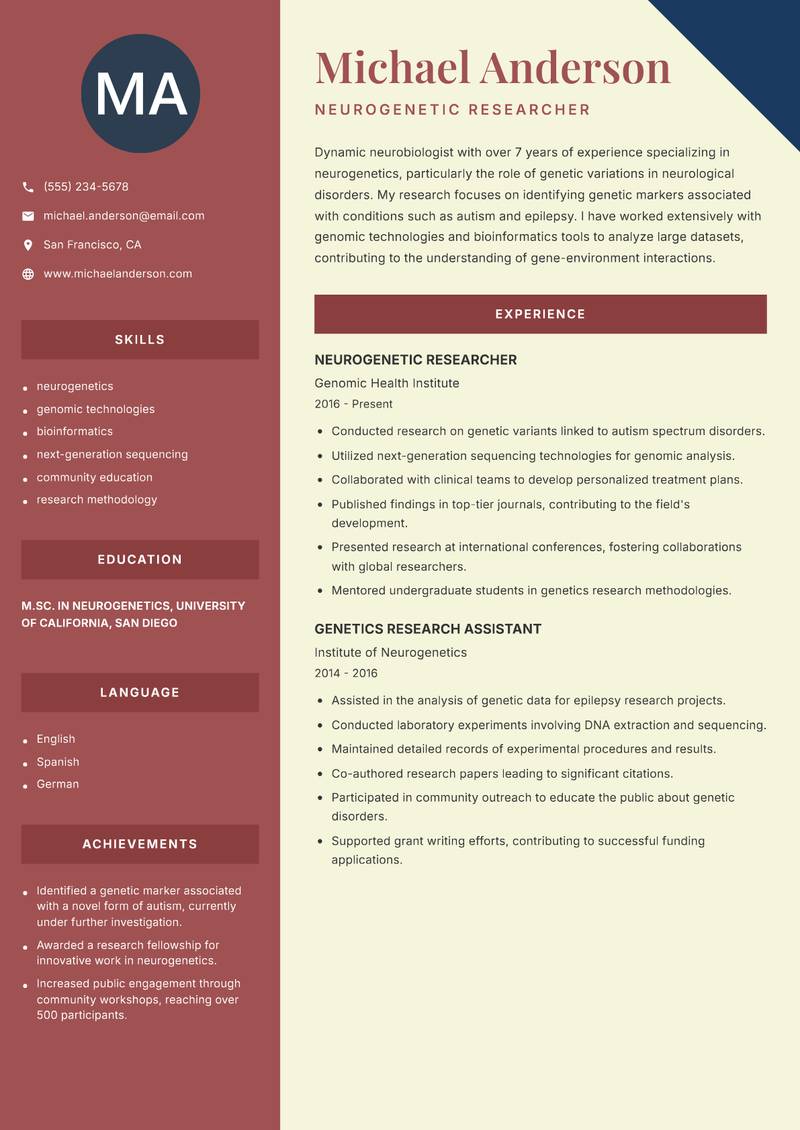
Two Column
Use Template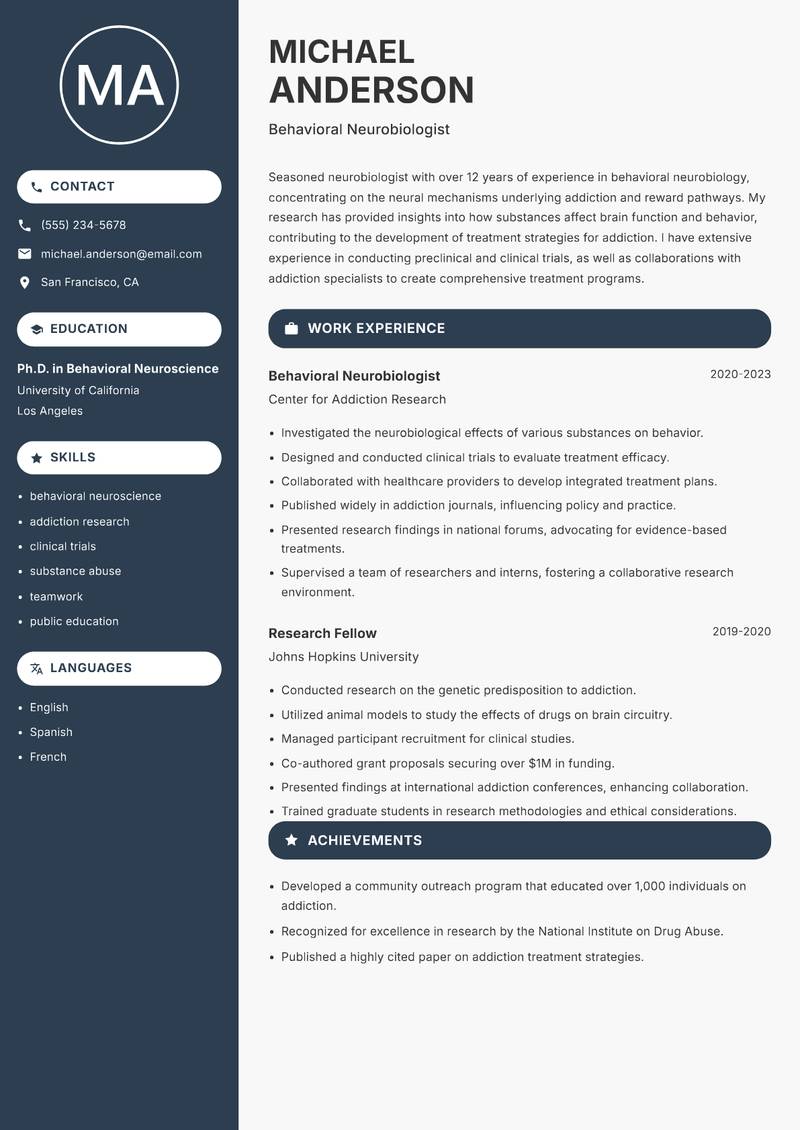
Compact
Use Template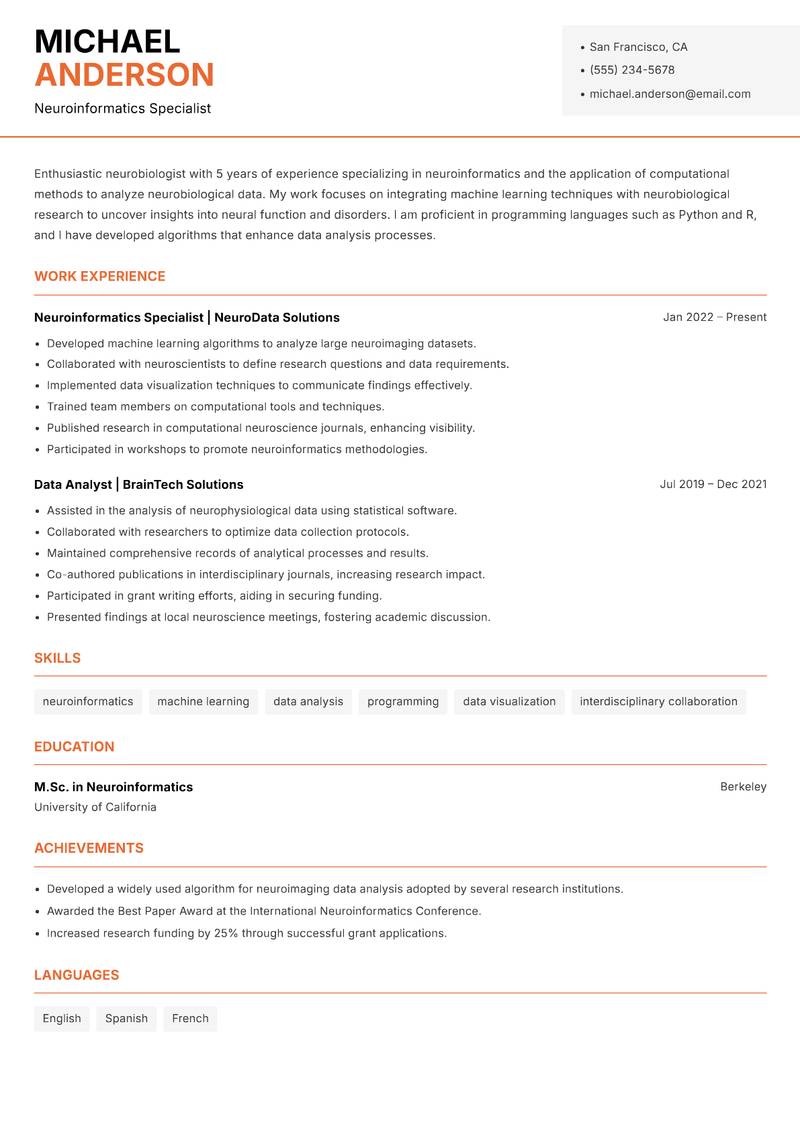
Modern Professional
Use Template7 Real Neurobiologist Resume Examples
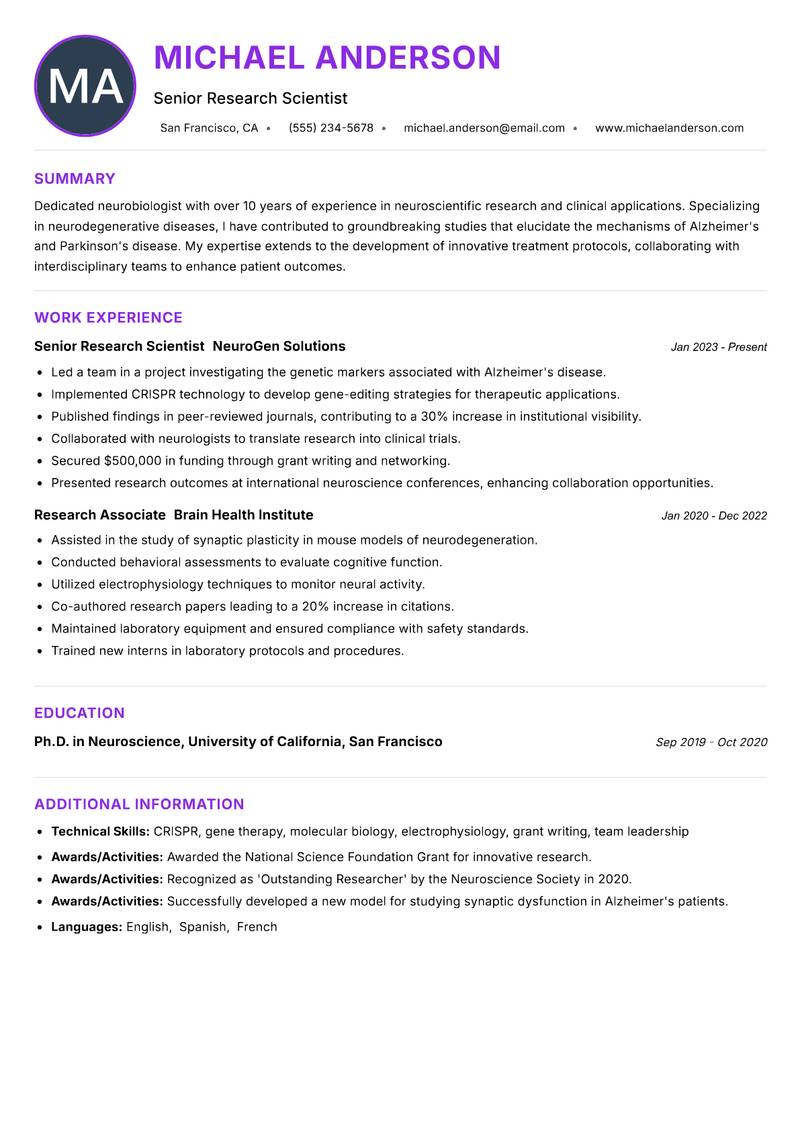
Senior Research Scientist with 11+ Years Experience
Summary: Dedicated neurobiologist with over 10 years of experience in neuroscientific research and clinical applications. Specializing in neurodegenerative diseases, I have contributed to groundbreaking studies that elucidate the mechanisms of Alzheimer's and Parkinson's disease. My expertise extends to the development of innovative treatment protocols, collaborating with interdisciplinary teams to enhance patient outcomes. I have a strong background in molecular biology techniques, including CRISPR and gene therapy, and I am committed to translating research findings into practical applications. My ability to communicate complex scientific concepts to diverse audiences has been instrumental in securing funding for research initiatives. I am passionate about mentoring the next generation of scientists and fostering a culture of curiosity and critical thinking in the laboratory.
Description:
- Led a team in a project investigating the genetic markers associated with Alzheimer's disease.
- Implemented CRISPR technology to develop gene-editing strategies for therapeutic applications.
- Published findings in peer-reviewed journals, contributing to a 30% increase in institutional visibility.
- Collaborated with neurologists to translate research into clinical trials.
- Secured $500,000 in funding through grant writing and networking.
- Presented research outcomes at international neuroscience conferences, enhancing collaboration opportunities.
🏆 Key Achievements
Neuropharmacologist with 9+ Years Experience
Summary: Accomplished neurobiologist with over 8 years of experience focusing on neuropharmacology and the effects of drug therapies on brain function. My research emphasizes the development of novel pharmacological agents to treat mood disorders and schizophrenia. With a solid foundation in behavioral neuroscience, I have conducted numerous studies that have contributed to the understanding of neurotransmitter systems. My proficiency in data analysis and interpretation has enabled me to identify potential therapeutic targets, leading to patents for new drug compounds. I thrive in collaborative environments and have a track record of successful partnerships with pharmaceutical companies to advance research from the bench to bedside.
Description:
- Designed and executed preclinical studies to evaluate the efficacy of new psychotropic medications.
- Collaborated with chemists to synthesize and optimize drug candidates.
- Analyzed pharmacokinetic data to ensure optimal dosing strategies.
- Presented findings to stakeholders, influencing investment decisions in drug development.
- Mentored junior researchers in experimental design and data analysis.
- Authored multiple publications in high-impact journals, enhancing corporate reputation.
🏆 Key Achievements
Cognitive Neuroscientist with 10+ Years Experience
Summary: Innovative neurobiologist with a decade of experience in cognitive neuroscience, focusing on the neural substrates of decision-making and memory. I have developed and implemented neuroimaging studies using fMRI and EEG to investigate cognitive processes in healthy and clinical populations. My research has led to significant insights into how brain networks interact during complex tasks, influencing both academic knowledge and practical applications in education and therapy. I am passionate about interdisciplinary approaches and have collaborated with psychologists and educators to develop cognitive training programs aimed at enhancing learning outcomes.
Description:
- Designed fMRI studies to explore the neural correlates of decision-making processes.
- Analyzed neuroimaging data using advanced statistical techniques to identify brain network interactions.
- Collaborated with educators to translate research findings into cognitive enhancement programs.
- Published research articles that contributed to advancements in cognitive training methodologies.
- Presented at educational conferences, advocating for the integration of neuroscience in teaching.
- Supervised graduate students in research methodologies and data analysis.
🏆 Key Achievements
Developmental Neuroscientist with 9+ Years Experience
Summary: Accomplished neurobiologist with extensive experience in developmental neuroscience, particularly in understanding the impact of early brain development on long-term cognitive outcomes. With over 9 years of experience, I have conducted longitudinal studies that track brain growth and behavior in children. My work has been pivotal in identifying critical periods for intervention in developmental disorders. I am well-versed in using advanced imaging techniques and statistical analyses to derive meaningful insights from complex datasets. My commitment to community engagement has led to collaborations with schools and healthcare providers to promote awareness and support for developmental issues.
Description:
- Led research projects examining brain development in at-risk populations.
- Utilized MRI technology to assess structural and functional brain changes over time.
- Collaborated with pediatricians to develop early intervention strategies.
- Published findings in high-impact journals, influencing policy changes in child healthcare.
- Conducted workshops for parents and educators on developmental milestones.
- Oversaw data management processes, ensuring accuracy and compliance with research standards.
🏆 Key Achievements
Neurogenetic Researcher with 8+ Years Experience
Summary: Dynamic neurobiologist with over 7 years of experience specializing in neurogenetics, particularly the role of genetic variations in neurological disorders. My research focuses on identifying genetic markers associated with conditions such as autism and epilepsy. I have worked extensively with genomic technologies and bioinformatics tools to analyze large datasets, contributing to the understanding of gene-environment interactions. My ability to translate complex genetic information into practical applications has led to collaborations with healthcare practitioners to develop personalized treatment plans. I am dedicated to advancing the field of neurogenetics through rigorous research and community education.
Description:
- Conducted research on genetic variants linked to autism spectrum disorders.
- Utilized next-generation sequencing technologies for genomic analysis.
- Collaborated with clinical teams to develop personalized treatment plans.
- Published findings in top-tier journals, contributing to the field's development.
- Presented research at international conferences, fostering collaborations with global researchers.
- Mentored undergraduate students in genetics research methodologies.
🏆 Key Achievements
Behavioral Neurobiologist with 12+ Years Experience
Summary: Seasoned neurobiologist with over 12 years of experience in behavioral neurobiology, concentrating on the neural mechanisms underlying addiction and reward pathways. My research has provided insights into how substances affect brain function and behavior, contributing to the development of treatment strategies for addiction. I have extensive experience in conducting preclinical and clinical trials, as well as collaborations with addiction specialists to create comprehensive treatment programs. My work has been recognized in various forums, and I am dedicated to educating the public about the neurobiological aspects of addiction and recovery.
Description:
- Investigated the neurobiological effects of various substances on behavior.
- Designed and conducted clinical trials to evaluate treatment efficacy.
- Collaborated with healthcare providers to develop integrated treatment plans.
- Published widely in addiction journals, influencing policy and practice.
- Presented research findings in national forums, advocating for evidence-based treatments.
- Supervised a team of researchers and interns, fostering a collaborative research environment.
🏆 Key Achievements
Neuroinformatics Specialist with 5+ Years Experience
Summary: Enthusiastic neurobiologist with 5 years of experience specializing in neuroinformatics and the application of computational methods to analyze neurobiological data. My work focuses on integrating machine learning techniques with neurobiological research to uncover insights into neural function and disorders. I am proficient in programming languages such as Python and R, and I have developed algorithms that enhance data analysis processes. My collaborative approach has allowed me to work with neuroscientists and data scientists, fostering innovation and efficiency in research. I am committed to leveraging technology to advance the field of neurobiology and improve scientific outcomes.
Description:
- Developed machine learning algorithms to analyze large neuroimaging datasets.
- Collaborated with neuroscientists to define research questions and data requirements.
- Implemented data visualization techniques to communicate findings effectively.
- Trained team members on computational tools and techniques.
- Published research in computational neuroscience journals, enhancing visibility.
- Participated in workshops to promote neuroinformatics methodologies.
🏆 Key Achievements
Key Skills for Neurobiologist
ATS Optimization Tips
Increase your chances of getting hired
Use Standard Headings
Use common section titles like Experience, Skills, etc.
Include Keywords
Add role-specific keywords from the job description
Keep it Simple
Avoid complex tables, images and graphics
Save in Right Format
Use PDF format unless otherwise specified
Neurobiologist Salary Insights
Average Salary
$92,500
per year
Salary Range
$65,000 - $120,000
per year
Top Paying Cities
Los Angeles, Seattle, Houston, Dallas, Boston
Source: Glassdoor, Payscale, Indeed (Updated April 2025)
Everything you need to write a great Neurobiologist resume
Strong Action Verbs to Use
Resume Writing Tips
- →Highlight specific technical skills directly related to neurobiology, such as expertise in CRISPR and confocal microscopy.
- →Include publications or presentations at conferences to demonstrate your contributions to the field.
- →Mention any experience with grants and funding to showcase your capability to secure resources for research.
- →Tailor your resume format to emphasize your research experience first, followed by educational qualifications and technical skills.
- →Use active language to describe your research impact, focusing on the significance of your findings.
Common Mistakes to Avoid
- ✕Listing generic lab skills without specifying their application in neurobiology.
- ✕Overlooking the importance of including research publications on your resume.
- ✕Failing to quantify achievements or contributions in previous roles.
- ✕Neglecting soft skills important for collaboration and communication in interdisciplinary research settings.
ATS Keywords for Neurobiologist
Neurobiologist Career Path
Relevant Certifications
Career Progression
Entry-Level Neurobiologist
Conduct basic research on neuronal structure and function; typically requires a Bachelor’s degree in biology or neuroscience.
Research Associate
Supports senior researchers by analyzing data, performing laboratory experiments, and maintaining laboratory equipment; often requires a Master’s degree.
Senior Neurobiologist
Leads independent research projects, oversees lab staff, and publishes findings in scientific journals; generally requires a Ph.D. and extensive lab experience.
Principal Investigator
Directs major research programs, secures funding through grants, and collaborates with academic institutions and industry partners; minimum Ph.D. and years of leadership experience.
Director of Neuroscience Research
Oversees all research activities within an organization or laboratory, makes strategic decisions, and engages with key stakeholders; extensive experience and expert recognition in the field required.
Neurobiologist Interview Questions
What specific techniques do you use to analyze neuronal function? +
Be prepared to discuss techniques such as patch-clamp electrophysiology or imaging methods like fMRI.
How do you stay current with advancements in neurobiology? +
Mention journals, conferences, or online courses that you follow to inform your research.
Can you describe a challenging experiment you conducted and how you approached it? +
Discuss your experimental design process, problem-solving skills, and how you addressed any setbacks.
What role does collaboration play in your research? +
Highlight experiences where teamwork has been essential in achieving research objectives.
How do you approach grant writing for research funding? +
Discuss your experience and strategies for writing successful grant proposals.
Describe a time when your results contradicted existing theories. How did you handle it? +
Explain your analytical thinking and how you approached reporting those results.
About the Neurobiologist Role
Neurobiologists engage in multidisciplinary research to unravel the anatomical and functional complexities of the human nervous system. They employ sophisticated techniques such as optogenetics and in vivo imaging to dissect neural pathways involved in behavior and cognition. This role also involves collaboration with clinicians to translate basic research findings into therapeutic applications, fostering advancements in neurological health.
Frequently Asked Questions
What does a typical day look like for a neurobiologist? +
A typical day may involve conducting lab experiments, analyzing data, writing report drafts, and collaborating with other scientists on research projects.
What educational background is required to become a neurobiologist? +
Most neurobiologists hold a Ph.D. in neuroscience or a related field, although some positions may be available for those with a master’s degree.
How important is computer programming knowledge in neurobiology? +
Programming skills can be highly advantageous for data analysis and modeling in neurobiological research.
Are there opportunities for neurobiologists outside of academia? +
Yes, neurobiologists can find careers in pharmaceuticals, medical device companies, or governmental research agencies.
What impact does neurobiology research have on society? +
Research in neurobiology has significant effects on understanding and treating neurological disorders, thereby improving public health outcomes.
More Resume Examples You Might Like
Related Career Paths
Other roles candidates for Neurobiologist positions often also consider.
Will this Neurobiologist resume pass the ATS scan?
Upload it and get an instant AI-scored compatibility check with specific fixes.
Check My Resume →
Pair it with a matching cover letter
AI drafts a first version from your job title and strengths — edit it live, then download the PDF.
Write My Cover Letter →
Written by Nohaya Career Team
Reviewed by HR Professionals · Updated April 2025
Ready to Build Your Perfect Resume?
Choose from 1000+ professional templates and land your dream job.
Create My Resume Now