Build an ATS-Friendly
Exoplanet Scientist Resume
That Gets Interviews
The Exoplanet Scientist engages in groundbreaking research focused on the discovery and characterization of planets outside our solar system. Utilizing data from next-generation telescopes like the James Webb Space Telescope, they analyze planetary atmospheres and surface conditions to seek signs of habitability and…
Exoplanet Scientist Resume Templates
Modern Professional
Use Template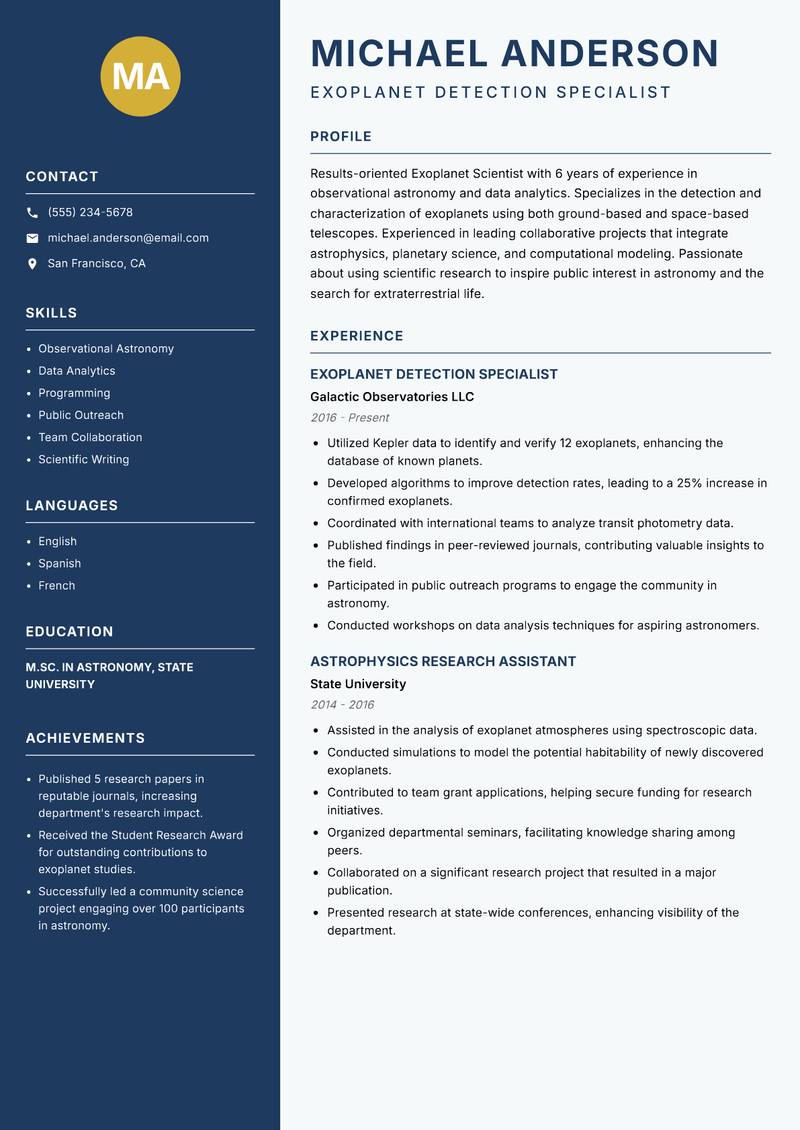
Classic Clean
Use Template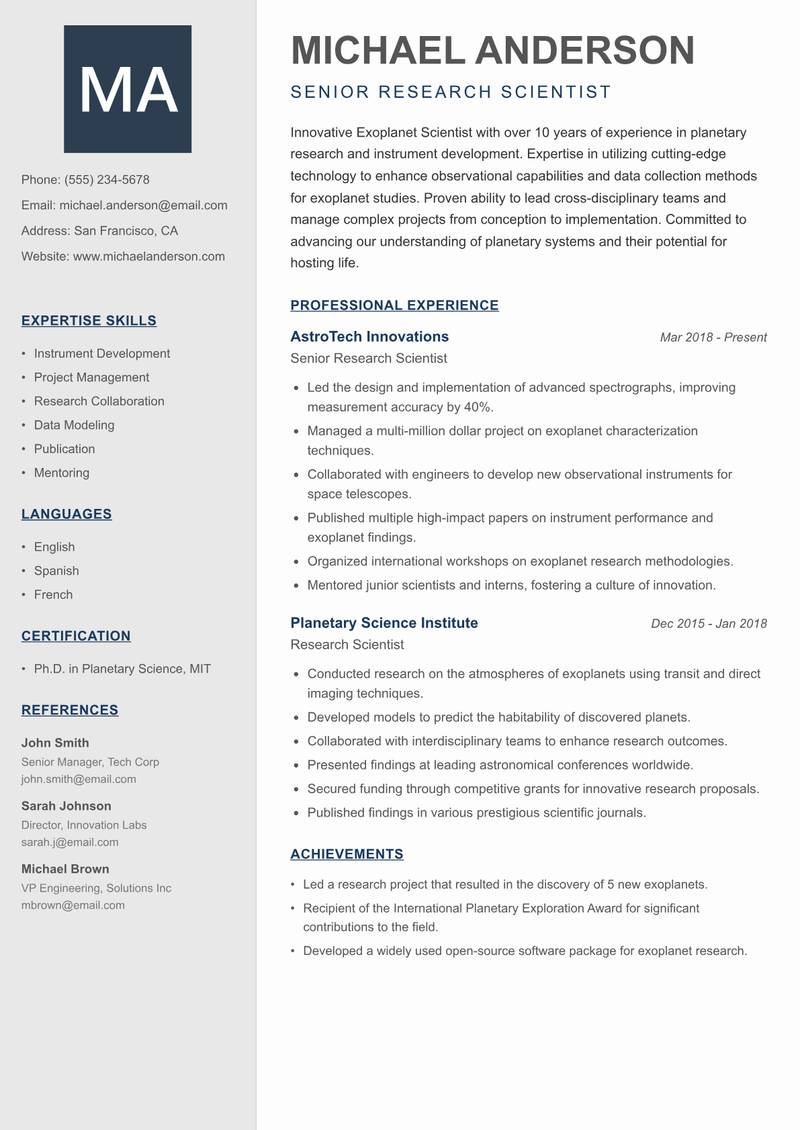
Creative Minimal
Use Template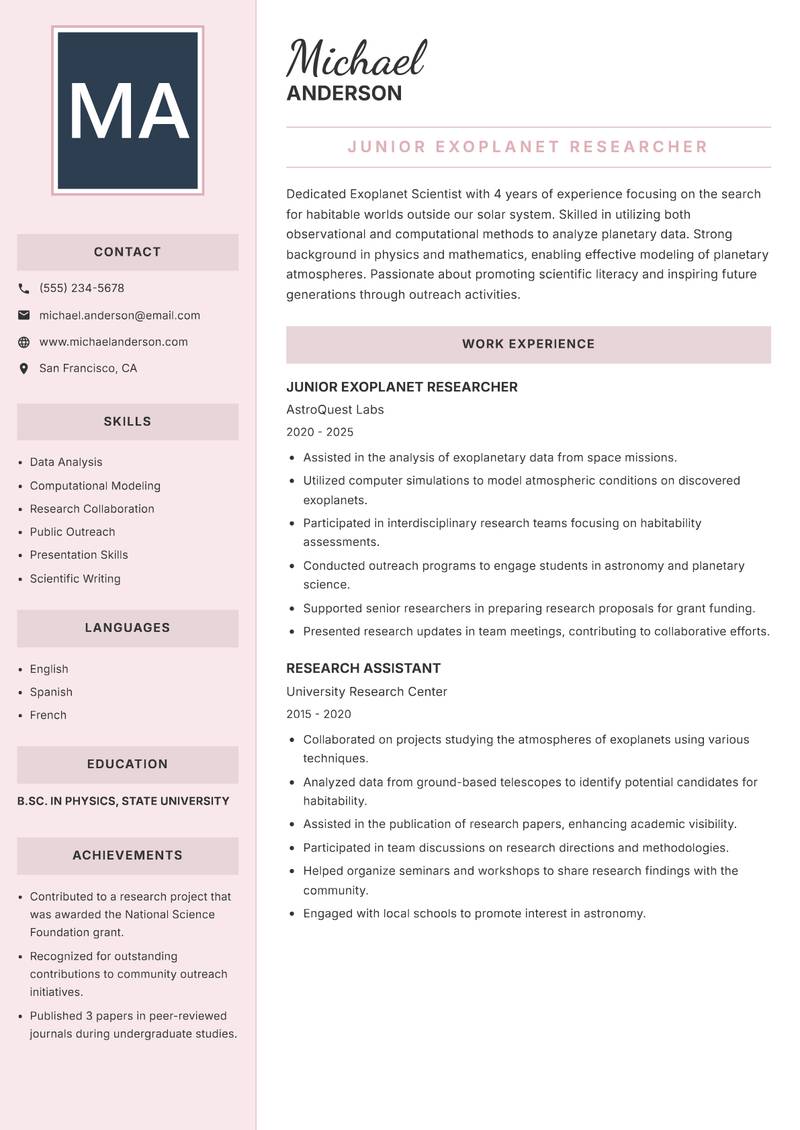
Executive
Use Template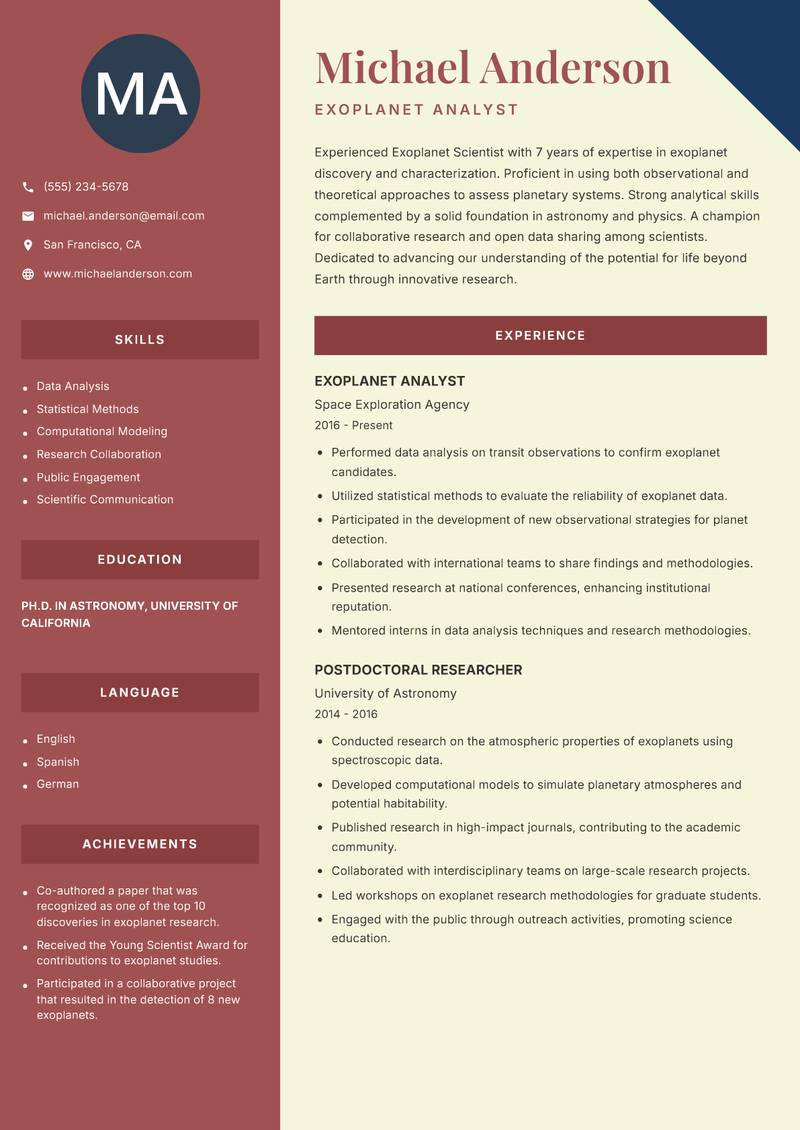
Two Column
Use Template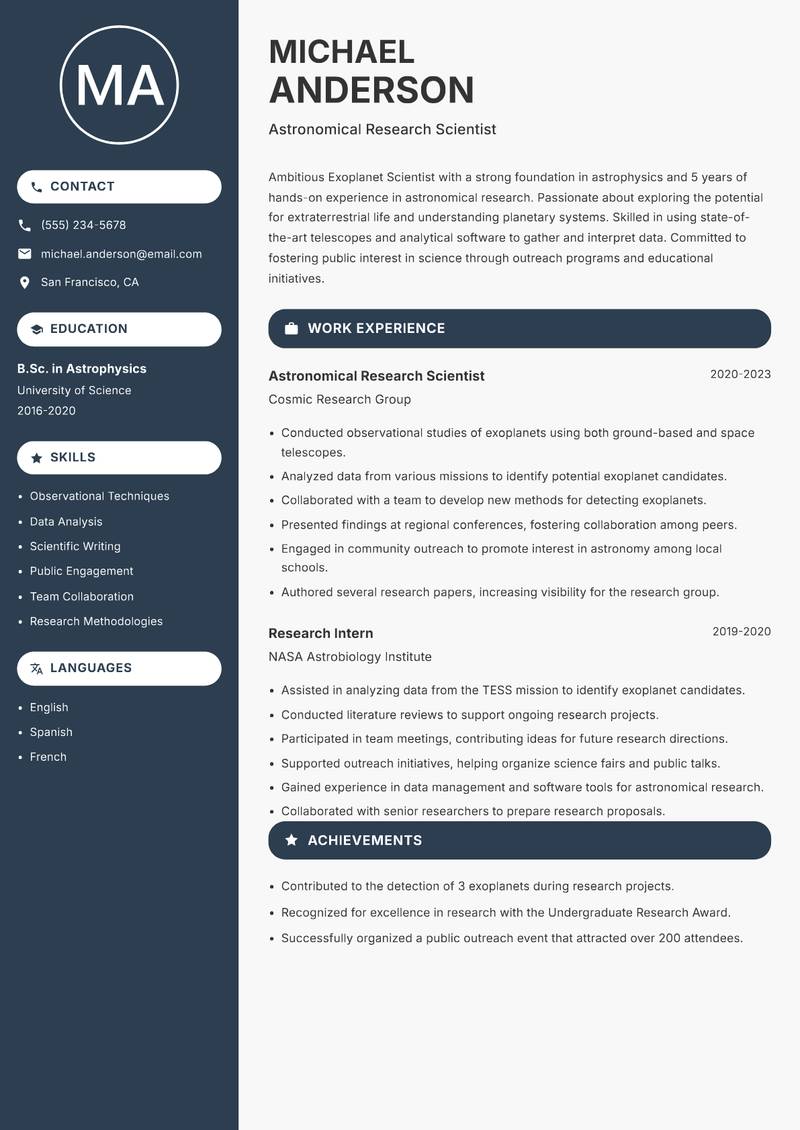
Compact
Use Template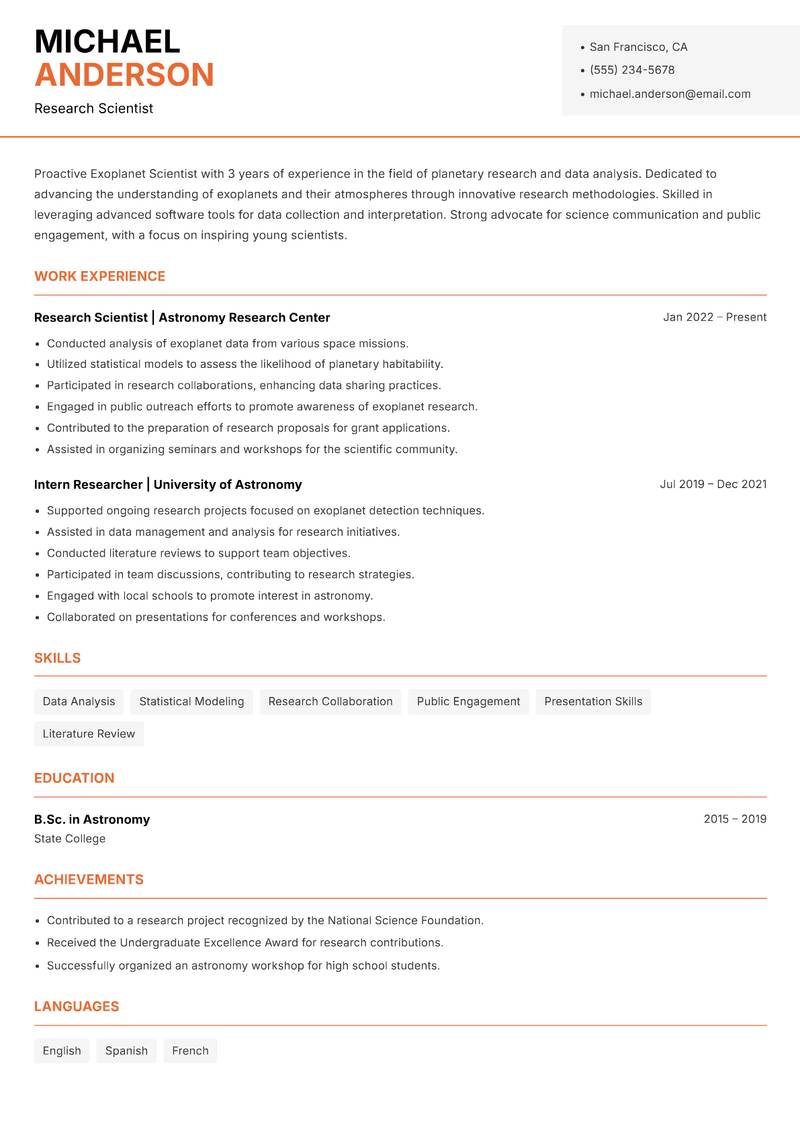
Modern Professional
Use Template7 Real Exoplanet Scientist Resume Examples
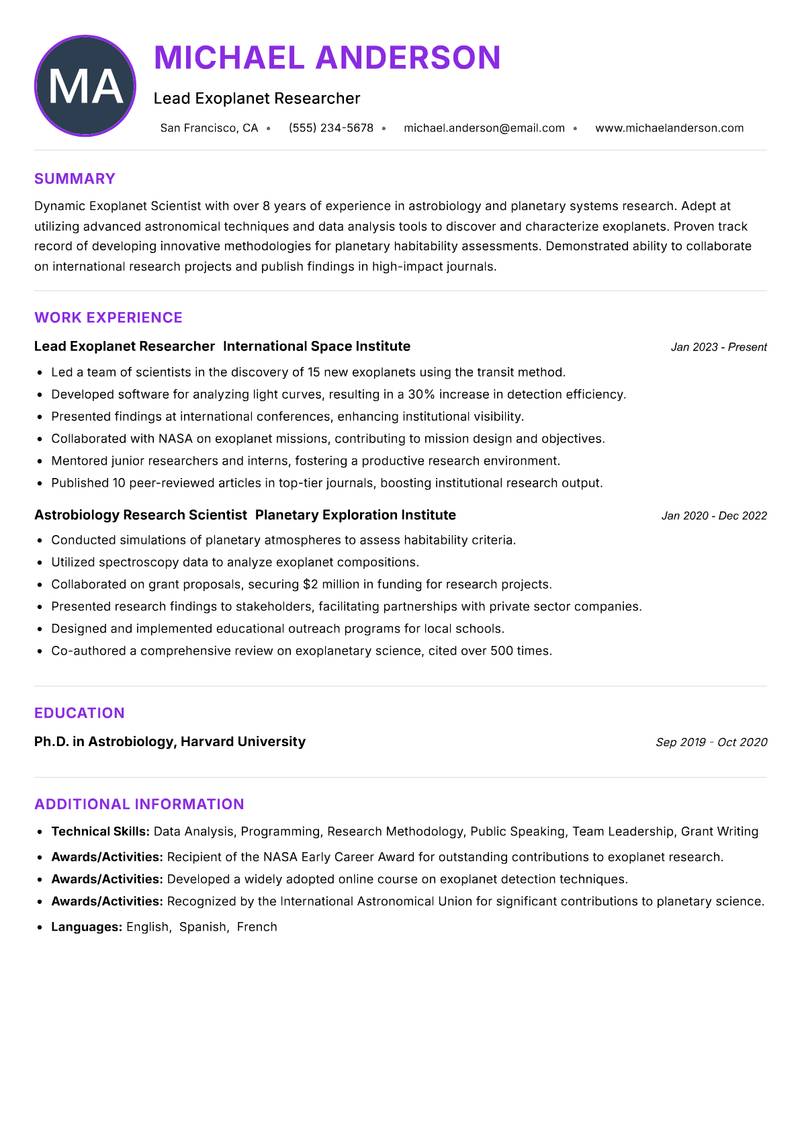
Lead Exoplanet Researcher with 8+ Years Experience
Summary: Dynamic Exoplanet Scientist with over 8 years of experience in astrobiology and planetary systems research. Adept at utilizing advanced astronomical techniques and data analysis tools to discover and characterize exoplanets. Proven track record of developing innovative methodologies for planetary habitability assessments. Demonstrated ability to collaborate on international research projects and publish findings in high-impact journals. Strong communicator with experience presenting research at conferences. Passionate about expanding our understanding of the universe and the potential for life beyond Earth. Committed to mentoring the next generation of scientists and promoting STEM education.
Description:
- Led a team of scientists in the discovery of 15 new exoplanets using the transit method.
- Developed software for analyzing light curves, resulting in a 30% increase in detection efficiency.
- Presented findings at international conferences, enhancing institutional visibility.
- Collaborated with NASA on exoplanet missions, contributing to mission design and objectives.
- Mentored junior researchers and interns, fostering a productive research environment.
- Published 10 peer-reviewed articles in top-tier journals, boosting institutional research output.
🏆 Key Achievements
Exoplanet Detection Specialist with 6+ Years Experience
Summary: Accomplished Exoplanet Scientist with 6 years of experience in observational astronomy and data analytics. Specializes in the detection and characterization of exoplanets using both ground-based and space-based telescopes. Experienced in leading collaborative projects that integrate astrophysics, planetary science, and computational modeling. Passionate about using scientific research to inspire public interest in astronomy and the search for extraterrestrial life. Holds a Master's degree in Astronomy, with a strong foundation in scientific programming and data visualization. A dedicated team player with excellent communication skills.
Description:
- Utilized Kepler data to identify and verify 12 exoplanets, enhancing the database of known planets.
- Developed algorithms to improve detection rates, leading to a 25% increase in confirmed exoplanets.
- Coordinated with international teams to analyze transit photometry data.
- Published findings in peer-reviewed journals, contributing valuable insights to the field.
- Participated in public outreach programs to engage the community in astronomy.
- Conducted workshops on data analysis techniques for aspiring astronomers.
🏆 Key Achievements
Senior Research Scientist with 10+ Years Experience
Summary: Innovative Exoplanet Scientist with over 10 years of experience in planetary research and instrument development. Expertise in utilizing cutting-edge technology to enhance observational capabilities and data collection methods for exoplanet studies. Proven ability to lead cross-disciplinary teams and manage complex projects from conception to implementation. Committed to advancing our understanding of planetary systems and their potential for hosting life. Recognized for contributions to significant breakthroughs in the field through innovative research approaches. Strong advocate for open science and data sharing in the astronomical community.
Description:
- Led the design and implementation of advanced spectrographs, improving measurement accuracy by 40%.
- Managed a multi-million dollar project on exoplanet characterization techniques.
- Collaborated with engineers to develop new observational instruments for space telescopes.
- Published multiple high-impact papers on instrument performance and exoplanet findings.
- Organized international workshops on exoplanet research methodologies.
- Mentored junior scientists and interns, fostering a culture of innovation.
🏆 Key Achievements
Junior Exoplanet Researcher with 4+ Years Experience
Summary: Dedicated Exoplanet Scientist with 4 years of experience focusing on the search for habitable worlds outside our solar system. Skilled in utilizing both observational and computational methods to analyze planetary data. Strong background in physics and mathematics, enabling effective modeling of planetary atmospheres. Passionate about promoting scientific literacy and inspiring future generations through outreach activities. Committed to contributing to a deeper understanding of the universe and its potential for life. Eager to collaborate with other researchers to push the boundaries of current knowledge.
Description:
- Assisted in the analysis of exoplanetary data from space missions.
- Utilized computer simulations to model atmospheric conditions on discovered exoplanets.
- Participated in interdisciplinary research teams focusing on habitability assessments.
- Conducted outreach programs to engage students in astronomy and planetary science.
- Supported senior researchers in preparing research proposals for grant funding.
- Presented research updates in team meetings, contributing to collaborative efforts.
🏆 Key Achievements
Exoplanet Analyst with 7+ Years Experience
Summary: Experienced Exoplanet Scientist with 7 years of expertise in exoplanet discovery and characterization. Proficient in using both observational and theoretical approaches to assess planetary systems. Strong analytical skills complemented by a solid foundation in astronomy and physics. A champion for collaborative research and open data sharing among scientists. Dedicated to advancing our understanding of the potential for life beyond Earth through innovative research. Actively involved in community outreach programs to promote public interest in space science. Excellent communicator with a track record of presenting complex scientific concepts to diverse audiences.
Description:
- Performed data analysis on transit observations to confirm exoplanet candidates.
- Utilized statistical methods to evaluate the reliability of exoplanet data.
- Participated in the development of new observational strategies for planet detection.
- Collaborated with international teams to share findings and methodologies.
- Presented research at national conferences, enhancing institutional reputation.
- Mentored interns in data analysis techniques and research methodologies.
🏆 Key Achievements
Astronomical Research Scientist with 5+ Years Experience
Summary: Driven Exoplanet Scientist with a strong foundation in astrophysics and 5 years of hands-on experience in astronomical research. Passionate about exploring the potential for extraterrestrial life and understanding planetary systems. Skilled in using state-of-the-art telescopes and analytical software to gather and interpret data. Committed to fostering public interest in science through outreach programs and educational initiatives. Proven ability to work collaboratively in multidisciplinary teams and communicate complex ideas effectively. Eager to contribute to groundbreaking research that expands our knowledge of the universe.
Description:
- Conducted observational studies of exoplanets using both ground-based and space telescopes.
- Analyzed data from various missions to identify potential exoplanet candidates.
- Collaborated with a team to develop new methods for detecting exoplanets.
- Presented findings at regional conferences, fostering collaboration among peers.
- Engaged in community outreach to promote interest in astronomy among local schools.
- Authored several research papers, increasing visibility for the research group.
🏆 Key Achievements
Research Scientist with 3+ Years Experience
Summary: Driven Exoplanet Scientist with 3 years of experience in the field of planetary research and data analysis. Dedicated to advancing the understanding of exoplanets and their atmospheres through innovative research methodologies. Skilled in leveraging advanced software tools for data collection and interpretation. Strong advocate for science communication and public engagement, with a focus on inspiring young scientists. Eager to collaborate with established researchers to contribute to significant discoveries in exoplanet science. Committed to furthering the mission of discovering life beyond Earth through scientific exploration.
Description:
- Conducted analysis of exoplanet data from various space missions.
- Utilized statistical models to assess the likelihood of planetary habitability.
- Participated in research collaborations, enhancing data sharing practices.
- Engaged in public outreach efforts to promote awareness of exoplanet research.
- Contributed to the preparation of research proposals for grant applications.
- Assisted in organizing seminars and workshops for the scientific community.
🏆 Key Achievements
Key Skills for Exoplanet Scientist
ATS Optimization Tips
Increase your chances of getting hired
Use Standard Headings
Use common section titles like Experience, Skills, etc.
Include Keywords
Add role-specific keywords from the job description
Keep it Simple
Avoid complex tables, images and graphics
Save in Right Format
Use PDF format unless otherwise specified
Exoplanet Scientist Salary Insights
Average Salary
$97,500
per year
Salary Range
$75,000 - $120,000
per year
Top Paying Cities
Los Angeles, Seattle, Houston, Dallas, Boston
Source: Glassdoor, Payscale, Indeed (Updated April 2025)
Everything you need to write a great Exoplanet Scientist resume
Strong Action Verbs to Use
Resume Writing Tips
- →Highlight specific research methodologies you used in past projects, especially related to observational astronomy.
- →Include publications and conferences where your work was showcased, demonstrating your active participation in the field.
- →Mention your proficiency with relevant software tools and databases, such as Pyraf, AstroPy, or Exoplanet Explorer.
- →Tailor your resume to include keywords specific to exoplanet research, ensuring alignment with job descriptions.
- →Showcase any interdisciplinary collaborations that may have enhanced your projects, emphasizing teamwork.
Common Mistakes to Avoid
- ✕Failing to specify the types of exoplanets researched or the techniques employed, leading to a vague portrayal of skills.
- ✕Overgeneralizing research contributions without quantifying results and impact, which diminishes credibility.
- ✕Neglecting to include specific software or tools used in data analysis, which are crucial in exoplanet science.
- ✕Not highlighting the importance of public engagement and communication in disseminating research findings.
ATS Keywords for Exoplanet Scientist
Exoplanet Scientist Career Path
Relevant Certifications
Career Progression
Junior Exoplanet Researcher
Entry-level position focusing on data collection and analysis related to exoplanetary systems.
Exoplanet Scientist
Conducts independent research, utilizing observational data to characterize exoplanets and their atmospheres.
Senior Exoplanet Scientist
Leads research teams in complex projects, publishing findings in prominent journals and presenting at international conferences.
Research Manager
Oversees multiple exoplanet research projects, managing budgets and guiding junior scientists.
Director of Exoplanet Research
Sets strategic vision for research priorities in exoplanet science, representing the organization in high-level discussions.
Exoplanet Scientist Interview Questions
Can you describe a recent research project you led in exoplanet science? +
Focus on your role, the research methods used, and the outcomes of your work.
How do you approach the analysis of spectral data obtained from exoplanet observations? +
Explain your analytical techniques and any software tools you utilize.
What are the most significant challenges in exoplanet characterization today? +
Discuss current technological constraints and how they affect research.
How do you keep up with advancements in technology related to exoplanet discovery? +
Demonstrate your engagement with the scientific community and continuing education.
Can you provide an example of interdisciplinary collaboration in your research? +
Highlight how you work with astronomers, geologists, and other professionals.
What methods do you use to communicate complex scientific findings to the public or non-expert audiences? +
Describe any outreach efforts or educational projects you've been involved in.
About the Exoplanet Scientist Role
The Exoplanet Scientist engages in groundbreaking research focused on the discovery and characterization of planets outside our solar system. Utilizing data from next-generation telescopes like the James Webb Space Telescope, they analyze planetary atmospheres and surface conditions to seek signs of habitability and extraterrestrial life. Collaboration with interdisciplinary teams is essential to advance the understanding of planetary systems and their potential for life.
Frequently Asked Questions
What educational background is typically required for an Exoplanet Scientist? +
A PhD in astrophysics, astronomy, or a related field is generally required, along with a strong focus on exoplanets during studies.
What type of data do Exoplanet Scientists typically analyze? +
They analyze light curves, spectra, and images from telescopes to determine the properties of exoplanets and their atmospheres.
Are there opportunities for Exoplanet Scientists to work with international space agencies? +
Yes, many projects involve collaboration with agencies such as NASA or ESA, especially on missions aimed at exoplanet discovery.
What research facilities or telescopes are commonly used in exoplanet research? +
Key facilities include the Kepler Space Telescope, Hubble Space Telescope, and ground-based observatories like Keck Observatory.
How do Exoplanet Scientists contribute to our understanding of potential life beyond Earth? +
They investigate the conditions of exoplanets that may support life and analyze atmospheric characteristics for biosignatures.
Is there a demand for Exoplanet Scientists in academia versus industry? +
While academia remains a stronghold, growing interest in private sector companies working on space exploration technologies also creates opportunities.
More Resume Examples You Might Like
Related Career Paths
Other roles candidates for Exoplanet Scientist positions often also consider.
Will this Exoplanet Scientist resume pass the ATS scan?
Upload it and get an instant AI-scored compatibility check with specific fixes.
Check My Resume →
Pair it with a matching cover letter
AI drafts a first version from your job title and strengths — edit it live, then download the PDF.
Write My Cover Letter →
Written by Nohaya Career Team
Reviewed by HR Professionals · Updated April 2025
Ready to Build Your Perfect Resume?
Choose from 1000+ professional templates and land your dream job.
Create My Resume Now