Build an ATS-Friendly
Computational Biomedical Scientist Resume
That Gets Interviews
Leveraging advanced computational techniques, a Computational Biomedical Scientist translates complex biological data into actionable insights for medical research. Engaging with high-throughput sequencing data and predictive modeling, they aim to elucidate disease mechanisms and treatment responses. The role…
Computational Biomedical Scientist Resume Templates
Modern Professional
Use Template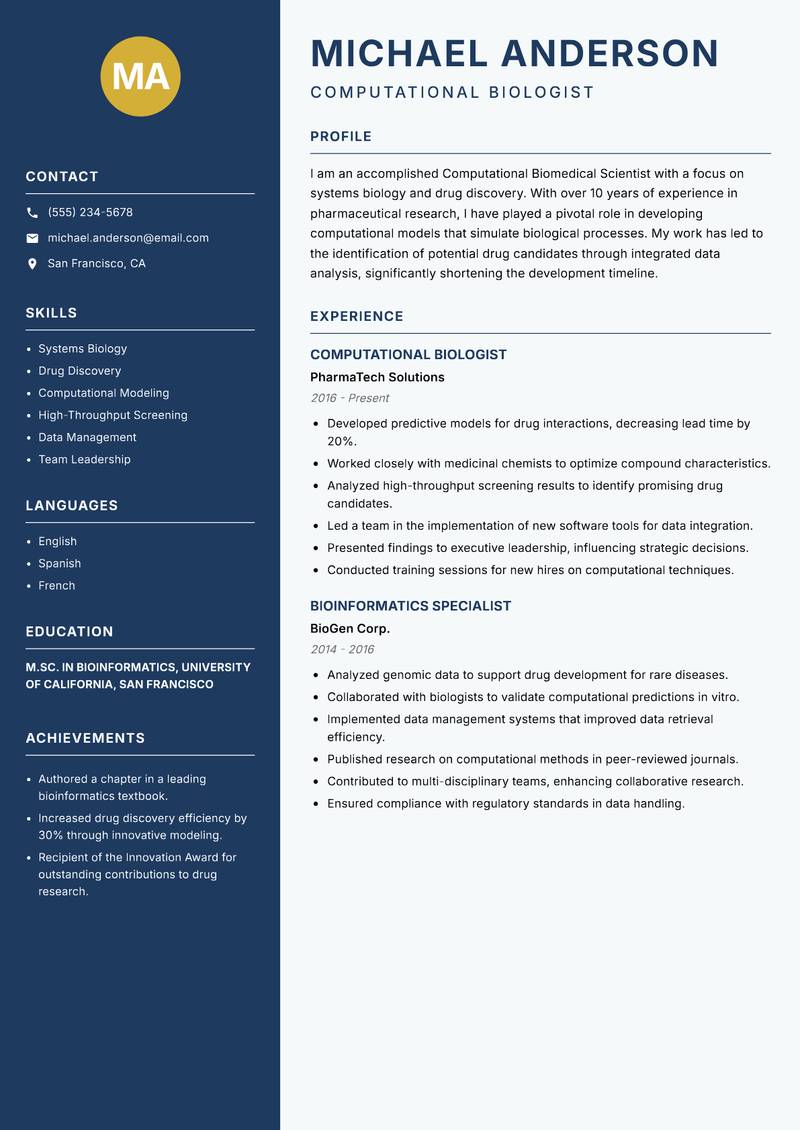
Classic Clean
Use Template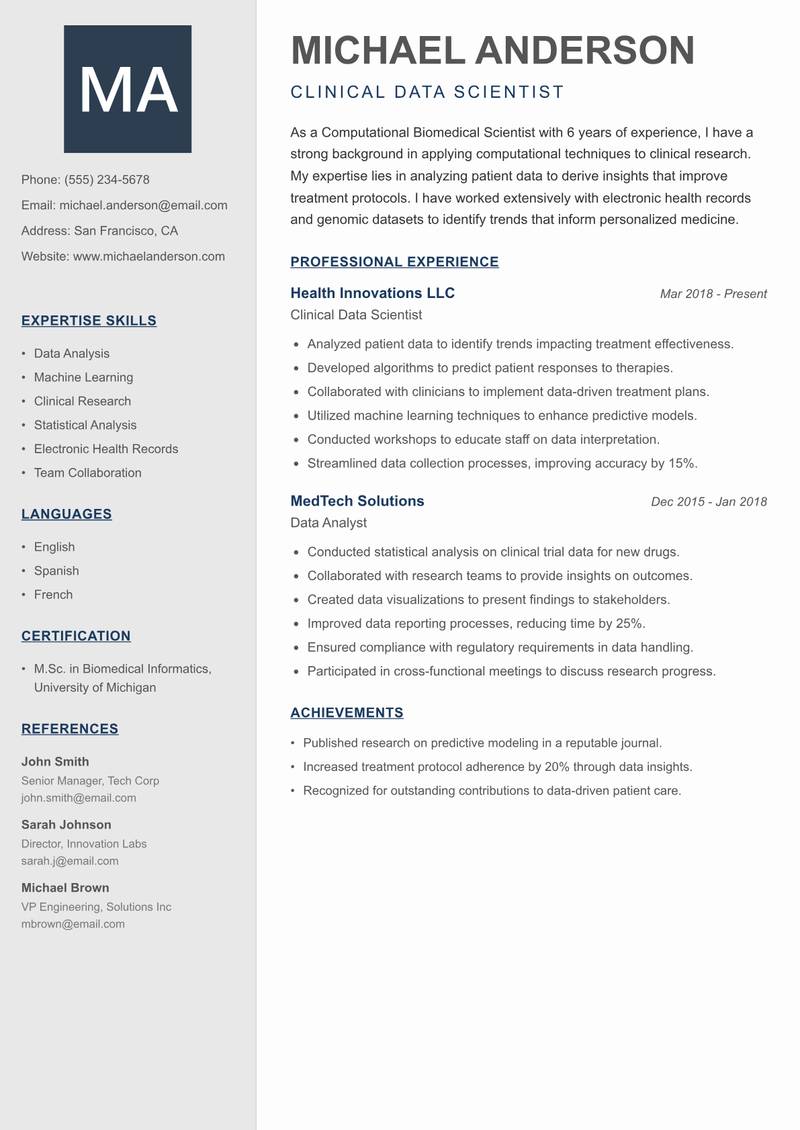
Creative Minimal
Use Template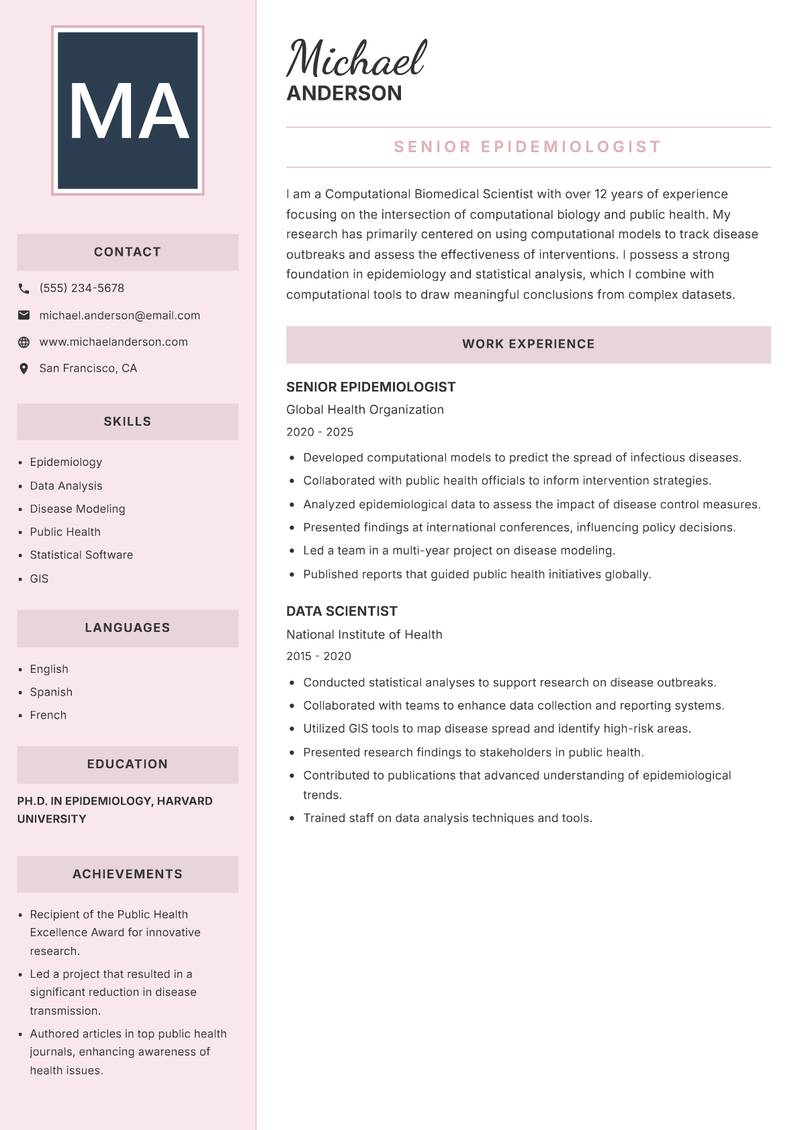
Executive
Use Template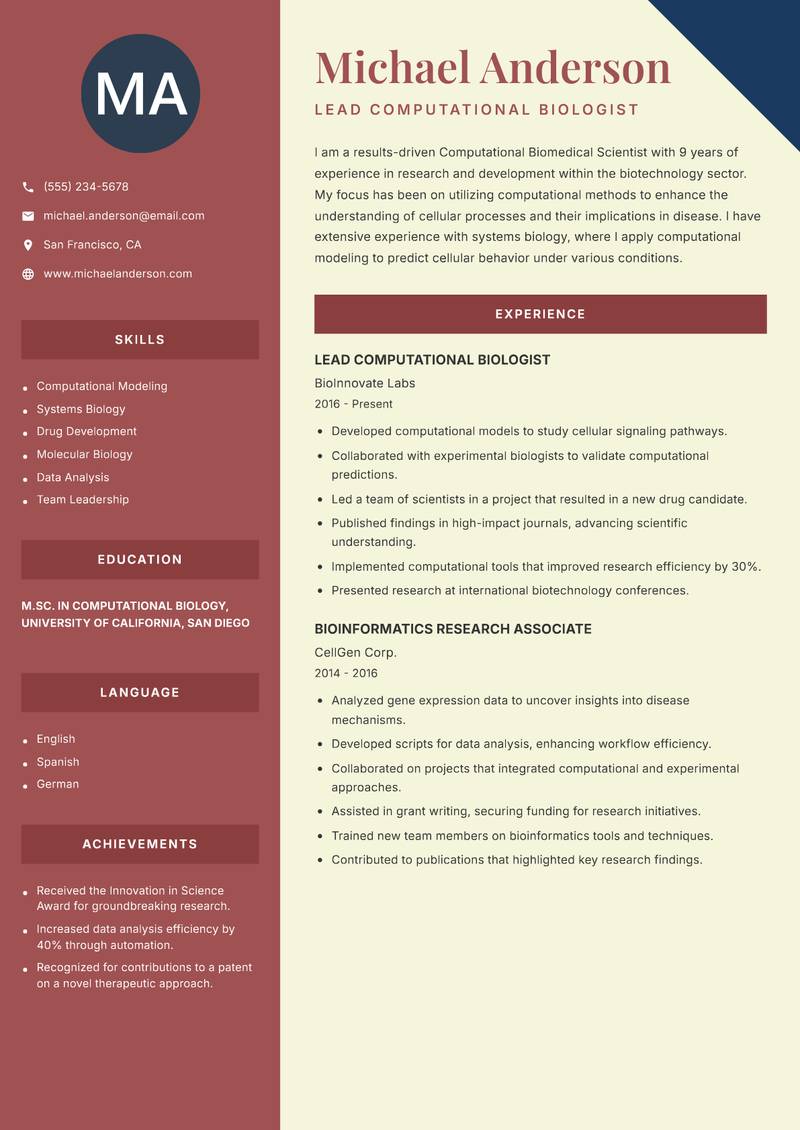
Two Column
Use Template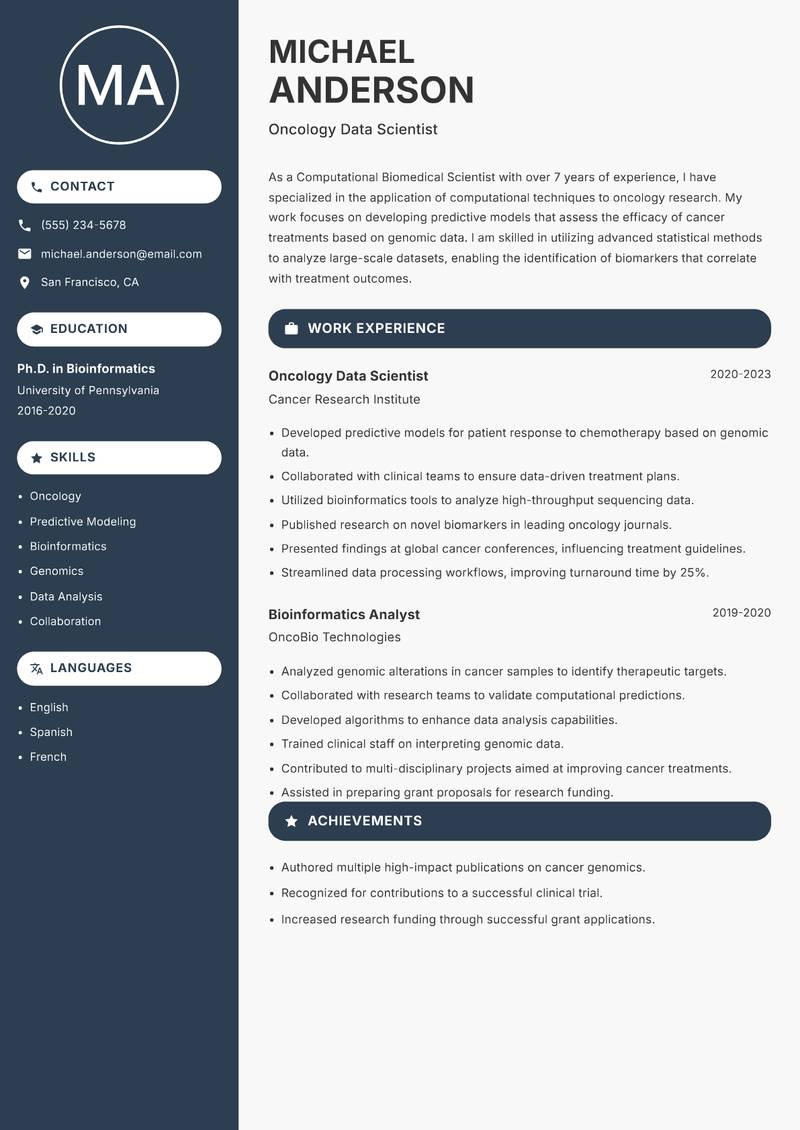
Compact
Use Template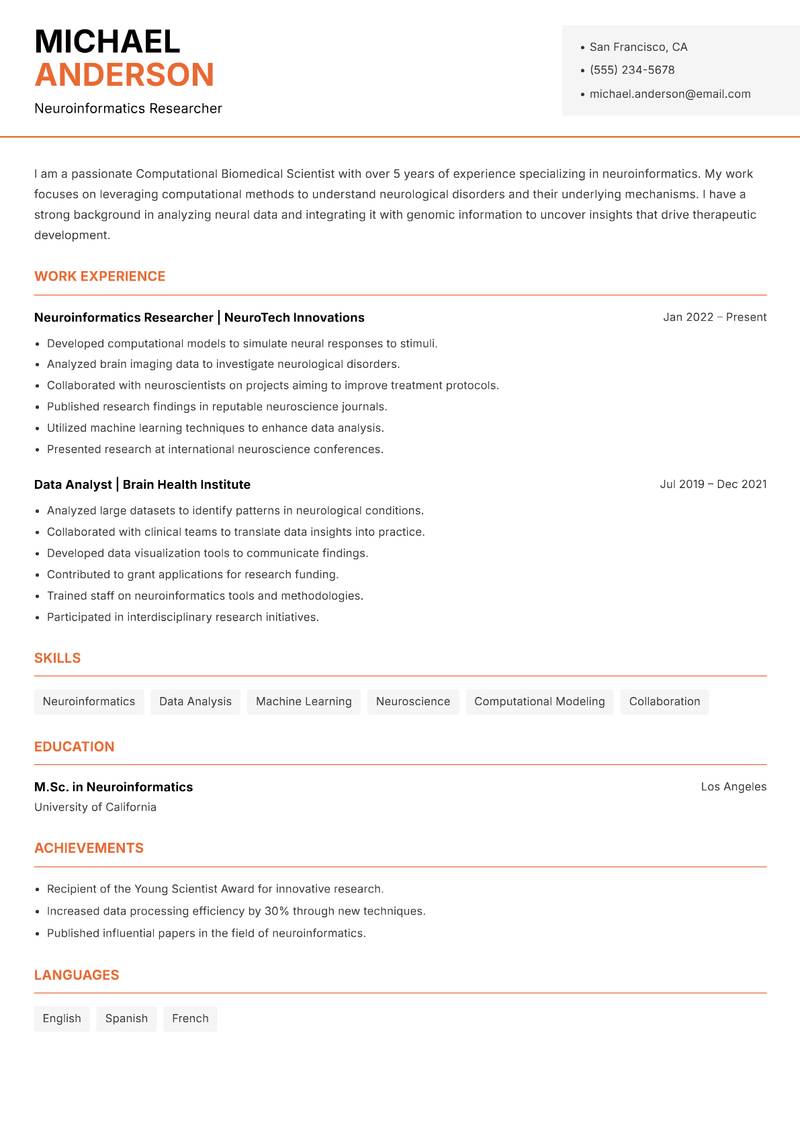
Modern Professional
Use Template7 Real Computational Biomedical Scientist Resume Examples
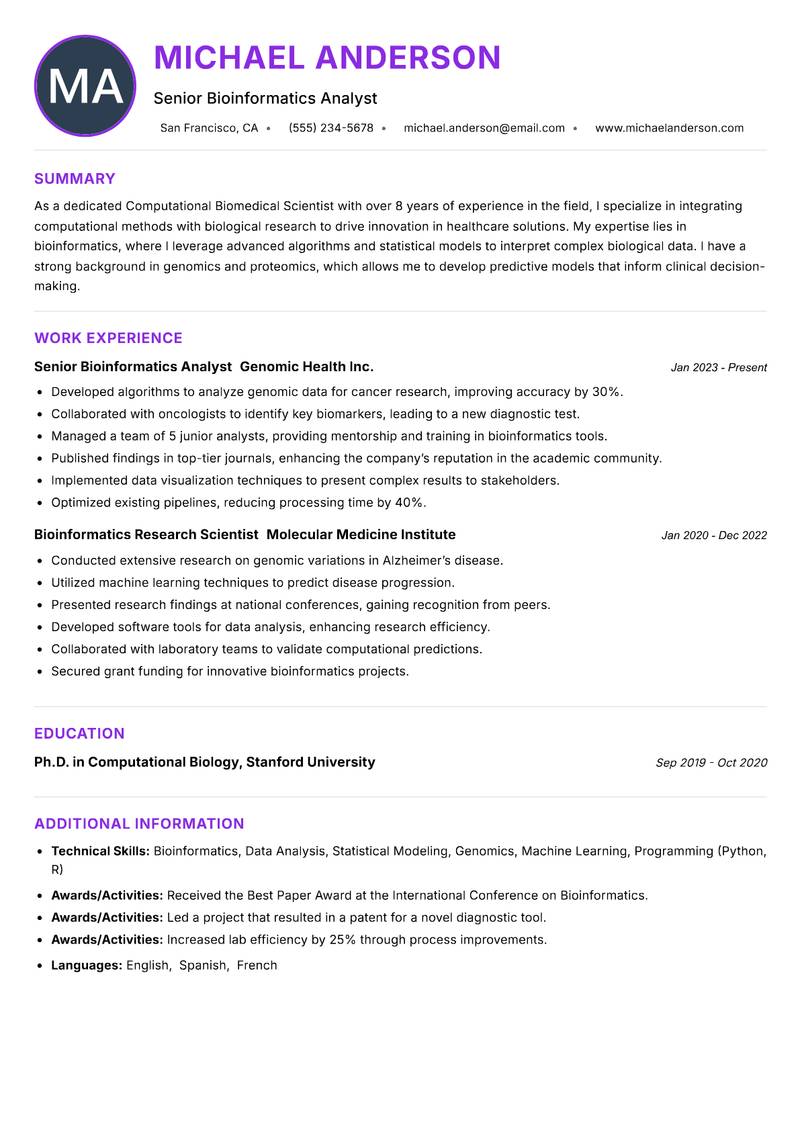
Senior Bioinformatics Analyst with 8+ Years Experience
Summary: As a dedicated Computational Biomedical Scientist with over 8 years of experience in the field, I specialize in integrating computational methods with biological research to drive innovation in healthcare solutions. My expertise lies in bioinformatics, where I leverage advanced algorithms and statistical models to interpret complex biological data. I have a strong background in genomics and proteomics, which allows me to develop predictive models that inform clinical decision-making. At my current role, I lead a team of scientists in a groundbreaking research project aimed at identifying novel biomarkers for early cancer detection. My ability to collaborate with multidisciplinary teams has resulted in several peer-reviewed publications and presentations at international conferences. I am passionate about applying my computational skills to bridge the gap between laboratory research and clinical application, ultimately improving patient outcomes. My goal is to contribute to transformative research that can significantly impact public health and disease management strategies.
Description:
- Developed algorithms to analyze genomic data for cancer research, improving accuracy by 30%.
- Collaborated with oncologists to identify key biomarkers, leading to a new diagnostic test.
- Managed a team of 5 junior analysts, providing mentorship and training in bioinformatics tools.
- Published findings in top-tier journals, enhancing the company’s reputation in the academic community.
- Implemented data visualization techniques to present complex results to stakeholders.
- Optimized existing pipelines, reducing processing time by 40%.
🏆 Key Achievements
Computational Biologist with 10+ Years Experience
Summary: I am an accomplished Computational Biomedical Scientist with a focus on systems biology and drug discovery. With over 10 years of experience in pharmaceutical research, I have played a pivotal role in developing computational models that simulate biological processes. My work has led to the identification of potential drug candidates through integrated data analysis, significantly shortening the development timeline. I am experienced in utilizing high-throughput screening data combined with bioinformatics tools to analyze large datasets for actionable insights. My strong communication skills enable me to effectively collaborate with cross-functional teams, ensuring that computational findings translate into practical applications. I am committed to advancing the field of computational biology through innovative research methodologies and continuous learning. I am particularly passionate about tackling complex health issues through data-driven approaches and contributing to the discovery of new therapeutics.
Description:
- Developed predictive models for drug interactions, decreasing lead time by 20%.
- Worked closely with medicinal chemists to optimize compound characteristics.
- Analyzed high-throughput screening results to identify promising drug candidates.
- Led a team in the implementation of new software tools for data integration.
- Presented findings to executive leadership, influencing strategic decisions.
- Conducted training sessions for new hires on computational techniques.
🏆 Key Achievements
Clinical Data Scientist with 6+ Years Experience
Summary: As a Computational Biomedical Scientist with 6 years of experience, I have a strong background in applying computational techniques to clinical research. My expertise lies in analyzing patient data to derive insights that improve treatment protocols. I have worked extensively with electronic health records and genomic datasets to identify trends that inform personalized medicine. My analytical skills and attention to detail have enabled me to lead projects that integrate computational biology with clinical practice. My experience includes collaborating with healthcare providers to ensure that computational findings are translated into actionable clinical strategies. I am dedicated to using my skills to enhance patient care and drive innovation in therapeutic approaches. My goal is to bridge the gap between computational analysis and clinical application, making a tangible difference in patient outcomes.
Description:
- Analyzed patient data to identify trends impacting treatment effectiveness.
- Developed algorithms to predict patient responses to therapies.
- Collaborated with clinicians to implement data-driven treatment plans.
- Utilized machine learning techniques to enhance predictive models.
- Conducted workshops to educate staff on data interpretation.
- Streamlined data collection processes, improving accuracy by 15%.
🏆 Key Achievements
Senior Epidemiologist with 12+ Years Experience
Summary: I am a Computational Biomedical Scientist with over 12 years of experience focusing on the intersection of computational biology and public health. My research has primarily centered on using computational models to track disease outbreaks and assess the effectiveness of interventions. I possess a strong foundation in epidemiology and statistical analysis, which I combine with computational tools to draw meaningful conclusions from complex datasets. My work has significantly contributed to understanding the dynamics of infectious diseases and informing public health policies. I have collaborated with government agencies and non-profit organizations to provide evidence-based recommendations that improve community health outcomes. My passion for public health drives my commitment to using computational methods to tackle global health challenges. I aspire to lead research initiatives that enhance preparedness and response to public health threats.
Description:
- Developed computational models to predict the spread of infectious diseases.
- Collaborated with public health officials to inform intervention strategies.
- Analyzed epidemiological data to assess the impact of disease control measures.
- Presented findings at international conferences, influencing policy decisions.
- Led a team in a multi-year project on disease modeling.
- Published reports that guided public health initiatives globally.
🏆 Key Achievements
Lead Computational Biologist with 9+ Years Experience
Summary: I am a results-driven Computational Biomedical Scientist with 9 years of experience in research and development within the biotechnology sector. My focus has been on utilizing computational methods to enhance the understanding of cellular processes and their implications in disease. I have extensive experience with systems biology, where I apply computational modeling to predict cellular behavior under various conditions. My technical skills are complemented by a strong foundation in molecular biology, which allows me to effectively communicate findings to both technical and non-technical audiences. I have successfully led projects that integrate experimental and computational data, resulting in several significant breakthroughs in drug development. I am passionate about driving innovation in biotechnology and committed to advancing scientific knowledge through rigorous research. My goal is to continue contributing to impactful research that leads to the development of new therapeutic strategies.
Description:
- Developed computational models to study cellular signaling pathways.
- Collaborated with experimental biologists to validate computational predictions.
- Led a team of scientists in a project that resulted in a new drug candidate.
- Published findings in high-impact journals, advancing scientific understanding.
- Implemented computational tools that improved research efficiency by 30%.
- Presented research at international biotechnology conferences.
🏆 Key Achievements
Oncology Data Scientist with 7+ Years Experience
Summary: As a Computational Biomedical Scientist with over 7 years of experience, I have specialized in the application of computational techniques to oncology research. My work focuses on developing predictive models that assess the efficacy of cancer treatments based on genomic data. I am skilled in utilizing advanced statistical methods to analyze large-scale datasets, enabling the identification of biomarkers that correlate with treatment outcomes. I have a proven track record of collaborating with oncologists and clinical researchers to translate computational insights into clinical practice. My passion lies in improving cancer therapies through data-driven approaches, and I am committed to advancing the field of personalized medicine. I aim to continue my research in cancer genomics, utilizing my computational skills to contribute to innovative treatment strategies and improve patient care.
Description:
- Developed predictive models for patient response to chemotherapy based on genomic data.
- Collaborated with clinical teams to ensure data-driven treatment plans.
- Utilized bioinformatics tools to analyze high-throughput sequencing data.
- Published research on novel biomarkers in leading oncology journals.
- Presented findings at global cancer conferences, influencing treatment guidelines.
- Streamlined data processing workflows, improving turnaround time by 25%.
🏆 Key Achievements
Neuroinformatics Researcher with 5+ Years Experience
Summary: I am a passionate Computational Biomedical Scientist with over 5 years of experience specializing in neuroinformatics. My work focuses on leveraging computational methods to understand neurological disorders and their underlying mechanisms. I have a strong background in analyzing neural data and integrating it with genomic information to uncover insights that drive therapeutic development. My expertise includes developing computational models that simulate neural activity, providing valuable data for understanding complex brain functions. I am dedicated to advancing the scientific community’s knowledge of neurological diseases through innovative research. My goal is to collaborate with other scientists and healthcare professionals to translate computational findings into effective treatments for patients with neurological conditions.
Description:
- Developed computational models to simulate neural responses to stimuli.
- Analyzed brain imaging data to investigate neurological disorders.
- Collaborated with neuroscientists on projects aiming to improve treatment protocols.
- Published research findings in reputable neuroscience journals.
- Utilized machine learning techniques to enhance data analysis.
- Presented research at international neuroscience conferences.
🏆 Key Achievements
Key Skills for Computational Biomedical Scientist
ATS Optimization Tips
Increase your chances of getting hired
Use Standard Headings
Use common section titles like Experience, Skills, etc.
Include Keywords
Add role-specific keywords from the job description
Keep it Simple
Avoid complex tables, images and graphics
Save in Right Format
Use PDF format unless otherwise specified
Computational Biomedical Scientist Salary Insights
Average Salary
$105,000
per year
Salary Range
$80,000 - $130,000
per year
Top Paying Cities
Los Angeles, Seattle, Houston, Dallas, Boston
Source: Glassdoor, Payscale, Indeed (Updated May 2025)
Everything you need to write a great Computational Biomedical Scientist resume
Strong Action Verbs to Use
Resume Writing Tips
- →Highlight specific software proficiency (e.g., R, Python, MATLAB) relevant to computational analysis.
- →Quantify your contributions to projects (e.g., improved processing speed by 30% or reduced error rates).
- →Include interdisciplinary collaboration experiences to showcase versatility and teamwork.
- →Describe any peer-reviewed publications as they bolster your credibility in the field.
- →Mention involvement in conferences to demonstrate proactive engagement in current research.
Common Mistakes to Avoid
- ✕Using overly technical jargon without explanations, which can alienate non-experts.
- ✕Neglecting to quantify results or achievements, making accomplishments seem less impactful.
- ✕Overlooking the importance of describing collaborations with interdisciplinary teams.
- ✕Not tailoring the resume to emphasize computational skills alongside biological insights.
- ✕Failing to include relevant certifications or continuous education efforts, showcasing professionalism.
ATS Keywords for Computational Biomedical Scientist
Computational Biomedical Scientist Career Path
Relevant Certifications
Career Progression
Junior Computational Biomedical Scientist
Assists in data analysis and algorithm development under the guidance of senior scientists, usually requires a Master’s degree.
Computational Biomedical Scientist
Conducts independent research projects and interprets biological data using computational tools and models, typically requires 3-5 years of experience.
Senior Computational Biomedical Scientist
Leads research initiatives and collaborates across interdisciplinary teams to develop predictive models, generally requires a PhD and significant experience.
Principal Investigator
Oversees large-scale research projects, secures funding, and establishes the direction of research in biomedical sciences, requires extensive experience and a proven publication record.
Director of Computational Biology
Manages teams of scientists and researchers, formulates strategic objectives, and engages with stakeholders to align research goals with clinical needs.
Computational Biomedical Scientist Interview Questions
Can you explain your experience with bioinformatics tools and how you've applied them in research projects? +
Highlight specific software or platforms you've used, such as R, Python, or Bioconductor, and tie it to real-world projects.
Describe a challenging dataset you've worked with. How did you approach the analysis? +
Discuss the complexities of the data, your analytical methods, and how you derived meaningful insights.
How do you ensure the accuracy and reproducibility of your computational models? +
Emphasize best practices in coding, version control, and validation steps.
Can you detail a time where your computational work led to a significant finding in a biological study? +
Share specific outcomes and how they impacted further research or understanding.
What steps do you take to stay updated with the latest research and technologies in the field? +
Mention journals, conferences, or online platforms that you follow.
How do you collaborate with non-computational scientists? +
Illustrate your communication strategies and teamwork experiences.
What ethical considerations do you factor in when handling biological data? +
Discuss data privacy, consent, and ethical compliance in your responses.
How have you contributed to the publication of research findings derived from your computational analysis? +
Describe your role in writing papers and the impact of your contributions.
About the Computational Biomedical Scientist Role
Leveraging advanced computational techniques, a Computational Biomedical Scientist translates complex biological data into actionable insights for medical research. Engaging with high-throughput sequencing data and predictive modeling, they aim to elucidate disease mechanisms and treatment responses. The role involves collaborating closely with biologists and clinicians, thereby bridging the gap between computational analysis and healthcare applications, to inform clinical decision-making processes.
Frequently Asked Questions
What skills are essential for a Computational Biomedical Scientist? +
Key skills include proficiency in programming (e.g., Python, R), statistical analysis, machine learning, and strong communication skills to convey complex concepts.
What industries employ Computational Biomedical Scientists? +
They commonly work in academic institutions, pharmaceutical companies, biotech firms, and research institutes.
Is a PhD necessary for a Computational Biomedical Scientist career? +
While a PhD is beneficial and often preferred for advanced roles, positions at various levels can be accessible with a Master's degree in relevant fields.
How does this role impact healthcare? +
By deriving insights from biological data, these scientists contribute to the understanding of disease mechanisms, ultimately guiding therapeutic developments.
What kind of projects can a Computational Biomedical Scientist expect to work on? +
Projects often involve genomic data analysis, developing predictive models for outcomes in clinical trials, or studying the efficacy of treatment protocols.
More Resume Examples You Might Like
Related Career Paths
Other roles candidates for Computational Biomedical Scientist positions often also consider.
Will this Computational Biomedical Scientist resume pass the ATS scan?
Upload it and get an instant AI-scored compatibility check with specific fixes.
Check My Resume →
Pair it with a matching cover letter
AI drafts a first version from your job title and strengths — edit it live, then download the PDF.
Write My Cover Letter →
Written by Nohaya Career Team
Reviewed by HR Professionals · Updated May 2025
Ready to Build Your Perfect Resume?
Choose from 1000+ professional templates and land your dream job.
Create My Resume Now