Build an ATS-Friendly
Biomedical Imaging Scientist Resume
That Gets Interviews
Biomedical Imaging Scientists develop cutting-edge imaging solutions to enhance diagnostic methods in healthcare. They work with advanced technologies like MRI and CT scanners, refining protocols to ensure optimal image quality while complying with safety standards. Their role often involves data analysis,…
Biomedical Imaging Scientist Resume Templates
Modern Professional
Use Template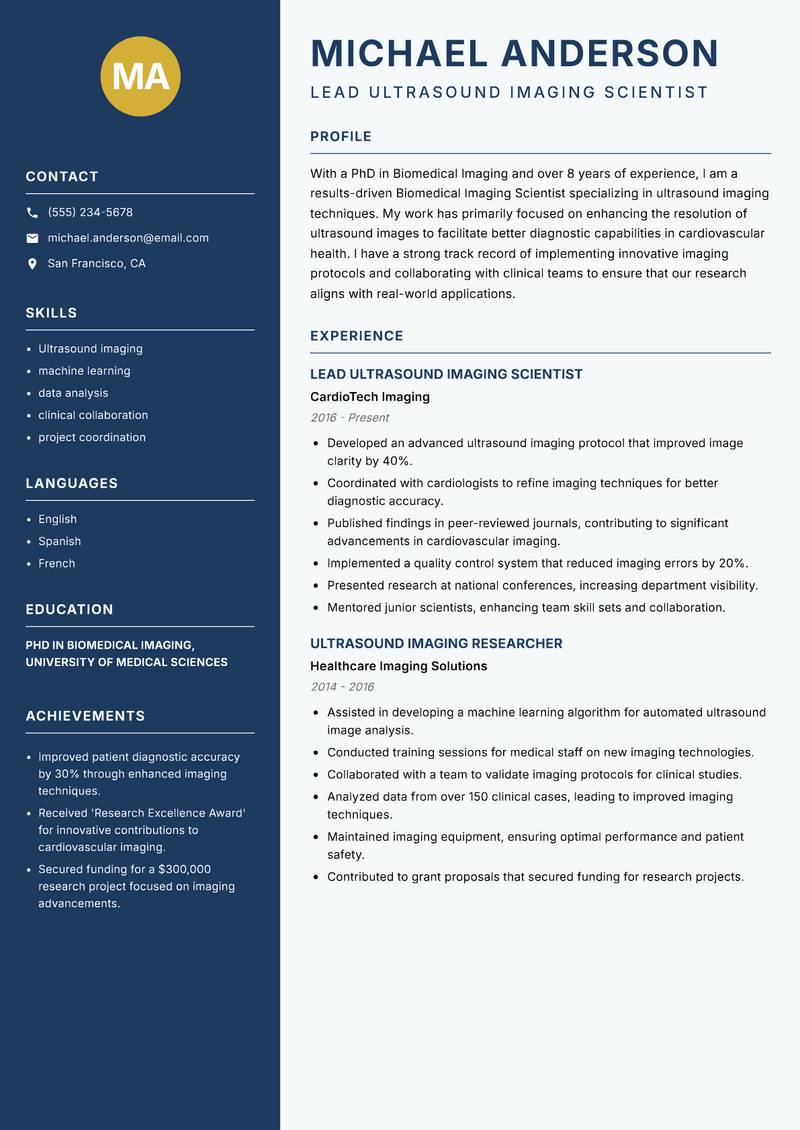
Classic Clean
Use Template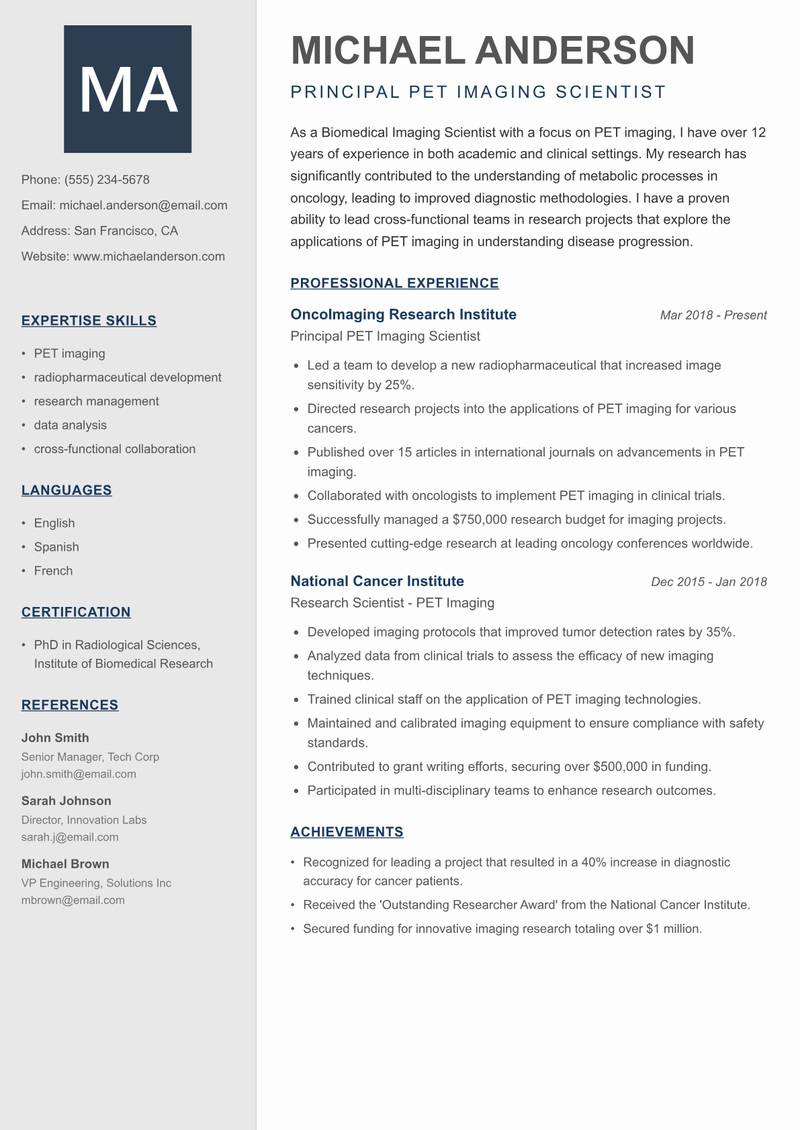
Creative Minimal
Use Template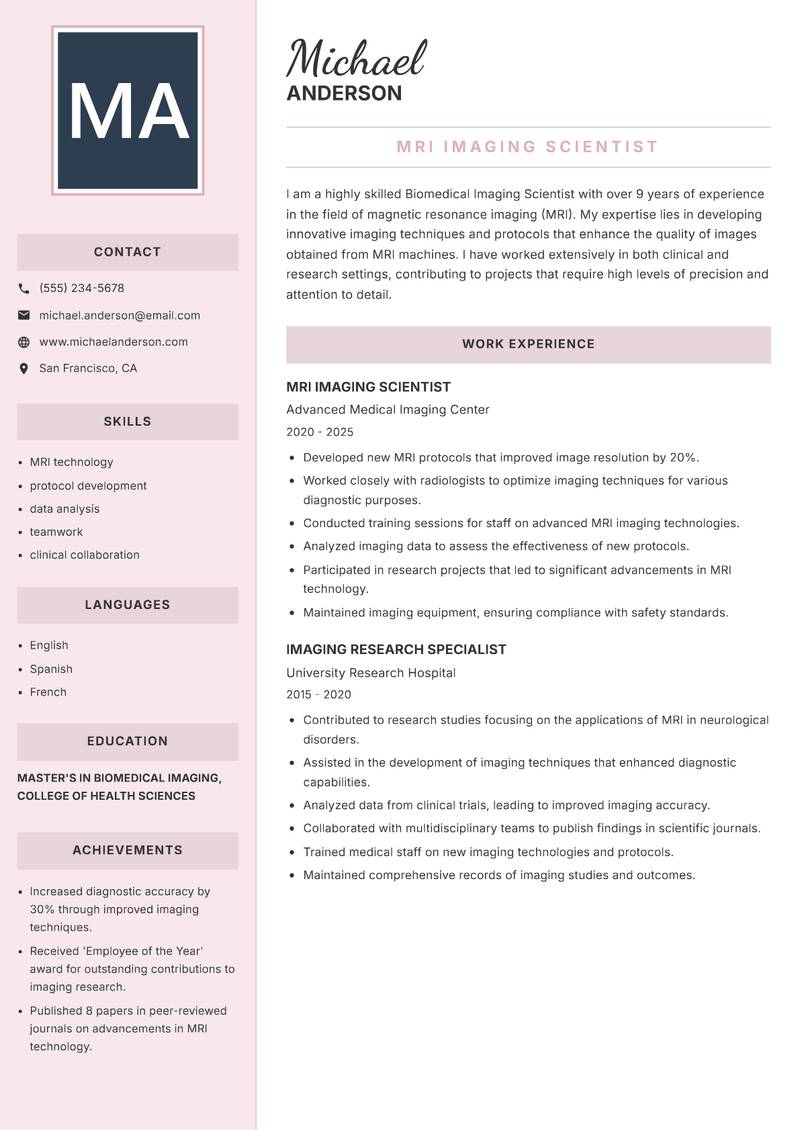
Executive
Use Template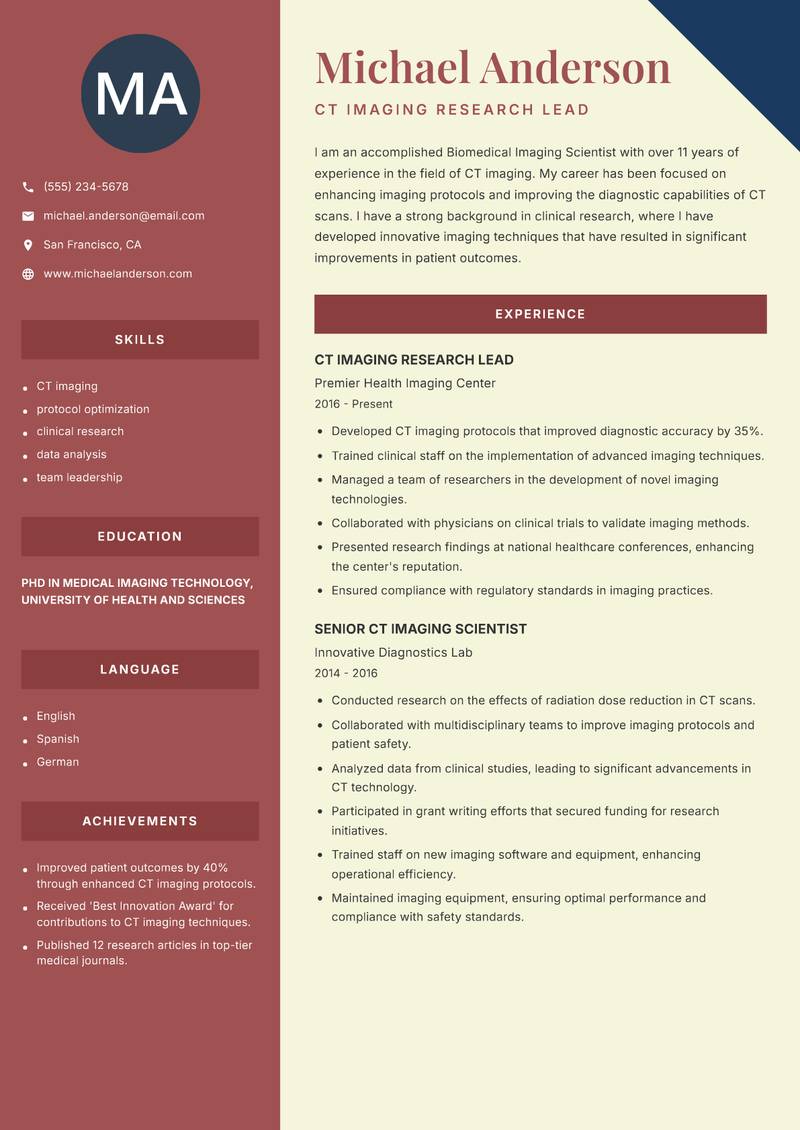
Two Column
Use Template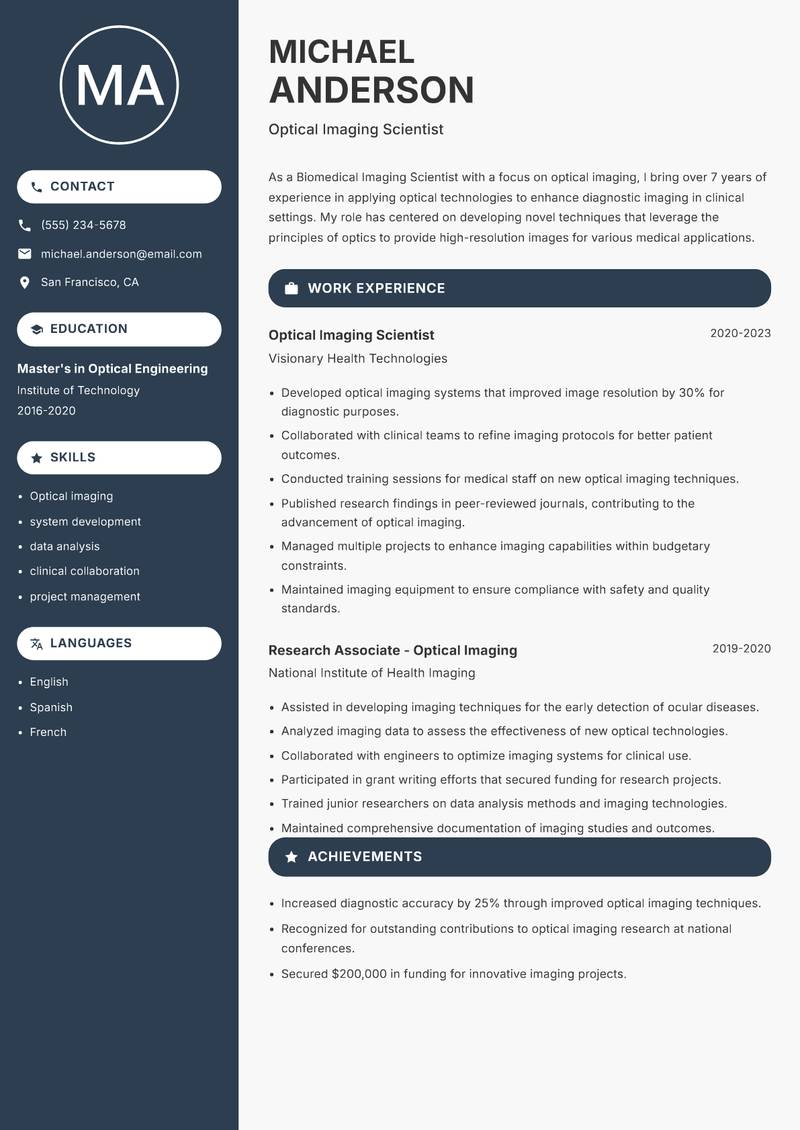
Compact
Use Template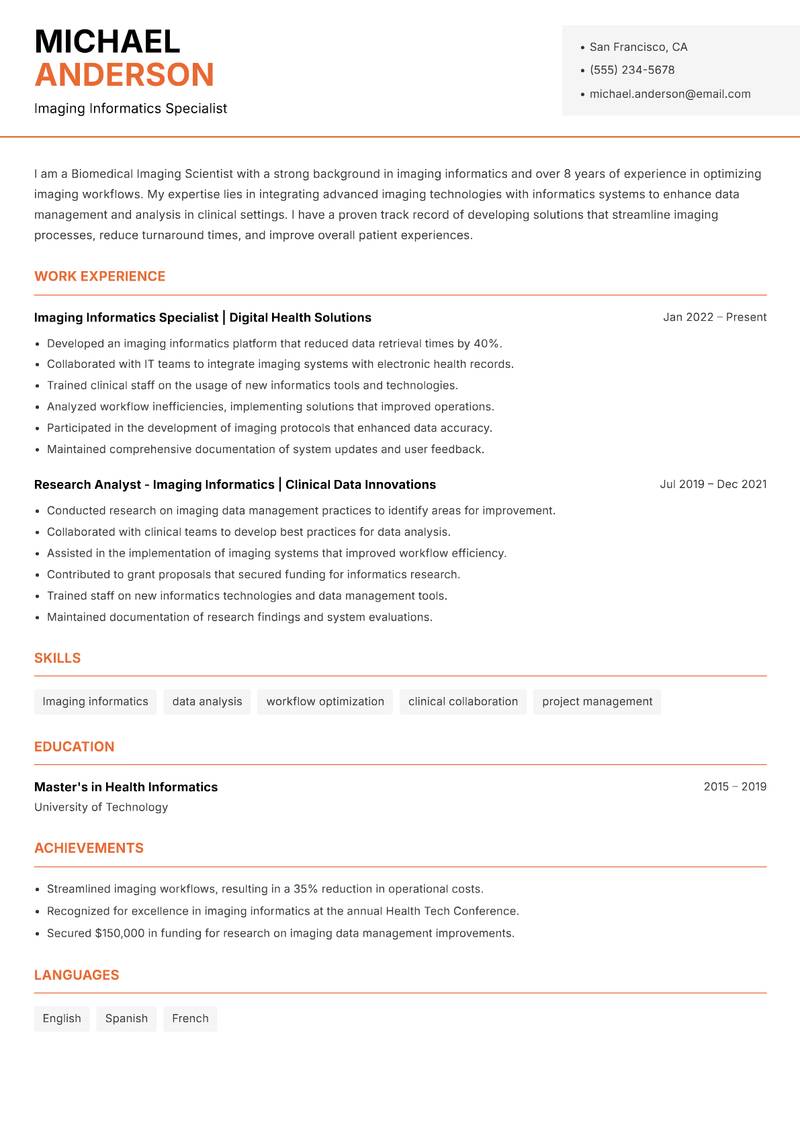
Modern Professional
Use Template7 Real Biomedical Imaging Scientist Resume Examples
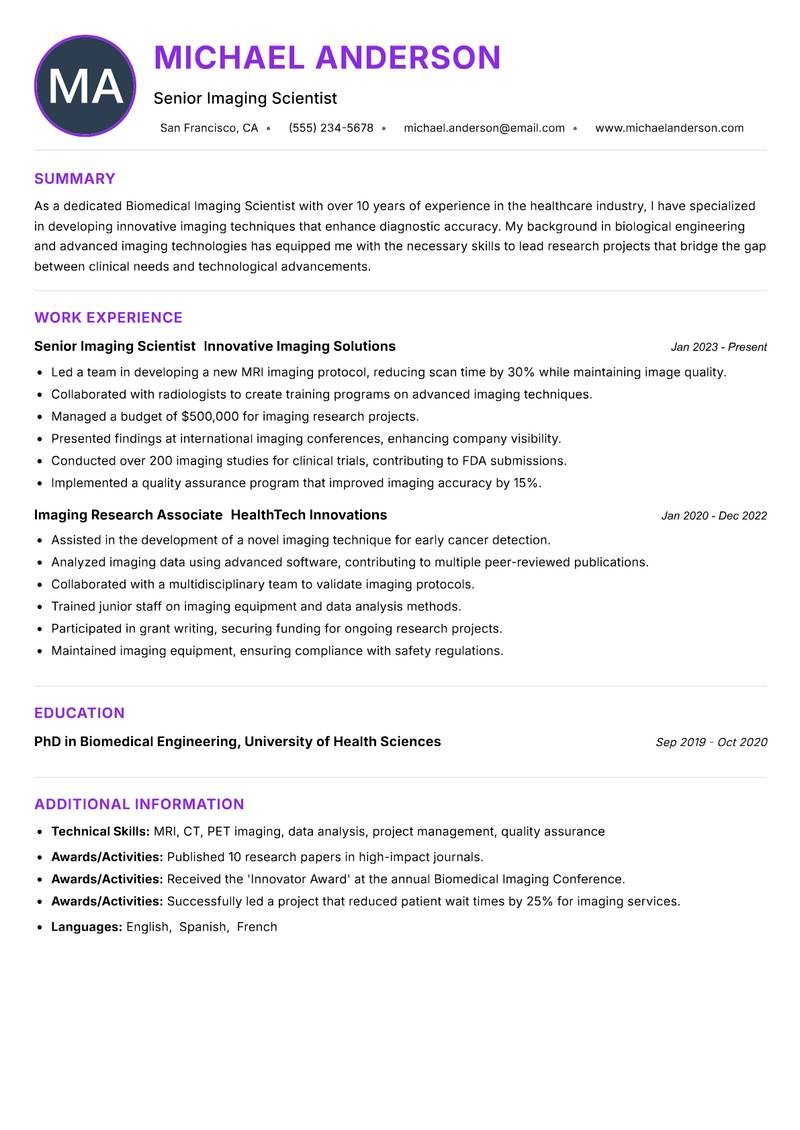
Senior Imaging Scientist with 10+ Years Experience
Summary: As a dedicated Biomedical Imaging Scientist with over 10 years of experience in the healthcare industry, I have specialized in developing innovative imaging techniques that enhance diagnostic accuracy. My background in biological engineering and advanced imaging technologies has equipped me with the necessary skills to lead research projects that bridge the gap between clinical needs and technological advancements. I have collaborated with multidisciplinary teams to create imaging protocols that reduce patient discomfort while maximizing data quality. My expertise in MRI, CT, and PET imaging has allowed me to contribute significantly to clinical trials and research endeavors, resulting in published works in reputable journals. I am passionate about improving patient outcomes through cutting-edge imaging solutions and thrive in dynamic, research-focused environments where I can apply my knowledge and leadership skills to drive impactful results.
Description:
- Led a team in developing a new MRI imaging protocol, reducing scan time by 30% while maintaining image quality.
- Collaborated with radiologists to create training programs on advanced imaging techniques.
- Managed a budget of $500,000 for imaging research projects.
- Presented findings at international imaging conferences, enhancing company visibility.
- Conducted over 200 imaging studies for clinical trials, contributing to FDA submissions.
- Implemented a quality assurance program that improved imaging accuracy by 15%.
🏆 Key Achievements
Lead Ultrasound Imaging Scientist with 8+ Years Experience
Summary: With a PhD in Biomedical Imaging and over 8 years of experience, I am a results-driven Biomedical Imaging Scientist specializing in ultrasound imaging techniques. My work has primarily focused on enhancing the resolution of ultrasound images to facilitate better diagnostic capabilities in cardiovascular health. I have a strong track record of implementing innovative imaging protocols and collaborating with clinical teams to ensure that our research aligns with real-world applications. My skills in machine learning have enabled me to develop algorithms that improve image processing efficiency. I have a passion for mentoring emerging scientists and fostering a collaborative work environment, which has proven to enhance team productivity and innovation in imaging technology. I am committed to continuous learning and staying abreast of the latest developments in the field to ultimately improve patient care.
Description:
- Developed an advanced ultrasound imaging protocol that improved image clarity by 40%.
- Coordinated with cardiologists to refine imaging techniques for better diagnostic accuracy.
- Published findings in peer-reviewed journals, contributing to significant advancements in cardiovascular imaging.
- Implemented a quality control system that reduced imaging errors by 20%.
- Presented research at national conferences, increasing department visibility.
- Mentored junior scientists, enhancing team skill sets and collaboration.
🏆 Key Achievements
Principal PET Imaging Scientist with 12+ Years Experience
Summary: As a Biomedical Imaging Scientist with a focus on PET imaging, I have over 12 years of experience in both academic and clinical settings. My research has significantly contributed to the understanding of metabolic processes in oncology, leading to improved diagnostic methodologies. I have a proven ability to lead cross-functional teams in research projects that explore the applications of PET imaging in understanding disease progression. My expertise in radiopharmaceutical development has also played a key role in enhancing image sensitivity and specificity. I excel in high-pressure environments and thrive on challenges that require innovative solutions. My goal is to leverage my expertise to advance imaging technologies that ultimately improve patient outcomes and support ongoing research in the biomedical field.
Description:
- Led a team to develop a new radiopharmaceutical that increased image sensitivity by 25%.
- Directed research projects into the applications of PET imaging for various cancers.
- Published over 15 articles in international journals on advancements in PET imaging.
- Collaborated with oncologists to implement PET imaging in clinical trials.
- Successfully managed a $750,000 research budget for imaging projects.
- Presented cutting-edge research at leading oncology conferences worldwide.
🏆 Key Achievements
MRI Imaging Scientist with 9+ Years Experience
Summary: I am a highly skilled Biomedical Imaging Scientist with over 9 years of experience in the field of magnetic resonance imaging (MRI). My expertise lies in developing innovative imaging techniques and protocols that enhance the quality of images obtained from MRI machines. I have worked extensively in both clinical and research settings, contributing to projects that require high levels of precision and attention to detail. My strong analytical skills enable me to interpret complex data and provide insights that are crucial for patient diagnosis and treatment planning. I am adept at collaborating with radiologists and other healthcare professionals to implement best practices in imaging. I am committed to continuous professional development and actively seek opportunities to expand my knowledge in the rapidly evolving field of biomedical imaging.
Description:
- Developed new MRI protocols that improved image resolution by 20%.
- Worked closely with radiologists to optimize imaging techniques for various diagnostic purposes.
- Conducted training sessions for staff on advanced MRI imaging technologies.
- Analyzed imaging data to assess the effectiveness of new protocols.
- Participated in research projects that led to significant advancements in MRI technology.
- Maintained imaging equipment, ensuring compliance with safety standards.
🏆 Key Achievements
CT Imaging Research Lead with 11+ Years Experience
Summary: I am an accomplished Biomedical Imaging Scientist with over 11 years of experience in the field of CT imaging. My career has been focused on enhancing imaging protocols and improving the diagnostic capabilities of CT scans. I have a strong background in clinical research, where I have developed innovative imaging techniques that have resulted in significant improvements in patient outcomes. I am highly skilled in utilizing advanced imaging software and tools, and I have a proven track record of collaborating with healthcare professionals to implement effective imaging strategies. I am passionate about leveraging technology to advance medical imaging and contribute to the ongoing improvement of patient care standards. My ability to analyze complex data and identify trends has been instrumental in developing solutions that address the needs of the clinical community.
Description:
- Developed CT imaging protocols that improved diagnostic accuracy by 35%.
- Trained clinical staff on the implementation of advanced imaging techniques.
- Managed a team of researchers in the development of novel imaging technologies.
- Collaborated with physicians on clinical trials to validate imaging methods.
- Presented research findings at national healthcare conferences, enhancing the center's reputation.
- Ensured compliance with regulatory standards in imaging practices.
🏆 Key Achievements
Optical Imaging Scientist with 7+ Years Experience
Summary: As a Biomedical Imaging Scientist with a focus on optical imaging, I bring over 7 years of experience in applying optical technologies to enhance diagnostic imaging in clinical settings. My role has centered on developing novel techniques that leverage the principles of optics to provide high-resolution images for various medical applications. I have collaborated closely with engineers and clinicians to design, test, and implement imaging systems that improve patient care and streamline diagnostic processes. My proficiency in optical imaging systems and data analysis has allowed me to contribute to innovative research projects that aim to advance the field. I am dedicated to the continuous improvement of imaging technologies and passionate about translating research into practical solutions that benefit patients and healthcare providers alike.
Description:
- Developed optical imaging systems that improved image resolution by 30% for diagnostic purposes.
- Collaborated with clinical teams to refine imaging protocols for better patient outcomes.
- Conducted training sessions for medical staff on new optical imaging techniques.
- Published research findings in peer-reviewed journals, contributing to the advancement of optical imaging.
- Managed multiple projects to enhance imaging capabilities within budgetary constraints.
- Maintained imaging equipment to ensure compliance with safety and quality standards.
🏆 Key Achievements
Imaging Informatics Specialist with 8+ Years Experience
Summary: I am a Biomedical Imaging Scientist with a strong background in imaging informatics and over 8 years of experience in optimizing imaging workflows. My expertise lies in integrating advanced imaging technologies with informatics systems to enhance data management and analysis in clinical settings. I have a proven track record of developing solutions that streamline imaging processes, reduce turnaround times, and improve overall patient experiences. My collaborative approach allows me to work effectively with radiologists, IT professionals, and healthcare administrators to implement efficient imaging systems. I am passionate about leveraging data analytics to drive improvements in imaging practices and patient care. My goal is to continue advancing the field of imaging informatics by developing innovative solutions that meet the evolving needs of healthcare providers.
Description:
- Developed an imaging informatics platform that reduced data retrieval times by 40%.
- Collaborated with IT teams to integrate imaging systems with electronic health records.
- Trained clinical staff on the usage of new informatics tools and technologies.
- Analyzed workflow inefficiencies, implementing solutions that improved operations.
- Participated in the development of imaging protocols that enhanced data accuracy.
- Maintained comprehensive documentation of system updates and user feedback.
🏆 Key Achievements
Key Skills for Biomedical Imaging Scientist
ATS Optimization Tips
Increase your chances of getting hired
Use Standard Headings
Use common section titles like Experience, Skills, etc.
Include Keywords
Add role-specific keywords from the job description
Keep it Simple
Avoid complex tables, images and graphics
Save in Right Format
Use PDF format unless otherwise specified
Biomedical Imaging Scientist Salary Insights
Average Salary
$95,000
per year
Salary Range
$75,000 - $115,000
per year
Top Paying Cities
Los Angeles, Seattle, Houston, Dallas, Boston
Source: Glassdoor, Payscale, Indeed (Updated May 2025)
Everything you need to write a great Biomedical Imaging Scientist resume
Strong Action Verbs to Use
Resume Writing Tips
- →Highlight specific imaging technologies you have experience with, such as PET or ultrasound, to align with potential employer needs.
- →Include quantitative results of your work, such as improvements in imaging accuracy or efficiency metrics.
- →Mention collaborations with healthcare providers to emphasize your ability to communicate complex information effectively.
- →Showcase any publications or presentations related to your research in biomedical imaging to establish credibility.
- →Customize your resume to reflect the keywords noted in the job description to enhance ATS compatibility.
Common Mistakes to Avoid
- ✕Using overly generic job descriptions that fail to specify particular imaging technologies or projects.
- ✕Neglecting to include quantifiable achievements that demonstrate the impact of your work.
- ✕Underestimating the importance of interdisciplinary collaboration in healthcare.
- ✕Focusing too much on technical skills without highlighting research experience related to patient outcomes.
- ✕Forgetting to detail your role in project management or leadership dynamics, especially in team settings.
ATS Keywords for Biomedical Imaging Scientist
Biomedical Imaging Scientist Career Path
Relevant Certifications
Career Progression
Junior Biomedical Imaging Scientist
Entry-level position focusing on supporting senior scientists in research projects, data collection, and preliminary analysis.
Biomedical Imaging Scientist
Responsible for conducting independent research, developing imaging techniques, and collaborating with medical professionals.
Senior Biomedical Imaging Scientist
Leads advanced imaging projects, mentors junior team members, and oversees clinical trials for new imaging technologies.
Principal Investigator
Heads research projects and secures funding, contributing to significant advancements in biomedical imaging methodologies and applications.
Director of Imaging Research
Manages the entire imaging department, directing strategic initiatives, project budgets, and inter-departmental collaborations.
Biomedical Imaging Scientist Interview Questions
Can you describe a recent project where you developed or improved an imaging protocol? +
Highlight your problem-solving skills and how you approached challenges.
What technologies do you specialize in for biomedical imaging? +
Be specific about the platforms and techniques you have used.
How do you ensure the accuracy of imaging analyses? +
Discuss your quality control processes and any relevant standards you follow.
Describe your experience collaborating with clinical staff. +
Provide examples of multidisciplinary teamwork and communication.
What role do you think emerging technologies (like AI) play in the future of biomedical imaging? +
Showcase your awareness of current trends and your foresight for the field.
How do you prioritize projects when faced with competing deadlines? +
Demonstrate your project management skills and logical decision-making.
What certifications do you hold related to biomedical imaging? +
Mention any relevant certifications clearly.
Explain a time you faced a significant challenge in a research setting. How did you overcome it? +
Focus on your resilience, flexibility, and innovative thinking.
About the Biomedical Imaging Scientist Role
Biomedical Imaging Scientists develop cutting-edge imaging solutions to enhance diagnostic methods in healthcare. They work with advanced technologies like MRI and CT scanners, refining protocols to ensure optimal image quality while complying with safety standards. Their role often involves data analysis, interpretation of imaging results, and collaboration with medical professionals to translate findings into clinical applications, ultimately improving patient outcomes.
Frequently Asked Questions
What kind of projects do Biomedical Imaging Scientists typically work on? +
They work on projects involving the development of new imaging techniques, enhancing existing ones, and conducting clinical trials to evaluate the effectiveness of imaging methods.
Is a PhD necessary to work as a Biomedical Imaging Scientist? +
While a PhD is often preferred, candidates with relevant experience and a master's degree may also qualify for certain positions.
How do Biomedical Imaging Scientists contribute to patient care? +
They improve imaging techniques and protocols, which directly enhance diagnostic accuracy and treatment decisions, thus affecting overall patient care.
What skills are most important for success in this role? +
Strong technical skills in imaging software, analytical abilities, project management, and effective communication are crucial.
Can you transition into biomedical imaging from another science field? +
Yes, many professionals from medical physics, radiology, or bioengineering make successful transitions into biomedical imaging with the right training.
What is the typical work environment for a Biomedical Imaging Scientist? +
Most work in research institutions, hospitals, or laboratories, often within multidisciplinary teams that include clinicians and engineers.
More Resume Examples You Might Like
Related Career Paths
Other roles candidates for Biomedical Imaging Scientist positions often also consider.
Will this Biomedical Imaging Scientist resume pass the ATS scan?
Upload it and get an instant AI-scored compatibility check with specific fixes.
Check My Resume →
Pair it with a matching cover letter
AI drafts a first version from your job title and strengths — edit it live, then download the PDF.
Write My Cover Letter →
Written by Nohaya Career Team
Reviewed by HR Professionals · Updated May 2025
Ready to Build Your Perfect Resume?
Choose from 1000+ professional templates and land your dream job.
Create My Resume Now