Build an ATS-Friendly
Wildlife Veterinarian Resume
That Gets Interviews
Addressing the unique medical needs of wildlife involves performing field surgeries, conducting species health assessments, and developing conservation strategies. Wildlife veterinarians often engage in habitat evaluation and environmental health studies to improve the sustainability of animal populations. Their work…
Wildlife Veterinarian Resume Templates
Modern Professional
Use Template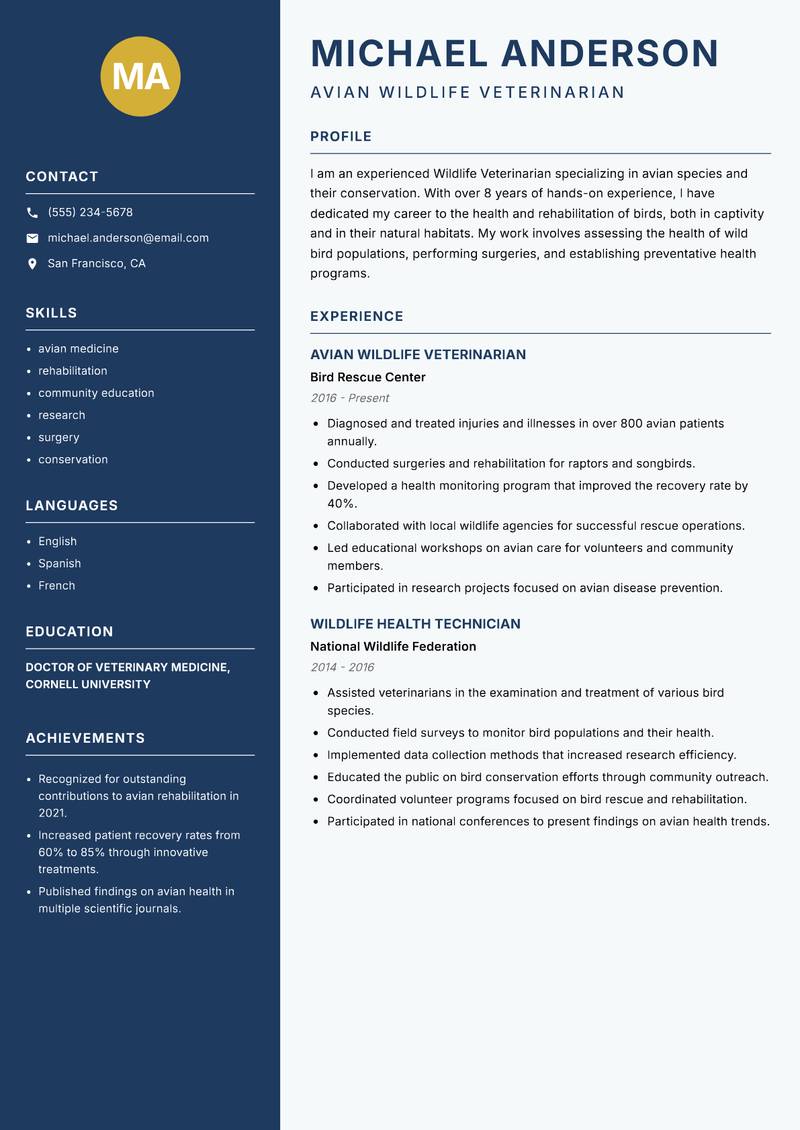
Classic Clean
Use Template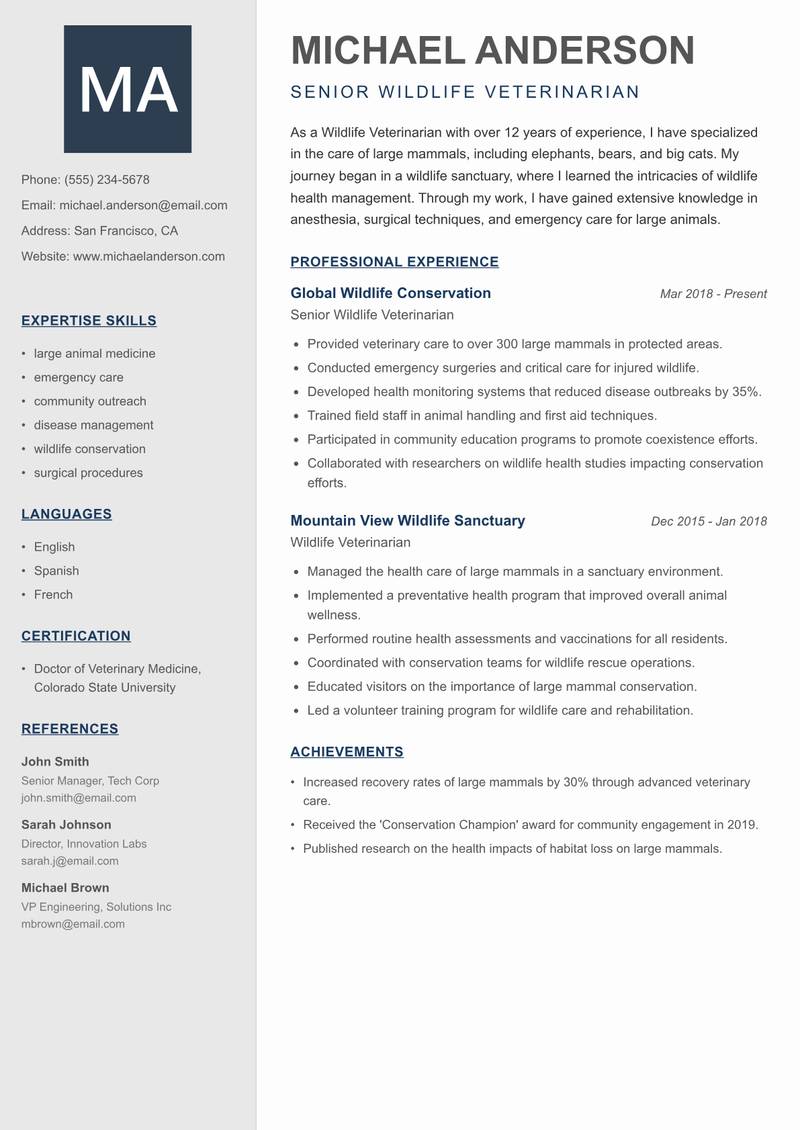
Creative Minimal
Use Template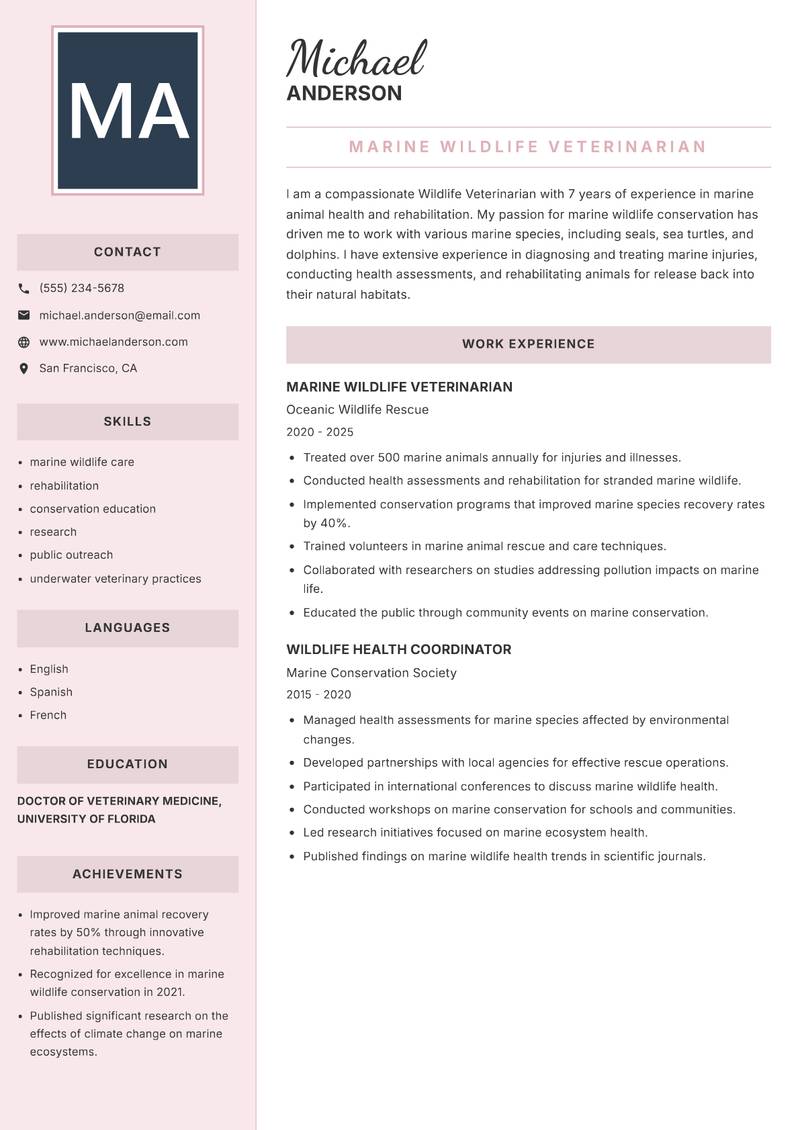
Executive
Use Template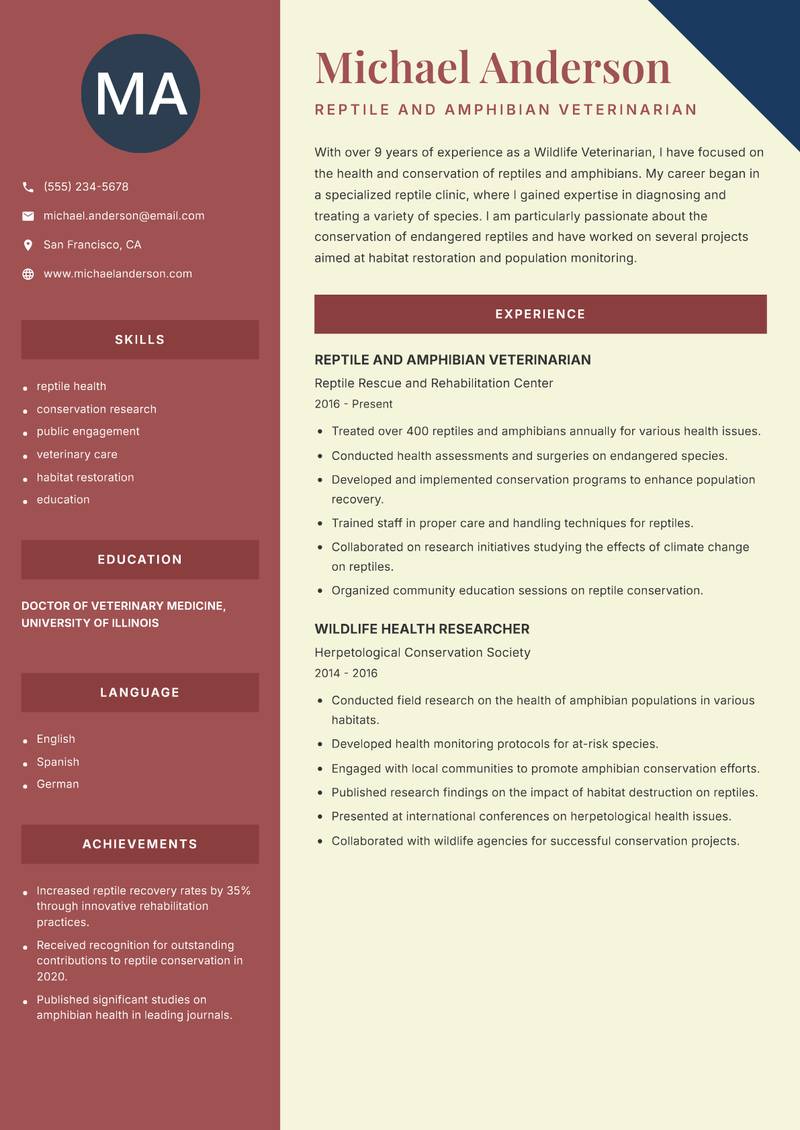
Two Column
Use Template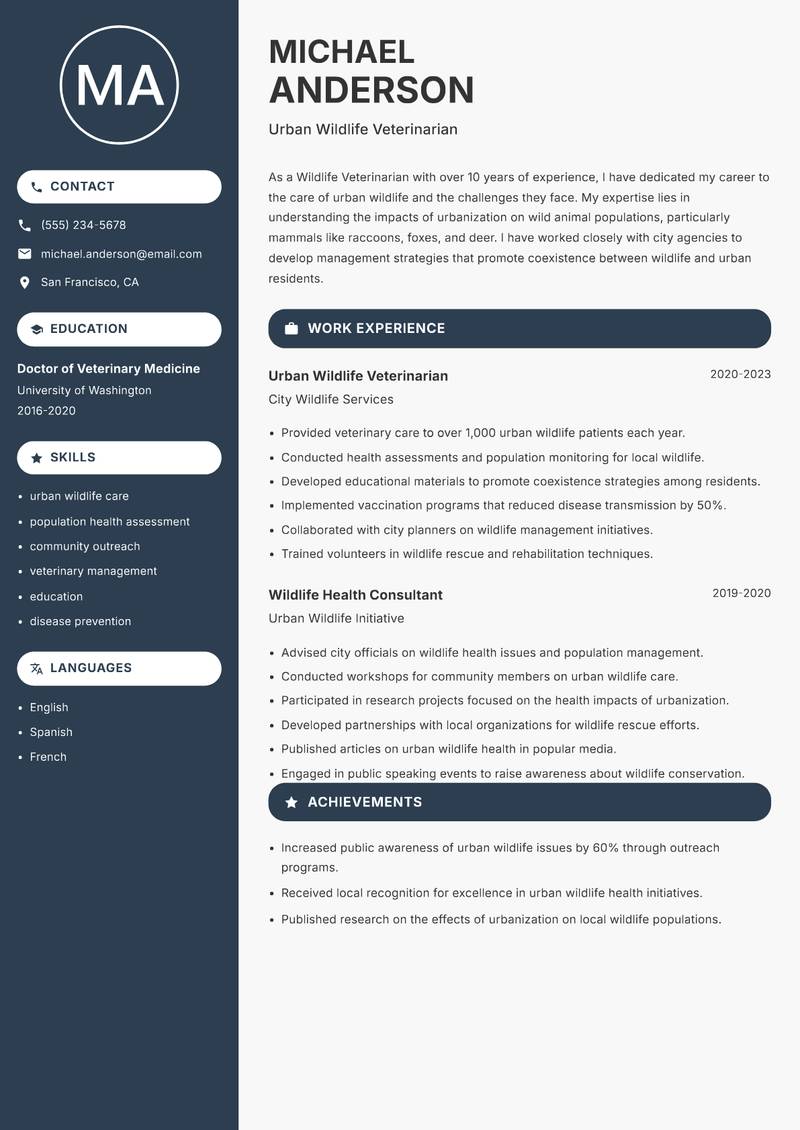
Compact
Use Template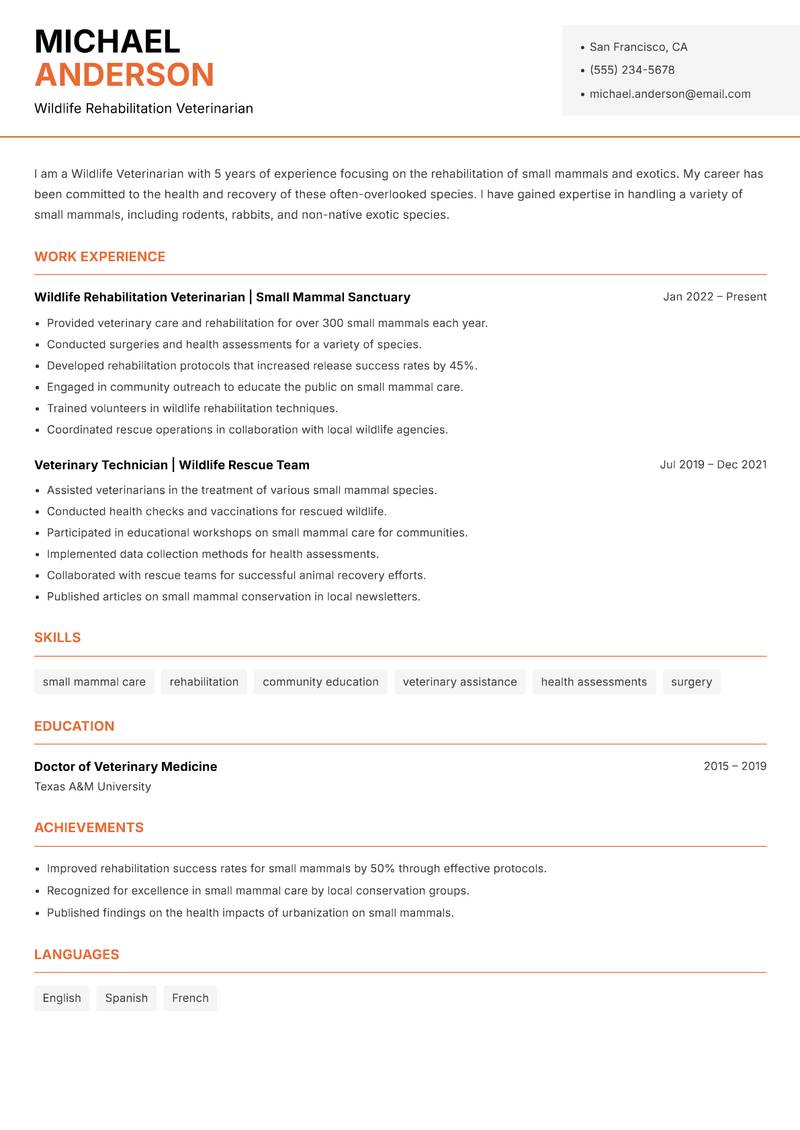
Modern Professional
Use Template7 Real Wildlife Veterinarian Resume Examples
Senior Wildlife Veterinarian with 11+ Years Experience
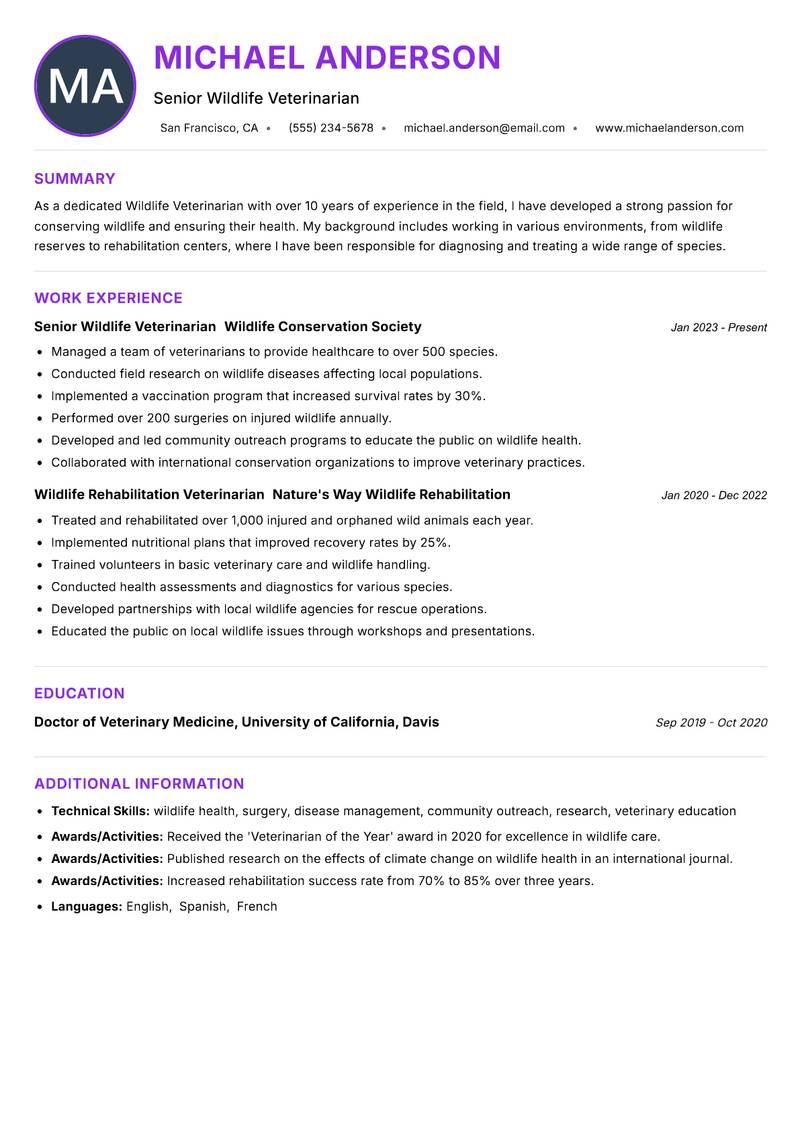
Summary: As a dedicated Wildlife Veterinarian with over 10 years of experience in the field, I have developed a strong passion for conserving wildlife and ensuring their health. My background includes working in various environments, from wildlife reserves to rehabilitation centers, where I have been responsible for diagnosing and treating a wide range of species. My expertise lies in the management of wildlife diseases, implementing vaccination programs, and conducting field surgeries. I have collaborated with conservation organizations to develop strategies that enhance the health and survival of endangered species. By utilizing cutting-edge veterinary practices and staying updated with the latest research, I strive to contribute to the sustainability of wildlife populations. Additionally, I have experience in educating the public about wildlife health issues and the importance of conservation efforts. My goal is to continue advocating for wildlife welfare and to make a significant impact in the field through my clinical skills and outreach initiatives.
Description:
- Managed a team of veterinarians to provide healthcare to over 500 species.
- Conducted field research on wildlife diseases affecting local populations.
- Implemented a vaccination program that increased survival rates by 30%.
- Performed over 200 surgeries on injured wildlife annually.
- Developed and led community outreach programs to educate the public on wildlife health.
- Collaborated with international conservation organizations to improve veterinary practices.
🏆 Key Achievements
Avian Wildlife Veterinarian with 9+ Years Experience
Summary: I am an experienced Wildlife Veterinarian specializing in avian species and their conservation. With over 8 years of hands-on experience, I have dedicated my career to the health and rehabilitation of birds, both in captivity and in their natural habitats. My work involves assessing the health of wild bird populations, performing surgeries, and establishing preventative health programs. I have also collaborated with environmental organizations to monitor and manage bird populations affected by habitat loss. My passion for avian medicine has led me to develop innovative treatment protocols that have significantly improved the recovery rates of injured birds. Furthermore, I actively engage in educational initiatives to raise awareness about the importance of bird conservation. My ultimate goal is to contribute to the sustainable management of avian species through veterinary care and community involvement.
Description:
- Diagnosed and treated injuries and illnesses in over 800 avian patients annually.
- Conducted surgeries and rehabilitation for raptors and songbirds.
- Developed a health monitoring program that improved the recovery rate by 40%.
- Collaborated with local wildlife agencies for successful rescue operations.
- Led educational workshops on avian care for volunteers and community members.
- Participated in research projects focused on avian disease prevention.
🏆 Key Achievements
Senior Wildlife Veterinarian with 12+ Years Experience
Summary: As a Wildlife Veterinarian with over 12 years of experience, I have specialized in the care of large mammals, including elephants, bears, and big cats. My journey began in a wildlife sanctuary, where I learned the intricacies of wildlife health management. Through my work, I have gained extensive knowledge in anesthesia, surgical techniques, and emergency care for large animals. I have collaborated with various conservation organizations to develop health monitoring systems that track disease outbreaks in wild populations. My commitment to wildlife conservation is evident in my participatory approach, working closely with local communities to reduce human-wildlife conflict. My goal is to ensure the health and sustainability of large mammal populations while promoting coexistence with humans through education and outreach programs.
Description:
- Provided veterinary care to over 300 large mammals in protected areas.
- Conducted emergency surgeries and critical care for injured wildlife.
- Developed health monitoring systems that reduced disease outbreaks by 35%.
- Trained field staff in animal handling and first aid techniques.
- Participated in community education programs to promote coexistence efforts.
- Collaborated with researchers on wildlife health studies impacting conservation efforts.
🏆 Key Achievements
Marine Wildlife Veterinarian with 7+ Years Experience
Summary: I am a compassionate Wildlife Veterinarian with 7 years of experience in marine animal health and rehabilitation. My passion for marine wildlife conservation has driven me to work with various marine species, including seals, sea turtles, and dolphins. I have extensive experience in diagnosing and treating marine injuries, conducting health assessments, and rehabilitating animals for release back into their natural habitats. Through my role, I have developed partnerships with local and international organizations to promote marine conservation efforts. I am skilled in underwater veterinary practices and have contributed to research on the effects of pollution and climate change on marine ecosystems. My goal is to enhance the well-being of marine wildlife while educating communities about the importance of ocean conservation.
Description:
- Treated over 500 marine animals annually for injuries and illnesses.
- Conducted health assessments and rehabilitation for stranded marine wildlife.
- Implemented conservation programs that improved marine species recovery rates by 40%.
- Trained volunteers in marine animal rescue and care techniques.
- Collaborated with researchers on studies addressing pollution impacts on marine life.
- Educated the public through community events on marine conservation.
🏆 Key Achievements
Reptile and Amphibian Veterinarian with 9+ Years Experience
Summary: With over 9 years of experience as a Wildlife Veterinarian, I have focused on the health and conservation of reptiles and amphibians. My career began in a specialized reptile clinic, where I gained expertise in diagnosing and treating a variety of species. I am particularly passionate about the conservation of endangered reptiles and have worked on several projects aimed at habitat restoration and population monitoring. My clinical skills are complemented by my research background, where I have led studies on the health impacts of environmental changes on reptile populations. Additionally, I actively engage in educational outreach programs to raise awareness about the importance of reptile conservation. My aim is to contribute to the preservation of reptile species through veterinary care and public education.
Description:
- Treated over 400 reptiles and amphibians annually for various health issues.
- Conducted health assessments and surgeries on endangered species.
- Developed and implemented conservation programs to enhance population recovery.
- Trained staff in proper care and handling techniques for reptiles.
- Collaborated on research initiatives studying the effects of climate change on reptiles.
- Organized community education sessions on reptile conservation.
🏆 Key Achievements
Urban Wildlife Veterinarian with 10+ Years Experience
Summary: As a Wildlife Veterinarian with over 10 years of experience, I have dedicated my career to the care of urban wildlife and the challenges they face. My expertise lies in understanding the impacts of urbanization on wild animal populations, particularly mammals like raccoons, foxes, and deer. I have worked closely with city agencies to develop management strategies that promote coexistence between wildlife and urban residents. My role includes diagnosing and treating injuries, conducting population health assessments, and implementing vaccination programs. I am also involved in educational campaigns aimed at raising awareness about urban wildlife issues and fostering community engagement. My goal is to ensure the health of urban wildlife while promoting a harmonious relationship with local communities.
Description:
- Provided veterinary care to over 1,000 urban wildlife patients each year.
- Conducted health assessments and population monitoring for local wildlife.
- Developed educational materials to promote coexistence strategies among residents.
- Implemented vaccination programs that reduced disease transmission by 50%.
- Collaborated with city planners on wildlife management initiatives.
- Trained volunteers in wildlife rescue and rehabilitation techniques.
🏆 Key Achievements
Wildlife Rehabilitation Veterinarian with 5+ Years Experience
Summary: I am a Wildlife Veterinarian with 5 years of experience focusing on the rehabilitation of small mammals and exotics. My career has been committed to the health and recovery of these often-overlooked species. I have gained expertise in handling a variety of small mammals, including rodents, rabbits, and non-native exotic species. My responsibilities include diagnosing health issues, performing surgeries, and implementing rehabilitation protocols to ensure successful releases back into the wild. I have collaborated with wildlife organizations to create and promote health education programs aimed at protecting these species. My goal is to improve the welfare of small mammals and exotics through dedicated veterinary care and community engagement.
Description:
- Provided veterinary care and rehabilitation for over 300 small mammals each year.
- Conducted surgeries and health assessments for a variety of species.
- Developed rehabilitation protocols that increased release success rates by 45%.
- Engaged in community outreach to educate the public on small mammal care.
- Trained volunteers in wildlife rehabilitation techniques.
- Coordinated rescue operations in collaboration with local wildlife agencies.
🏆 Key Achievements
Key Skills for Wildlife Veterinarian
ATS Optimization Tips
Increase your chances of getting hired
Use Standard Headings
Use common section titles like Experience, Skills, etc.
Include Keywords
Add role-specific keywords from the job description
Keep it Simple
Avoid complex tables, images and graphics
Save in Right Format
Use PDF format unless otherwise specified
Wildlife Veterinarian Salary Insights
Average Salary
$100,000
per year
Salary Range
$70,000 - $130,000
per year
Top Paying Cities
Los Angeles, Seattle, Houston, Dallas, Boston
Source: Glassdoor, Payscale, Indeed (Updated April 2025)
Everything you need to write a great Wildlife Veterinarian resume
Strong Action Verbs to Use
Resume Writing Tips
- →Highlight fieldwork experience and specific wildlife species treated.
- →Include details of any research collaborations with conservation groups.
- →Emphasize hands-on surgical skills and use of specialized veterinary equipment.
- →Present any experience in public education about wildlife health issues.
- →Tailor the resume to showcase unique environmental or habitat assessments you've performed.
Common Mistakes to Avoid
- ✕Neglecting to mention specific species experience which is critical for wildlife medicine.
- ✕Using generic veterinary terms instead of wildlife-specific terminology.
- ✕Failing to highlight collaboration with environmental organizations for conservation efforts.
- ✕Not detailing field experience, which can be a significant component of wildlife veterinary roles.
ATS Keywords for Wildlife Veterinarian
Wildlife Veterinarian Career Path
Relevant Certifications
Career Progression
Entry-Level
Wildlife veterinarian assisting in basic health evaluations and vaccinations for local wildlife in partnership with conservation organizations.
Mid-Level
Involves diagnosing illnesses in various species and performing minor surgical procedures while collaborating with wildlife rehabilitators.
Senior-Level
Leading wildlife health monitoring programs and conducting field research, integrating findings into conservation efforts.
Specialist
Specializing in a particular wildlife species or ecosystem, working to develop and implement breeding programs or rehabilitation strategies.
Director/Manager
Overseeing a department or organization focused on wildlife health, conservation strategies, and staff management, often liaising with government agencies.
Wildlife Veterinarian Interview Questions
What is your experience with population health management for wildlife species? +
Discuss specific cases and methodologies used in monitoring and managing wildlife populations.
Can you describe a time when you conducted a necropsy and what findings you reported? +
Explain the process and importance of necropsies in wildlife medicine, emphasizing details of the case.
How do you prioritize animal welfare when treating wild animals that may be dangerous? +
Provide examples of protocols and safety measures implemented during treatment.
What strategies do you employ to prevent zoonotic diseases in wildlife? +
Detail any preventive measures, outreach programs, or educational initiatives you have conducted.
Describe a successful collaboration with conservation groups and its impact on wildlife management. +
Highlight specific projects and outcomes that resulted from partnerships.
How do you stay current with veterinary practices and research relevant to wildlife? +
Mention specific journals, conferences, or training that ensure your continuous education.
About the Wildlife Veterinarian Role
Addressing the unique medical needs of wildlife involves performing field surgeries, conducting species health assessments, and developing conservation strategies. Wildlife veterinarians often engage in habitat evaluation and environmental health studies to improve the sustainability of animal populations. Their work extends beyond clinic walls, often integrating into broader conservation efforts and collaborating with environmental agencies to monitor ecosystem health.
Frequently Asked Questions
What does a typical day look like for a wildlife veterinarian? +
A wildlife veterinarian's day may involve fieldwork such as conducting health assessments, treating injured animals, and collaborating with conservation teams on rehabilitation projects.
What is the most rewarding aspect of being a wildlife veterinarian? +
Many wildlife veterinarians find fulfillment in contributing to species recovery efforts and the protection of ecosystems.
Are wildlife veterinarians involved in wildlife education and outreach programs? +
Yes, they often engage in public education, providing insights into wildlife health and conservation issues.
What are common health issues seen in wildlife? +
Common issues include trauma from human interaction, diseases like rabies or West Nile virus, and nutritional deficiencies.
How important is it to have specific certifications for this role? +
Certifications demonstrate specialized knowledge and skills that are vital for working in wildlife medicine and conservation.
What tools are essential for wildlife veterinarians in the field? +
Essential tools include portable ultrasound machines, tranquilizers, specialized surgical kits, and diagnostic kits tailored for various species.
More Resume Examples You Might Like
Related Career Paths
Other roles candidates for Wildlife Veterinarian positions often also consider.
Will this Wildlife Veterinarian resume pass the ATS scan?
Upload it and get an instant AI-scored compatibility check with specific fixes.
Check My Resume →
Pair it with a matching cover letter
AI drafts a first version from your job title and strengths — edit it live, then download the PDF.
Write My Cover Letter →
Written by Nohaya Career Team
Reviewed by HR Professionals · Updated April 2025
Ready to Build Your Perfect Resume?
Choose from 1000+ professional templates and land your dream job.
Create My Resume Now