Build an ATS-Friendly
Wildlife Biologist Resume
That Gets Interviews
A Wildlife Biologist conducts extensive field research to monitor and manage wildlife populations, habitats, and ecosystems. This role involves collecting and analyzing data, developing conservation strategies, and collaborating with governmental and non-governmental organizations. Wildlife Biologists play a crucial…
Wildlife Biologist Resume Templates
Modern Professional
Use Template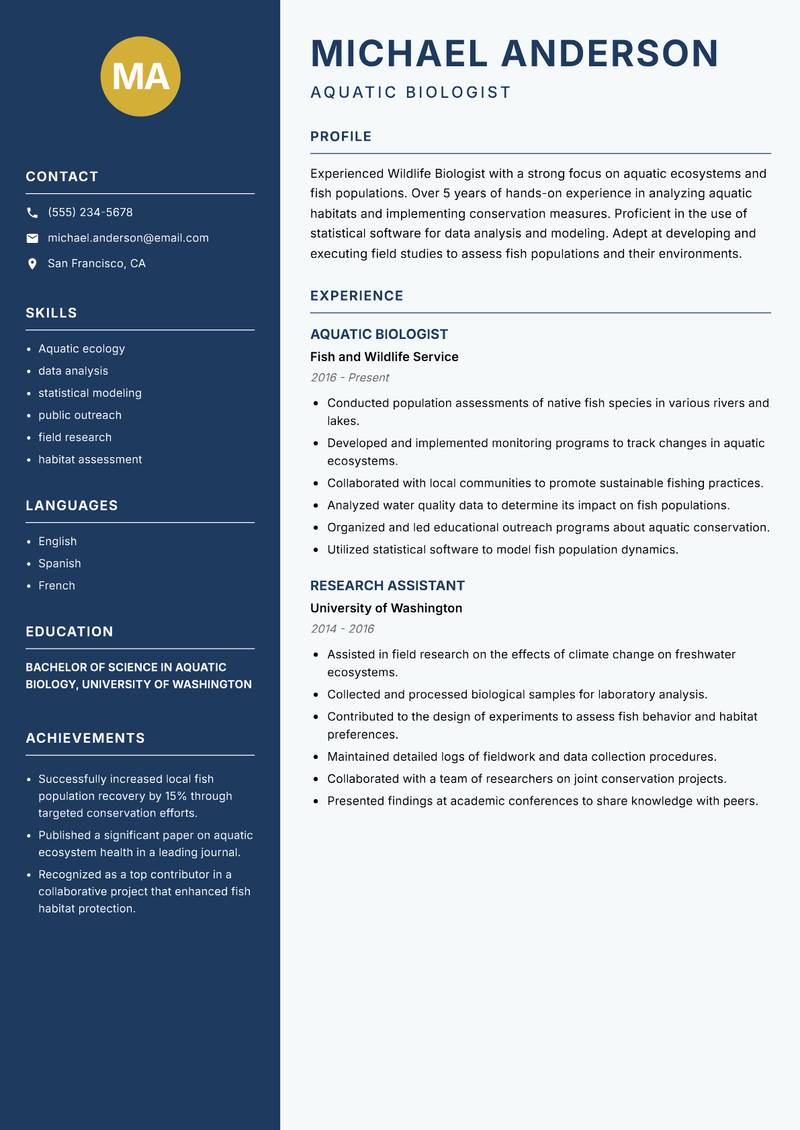
Classic Clean
Use Template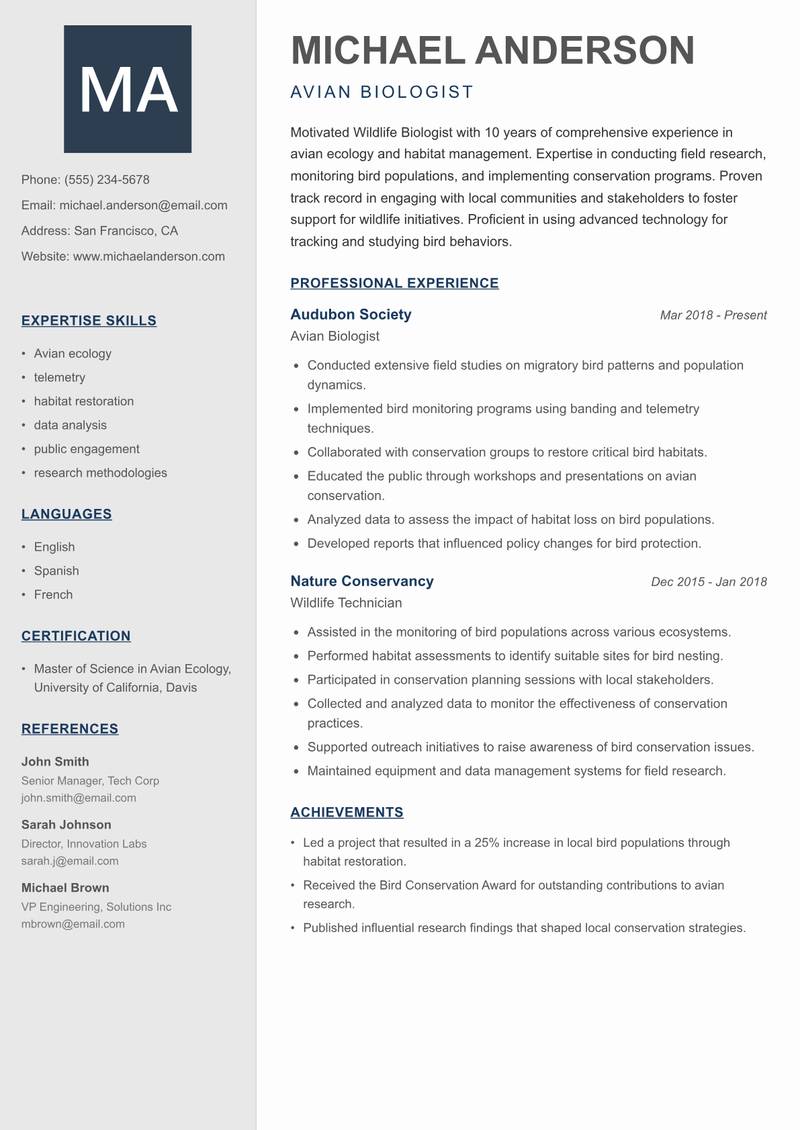
Creative Minimal
Use Template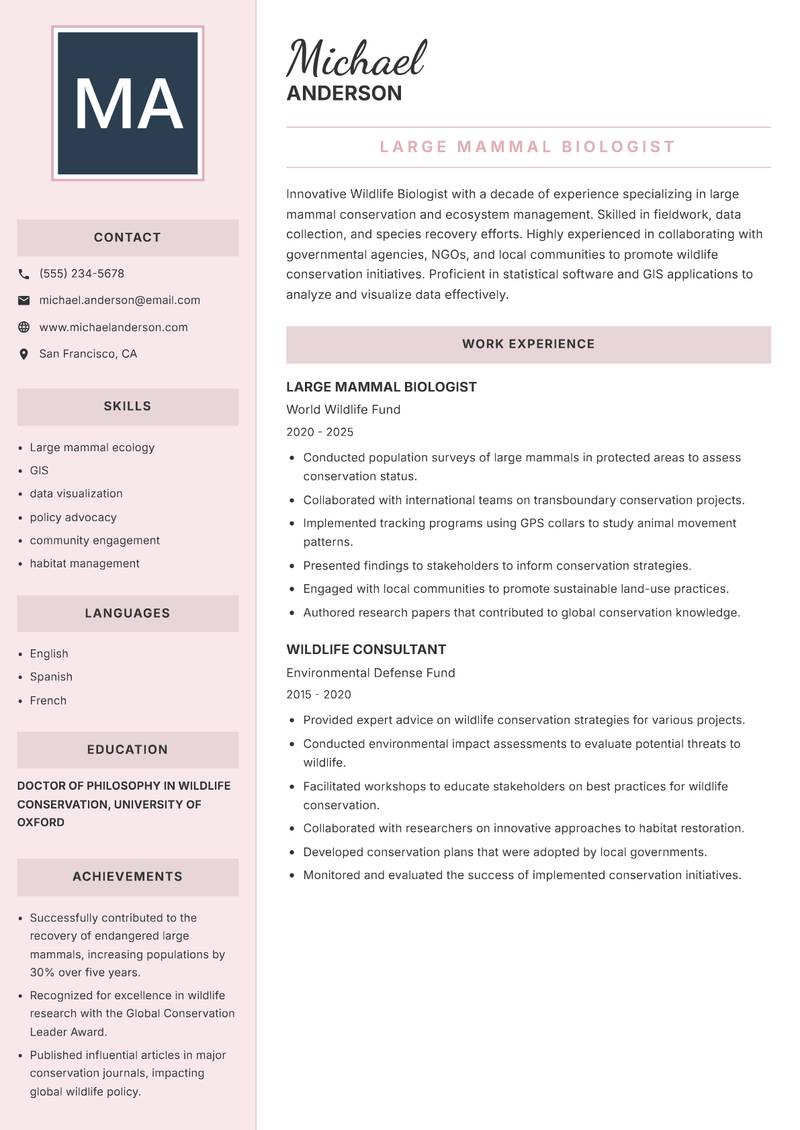
Executive
Use Template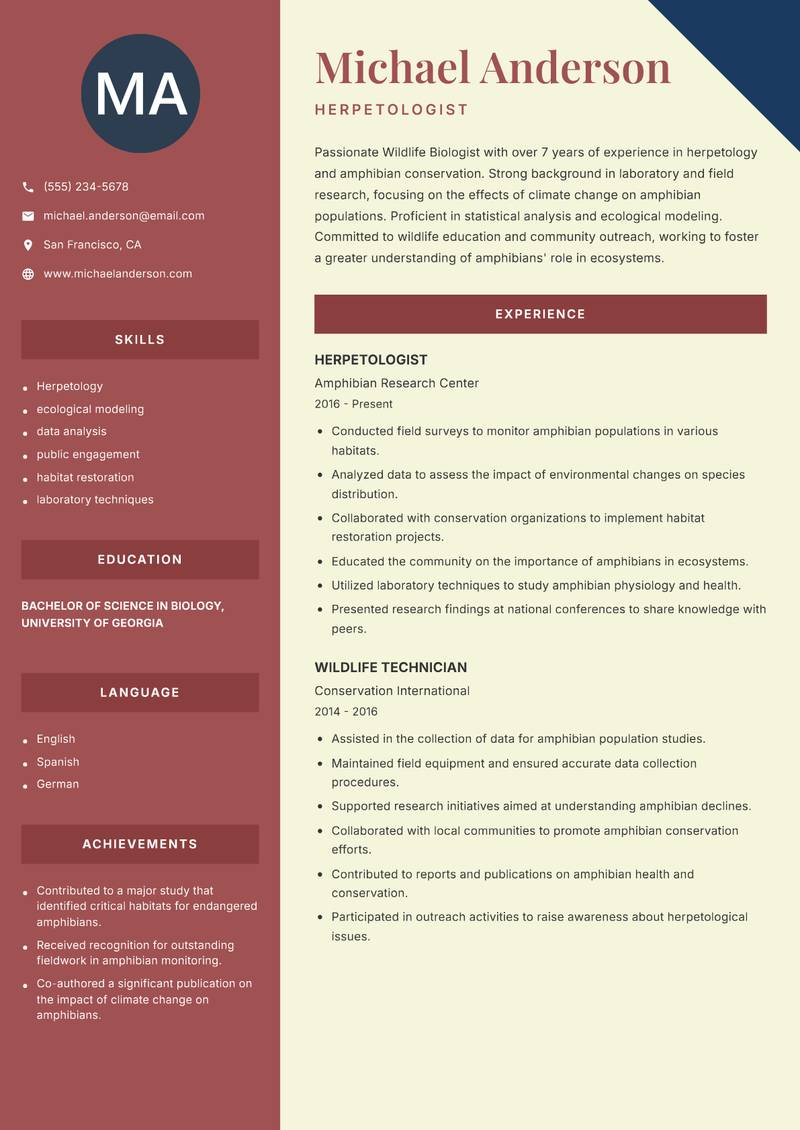
Two Column
Use Template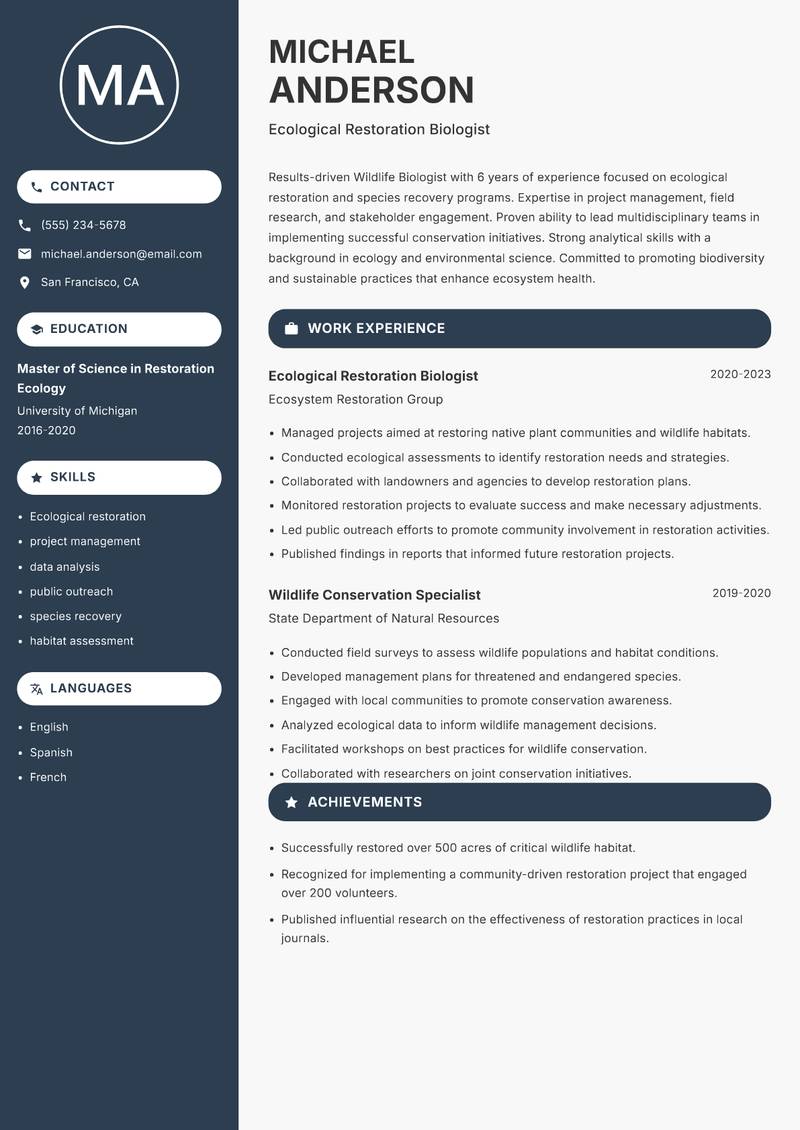
Compact
Use Template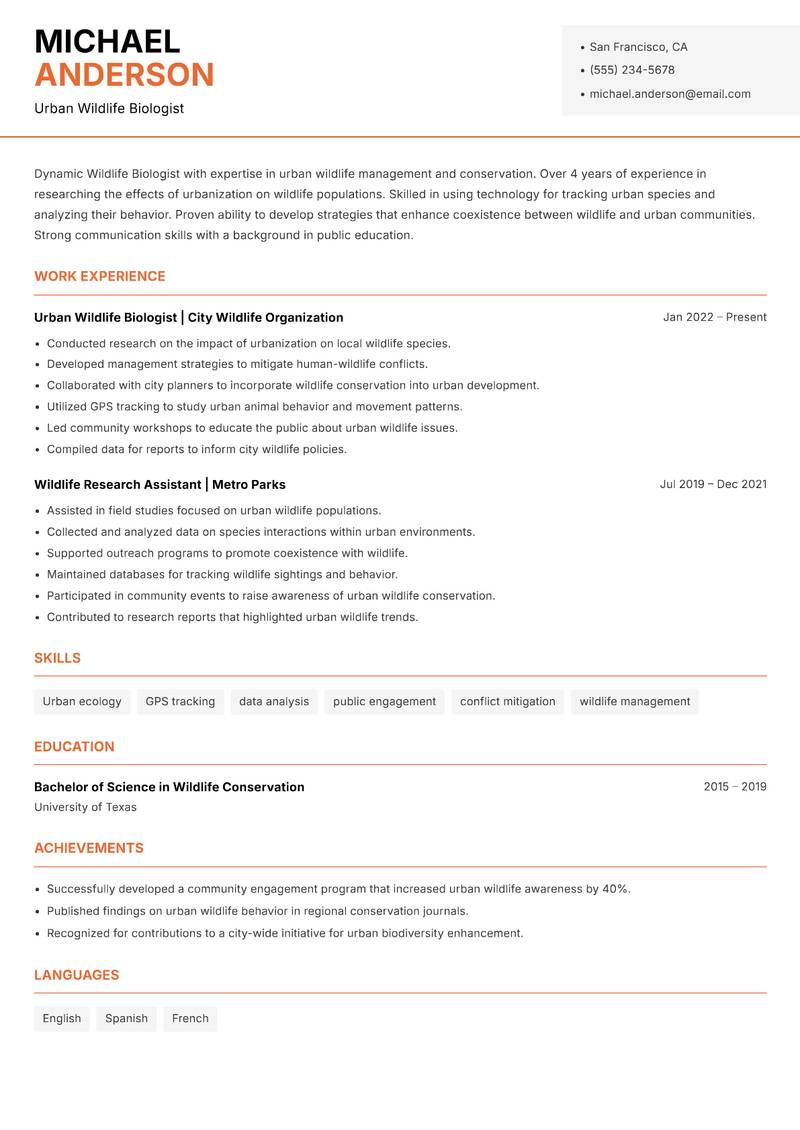
Modern Professional
Use Template7 Real Wildlife Biologist Resume Examples
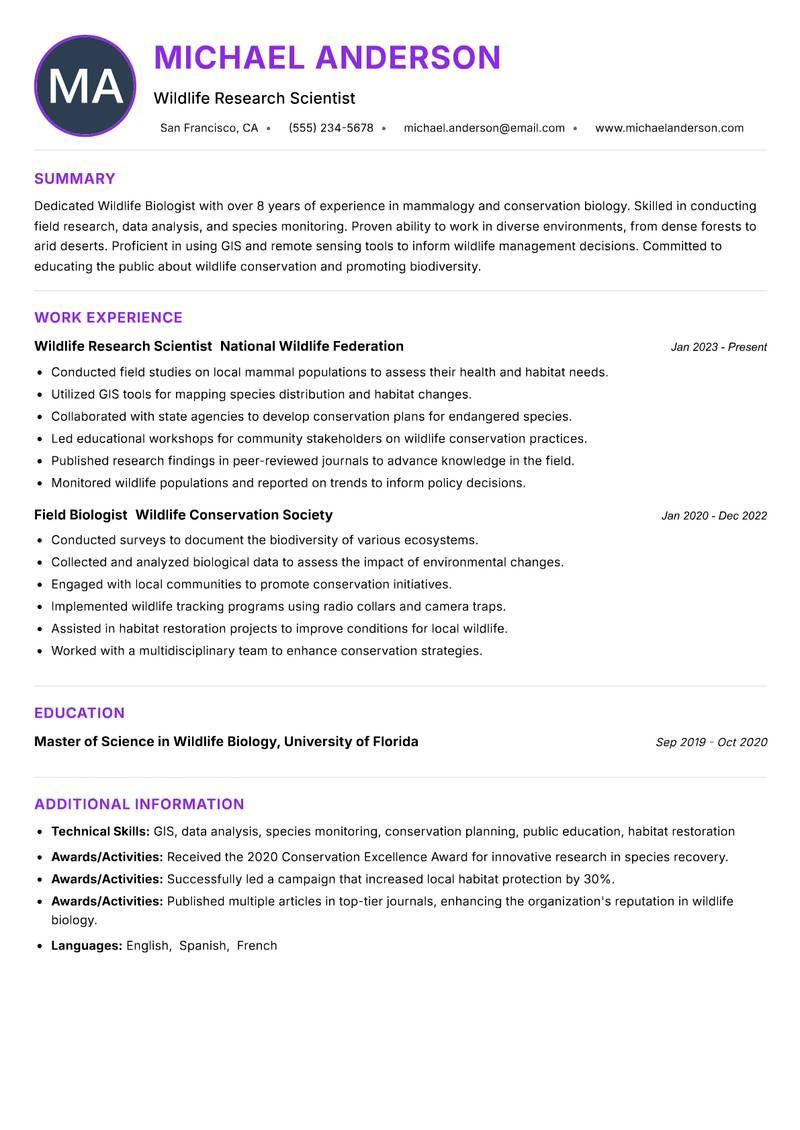
Wildlife Research Scientist with 8+ Years Experience
Summary: Dedicated Wildlife Biologist with over 8 years of experience in mammalogy and conservation biology. Skilled in conducting field research, data analysis, and species monitoring. Proven ability to work in diverse environments, from dense forests to arid deserts. Proficient in using GIS and remote sensing tools to inform wildlife management decisions. Committed to educating the public about wildlife conservation and promoting biodiversity. Strong background in collaborating with governmental and non-governmental organizations to develop conservation strategies. A passionate advocate for sustainable practices and habitat restoration, aiming to protect endangered species and their ecosystems.
Description:
- Conducted field studies on local mammal populations to assess their health and habitat needs.
- Utilized GIS tools for mapping species distribution and habitat changes.
- Collaborated with state agencies to develop conservation plans for endangered species.
- Led educational workshops for community stakeholders on wildlife conservation practices.
- Published research findings in peer-reviewed journals to advance knowledge in the field.
- Monitored wildlife populations and reported on trends to inform policy decisions.
🏆 Key Achievements
Aquatic Biologist with 5+ Years Experience
Summary: Experienced Wildlife Biologist with a strong focus on aquatic ecosystems and fish populations. Over 5 years of hands-on experience in analyzing aquatic habitats and implementing conservation measures. Proficient in the use of statistical software for data analysis and modeling. Adept at developing and executing field studies to assess fish populations and their environments. Known for building strong relationships with stakeholders, including local fishermen and conservationists. Demonstrated ability to educate the public about the importance of healthy waterways and sustainable fishing practices. Seeking to contribute expertise in aquatic biology to a forward-thinking organization.
Description:
- Conducted population assessments of native fish species in various rivers and lakes.
- Developed and implemented monitoring programs to track changes in aquatic ecosystems.
- Collaborated with local communities to promote sustainable fishing practices.
- Analyzed water quality data to determine its impact on fish populations.
- Organized and led educational outreach programs about aquatic conservation.
- Utilized statistical software to model fish population dynamics.
🏆 Key Achievements
Avian Biologist with 10+ Years Experience
Summary: Driven Wildlife Biologist with 10 years of comprehensive experience in avian ecology and habitat management. Expertise in conducting field research, monitoring bird populations, and implementing conservation programs. Proven track record in engaging with local communities and stakeholders to foster support for wildlife initiatives. Proficient in using advanced technology for tracking and studying bird behaviors. Strong analytical skills with a background in biology and environmental science. Aiming to leverage experience in avian research to contribute effectively to conservation efforts and biodiversity protection.
Description:
- Conducted extensive field studies on migratory bird patterns and population dynamics.
- Implemented bird monitoring programs using banding and telemetry techniques.
- Collaborated with conservation groups to restore critical bird habitats.
- Educated the public through workshops and presentations on avian conservation.
- Analyzed data to assess the impact of habitat loss on bird populations.
- Developed reports that influenced policy changes for bird protection.
🏆 Key Achievements
Large Mammal Biologist with 10+ Years Experience
Summary: Innovative Wildlife Biologist with a decade of experience specializing in large mammal conservation and ecosystem management. Skilled in fieldwork, data collection, and species recovery efforts. Highly experienced in collaborating with governmental agencies, NGOs, and local communities to promote wildlife conservation initiatives. Proficient in statistical software and GIS applications to analyze and visualize data effectively. Passionate about educating the public and fostering community involvement in wildlife protection. Committed to using scientific research to influence policy and drive sustainable practices in wildlife management.
Description:
- Conducted population surveys of large mammals in protected areas to assess conservation status.
- Collaborated with international teams on transboundary conservation projects.
- Implemented tracking programs using GPS collars to study animal movement patterns.
- Presented findings to stakeholders to inform conservation strategies.
- Engaged with local communities to promote sustainable land-use practices.
- Authored research papers that contributed to global conservation knowledge.
🏆 Key Achievements
Herpetologist with 7+ Years Experience
Summary: Dedicated Wildlife Biologist with over 7 years of experience in herpetology and amphibian conservation. Strong background in laboratory and field research, focusing on the effects of climate change on amphibian populations. Proficient in statistical analysis and ecological modeling. Committed to wildlife education and community outreach, working to foster a greater understanding of amphibians' role in ecosystems. Experienced in collaborating with diverse teams to implement conservation projects and promote sustainable practices. Seeking to apply expertise in herpetology to a research-focused role within a conservation organization.
Description:
- Conducted field surveys to monitor amphibian populations in various habitats.
- Analyzed data to assess the impact of environmental changes on species distribution.
- Collaborated with conservation organizations to implement habitat restoration projects.
- Educated the community on the importance of amphibians in ecosystems.
- Utilized laboratory techniques to study amphibian physiology and health.
- Presented research findings at national conferences to share knowledge with peers.
🏆 Key Achievements
Ecological Restoration Biologist with 6+ Years Experience
Summary: Experienced Wildlife Biologist with 6 years of experience focused on ecological restoration and species recovery programs. Expertise in project management, field research, and stakeholder engagement. Proven ability to lead multidisciplinary teams in implementing successful conservation initiatives. Strong analytical skills with a background in ecology and environmental science. Committed to promoting biodiversity and sustainable practices that enhance ecosystem health. Seeking to leverage experience in ecological restoration to contribute to impactful conservation projects.
Description:
- Managed projects aimed at restoring native plant communities and wildlife habitats.
- Conducted ecological assessments to identify restoration needs and strategies.
- Collaborated with landowners and agencies to develop restoration plans.
- Monitored restoration projects to evaluate success and make necessary adjustments.
- Led public outreach efforts to promote community involvement in restoration activities.
- Published findings in reports that informed future restoration projects.
🏆 Key Achievements
Urban Wildlife Biologist with 4+ Years Experience
Summary: Dynamic Wildlife Biologist with expertise in urban wildlife management and conservation. Over 4 years of experience in researching the effects of urbanization on wildlife populations. Skilled in using technology for tracking urban species and analyzing their behavior. Proven ability to develop strategies that enhance coexistence between wildlife and urban communities. Strong communication skills with a background in public education. Eager to contribute to innovative urban wildlife conservation projects that promote biodiversity in metropolitan areas.
Description:
- Conducted research on the impact of urbanization on local wildlife species.
- Developed management strategies to mitigate human-wildlife conflicts.
- Collaborated with city planners to incorporate wildlife conservation into urban development.
- Utilized GPS tracking to study urban animal behavior and movement patterns.
- Led community workshops to educate the public about urban wildlife issues.
- Compiled data for reports to inform city wildlife policies.
🏆 Key Achievements
Key Skills for Wildlife Biologist
ATS Optimization Tips
Increase your chances of getting hired
Use Standard Headings
Use common section titles like Experience, Skills, etc.
Include Keywords
Add role-specific keywords from the job description
Keep it Simple
Avoid complex tables, images and graphics
Save in Right Format
Use PDF format unless otherwise specified
Wildlife Biologist Salary Insights
Average Salary
$66,000
per year
Salary Range
$50,000 - $82,000
per year
Top Paying Cities
Los Angeles, Seattle, Houston, Dallas, Boston
Source: Glassdoor, Payscale, Indeed (Updated April 2025)
Everything you need to write a great Wildlife Biologist resume
Strong Action Verbs to Use
Resume Writing Tips
- →Highlight specific field research techniques you’ve mastered, such as GPS tracking or remote sensing technologies.
- →Showcase any experience with grant writing or fundraising for wildlife conservation projects.
- →List specific software skills, especially in data analysis or GIS, relevant to wildlife studies.
- →Use quantifiable achievements to illustrate your impact, such as population recovery rates or habitat restoration metrics.
- →Include volunteer work or internships in wildlife settings to strengthen your portfolio.
Common Mistakes to Avoid
- ✕Failing to tailor your resume to highlight field-based research experience and specific species knowledge.
- ✕Neglecting to include technical skills related to wildlife data analysis and geographic information systems (GIS).
- ✕Omitting relevant certifications that demonstrate your expertise and commitment to the field.
- ✕Listing generic work experience without connecting it back to wildlife biology, such as focusing solely on entry-level positions in unrelated fields.
ATS Keywords for Wildlife Biologist
Wildlife Biologist Career Path
Relevant Certifications
Career Progression
Entry-Level Wildlife Biologist
Focuses on conducting field surveys and observing wildlife populations, often involving data collection and preliminary analysis.
Wildlife Ecologist
Specializes in studying the interactions of wildlife with their environment, often requiring advanced statistical modeling and habitat assessment.
Senior Wildlife Biologist
Leads research projects, manages field teams, and presents findings to stakeholders, including government agencies and non-profit organizations.
Conservation Program Manager
Oversees conservation initiatives, collaborates with various partners, and develops strategic plans for wildlife management.
Environmental Consultant
Provides expert advice on wildlife regulations and conservation strategies to governmental bodies and private corporations.
Wildlife Biologist Interview Questions
What field research methods have you used to study wildlife populations? +
Focus on specific techniques, such as camera trapping, direct observation, or telemetry, and highlight any innovative approaches.
How do you ensure accurate data collection during surveys? +
Discuss your methodology, including equipment used and peer review processes.
Can you describe a time when you had to communicate complex scientific data to non-scientists? +
Provide a specific example that showcases your communication skills and adaptability.
What role do you believe wildlife biologists play in conservation efforts? +
Emphasize the importance of research-based policy recommendations and community education.
How do you stay updated on the latest research and trends in wildlife biology? +
Mention specific journals, organizations, and networks you are part of to enhance your professional development.
Describe a conflict you encountered while working on a conservation project and how you resolved it. +
Highlight your problem-solving skills and ability to work under pressure.
About the Wildlife Biologist Role
A Wildlife Biologist conducts extensive field research to monitor and manage wildlife populations, habitats, and ecosystems. This role involves collecting and analyzing data, developing conservation strategies, and collaborating with governmental and non-governmental organizations. Wildlife Biologists play a crucial role in informing policies and practices that ensure the protection of biodiversity and natural ecosystems.
Frequently Asked Questions
What does a typical day look like for a Wildlife Biologist? +
A typical day includes planning fieldwork, conducting surveys, analyzing data, and writing reports. Wildlife Biologists also spend time collaborating with conservation organizations and engaging with the public.
What kind of education do I need to become a Wildlife Biologist? +
Most Wildlife Biologists need at least a bachelor’s degree in wildlife biology, ecology, or a related field, but many positions may require a master’s degree or higher.
Are there opportunities for Wildlife Biologists to work internationally? +
Yes, many Wildlife Biologists work on international conservation projects, providing opportunities to study diverse ecosystems and species around the world.
What are the most important skills for a Wildlife Biologist? +
Key skills include data analysis, knowledge of ecological principles, effective communication, field research techniques, and experience with geographic information systems (GIS).
What career advancements are available in Wildlife Biology? +
Advancements can include managerial roles in conservation organizations, leading research projects, or specializing in certain species or ecosystems, potentially leading to academic positions.
How does climate change affect my work as a Wildlife Biologist? +
Climate change impacts habitat suitability, species migration patterns, and conservation strategies, making it essential for Wildlife Biologists to integrate adaptive management techniques into their work.
More Resume Examples You Might Like
Related Career Paths
Other roles candidates for Wildlife Biologist positions often also consider.
Will this Wildlife Biologist resume pass the ATS scan?
Upload it and get an instant AI-scored compatibility check with specific fixes.
Check My Resume →
Pair it with a matching cover letter
AI drafts a first version from your job title and strengths — edit it live, then download the PDF.
Write My Cover Letter →
Written by Nohaya Career Team
Reviewed by HR Professionals · Updated April 2025
Ready to Build Your Perfect Resume?
Choose from 1000+ professional templates and land your dream job.
Create My Resume Now