Build an ATS-Friendly
Veterinary Laboratory Scientist Resume
That Gets Interviews
Veterinary Laboratory Scientists utilize state-of-the-art diagnostic methodologies to support animal health. Their work involves intricate procedures such as histopathology, microbiological culture, and serological testing to diagnose diseases in various species. These scientists also play a key part in interpreting…
Veterinary Laboratory Scientist Resume Templates
Modern Professional
Use Template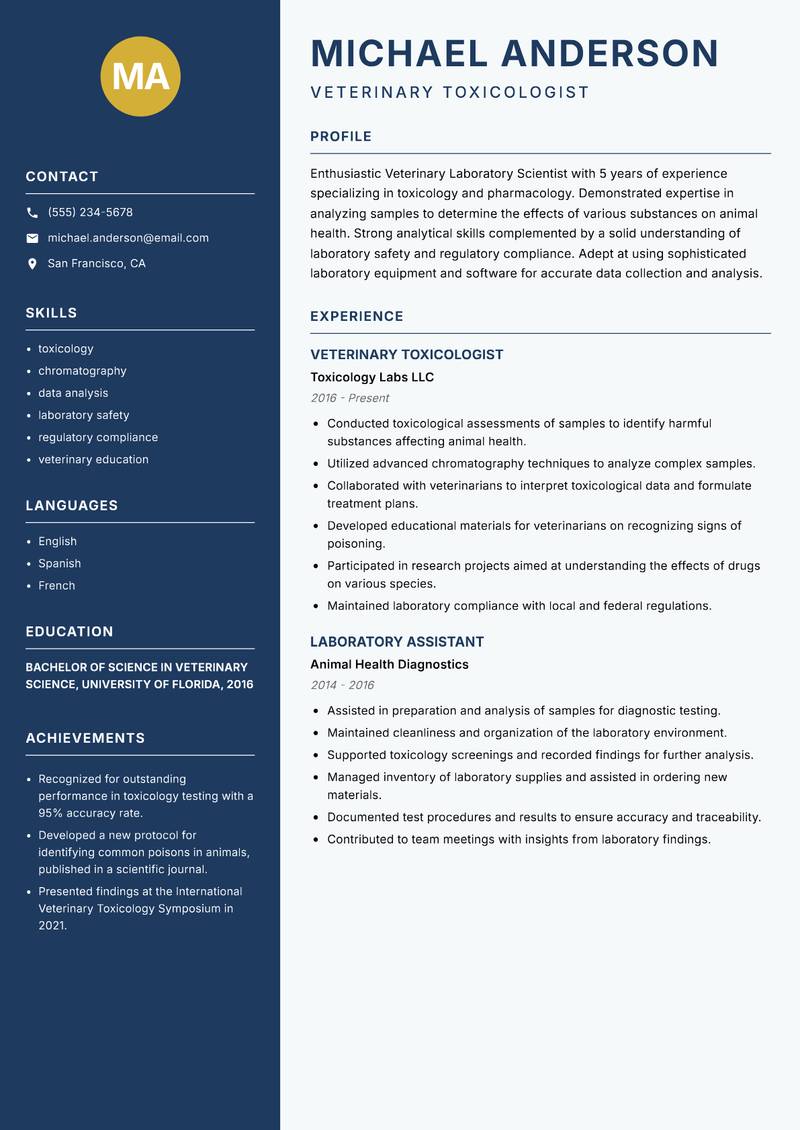
Classic Clean
Use Template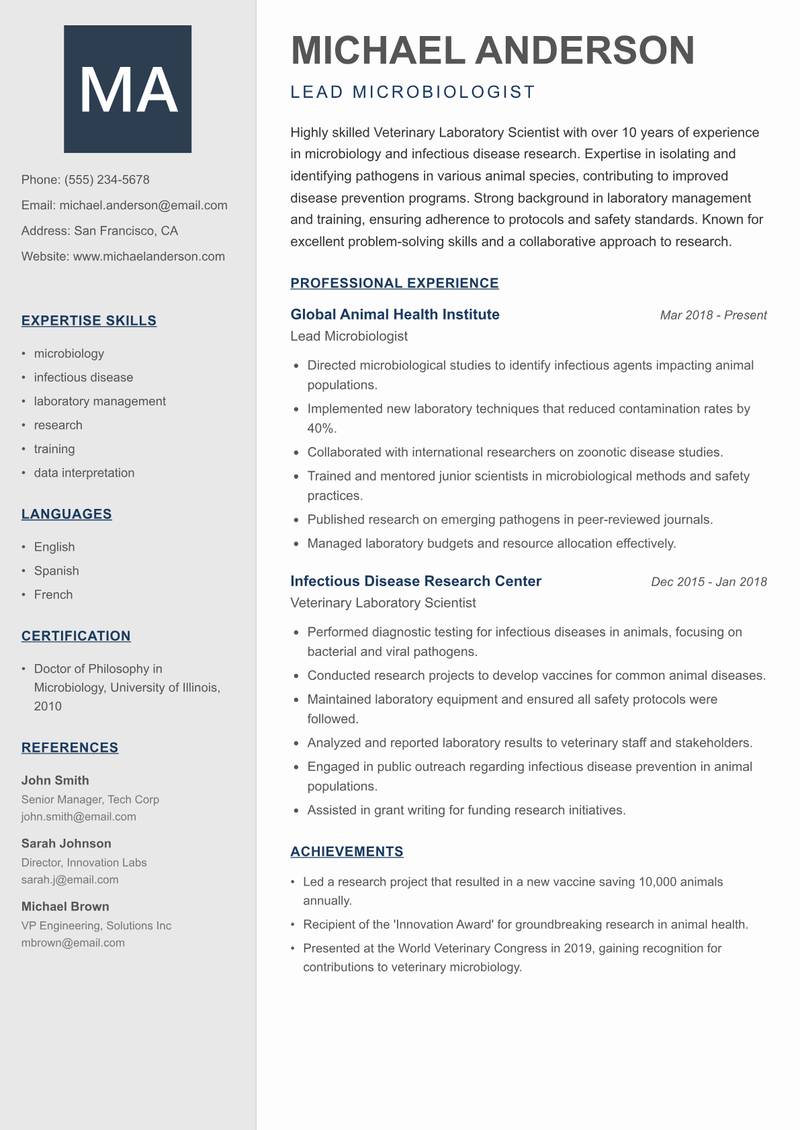
Creative Minimal
Use Template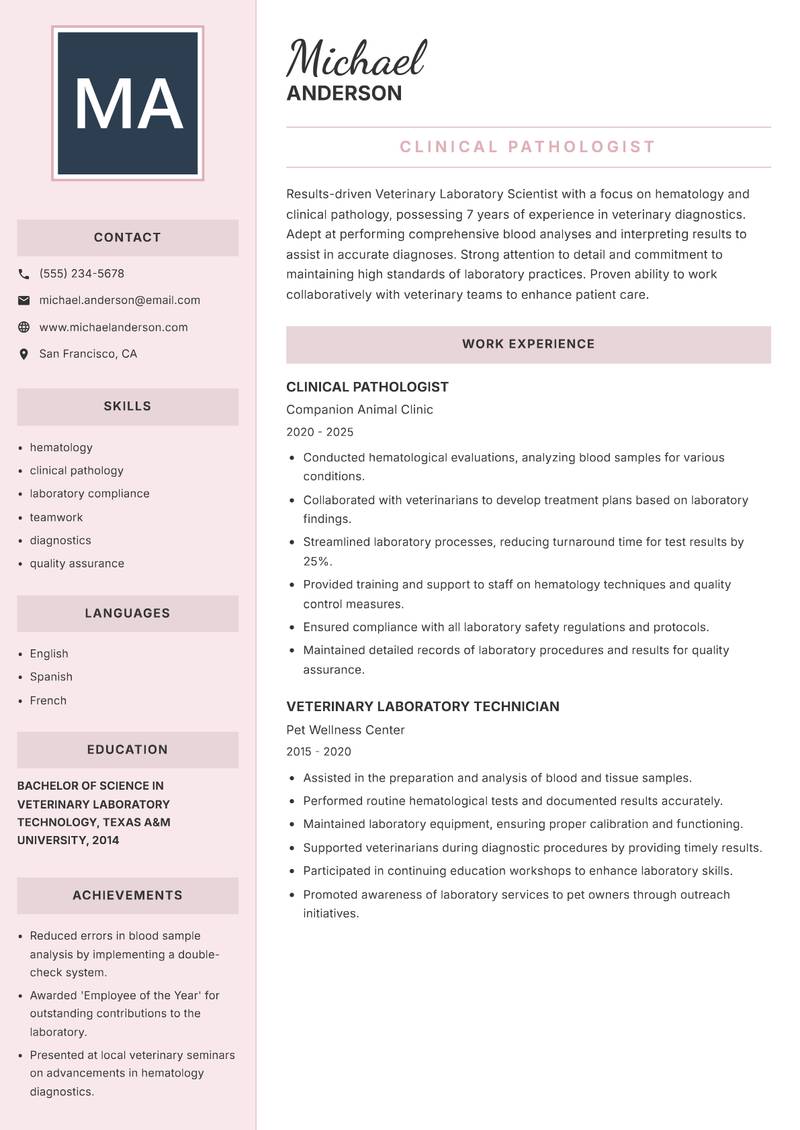
Executive
Use Template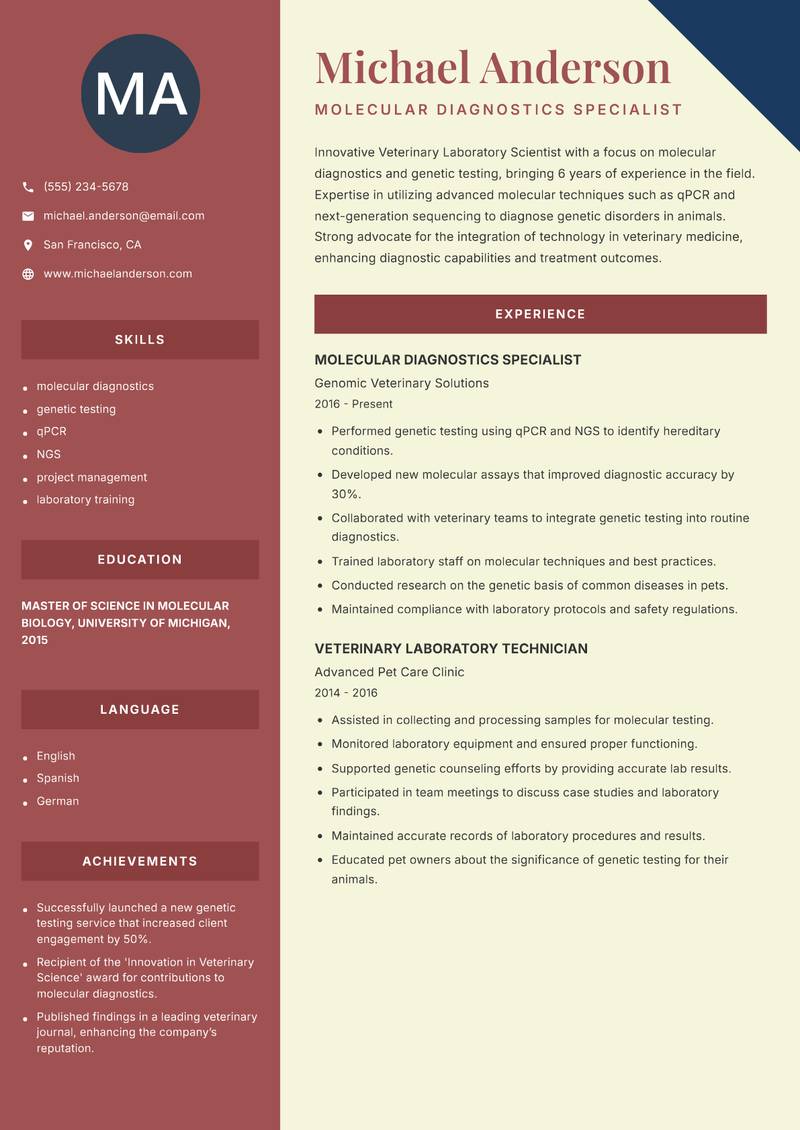
Two Column
Use Template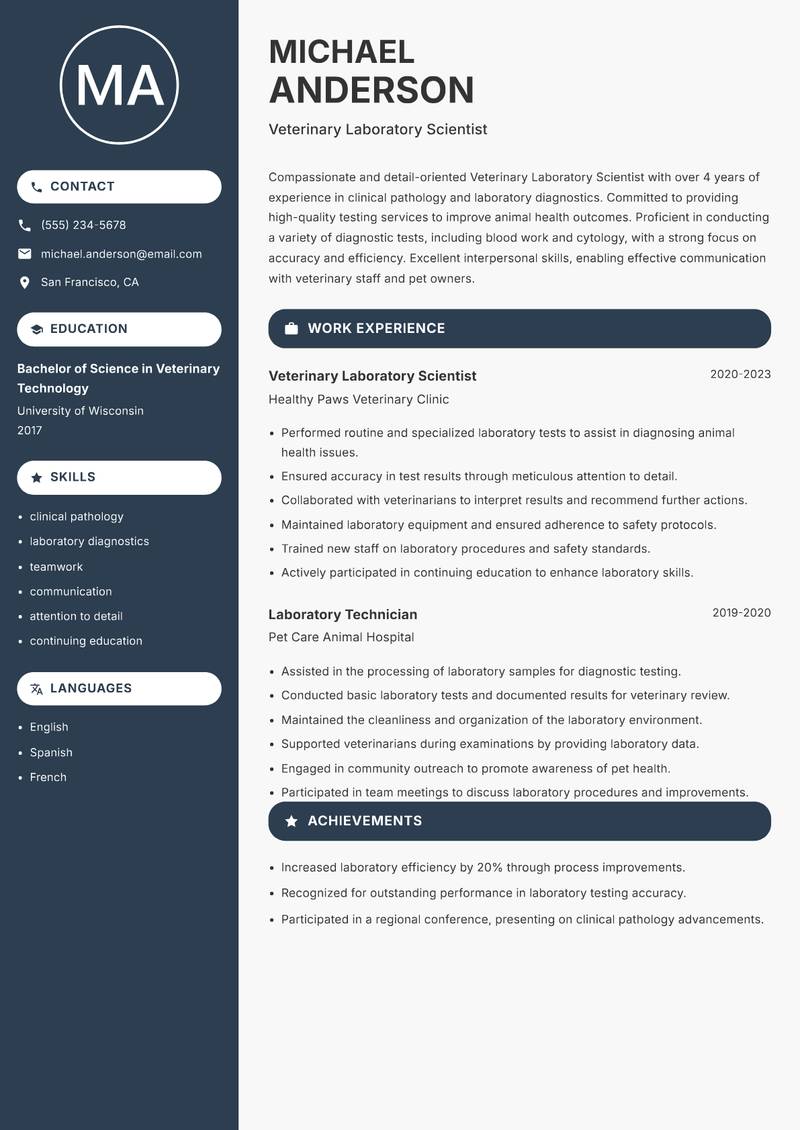
Compact
Use Template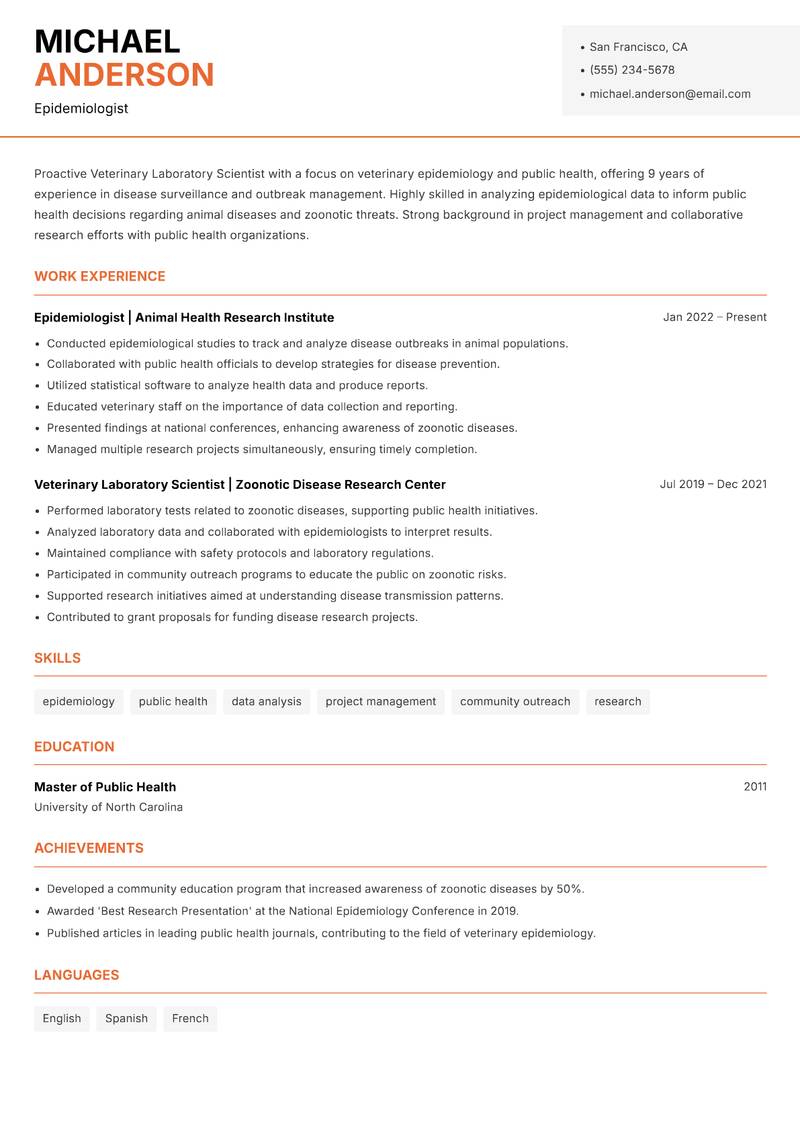
Modern Professional
Use Template7 Real Veterinary Laboratory Scientist Resume Examples
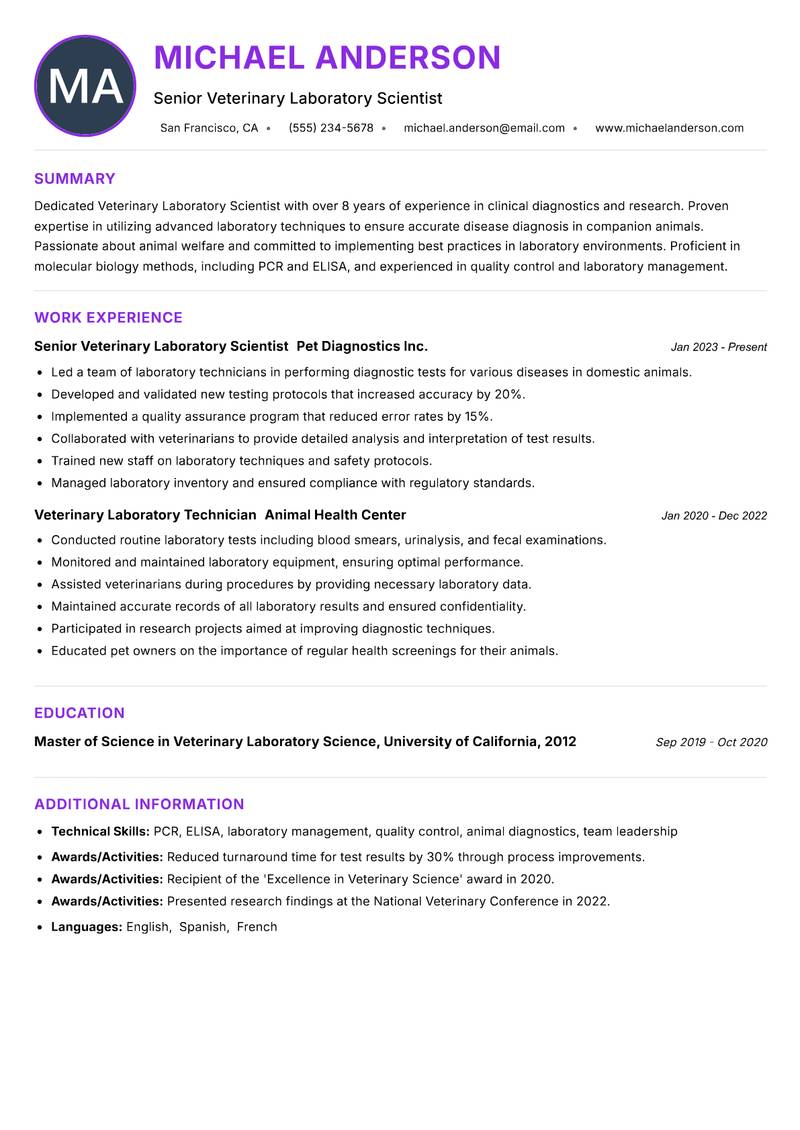
Senior Veterinary Laboratory Scientist with 8+ Years Experience
Summary: Dedicated Veterinary Laboratory Scientist with over 8 years of experience in clinical diagnostics and research. Proven expertise in utilizing advanced laboratory techniques to ensure accurate disease diagnosis in companion animals. Passionate about animal welfare and committed to implementing best practices in laboratory environments. Proficient in molecular biology methods, including PCR and ELISA, and experienced in quality control and laboratory management. Adept at collaborating with veterinarians to interpret diagnostic results and provide actionable insights. Strong communicator with a focus on continuous learning and staying updated with the latest advancements in veterinary science. Looking to leverage my analytical skills and laboratory expertise to contribute to a progressive veterinary laboratory.
Description:
- Led a team of laboratory technicians in performing diagnostic tests for various diseases in domestic animals.
- Developed and validated new testing protocols that increased accuracy by 20%.
- Implemented a quality assurance program that reduced error rates by 15%.
- Collaborated with veterinarians to provide detailed analysis and interpretation of test results.
- Trained new staff on laboratory techniques and safety protocols.
- Managed laboratory inventory and ensured compliance with regulatory standards.
🏆 Key Achievements
Veterinary Toxicologist with 5+ Years Experience
Summary: Enthusiastic Veterinary Laboratory Scientist with 5 years of experience specializing in toxicology and pharmacology. Demonstrated expertise in analyzing samples to determine the effects of various substances on animal health. Strong analytical skills complemented by a solid understanding of laboratory safety and regulatory compliance. Adept at using sophisticated laboratory equipment and software for accurate data collection and analysis. Known for a proactive approach in identifying potential health risks and recommending preventive measures. Eager to contribute my specialized knowledge and passion for animal health to a dynamic team focused on advancing veterinary research.
Description:
- Conducted toxicological assessments of samples to identify harmful substances affecting animal health.
- Utilized advanced chromatography techniques to analyze complex samples.
- Collaborated with veterinarians to interpret toxicological data and formulate treatment plans.
- Developed educational materials for veterinarians on recognizing signs of poisoning.
- Participated in research projects aimed at understanding the effects of drugs on various species.
- Maintained laboratory compliance with local and federal regulations.
🏆 Key Achievements
Lead Microbiologist with 10+ Years Experience
Summary: Highly skilled Veterinary Laboratory Scientist with over 10 years of experience in microbiology and infectious disease research. Expertise in isolating and identifying pathogens in various animal species, contributing to improved disease prevention programs. Strong background in laboratory management and training, ensuring adherence to protocols and safety standards. Known for excellent problem-solving skills and a collaborative approach to research. Committed to advancing veterinary science through innovative research and applying findings to enhance animal health. Seeking a position where I can utilize my extensive knowledge and experience to drive impactful results.
Description:
- Directed microbiological studies to identify infectious agents impacting animal populations.
- Implemented new laboratory techniques that reduced contamination rates by 40%.
- Collaborated with international researchers on zoonotic disease studies.
- Trained and mentored junior scientists in microbiological methods and safety practices.
- Published research on emerging pathogens in peer-reviewed journals.
- Managed laboratory budgets and resource allocation effectively.
🏆 Key Achievements
Clinical Pathologist with 7+ Years Experience
Summary: Experienced Veterinary Laboratory Scientist with a focus on hematology and clinical pathology, possessing 7 years of experience in veterinary diagnostics. Adept at performing comprehensive blood analyses and interpreting results to assist in accurate diagnoses. Strong attention to detail and commitment to maintaining high standards of laboratory practices. Proven ability to work collaboratively with veterinary teams to enhance patient care. Skilled in implementing laboratory protocols that ensure compliance with regulatory guidelines. Eager to leverage my expertise in hematology to contribute to a leading veterinary practice dedicated to animal health and welfare.
Description:
- Conducted hematological evaluations, analyzing blood samples for various conditions.
- Collaborated with veterinarians to develop treatment plans based on laboratory findings.
- Streamlined laboratory processes, reducing turnaround time for test results by 25%.
- Provided training and support to staff on hematology techniques and quality control measures.
- Ensured compliance with all laboratory safety regulations and protocols.
- Maintained detailed records of laboratory procedures and results for quality assurance.
🏆 Key Achievements
Molecular Diagnostics Specialist with 6+ Years Experience
Summary: Innovative Veterinary Laboratory Scientist with a focus on molecular diagnostics and genetic testing, bringing 6 years of experience in the field. Expertise in utilizing advanced molecular techniques such as qPCR and next-generation sequencing to diagnose genetic disorders in animals. Strong advocate for the integration of technology in veterinary medicine, enhancing diagnostic capabilities and treatment outcomes. Proven track record of successful project management, from research conception through implementation. Committed to ongoing professional development and sharing knowledge with peers. Seeking an opportunity to utilize my skills in a forward-thinking veterinary laboratory.
Description:
- Performed genetic testing using qPCR and NGS to identify hereditary conditions.
- Developed new molecular assays that improved diagnostic accuracy by 30%.
- Collaborated with veterinary teams to integrate genetic testing into routine diagnostics.
- Trained laboratory staff on molecular techniques and best practices.
- Conducted research on the genetic basis of common diseases in pets.
- Maintained compliance with laboratory protocols and safety regulations.
🏆 Key Achievements
Veterinary Laboratory Scientist with 4+ Years Experience
Summary: Compassionate and detail-oriented Veterinary Laboratory Scientist with over 4 years of experience in clinical pathology and laboratory diagnostics. Committed to providing high-quality testing services to improve animal health outcomes. Proficient in conducting a variety of diagnostic tests, including blood work and cytology, with a strong focus on accuracy and efficiency. Excellent interpersonal skills, enabling effective communication with veterinary staff and pet owners. Enthusiastic about continuous learning and development in veterinary practices. Looking to bring my strong analytical skills and dedication to a reputable veterinary laboratory.
Description:
- Performed routine and specialized laboratory tests to assist in diagnosing animal health issues.
- Ensured accuracy in test results through meticulous attention to detail.
- Collaborated with veterinarians to interpret results and recommend further actions.
- Maintained laboratory equipment and ensured adherence to safety protocols.
- Trained new staff on laboratory procedures and safety standards.
- Actively participated in continuing education to enhance laboratory skills.
🏆 Key Achievements
Epidemiologist with 9+ Years Experience
Summary: Driven Veterinary Laboratory Scientist with a focus on veterinary epidemiology and public health, offering 9 years of experience in disease surveillance and outbreak management. Highly skilled in analyzing epidemiological data to inform public health decisions regarding animal diseases and zoonotic threats. Strong background in project management and collaborative research efforts with public health organizations. Committed to enhancing animal and human health through effective disease prevention strategies. Eager to apply my expertise in a role that emphasizes research and community health.
Description:
- Conducted epidemiological studies to track and analyze disease outbreaks in animal populations.
- Collaborated with public health officials to develop strategies for disease prevention.
- Utilized statistical software to analyze health data and produce reports.
- Educated veterinary staff on the importance of data collection and reporting.
- Presented findings at national conferences, enhancing awareness of zoonotic diseases.
- Managed multiple research projects simultaneously, ensuring timely completion.
🏆 Key Achievements
Key Skills for Veterinary Laboratory Scientist
ATS Optimization Tips
Increase your chances of getting hired
Use Standard Headings
Use common section titles like Experience, Skills, etc.
Include Keywords
Add role-specific keywords from the job description
Keep it Simple
Avoid complex tables, images and graphics
Save in Right Format
Use PDF format unless otherwise specified
Veterinary Laboratory Scientist Salary Insights
Average Salary
$70,000
per year
Salary Range
$55,000 - $85,000
per year
Top Paying Cities
Los Angeles, Seattle, Houston, Dallas, Boston
Source: Glassdoor, Payscale, Indeed (Updated April 2025)
Everything you need to write a great Veterinary Laboratory Scientist resume
Strong Action Verbs to Use
Resume Writing Tips
- →Highlight specific diagnostic tests you have expertise in, tailored to different species.
- →Emphasize hands-on experience with specialized laboratory equipment relevant to veterinary science.
- →Use metrics when possible, such as throughput of tests or accuracy rates, to showcase your impact.
- →Detail your experience working with veterinary teams and how you've improved collaborative efforts in test analysis.
- →Include any volunteer work or continuing education that emphasizes dedication to animal health and laboratory science.
Common Mistakes to Avoid
- ✕Listing generic veterinary skills that do not highlight laboratory-specific competencies.
- ✕Failing to mention exact laboratory tests you are proficient in or software systems used.
- ✕Omitting soft skills like teamwork and communication that are essential in a lab environment.
- ✕Using overly technical jargon without clear explanations that could resonate with non-specialist viewers.
ATS Keywords for Veterinary Laboratory Scientist
Veterinary Laboratory Scientist Career Path
Relevant Certifications
Career Progression
Entry-Level
Veterinary Technician with a focus on laboratory procedures, learning basic diagnostics.
Mid-Level
Veterinary Laboratory Scientist responsible for analyzing biological samples and maintaining lab equipment.
Senior-Level
Lead Veterinary Laboratory Scientist overseeing a team and managing specialized diagnostic programs.
Management
Laboratory Manager coordinating between veterinary departments and enhancing laboratory operations.
Specialization
Veterinary Pathologist specializing in histopathology and molecular diagnostics, contributing to research.
Veterinary Laboratory Scientist Interview Questions
Can you describe your experience with laboratory testing procedures relevant to veterinary medicine? +
Focus on specific tests you have performed, how you ensured accuracy, and the outcomes.
How do you handle discrepancies in test results? +
Discuss your approach to quality control and resolving issues in the laboratory.
What laboratory equipment are you most familiar with, and how have you utilized it? +
Provide details on the equipment types, such as centrifuges or analyzers, and specific applications.
Can you give an example of how you contributed to improving a laboratory process? +
Highlight a particular change you initiated that had a significant impact on efficiency or accuracy.
Describe your experience with data management and reporting in a laboratory setting. +
Emphasize your proficiency in using laboratory information systems and maintaining documentation.
How do you ensure compliance with veterinary laboratory regulations and standards? +
Talk about your knowledge of regulations like CLIA or ISO and their practical application.
What role does teamwork play in a successful veterinary laboratory environment? +
Provide insights into collaboration with veterinarians, technicians, and other staff for patient care.
About the Veterinary Laboratory Scientist Role
Veterinary Laboratory Scientists utilize state-of-the-art diagnostic methodologies to support animal health. Their work involves intricate procedures such as histopathology, microbiological culture, and serological testing to diagnose diseases in various species. These scientists also play a key part in interpreting laboratory results for veterinarians and communicating findings crucial for treatment decisions, ultimately ensuring optimal care for patients.
Frequently Asked Questions
What is the primary role of a Veterinary Laboratory Scientist? +
The primary role is to perform diagnostic tests and analyze biological samples to aid in the diagnosis and treatment of animal diseases.
What types of samples do Veterinary Laboratory Scientists analyze? +
They typically analyze blood, urine, tissues, and microbiological specimens from various animals.
Are certifications necessary for Veterinary Laboratory Scientists? +
While certification is not always required, it is highly recommended as it demonstrates professionalism and expertise.
What tools do Veterinary Laboratory Scientists commonly use? +
Common tools include hematology analyzers, microscopes, centrifuges, and PCR machines for genetic testing.
How does the work of a Veterinary Laboratory Scientist impact animal health? +
Their work provides crucial diagnostic information that helps in creating treatment plans and improving animal care outcomes.
What continuing education opportunities are available for Veterinary Laboratory Scientists? +
Options may include specialized workshops, conferences, and online courses focusing on new laboratory technologies and procedures.
More Resume Examples You Might Like
Related Career Paths
Other roles candidates for Veterinary Laboratory Scientist positions often also consider.
Will this Veterinary Laboratory Scientist resume pass the ATS scan?
Upload it and get an instant AI-scored compatibility check with specific fixes.
Check My Resume →
Pair it with a matching cover letter
AI drafts a first version from your job title and strengths — edit it live, then download the PDF.
Write My Cover Letter →
Written by Nohaya Career Team
Reviewed by HR Professionals · Updated April 2025
Ready to Build Your Perfect Resume?
Choose from 1000+ professional templates and land your dream job.
Create My Resume Now