Build an ATS-Friendly
Veterinary Toxicologist Resume
That Gets Interviews
Daily responsibilities for a Veterinary Toxicologist often include performing critical toxicological screenings and interpreting lab results to guide treatment plans for animal patients. Collaborating with veterinary teams, you assess toxic exposure risks and develop protocols to mitigate or manage these risks…
Veterinary Toxicologist Resume Templates
Modern Professional
Use Template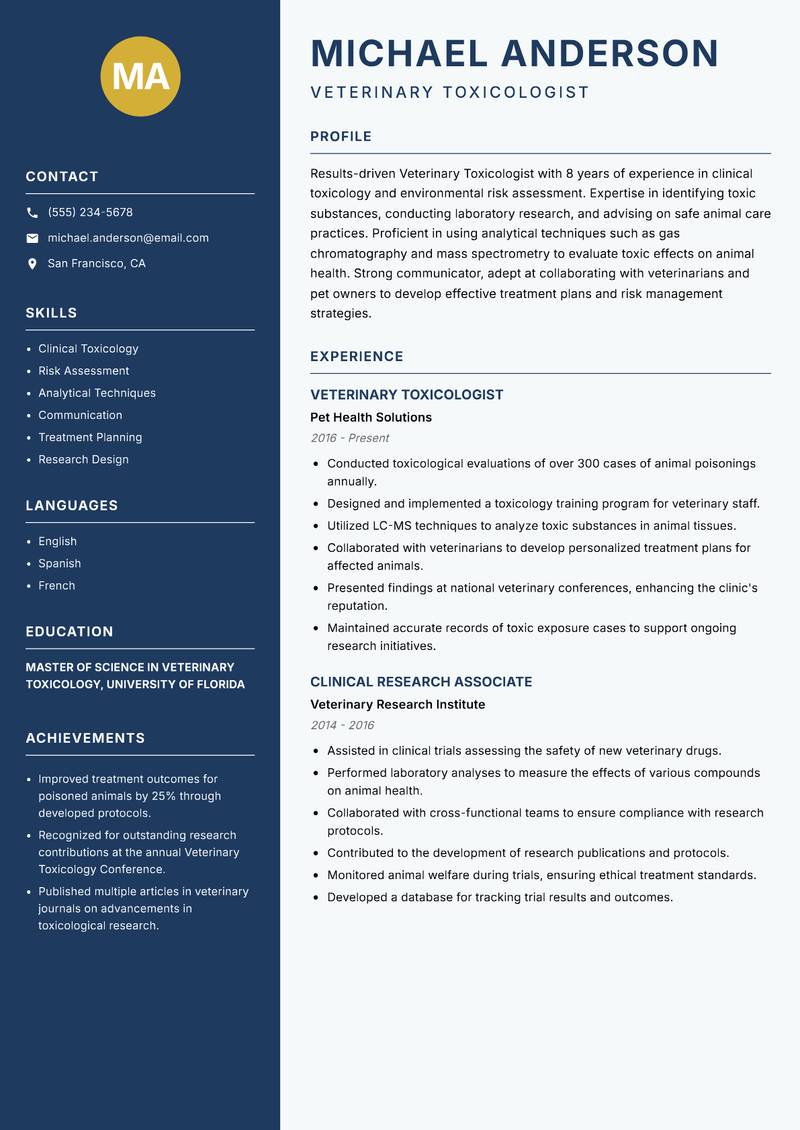
Classic Clean
Use Template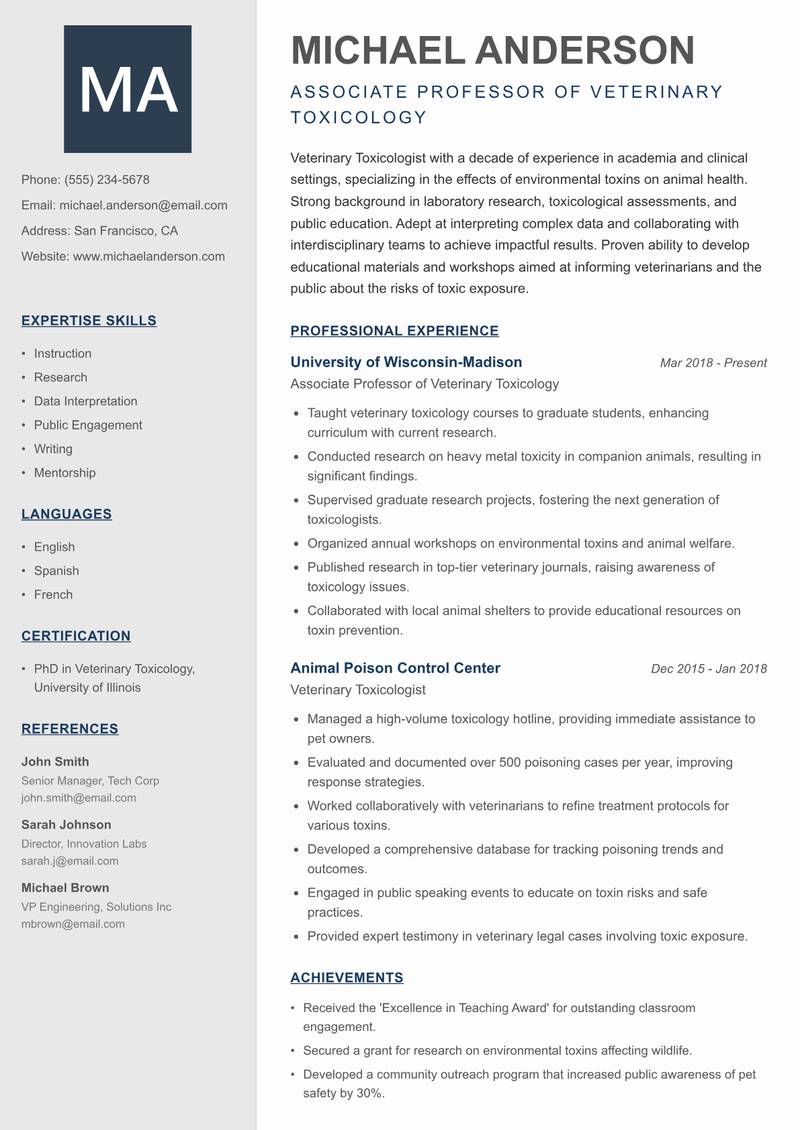
Creative Minimal
Use Template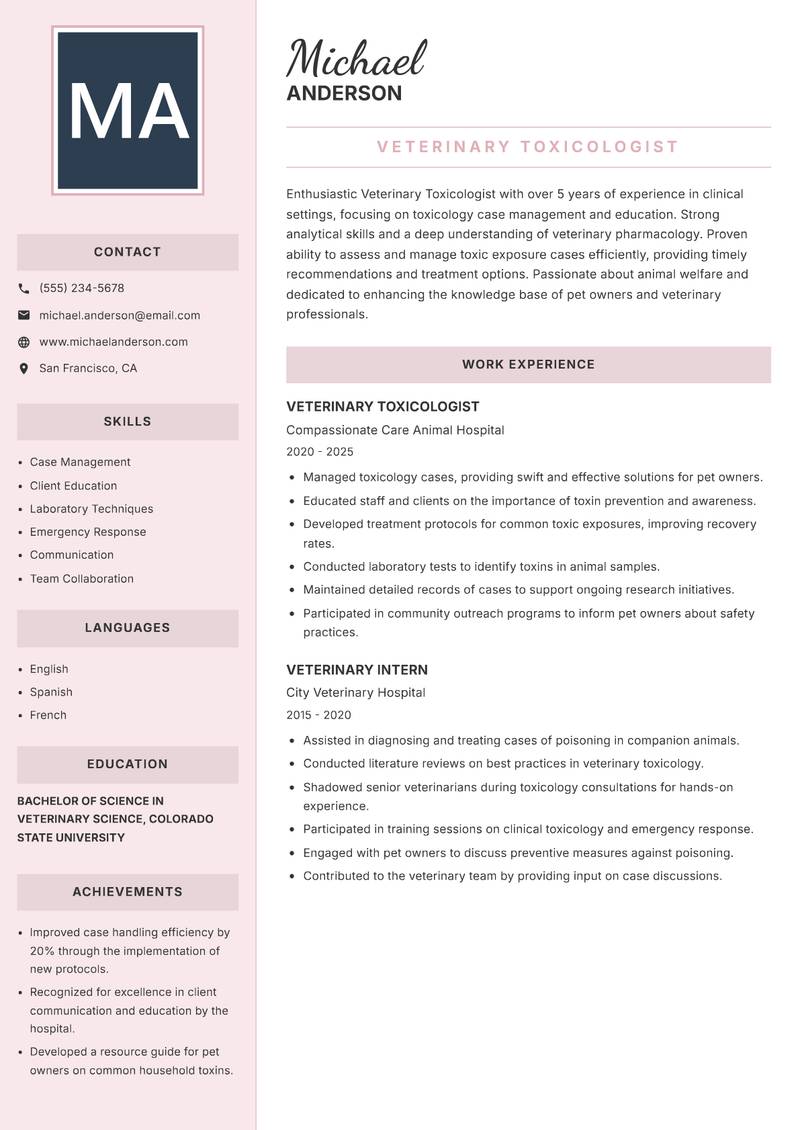
Executive
Use Template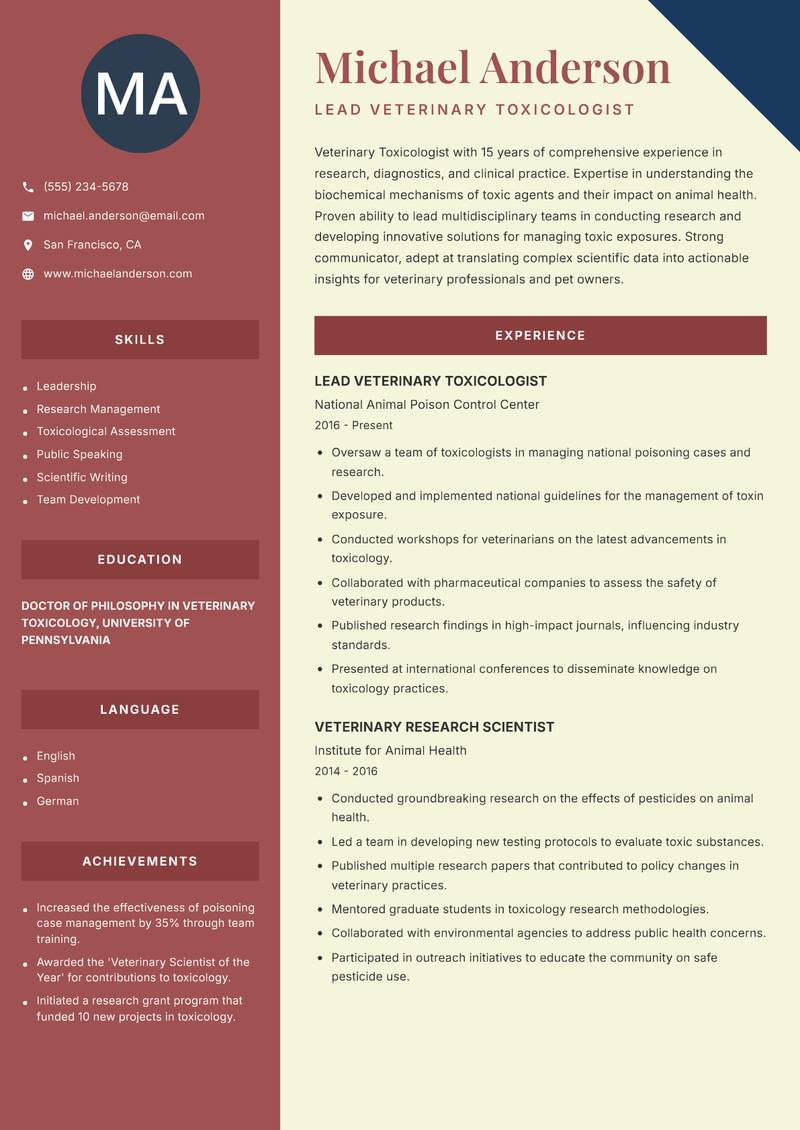
Two Column
Use Template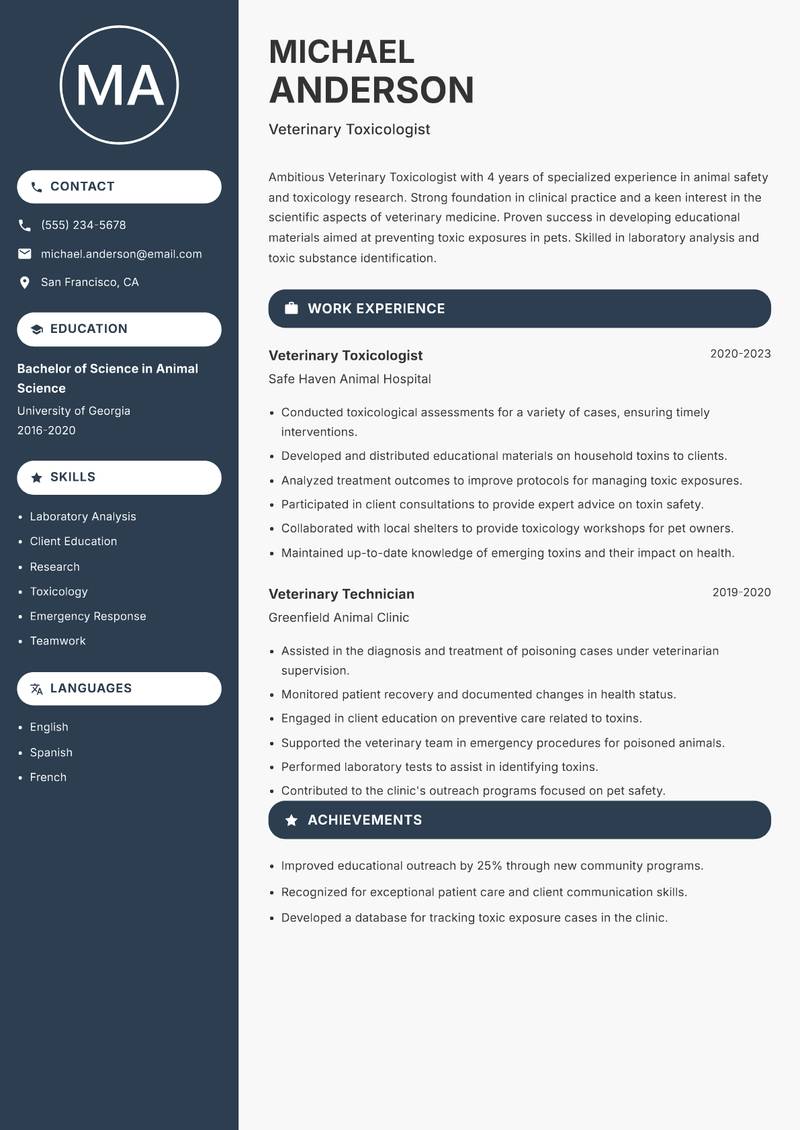
Compact
Use Template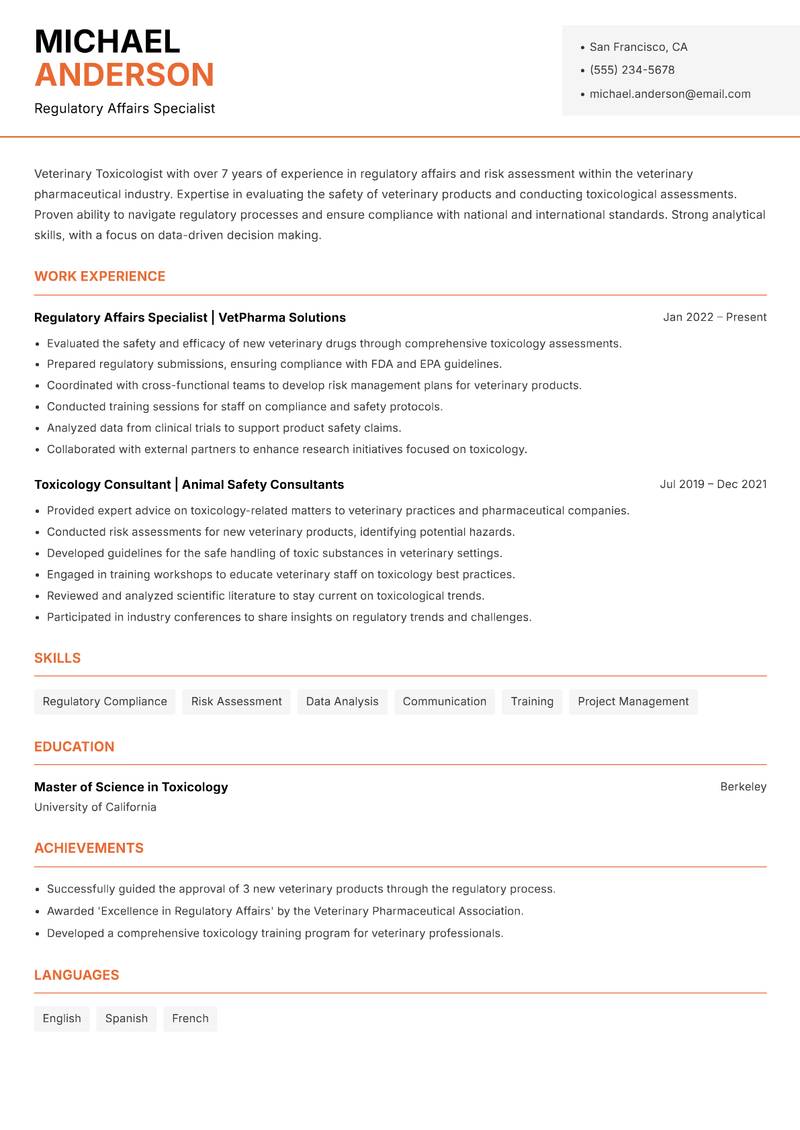
Modern Professional
Use Template7 Real Veterinary Toxicologist Resume Examples
Senior Veterinary Toxicologist with 12+ Years Experience
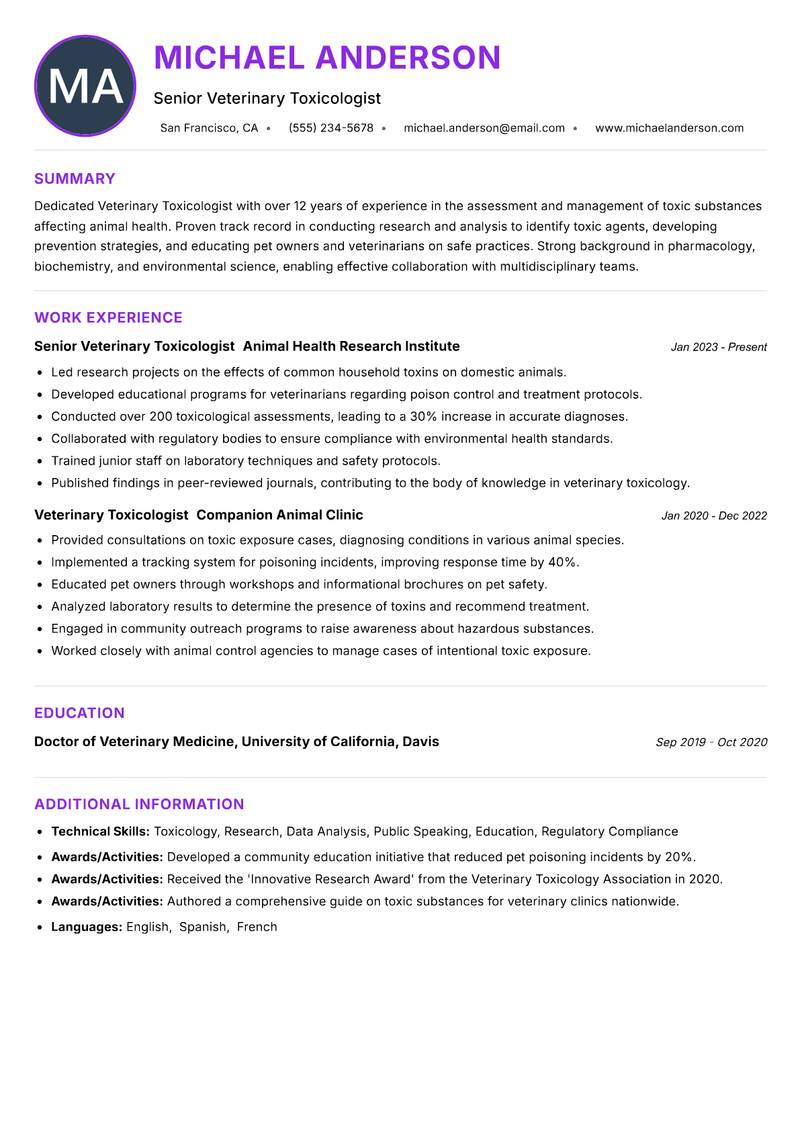
Summary: Dedicated Veterinary Toxicologist with over 12 years of experience in the assessment and management of toxic substances affecting animal health. Proven track record in conducting research and analysis to identify toxic agents, developing prevention strategies, and educating pet owners and veterinarians on safe practices. Strong background in pharmacology, biochemistry, and environmental science, enabling effective collaboration with multidisciplinary teams. Skilled in utilizing advanced laboratory techniques and diagnostic tools, combined with a passion for improving animal welfare through scientific advances. Adept at presenting complex information in understandable formats to diverse audiences, and committed to staying updated with the latest research and regulatory changes impacting veterinary toxicology. Seeking to leverage expertise in a dynamic organization focused on innovative veterinary solutions and public health.
Description:
- Led research projects on the effects of common household toxins on domestic animals.
- Developed educational programs for veterinarians regarding poison control and treatment protocols.
- Conducted over 200 toxicological assessments, leading to a 30% increase in accurate diagnoses.
- Collaborated with regulatory bodies to ensure compliance with environmental health standards.
- Trained junior staff on laboratory techniques and safety protocols.
- Published findings in peer-reviewed journals, contributing to the body of knowledge in veterinary toxicology.
🏆 Key Achievements
Veterinary Toxicologist with 8+ Years Experience
Summary: Experienced Veterinary Toxicologist with 8 years of experience in clinical toxicology and environmental risk assessment. Expertise in identifying toxic substances, conducting laboratory research, and advising on safe animal care practices. Proficient in using analytical techniques such as gas chromatography and mass spectrometry to evaluate toxic effects on animal health. Strong communicator, adept at collaborating with veterinarians and pet owners to develop effective treatment plans and risk management strategies. Passionate about advancing veterinary medicine through research and education, and committed to promoting animal welfare. Seeking a challenging role where I can apply my skills in toxicology to contribute to animal health and safety.
Description:
- Conducted toxicological evaluations of over 300 cases of animal poisonings annually.
- Designed and implemented a toxicology training program for veterinary staff.
- Utilized LC-MS techniques to analyze toxic substances in animal tissues.
- Collaborated with veterinarians to develop personalized treatment plans for affected animals.
- Presented findings at national veterinary conferences, enhancing the clinic's reputation.
- Maintained accurate records of toxic exposure cases to support ongoing research initiatives.
🏆 Key Achievements
Associate Professor of Veterinary Toxicology with 10+ Years Experience
Summary: Veterinary Toxicologist with a decade of experience in academia and clinical settings, specializing in the effects of environmental toxins on animal health. Strong background in laboratory research, toxicological assessments, and public education. Adept at interpreting complex data and collaborating with interdisciplinary teams to achieve impactful results. Proven ability to develop educational materials and workshops aimed at informing veterinarians and the public about the risks of toxic exposure. Committed to advancing veterinary toxicology through research, innovation, and community engagement. Looking for an opportunity to contribute to a research institution focused on animal health and environmental safety.
Description:
- Taught veterinary toxicology courses to graduate students, enhancing curriculum with current research.
- Conducted research on heavy metal toxicity in companion animals, resulting in significant findings.
- Supervised graduate research projects, fostering the next generation of toxicologists.
- Organized annual workshops on environmental toxins and animal welfare.
- Published research in top-tier veterinary journals, raising awareness of toxicology issues.
- Collaborated with local animal shelters to provide educational resources on toxin prevention.
🏆 Key Achievements
Veterinary Toxicologist with 5+ Years Experience
Summary: Enthusiastic Veterinary Toxicologist with over 5 years of experience in clinical settings, focusing on toxicology case management and education. Strong analytical skills and a deep understanding of veterinary pharmacology. Proven ability to assess and manage toxic exposure cases efficiently, providing timely recommendations and treatment options. Passionate about animal welfare and dedicated to enhancing the knowledge base of pet owners and veterinary professionals. Skilled in using modern diagnostic tools to identify toxic agents and their effects. Seeking a role that allows for direct impact on animal health and safety through research and community education.
Description:
- Managed toxicology cases, providing swift and effective solutions for pet owners.
- Educated staff and clients on the importance of toxin prevention and awareness.
- Developed treatment protocols for common toxic exposures, improving recovery rates.
- Conducted laboratory tests to identify toxins in animal samples.
- Maintained detailed records of cases to support ongoing research initiatives.
- Participated in community outreach programs to inform pet owners about safety practices.
🏆 Key Achievements
Lead Veterinary Toxicologist with 15+ Years Experience
Summary: Veterinary Toxicologist with 15 years of comprehensive experience in research, diagnostics, and clinical practice. Expertise in understanding the biochemical mechanisms of toxic agents and their impact on animal health. Proven ability to lead multidisciplinary teams in conducting research and developing innovative solutions for managing toxic exposures. Strong communicator, adept at translating complex scientific data into actionable insights for veterinary professionals and pet owners. Passionate about advancing veterinary toxicology through education, research, and community engagement. Seeking a leadership role in a forward-thinking veterinary organization focused on animal health and safety.
Description:
- Oversaw a team of toxicologists in managing national poisoning cases and research.
- Developed and implemented national guidelines for the management of toxin exposure.
- Conducted workshops for veterinarians on the latest advancements in toxicology.
- Collaborated with pharmaceutical companies to assess the safety of veterinary products.
- Published research findings in high-impact journals, influencing industry standards.
- Presented at international conferences to disseminate knowledge on toxicology practices.
🏆 Key Achievements
Veterinary Toxicologist with 4+ Years Experience
Summary: Driven Veterinary Toxicologist with 4 years of specialized experience in animal safety and toxicology research. Strong foundation in clinical practice and a keen interest in the scientific aspects of veterinary medicine. Proven success in developing educational materials aimed at preventing toxic exposures in pets. Skilled in laboratory analysis and toxic substance identification. Passionate about improving animal welfare through proactive education and community involvement. Seeking a position that allows for growth and the opportunity to make a difference in veterinary toxicology.
Description:
- Conducted toxicological assessments for a variety of cases, ensuring timely interventions.
- Developed and distributed educational materials on household toxins to clients.
- Analyzed treatment outcomes to improve protocols for managing toxic exposures.
- Participated in client consultations to provide expert advice on toxin safety.
- Collaborated with local shelters to provide toxicology workshops for pet owners.
- Maintained up-to-date knowledge of emerging toxins and their impact on health.
🏆 Key Achievements
Regulatory Affairs Specialist with 7+ Years Experience
Summary: Veterinary Toxicologist with over 7 years of experience in regulatory affairs and risk assessment within the veterinary pharmaceutical industry. Expertise in evaluating the safety of veterinary products and conducting toxicological assessments. Proven ability to navigate regulatory processes and ensure compliance with national and international standards. Strong analytical skills, with a focus on data-driven decision making. Committed to improving animal health through effective risk management strategies and education. Seeking a senior role within a reputable organization that prioritizes animal safety and welfare.
Description:
- Evaluated the safety and efficacy of new veterinary drugs through comprehensive toxicology assessments.
- Prepared regulatory submissions, ensuring compliance with FDA and EPA guidelines.
- Coordinated with cross-functional teams to develop risk management plans for veterinary products.
- Conducted training sessions for staff on compliance and safety protocols.
- Analyzed data from clinical trials to support product safety claims.
- Collaborated with external partners to enhance research initiatives focused on toxicology.
🏆 Key Achievements
Key Skills for Veterinary Toxicologist
ATS Optimization Tips
Increase your chances of getting hired
Use Standard Headings
Use common section titles like Experience, Skills, etc.
Include Keywords
Add role-specific keywords from the job description
Keep it Simple
Avoid complex tables, images and graphics
Save in Right Format
Use PDF format unless otherwise specified
Veterinary Toxicologist Salary Insights
Average Salary
$105,000
per year
Salary Range
$80,000 - $130,000
per year
Top Paying Cities
Los Angeles, Seattle, Houston, Dallas, Boston
Source: Glassdoor, Payscale, Indeed (Updated April 2025)
Everything you need to write a great Veterinary Toxicologist resume
Strong Action Verbs to Use
Resume Writing Tips
- →Highlight specific case studies where you had a significant impact on treatment outcomes.
- →Include any research contributions or publications that demonstrate your expertise in toxicology.
- →Detail your familiarity with toxicological databases and software used for analyzing chemicals.
- →Mention any collaborations with veterinary clinics or research institutions to emphasize team experience.
- →Focus on your analytical abilities with real examples of toxicology assessments you conducted.
Common Mistakes to Avoid
- ✕Failing to emphasize laboratory skills specific to toxicology, such as chemical assays and diagnostics.
- ✕Neglecting to include specialized training or certifications relevant to veterinary toxicology.
- ✕Using generic job responsibilities rather than specific examples of cases handled.
- ✕Omitting the importance of communication skills for educating clients and veterinarians about toxins.
ATS Keywords for Veterinary Toxicologist
Veterinary Toxicologist Career Path
Relevant Certifications
Career Progression
Entry-Level
Work as a Veterinary Technician or Toxicological Assistant, gaining hands-on experience with animal care and toxicity cases.
Mid-Level
Serve as a Veterinary Toxicologist, analyzing suspected poisoning cases, conducting lab tests, and consulting with veterinarians about treatment options.
Senior-Level
Progress to Lead Veterinary Toxicologist, coordinating investigations into toxic substance exposure and training junior staff.
Expert-Level
Transition into a Research Executive position, focusing on developing safety protocols for veterinary pharmaceuticals and teaching at a university level.
Veterinary Toxicologist Interview Questions
Can you describe a challenging case you handled as a Veterinary Toxicologist? +
Focus on your analytical process, decision-making, and the outcomes.
What methods do you use for identifying and analyzing toxic substances? +
List specific laboratory techniques and tools you're proficient in.
How do you stay updated with the latest research in veterinary toxicology? +
Mention specific journals, conferences, or online courses that inform your practice.
Describe your experience working with interdisciplinary teams in a veterinary setting. +
Emphasize collaboration with veterinarians, chemists, and researchers.
What role do you play in educating pet owners about toxic substances? +
Discuss your approach to communicating complex information in an understandable way.
Have you ever contributed to research publications? If so, describe your involvement. +
Showcase your research experience and any relevant contributions.
How do you manage stress and decision-making in high-pressure situations? +
Highlight specific strategies or examples from your experience.
About the Veterinary Toxicologist Role
Daily responsibilities for a Veterinary Toxicologist often include performing critical toxicological screenings and interpreting lab results to guide treatment plans for animal patients. Collaborating with veterinary teams, you assess toxic exposure risks and develop protocols to mitigate or manage these risks effectively. This role requires an understanding of chemical interactions within animal systems, often necessitating advanced laboratory skills and up-to-date knowledge on emerging toxins in the veterinary field.
Frequently Asked Questions
View all →What is the typical work environment for a Veterinary Toxicologist? +
Veterinary Toxicologists typically work in laboratories, private veterinary offices, or research facilities, often collaborating closely with clinical teams.
What educational background is required to become a Veterinary Toxicologist? +
A Doctor of Veterinary Medicine (DVM) degree is required, along with specialized training or certification in toxicology.
What types of cases does a Veterinary Toxicologist deal with? +
Cases often involve animals that have ingested poisonous substances, exposure to toxic plants, or adverse drug reactions.
How does a Veterinary Toxicologist contribute to pet owner education? +
They develop informative resources and provide direct consultations regarding safe medication use and toxin prevention.
Is hands-on experience important for this role? +
Yes, practical experience assessing and treating toxicological cases is crucial for effective diagnosis and management.
What is the projected job outlook for Veterinary Toxicologists? +
The demand for Veterinary Toxicologists is expected to grow as awareness of pet safety and environmental toxins increases.
Can Veterinary Toxicologists work in research or academia? +
Absolutely, many Toxicologists contribute to research studies and teach at veterinary schools, influencing future practices in animal health.
More Resume Examples You Might Like
Related Career Paths
Other roles candidates for Veterinary Toxicologist positions often also consider.
Will this Veterinary Toxicologist resume pass the ATS scan?
Upload it and get an instant AI-scored compatibility check with specific fixes.
Check My Resume →
Pair it with a matching cover letter
AI drafts a first version from your job title and strengths — edit it live, then download the PDF.
Write My Cover Letter →
Written by Nohaya Career Team
Reviewed by HR Professionals · Updated April 2025
Ready to Build Your Perfect Resume?
Choose from 1000+ professional templates and land your dream job.
Create My Resume Now