Build an ATS-Friendly
Tissue Engineering Scientist Resume
That Gets Interviews
Advancements in tissue engineering are shaped through intricate research methodologies that integrate biology, materials science, and engineering principles. Innovating around biomaterials, a Tissue Engineering Scientist develops scaffolds and cellular systems aimed at repairing damaged organs or tissue. This dynamic…
Tissue Engineering Scientist Resume Templates
Modern Professional
Use Template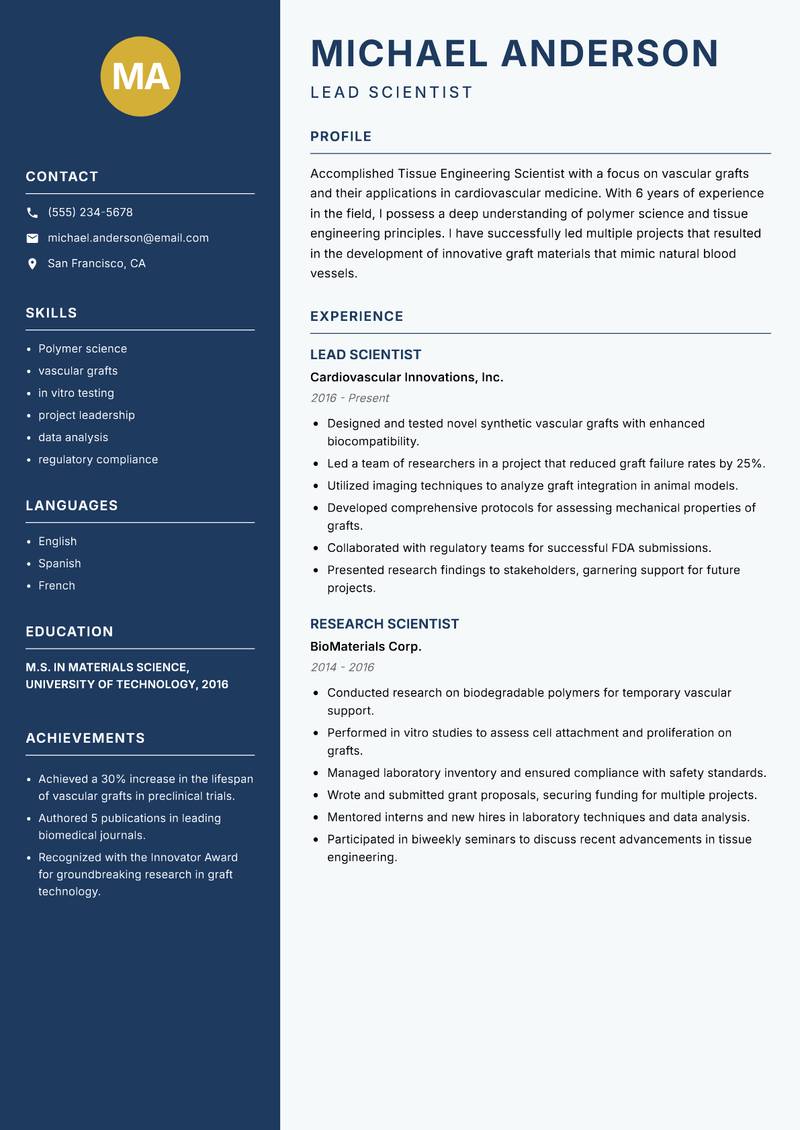
Classic Clean
Use Template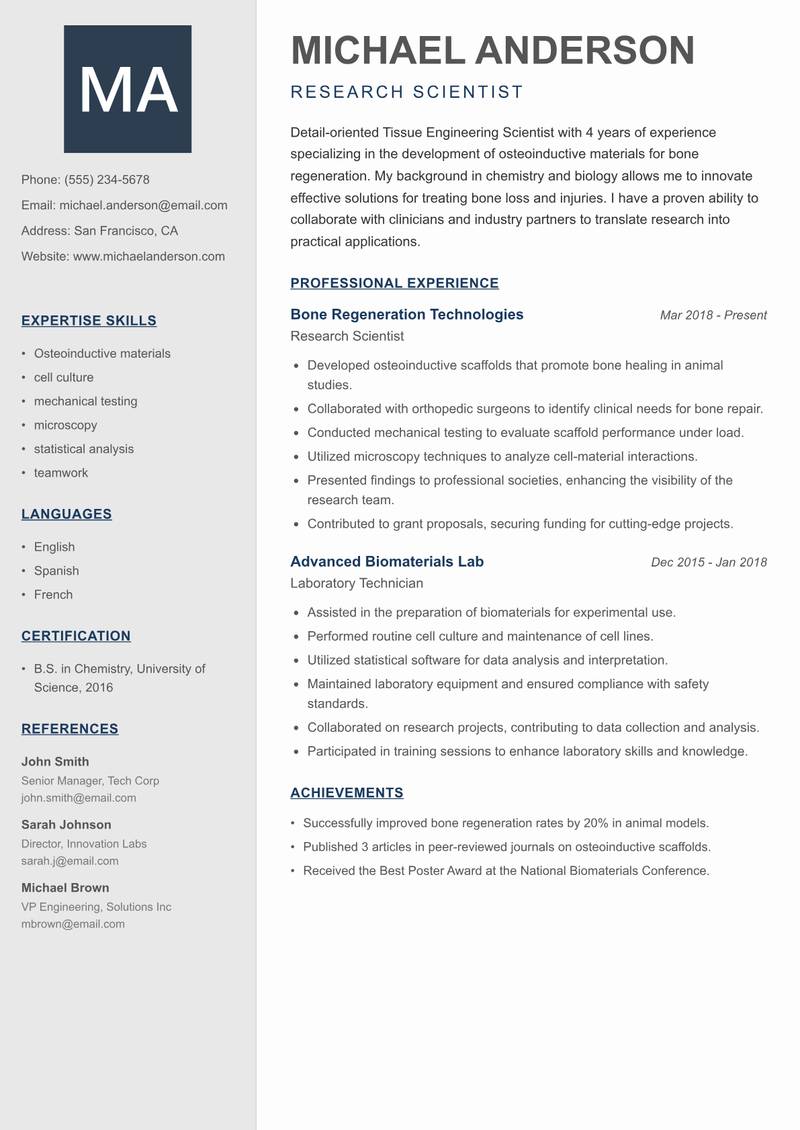
Creative Minimal
Use Template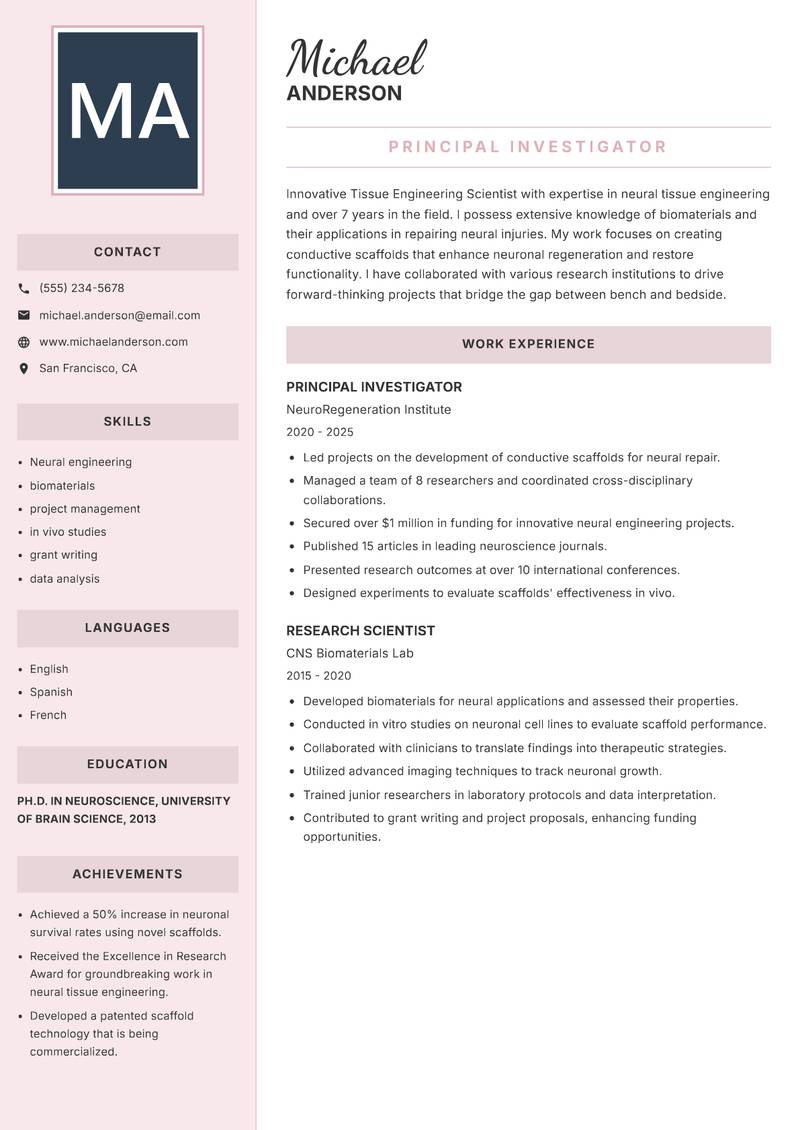
Executive
Use Template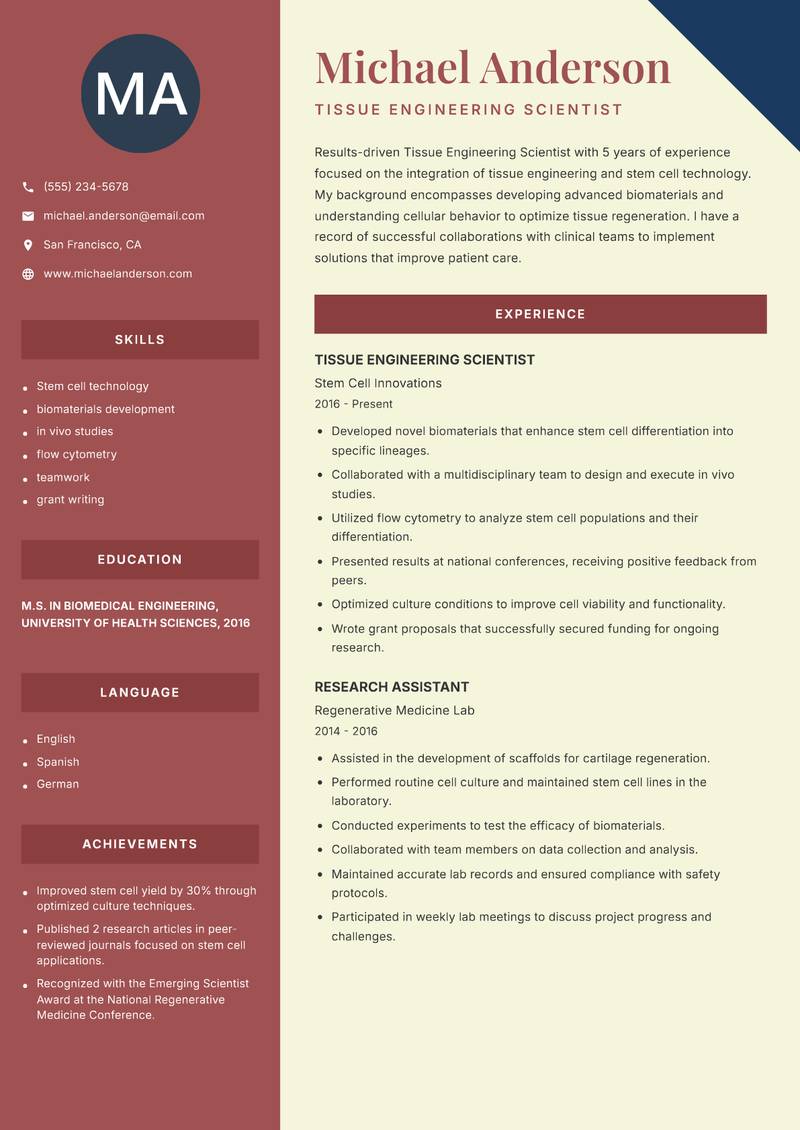
Two Column
Use Template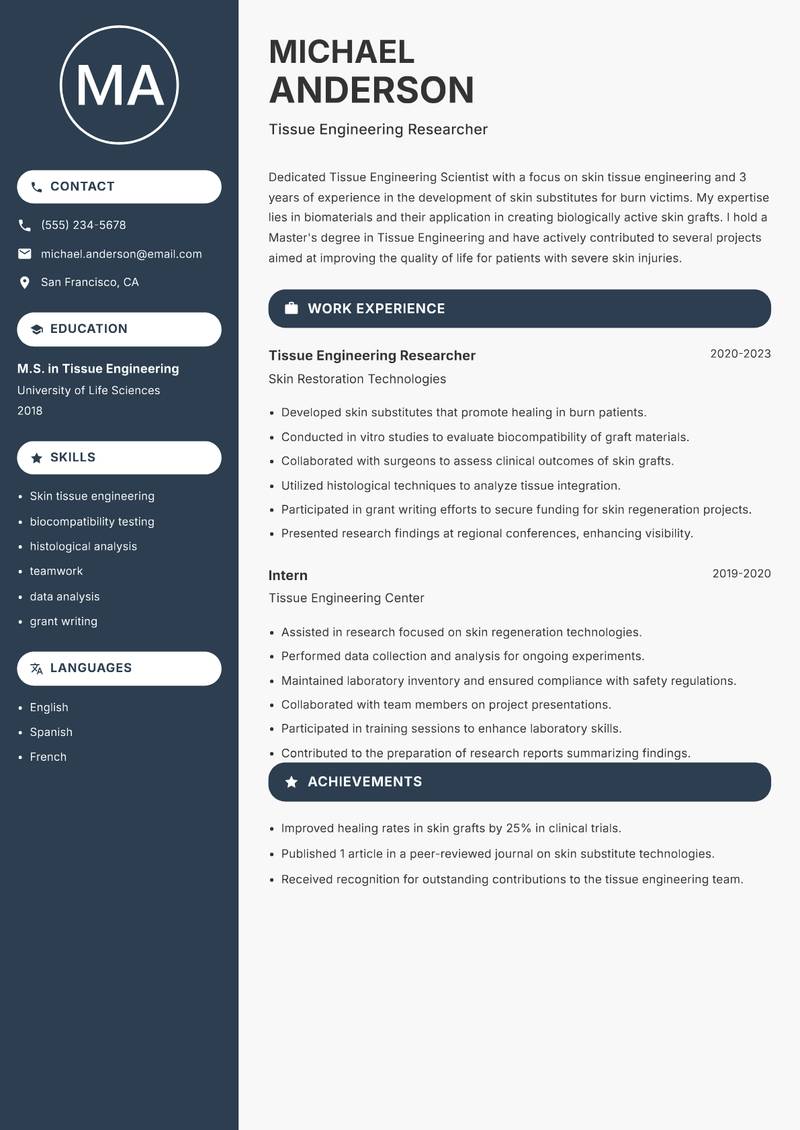
Compact
Use Template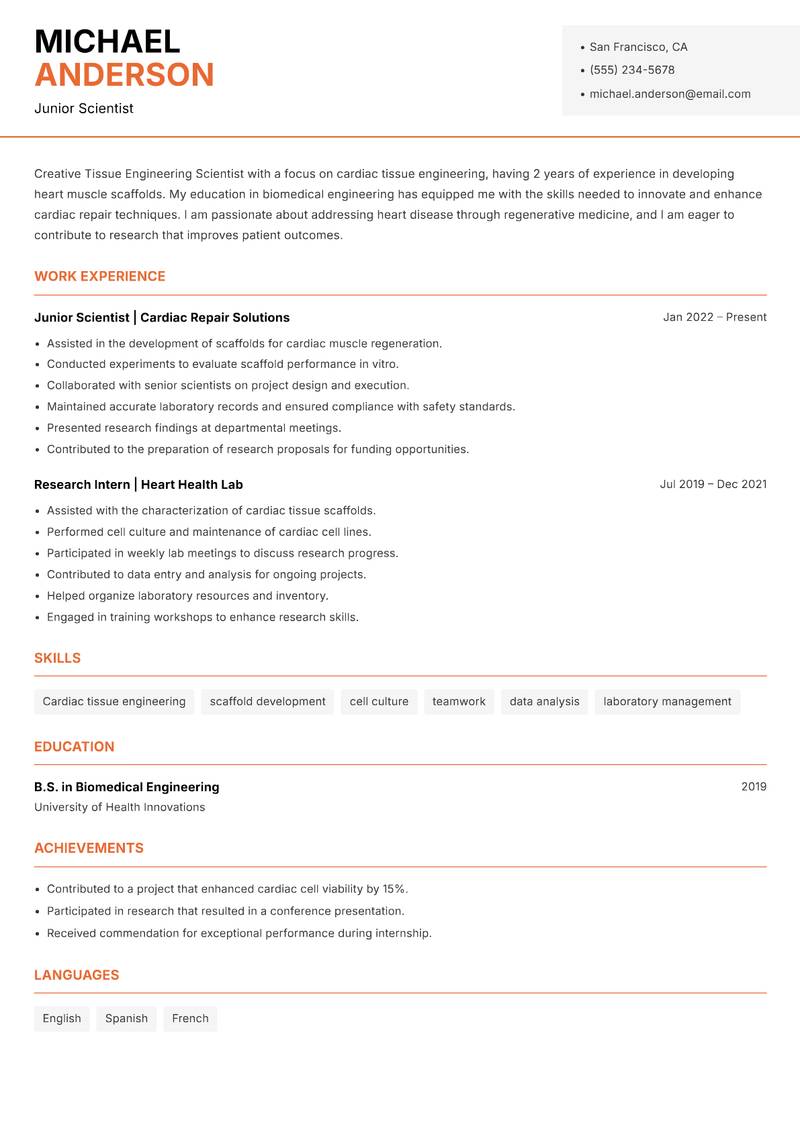
Modern Professional
Use Template7 Real Tissue Engineering Scientist Resume Examples
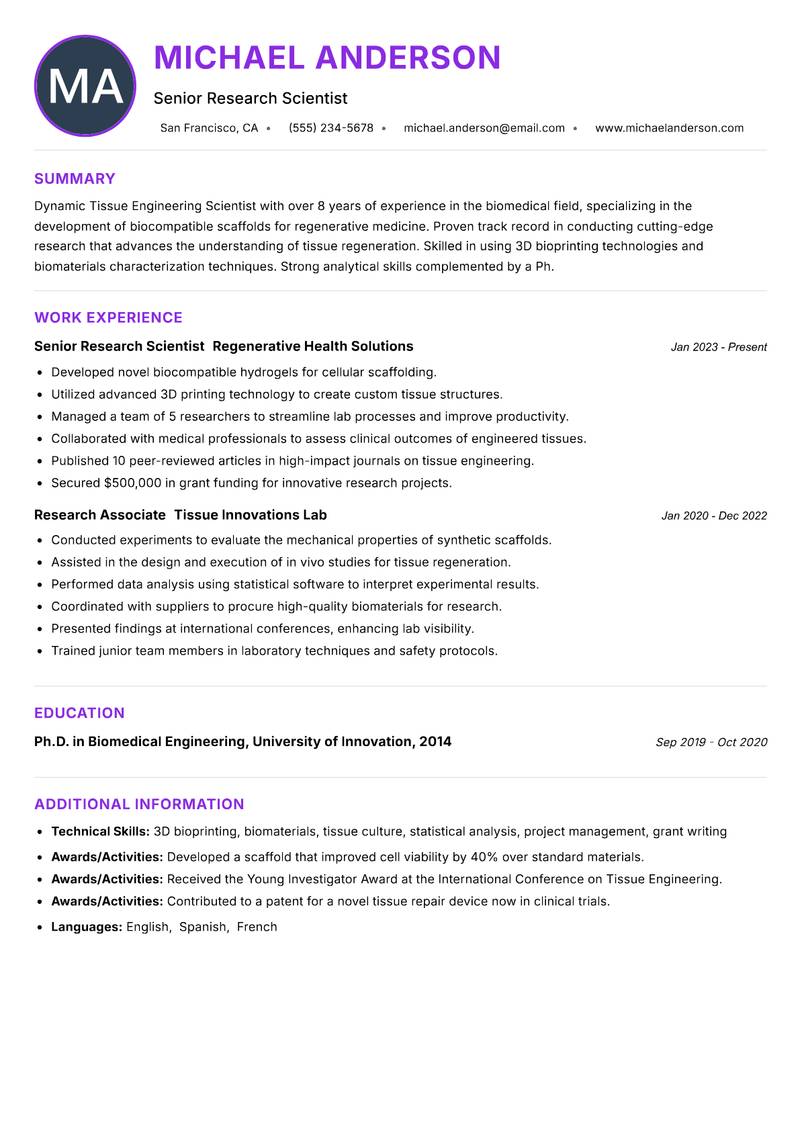
Senior Research Scientist with 8+ Years Experience
Summary: Dynamic Tissue Engineering Scientist with over 8 years of experience in the biomedical field, specializing in the development of biocompatible scaffolds for regenerative medicine. Proven track record in conducting cutting-edge research that advances the understanding of tissue regeneration. Skilled in using 3D bioprinting technologies and biomaterials characterization techniques. Strong analytical skills complemented by a Ph.D. in Biomedical Engineering from a reputable university. Passionate about translating laboratory findings into clinical applications. Recognized for collaborative work with cross-functional teams to drive innovative solutions in tissue engineering. Committed to continuous professional development and staying abreast of emerging trends in the field.
Description:
- Developed novel biocompatible hydrogels for cellular scaffolding.
- Utilized advanced 3D printing technology to create custom tissue structures.
- Managed a team of 5 researchers to streamline lab processes and improve productivity.
- Collaborated with medical professionals to assess clinical outcomes of engineered tissues.
- Published 10 peer-reviewed articles in high-impact journals on tissue engineering.
- Secured $500,000 in grant funding for innovative research projects.
🏆 Key Achievements
Lead Scientist with 6+ Years Experience
Summary: Accomplished Tissue Engineering Scientist with a focus on vascular grafts and their applications in cardiovascular medicine. With 6 years of experience in the field, I possess a deep understanding of polymer science and tissue engineering principles. I have successfully led multiple projects that resulted in the development of innovative graft materials that mimic natural blood vessels. My strong communication skills enable me to collaborate effectively with interdisciplinary teams and convey complex concepts to non-specialists. I hold a Master's degree in Materials Science and engage actively in scientific communities to share knowledge and best practices.
Description:
- Designed and tested novel synthetic vascular grafts with enhanced biocompatibility.
- Led a team of researchers in a project that reduced graft failure rates by 25%.
- Utilized imaging techniques to analyze graft integration in animal models.
- Developed comprehensive protocols for assessing mechanical properties of grafts.
- Collaborated with regulatory teams for successful FDA submissions.
- Presented research findings to stakeholders, garnering support for future projects.
🏆 Key Achievements
Research Scientist with 4+ Years Experience
Summary: Detail-oriented Tissue Engineering Scientist with 4 years of experience specializing in the development of osteoinductive materials for bone regeneration. My background in chemistry and biology allows me to innovate effective solutions for treating bone loss and injuries. I have a proven ability to collaborate with clinicians and industry partners to translate research into practical applications. I am passionate about improving patient outcomes through advanced tissue engineering techniques. My research has led to the publication of multiple articles in respected journals, and I actively seek to enhance my expertise through continuous learning and professional development.
Description:
- Developed osteoinductive scaffolds that promote bone healing in animal studies.
- Collaborated with orthopedic surgeons to identify clinical needs for bone repair.
- Conducted mechanical testing to evaluate scaffold performance under load.
- Utilized microscopy techniques to analyze cell-material interactions.
- Presented findings to professional societies, enhancing the visibility of the research team.
- Contributed to grant proposals, securing funding for cutting-edge projects.
🏆 Key Achievements
Principal Investigator with 7+ Years Experience
Summary: Innovative Tissue Engineering Scientist with expertise in neural tissue engineering and over 7 years in the field. I possess extensive knowledge of biomaterials and their applications in repairing neural injuries. My work focuses on creating conductive scaffolds that enhance neuronal regeneration and restore functionality. I have collaborated with various research institutions to drive forward-thinking projects that bridge the gap between bench and bedside. With a Ph.D. in Neuroscience, I am dedicated to advancing research that improves the lives of patients with neurological disorders. I have published numerous articles and presented findings at international conferences, establishing myself as a thought leader in the field.
Description:
- Led projects on the development of conductive scaffolds for neural repair.
- Managed a team of 8 researchers and coordinated cross-disciplinary collaborations.
- Secured over $1 million in funding for innovative neural engineering projects.
- Published 15 articles in leading neuroscience journals.
- Presented research outcomes at over 10 international conferences.
- Designed experiments to evaluate scaffolds' effectiveness in vivo.
🏆 Key Achievements
Tissue Engineering Scientist with 5+ Years Experience
Summary: Experienced Tissue Engineering Scientist with 5 years of experience focused on the integration of tissue engineering and stem cell technology. My background encompasses developing advanced biomaterials and understanding cellular behavior to optimize tissue regeneration. I have a record of successful collaborations with clinical teams to implement solutions that improve patient care. Possessing a Master's degree in Biomedical Engineering, I am committed to ongoing research and professional growth in the field. My passion lies in creating innovative therapies that harness the power of stem cells for regenerative medicine, and I have presented my work at several national conferences.
Description:
- Developed novel biomaterials that enhance stem cell differentiation into specific lineages.
- Collaborated with a multidisciplinary team to design and execute in vivo studies.
- Utilized flow cytometry to analyze stem cell populations and their differentiation.
- Presented results at national conferences, receiving positive feedback from peers.
- Optimized culture conditions to improve cell viability and functionality.
- Wrote grant proposals that successfully secured funding for ongoing research.
🏆 Key Achievements
Tissue Engineering Researcher with 3+ Years Experience
Summary: Dedicated Tissue Engineering Scientist with a focus on skin tissue engineering and 3 years of experience in the development of skin substitutes for burn victims. My expertise lies in biomaterials and their application in creating biologically active skin grafts. I hold a Master's degree in Tissue Engineering and have actively contributed to several projects aimed at improving the quality of life for patients with severe skin injuries. I am proficient in conducting both in vitro and in vivo studies and have a strong commitment to advancing the field through innovative research and collaboration with healthcare professionals.
Description:
- Developed skin substitutes that promote healing in burn patients.
- Conducted in vitro studies to evaluate biocompatibility of graft materials.
- Collaborated with surgeons to assess clinical outcomes of skin grafts.
- Utilized histological techniques to analyze tissue integration.
- Participated in grant writing efforts to secure funding for skin regeneration projects.
- Presented research findings at regional conferences, enhancing visibility.
🏆 Key Achievements
Junior Scientist with 2+ Years Experience
Summary: Creative Tissue Engineering Scientist with a focus on cardiac tissue engineering, having 2 years of experience in developing heart muscle scaffolds. My education in biomedical engineering has equipped me with the skills needed to innovate and enhance cardiac repair techniques. I am passionate about addressing heart disease through regenerative medicine, and I am eager to contribute to research that improves patient outcomes. I have collaborated with clinicians to understand the challenges faced in cardiac health and am committed to finding solutions through interdisciplinary approaches. My goal is to further my expertise in tissue engineering while contributing to impactful projects.
Description:
- Assisted in the development of scaffolds for cardiac muscle regeneration.
- Conducted experiments to evaluate scaffold performance in vitro.
- Collaborated with senior scientists on project design and execution.
- Maintained accurate laboratory records and ensured compliance with safety standards.
- Presented research findings at departmental meetings.
- Contributed to the preparation of research proposals for funding opportunities.
🏆 Key Achievements
Key Skills for Tissue Engineering Scientist
ATS Optimization Tips
Increase your chances of getting hired
Use Standard Headings
Use common section titles like Experience, Skills, etc.
Include Keywords
Add role-specific keywords from the job description
Keep it Simple
Avoid complex tables, images and graphics
Save in Right Format
Use PDF format unless otherwise specified
Tissue Engineering Scientist Salary Insights
Average Salary
$105,000
per year
Salary Range
$80,000 - $130,000
per year
Top Paying Cities
Los Angeles, Seattle, Houston, Dallas, Boston
Source: Glassdoor, Payscale, Indeed (Updated May 2025)
Everything you need to write a great Tissue Engineering Scientist resume
Strong Action Verbs to Use
Resume Writing Tips
- →Highlight specific techniques in biomaterials development and the tools used for each.
- →Include quantifiable outcomes from your research or projects, such as improved healing times or successful animal model studies.
- →Emphasize collaborative projects with healthcare professionals, showcasing successful clinical applications.
- →Demonstrate your understanding of regulatory considerations in the biomedical field through relevant case studies or experiences.
- →Use industry-specific terminologies that align with current trends in tissue engineering.
Common Mistakes to Avoid
- ✕Vaguely mentioning experience with laboratory techniques without specifying the processes or technologies relevant to tissue engineering.
- ✕Listing research topics without detailing your contributions or findings within those projects.
- ✕Not highlighting collaboration with clinical stakeholders, which is crucial in translating research into practice.
- ✕Overgeneralizing educational backgrounds without emphasizing specialized training relevant to tissue engineering.
ATS Keywords for Tissue Engineering Scientist
Tissue Engineering Scientist Career Path
Career Progression
Entry-Level Tissue Engineering Scientist
Focuses on laboratory techniques and assisting in research projects, analyzing data, and performing experiments under supervision.
Mid-Level Tissue Engineering Scientist
Responsible for designing and conducting research projects, mentoring junior scientists, and publishing studies in academic journals.
Senior Tissue Engineering Scientist
Leads research teams, develops innovative biomaterials and scaffolding for tissue regeneration, and collaborates with clinical professionals to translate findings into medical applications.
Principal Investigator in Tissue Engineering
Oversees sizable research programs, secures funding, and establishes strategic partnerships with academic institutions and biomedical companies.
Director of Tissue Engineering Research
Manages departmental budgets, aligns research with clinical needs, and drives projects towards commercialization.
Tissue Engineering Scientist Interview Questions
What types of scaffolds have you developed for tissue engineering applications? +
Be specific about materials, processes, and the applications they were intended for.
How do you ensure the biocompatibility of materials used in tissue engineering? +
Discuss methods and tests you have performed for materials evaluation.
Can you describe your experience with in vivo and in vitro testing methodologies? +
Share examples illustrating both testing environments and their relevance to your projects.
What challenges have you encountered in translating tissue engineering research to clinical applications? +
Focus on specifics, such as regulatory hurdles or technical limitations.
How do you stay updated with advancements in tissue engineering? +
Mention specific journals, conferences, or professional networks.
What role does interdisciplinary collaboration play in your research? +
Give examples of how working with other disciplines has enhanced your projects.
About the Tissue Engineering Scientist Role
Advancements in tissue engineering are shaped through intricate research methodologies that integrate biology, materials science, and engineering principles. Innovating around biomaterials, a Tissue Engineering Scientist develops scaffolds and cellular systems aimed at repairing damaged organs or tissue. This dynamic role demands both creativity and technical prowess, as the scientist collaborates with multidisciplinary teams to translate lab successes into viable therapeutic options, often addressing complex issues such as material biocompatibility and patient outcomes.
Frequently Asked Questions
What educational background is necessary for a career as a Tissue Engineering Scientist? +
Typically, a Ph.D. in biomedical engineering, tissue engineering, or a closely related field is required, with a focus on molecular biology or materials science.
What industries employ Tissue Engineering Scientists? +
They can be found in academic research, biotechnology firms, and medical device companies, contributing to advancements in regenerative medicine.
Is there demand for Tissue Engineering Scientists? +
Yes, there is a growing demand as the field expands, particularly in areas like regenerative therapies and organ transplantation.
What are common tools used by Tissue Engineering Scientists? +
Common tools include tissue culture systems, 3D bioprinter technology, and various biomolecular assays.
How important is interdisciplinary collaboration in this role? +
Extremely important, as collaboration with biomaterials experts, surgeons, and other specialists is essential to successfully translate research into clinical applications.
What skills are most valued in a Tissue Engineering Scientist? +
Critical thinking, problem-solving, laboratory technique proficiency, and strong communication skills for collaboration and documentation are highly valued.
More Resume Examples You Might Like
Related Career Paths
Other roles candidates for Tissue Engineering Scientist positions often also consider.
Will this Tissue Engineering Scientist resume pass the ATS scan?
Upload it and get an instant AI-scored compatibility check with specific fixes.
Check My Resume →
Pair it with a matching cover letter
AI drafts a first version from your job title and strengths — edit it live, then download the PDF.
Write My Cover Letter →
Written by Nohaya Career Team
Reviewed by HR Professionals · Updated May 2025
Ready to Build Your Perfect Resume?
Choose from 1000+ professional templates and land your dream job.
Create My Resume Now