Build an ATS-Friendly
Structural Biologist Resume
That Gets Interviews
A Structural Biologist studies the three-dimensional structures of biological macromolecules, primarily proteins, to understand their function and interaction in biological systems. Utilizing advanced techniques such as X-ray crystallography and cryo-electron microscopy, they analyze structural data to inform drug…
Structural Biologist Resume Templates
Modern Professional
Use Template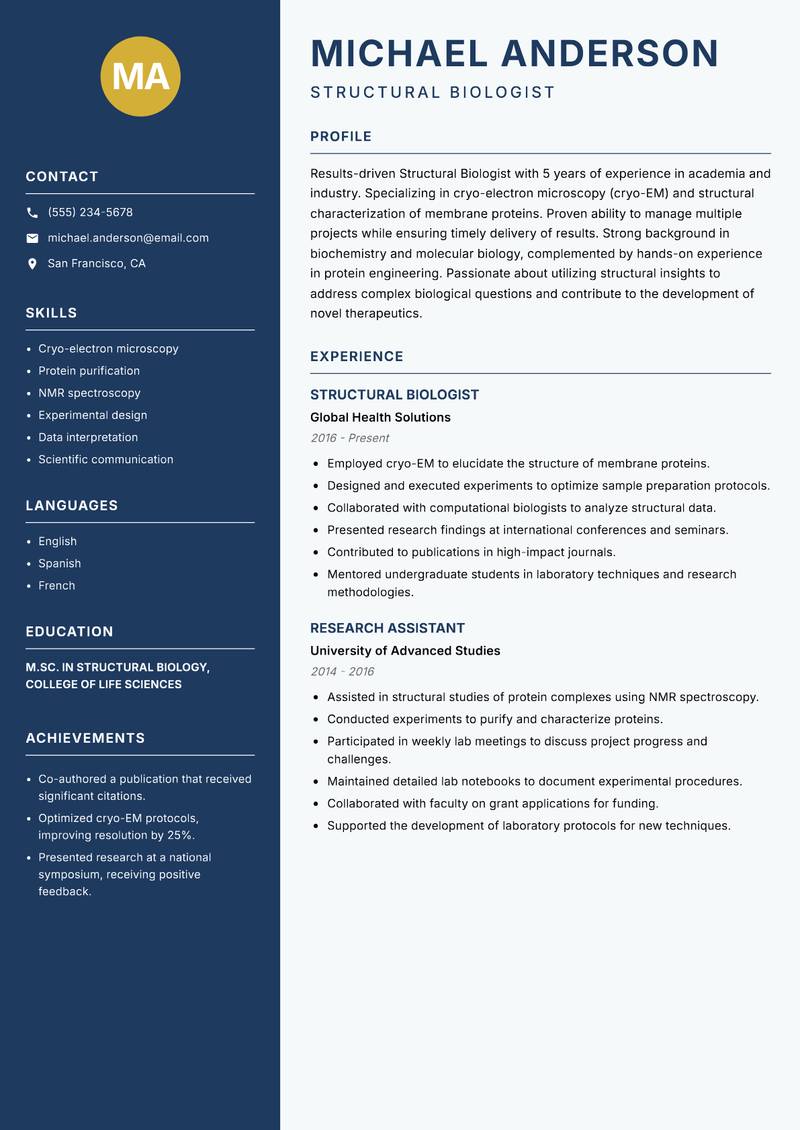
Classic Clean
Use Template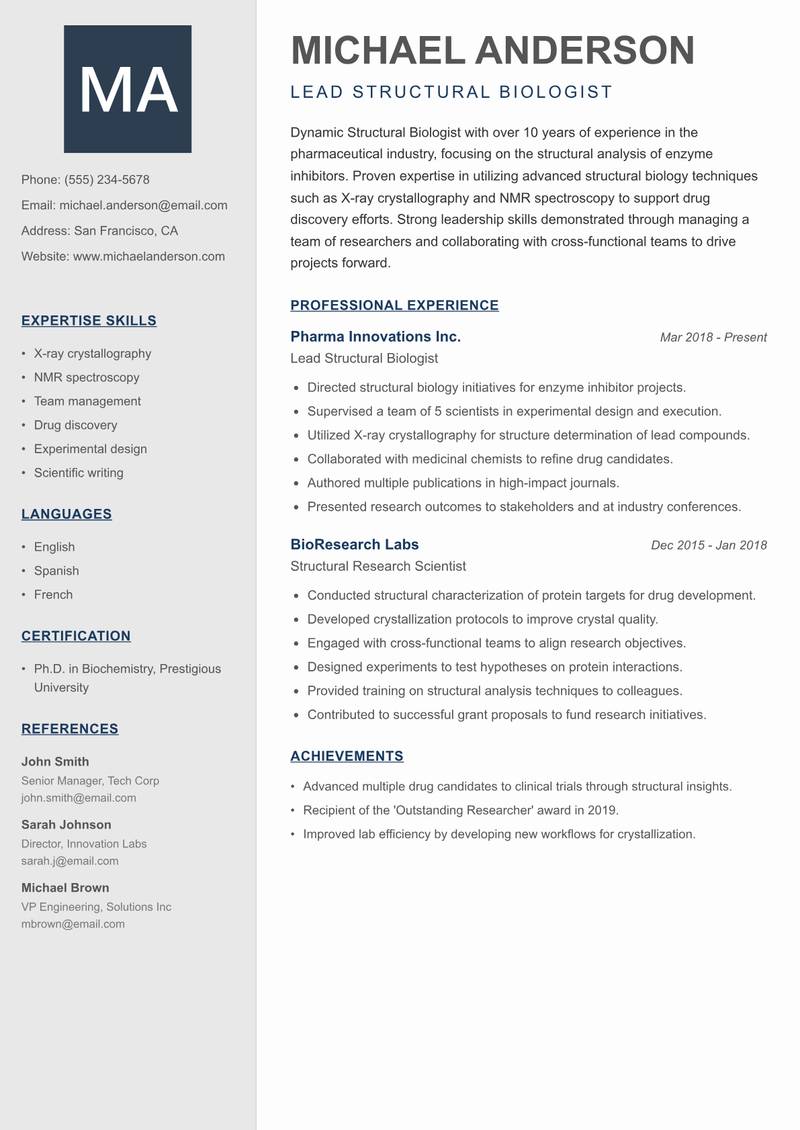
Creative Minimal
Use Template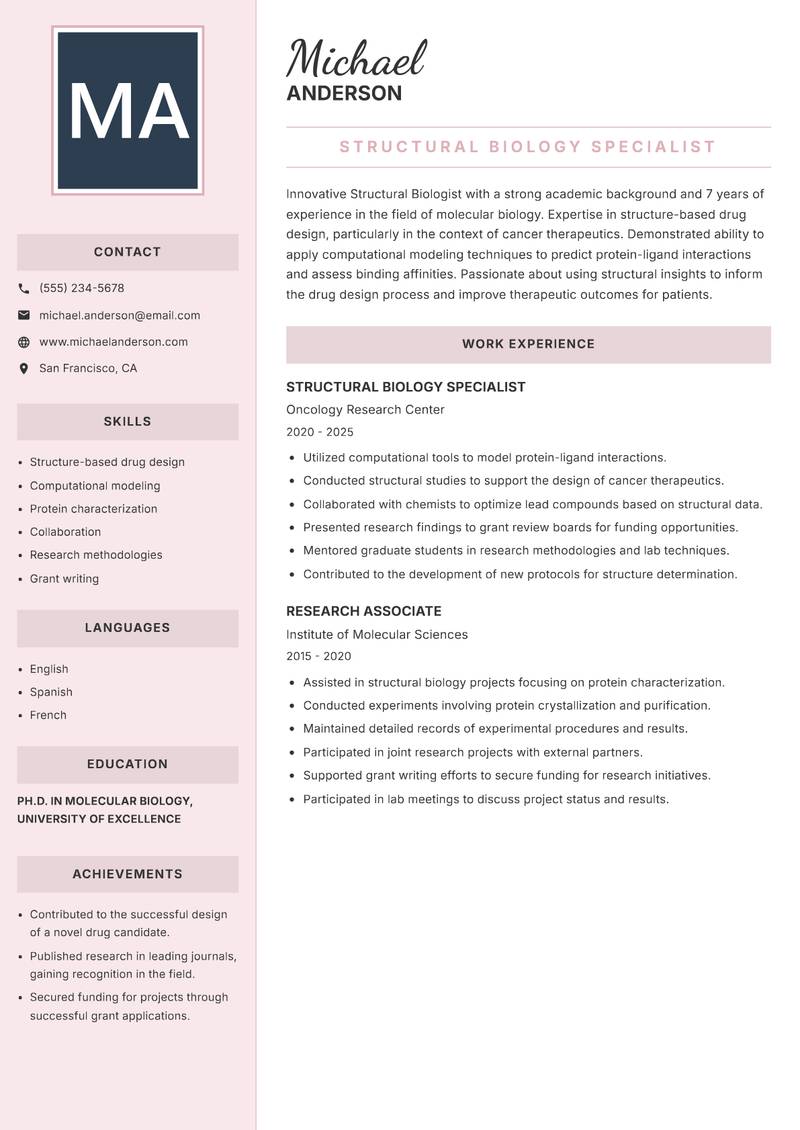
Executive
Use Template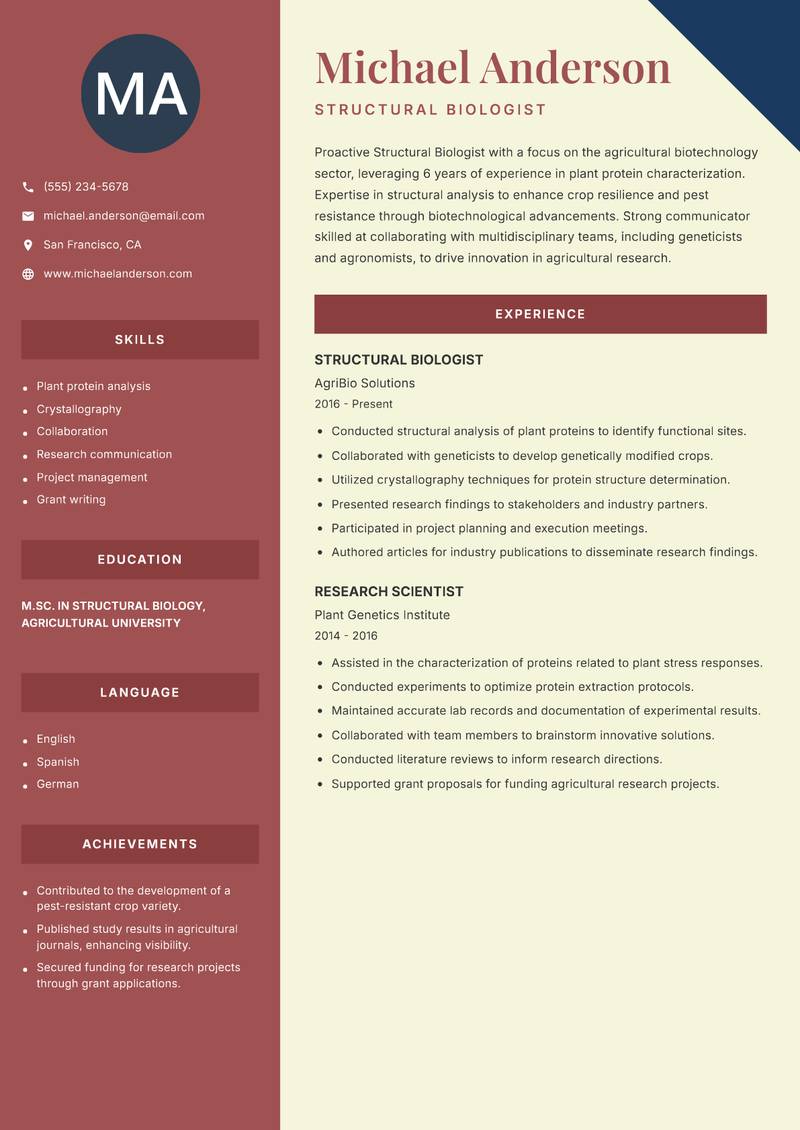
Two Column
Use Template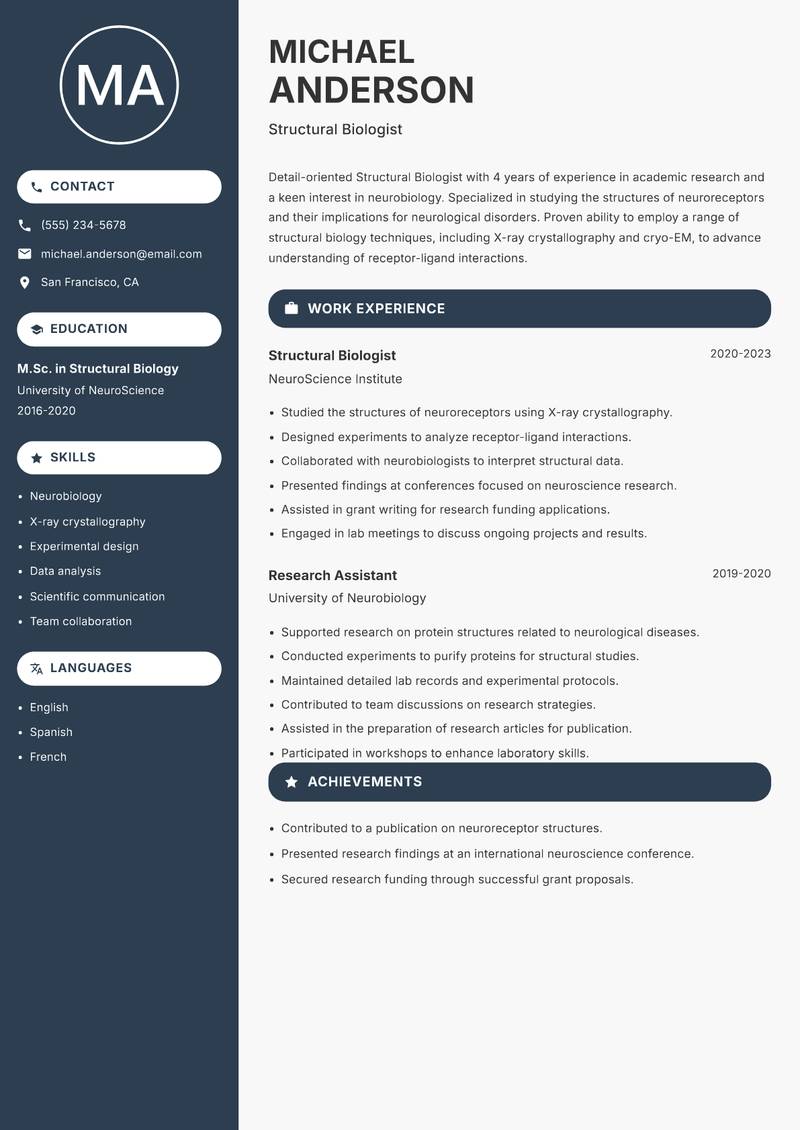
Compact
Use Template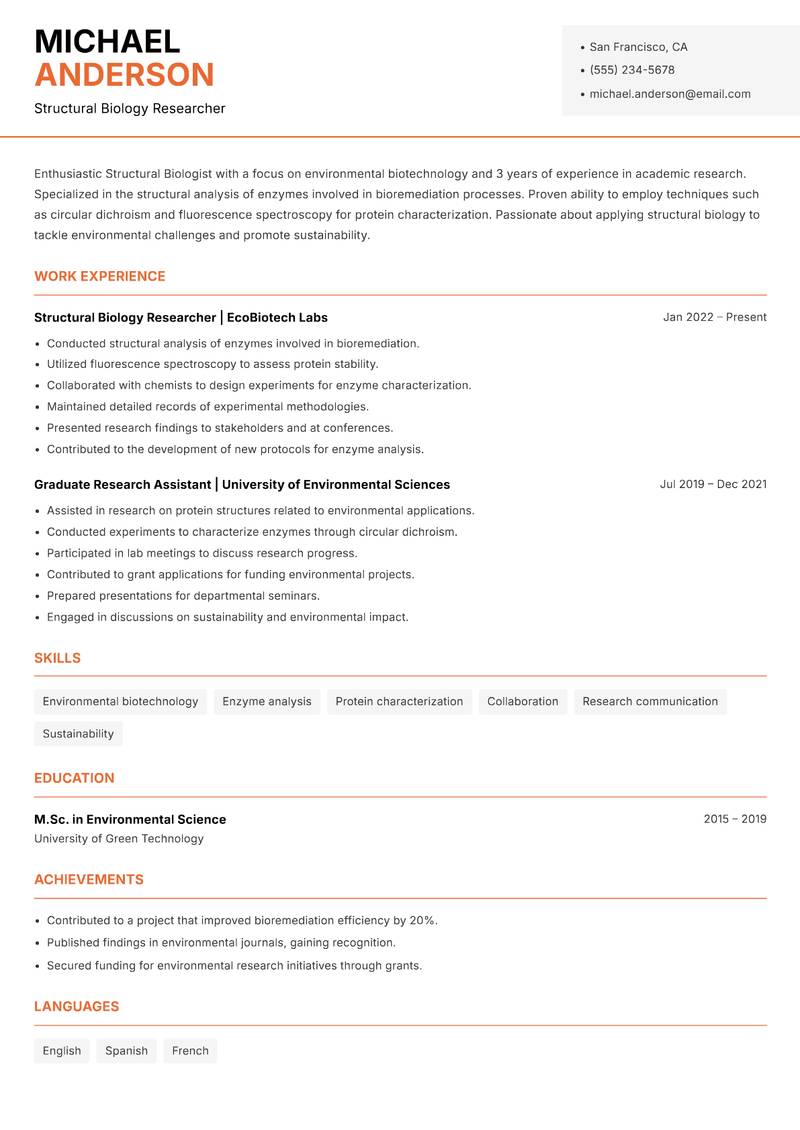
Modern Professional
Use Template7 Real Structural Biologist Resume Examples
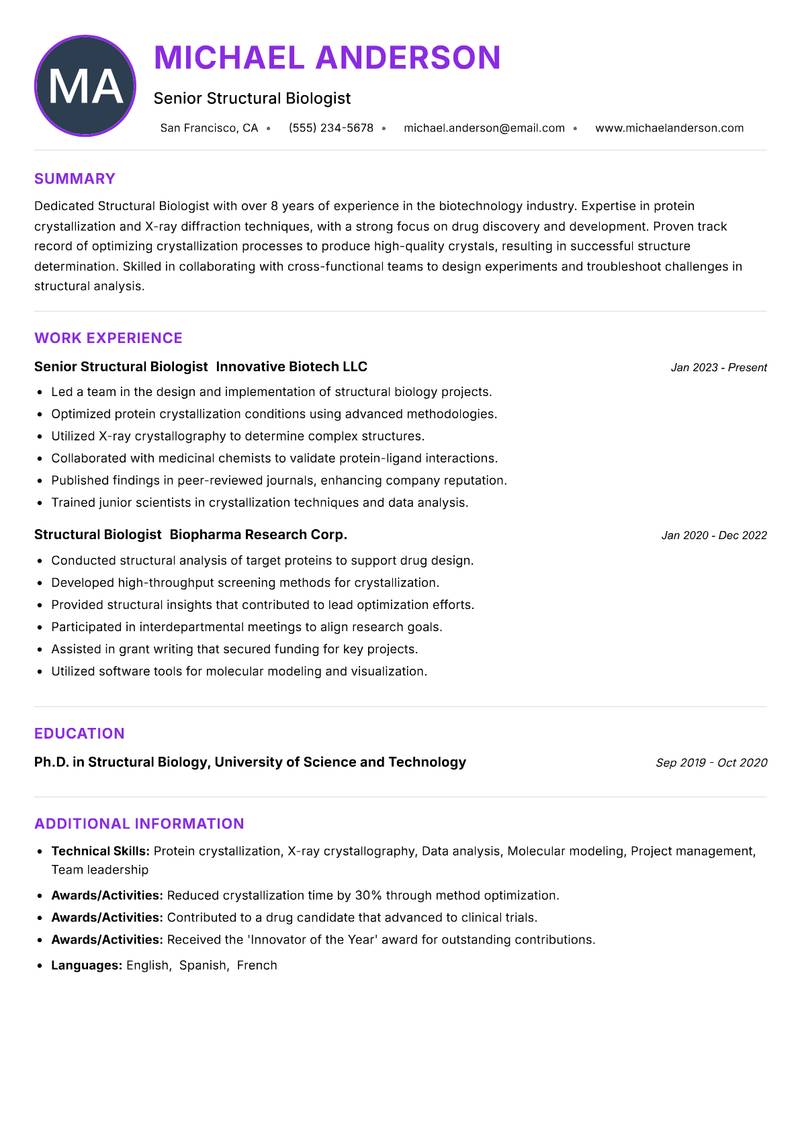
Senior Structural Biologist with 8+ Years Experience
Summary: Dedicated Structural Biologist with over 8 years of experience in the biotechnology industry. Expertise in protein crystallization and X-ray diffraction techniques, with a strong focus on drug discovery and development. Proven track record of optimizing crystallization processes to produce high-quality crystals, resulting in successful structure determination. Skilled in collaborating with cross-functional teams to design experiments and troubleshoot challenges in structural analysis. Passionate about advancing the understanding of protein-ligand interactions to support therapeutic innovations. Committed to continuous learning and staying updated with the latest advancements in structural biology. Holds a Ph.D. in Structural Biology from a leading institution, with publications in reputable journals. Strong analytical skills paired with a detail-oriented approach make me an asset in research and development environments.
Description:
- Led a team in the design and implementation of structural biology projects.
- Optimized protein crystallization conditions using advanced methodologies.
- Utilized X-ray crystallography to determine complex structures.
- Collaborated with medicinal chemists to validate protein-ligand interactions.
- Published findings in peer-reviewed journals, enhancing company reputation.
- Trained junior scientists in crystallization techniques and data analysis.
🏆 Key Achievements
Structural Biologist with 5+ Years Experience
Summary: Experienced Structural Biologist with 5 years of experience in academia and industry. Specializing in cryo-electron microscopy (cryo-EM) and structural characterization of membrane proteins. Proven ability to manage multiple projects while ensuring timely delivery of results. Strong background in biochemistry and molecular biology, complemented by hands-on experience in protein engineering. Passionate about utilizing structural insights to address complex biological questions and contribute to the development of novel therapeutics. Adept at presenting research findings to diverse audiences and collaborating with interdisciplinary teams. Committed to fostering a culture of scientific inquiry and innovation within research environments.
Description:
- Employed cryo-EM to elucidate the structure of membrane proteins.
- Designed and executed experiments to optimize sample preparation protocols.
- Collaborated with computational biologists to analyze structural data.
- Presented research findings at international conferences and seminars.
- Contributed to publications in high-impact journals.
- Mentored undergraduate students in laboratory techniques and research methodologies.
🏆 Key Achievements
Lead Structural Biologist with 10+ Years Experience
Summary: Dynamic Structural Biologist with over 10 years of experience in the pharmaceutical industry, focusing on the structural analysis of enzyme inhibitors. Proven expertise in utilizing advanced structural biology techniques such as X-ray crystallography and NMR spectroscopy to support drug discovery efforts. Strong leadership skills demonstrated through managing a team of researchers and collaborating with cross-functional teams to drive projects forward. Committed to mentoring junior scientists and fostering a collaborative research environment. Recognized for contributions to several successful drug candidates that reached the market. Holds a Ph.D. in Biochemistry, with a passion for translating structural data into actionable insights for therapeutic development.
Description:
- Directed structural biology initiatives for enzyme inhibitor projects.
- Supervised a team of 5 scientists in experimental design and execution.
- Utilized X-ray crystallography for structure determination of lead compounds.
- Collaborated with medicinal chemists to refine drug candidates.
- Authored multiple publications in high-impact journals.
- Presented research outcomes to stakeholders and at industry conferences.
🏆 Key Achievements
Structural Biology Specialist with 7+ Years Experience
Summary: Innovative Structural Biologist with a strong academic background and 7 years of experience in the field of molecular biology. Expertise in structure-based drug design, particularly in the context of cancer therapeutics. Demonstrated ability to apply computational modeling techniques to predict protein-ligand interactions and assess binding affinities. Passionate about using structural insights to inform the drug design process and improve therapeutic outcomes for patients. Adept at working in collaborative environments, with a history of successful partnerships with chemists and biologists. Committed to ongoing professional development and staying at the forefront of research in structural biology.
Description:
- Utilized computational tools to model protein-ligand interactions.
- Conducted structural studies to support the design of cancer therapeutics.
- Collaborated with chemists to optimize lead compounds based on structural data.
- Presented research findings to grant review boards for funding opportunities.
- Mentored graduate students in research methodologies and lab techniques.
- Contributed to the development of new protocols for structure determination.
🏆 Key Achievements
Structural Biologist with 6+ Years Experience
Summary: Driven Structural Biologist with a focus on the agricultural biotechnology sector, leveraging 6 years of experience in plant protein characterization. Expertise in structural analysis to enhance crop resilience and pest resistance through biotechnological advancements. Strong communicator skilled at collaborating with multidisciplinary teams, including geneticists and agronomists, to drive innovation in agricultural research. Committed to translating structural insights into practical applications that benefit agricultural productivity and sustainability. Holds a Master's degree in Structural Biology and actively participates in industry conferences to share knowledge and advancements. Passionate about using science to solve real-world agricultural challenges.
Description:
- Conducted structural analysis of plant proteins to identify functional sites.
- Collaborated with geneticists to develop genetically modified crops.
- Utilized crystallography techniques for protein structure determination.
- Presented research findings to stakeholders and industry partners.
- Participated in project planning and execution meetings.
- Authored articles for industry publications to disseminate research findings.
🏆 Key Achievements
Structural Biologist with 4+ Years Experience
Summary: Detail-oriented Structural Biologist with 4 years of experience in academic research and a keen interest in neurobiology. Specialized in studying the structures of neuroreceptors and their implications for neurological disorders. Proven ability to employ a range of structural biology techniques, including X-ray crystallography and cryo-EM, to advance understanding of receptor-ligand interactions. Adept at designing experiments and analyzing data to derive meaningful conclusions. Strong team player who thrives in collaborative environments, with experience presenting findings to both scientific and lay audiences. Holds a Master's degree in Structural Biology and is committed to continuous learning and professional development in the field.
Description:
- Studied the structures of neuroreceptors using X-ray crystallography.
- Designed experiments to analyze receptor-ligand interactions.
- Collaborated with neurobiologists to interpret structural data.
- Presented findings at conferences focused on neuroscience research.
- Assisted in grant writing for research funding applications.
- Engaged in lab meetings to discuss ongoing projects and results.
🏆 Key Achievements
Structural Biology Researcher with 3+ Years Experience
Summary: Enthusiastic Structural Biologist with a focus on environmental biotechnology and 3 years of experience in academic research. Specialized in the structural analysis of enzymes involved in bioremediation processes. Proven ability to employ techniques such as circular dichroism and fluorescence spectroscopy for protein characterization. Passionate about applying structural biology to tackle environmental challenges and promote sustainability. Effective communicator who enjoys collaborating with interdisciplinary teams to drive research forward. Holds a Master's degree in Environmental Science with a focus on Structural Biology, and is eager to contribute to impactful research projects in the field.
Description:
- Conducted structural analysis of enzymes involved in bioremediation.
- Utilized fluorescence spectroscopy to assess protein stability.
- Collaborated with chemists to design experiments for enzyme characterization.
- Maintained detailed records of experimental methodologies.
- Presented research findings to stakeholders and at conferences.
- Contributed to the development of new protocols for enzyme analysis.
🏆 Key Achievements
Key Skills for Structural Biologist
ATS Optimization Tips
Increase your chances of getting hired
Use Standard Headings
Use common section titles like Experience, Skills, etc.
Include Keywords
Add role-specific keywords from the job description
Keep it Simple
Avoid complex tables, images and graphics
Save in Right Format
Use PDF format unless otherwise specified
Structural Biologist Salary Insights
Average Salary
$95,000
per year
Salary Range
$70,000 - $120,000
per year
Top Paying Cities
Los Angeles, Seattle, Houston, Dallas, Boston
Source: Glassdoor, Payscale, Indeed (Updated April 2025)
Everything you need to write a great Structural Biologist resume
Strong Action Verbs to Use
Resume Writing Tips
- →Highlight technical skills with specific software or methods used in your research, such as PyMOL or Chimera.
- →Include publications and conference presentations to demonstrate your research impact and visibility in the field.
- →Detail hands-on lab experiences and your role in major projects, emphasizing teamwork and individual contributions.
- →Showcase any interdisciplinary collaboration, such as working with chemists or physicists, to highlight versatility.
- →Mention any grant writing or funding acquisition experiences to emphasize project management skills.
Common Mistakes to Avoid
- ✕Using overly generic language that doesn’t highlight specific structural biology techniques or experiences.
- ✕Failing to provide measurable outcomes or impacts from projects worked on, such as contributions to publications or patents.
- ✕Neglecting to mention soft skills crucial in collaborative environments, such as communication and teamwork.
- ✕Understating the importance of ongoing education or recent coursework relevant to structural biology advancements.
ATS Keywords for Structural Biologist
Structural Biologist Career Path
Career Progression
Entry Level
Typically involves supporting experiments and data analysis, often as a research assistant or technician.
Mid-Level
As a Structural Biologist, you may lead small research projects, supervise laboratory staff, or contribute to scientific publications.
Senior Level
At this level, you oversee major research initiatives, collaborate with interdisciplinary teams, and may mentor junior staff.
Principal Scientist
Responsible for shaping research direction, securing funding, and publishing high-impact studies.
Director of Structural Biology
Leads entire structural biology divisions or departments, setting strategic goals and managing large teams of researchers.
Structural Biologist Interview Questions
What techniques do you use to determine the structure of a protein? +
Mention specific methods like X-ray crystallography and cryo-EM, focusing on your experience with each.
Can you describe a challenging project you worked on? What was your role? +
Discuss specific projects, highlighting your problem-solving abilities and teamwork.
How do you ensure the accuracy and reliability of your structural data? +
Explain your quality control measures, including software tools and peer reviews.
What experience do you have with computational structural biology? +
Share examples of software or simulations used in your research.
How do you communicate complex structural findings to a non-scientific audience? +
Focus on your ability to simplify concepts, using specific outreach or teaching experiences.
What collaborative experiences have you had with other scientific disciplines? +
Discuss interdisciplinary projects, highlighting communication and coordination skills.
What are the current trends in structural biology that excite you? +
Mention recent advancements and how they impact the field, linking to your interests.
About the Structural Biologist Role
A Structural Biologist studies the three-dimensional structures of biological macromolecules, primarily proteins, to understand their function and interaction in biological systems. Utilizing advanced techniques such as X-ray crystallography and cryo-electron microscopy, they analyze structural data to inform drug design and molecular biology. Involved in both laboratory work and theoretical analyses, Structural Biologists collaborate with cross-functional teams to drive research initiatives and contribute to scientific literature.
Frequently Asked Questions
View all →What kind of research do Structural Biologists typically conduct? +
Structural Biologists conduct research primarily focused on understanding protein structures and their functions, often to aid in drug development.
What industries employ Structural Biologists? +
Structural Biologists are commonly employed in pharmaceuticals, biotechnology companies, and academic research institutions.
What degrees are required to become a Structural Biologist? +
A PhD in structural biology, biochemistry, or a related field is typically required for advanced positions.
Is it necessary to have laboratory experience before applying for a structural biology position? +
Yes, practical laboratory experience with relevant techniques is crucial for success in this field.
What advancements in technology are affecting Structural Biology? +
Recent advancements include improvements in cryo-electron microscopy resolution and computational tools for modeling protein interactions.
How important is collaboration in Structural Biology? +
Collaboration is essential as Structural Biology intersects with fields like chemistry, physics, and medicine, requiring a multidisciplinary approach.
Are there professional organizations for Structural Biologists? +
Yes, organizations such as the American Society for Biochemistry and Molecular Biology (ASBMB) focus on resources and networking for professionals in the field.
More Resume Examples You Might Like
Related Career Paths
Other roles candidates for Structural Biologist positions often also consider.
Will this Structural Biologist resume pass the ATS scan?
Upload it and get an instant AI-scored compatibility check with specific fixes.
Check My Resume →
Pair it with a matching cover letter
AI drafts a first version from your job title and strengths — edit it live, then download the PDF.
Write My Cover Letter →
Written by Nohaya Career Team
Reviewed by HR Professionals · Updated April 2025
Ready to Build Your Perfect Resume?
Choose from 1000+ professional templates and land your dream job.
Create My Resume Now