Build an ATS-Friendly
Life Sciences Laboratory Researcher Resume
That Gets Interviews
Engaging in intricate investigations within controlled laboratory environments, the role of a Life Sciences Laboratory Researcher demands keen analytical skills to support profound biological explorations. Utilizing various laboratory instruments like spectrophotometers and PCR machines, researchers contribute to…
Life Sciences Laboratory Researcher Resume Templates
Modern Professional
Use Template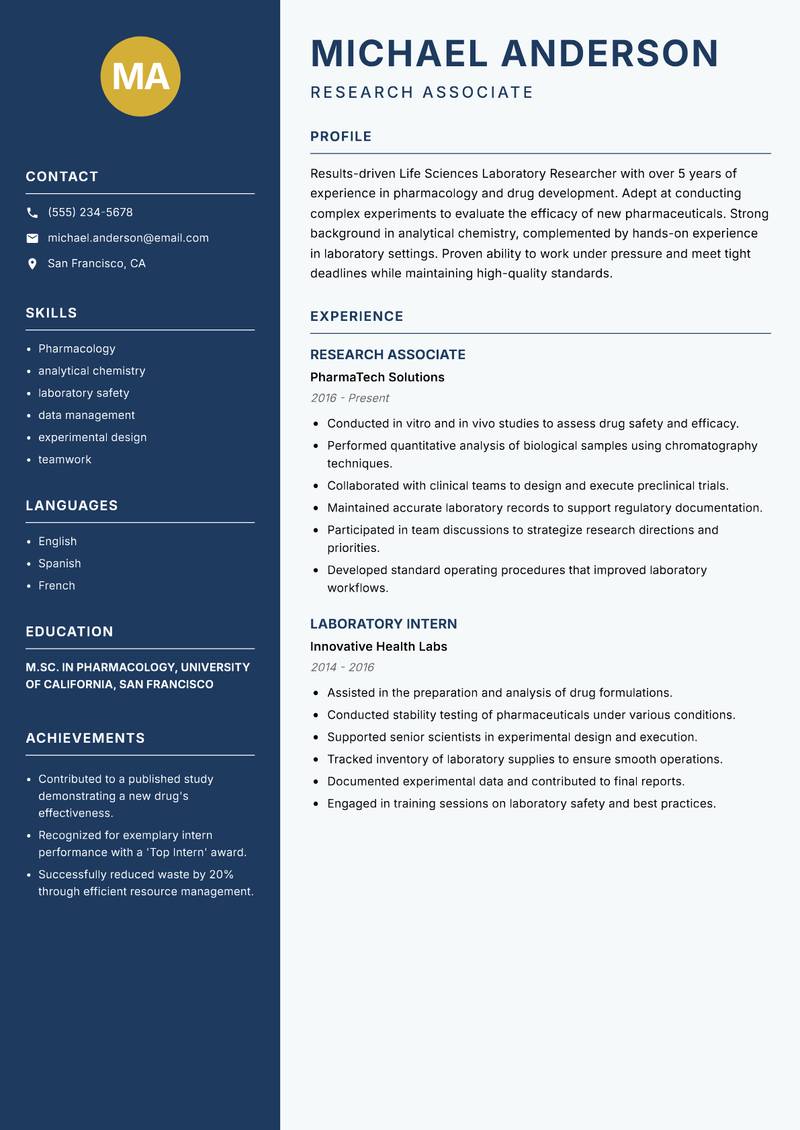
Classic Clean
Use Template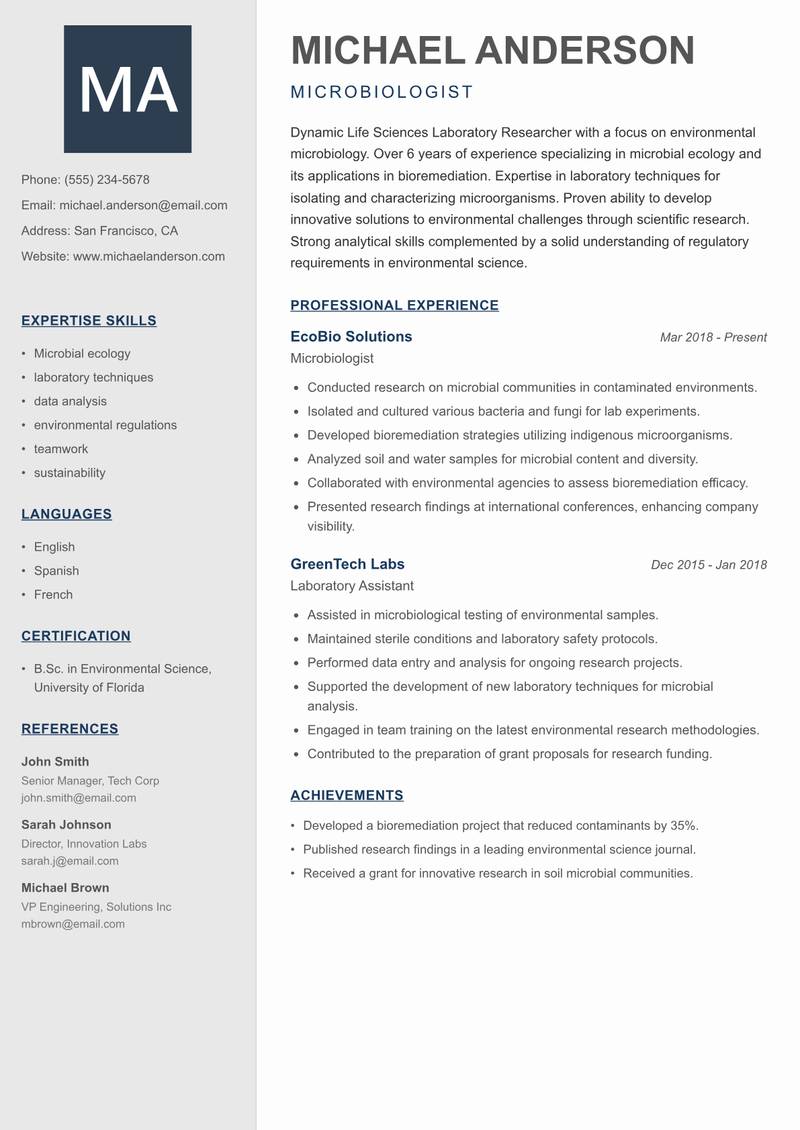
Creative Minimal
Use Template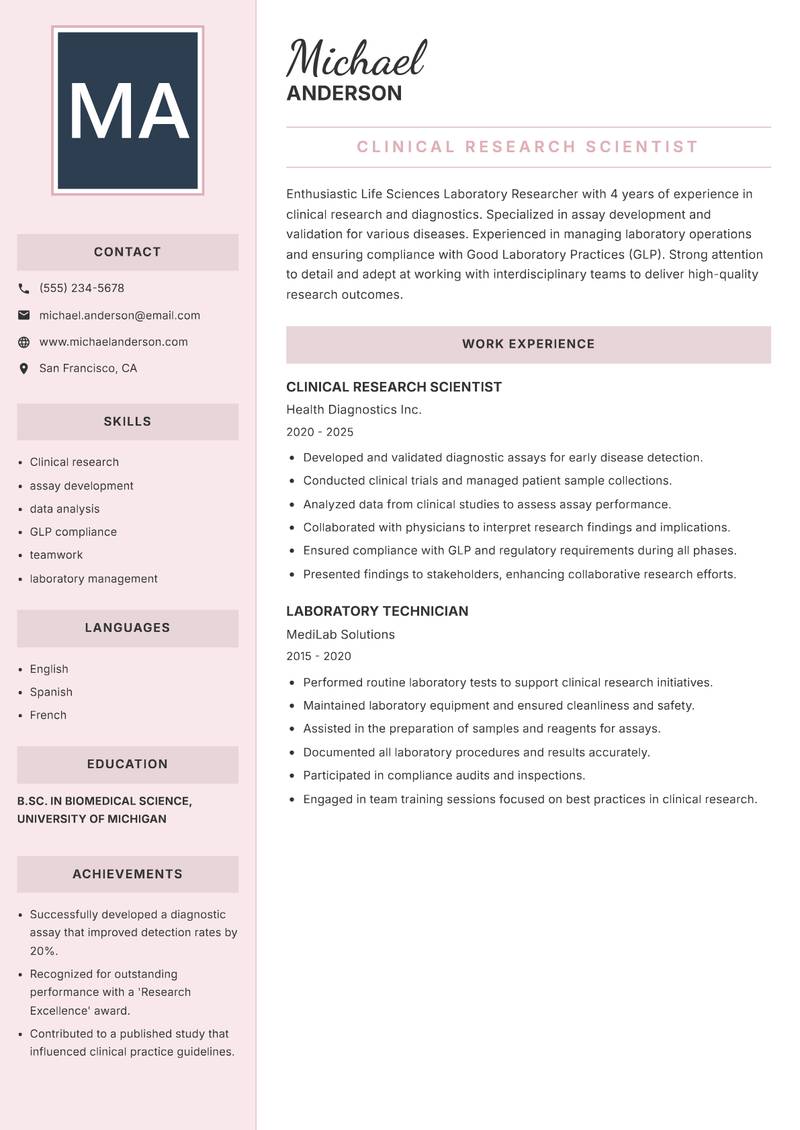
Executive
Use Template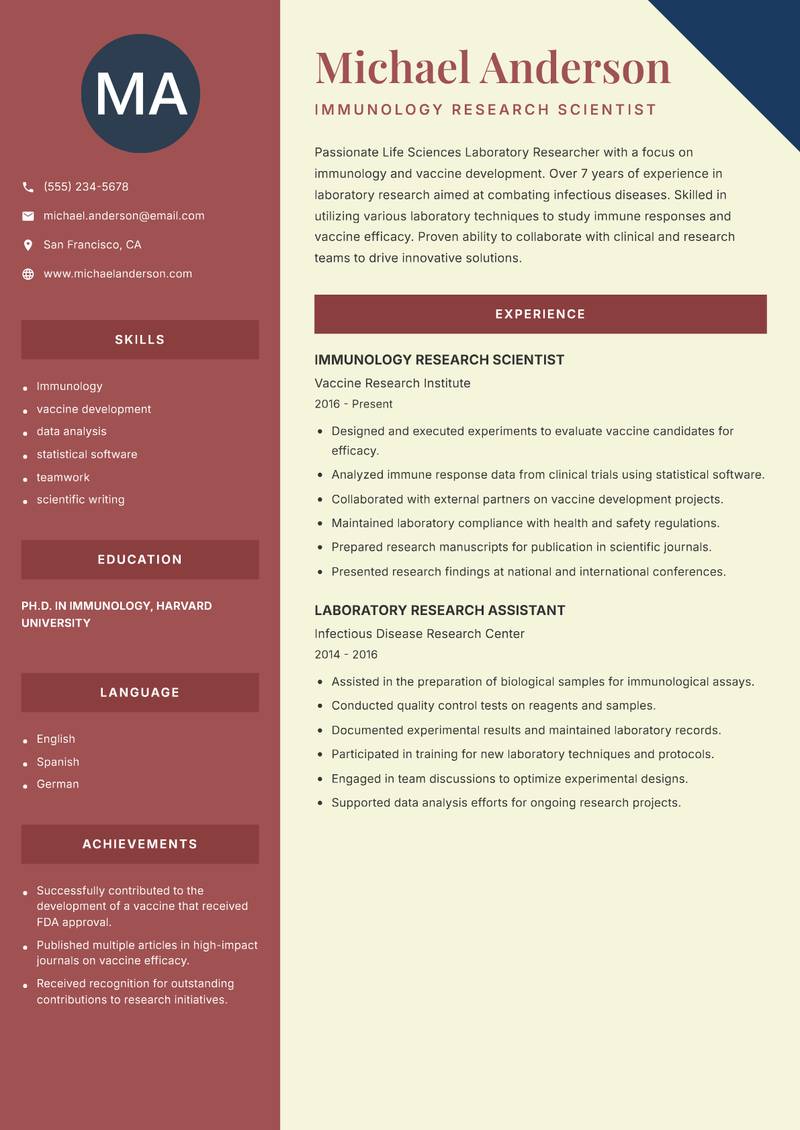
Two Column
Use Template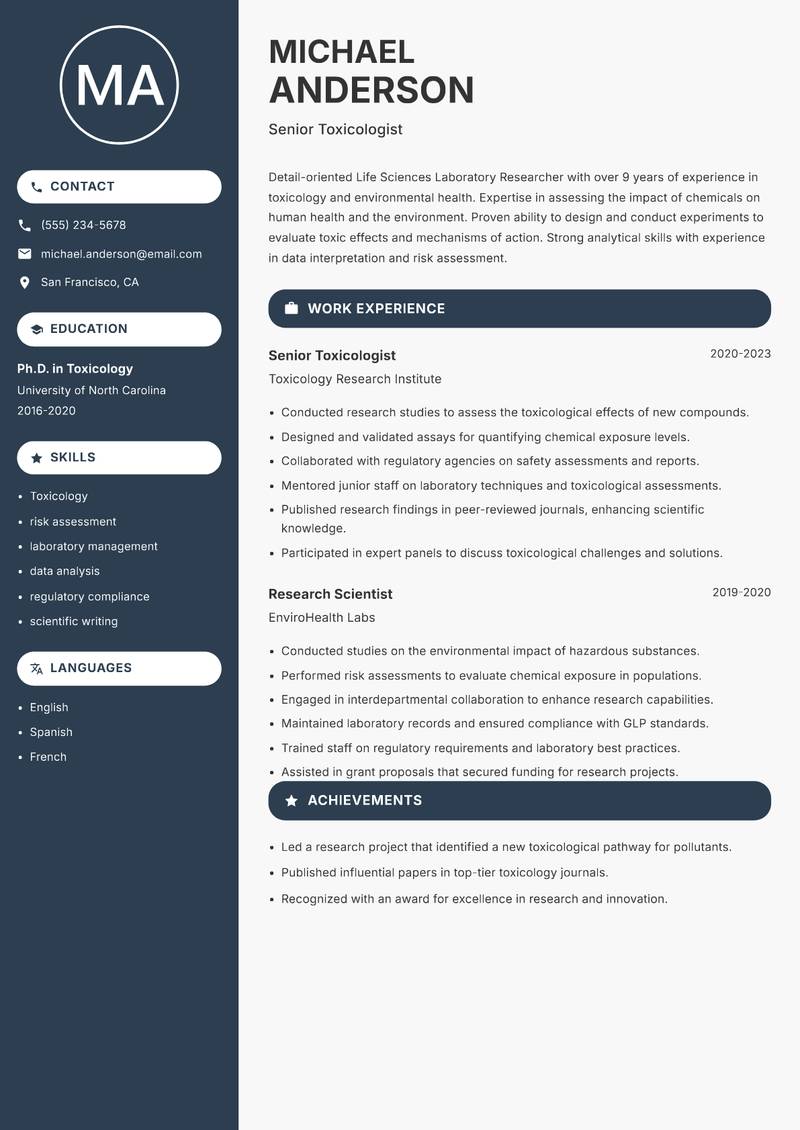
Compact
Use Template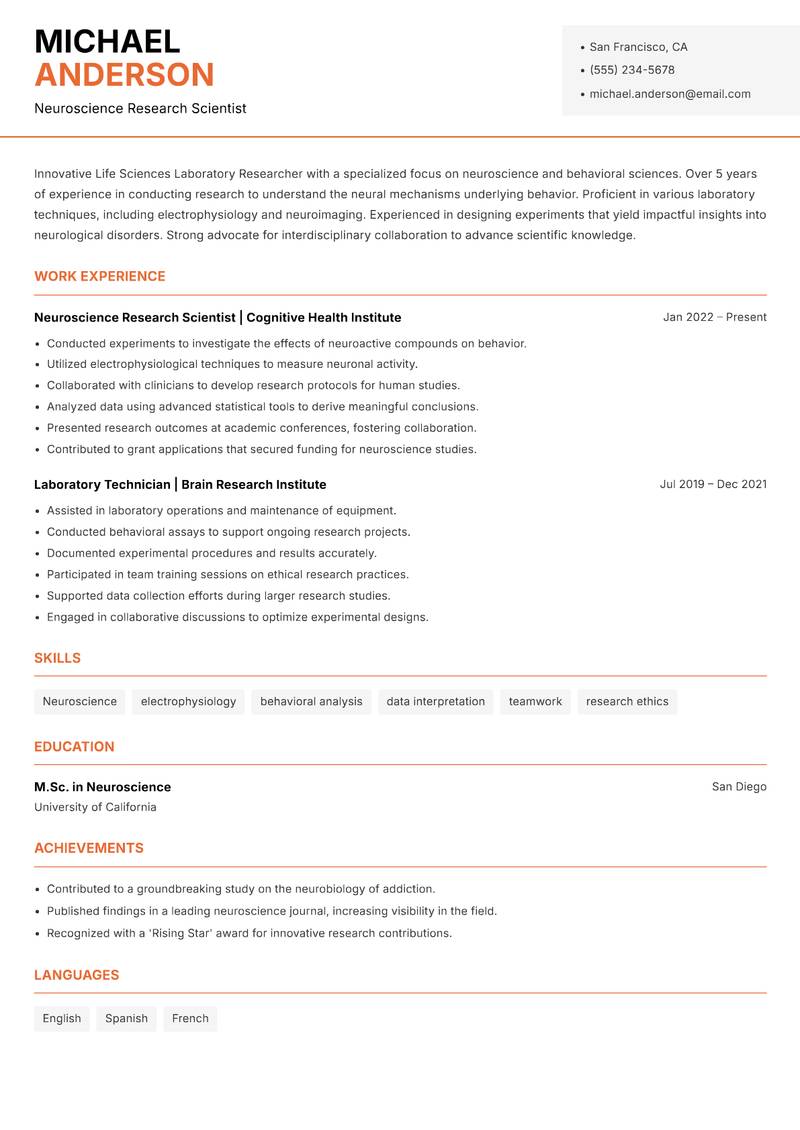
Modern Professional
Use Template7 Real Life Sciences Laboratory Researcher Resume Examples
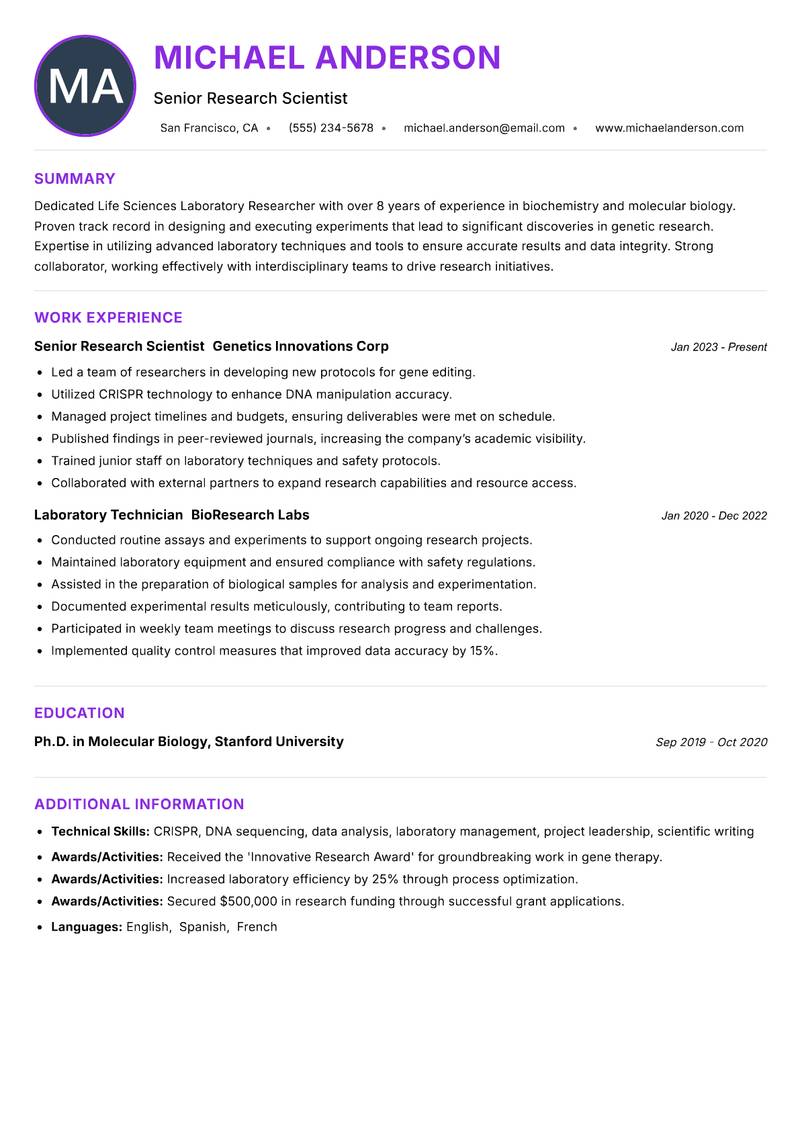
Senior Research Scientist with 8+ Years Experience
Summary: Dedicated Life Sciences Laboratory Researcher with over 8 years of experience in biochemistry and molecular biology. Proven track record in designing and executing experiments that lead to significant discoveries in genetic research. Expertise in utilizing advanced laboratory techniques and tools to ensure accurate results and data integrity. Strong collaborator, working effectively with interdisciplinary teams to drive research initiatives. Committed to contributing to scientific advancements that improve health outcomes. Recognized for meticulous attention to detail and ability to analyze complex data sets. Passionate about continuous learning and staying updated with the latest industry trends and technologies.
Description:
- Led a team of researchers in developing new protocols for gene editing.
- Utilized CRISPR technology to enhance DNA manipulation accuracy.
- Managed project timelines and budgets, ensuring deliverables were met on schedule.
- Published findings in peer-reviewed journals, increasing the company’s academic visibility.
- Trained junior staff on laboratory techniques and safety protocols.
- Collaborated with external partners to expand research capabilities and resource access.
🏆 Key Achievements
Research Associate with 5+ Years Experience
Summary: Experienced Life Sciences Laboratory Researcher with over 5 years of experience in pharmacology and drug development. Adept at conducting complex experiments to evaluate the efficacy of new pharmaceuticals. Strong background in analytical chemistry, complemented by hands-on experience in laboratory settings. Proven ability to work under pressure and meet tight deadlines while maintaining high-quality standards. Excellent communicator who collaborates effectively with cross-functional teams to achieve research objectives. Committed to advancing medical science through innovative research methodologies.
Description:
- Conducted in vitro and in vivo studies to assess drug safety and efficacy.
- Performed quantitative analysis of biological samples using chromatography techniques.
- Collaborated with clinical teams to design and execute preclinical trials.
- Maintained accurate laboratory records to support regulatory documentation.
- Participated in team discussions to strategize research directions and priorities.
- Developed standard operating procedures that improved laboratory workflows.
🏆 Key Achievements
Microbiologist with 6+ Years Experience
Summary: Dynamic Life Sciences Laboratory Researcher with a focus on environmental microbiology. Over 6 years of experience specializing in microbial ecology and its applications in bioremediation. Expertise in laboratory techniques for isolating and characterizing microorganisms. Proven ability to develop innovative solutions to environmental challenges through scientific research. Strong analytical skills complemented by a solid understanding of regulatory requirements in environmental science. Committed to sustainability and advancing knowledge in microbial processes to promote ecological health.
Description:
- Conducted research on microbial communities in contaminated environments.
- Isolated and cultured various bacteria and fungi for lab experiments.
- Developed bioremediation strategies utilizing indigenous microorganisms.
- Analyzed soil and water samples for microbial content and diversity.
- Collaborated with environmental agencies to assess bioremediation efficacy.
- Presented research findings at international conferences, enhancing company visibility.
🏆 Key Achievements
Clinical Research Scientist with 4+ Years Experience
Summary: Enthusiastic Life Sciences Laboratory Researcher with 4 years of experience in clinical research and diagnostics. Specialized in assay development and validation for various diseases. Experienced in managing laboratory operations and ensuring compliance with Good Laboratory Practices (GLP). Strong attention to detail and adept at working with interdisciplinary teams to deliver high-quality research outcomes. Passionate about leveraging laboratory findings to contribute to patient care and public health. Recognized for implementing innovative solutions that enhance laboratory efficiency and accuracy.
Description:
- Developed and validated diagnostic assays for early disease detection.
- Conducted clinical trials and managed patient sample collections.
- Analyzed data from clinical studies to assess assay performance.
- Collaborated with physicians to interpret research findings and implications.
- Ensured compliance with GLP and regulatory requirements during all phases.
- Presented findings to stakeholders, enhancing collaborative research efforts.
🏆 Key Achievements
Immunology Research Scientist with 7+ Years Experience
Summary: Dedicated Life Sciences Laboratory Researcher with a focus on immunology and vaccine development. Over 7 years of experience in laboratory research aimed at combating infectious diseases. Skilled in utilizing various laboratory techniques to study immune responses and vaccine efficacy. Proven ability to collaborate with clinical and research teams to drive innovative solutions. Strong communicator, capable of presenting complex scientific information to diverse audiences. Committed to advancing public health through rigorous scientific research and discovery.
Description:
- Designed and executed experiments to evaluate vaccine candidates for efficacy.
- Analyzed immune response data from clinical trials using statistical software.
- Collaborated with external partners on vaccine development projects.
- Maintained laboratory compliance with health and safety regulations.
- Prepared research manuscripts for publication in scientific journals.
- Presented research findings at national and international conferences.
🏆 Key Achievements
Senior Toxicologist with 9+ Years Experience
Summary: Detail-oriented Life Sciences Laboratory Researcher with over 9 years of experience in toxicology and environmental health. Expertise in assessing the impact of chemicals on human health and the environment. Proven ability to design and conduct experiments to evaluate toxic effects and mechanisms of action. Strong analytical skills with experience in data interpretation and risk assessment. Committed to ensuring laboratory compliance with regulatory requirements while driving innovative research. Recognized for contributions to significant publications in the field of toxicology.
Description:
- Conducted research studies to assess the toxicological effects of new compounds.
- Designed and validated assays for quantifying chemical exposure levels.
- Collaborated with regulatory agencies on safety assessments and reports.
- Mentored junior staff on laboratory techniques and toxicological assessments.
- Published research findings in peer-reviewed journals, enhancing scientific knowledge.
- Participated in expert panels to discuss toxicological challenges and solutions.
🏆 Key Achievements
Neuroscience Research Scientist with 5+ Years Experience
Summary: Innovative Life Sciences Laboratory Researcher with a specialized focus on neuroscience and behavioral sciences. Over 5 years of experience in conducting research to understand the neural mechanisms underlying behavior. Proficient in various laboratory techniques, including electrophysiology and neuroimaging. Experienced in designing experiments that yield impactful insights into neurological disorders. Strong advocate for interdisciplinary collaboration to advance scientific knowledge. Committed to translating research findings into practical applications that enhance mental health treatment.
Description:
- Conducted experiments to investigate the effects of neuroactive compounds on behavior.
- Utilized electrophysiological techniques to measure neuronal activity.
- Collaborated with clinicians to develop research protocols for human studies.
- Analyzed data using advanced statistical tools to derive meaningful conclusions.
- Presented research outcomes at academic conferences, fostering collaboration.
- Contributed to grant applications that secured funding for neuroscience studies.
🏆 Key Achievements
Key Skills for Life Sciences Laboratory Researcher
ATS Optimization Tips
Increase your chances of getting hired
Use Standard Headings
Use common section titles like Experience, Skills, etc.
Include Keywords
Add role-specific keywords from the job description
Keep it Simple
Avoid complex tables, images and graphics
Save in Right Format
Use PDF format unless otherwise specified
Life Sciences Laboratory Researcher Salary Insights
Average Salary
$73,000
per year
Salary Range
$54,000 - $92,000
per year
Top Paying Cities
Los Angeles, Seattle, Houston, Dallas, Boston
Source: Glassdoor, Payscale, Indeed (Updated April 2025)
Everything you need to write a great Life Sciences Laboratory Researcher resume
Strong Action Verbs to Use
Resume Writing Tips
- →Highlight specific laboratory techniques relevant to the job, such as CRISPR or ELISA.
- →Provide quantitative results from your research projects to demonstrate impact.
- →Tailor your resume to showcase your familiarity with regulatory guidelines specific to the life sciences field.
- →Include keywords from the job description in your resume to pass through ATS.
- →Illustrate teamwork experiences that involved collaboration in multi-disciplinary research settings.
Common Mistakes to Avoid
- ✕Using overly technical jargon that may not be understood by HR personnel.
- ✕Failing to include relevant certifications that enhance credibility in the field.
- ✕Listing responsibilities instead of accomplishments and impact of your work.
- ✕Neglecting to highlight soft skills such as communication and teamwork essential for lab settings.
ATS Keywords for Life Sciences Laboratory Researcher
Life Sciences Laboratory Researcher Career Path
Relevant Certifications
Career Progression
Entry-Level Researcher
Conducts basic experiments and assists in data collection under the direction of senior researchers.
Mid-Level Research Scientist
Independently designs experiments, analyzes results, and contributes to research papers.
Senior Research Scientist
Mentors junior staff, leads major projects, and collaborates with cross-functional teams to develop research protocols.
Laboratory Manager
Manages laboratory operations, oversees compliance with safety standards, and coordinates between research teams.
Director of Research
Sets the strategic direction for research initiatives, secures funding, and represents the institution at conferences.
Life Sciences Laboratory Researcher Interview Questions
What laboratory techniques are you most proficient in, and how have you applied them in your research? +
Be specific about the techniques you've used and the outcomes of your research, illustrating your direct impact.
Describe an experiment you designed. What were your hypotheses, and how did you validate them? +
Focus on the methodology, challenges faced, and adjustments made during the experiment.
How do you ensure compliance with safety regulations and quality control in the laboratory? +
Provide examples of practices you follow and how you promote safety among colleagues.
Explain a time when you had to analyze and interpret complex data. What tools did you use? +
Discuss the software or methods you utilized for data analysis and the insights gained.
How do you prioritize multiple research projects or deadlines? +
Share your time management strategies and give examples of workload balancing.
Can you discuss a successful collaboration with a cross-functional team? What was your role? +
Highlight your teamwork skills and any challenges that were overcome through collaboration.
What advancements in life sciences research most excite you, and how do you integrate this into your work? +
Demonstrate your awareness of current trends and how they can influence your research.
About the Life Sciences Laboratory Researcher Role
Engaging in intricate investigations within controlled laboratory environments, the role of a Life Sciences Laboratory Researcher demands keen analytical skills to support profound biological explorations. Utilizing various laboratory instruments like spectrophotometers and PCR machines, researchers contribute to groundbreaking studies that could pioneer new therapies or enhance understanding of diseases. This position often involves rigorous data recording and collaboration with interdisciplinary teams to validate research findings, ensuring adherence to ethical standards and regulatory guidelines.
Frequently Asked Questions
View all →What are the common soft skills required for a Life Sciences Laboratory Researcher? +
Essential soft skills include communication, problem-solving, attention to detail, and teamwork.
What types of research projects do Life Sciences Laboratory Researchers typically work on? +
Projects often range from studying cell cultures to developing assays for drug testing or environmental sampling.
What is the typical work environment for Life Sciences Laboratory Researchers? +
Researchers usually work in laboratories within academic institutions, pharmaceuticals, or governmental agencies, often adhering to strict safety regulations.
How can I further my career as a Life Sciences Laboratory Researcher? +
Consider pursuing advanced degrees, participating in professional organizations, and obtaining certifications to enhance your qualifications.
What is the role of a Life Sciences Laboratory Researcher in a clinical trial? +
Researchers may develop trial protocols, manage sample collection, and analyze data to ensure the trial’s scientific integrity.
Is it necessary to have a master's or PhD to work in this field? +
While many positions are available for bachelor's degree holders, advanced degrees are often preferred for research roles especially in prominent institutions.
What are the emerging trends that Life Sciences Laboratory Researchers should watch out for? +
Trends include advancements in personalized medicine, application of artificial intelligence in research, and increased focus on sustainable practices in laboratory settings.
More Resume Examples You Might Like
Related Career Paths
Other roles candidates for Life Sciences Laboratory Researcher positions often also consider.
Will this Life Sciences Laboratory Researcher resume pass the ATS scan?
Upload it and get an instant AI-scored compatibility check with specific fixes.
Check My Resume →
Pair it with a matching cover letter
AI drafts a first version from your job title and strengths — edit it live, then download the PDF.
Write My Cover Letter →
Written by Nohaya Career Team
Reviewed by HR Professionals · Updated April 2025
Ready to Build Your Perfect Resume?
Choose from 1000+ professional templates and land your dream job.
Create My Resume Now