Build an ATS-Friendly
Evolutionary Biologist Resume
That Gets Interviews
An Evolutionary Biologist investigates the processes that drive change in living organisms over time, analyzing genetic, environmental, and ecological factors. This role requires a deep understanding of evolutionary theory and methods, heralding a blend of field research and laboratory analysis. By employing advanced…
Evolutionary Biologist Resume Templates
Modern Professional
Use Template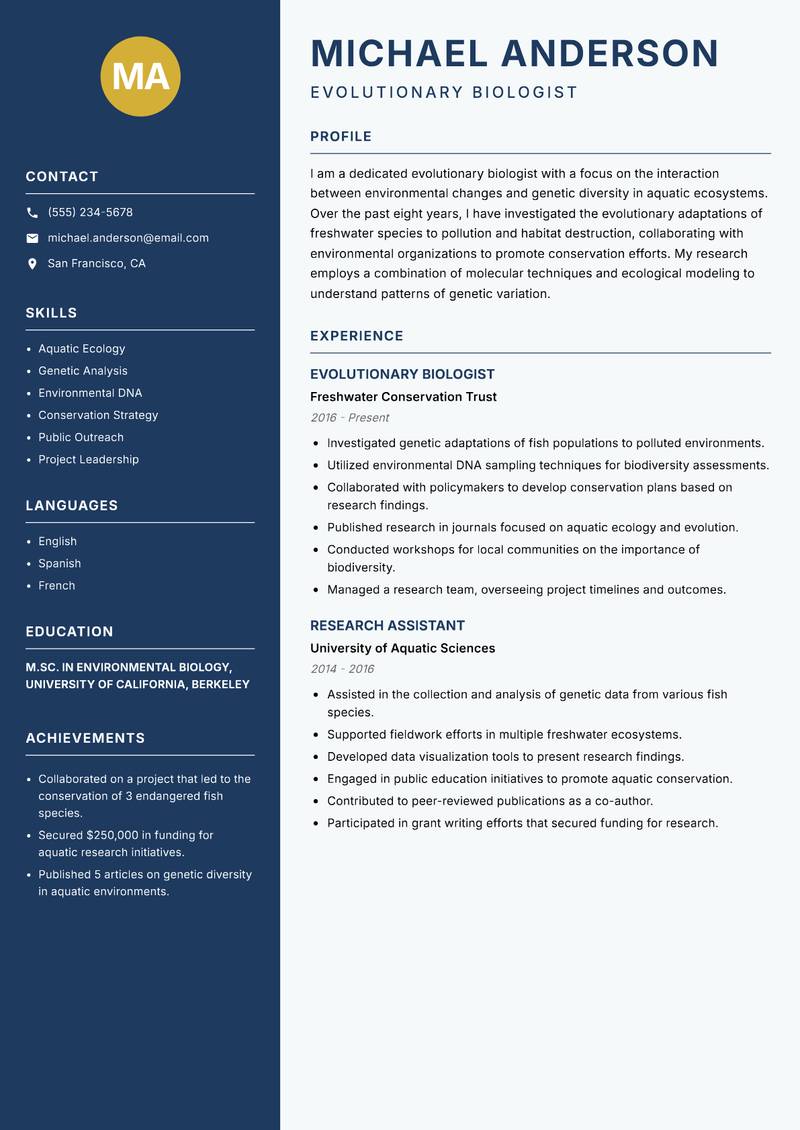
Classic Clean
Use Template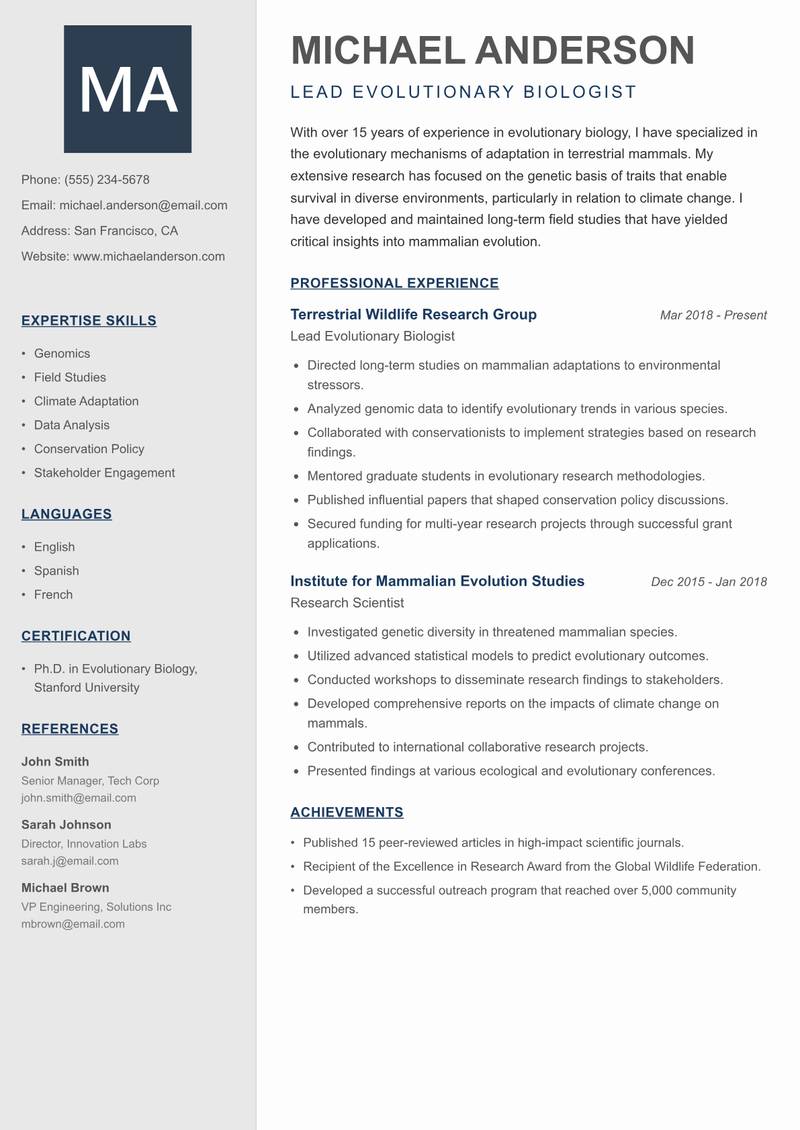
Creative Minimal
Use Template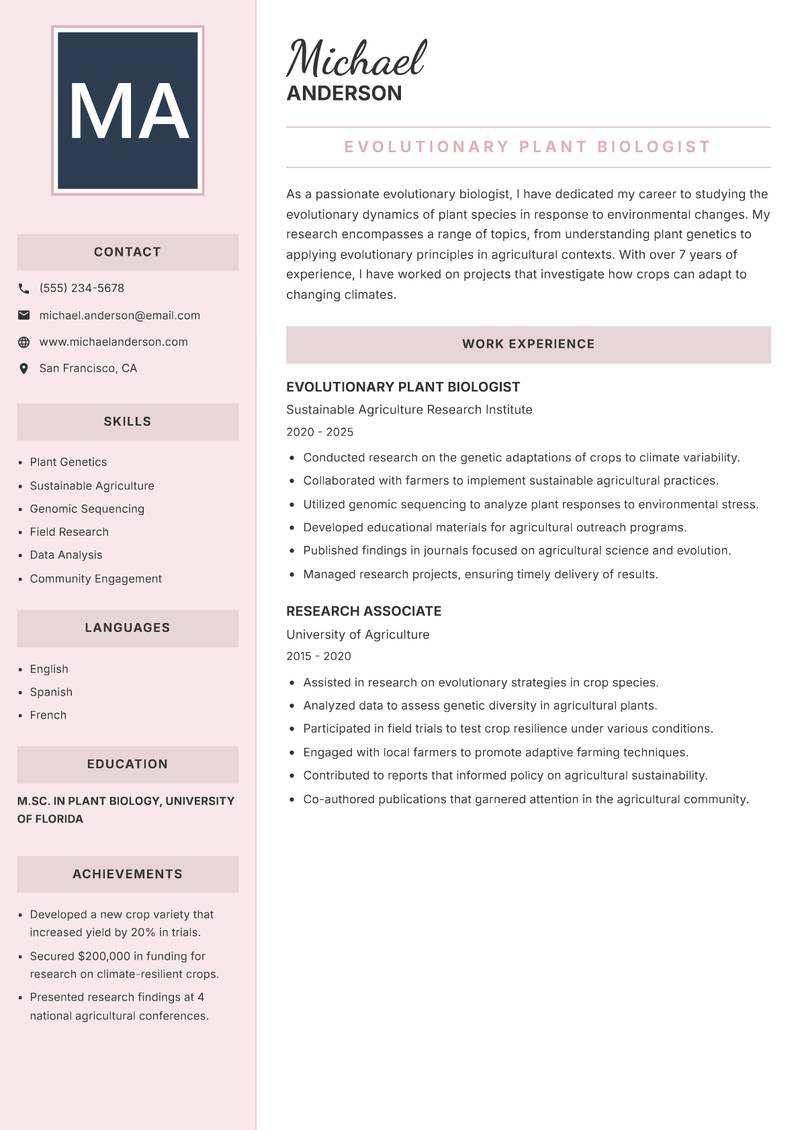
Executive
Use Template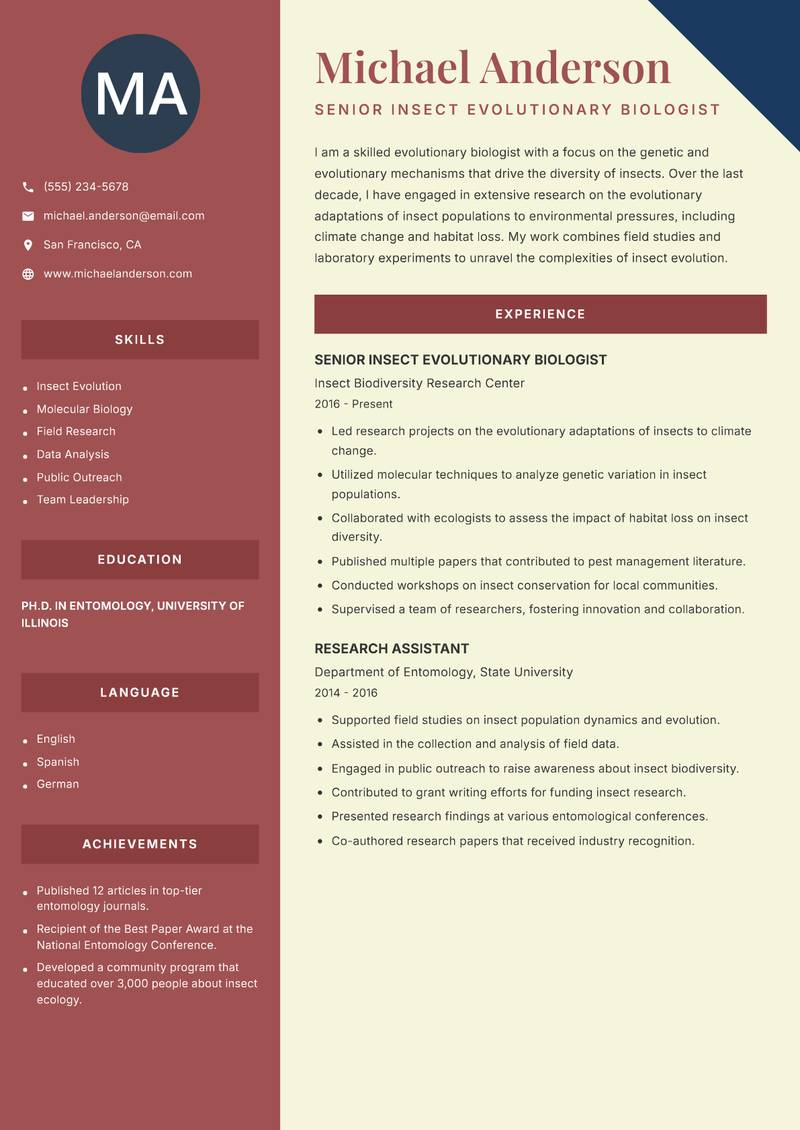
Two Column
Use Template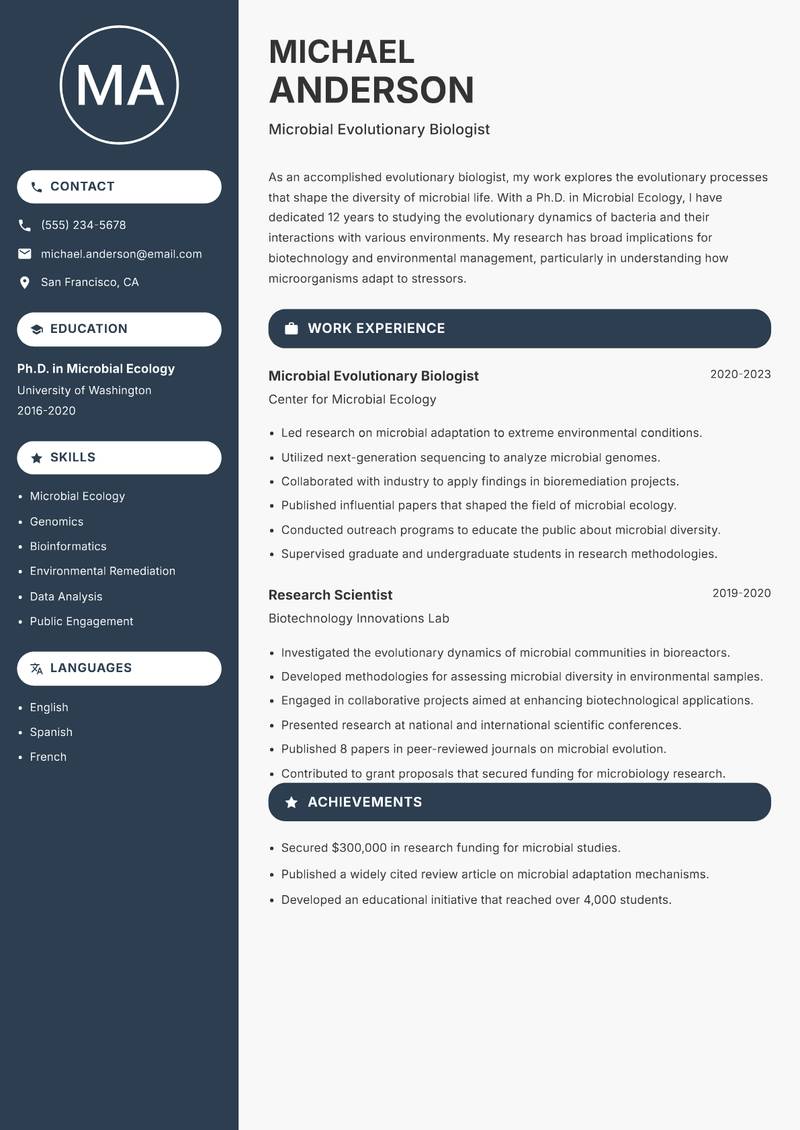
Compact
Use Template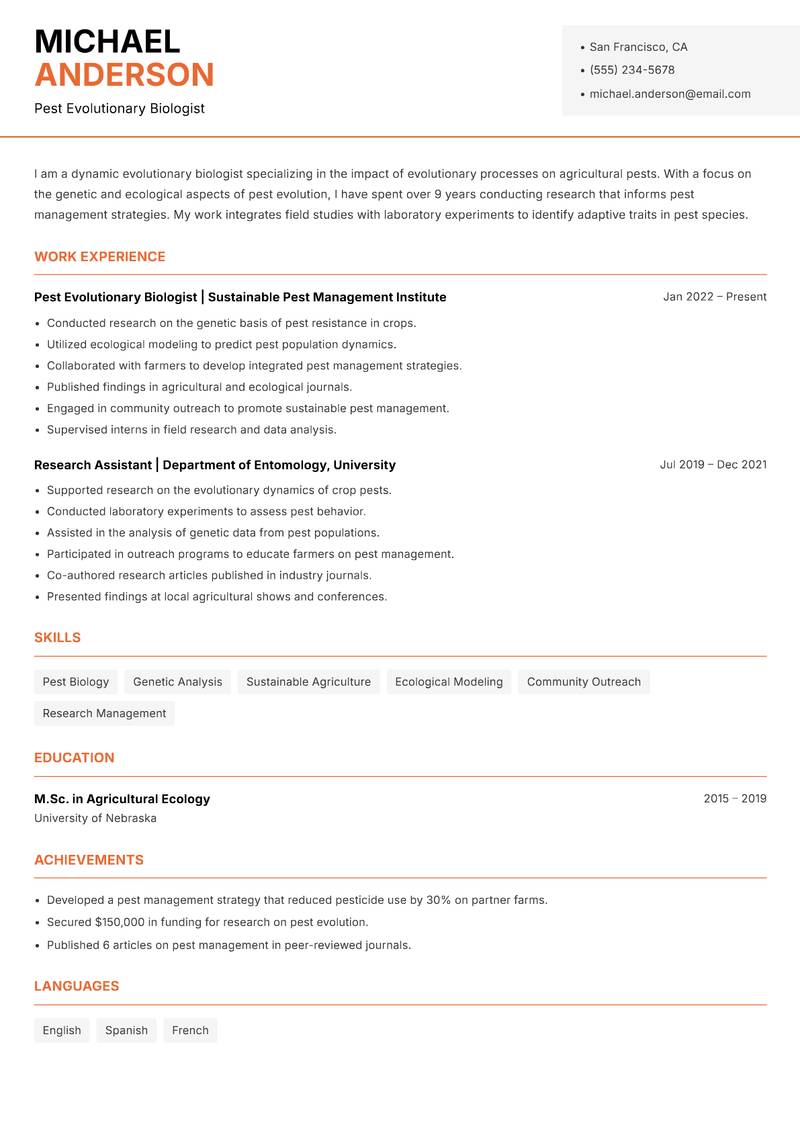
Modern Professional
Use Template7 Real Evolutionary Biologist Resume Examples
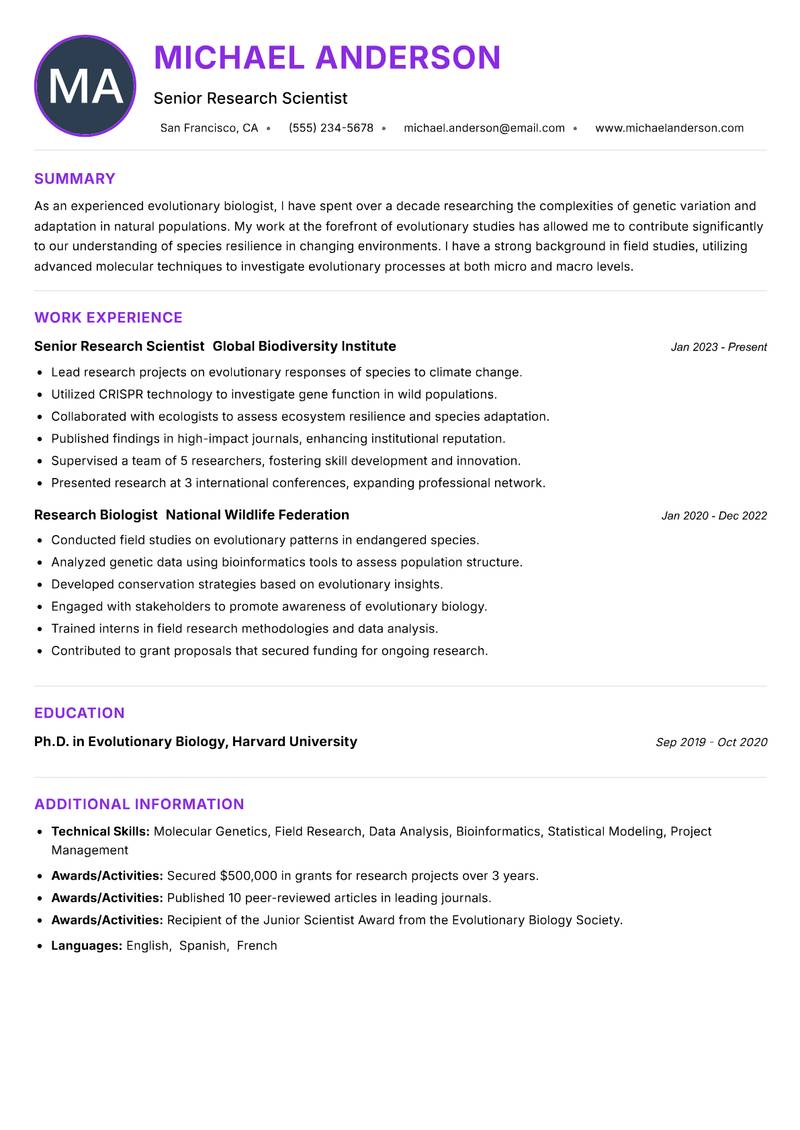
Senior Research Scientist with 11+ Years Experience
Summary: As an experienced evolutionary biologist, I have spent over a decade researching the complexities of genetic variation and adaptation in natural populations. My work at the forefront of evolutionary studies has allowed me to contribute significantly to our understanding of species resilience in changing environments. I have a strong background in field studies, utilizing advanced molecular techniques to investigate evolutionary processes at both micro and macro levels. My research has been published in leading journals, and I have presented findings at international conferences. My passion for education has led me to mentor students and junior researchers, fostering the next generation of scientists. I am committed to interdisciplinary collaboration, often working with ecologists and conservationists to apply evolutionary principles to real-world challenges. I aim to bridge the gap between theoretical research and practical applications in biodiversity conservation.
Description:
- Lead research projects on evolutionary responses of species to climate change.
- Utilized CRISPR technology to investigate gene function in wild populations.
- Collaborated with ecologists to assess ecosystem resilience and species adaptation.
- Published findings in high-impact journals, enhancing institutional reputation.
- Supervised a team of 5 researchers, fostering skill development and innovation.
- Presented research at 3 international conferences, expanding professional network.
🏆 Key Achievements
Evolutionary Biologist with 8+ Years Experience
Summary: I am a dedicated evolutionary biologist with a focus on the interaction between environmental changes and genetic diversity in aquatic ecosystems. Over the past eight years, I have investigated the evolutionary adaptations of freshwater species to pollution and habitat destruction, collaborating with environmental organizations to promote conservation efforts. My research employs a combination of molecular techniques and ecological modeling to understand patterns of genetic variation. I have a strong commitment to public outreach and education, often engaging with local communities to raise awareness about the importance of biodiversity. My work has significant implications for environmental policy and conservation strategies, making me an advocate for science-based decision-making. As I move forward in my career, I aspire to lead larger projects that integrate evolutionary biology with conservation efforts globally.
Description:
- Investigated genetic adaptations of fish populations to polluted environments.
- Utilized environmental DNA sampling techniques for biodiversity assessments.
- Collaborated with policymakers to develop conservation plans based on research findings.
- Published research in journals focused on aquatic ecology and evolution.
- Conducted workshops for local communities on the importance of biodiversity.
- Managed a research team, overseeing project timelines and outcomes.
🏆 Key Achievements
Lead Evolutionary Biologist with 15+ Years Experience
Summary: With over 15 years of experience in evolutionary biology, I have specialized in the evolutionary mechanisms of adaptation in terrestrial mammals. My extensive research has focused on the genetic basis of traits that enable survival in diverse environments, particularly in relation to climate change. I have developed and maintained long-term field studies that have yielded critical insights into mammalian evolution. My work is not only academic; I actively seek partnerships with conservation organizations to apply my research findings to real-world challenges. I have also contributed to public policy discussions on wildlife conservation, advocating for evidence-based approaches. As I continue my career, I am eager to expand my research into applied evolutionary biology, particularly in developing strategies for species management in changing habitats.
Description:
- Directed long-term studies on mammalian adaptations to environmental stressors.
- Analyzed genomic data to identify evolutionary trends in various species.
- Collaborated with conservationists to implement strategies based on research findings.
- Mentored graduate students in evolutionary research methodologies.
- Published influential papers that shaped conservation policy discussions.
- Secured funding for multi-year research projects through successful grant applications.
🏆 Key Achievements
Evolutionary Plant Biologist with 7+ Years Experience
Summary: As a passionate evolutionary biologist, I have dedicated my career to studying the evolutionary dynamics of plant species in response to environmental changes. My research encompasses a range of topics, from understanding plant genetics to applying evolutionary principles in agricultural contexts. With over 7 years of experience, I have worked on projects that investigate how crops can adapt to changing climates. I have developed methodologies that integrate ecological and genetic approaches to enhance crop resilience. My collaborative efforts with agronomists have resulted in the development of sustainable practices that benefit both farmers and ecosystems. I am committed to translating scientific findings into actionable strategies for agricultural stakeholders, ensuring that my work has a meaningful impact on food security and environmental sustainability.
Description:
- Conducted research on the genetic adaptations of crops to climate variability.
- Collaborated with farmers to implement sustainable agricultural practices.
- Utilized genomic sequencing to analyze plant responses to environmental stress.
- Developed educational materials for agricultural outreach programs.
- Published findings in journals focused on agricultural science and evolution.
- Managed research projects, ensuring timely delivery of results.
🏆 Key Achievements
Senior Insect Evolutionary Biologist with 10+ Years Experience
Summary: I am a skilled evolutionary biologist with a focus on the genetic and evolutionary mechanisms that drive the diversity of insects. Over the last decade, I have engaged in extensive research on the evolutionary adaptations of insect populations to environmental pressures, including climate change and habitat loss. My work combines field studies and laboratory experiments to unravel the complexities of insect evolution. I have collaborated with entomologists and ecologists to provide insights that inform pest management strategies and conservation efforts. My goal is to enhance our understanding of insect biodiversity and its implications for ecosystem health. I am dedicated to mentoring the next generation of scientists and am actively involved in outreach programs that promote the importance of insect conservation.
Description:
- Led research projects on the evolutionary adaptations of insects to climate change.
- Utilized molecular techniques to analyze genetic variation in insect populations.
- Collaborated with ecologists to assess the impact of habitat loss on insect diversity.
- Published multiple papers that contributed to pest management literature.
- Conducted workshops on insect conservation for local communities.
- Supervised a team of researchers, fostering innovation and collaboration.
🏆 Key Achievements
Microbial Evolutionary Biologist with 12+ Years Experience
Summary: As an accomplished evolutionary biologist, my work explores the evolutionary processes that shape the diversity of microbial life. With a Ph.D. in Microbial Ecology, I have dedicated 12 years to studying the evolutionary dynamics of bacteria and their interactions with various environments. My research has broad implications for biotechnology and environmental management, particularly in understanding how microorganisms adapt to stressors. I employ cutting-edge genomic techniques and bioinformatics to analyze microbial communities. My collaborations with industry partners have led to innovative applications in environmental remediation and biotechnology. I am also committed to public education and outreach, emphasizing the importance of microbial diversity in ecosystem functioning. My goal is to advance our understanding of microbial evolution and contribute to sustainable practices in biotechnology.
Description:
- Led research on microbial adaptation to extreme environmental conditions.
- Utilized next-generation sequencing to analyze microbial genomes.
- Collaborated with industry to apply findings in bioremediation projects.
- Published influential papers that shaped the field of microbial ecology.
- Conducted outreach programs to educate the public about microbial diversity.
- Supervised graduate and undergraduate students in research methodologies.
🏆 Key Achievements
Pest Evolutionary Biologist with 9+ Years Experience
Summary: I am a dynamic evolutionary biologist specializing in the impact of evolutionary processes on agricultural pests. With a focus on the genetic and ecological aspects of pest evolution, I have spent over 9 years conducting research that informs pest management strategies. My work integrates field studies with laboratory experiments to identify adaptive traits in pest species. I am passionate about using my findings to support sustainable agriculture practices. My collaborative efforts with farmers and agricultural organizations have led to the implementation of successful pest control strategies that minimize chemical use. I am committed to translating scientific research into practical solutions that benefit both farmers and the environment, making a tangible impact on agricultural sustainability.
Description:
- Conducted research on the genetic basis of pest resistance in crops.
- Utilized ecological modeling to predict pest population dynamics.
- Collaborated with farmers to develop integrated pest management strategies.
- Published findings in agricultural and ecological journals.
- Engaged in community outreach to promote sustainable pest management.
- Supervised interns in field research and data analysis.
🏆 Key Achievements
Key Skills for Evolutionary Biologist
ATS Optimization Tips
Increase your chances of getting hired
Use Standard Headings
Use common section titles like Experience, Skills, etc.
Include Keywords
Add role-specific keywords from the job description
Keep it Simple
Avoid complex tables, images and graphics
Save in Right Format
Use PDF format unless otherwise specified
Evolutionary Biologist Salary Insights
Average Salary
$85,500
per year
Salary Range
$62,000 - $109,000
per year
Top Paying Cities
Los Angeles, Seattle, Houston, Dallas, Boston
Source: Glassdoor, Payscale, Indeed (Updated April 2025)
Everything you need to write a great Evolutionary Biologist resume
Strong Action Verbs to Use
Resume Writing Tips
- →Highlight specific field research experiences and the techniques used to gather data.
- →Detail your proficiency with relevant software like R or Bioconductor for statistical analysis.
- →Include publications and presentations that demonstrate your contributions to the field.
- →Mention any interdisciplinary collaborations that enhance your research portfolio.
- →Use clear metrics to showcase successful outcomes from your projects.
Common Mistakes to Avoid
- ✕Avoid generic phrases; instead, use specific examples related to your research.
- ✕Do not downplay fieldwork experience; highlight the environments and ecosystems you studied.
- ✕Neglecting to tailor your resume for the specific evolutionary biology position you are applying for can hurt your chances.
- ✕Overemphasizing laboratory skills without mentioning field research can misrepresent your capabilities.
ATS Keywords for Evolutionary Biologist
Evolutionary Biologist Career Path
Relevant Certifications
Career Progression
Entry-Level Evolutionary Biologist
Typically involves conducting data collection and basic laboratory analyses under supervision, often as part of a research team.
Mid-Level Evolutionary Biologist
Works independently on specific projects, leading research initiatives, designing experiments, and overseeing data analysis.
Senior Evolutionary Biologist
Manages larger research groups, coordinates interdisciplinary projects, and mentors junior biologists and students.
Principal Investigator (PI)
Heads a research lab dedicated to long-term projects, securing funding through grant applications, and publishing comprehensive studies.
Professor of Evolutionary Biology
Involves teaching at the university level, conducting research, and contributing to academic publications and conferences.
Evolutionary Biologist Interview Questions
What methods do you use to collect data in the field? +
Discuss specific techniques such as sampling methods, surveys, or observational studies relevant to your past work.
How do you approach analyzing genetic data? +
Explain the software or tools you are familiar with and your process for interpreting results from genetic analysis.
Can you describe a successful project you led? What were the outcomes? +
Highlight your role, the research question addressed, and the impact of the findings.
How do you stay current with advancements in evolutionary biology? +
Mention journals, conferences, and networks you engage with to keep up to date.
What challenges have you faced in your research and how did you overcome them? +
Provide examples that demonstrate your problem-solving and critical thinking skills.
How do you communicate complex scientific concepts to non-experts? +
Provide specific instances where you simplified technical information for diverse audiences.
About the Evolutionary Biologist Role
An Evolutionary Biologist investigates the processes that drive change in living organisms over time, analyzing genetic, environmental, and ecological factors. This role requires a deep understanding of evolutionary theory and methods, heralding a blend of field research and laboratory analysis. By employing advanced statistical tools and bioinformatics software, evolutionary biologists contribute valuable insights into biodiversity and conservation efforts, often leading research projects with significant scientific impacts.
Frequently Asked Questions
What are the most important skills for an Evolutionary Biologist? +
Key skills include a strong foundation in genetics, data analysis capabilities, and proficiency with bioinformatics tools.
What kind of research methodologies are commonly used in evolutionary biology? +
Common methodologies include phylogenetic analysis, population genomics, and ecological modeling.
Is fieldwork necessary for an Evolutionary Biologist? +
Yes, fieldwork is often essential for gathering data on species interactions and environmental variables.
What is the role of evolutionary biology in conservation efforts? +
Evolutionary biology provides insights into the genetic diversity and adaptability of species, which are critical for conservation strategies.
How do job prospects look for Evolutionary Biologists? +
Job prospects are stable, especially in academia, government research, and environmental consulting, but can vary based on funding and specific expertise.
What advanced degrees are beneficial for an Evolutionary Biologist? +
A PhD is typically necessary for advanced research positions; however, a Master's degree can be sufficient for various support roles.
More Resume Examples You Might Like
Related Career Paths
Other roles candidates for Evolutionary Biologist positions often also consider.
Will this Evolutionary Biologist resume pass the ATS scan?
Upload it and get an instant AI-scored compatibility check with specific fixes.
Check My Resume →
Pair it with a matching cover letter
AI drafts a first version from your job title and strengths — edit it live, then download the PDF.
Write My Cover Letter →
Written by Nohaya Career Team
Reviewed by HR Professionals · Updated April 2025
Ready to Build Your Perfect Resume?
Choose from 1000+ professional templates and land your dream job.
Create My Resume Now