Build an ATS-Friendly
Biomedical Signal Scientist Resume
That Gets Interviews
Employing advanced mathematical models, a Biomedical Signal Scientist works closely with healthcare data to extract valuable insights from various physiological signals. Focusing on signals obtained from electrocardiograms (ECGs), electroencephalograms (EEGs), and other biosignal sources, professionals in this role…
Biomedical Signal Scientist Resume Templates
Modern Professional
Use Template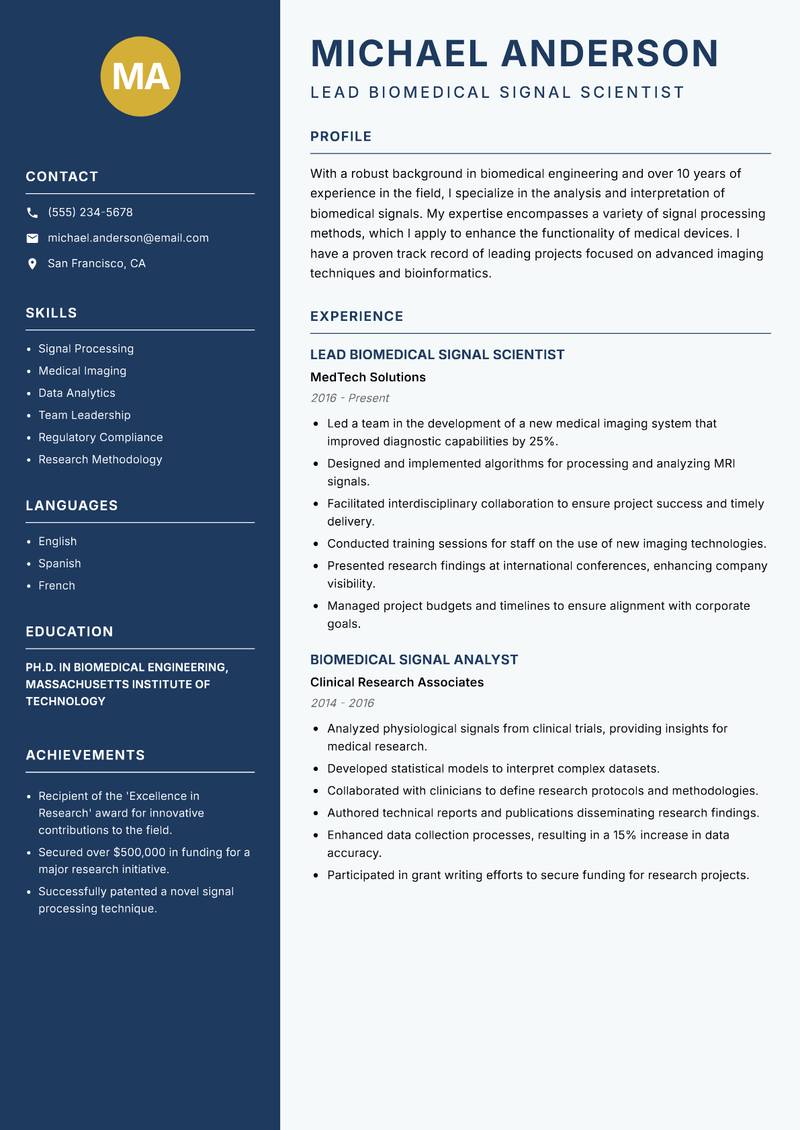
Classic Clean
Use Template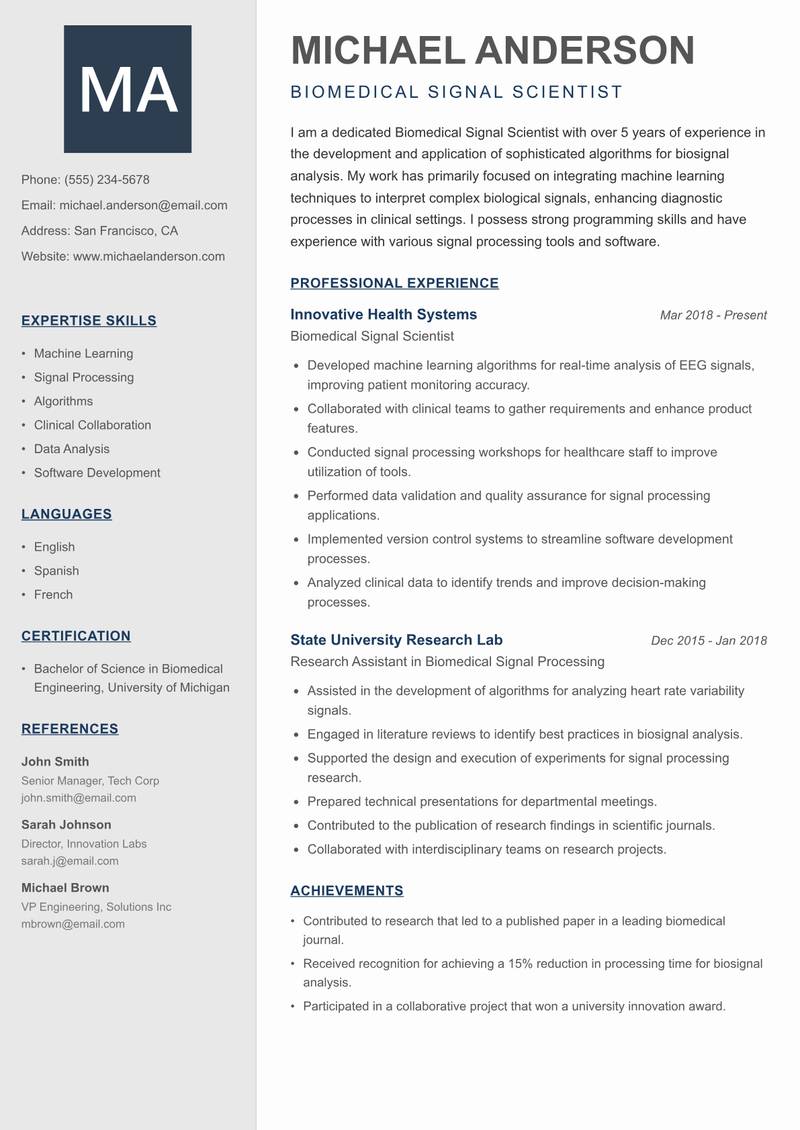
Creative Minimal
Use Template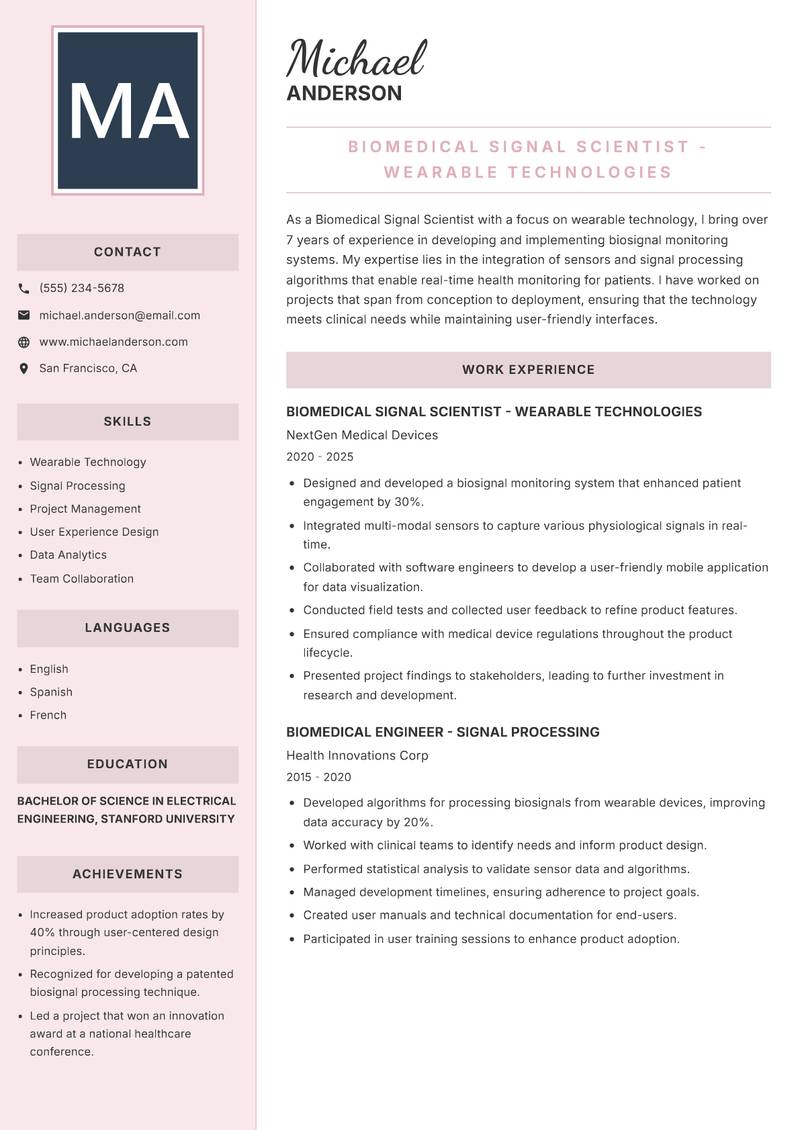
Executive
Use Template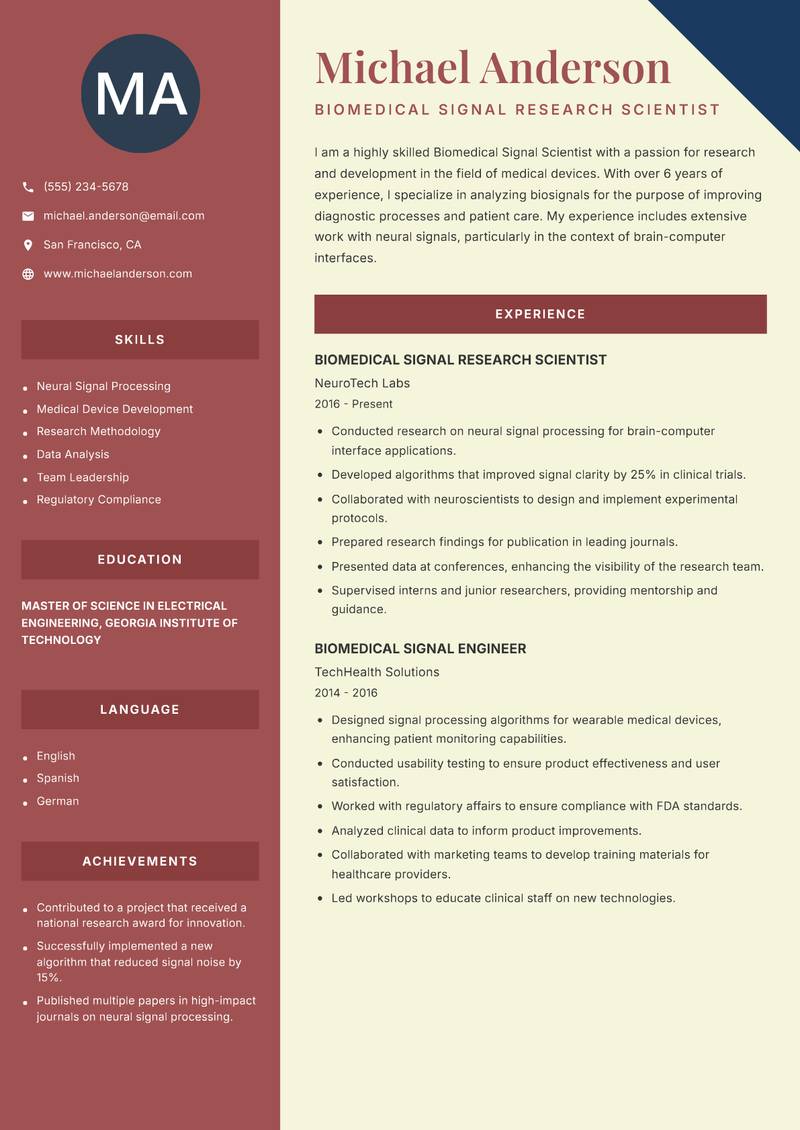
Two Column
Use Template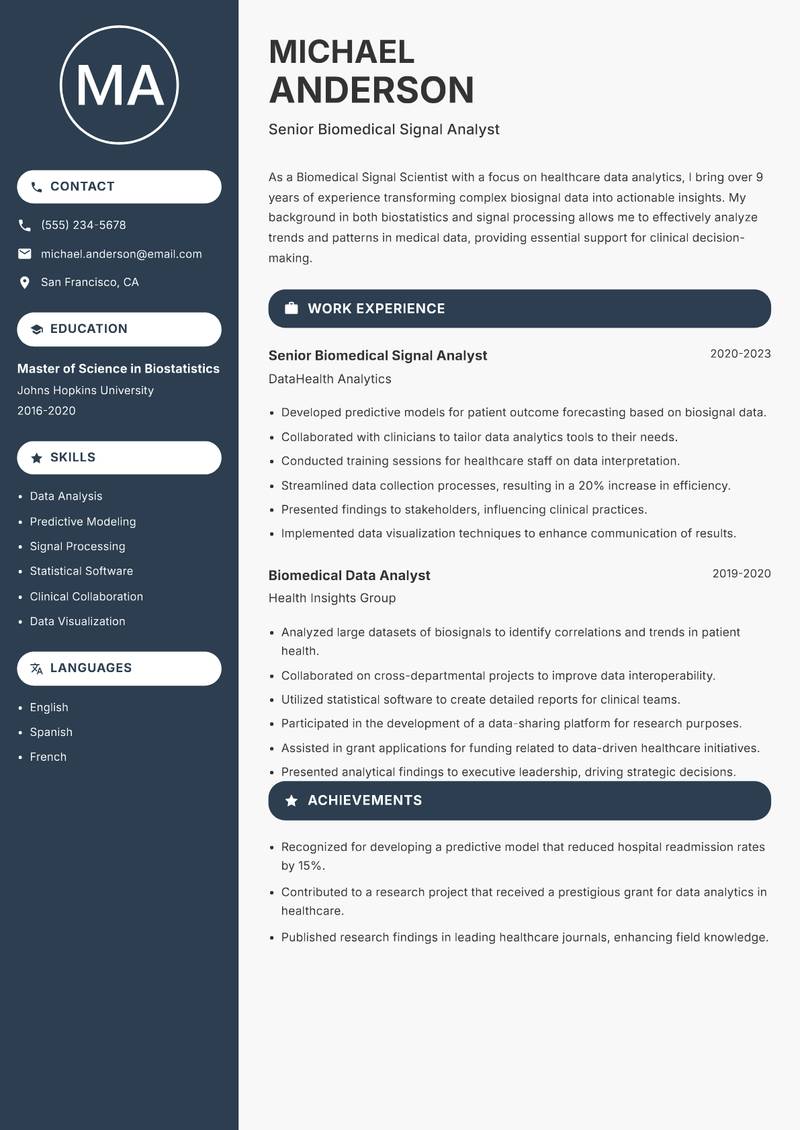
Compact
Use Template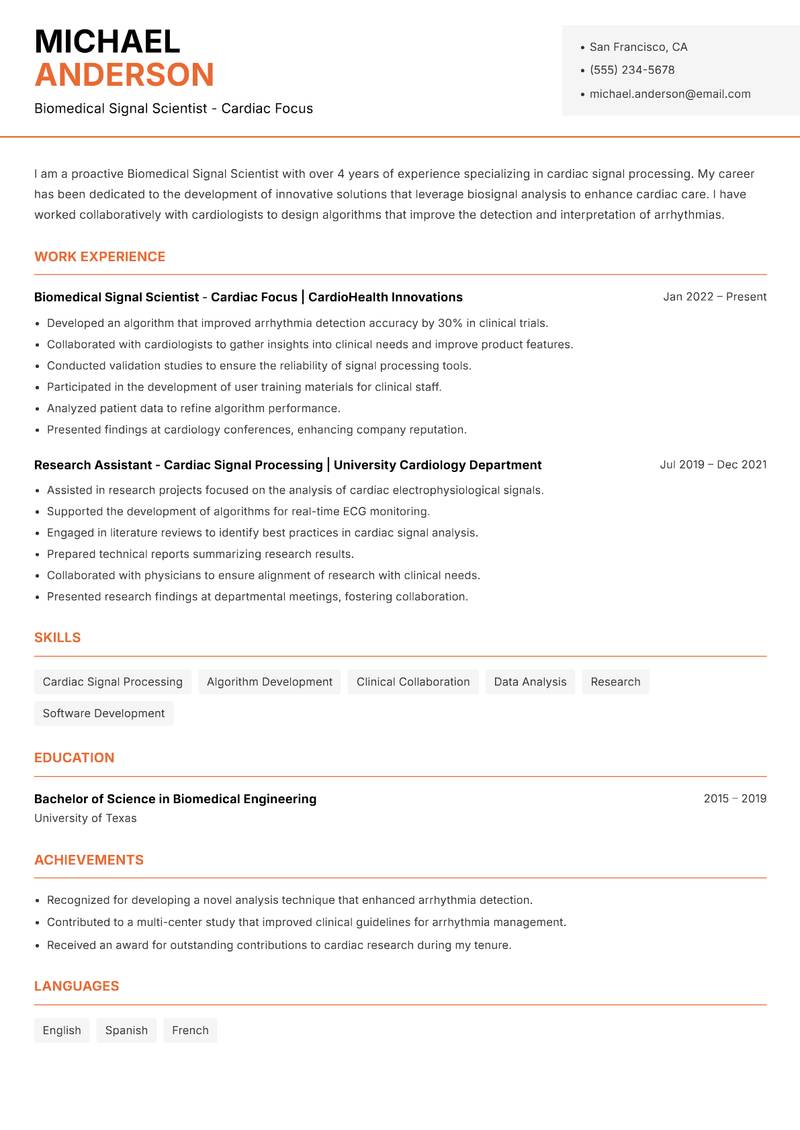
Modern Professional
Use Template7 Real Biomedical Signal Scientist Resume Examples
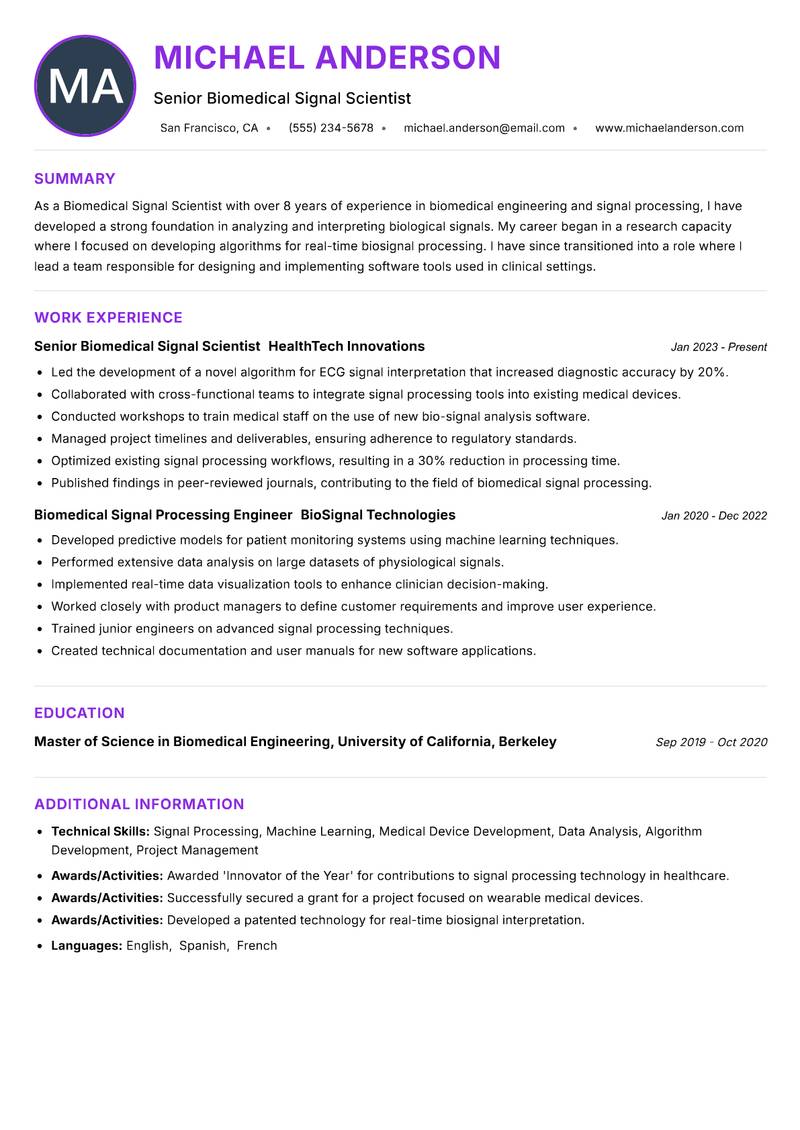
Senior Biomedical Signal Scientist with 8+ Years Experience
Summary: As a Biomedical Signal Scientist with over 8 years of experience in biomedical engineering and signal processing, I have developed a strong foundation in analyzing and interpreting biological signals. My career began in a research capacity where I focused on developing algorithms for real-time biosignal processing. I have since transitioned into a role where I lead a team responsible for designing and implementing software tools used in clinical settings. My expertise lies in machine learning applications for healthcare, notably in areas such as ECG and EEG signal analysis. I am dedicated to enhancing patient outcomes through innovative technological solutions. My strong analytical skills combined with a passion for healthcare have driven successful projects that improve diagnostic accuracy and efficiency in medical settings. I possess excellent communication skills, allowing me to effectively collaborate with interdisciplinary teams, including physicians and researchers, to translate complex technical concepts into understandable terms. I am now looking to leverage my expertise in a challenging position that allows me to further contribute to advancements in medical technology and patient care.
Description:
- Led the development of a novel algorithm for ECG signal interpretation that increased diagnostic accuracy by 20%.
- Collaborated with cross-functional teams to integrate signal processing tools into existing medical devices.
- Conducted workshops to train medical staff on the use of new bio-signal analysis software.
- Managed project timelines and deliverables, ensuring adherence to regulatory standards.
- Optimized existing signal processing workflows, resulting in a 30% reduction in processing time.
- Published findings in peer-reviewed journals, contributing to the field of biomedical signal processing.
🏆 Key Achievements
Lead Biomedical Signal Scientist with 10+ Years Experience
Summary: With a robust background in biomedical engineering and over 10 years of experience in the field, I specialize in the analysis and interpretation of biomedical signals. My expertise encompasses a variety of signal processing methods, which I apply to enhance the functionality of medical devices. I have a proven track record of leading projects focused on advanced imaging techniques and bioinformatics. My role at a leading medical technology firm involved spearheading initiatives that significantly improved patient monitoring systems. I am passionate about using data-driven insights to drive innovations in healthcare technology. I thrive in fast-paced environments and excel at problem-solving and critical thinking, which allows me to navigate complex challenges effectively. I have worked extensively with regulatory bodies to ensure compliance with medical standards and have a deep understanding of the clinical needs that drive healthcare technology advancements. As I look to further my career, I am eager to take on new challenges that allow me to utilize my analytical skills and leadership experience to contribute to transformative healthcare solutions.
Description:
- Led a team in the development of a new medical imaging system that improved diagnostic capabilities by 25%.
- Designed and implemented algorithms for processing and analyzing MRI signals.
- Facilitated interdisciplinary collaboration to ensure project success and timely delivery.
- Conducted training sessions for staff on the use of new imaging technologies.
- Presented research findings at international conferences, enhancing company visibility.
- Managed project budgets and timelines to ensure alignment with corporate goals.
🏆 Key Achievements
Biomedical Signal Scientist with 5+ Years Experience
Summary: I am a dedicated Biomedical Signal Scientist with over 5 years of experience in the development and application of sophisticated algorithms for biosignal analysis. My work has primarily focused on integrating machine learning techniques to interpret complex biological signals, enhancing diagnostic processes in clinical settings. I possess strong programming skills and have experience with various signal processing tools and software. My background in both engineering and biology allows me to bridge the gap between technology and healthcare, ensuring that solutions are both innovative and clinically relevant. Throughout my career, I have collaborated with healthcare professionals to understand their needs and to translate those into functional technical solutions. I am particularly passionate about advancing technologies that improve patient care and streamline medical practices. I am now seeking to expand my horizons within a dynamic organization that values creativity and scientific rigor in its approach to healthcare solutions.
Description:
- Developed machine learning algorithms for real-time analysis of EEG signals, improving patient monitoring accuracy.
- Collaborated with clinical teams to gather requirements and enhance product features.
- Conducted signal processing workshops for healthcare staff to improve utilization of tools.
- Performed data validation and quality assurance for signal processing applications.
- Implemented version control systems to streamline software development processes.
- Analyzed clinical data to identify trends and improve decision-making processes.
🏆 Key Achievements
Biomedical Signal Scientist - Wearable Technologies with 7+ Years Experience
Summary: As a Biomedical Signal Scientist with a focus on wearable technology, I bring over 7 years of experience in developing and implementing biosignal monitoring systems. My expertise lies in the integration of sensors and signal processing algorithms that enable real-time health monitoring for patients. I have worked on projects that span from conception to deployment, ensuring that the technology meets clinical needs while maintaining user-friendly interfaces. My background in electrical engineering, combined with my knowledge of biological systems, allows me to create innovative solutions that improve patient engagement and health outcomes. I am adept at collaborating with multidisciplinary teams to bring projects to fruition and have a track record of successfully managing timelines and resources. I am seeking to leverage my technical skills and project management experience in a challenging role that focuses on the intersection of technology and healthcare.
Description:
- Designed and developed a biosignal monitoring system that enhanced patient engagement by 30%.
- Integrated multi-modal sensors to capture various physiological signals in real-time.
- Collaborated with software engineers to develop a user-friendly mobile application for data visualization.
- Conducted field tests and collected user feedback to refine product features.
- Ensured compliance with medical device regulations throughout the product lifecycle.
- Presented project findings to stakeholders, leading to further investment in research and development.
🏆 Key Achievements
Biomedical Signal Research Scientist with 6+ Years Experience
Summary: I am a highly skilled Biomedical Signal Scientist with a passion for research and development in the field of medical devices. With over 6 years of experience, I specialize in analyzing biosignals for the purpose of improving diagnostic processes and patient care. My experience includes extensive work with neural signals, particularly in the context of brain-computer interfaces. I am adept at utilizing advanced signal processing techniques and have a solid understanding of the regulatory landscape governing medical device development. Throughout my career, I have contributed to projects from the ground up, actively participating in research, algorithm development, and testing. I excel in collaborative environments and am committed to fostering effective communication among team members to achieve common goals. I am now seeking to further advance my career within a forward-thinking organization that prioritizes innovation and excellence in healthcare technology.
Description:
- Conducted research on neural signal processing for brain-computer interface applications.
- Developed algorithms that improved signal clarity by 25% in clinical trials.
- Collaborated with neuroscientists to design and implement experimental protocols.
- Prepared research findings for publication in leading journals.
- Presented data at conferences, enhancing the visibility of the research team.
- Supervised interns and junior researchers, providing mentorship and guidance.
🏆 Key Achievements
Senior Biomedical Signal Analyst with 9+ Years Experience
Summary: As a Biomedical Signal Scientist with a focus on healthcare data analytics, I bring over 9 years of experience transforming complex biosignal data into actionable insights. My background in both biostatistics and signal processing allows me to effectively analyze trends and patterns in medical data, providing essential support for clinical decision-making. I have developed predictive algorithms that assist healthcare providers in identifying at-risk patients before critical health events occur. My experience spans various healthcare settings, including hospitals and research institutions, where I have collaborated with cross-functional teams to improve patient outcomes through data-driven strategies. I am passionate about leveraging technology to enhance healthcare delivery and am dedicated to continuous professional growth in this rapidly evolving field. I am looking for an opportunity to leverage my analytical skills and technical expertise to contribute to innovative healthcare solutions.
Description:
- Developed predictive models for patient outcome forecasting based on biosignal data.
- Collaborated with clinicians to tailor data analytics tools to their needs.
- Conducted training sessions for healthcare staff on data interpretation.
- Streamlined data collection processes, resulting in a 20% increase in efficiency.
- Presented findings to stakeholders, influencing clinical practices.
- Implemented data visualization techniques to enhance communication of results.
🏆 Key Achievements
Biomedical Signal Scientist - Cardiac Focus with 4+ Years Experience
Summary: I am a proactive Biomedical Signal Scientist with over 4 years of experience specializing in cardiac signal processing. My career has been dedicated to the development of innovative solutions that leverage biosignal analysis to enhance cardiac care. I have worked collaboratively with cardiologists to design algorithms that improve the detection and interpretation of arrhythmias. My hands-on experience in both software development and clinical application of signal processing has equipped me with a unique perspective on the needs of healthcare providers. I am passionate about advancing technologies that not only improve patient outcomes but also streamline clinical workflows. I am eager to bring my technical skills and clinical insights to a dynamic team focused on improving cardiac health through innovative biomedical signal solutions.
Description:
- Developed an algorithm that improved arrhythmia detection accuracy by 30% in clinical trials.
- Collaborated with cardiologists to gather insights into clinical needs and improve product features.
- Conducted validation studies to ensure the reliability of signal processing tools.
- Participated in the development of user training materials for clinical staff.
- Analyzed patient data to refine algorithm performance.
- Presented findings at cardiology conferences, enhancing company reputation.
🏆 Key Achievements
Key Skills for Biomedical Signal Scientist
ATS Optimization Tips
Increase your chances of getting hired
Use Standard Headings
Use common section titles like Experience, Skills, etc.
Include Keywords
Add role-specific keywords from the job description
Keep it Simple
Avoid complex tables, images and graphics
Save in Right Format
Use PDF format unless otherwise specified
Biomedical Signal Scientist Salary Insights
Average Salary
$105,000
per year
Salary Range
$80,000 - $130,000
per year
Top Paying Cities
Los Angeles, Seattle, Houston, Dallas, Boston
Source: Glassdoor, Payscale, Indeed (Updated May 2025)
Everything you need to write a great Biomedical Signal Scientist resume
Strong Action Verbs to Use
Resume Writing Tips
- →Highlight your technical expertise in specific software and tools used in signal processing.
- →Detail collaborative projects with healthcare professionals to showcase communication skills.
- →Emphasize any experience with regulatory compliance in research settings.
- →Include publications or presentations at conferences related to biomedical signal research.
- →Showcase unique projects where innovative signal analysis impacted clinical outcomes.
Common Mistakes to Avoid
- ✕Listing irrelevant technical skills not applicable to biomedical signals.
- ✕Using generic language that doesn’t reflect specific contributions to healthcare projects.
- ✕Failing to tailor the resume for roles emphasizing practical applications of signal processing.
- ✕Omitting certifications that validate your expertise in biomedical signal sciences.
ATS Keywords for Biomedical Signal Scientist
Biomedical Signal Scientist Career Path
Relevant Certifications
Career Progression
Entry-Level Biomedical Signal Scientist
Work involves supporting senior scientists in data collection, analysis, and preparation of reports.
Biomedical Signal Analyst
Handle significant datasets, performing in-depth analyses for research projects in clinical settings.
Senior Biomedical Signal Scientist
Lead projects focusing on the development and testing of algorithms to interpret complex signals from medical devices.
Principal Investigator
Oversee research initiatives and collaborate with multi-disciplinary teams; author peer-reviewed publications.
Biomedical Engineering Director
Manage teams of scientists and engineers, directing research strategy and overseeing budget allocations.
Biomedical Signal Scientist Interview Questions
Can you explain the significance of filtering techniques in biomedical signal processing? +
Discuss different types of filters used and their impact on the clarity of physiological signals.
What experience do you have with machine learning applications in biomedical research? +
Share specific examples of algorithms used to enhance signal analysis.
Describe a project where you collaborated with clinicians. What insights did you gain from that interaction? +
Focus on communication skills and the ability to translate technical information to non-specialists.
How do you ensure compliance with ethical guidelines when handling biophysical data? +
Articulate your understanding of patient privacy and data protection regulations.
What software tools are you proficient in for signal analysis and data visualization? +
Mention specific platforms like MATLAB, Python, or LabVIEW.
Can you provide an example of a signal that posed a significant challenge? How did you address it? +
Detail a specific instance showcasing problem-solving skills in your analysis.
About the Biomedical Signal Scientist Role
Employing advanced mathematical models, a Biomedical Signal Scientist works closely with healthcare data to extract valuable insights from various physiological signals. Focusing on signals obtained from electrocardiograms (ECGs), electroencephalograms (EEGs), and other biosignal sources, professionals in this role develop sophisticated algorithms to improve diagnostic precision. Collaboration with healthcare teams is key, often involving the translation of complex data into actionable intelligence for patient care optimization.
Frequently Asked Questions
What educational background is typical for a Biomedical Signal Scientist? +
Most hold a master's degree or Ph.D. in biomedical engineering, signal processing, or related fields.
Is programming knowledge necessary for this role? +
Yes, proficiency in languages like MATLAB or Python is crucial for developing analysis algorithms.
What industries employ Biomedical Signal Scientists? +
They typically work in hospitals, research institutions, and technology companies developing medical devices.
How can I advance my career as a Biomedical Signal Scientist? +
Gaining experience in leadership roles, contributing to publications, and obtaining relevant certifications can help.
What are typical challenges faced in this field? +
Scientists often encounter noise in data and must develop techniques to mitigate these effects.
Are there opportunities for remote work in this field? +
Yes, particularly in analysis roles, although data collection may require on-site presence.
More Resume Examples You Might Like
Related Career Paths
Other roles candidates for Biomedical Signal Scientist positions often also consider.
Will this Biomedical Signal Scientist resume pass the ATS scan?
Upload it and get an instant AI-scored compatibility check with specific fixes.
Check My Resume →
Pair it with a matching cover letter
AI drafts a first version from your job title and strengths — edit it live, then download the PDF.
Write My Cover Letter →
Written by Nohaya Career Team
Reviewed by HR Professionals · Updated May 2025
Ready to Build Your Perfect Resume?
Choose from 1000+ professional templates and land your dream job.
Create My Resume Now