Build an ATS-Friendly
Aquaculture Scientist Resume
That Gets Interviews
Aquaculture Scientists engage in multidisciplinary research and experimentation to innovate sustainable practices within fish farming. Responsibilities encompass the assessment of fish health, evaluation of feed formulations, and analysis of ecosystem impacts related to aquaculture activities. Collaborative efforts…
Aquaculture Scientist Resume Templates
Modern Professional
Use Template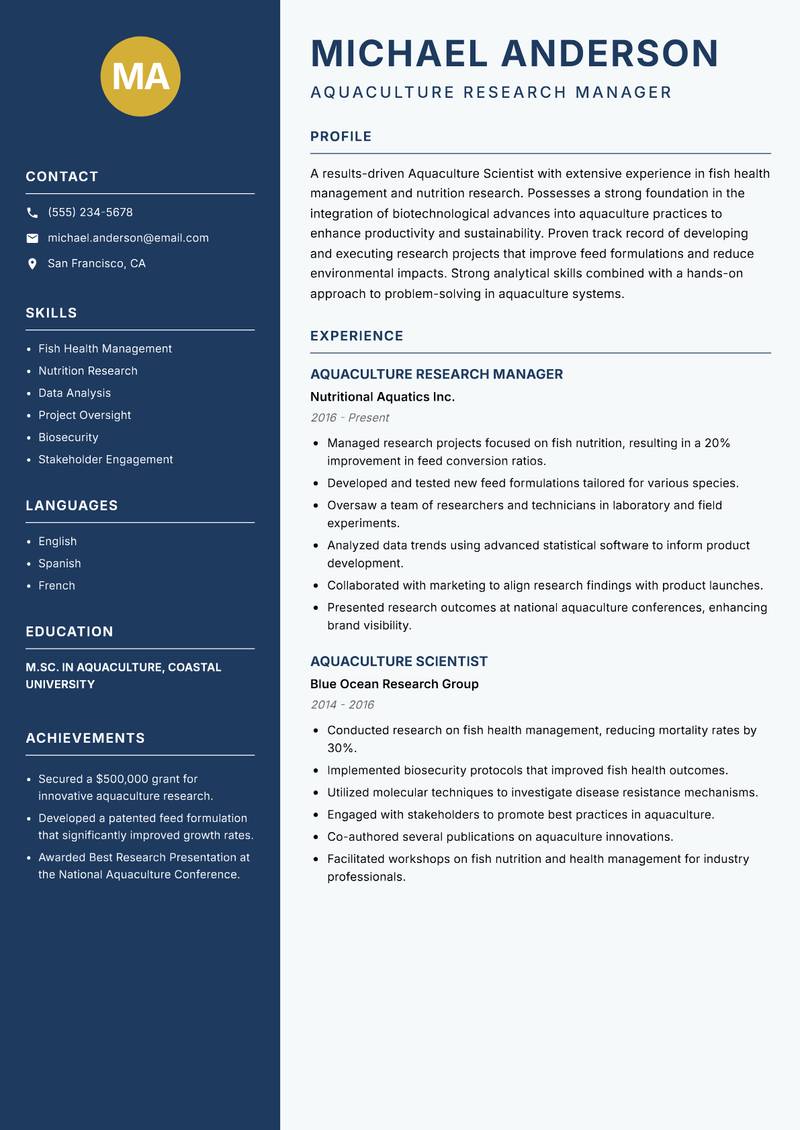
Classic Clean
Use Template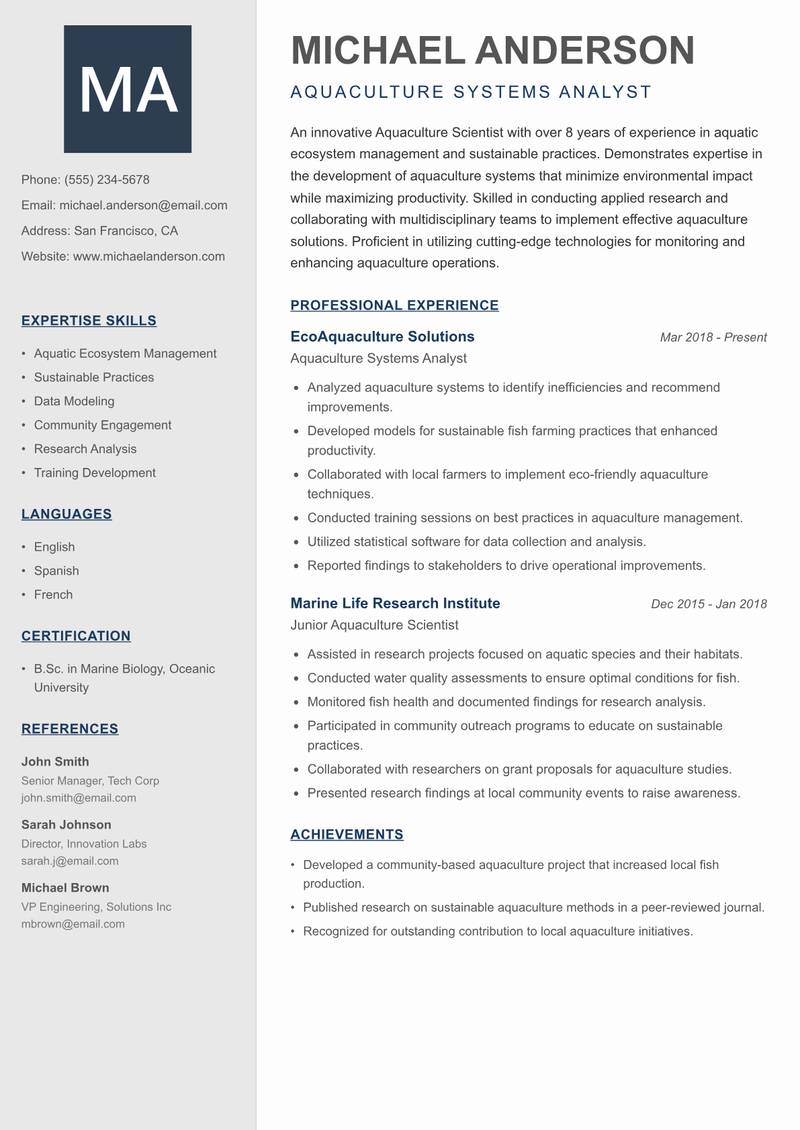
Creative Minimal
Use Template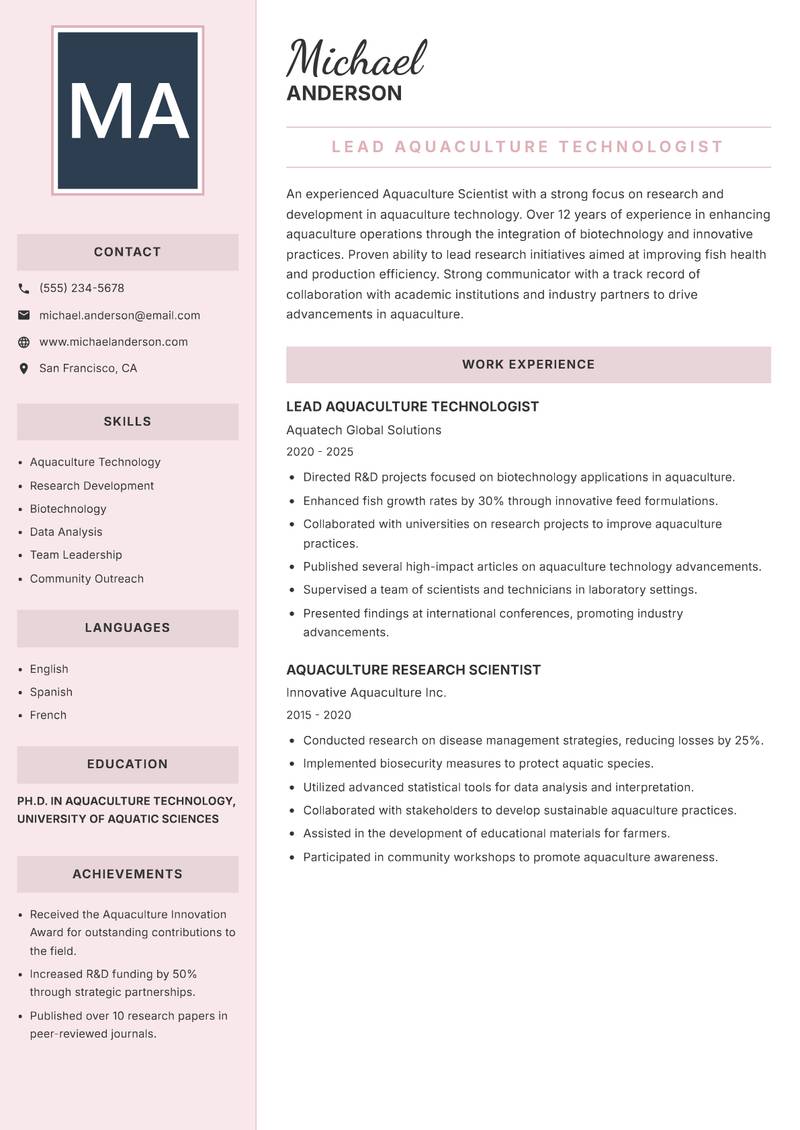
Executive
Use Template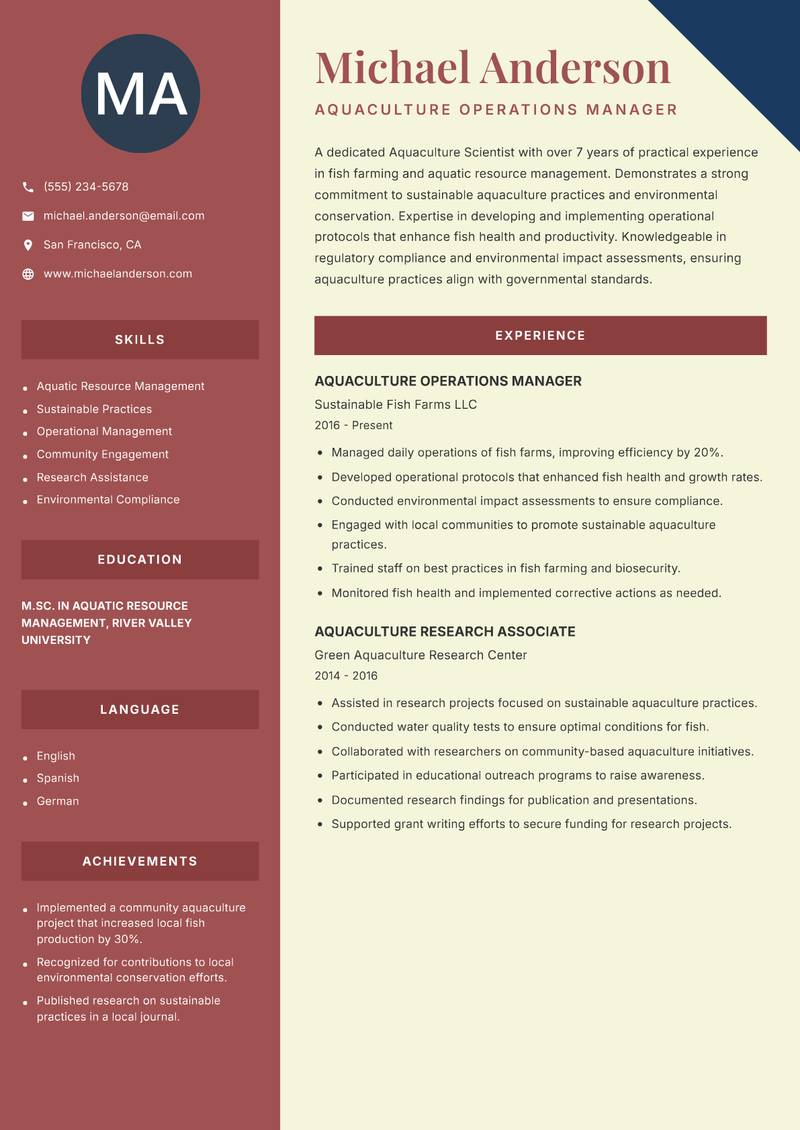
Two Column
Use Template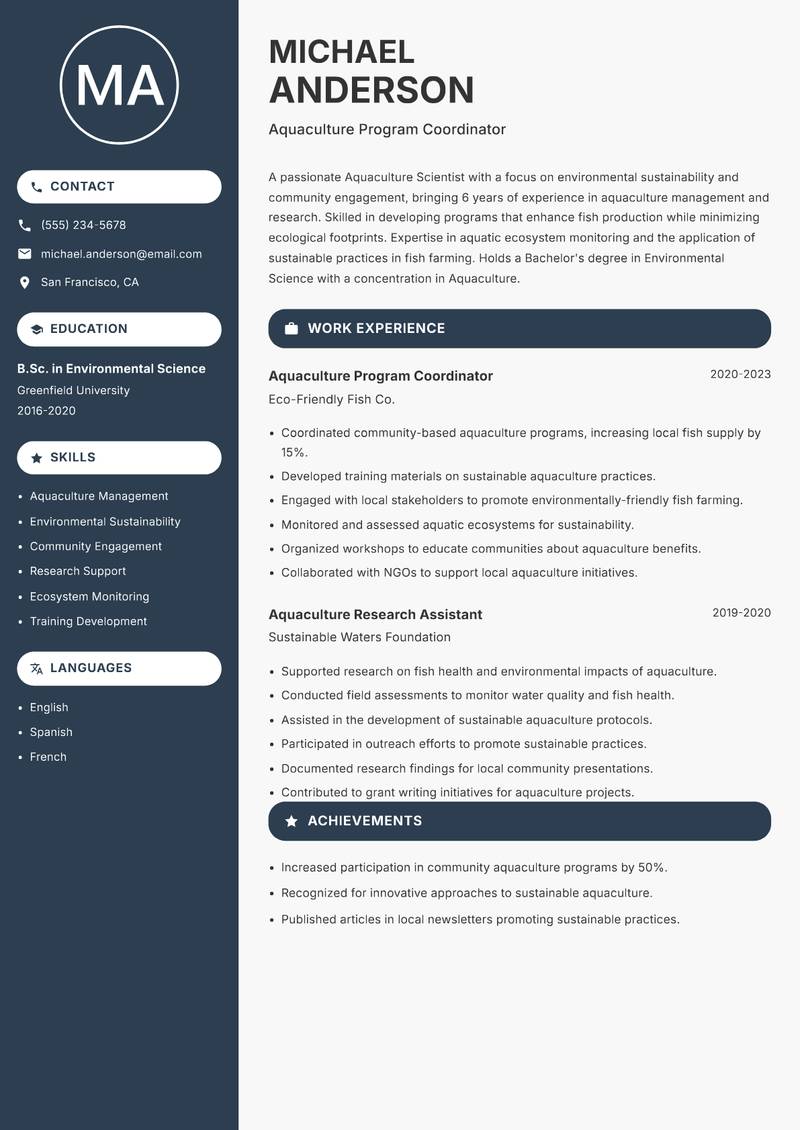
Compact
Use Template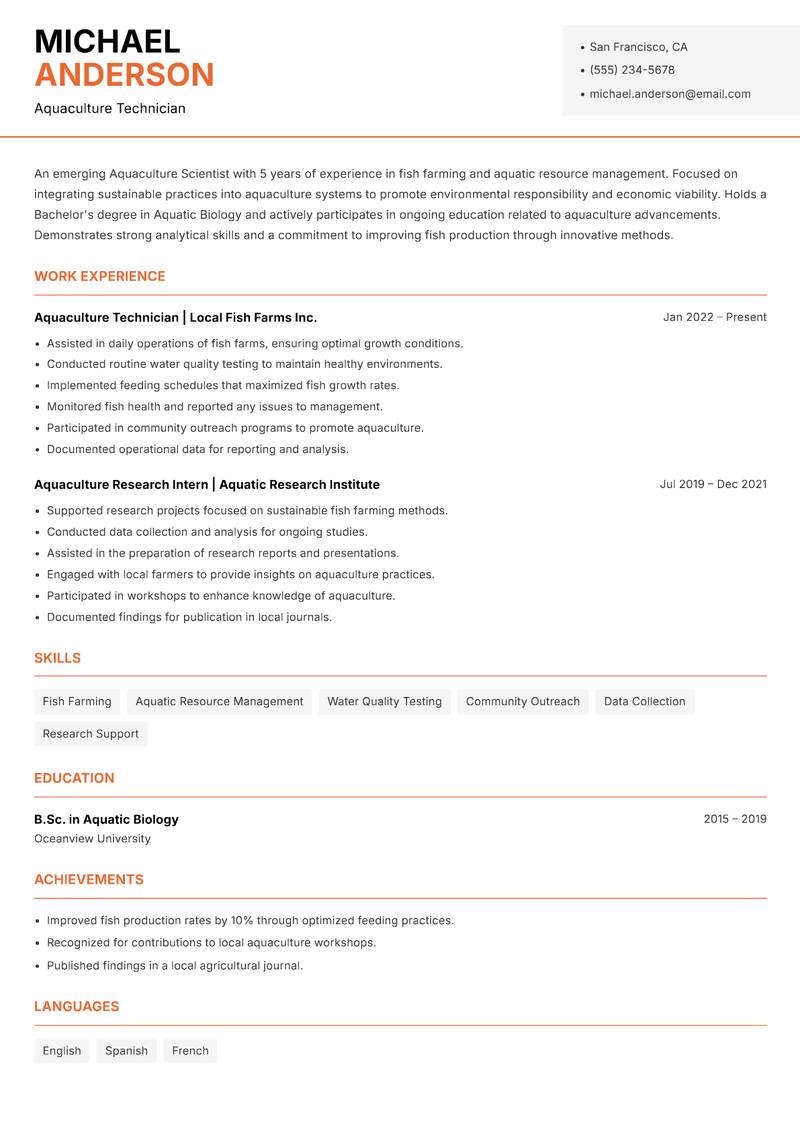
Modern Professional
Use Template7 Real Aquaculture Scientist Resume Examples
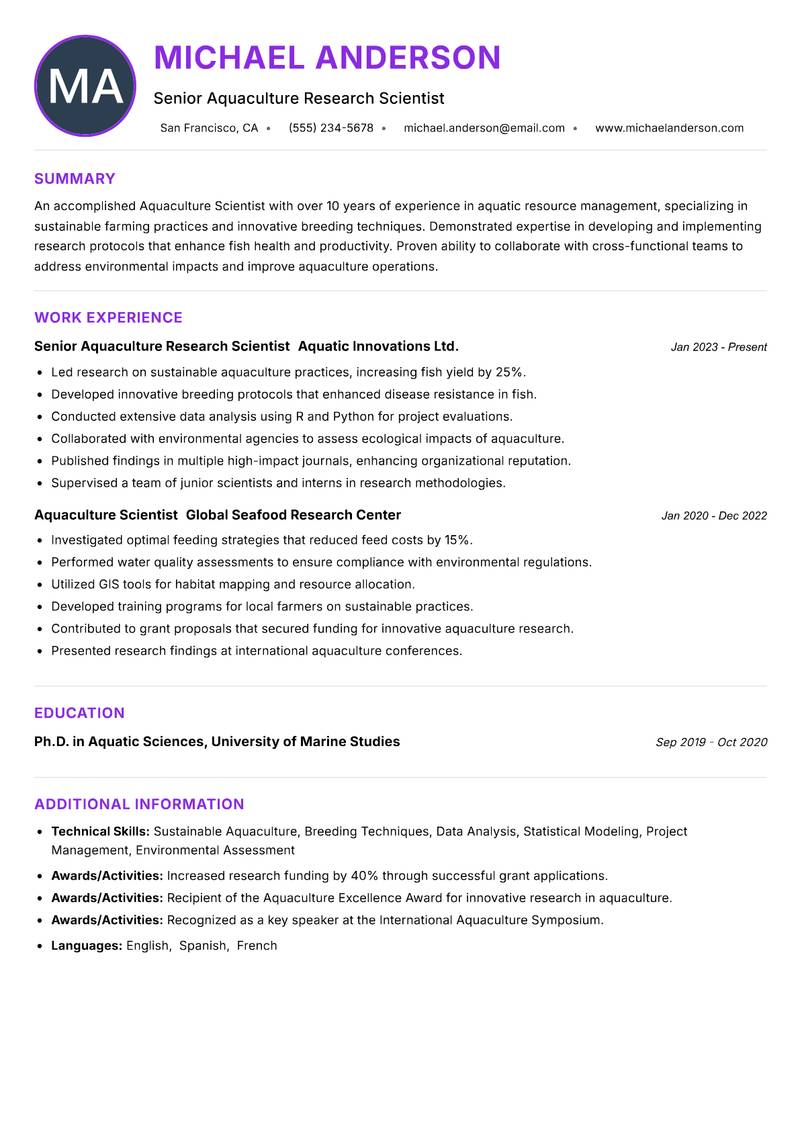
Senior Aquaculture Research Scientist with 11+ Years Experience
Summary: An accomplished Aquaculture Scientist with over 10 years of experience in aquatic resource management, specializing in sustainable farming practices and innovative breeding techniques. Demonstrated expertise in developing and implementing research protocols that enhance fish health and productivity. Proven ability to collaborate with cross-functional teams to address environmental impacts and improve aquaculture operations. Strong background in data analysis and statistical modeling, contributing to the advancement of aquaculture technologies. Committed to fostering partnerships with industry stakeholders to promote best practices in aquaculture. Holds a Ph.D. in Aquatic Sciences, with numerous publications in peer-reviewed journals, reflecting a deep commitment to advancing scientific knowledge in the field. Recognized for leadership in various research projects aimed at optimizing feed efficiency and reducing waste in aquaculture systems.
Description:
- Led research on sustainable aquaculture practices, increasing fish yield by 25%.
- Developed innovative breeding protocols that enhanced disease resistance in fish.
- Conducted extensive data analysis using R and Python for project evaluations.
- Collaborated with environmental agencies to assess ecological impacts of aquaculture.
- Published findings in multiple high-impact journals, enhancing organizational reputation.
- Supervised a team of junior scientists and interns in research methodologies.
🏆 Key Achievements
Aquaculture Research Manager with 9+ Years Experience
Summary: A results-driven Aquaculture Scientist with extensive experience in fish health management and nutrition research. Possesses a strong foundation in the integration of biotechnological advances into aquaculture practices to enhance productivity and sustainability. Proven track record of developing and executing research projects that improve feed formulations and reduce environmental impacts. Strong analytical skills combined with a hands-on approach to problem-solving in aquaculture systems. Adept at fostering collaborations with academic institutions and industry partners to drive innovation. Holds a Master's degree in Aquaculture and has contributed to several significant studies published in renowned journals. Passionate about promoting sustainable aquaculture practices to support global food security.
Description:
- Managed research projects focused on fish nutrition, resulting in a 20% improvement in feed conversion ratios.
- Developed and tested new feed formulations tailored for various species.
- Oversaw a team of researchers and technicians in laboratory and field experiments.
- Analyzed data trends using advanced statistical software to inform product development.
- Collaborated with marketing to align research findings with product launches.
- Presented research outcomes at national aquaculture conferences, enhancing brand visibility.
🏆 Key Achievements
Aquaculture Systems Analyst with 8+ Years Experience
Summary: An innovative Aquaculture Scientist with over 8 years of experience in aquatic ecosystem management and sustainable practices. Demonstrates expertise in the development of aquaculture systems that minimize environmental impact while maximizing productivity. Skilled in conducting applied research and collaborating with multidisciplinary teams to implement effective aquaculture solutions. Proficient in utilizing cutting-edge technologies for monitoring and enhancing aquaculture operations. Holds a Bachelor's degree in Marine Biology with ongoing professional development in sustainable aquaculture methods. Committed to advancing the field through research and community engagement, focusing on ecological preservation and resource management.
Description:
- Analyzed aquaculture systems to identify inefficiencies and recommend improvements.
- Developed models for sustainable fish farming practices that enhanced productivity.
- Collaborated with local farmers to implement eco-friendly aquaculture techniques.
- Conducted training sessions on best practices in aquaculture management.
- Utilized statistical software for data collection and analysis.
- Reported findings to stakeholders to drive operational improvements.
🏆 Key Achievements
Lead Aquaculture Technologist with 12+ Years Experience
Summary: An experienced Aquaculture Scientist with a strong focus on research and development in aquaculture technology. Over 12 years of experience in enhancing aquaculture operations through the integration of biotechnology and innovative practices. Proven ability to lead research initiatives aimed at improving fish health and production efficiency. Strong communicator with a track record of collaboration with academic institutions and industry partners to drive advancements in aquaculture. Holds a Ph.D. in Aquaculture Technology and has numerous publications that contribute to the scientific community. Committed to advancing sustainable aquaculture practices that support environmental stewardship and economic viability.
Description:
- Directed R&D projects focused on biotechnology applications in aquaculture.
- Enhanced fish growth rates by 30% through innovative feed formulations.
- Collaborated with universities on research projects to improve aquaculture practices.
- Published several high-impact articles on aquaculture technology advancements.
- Supervised a team of scientists and technicians in laboratory settings.
- Presented findings at international conferences, promoting industry advancements.
🏆 Key Achievements
Aquaculture Operations Manager with 7+ Years Experience
Summary: A dedicated Aquaculture Scientist with over 7 years of practical experience in fish farming and aquatic resource management. Demonstrates a strong commitment to sustainable aquaculture practices and environmental conservation. Expertise in developing and implementing operational protocols that enhance fish health and productivity. Knowledgeable in regulatory compliance and environmental impact assessments, ensuring aquaculture practices align with governmental standards. Holds a Master's degree in Aquatic Resource Management, with a focus on community-based aquaculture initiatives. Adept at fostering relationships with local communities to promote sustainable practices and improve economic outcomes. Passionate about educating stakeholders on the importance of environmental stewardship in aquaculture.
Description:
- Managed daily operations of fish farms, improving efficiency by 20%.
- Developed operational protocols that enhanced fish health and growth rates.
- Conducted environmental impact assessments to ensure compliance.
- Engaged with local communities to promote sustainable aquaculture practices.
- Trained staff on best practices in fish farming and biosecurity.
- Monitored fish health and implemented corrective actions as needed.
🏆 Key Achievements
Aquaculture Program Coordinator with 6+ Years Experience
Summary: A passionate Aquaculture Scientist with a focus on environmental sustainability and community engagement, bringing 6 years of experience in aquaculture management and research. Skilled in developing programs that enhance fish production while minimizing ecological footprints. Expertise in aquatic ecosystem monitoring and the application of sustainable practices in fish farming. Holds a Bachelor's degree in Environmental Science with a concentration in Aquaculture. Committed to promoting awareness of sustainable aquaculture among local communities and stakeholders. Proven ability to work collaboratively with diverse groups to achieve common goals in aquaculture development. Actively involved in outreach programs to educate on the importance of sustainable fish farming practices.
Description:
- Coordinated community-based aquaculture programs, increasing local fish supply by 15%.
- Developed training materials on sustainable aquaculture practices.
- Engaged with local stakeholders to promote environmentally-friendly fish farming.
- Monitored and assessed aquatic ecosystems for sustainability.
- Organized workshops to educate communities about aquaculture benefits.
- Collaborated with NGOs to support local aquaculture initiatives.
🏆 Key Achievements
Aquaculture Technician with 5+ Years Experience
Summary: An emerging Aquaculture Scientist with 5 years of experience in fish farming and aquatic resource management. Focused on integrating sustainable practices into aquaculture systems to promote environmental responsibility and economic viability. Holds a Bachelor's degree in Aquatic Biology and actively participates in ongoing education related to aquaculture advancements. Demonstrates strong analytical skills and a commitment to improving fish production through innovative methods. Adept at collaborating with local communities to implement aquaculture solutions that meet both economic and environmental goals. Passionate about education and outreach efforts to raise awareness of sustainable aquaculture practices.
Description:
- Assisted in daily operations of fish farms, ensuring optimal growth conditions.
- Conducted routine water quality testing to maintain healthy environments.
- Implemented feeding schedules that maximized fish growth rates.
- Monitored fish health and reported any issues to management.
- Participated in community outreach programs to promote aquaculture.
- Documented operational data for reporting and analysis.
🏆 Key Achievements
Key Skills for Aquaculture Scientist
ATS Optimization Tips
Increase your chances of getting hired
Use Standard Headings
Use common section titles like Experience, Skills, etc.
Include Keywords
Add role-specific keywords from the job description
Keep it Simple
Avoid complex tables, images and graphics
Save in Right Format
Use PDF format unless otherwise specified
Aquaculture Scientist Salary Insights
Average Salary
$71,000
per year
Salary Range
$55,000 - $87,000
per year
Top Paying Cities
Los Angeles, Seattle, Houston, Dallas, Boston
Source: Glassdoor, Payscale, Indeed (Updated August 2025)
Everything you need to write a great Aquaculture Scientist resume
Strong Action Verbs to Use
Resume Writing Tips
- →Describe specific aquatic systems you've worked with, such as recirculating aquaculture systems or integrated multi-trophic aquaculture.
- →Highlight your data collection techniques, especially if you've employed novel methods or technologies like remote sensing.
- →Emphasize collaborative projects with stakeholders, detailing your role in research or community engagement efforts.
- →Quantify your successes where possible; mention specific increases in yield or ecological benefits achieved through your initiatives.
- →Tailor your resume by focusing on relevant volunteer or extracurricular activities in marine or aquatic sciences.
- →Include a section on software and tools you are familiar with, such as statistical analysis software or aquaculture management platforms.
Common Mistakes to Avoid
- ✕Listing general research experience without specifying aquaculture-related projects.
- ✕Omitting practical experience in water quality assessment and management methods.
- ✕Using jargon without context or explanation that may confuse non-specialists reading the resume.
- ✕Failing to connect your role to the larger impact on environmental sustainability; always tie your achievements back to ecosystem health.
ATS Keywords for Aquaculture Scientist
Aquaculture Scientist Career Path
Relevant Certifications
Career Progression
Entry-Level Aquaculture Technician
Supports research activities, assists in data collection, and monitors aquatic systems.
Aquaculture Research Scientist
Begins to lead specific projects, designs experiments and analyzes data to develop aquaculture practices.
Senior Aquaculture Scientist
Oversees larger research initiatives, mentoring junior scientists and collaborating with industry stakeholders.
Aquaculture Program Manager
Manages teams working on multiple projects, develops budgets, grants, and strategic partnerships.
Aquaculture Policy Analyst
Provides expert analysis on fisheries and aquaculture policy, advising governmental and environmental organizations.
Aquaculture Scientist Interview Questions
What methods do you use to monitor and maintain water quality in aquaculture systems? +
Be specific about techniques and tools used in past experiences.
Can you describe a successful aquaculture project you led? +
Highlight your role, strategies employed, and outcomes.
How do you approach the introduction of new species into aquaculture systems? +
Discuss risk assessment, habitat suitability, and ecological impacts.
What are common disease challenges in aquaculture, and how have you dealt with them? +
Detail your experience with diagnostics, treatment options, and prevention strategies.
How do you stay updated on advancements in aquaculture technology? +
Mention any journals, conferences, or professional networks you engage with.
What role does sustainability play in your aquaculture practices? +
Provide examples of how you implement sustainability in your work.
About the Aquaculture Scientist Role
Aquaculture Scientists engage in multidisciplinary research and experimentation to innovate sustainable practices within fish farming. Responsibilities encompass the assessment of fish health, evaluation of feed formulations, and analysis of ecosystem impacts related to aquaculture activities. Collaborative efforts with government agencies, environmental organizations, and commercial fisheries are critical to developing regulations that balance industry growth with ecological considerations.
Frequently Asked Questions
View all →What is the primary focus of an Aquaculture Scientist? +
Aquaculture Scientists primarily focus on improving technologies and practices in fish farming to ensure sustainability and efficiency in production.
What degree is typically required to become an Aquaculture Scientist? +
A bachelor's degree in marine biology, aquaculture, or a related field is usually required, with a master's or Ph.D. preferred for advanced positions.
What types of facilities do Aquaculture Scientists typically work in? +
They often work in research laboratories, hatcheries, fish farms, and government or environmental agencies.
What role does community involvement play in the work of Aquaculture Scientists? +
Community engagement is essential for informing local stakeholders about sustainable practices and gathering support for environmental initiatives.
Do Aquaculture Scientists have opportunities for career advancement? +
Yes, there are various paths for advancement, including positions in management, policy analysis, or specialized areas like aquaponics or aquatic health.
What is the significance of sustainability in aquaculture? +
Sustainability ensures that aquaculture practices do not harm aquatic ecosystems while meeting the growing demand for seafood.
Is hands-on experience important for Aquaculture Scientists? +
Yes, practical experience with aquatic species management, health assessment, and ecosystem monitoring is crucial for success in this field.
More Resume Examples You Might Like
Related Career Paths
Other roles candidates for Aquaculture Scientist positions often also consider.
Will this Aquaculture Scientist resume pass the ATS scan?
Upload it and get an instant AI-scored compatibility check with specific fixes.
Check My Resume →
Pair it with a matching cover letter
AI drafts a first version from your job title and strengths — edit it live, then download the PDF.
Write My Cover Letter →
Written by Nohaya Career Team
Reviewed by HR Professionals · Updated August 2025
Ready to Build Your Perfect Resume?
Choose from 1000+ professional templates and land your dream job.
Create My Resume Now