Build an ATS-Friendly
Fishery Biologist Resume
That Gets Interviews
Fishery Biologists conduct detailed assessments of aquatic ecosystems to monitor fish populations and their habitats. They utilize both field data collection techniques and laboratory analyses to inform conservation strategies, regulatory guidelines, and sustainable fishing practices. This role often involves…
Fishery Biologist Resume Templates
Modern Professional
Use Template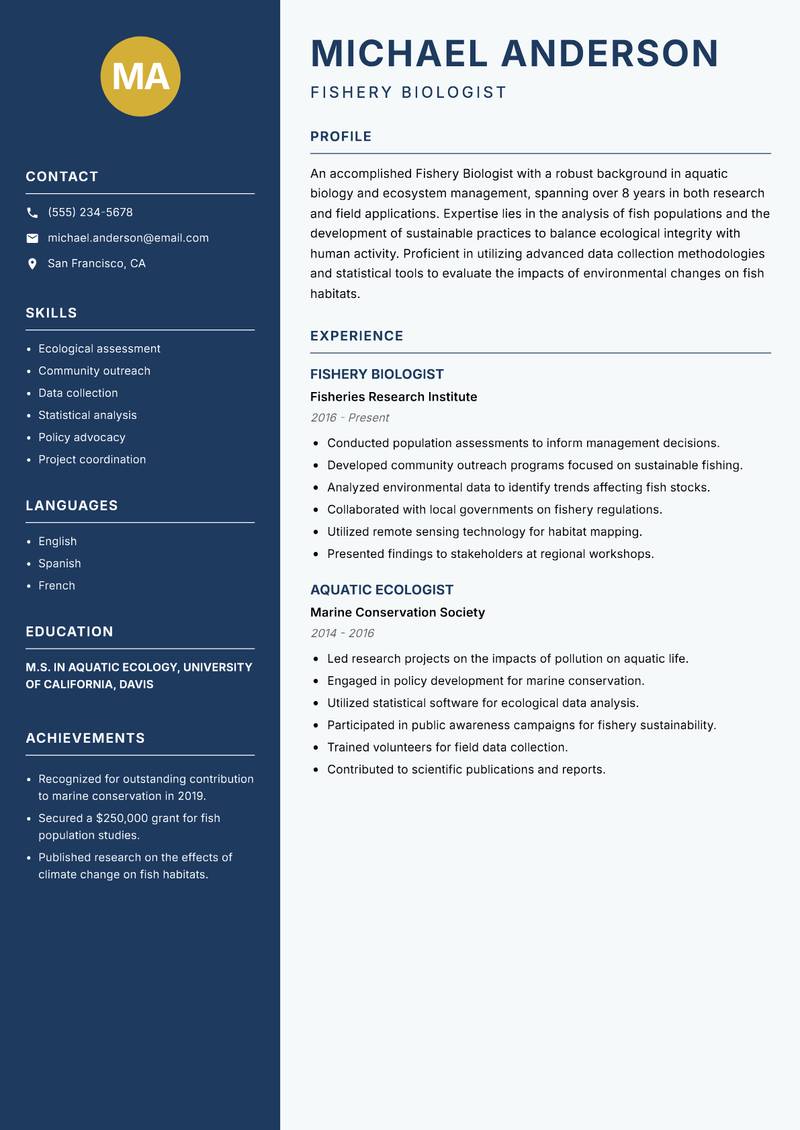
Classic Clean
Use Template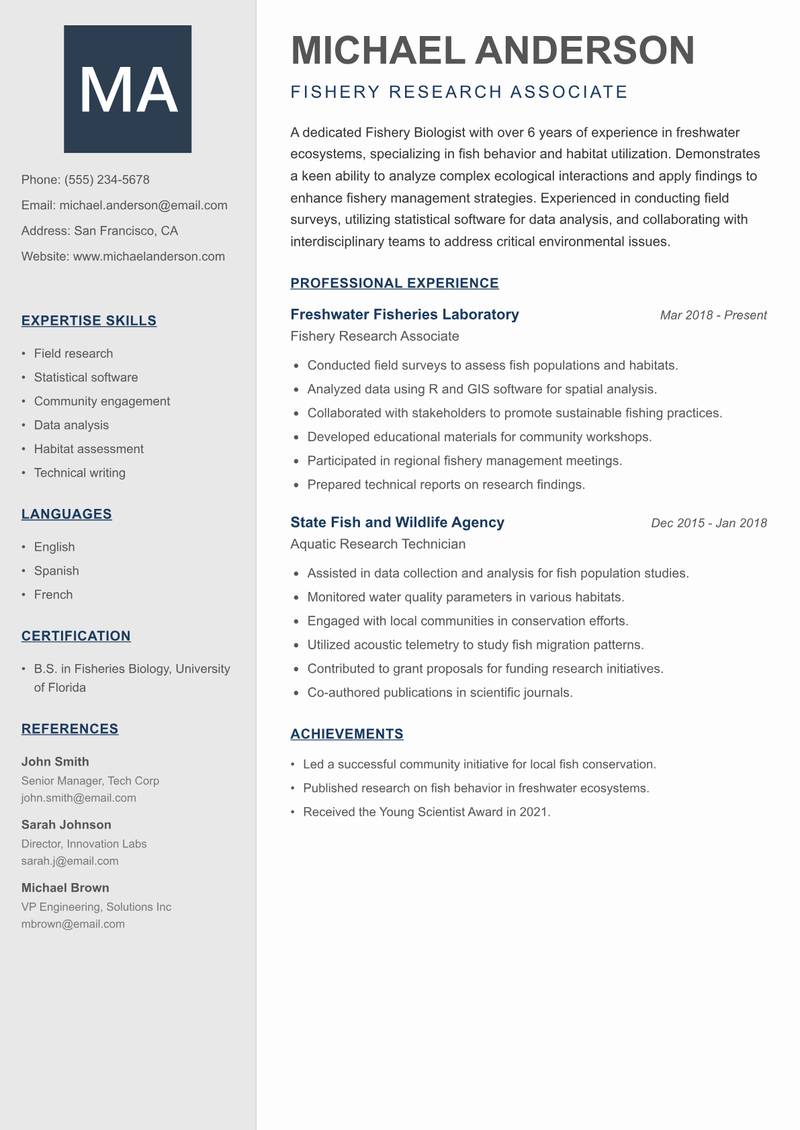
Creative Minimal
Use Template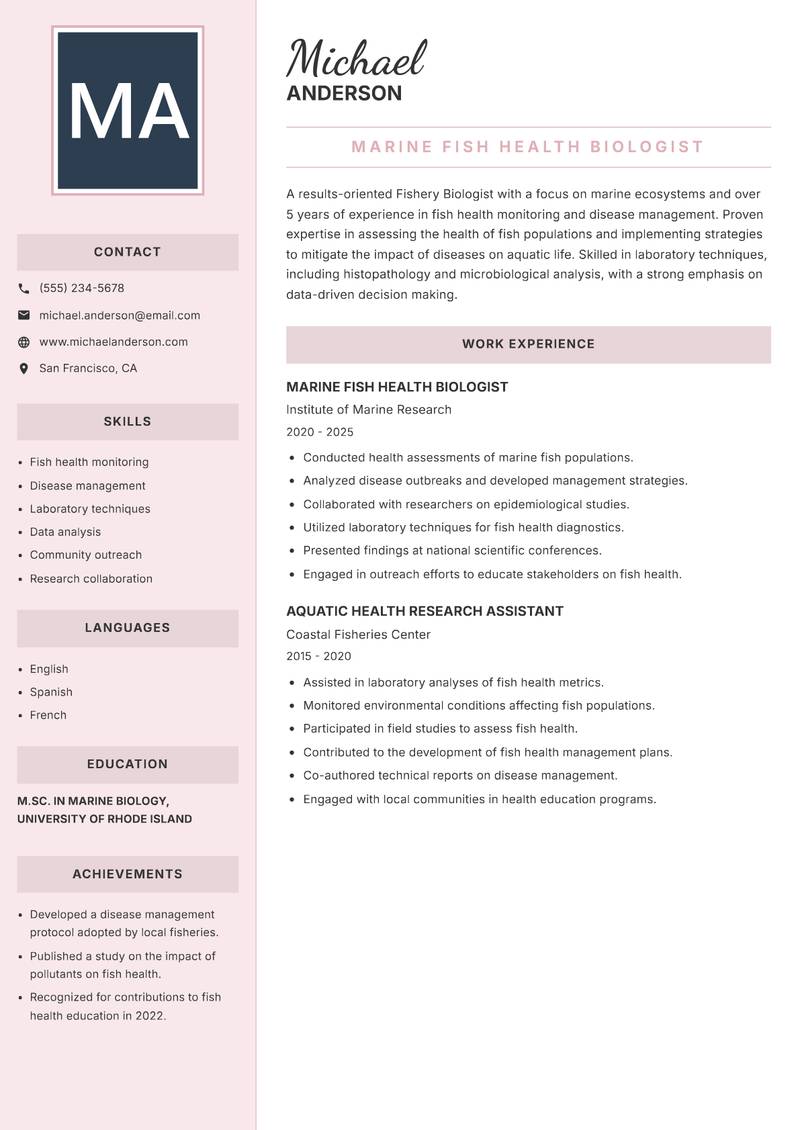
Executive
Use Template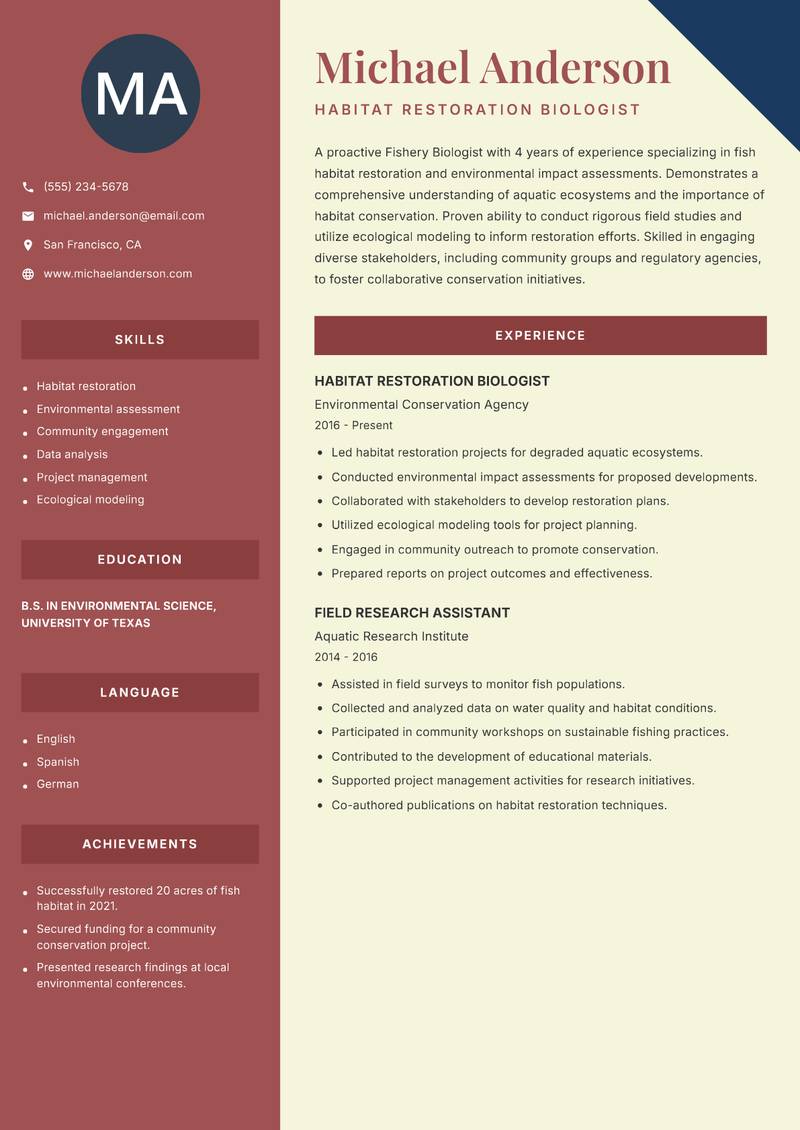
Two Column
Use Template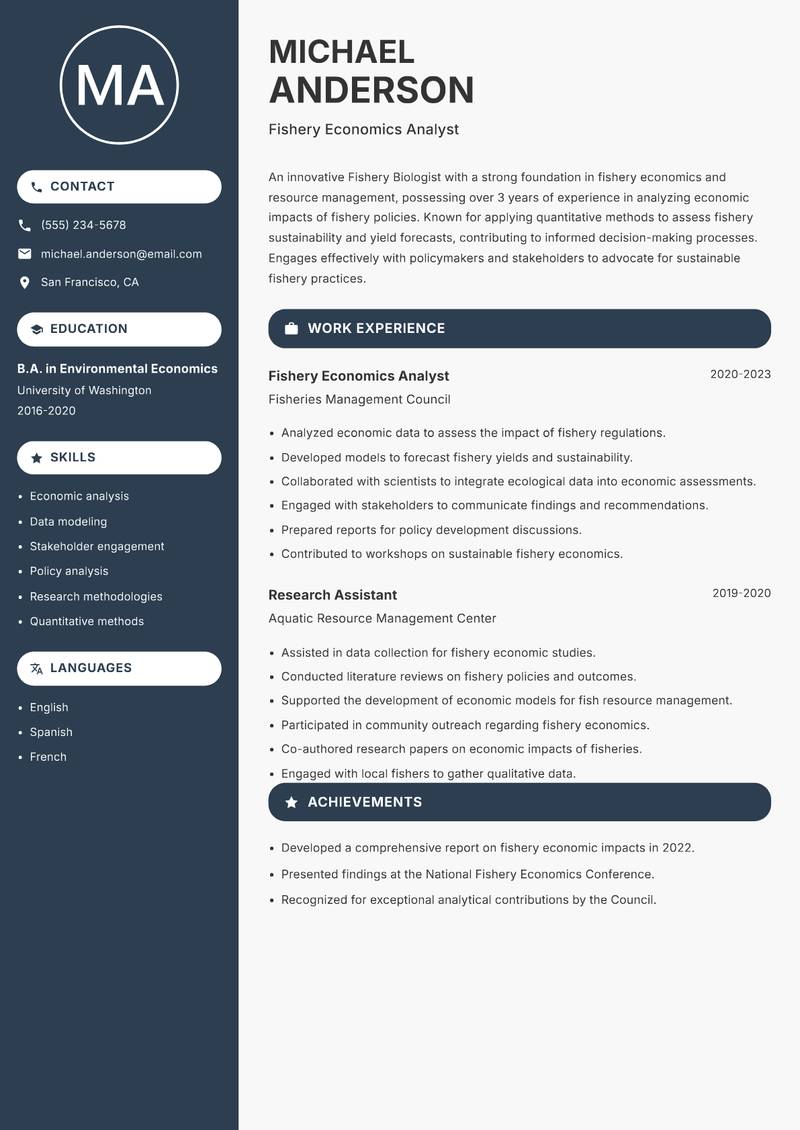
Compact
Use Template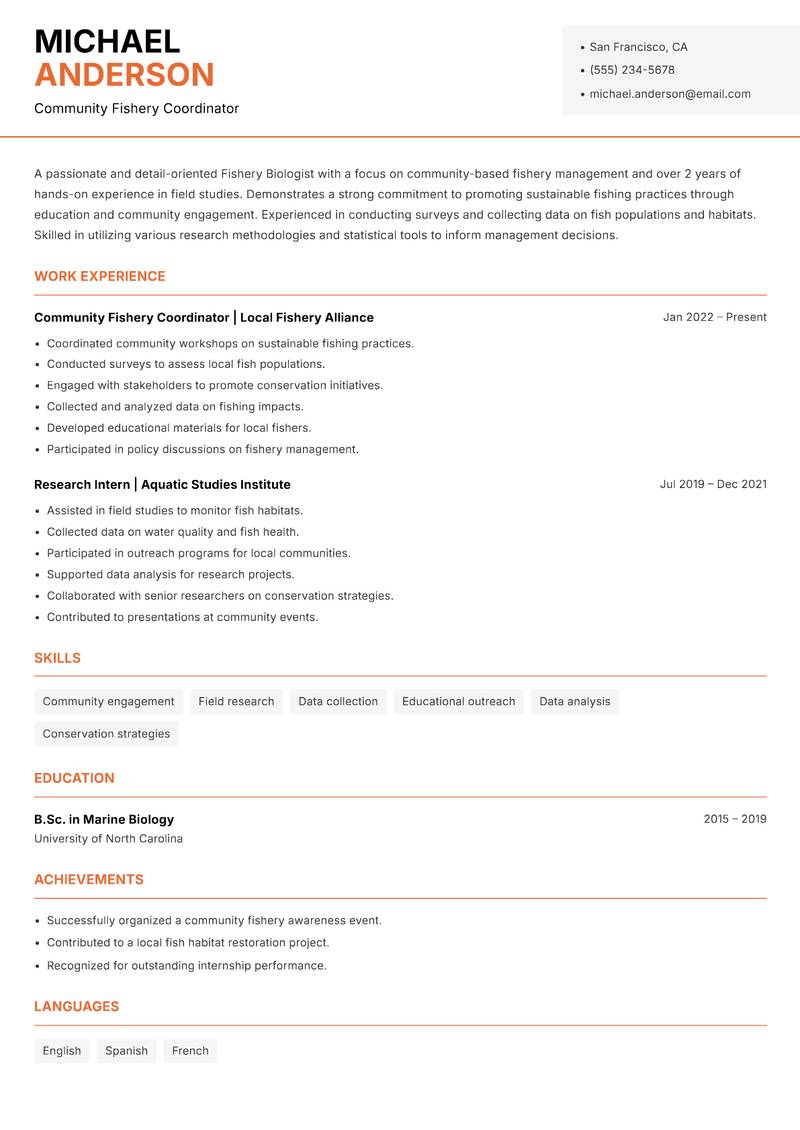
Modern Professional
Use Template7 Real Fishery Biologist Resume Examples
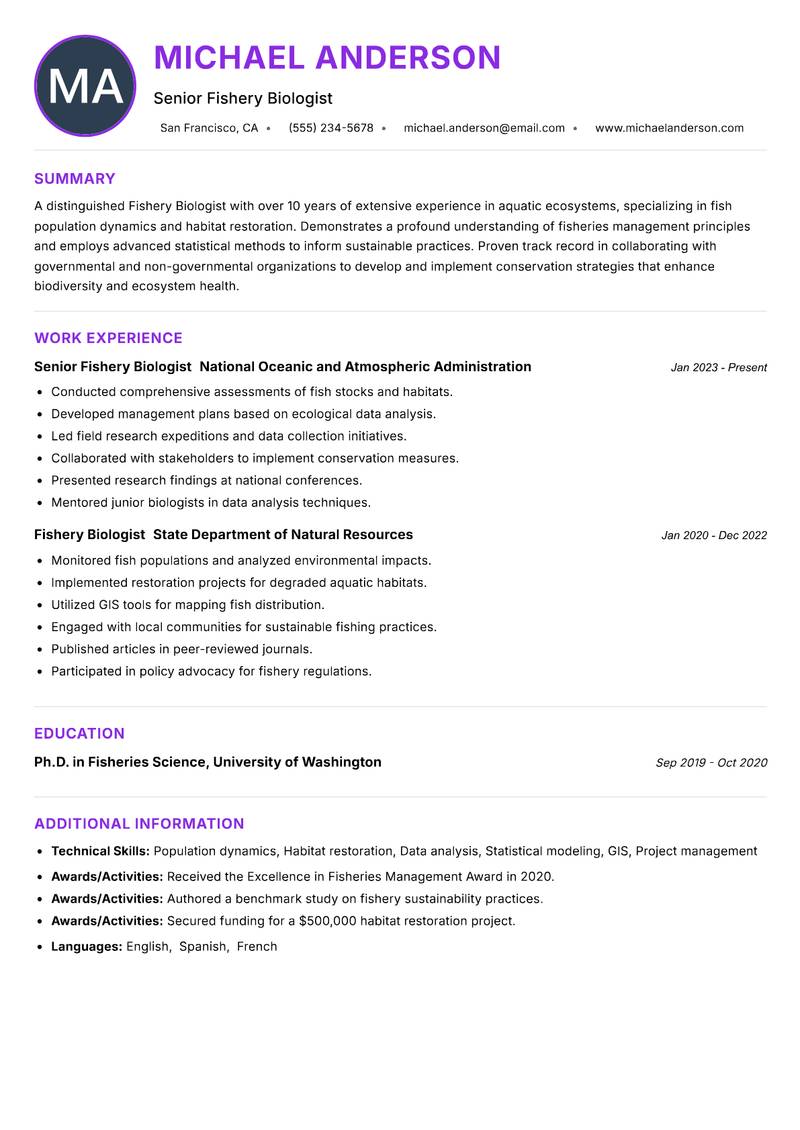
Senior Fishery Biologist with 11+ Years Experience
Summary: A distinguished Fishery Biologist with over 10 years of extensive experience in aquatic ecosystems, specializing in fish population dynamics and habitat restoration. Demonstrates a profound understanding of fisheries management principles and employs advanced statistical methods to inform sustainable practices. Proven track record in collaborating with governmental and non-governmental organizations to develop and implement conservation strategies that enhance biodiversity and ecosystem health. Possesses a strong aptitude for conducting field research, analyzing ecological data, and disseminating findings to stakeholders. Adept at leading multidisciplinary teams and fostering partnerships that drive innovative solutions in fishery science. Committed to advancing the field through continuous research and education, contributing to policy development and community engagement initiatives.
Description:
- Conducted comprehensive assessments of fish stocks and habitats.
- Developed management plans based on ecological data analysis.
- Led field research expeditions and data collection initiatives.
- Collaborated with stakeholders to implement conservation measures.
- Presented research findings at national conferences.
- Mentored junior biologists in data analysis techniques.
🏆 Key Achievements
Fishery Biologist with 8+ Years Experience
Summary: An accomplished Fishery Biologist with a robust background in aquatic biology and ecosystem management, spanning over 8 years in both research and field applications. Expertise lies in the analysis of fish populations and the development of sustainable practices to balance ecological integrity with human activity. Proficient in utilizing advanced data collection methodologies and statistical tools to evaluate the impacts of environmental changes on fish habitats. Recognized for collaborative efforts with interdisciplinary teams to promote effective fishery policies and practices. Strong advocate for community engagement in conservation initiatives, with a focus on education and outreach. Aiming to leverage extensive knowledge and skills to further enhance sustainable fishery management practices.
Description:
- Conducted population assessments to inform management decisions.
- Developed community outreach programs focused on sustainable fishing.
- Analyzed environmental data to identify trends affecting fish stocks.
- Collaborated with local governments on fishery regulations.
- Utilized remote sensing technology for habitat mapping.
- Presented findings to stakeholders at regional workshops.
🏆 Key Achievements
Fishery Research Associate with 6+ Years Experience
Summary: A dedicated Fishery Biologist with over 6 years of experience in freshwater ecosystems, specializing in fish behavior and habitat utilization. Demonstrates a keen ability to analyze complex ecological interactions and apply findings to enhance fishery management strategies. Experienced in conducting field surveys, utilizing statistical software for data analysis, and collaborating with interdisciplinary teams to address critical environmental issues. Recognized for innovative approaches to community engagement and education, fostering a culture of sustainability among local fishers. Committed to advancing scientific knowledge through rigorous research and effective communication of findings to diverse audiences. Passionate about contributing to the sustainable management of aquatic resources.
Description:
- Conducted field surveys to assess fish populations and habitats.
- Analyzed data using R and GIS software for spatial analysis.
- Collaborated with stakeholders to promote sustainable fishing practices.
- Developed educational materials for community workshops.
- Participated in regional fishery management meetings.
- Prepared technical reports on research findings.
🏆 Key Achievements
Marine Fish Health Biologist with 5+ Years Experience
Summary: A results-oriented Fishery Biologist with a focus on marine ecosystems and over 5 years of experience in fish health monitoring and disease management. Proven expertise in assessing the health of fish populations and implementing strategies to mitigate the impact of diseases on aquatic life. Skilled in laboratory techniques, including histopathology and microbiological analysis, with a strong emphasis on data-driven decision making. Known for fostering collaborative relationships with academic institutions and governmental agencies to promote research initiatives and enhance fishery practices. Committed to advancing knowledge through rigorous scientific inquiry, with a focus on sustainability and ecological balance.
Description:
- Conducted health assessments of marine fish populations.
- Analyzed disease outbreaks and developed management strategies.
- Collaborated with researchers on epidemiological studies.
- Utilized laboratory techniques for fish health diagnostics.
- Presented findings at national scientific conferences.
- Engaged in outreach efforts to educate stakeholders on fish health.
🏆 Key Achievements
Habitat Restoration Biologist with 4+ Years Experience
Summary: A proactive Fishery Biologist with 4 years of experience specializing in fish habitat restoration and environmental impact assessments. Demonstrates a comprehensive understanding of aquatic ecosystems and the importance of habitat conservation. Proven ability to conduct rigorous field studies and utilize ecological modeling to inform restoration efforts. Skilled in engaging diverse stakeholders, including community groups and regulatory agencies, to foster collaborative conservation initiatives. Committed to promoting sustainable practices and enhancing public awareness of fishery issues through education and outreach programs. Aiming to leverage hands-on experience and scientific expertise to drive impactful conservation projects.
Description:
- Led habitat restoration projects for degraded aquatic ecosystems.
- Conducted environmental impact assessments for proposed developments.
- Collaborated with stakeholders to develop restoration plans.
- Utilized ecological modeling tools for project planning.
- Engaged in community outreach to promote conservation.
- Prepared reports on project outcomes and effectiveness.
🏆 Key Achievements
Fishery Economics Analyst with 3+ Years Experience
Summary: An innovative Fishery Biologist with a strong foundation in fishery economics and resource management, possessing over 3 years of experience in analyzing economic impacts of fishery policies. Known for applying quantitative methods to assess fishery sustainability and yield forecasts, contributing to informed decision-making processes. Engages effectively with policymakers and stakeholders to advocate for sustainable fishery practices. Strong analytical skills complemented by a solid understanding of ecological principles, enabling the integration of economic and environmental considerations in fishery management. Passionate about fostering sustainable fisheries that benefit both ecosystems and local communities.
Description:
- Analyzed economic data to assess the impact of fishery regulations.
- Developed models to forecast fishery yields and sustainability.
- Collaborated with scientists to integrate ecological data into economic assessments.
- Engaged with stakeholders to communicate findings and recommendations.
- Prepared reports for policy development discussions.
- Contributed to workshops on sustainable fishery economics.
🏆 Key Achievements
Community Fishery Coordinator with 2+ Years Experience
Summary: A passionate and detail-oriented Fishery Biologist with a focus on community-based fishery management and over 2 years of hands-on experience in field studies. Demonstrates a strong commitment to promoting sustainable fishing practices through education and community engagement. Experienced in conducting surveys and collecting data on fish populations and habitats. Skilled in utilizing various research methodologies and statistical tools to inform management decisions. Known for building strong relationships with local fishers and stakeholders to foster collaborative conservation efforts. Eager to contribute to the sustainable management of aquatic resources while enhancing community awareness and participation.
Description:
- Coordinated community workshops on sustainable fishing practices.
- Conducted surveys to assess local fish populations.
- Engaged with stakeholders to promote conservation initiatives.
- Collected and analyzed data on fishing impacts.
- Developed educational materials for local fishers.
- Participated in policy discussions on fishery management.
🏆 Key Achievements
Key Skills for Fishery Biologist
ATS Optimization Tips
Increase your chances of getting hired
Use Standard Headings
Use common section titles like Experience, Skills, etc.
Include Keywords
Add role-specific keywords from the job description
Keep it Simple
Avoid complex tables, images and graphics
Save in Right Format
Use PDF format unless otherwise specified
Fishery Biologist Salary Insights
Average Salary
$77,000
per year
Salary Range
$55,000 - $99,000
per year
Top Paying Cities
Los Angeles, Seattle, Houston, Dallas, Boston
Source: Glassdoor, Payscale, Indeed (Updated July 2025)
Everything you need to write a great Fishery Biologist resume
Strong Action Verbs to Use
Resume Writing Tips
- →Highlight fieldwork experience with specific examples of ecosystem monitoring.
- →Include any advanced data analysis skills, like statistical modeling or programming in R.
- →Showcase collaboration across diverse groups, emphasizing your communication skills.
- →Mention any hands-on work with specific species, particularly those impacted by local fisheries.
- →Detail your experience with habitat restoration techniques and their measurable outcomes.
Common Mistakes to Avoid
- ✕Using overly general terms without specifying fish species or ecosystems.
- ✕Neglecting to quantify achievements in past roles, such as amounts of fish population recovered.
- ✕Failing to highlight specific technical skills related to fisheries science tools.
- ✕Underrepresenting stakeholder engagement efforts or community outreach projects.
ATS Keywords for Fishery Biologist
Fishery Biologist Career Path
Relevant Certifications
Career Progression
Entry-Level
Fishery Technician or Assistant, focusing on data collection and maintenance of aquatic environments.
Mid-Level
Fishery Biologist responsible for implementing research techniques, analyzing fish biology data, and assisting in habitat restoration projects.
Senior-Level
Senior Fishery Biologist, overseeing project development, funding applications, and leading community outreach programs.
Managerial
Fisheries Program Manager, directing state or federal fisheries policies and coordinating multidisciplinary teams.
Executive
Director of Fisheries Management, setting strategic direction for state or national fisheries programs and working with legislators.
Fishery Biologist Interview Questions
What field data collection methods do you find most effective for assessing fish populations? +
Discuss specific methodologies you've used, like electrofishing or gill-netting.
Can you provide an example of a successful habitat restoration project you've worked on? +
Highlight your role, the challenges faced, and the outcomes.
How do you approach stakeholder engagement when initiating a new fishery management policy? +
Mention specific strategies or tools you’ve used to gather diverse input.
What criteria do you use to evaluate the health of a fishery? +
Detail metrics you monitor and your approach to data interpretation.
Have you ever had to address conflicting views among stakeholders in your projects? How did you handle it? +
Provide a specific example that illustrates your mediation skills.
Describe your experience with utilizing GIS technology in your work. What insights did it provide? +
Focus on specific projects where GIS played a crucial role.
About the Fishery Biologist Role
Fishery Biologists conduct detailed assessments of aquatic ecosystems to monitor fish populations and their habitats. They utilize both field data collection techniques and laboratory analyses to inform conservation strategies, regulatory guidelines, and sustainable fishing practices. This role often involves collaborative projects with governmental and non-governmental organizations to ensure compliance with environmental standards and promote stakeholder awareness.
Frequently Asked Questions
What educational background is required to become a Fishery Biologist? +
A bachelor's degree in biology, ecology, or fisheries science is typically required, with a master's degree preferred for advanced positions.
What kind of tools are essential for Fishery Biologists? +
Common tools include electrofishing gear, gill nets, water quality testing kits, and GIS software.
Is fieldwork a significant part of this job? +
Yes, substantial time is spent in the field collecting data, assessing habitats, and observing species.
What impact does policy have on a Fishery Biologist's work? +
Policies guide conservation methods, fishing regulations, and habitat protection, making policy understanding crucial.
How can one advance a career as a Fishery Biologist? +
Continuous education, gaining certifications, and networking through conferences are key steps in career advancement.
Are internships important for aspiring Fishery Biologists? +
Absolutely; internships provide hands-on experience and can often lead to job opportunities post-graduation.
More Resume Examples You Might Like
Related Career Paths
Other roles candidates for Fishery Biologist positions often also consider.
Will this Fishery Biologist resume pass the ATS scan?
Upload it and get an instant AI-scored compatibility check with specific fixes.
Check My Resume →
Pair it with a matching cover letter
AI drafts a first version from your job title and strengths — edit it live, then download the PDF.
Write My Cover Letter →
Written by Nohaya Career Team
Reviewed by HR Professionals · Updated July 2025
Ready to Build Your Perfect Resume?
Choose from 1000+ professional templates and land your dream job.
Create My Resume Now