Build an ATS-Friendly
Aquaculture Biosecurity Specialist Resume
That Gets Interviews
Preventative measures against aquatic pathogens form the core responsibilities of an Aquaculture Biosecurity Specialist, who meticulously designs practices tailored to specific aquatic environments. By examining water quality, species interactions, and facility layouts, these professionals create robust biosecurity…
Aquaculture Biosecurity Specialist Resume Templates
Modern Professional
Use Template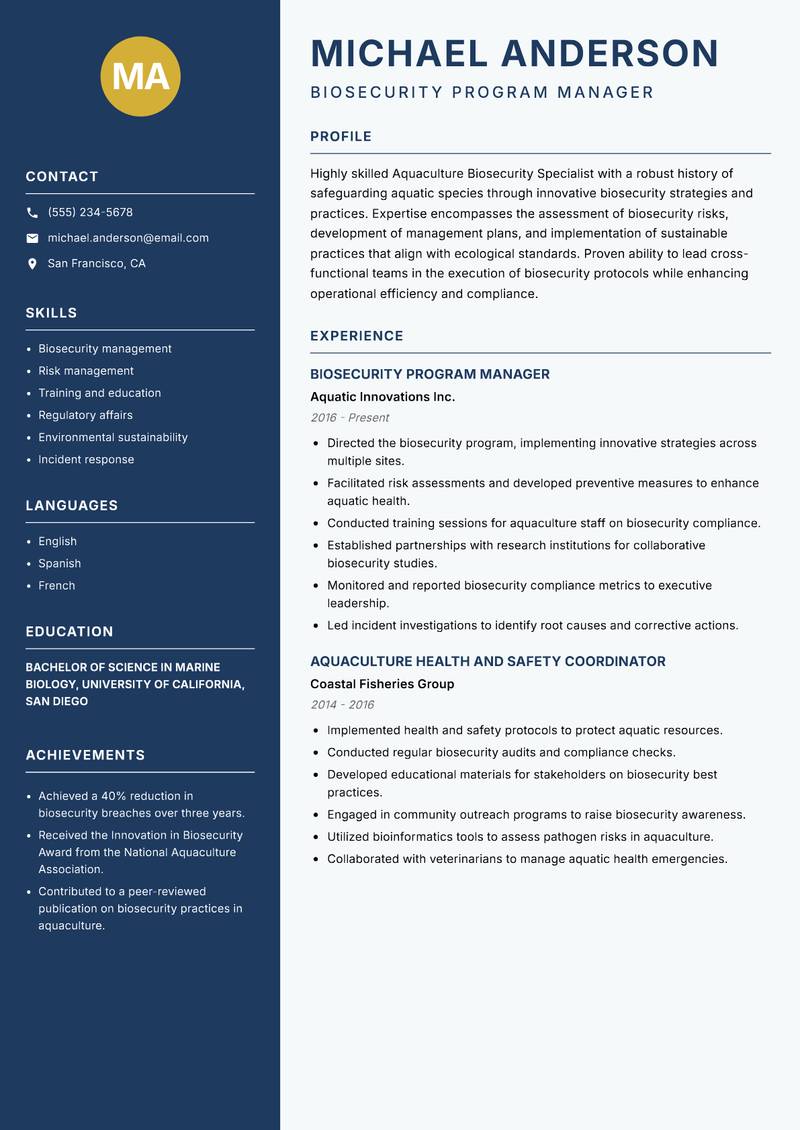
Classic Clean
Use Template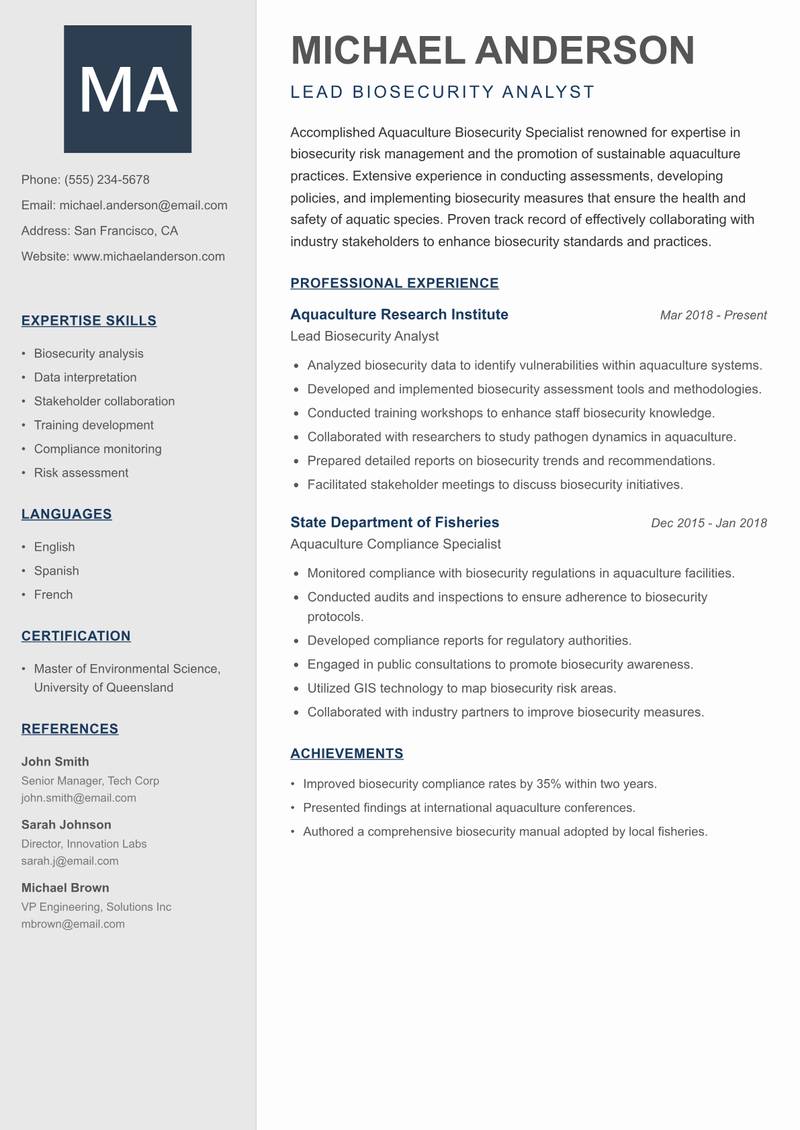
Creative Minimal
Use Template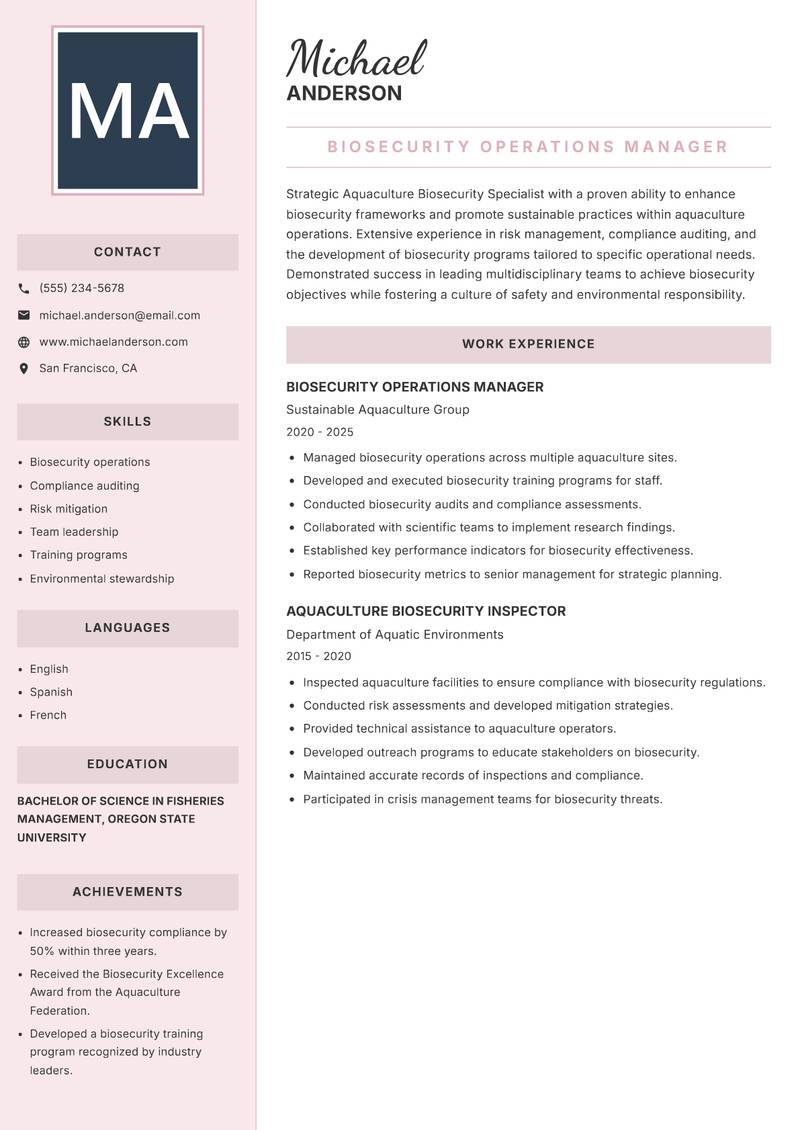
Executive
Use Template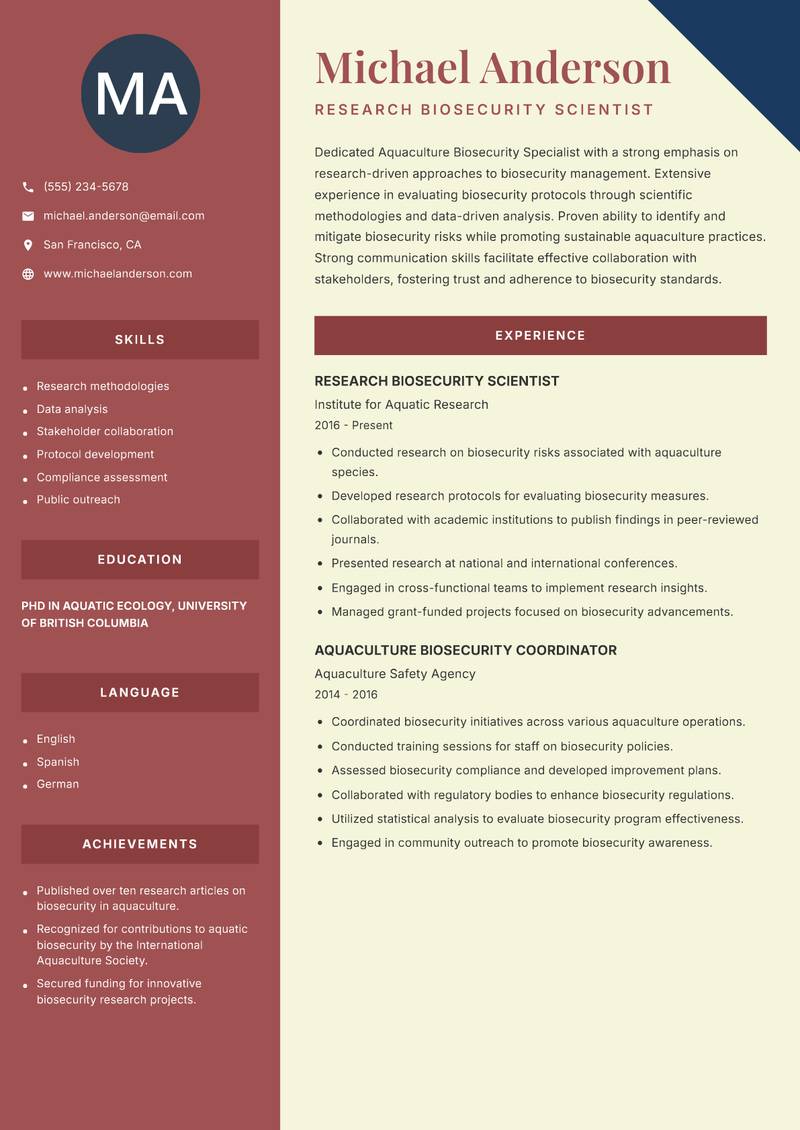
Two Column
Use Template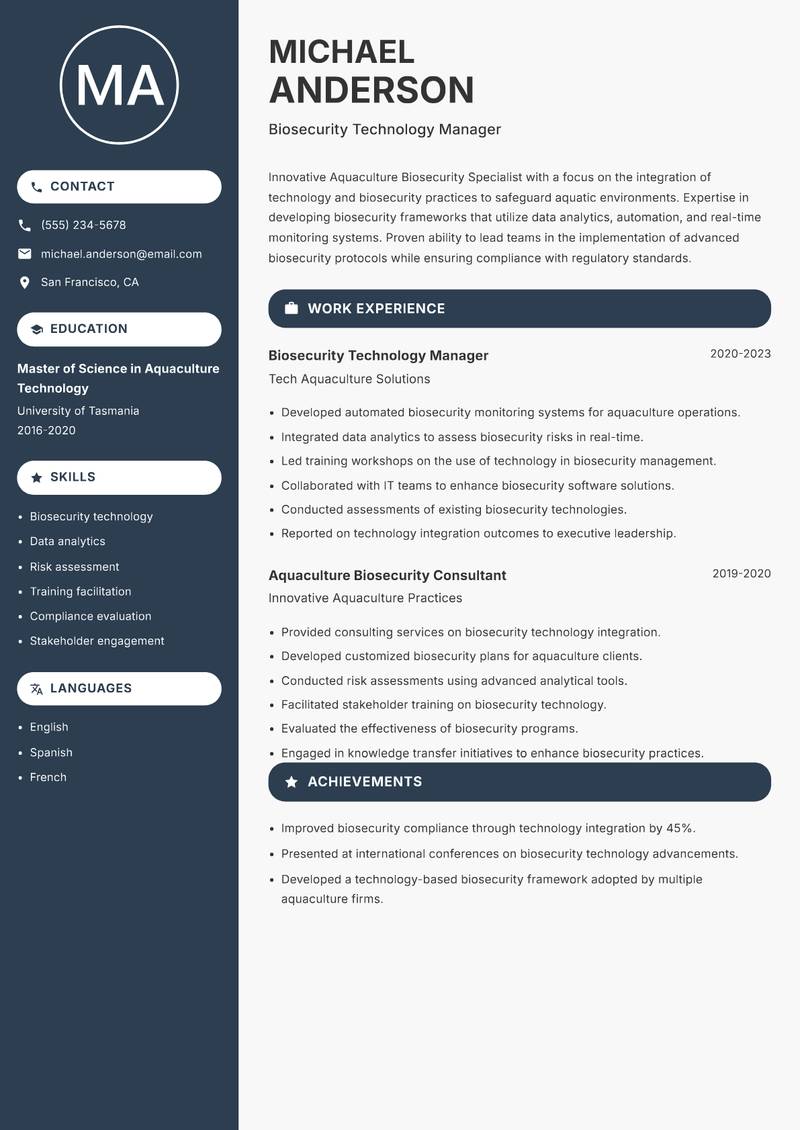
Compact
Use Template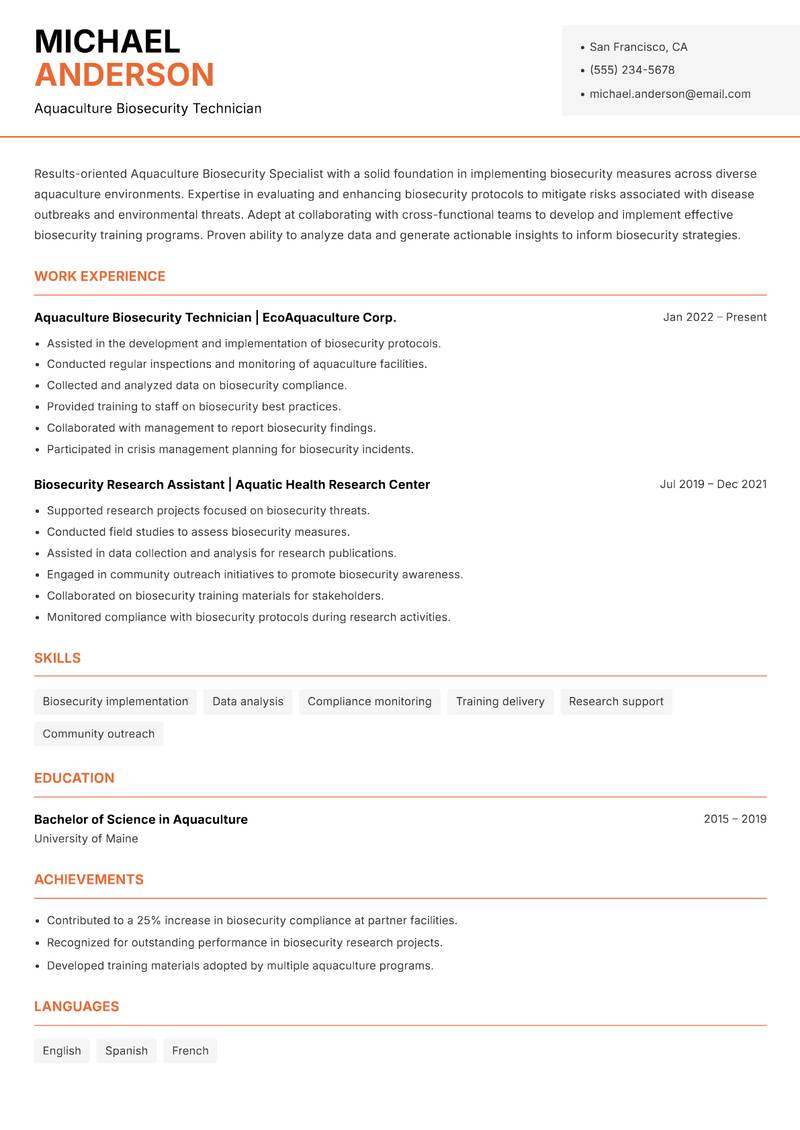
Modern Professional
Use Template7 Real Aquaculture Biosecurity Specialist Resume Examples
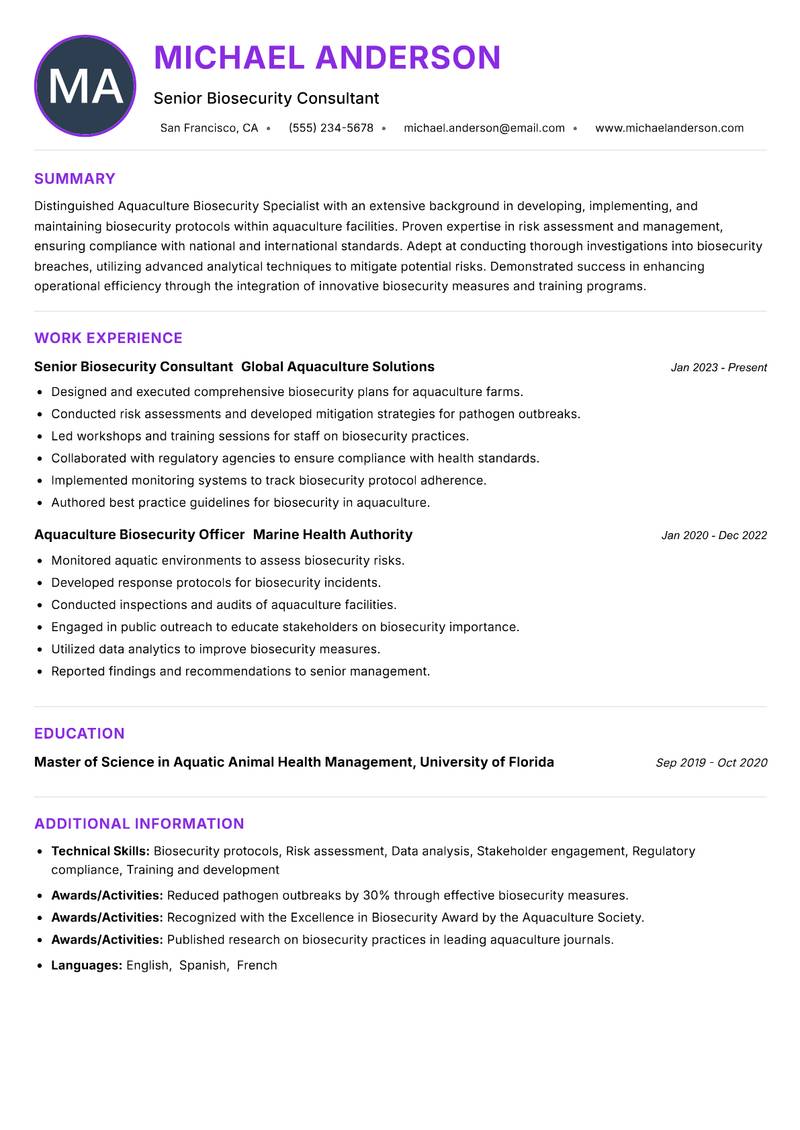
Senior Biosecurity Consultant with 8+ Years Experience
Summary: Distinguished Aquaculture Biosecurity Specialist with an extensive background in developing, implementing, and maintaining biosecurity protocols within aquaculture facilities. Proven expertise in risk assessment and management, ensuring compliance with national and international standards. Adept at conducting thorough investigations into biosecurity breaches, utilizing advanced analytical techniques to mitigate potential risks. Demonstrated success in enhancing operational efficiency through the integration of innovative biosecurity measures and training programs. Strong collaborative skills, fostering relationships with stakeholders, regulatory bodies, and industry partners to promote best practices. Committed to advancing sustainable aquaculture practices while safeguarding aquatic health and environmental integrity.
Description:
- Designed and executed comprehensive biosecurity plans for aquaculture farms.
- Conducted risk assessments and developed mitigation strategies for pathogen outbreaks.
- Led workshops and training sessions for staff on biosecurity practices.
- Collaborated with regulatory agencies to ensure compliance with health standards.
- Implemented monitoring systems to track biosecurity protocol adherence.
- Authored best practice guidelines for biosecurity in aquaculture.
🏆 Key Achievements
Biosecurity Program Manager with 7+ Years Experience
Summary: Highly skilled Aquaculture Biosecurity Specialist with a robust history of safeguarding aquatic species through innovative biosecurity strategies and practices. Expertise encompasses the assessment of biosecurity risks, development of management plans, and implementation of sustainable practices that align with ecological standards. Proven ability to lead cross-functional teams in the execution of biosecurity protocols while enhancing operational efficiency and compliance. Strong analytical skills coupled with a proactive approach to problem-solving, ensuring rapid response to biosecurity threats. Committed to fostering a culture of safety and environmental stewardship within aquaculture operations.
Description:
- Directed the biosecurity program, implementing innovative strategies across multiple sites.
- Facilitated risk assessments and developed preventive measures to enhance aquatic health.
- Conducted training sessions for aquaculture staff on biosecurity compliance.
- Established partnerships with research institutions for collaborative biosecurity studies.
- Monitored and reported biosecurity compliance metrics to executive leadership.
- Led incident investigations to identify root causes and corrective actions.
🏆 Key Achievements
Lead Biosecurity Analyst with 8+ Years Experience
Summary: Accomplished Aquaculture Biosecurity Specialist renowned for expertise in biosecurity risk management and the promotion of sustainable aquaculture practices. Extensive experience in conducting assessments, developing policies, and implementing biosecurity measures that ensure the health and safety of aquatic species. Proven track record of effectively collaborating with industry stakeholders to enhance biosecurity standards and practices. Leveraging advanced data analysis and research methodologies to identify trends and inform decision-making processes. Committed to continuous improvement and the advancement of biosecurity strategies that protect aquatic ecosystems.
Description:
- Analyzed biosecurity data to identify vulnerabilities within aquaculture systems.
- Developed and implemented biosecurity assessment tools and methodologies.
- Conducted training workshops to enhance staff biosecurity knowledge.
- Collaborated with researchers to study pathogen dynamics in aquaculture.
- Prepared detailed reports on biosecurity trends and recommendations.
- Facilitated stakeholder meetings to discuss biosecurity initiatives.
🏆 Key Achievements
Biosecurity Operations Manager with 9+ Years Experience
Summary: Strategic Aquaculture Biosecurity Specialist with a proven ability to enhance biosecurity frameworks and promote sustainable practices within aquaculture operations. Extensive experience in risk management, compliance auditing, and the development of biosecurity programs tailored to specific operational needs. Demonstrated success in leading multidisciplinary teams to achieve biosecurity objectives while fostering a culture of safety and environmental responsibility. Expertise in utilizing cutting-edge technologies and methodologies to assess biosecurity threats and implement effective responses. Committed to elevating industry standards and protecting aquatic biodiversity through proactive biosecurity measures.
Description:
- Managed biosecurity operations across multiple aquaculture sites.
- Developed and executed biosecurity training programs for staff.
- Conducted biosecurity audits and compliance assessments.
- Collaborated with scientific teams to implement research findings.
- Established key performance indicators for biosecurity effectiveness.
- Reported biosecurity metrics to senior management for strategic planning.
🏆 Key Achievements
Research Biosecurity Scientist with 9+ Years Experience
Summary: Dedicated Aquaculture Biosecurity Specialist with a strong emphasis on research-driven approaches to biosecurity management. Extensive experience in evaluating biosecurity protocols through scientific methodologies and data-driven analysis. Proven ability to identify and mitigate biosecurity risks while promoting sustainable aquaculture practices. Strong communication skills facilitate effective collaboration with stakeholders, fostering trust and adherence to biosecurity standards. Committed to advancing the field of aquaculture biosecurity through innovative research and the implementation of best practices.
Description:
- Conducted research on biosecurity risks associated with aquaculture species.
- Developed research protocols for evaluating biosecurity measures.
- Collaborated with academic institutions to publish findings in peer-reviewed journals.
- Presented research at national and international conferences.
- Engaged in cross-functional teams to implement research insights.
- Managed grant-funded projects focused on biosecurity advancements.
🏆 Key Achievements
Biosecurity Technology Manager with 8+ Years Experience
Summary: Innovative Aquaculture Biosecurity Specialist with a focus on the integration of technology and biosecurity practices to safeguard aquatic environments. Expertise in developing biosecurity frameworks that utilize data analytics, automation, and real-time monitoring systems. Proven ability to lead teams in the implementation of advanced biosecurity protocols while ensuring compliance with regulatory standards. Strong background in conducting training programs that enhance staff engagement and awareness of biosecurity measures. Committed to driving innovation in aquaculture biosecurity and fostering sustainable practices that protect aquatic biodiversity.
Description:
- Developed automated biosecurity monitoring systems for aquaculture operations.
- Integrated data analytics to assess biosecurity risks in real-time.
- Led training workshops on the use of technology in biosecurity management.
- Collaborated with IT teams to enhance biosecurity software solutions.
- Conducted assessments of existing biosecurity technologies.
- Reported on technology integration outcomes to executive leadership.
🏆 Key Achievements
Aquaculture Biosecurity Technician with 5+ Years Experience
Summary: Accomplished Aquaculture Biosecurity Specialist with a solid foundation in implementing biosecurity measures across diverse aquaculture environments. Expertise in evaluating and enhancing biosecurity protocols to mitigate risks associated with disease outbreaks and environmental threats. Adept at collaborating with cross-functional teams to develop and implement effective biosecurity training programs. Proven ability to analyze data and generate actionable insights to inform biosecurity strategies. Committed to promoting sustainable aquaculture practices while ensuring the health and safety of aquatic species.
Description:
- Assisted in the development and implementation of biosecurity protocols.
- Conducted regular inspections and monitoring of aquaculture facilities.
- Collected and analyzed data on biosecurity compliance.
- Provided training to staff on biosecurity best practices.
- Collaborated with management to report biosecurity findings.
- Participated in crisis management planning for biosecurity incidents.
🏆 Key Achievements
Key Skills for Aquaculture Biosecurity Specialist
ATS Optimization Tips
Increase your chances of getting hired
Use Standard Headings
Use common section titles like Experience, Skills, etc.
Include Keywords
Add role-specific keywords from the job description
Keep it Simple
Avoid complex tables, images and graphics
Save in Right Format
Use PDF format unless otherwise specified
Aquaculture Biosecurity Specialist Salary Insights
Average Salary
$70,000
per year
Salary Range
$55,000 - $85,000
per year
Top Paying Cities
Los Angeles, Seattle, Houston, Dallas, Boston
Source: Glassdoor, Payscale, Indeed (Updated August 2025)
Everything you need to write a great Aquaculture Biosecurity Specialist resume
Strong Action Verbs to Use
Resume Writing Tips
- →Highlight any experience with diseases specific to aquatic species, such as bacterial, viral, or parasitic infections.
- →Detail your familiarity with biosecurity technologies and software used for pathogen tracking and environmental monitoring.
- →Include any direct collaboration with regulatory bodies or participation in industry workshops to showcase your proactive approach to ongoing education.
- →Use quantifiable outcomes from previous biosecurity measures, such as reduced disease outbreaks or improved water quality metrics, to strengthen your achievements.
- →List any fieldwork experiences that involved hands-on biosecurity measures, such as farm inspections or laboratory environments.
Common Mistakes to Avoid
- ✕Neglecting to specify hands-on experience in aquatic environments, which distinguishes this role from general biosecurity positions.
- ✕Overlooking the importance of teamwork and interdisciplinary approaches when discussing past projects or responsibilities.
- ✕Failing to mention specific pathogens or diseases relevant to the job that align with the employer's focus area.
- ✕Using generic terminology without linking it directly to aquaculture processes or scenarios.
ATS Keywords for Aquaculture Biosecurity Specialist
Aquaculture Biosecurity Specialist Career Path
Relevant Certifications
Career Progression
Entry-Level Biosecurity Technician
Works on the operational aspects of biosecurity programs, supporting senior specialists in monitoring fish health and pathogen detection.
Aquaculture Biosecurity Specialist
Develops and implements biosecurity protocols, focusing on preventing disease outbreaks in aquaculture environments.
Senior Biosecurity Consultant
Advises aquaculture businesses on advanced biosecurity measures, risk assessments, and compliance with industry regulations.
Biosecurity Program Manager
Oversees biosecurity initiatives for large aquaculture operations, ensuring adherence to best practices and effective response strategies.
Director of Aquatic Biosecurity Operations
Leads biosecurity efforts across multiple sites, coordinating research, policy development, and stakeholder engagement.
Aquaculture Biosecurity Specialist Interview Questions
What methods do you utilize for pathogen detection in aquaculture systems? +
Provide specific examples of techniques and technologies you have experience with.
How do you assess the biosecurity risks associated with new aquaculture projects? +
Discuss the steps taken to evaluate risks and implement preventative measures.
Can you describe a challenging biosecurity situation you managed and what steps you took to resolve it? +
Highlight your problem-solving skills and adaptability in crisis management.
What role does water quality play in aquaculture biosecurity? +
Focus on the interrelation between water management and disease prevention.
How do you keep current with regulations impacting aquaculture biosecurity? +
Mention sources like journals, professional organizations, or workshops.
Describe your experience with training staff on biosecurity protocols. What approach do you take? +
Discuss the importance of knowledge dissemination in maintaining biosecurity.
About the Aquaculture Biosecurity Specialist Role
Preventative measures against aquatic pathogens form the core responsibilities of an Aquaculture Biosecurity Specialist, who meticulously designs practices tailored to specific aquatic environments. By examining water quality, species interactions, and facility layouts, these professionals create robust biosecurity plans that align with industry regulations. Daily activities include coordinating with farm managers, conducting audits, and educating staff on necessary protocols to mitigate disease risk effectively.
Frequently Asked Questions
What specific diseases should an Aquaculture Biosecurity Specialist focus on? +
Key diseases include Viral Hemorrhagic Septicemia (VHS), Infectious Hematopoietic Necrosis (IHN), and various bacterial infections like Aeromonas.
Is a background in marine biology necessary for this role? +
While beneficial, it is not always necessary; a strong understanding of biosecurity protocols and risk management strategies is essential.
What environmental factors do biosecurity specialists monitor? +
They assess parameters like water temperature, salinity, and oxygen levels, as these can influence pathogen viability.
How does biosecurity impact fish farming productivity? +
Effective biosecurity minimizes disease outbreaks, leading to healthier stocks and potentially higher yields.
What trends are currently shaping the aquaculture biosecurity landscape? +
Emerging technologies in monitoring, sustainability practices, and increased regulatory scrutiny are key trends that influence the industry.
What organizations provide resources for Aquaculture Biosecurity Specialists? +
Organizations like the World Aquaculture Society and the Aquatic Animal Health Program offer valuable resources and networking opportunities.
More Resume Examples You Might Like
Will this Aquaculture Biosecurity Specialist resume pass the ATS scan?
Upload it and get an instant AI-scored compatibility check with specific fixes.
Check My Resume →
Pair it with a matching cover letter
AI drafts a first version from your job title and strengths — edit it live, then download the PDF.
Write My Cover Letter →
Written by Nohaya Career Team
Reviewed by HR Professionals · Updated August 2025
Ready to Build Your Perfect Resume?
Choose from 1000+ professional templates and land your dream job.
Create My Resume Now