Build an ATS-Friendly
Sports Technology Scientist Resume
That Gets Interviews
Sports Technology Scientists employ advanced technological solutions to analyze athletic performance and optimize training techniques. By utilizing data collected from wearable devices and biomechanical systems, they can suggest actionable insights focused on improving efficiency and reducing injury risk.…
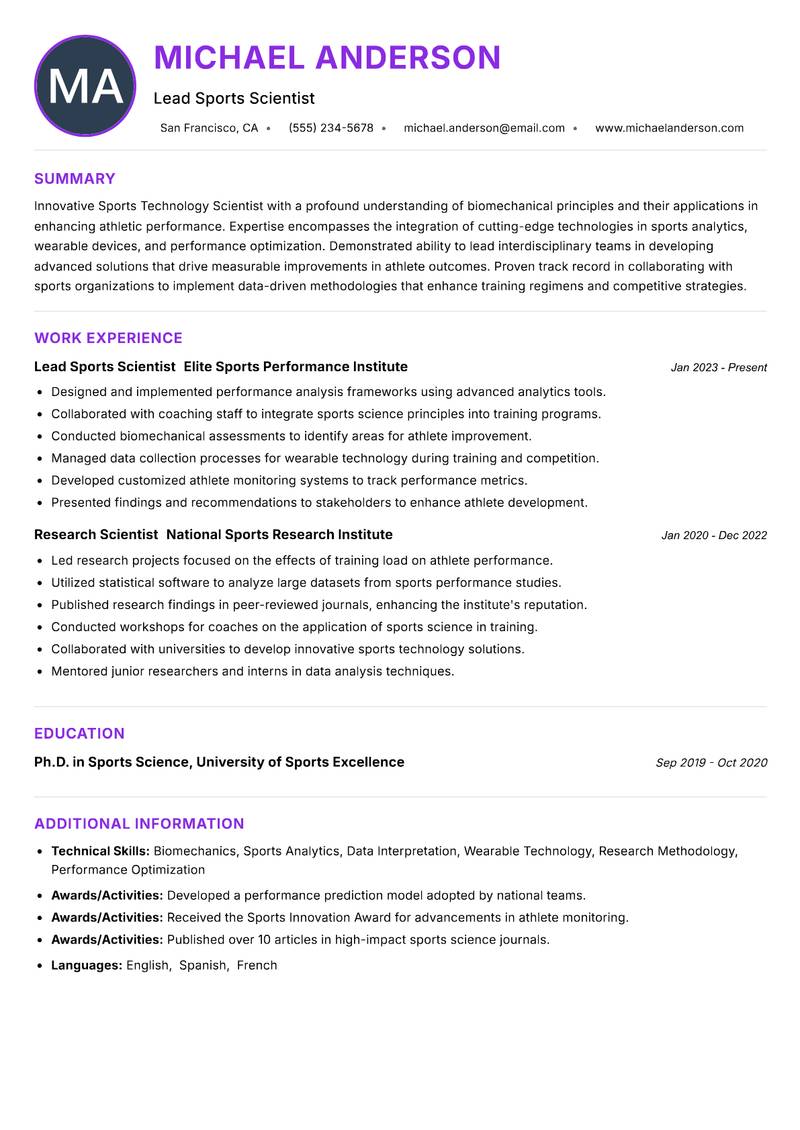
Sports Technology Scientist Resume Templates
Modern Professional
Use Template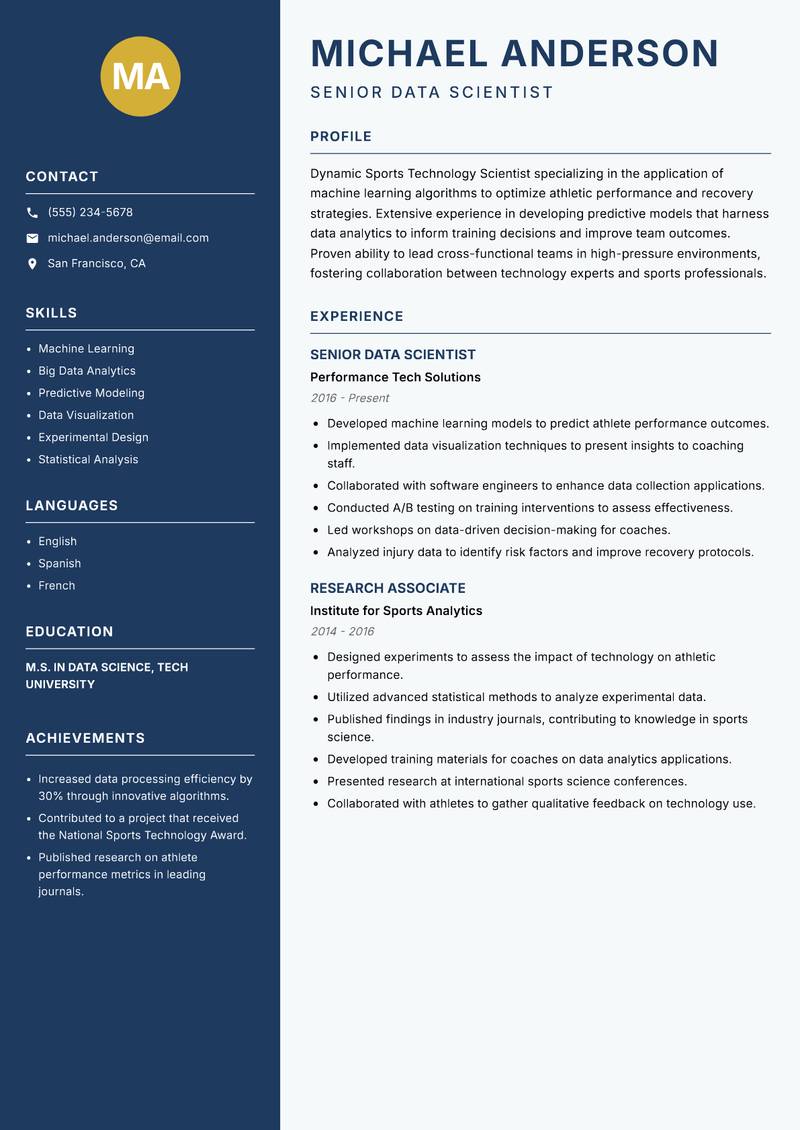
Classic Clean
Use Template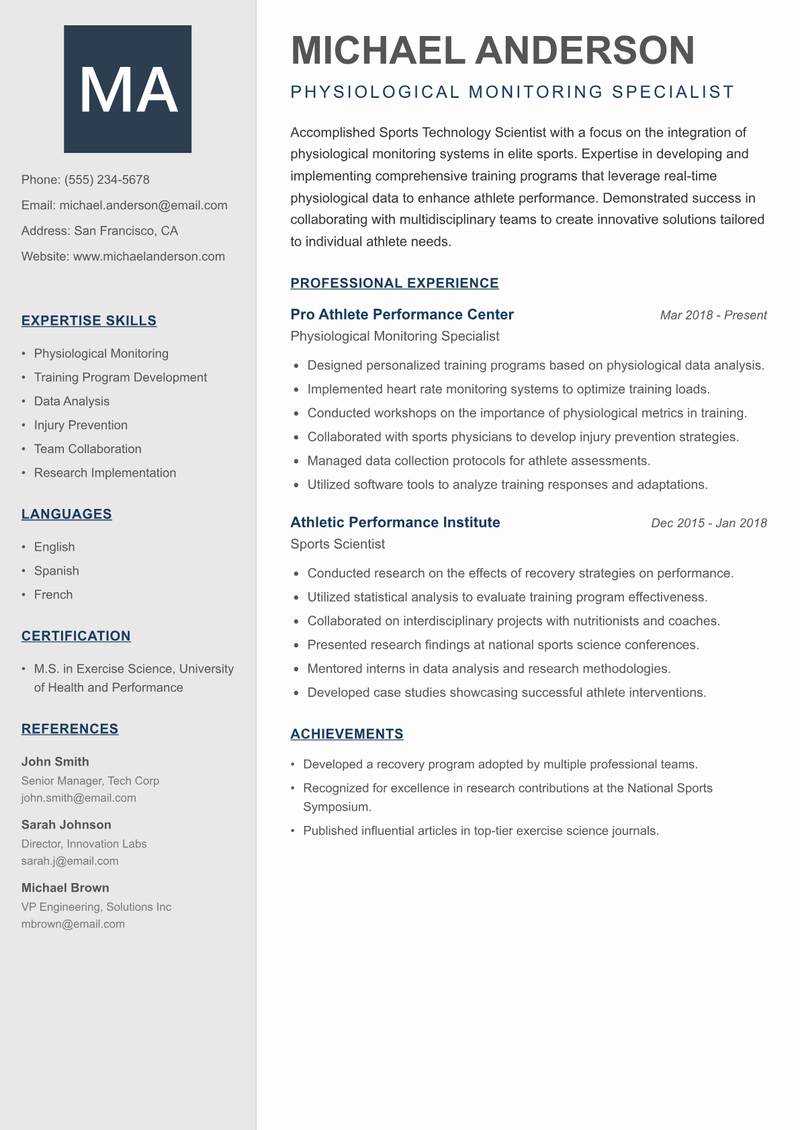
Creative Minimal
Use Template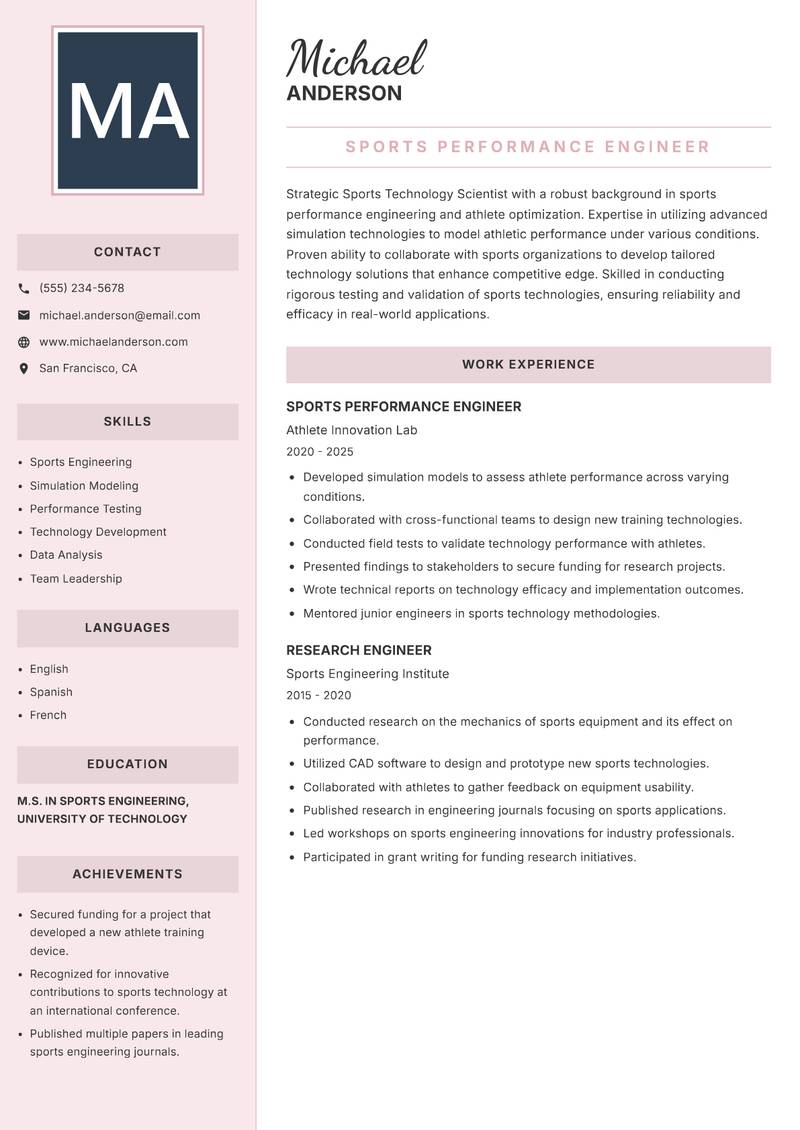
Executive
Use Template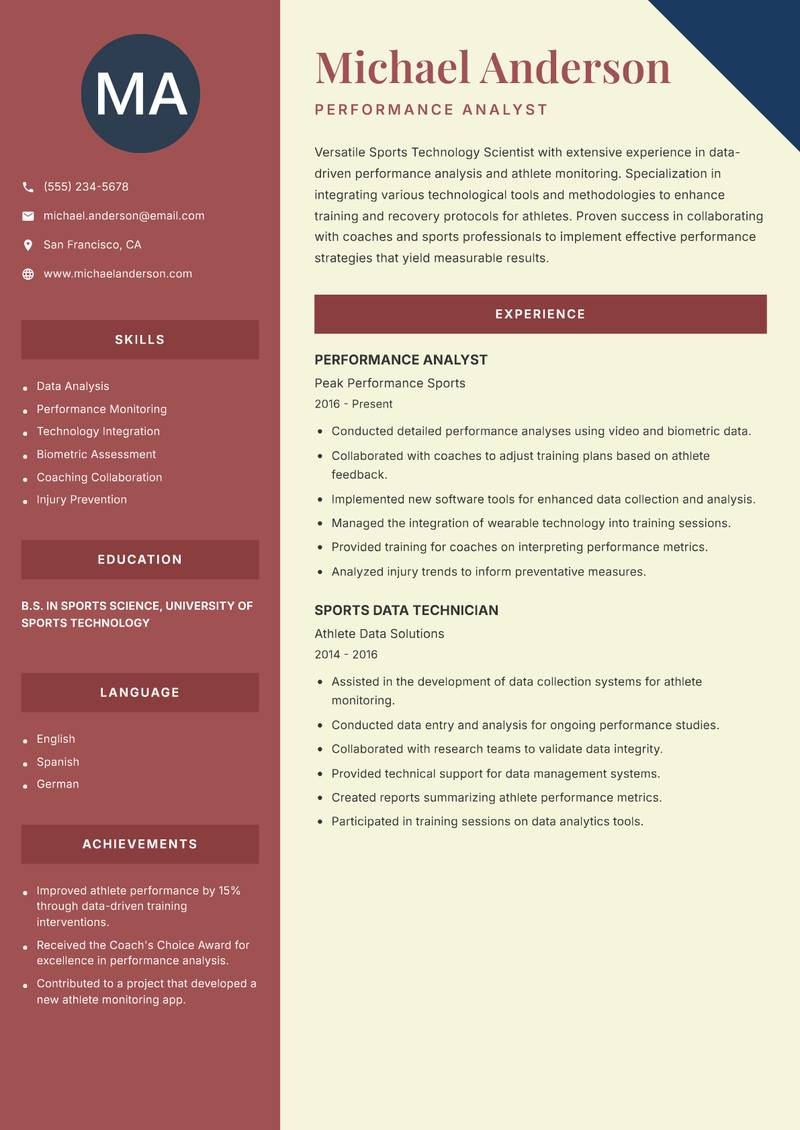
Two Column
Use Template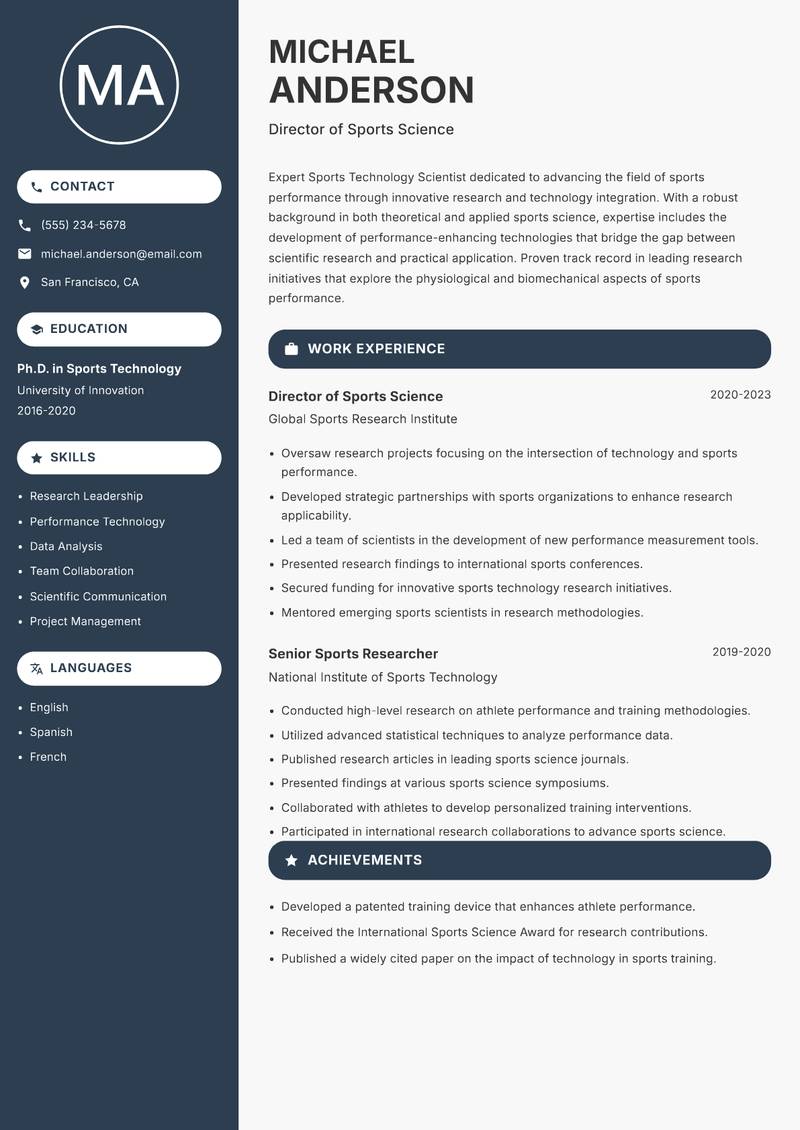
Compact
Use Template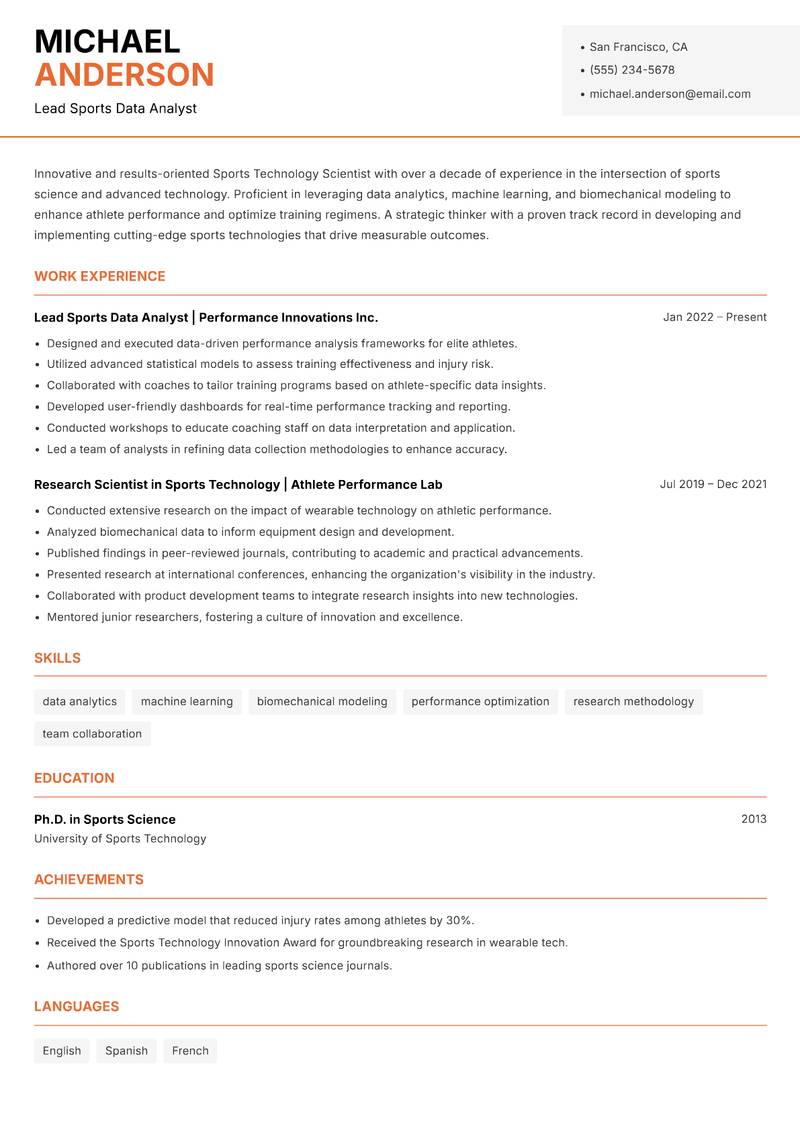
Modern Professional
Use Template7 Real Sports Technology Scientist Resume Examples
Lead Sports Scientist with 8+ Years Experience
Summary: Innovative Sports Technology Scientist with a profound understanding of biomechanical principles and their applications in enhancing athletic performance. Expertise encompasses the integration of cutting-edge technologies in sports analytics, wearable devices, and performance optimization. Demonstrated ability to lead interdisciplinary teams in developing advanced solutions that drive measurable improvements in athlete outcomes. Proven track record in collaborating with sports organizations to implement data-driven methodologies that enhance training regimens and competitive strategies. Adept at translating complex scientific concepts into actionable insights for coaches and athletes, fostering a culture of continuous improvement. Committed to advancing the field of sports science through research and development initiatives that align with emerging trends and technologies. Recognized for contributions to the field through publications and presentations at international conferences.
Description:
- Designed and implemented performance analysis frameworks using advanced analytics tools.
- Collaborated with coaching staff to integrate sports science principles into training programs.
- Conducted biomechanical assessments to identify areas for athlete improvement.
- Managed data collection processes for wearable technology during training and competition.
- Developed customized athlete monitoring systems to track performance metrics.
- Presented findings and recommendations to stakeholders to enhance athlete development.
🏆 Key Achievements
Senior Data Scientist with 7+ Years Experience
Summary: Dynamic Sports Technology Scientist specializing in the application of machine learning algorithms to optimize athletic performance and recovery strategies. Extensive experience in developing predictive models that harness data analytics to inform training decisions and improve team outcomes. Proven ability to lead cross-functional teams in high-pressure environments, fostering collaboration between technology experts and sports professionals. Strong background in conducting field studies and laboratory experiments to validate technological innovations. Committed to leveraging emerging technologies such as artificial intelligence and big data to revolutionize the sports industry. Recognized as a thought leader in the intersection of sports and technology, contributing to significant advancements in performance science. Adept at communicating complex technical concepts to diverse audiences, ensuring alignment and understanding across stakeholders.
Description:
- Developed machine learning models to predict athlete performance outcomes.
- Implemented data visualization techniques to present insights to coaching staff.
- Collaborated with software engineers to enhance data collection applications.
- Conducted A/B testing on training interventions to assess effectiveness.
- Led workshops on data-driven decision-making for coaches.
- Analyzed injury data to identify risk factors and improve recovery protocols.
🏆 Key Achievements
Physiological Monitoring Specialist with 6+ Years Experience
Summary: Accomplished Sports Technology Scientist with a focus on the integration of physiological monitoring systems in elite sports. Expertise in developing and implementing comprehensive training programs that leverage real-time physiological data to enhance athlete performance. Demonstrated success in collaborating with multidisciplinary teams to create innovative solutions tailored to individual athlete needs. Proven ability to translate scientific research into practical applications, ensuring that cutting-edge technology is accessible and actionable for coaches and athletes alike. Recognized for a commitment to continual professional development and staying abreast of industry advancements. A strong advocate for the use of technology in sports, aiming to bridge the gap between research and practical implementation. Passionate about mentoring emerging professionals in the field of sports science, fostering a culture of innovation and excellence.
Description:
- Designed personalized training programs based on physiological data analysis.
- Implemented heart rate monitoring systems to optimize training loads.
- Conducted workshops on the importance of physiological metrics in training.
- Collaborated with sports physicians to develop injury prevention strategies.
- Managed data collection protocols for athlete assessments.
- Utilized software tools to analyze training responses and adaptations.
🏆 Key Achievements
Sports Performance Engineer with 7+ Years Experience
Summary: Strategic Sports Technology Scientist with a robust background in sports performance engineering and athlete optimization. Expertise in utilizing advanced simulation technologies to model athletic performance under various conditions. Proven ability to collaborate with sports organizations to develop tailored technology solutions that enhance competitive edge. Skilled in conducting rigorous testing and validation of sports technologies, ensuring reliability and efficacy in real-world applications. Committed to fostering innovation through research and development initiatives that challenge conventional training methodologies. A strong advocate for the integration of technology and athlete education, empowering sports professionals to make informed decisions. Recognized as a key contributor to the advancement of sports science through impactful research and initiatives.
Description:
- Developed simulation models to assess athlete performance across varying conditions.
- Collaborated with cross-functional teams to design new training technologies.
- Conducted field tests to validate technology performance with athletes.
- Presented findings to stakeholders to secure funding for research projects.
- Wrote technical reports on technology efficacy and implementation outcomes.
- Mentored junior engineers in sports technology methodologies.
🏆 Key Achievements
Performance Analyst with 5+ Years Experience
Summary: Versatile Sports Technology Scientist with extensive experience in data-driven performance analysis and athlete monitoring. Specialization in integrating various technological tools and methodologies to enhance training and recovery protocols for athletes. Proven success in collaborating with coaches and sports professionals to implement effective performance strategies that yield measurable results. Strong analytical skills combined with a passion for sports science and technology enable the development of innovative solutions tailored to the unique needs of athletes. Recognized for the ability to distill complex data into clear insights that inform coaching decisions and athlete development. Committed to ongoing professional development and staying abreast of advancements in sports technology. A proactive approach to problem-solving fosters a culture of continuous improvement among teams.
Description:
- Conducted detailed performance analyses using video and biometric data.
- Collaborated with coaches to adjust training plans based on athlete feedback.
- Implemented new software tools for enhanced data collection and analysis.
- Managed the integration of wearable technology into training sessions.
- Provided training for coaches on interpreting performance metrics.
- Analyzed injury trends to inform preventative measures.
🏆 Key Achievements
Director of Sports Science with 11+ Years Experience
Summary: Expert Sports Technology Scientist dedicated to advancing the field of sports performance through innovative research and technology integration. With a robust background in both theoretical and applied sports science, expertise includes the development of performance-enhancing technologies that bridge the gap between scientific research and practical application. Proven track record in leading research initiatives that explore the physiological and biomechanical aspects of sports performance. Strong ability to communicate complex scientific concepts to diverse audiences, ensuring that findings are actionable and relevant to sports professionals. Committed to fostering an environment of collaboration and innovation within teams, driving forward-thinking approaches to athlete development. Recognized for significant contributions to the field, including awards for research excellence and impactful publications.
Description:
- Oversaw research projects focusing on the intersection of technology and sports performance.
- Developed strategic partnerships with sports organizations to enhance research applicability.
- Led a team of scientists in the development of new performance measurement tools.
- Presented research findings to international sports conferences.
- Secured funding for innovative sports technology research initiatives.
- Mentored emerging sports scientists in research methodologies.
🏆 Key Achievements
Lead Sports Data Analyst with 10+ Years Experience
Summary: Innovative and results-oriented Sports Technology Scientist with over a decade of experience in the intersection of sports science and advanced technology. Proficient in leveraging data analytics, machine learning, and biomechanical modeling to enhance athlete performance and optimize training regimens. A strategic thinker with a proven track record in developing and implementing cutting-edge sports technologies that drive measurable outcomes. Demonstrated expertise in collaborating with interdisciplinary teams to translate complex data into actionable insights for coaches and athletes alike. Adept at conducting rigorous research and presenting findings to stakeholders, facilitating informed decision-making processes. Committed to advancing the field of sports technology through continuous learning and adaptation to emerging trends and tools.
Description:
- Designed and executed data-driven performance analysis frameworks for elite athletes.
- Utilized advanced statistical models to assess training effectiveness and injury risk.
- Collaborated with coaches to tailor training programs based on athlete-specific data insights.
- Developed user-friendly dashboards for real-time performance tracking and reporting.
- Conducted workshops to educate coaching staff on data interpretation and application.
- Led a team of analysts in refining data collection methodologies to enhance accuracy.
🏆 Key Achievements
Key Skills for Sports Technology Scientist
ATS Optimization Tips
Increase your chances of getting hired
Use Standard Headings
Use common section titles like Experience, Skills, etc.
Include Keywords
Add role-specific keywords from the job description
Keep it Simple
Avoid complex tables, images and graphics
Save in Right Format
Use PDF format unless otherwise specified
Sports Technology Scientist Salary Insights
Average Salary
$95,000
per year
Salary Range
$70,000 - $120,000
per year
Top Paying Cities
Los Angeles, Seattle, Houston, Dallas, Boston
Source: Glassdoor, Payscale, Indeed (Updated May 2026)
Everything you need to write a great Sports Technology Scientist resume
Strong Action Verbs to Use
Resume Writing Tips
- →Highlight specific technologies or software you are proficient in, such as data analysis tools or wearable tech applications.
- →Include quantifiable achievements, such as performance improvements or successful project outcomes, to showcase your impact.
- →Tailor your resume to demonstrate experience with both technical skills and collaboration with sports professionals.
- →Use action verbs and terminology commonly found in sports science to enhance relevance and engage technical readers.
- →Mention any ongoing projects or research in sports technology to position yourself as an industry thought leader.
Common Mistakes to Avoid
- ✕Overgeneralizing skills; be specific about your technological prowess and its applications in sports.
- ✕Neglecting to highlight collaboration with athletes; it's crucial to showcase interpersonal skills.
- ✕Failing to emphasize quantitative results from projects, which diminishes the impact of your contributions.
- ✕Using technical jargon excessively without explaining it can alienate non-technical stakeholders reviewing your resume.
ATS Keywords for Sports Technology Scientist
Sports Technology Scientist Career Path
Relevant Certifications
Career Progression
Entry-Level Sports Technology Analyst
Focuses on data collection and basic performance analysis using sports management software.
Sports Technology Engineer
Develops and tests innovative training solutions, often working alongside athletes and coaches.
Senior Sports Technology Consultant
Provides strategic advice on technology integration in professional sports settings, overseeing large-scale projects.
Director of Sports Technology Innovations
Leads a team in exploring and evaluating cutting-edge technologies across various sports disciplines.
Head of Research and Development in Sports Technology
Drives long-term strategic initiatives, collaborating with industry leaders and influencing technology direction.
Sports Technology Scientist Interview Questions
Can you describe an instance where you used data analysis to enhance athlete performance? +
Use a specific example that highlights your analytical skills and the technological tools involved.
What experience do you have with wearable technology in sports? +
Discuss technical specifications or sports applications you have worked with.
How do you stay updated on the latest trends in sports technology? +
Mention specific publications, conferences, or networks you engage with to remain informed.
Describe a project where you collaborated with coaches or athletes. What was the outcome? +
Emphasize teamwork and the impact of your contributions on performance or strategy.
How would you approach integrating new technologies in an established sports program? +
Discuss strategic planning and address potential resistance from stakeholders.
What metrics do you believe are most critical when evaluating training technologies? +
Talk about specific KPIs you would consider for performance evaluation.
Have you ever encountered a failure with a technology implementation? What did you learn from it? +
Be honest about challenges faced, focusing on lessons learned and growth.
About the Sports Technology Scientist Role
Sports Technology Scientists employ advanced technological solutions to analyze athletic performance and optimize training techniques. By utilizing data collected from wearable devices and biomechanical systems, they can suggest actionable insights focused on improving efficiency and reducing injury risk. Collaboration with coaches and athletes is essential, ensuring research findings are effectively integrated into training regimens that promote peak performance under competitive conditions.
Frequently Asked Questions
View all →What is the role of a Sports Technology Scientist in athletic training? +
They leverage technology and data to create tailored training programs aimed at enhancing athlete performance and preventing injuries.
What kind of technologies do Sports Technology Scientists work with? +
They commonly utilize wearable devices, biomechanical analysis tools, and performance management software.
How important is collaboration in the role of a Sports Technology Scientist? +
Collaboration is critical; they frequently work with coaches, trainers, and athletes to translate data insights into actionable training adjustments.
What educational background is typical for a Sports Technology Scientist? +
Most have degrees in sports science, kinesiology, engineering, or a related field, often supplemented with certifications in sports technology.
Are there any specific certifications recommended for this role? +
Certifications like the Certified Sports Technologist (CST) can enhance your qualifications and credibility in the field.
What challenges do Sports Technology Scientists face in their work? +
Common challenges include resistance to change from established training practices and the need for constant innovation in a rapidly evolving field.
What skills are essential for success as a Sports Technology Scientist? +
Key skills include data analysis, familiarity with sports technology, communication abilities, and understanding biomechanics.
More Resume Examples You Might Like
Related Career Paths
Other roles candidates for Sports Technology Scientist positions often also consider.
Will this Sports Technology Scientist resume pass the ATS scan?
Upload it and get an instant AI-scored compatibility check with specific fixes.
Check My Resume →
Pair it with a matching cover letter
AI drafts a first version from your job title and strengths — edit it live, then download the PDF.
Write My Cover Letter →
Written by Nohaya Career Team
Reviewed by HR Professionals · Updated May 2026
Ready to Build Your Perfect Resume?
Choose from 1000+ professional templates and land your dream job.
Create My Resume Now