Build an ATS-Friendly
Biomechanics Analyst Resume
That Gets Interviews
A Biomechanics Analyst employs advanced technology, such as motion capture and force plates, to evaluate athletes' movements and optimize performance. Utilizing data to inform training techniques and rehabilitation practices, these professionals play a crucial role in enhancing athletic outcomes and minimizing injury…
Biomechanics Analyst Resume Templates
Modern Professional
Use Template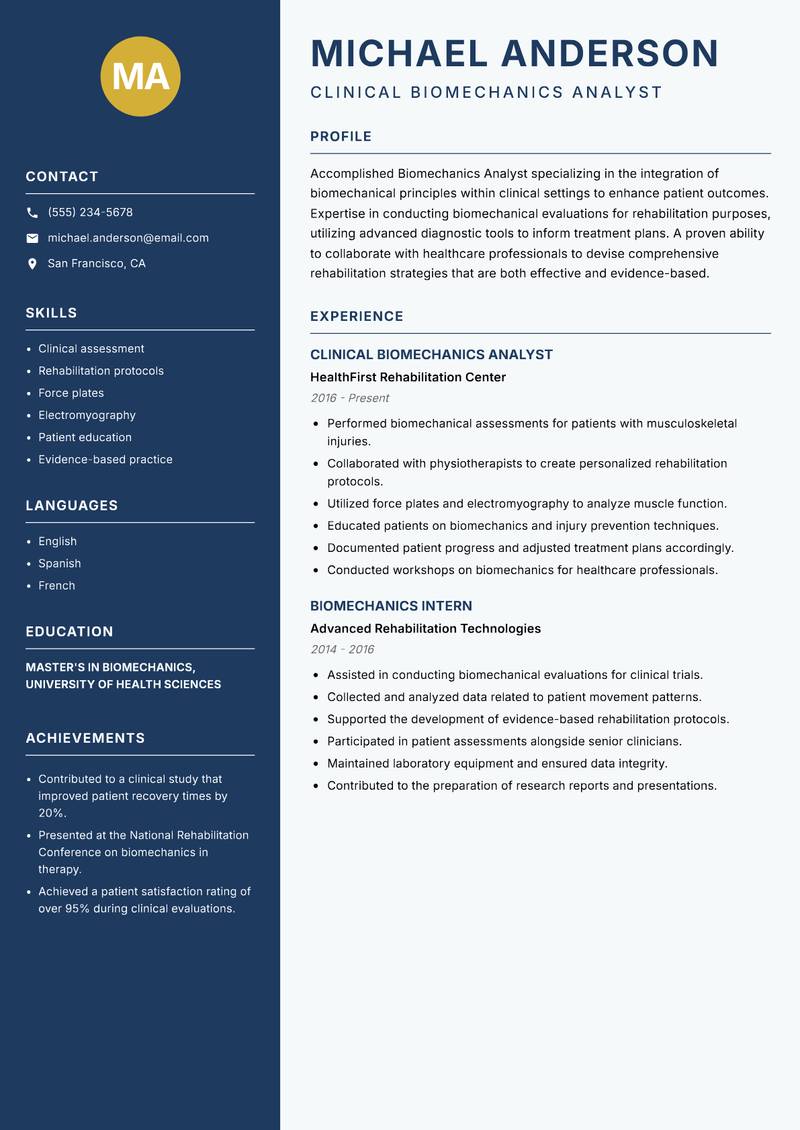
Classic Clean
Use Template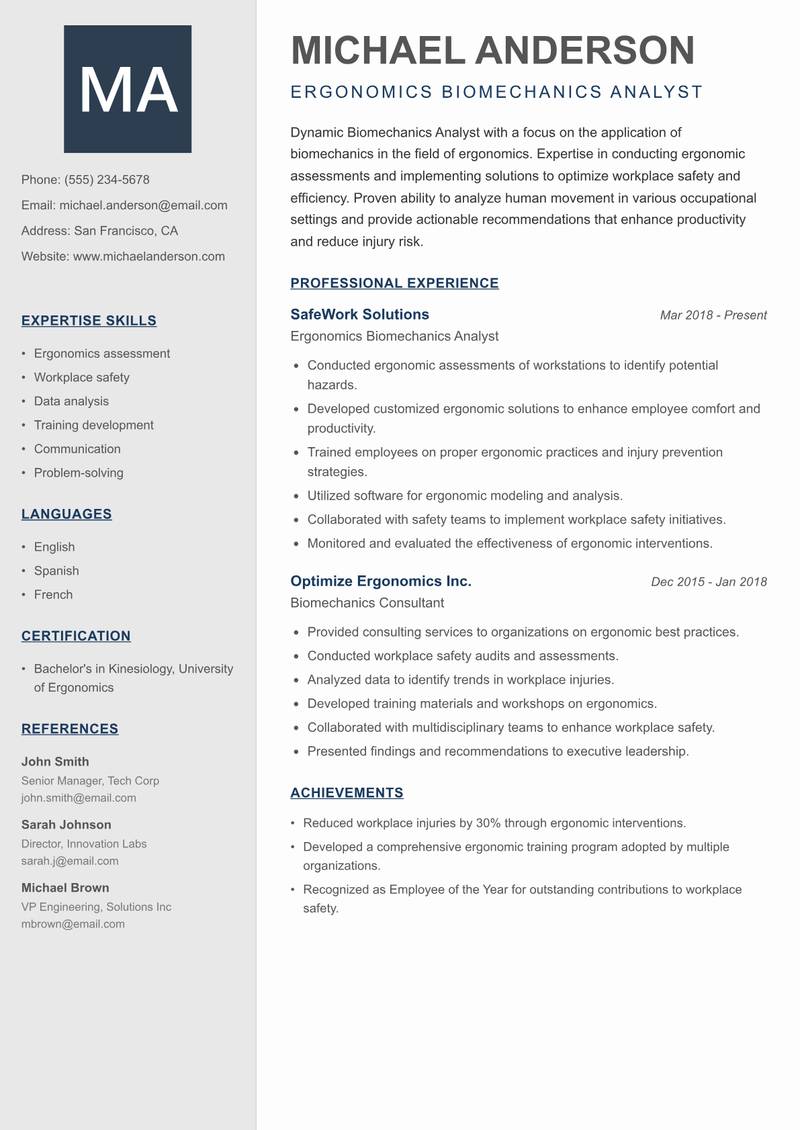
Creative Minimal
Use Template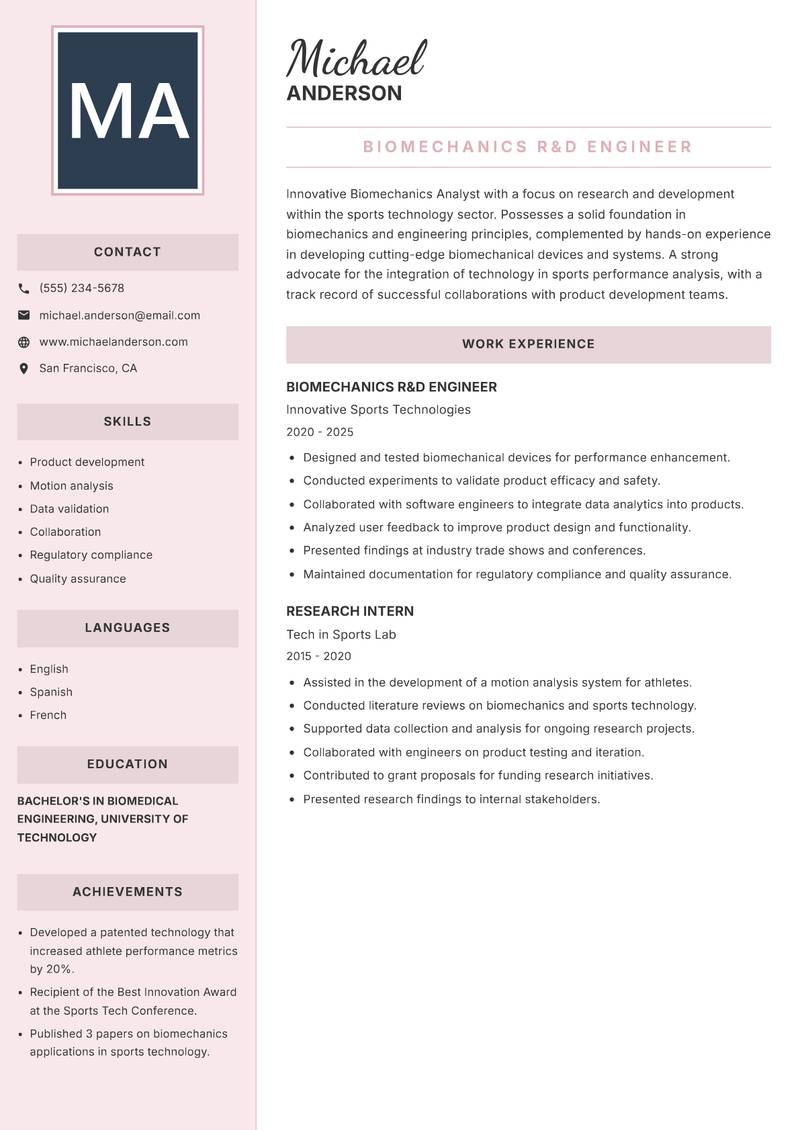
Executive
Use Template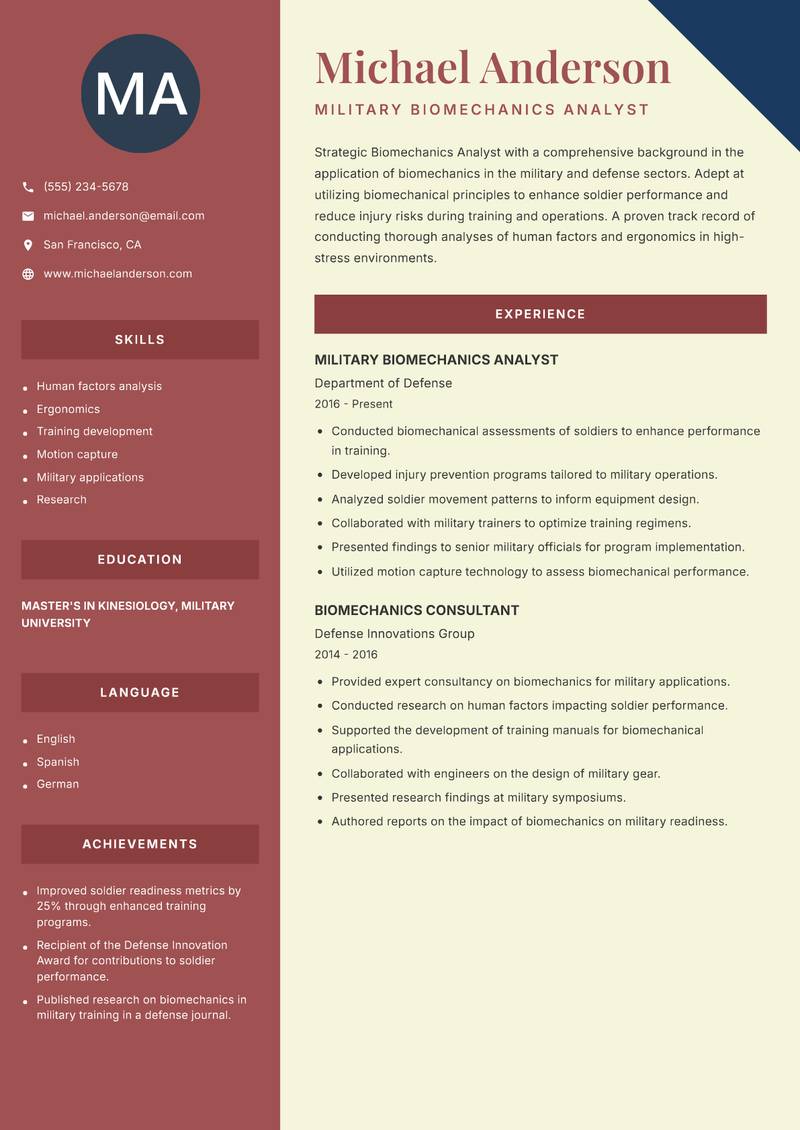
Two Column
Use Template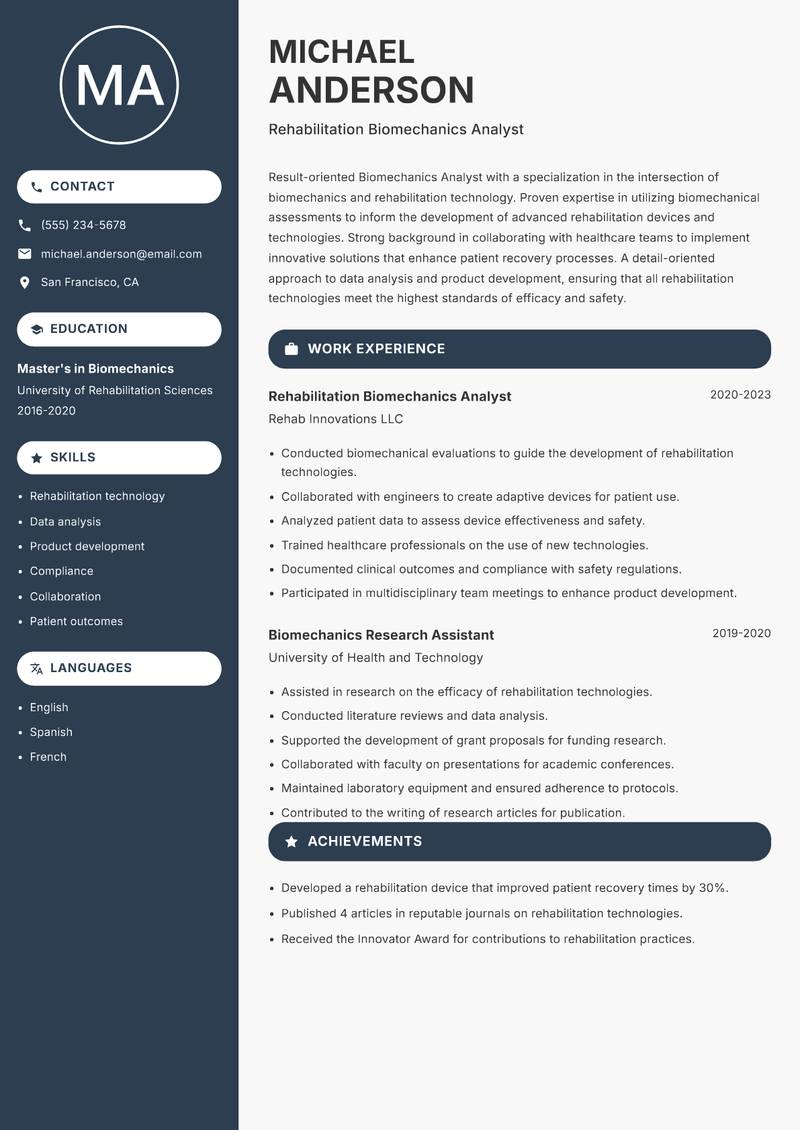
Compact
Use Template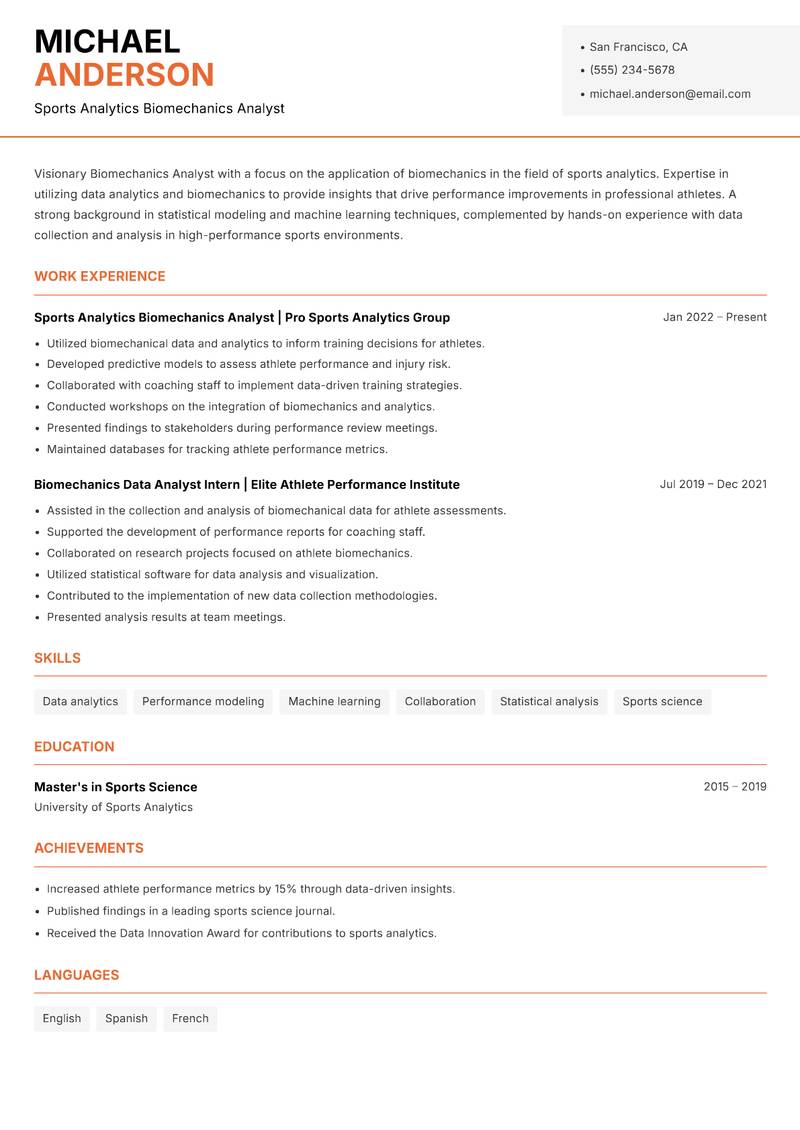
Modern Professional
Use Template7 Real Biomechanics Analyst Resume Examples
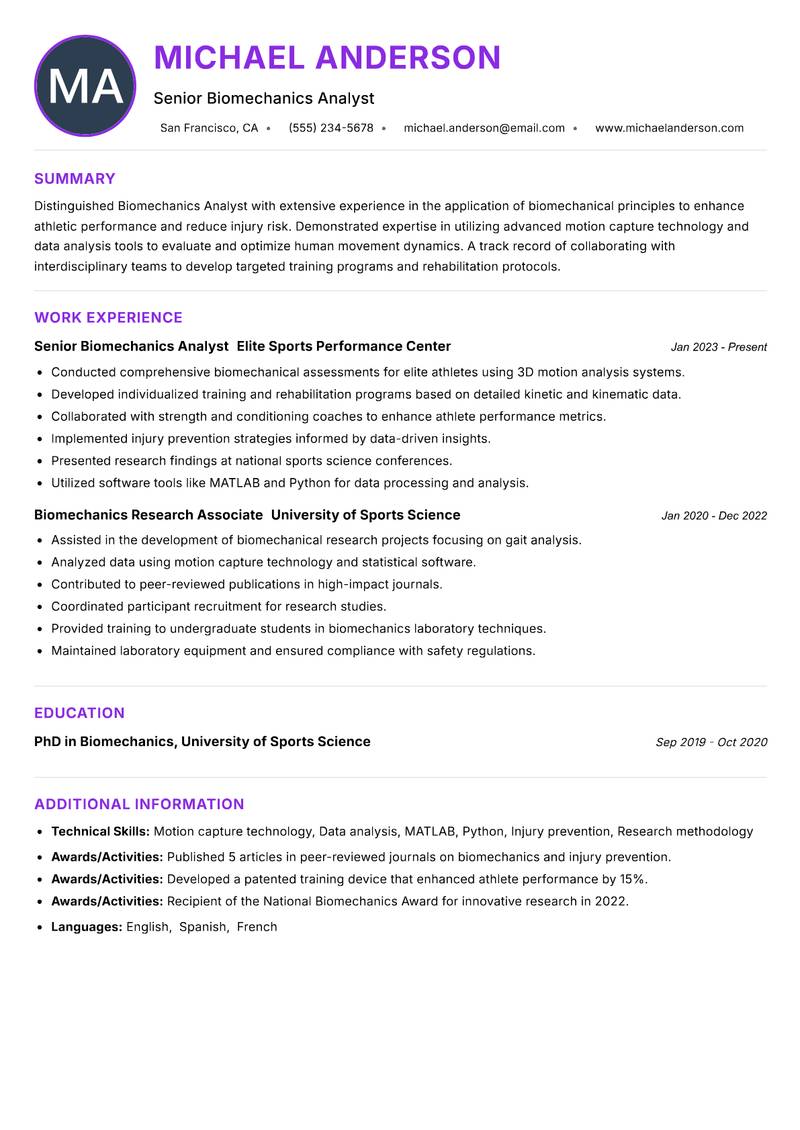
Senior Biomechanics Analyst with 5+ Years Experience
Summary: Distinguished Biomechanics Analyst with extensive experience in the application of biomechanical principles to enhance athletic performance and reduce injury risk. Demonstrated expertise in utilizing advanced motion capture technology and data analysis tools to evaluate and optimize human movement dynamics. A track record of collaborating with interdisciplinary teams to develop targeted training programs and rehabilitation protocols. Proficient in leveraging biomechanical data to inform sports science research and contribute to scholarly publications. Recognized for innovative problem-solving skills and the ability to translate complex data into actionable insights. A commitment to advancing the field of biomechanics through ongoing professional development and research initiatives.
Description:
- Conducted comprehensive biomechanical assessments for elite athletes using 3D motion analysis systems.
- Developed individualized training and rehabilitation programs based on detailed kinetic and kinematic data.
- Collaborated with strength and conditioning coaches to enhance athlete performance metrics.
- Implemented injury prevention strategies informed by data-driven insights.
- Presented research findings at national sports science conferences.
- Utilized software tools like MATLAB and Python for data processing and analysis.
🏆 Key Achievements
Clinical Biomechanics Analyst with 3+ Years Experience
Summary: Accomplished Biomechanics Analyst specializing in the integration of biomechanical principles within clinical settings to enhance patient outcomes. Expertise in conducting biomechanical evaluations for rehabilitation purposes, utilizing advanced diagnostic tools to inform treatment plans. A proven ability to collaborate with healthcare professionals to devise comprehensive rehabilitation strategies that are both effective and evidence-based. Recognized for exceptional analytical skills and a detail-oriented approach to problem-solving. Committed to continuous education in biomechanics and rehabilitation sciences to remain at the forefront of the field. Demonstrated success in patient education and support in the recovery process.
Description:
- Performed biomechanical assessments for patients with musculoskeletal injuries.
- Collaborated with physiotherapists to create personalized rehabilitation protocols.
- Utilized force plates and electromyography to analyze muscle function.
- Educated patients on biomechanics and injury prevention techniques.
- Documented patient progress and adjusted treatment plans accordingly.
- Conducted workshops on biomechanics for healthcare professionals.
🏆 Key Achievements
Ergonomics Biomechanics Analyst with 4+ Years Experience
Summary: Dynamic Biomechanics Analyst with a focus on the application of biomechanics in the field of ergonomics. Expertise in conducting ergonomic assessments and implementing solutions to optimize workplace safety and efficiency. Proven ability to analyze human movement in various occupational settings and provide actionable recommendations that enhance productivity and reduce injury risk. Recognized for strong communication skills and the ability to deliver training programs that educate employees on ergonomic best practices. A commitment to fostering a culture of safety and wellness within organizations. Knowledgeable in the latest ergonomic tools and technologies.
Description:
- Conducted ergonomic assessments of workstations to identify potential hazards.
- Developed customized ergonomic solutions to enhance employee comfort and productivity.
- Trained employees on proper ergonomic practices and injury prevention strategies.
- Utilized software for ergonomic modeling and analysis.
- Collaborated with safety teams to implement workplace safety initiatives.
- Monitored and evaluated the effectiveness of ergonomic interventions.
🏆 Key Achievements
Biomechanics R&D Engineer with 3+ Years Experience
Summary: Innovative Biomechanics Analyst with a focus on research and development within the sports technology sector. Possesses a solid foundation in biomechanics and engineering principles, complemented by hands-on experience in developing cutting-edge biomechanical devices and systems. A strong advocate for the integration of technology in sports performance analysis, with a track record of successful collaborations with product development teams. Demonstrated ability to conduct rigorous testing and validation of biomechanical products, ensuring compliance with industry standards. Recognized for contributions to technology-driven solutions that enhance athlete performance and safety. Committed to advancing the field through continuous learning and adaptation to technological advancements.
Description:
- Designed and tested biomechanical devices for performance enhancement.
- Conducted experiments to validate product efficacy and safety.
- Collaborated with software engineers to integrate data analytics into products.
- Analyzed user feedback to improve product design and functionality.
- Presented findings at industry trade shows and conferences.
- Maintained documentation for regulatory compliance and quality assurance.
🏆 Key Achievements
Military Biomechanics Analyst with 6+ Years Experience
Summary: Strategic Biomechanics Analyst with a comprehensive background in the application of biomechanics in the military and defense sectors. Adept at utilizing biomechanical principles to enhance soldier performance and reduce injury risks during training and operations. A proven track record of conducting thorough analyses of human factors and ergonomics in high-stress environments. Skilled in collaborating with defense agencies to develop training programs that optimize physical readiness. Recognized for the ability to translate complex biomechanical data into actionable strategies for military applications. Committed to improving soldier health and performance through innovative biomechanical solutions.
Description:
- Conducted biomechanical assessments of soldiers to enhance performance in training.
- Developed injury prevention programs tailored to military operations.
- Analyzed soldier movement patterns to inform equipment design.
- Collaborated with military trainers to optimize training regimens.
- Presented findings to senior military officials for program implementation.
- Utilized motion capture technology to assess biomechanical performance.
🏆 Key Achievements
Rehabilitation Biomechanics Analyst with 4+ Years Experience
Summary: Result-oriented Biomechanics Analyst with a specialization in the intersection of biomechanics and rehabilitation technology. Proven expertise in utilizing biomechanical assessments to inform the development of advanced rehabilitation devices and technologies. Strong background in collaborating with healthcare teams to implement innovative solutions that enhance patient recovery processes. A detail-oriented approach to data analysis and product development, ensuring that all rehabilitation technologies meet the highest standards of efficacy and safety. Recognized for a commitment to improving patient outcomes through research-driven practices and continuous professional development. Adept at navigating the complexities of healthcare regulations and compliance.
Description:
- Conducted biomechanical evaluations to guide the development of rehabilitation technologies.
- Collaborated with engineers to create adaptive devices for patient use.
- Analyzed patient data to assess device effectiveness and safety.
- Trained healthcare professionals on the use of new technologies.
- Documented clinical outcomes and compliance with safety regulations.
- Participated in multidisciplinary team meetings to enhance product development.
🏆 Key Achievements
Sports Analytics Biomechanics Analyst with 3+ Years Experience
Summary: Visionary Biomechanics Analyst with a focus on the application of biomechanics in the field of sports analytics. Expertise in utilizing data analytics and biomechanics to provide insights that drive performance improvements in professional athletes. A strong background in statistical modeling and machine learning techniques, complemented by hands-on experience with data collection and analysis in high-performance sports environments. Recognized for the ability to translate complex biomechanical data into strategic recommendations for coaches and athletes. Committed to leveraging technology and analytics to enhance athletic performance and contribute to the advancement of sports science. A proactive approach to continuous learning and adaptation to emerging trends in sports analytics.
Description:
- Utilized biomechanical data and analytics to inform training decisions for athletes.
- Developed predictive models to assess athlete performance and injury risk.
- Collaborated with coaching staff to implement data-driven training strategies.
- Conducted workshops on the integration of biomechanics and analytics.
- Presented findings to stakeholders during performance review meetings.
- Maintained databases for tracking athlete performance metrics.
🏆 Key Achievements
Key Skills for Biomechanics Analyst
ATS Optimization Tips
Increase your chances of getting hired
Use Standard Headings
Use common section titles like Experience, Skills, etc.
Include Keywords
Add role-specific keywords from the job description
Keep it Simple
Avoid complex tables, images and graphics
Save in Right Format
Use PDF format unless otherwise specified
Biomechanics Analyst Salary Insights
Average Salary
$72,500
per year
Salary Range
$55,000 - $90,000
per year
Top Paying Cities
Los Angeles, Seattle, Houston, Dallas, Boston
Source: Glassdoor, Payscale, Indeed (Updated May 2026)
Everything you need to write a great Biomechanics Analyst resume
Strong Action Verbs to Use
Resume Writing Tips
- →Highlight experience with specific biomechanical software (e.g., Vicon, Qualisys) prominently within the skills section.
- →Include measurable outcomes from projects (e.g., reduced injury rates, improved performance metrics) to demonstrate effectiveness.
- →Tailor your resume for each position; match the language used in job descriptions to demonstrate relevance and understanding.
- →Showcase any research publications or presentations to emphasize expertise and contribution to the field.
- →Mention collaboration with multidisciplinary teams, such as physiotherapists and strength coaches, to illustrate adaptability.
Common Mistakes to Avoid
- ✕Listing general sports-related job responsibilities instead of specific biomechanical tasks and achievements.
- ✕Failing to include technical skills associated with biomechanics tools and methodologies relevant to the job.
- ✕Not quantifying results of previous analysis, which detracts from demonstrating the impact of their work.
- ✕Using overly generic wording in the experience section without reflecting a specialized focus on biomechanics.
ATS Keywords for Biomechanics Analyst
Biomechanics Analyst Career Path
Relevant Certifications
Career Progression
Entry Level
Biomechanics Assistant, working under the supervision of experienced analysts and researchers.
Mid Level
Biomechanics Analyst, independently conducting assessments and analyzing movement patterns in sports science.
Senior Level
Senior Biomechanics Analyst, leading research projects and collaborating with coaches and athletes.
Executive Level
Director of Biomechanics, overseeing biomechanics programs and research initiatives within an organization.
Consulting Level
Biomechanics Consultant, advising sports teams and organizations on performance optimization based on biomechanics principles.
Biomechanics Analyst Interview Questions
What biomechanical tools and software are you proficient in? +
Be specific about the relevant technologies and methodologies you've used.
Can you explain the importance of kinetic and kinematic analyses in sports settings? +
Provide insights on how these analyses enhance athletic performance and safety.
Describe a project where your analysis significantly impacted an athlete’s performance. +
Share specific results or improvements attributed directly to your work.
What role does technology play in your biomechanical assessments? +
Discuss any advanced equipment or software that enhances your analysis.
How do you stay current with the latest research in biomechanics? +
Mention specific journals, conferences, or networks relevant to the field.
How do you approach interdisciplinary collaboration with coaches and physiologists? +
Illustrate your communication skills and teamwork in applying biomechanical principles.
About the Biomechanics Analyst Role
A Biomechanics Analyst employs advanced technology, such as motion capture and force plates, to evaluate athletes' movements and optimize performance. Utilizing data to inform training techniques and rehabilitation practices, these professionals play a crucial role in enhancing athletic outcomes and minimizing injury risks. By analyzing kinetic and kinematic data, they provide tailored insights to coaches and trainers to improve an athlete's technique and overall physical capabilities.
Frequently Asked Questions
What is the primary duty of a Biomechanics Analyst in sports science? +
The primary duty is to analyze athletes' movements to inform training and rehabilitation strategies, enhancing performance while minimizing injury risk.
Which industries typically employ Biomechanics Analysts? +
They are commonly found in professional sports organizations, research institutions, academic settings, and rehabilitation clinics.
What kind of projects do Biomechanics Analysts commonly work on? +
Projects often involve performance testing, injury prevention programs, and biomechanics research aimed at optimizing athletic skills.
What skills are essential for a successful Biomechanics Analyst? +
Critical skills include data analysis, proficiency with motion capture technology, understanding of human anatomy, and excellent communication abilities.
How important is continuing education for a Biomechanics Analyst? +
Continuing education is vital to stay updated with the latest technologies and methodologies in biomechanics and sports science.
What software is commonly used by Biomechanics Analysts? +
Common software includes MATLAB, Visual 3D, OpenSim, and specialized motion analysis programs.
More Resume Examples You Might Like
Will this Biomechanics Analyst resume pass the ATS scan?
Upload it and get an instant AI-scored compatibility check with specific fixes.
Check My Resume →
Pair it with a matching cover letter
AI drafts a first version from your job title and strengths — edit it live, then download the PDF.
Write My Cover Letter →
Written by Nohaya Career Team
Reviewed by HR Professionals · Updated May 2026
Ready to Build Your Perfect Resume?
Choose from 1000+ professional templates and land your dream job.
Create My Resume Now