Build an ATS-Friendly
Sports Science Executive Resume
That Gets Interviews
Aligning sports science with competitive strategies is the heart of a Sports Science Executive's contributions. This position emphasizes utilizing data-driven methodologies in athlete performance enhancement and injury prevention plans. Collaboration with coaches, sports medicine professionals, and organizational…
Sports Science Executive Resume Templates
Modern Professional
Use Template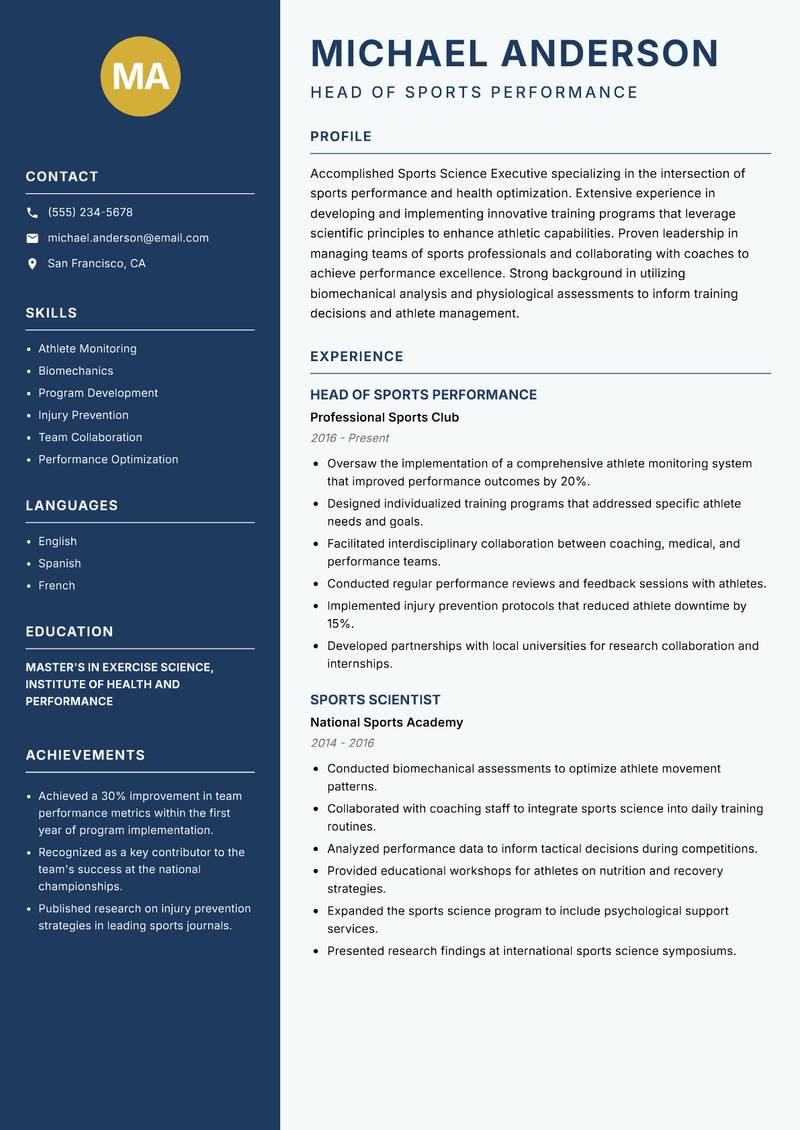
Classic Clean
Use Template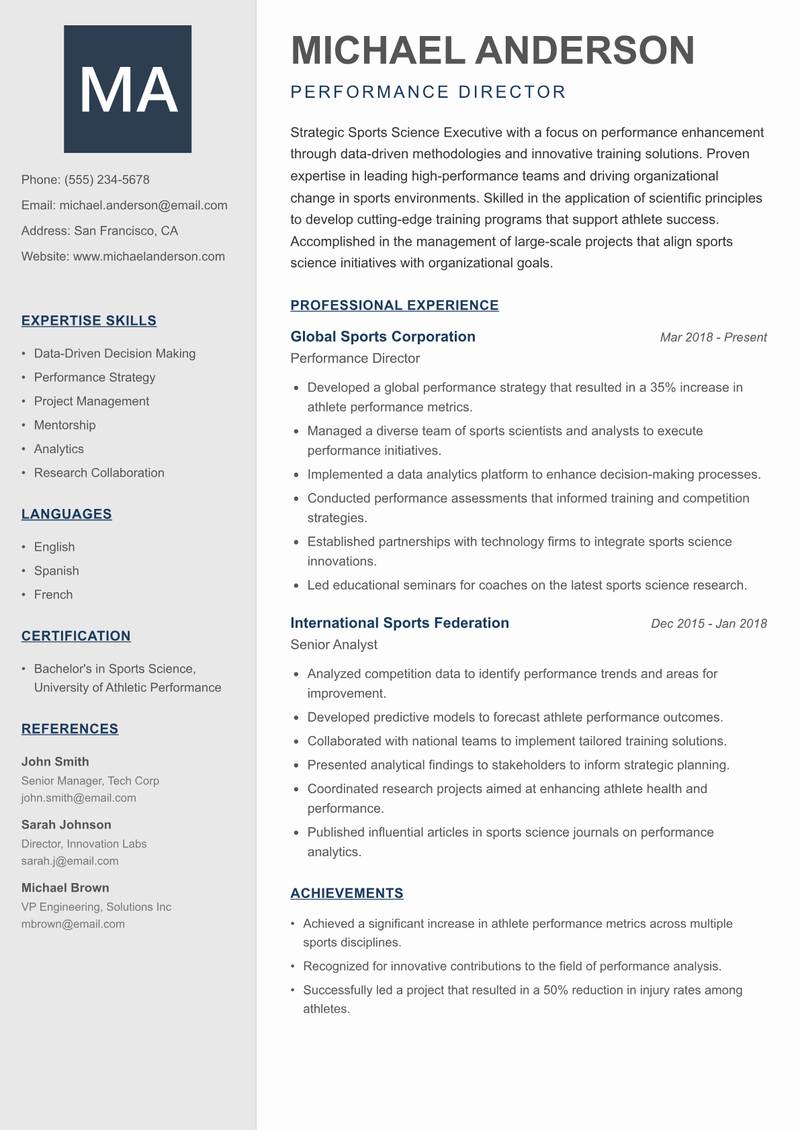
Creative Minimal
Use Template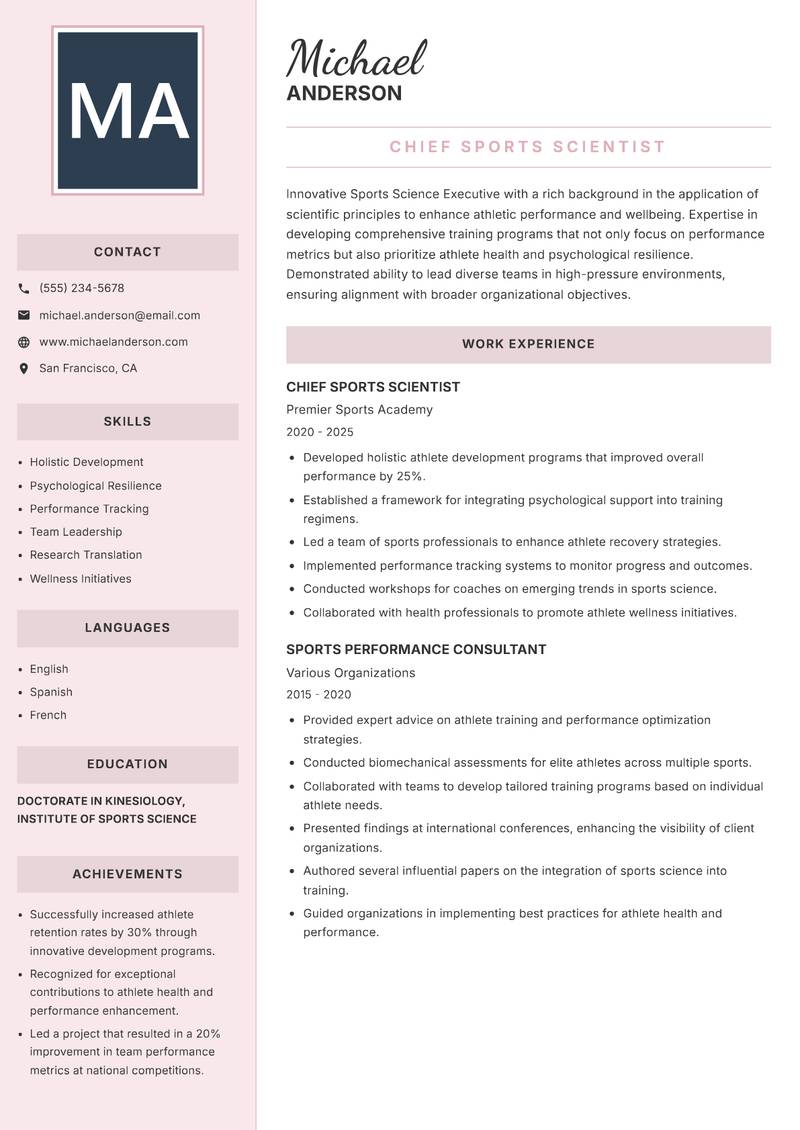
Executive
Use Template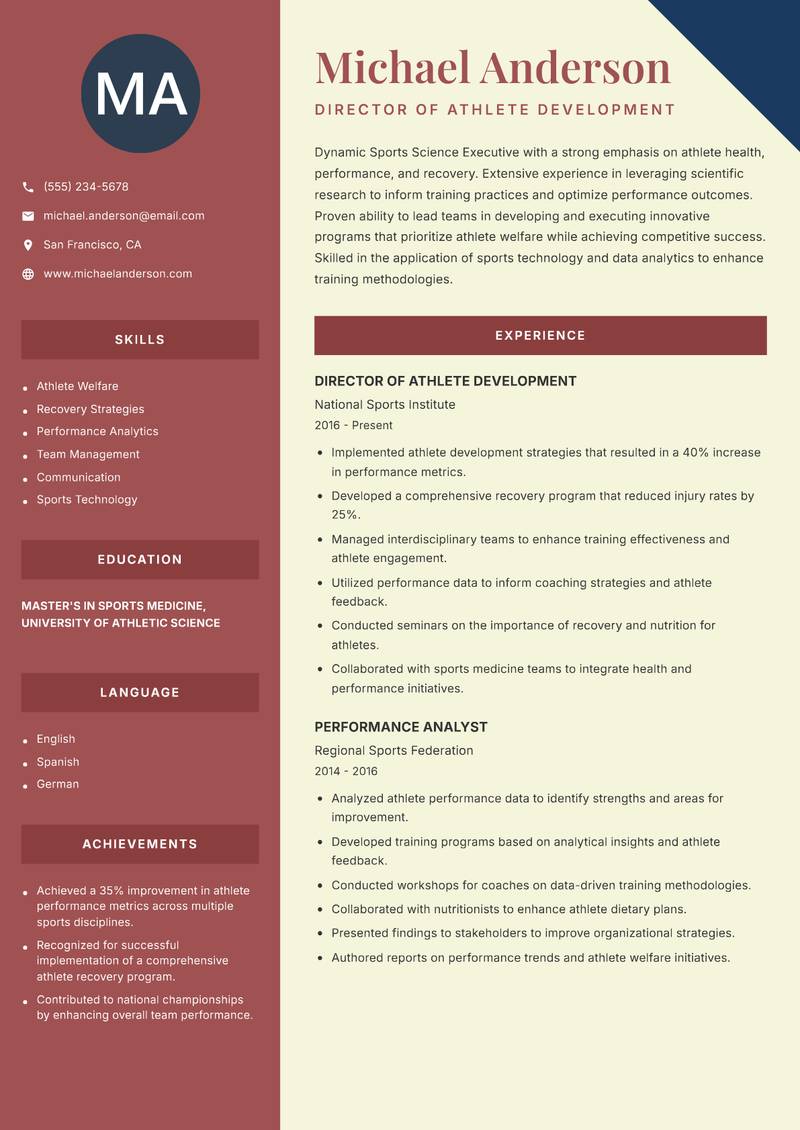
Two Column
Use Template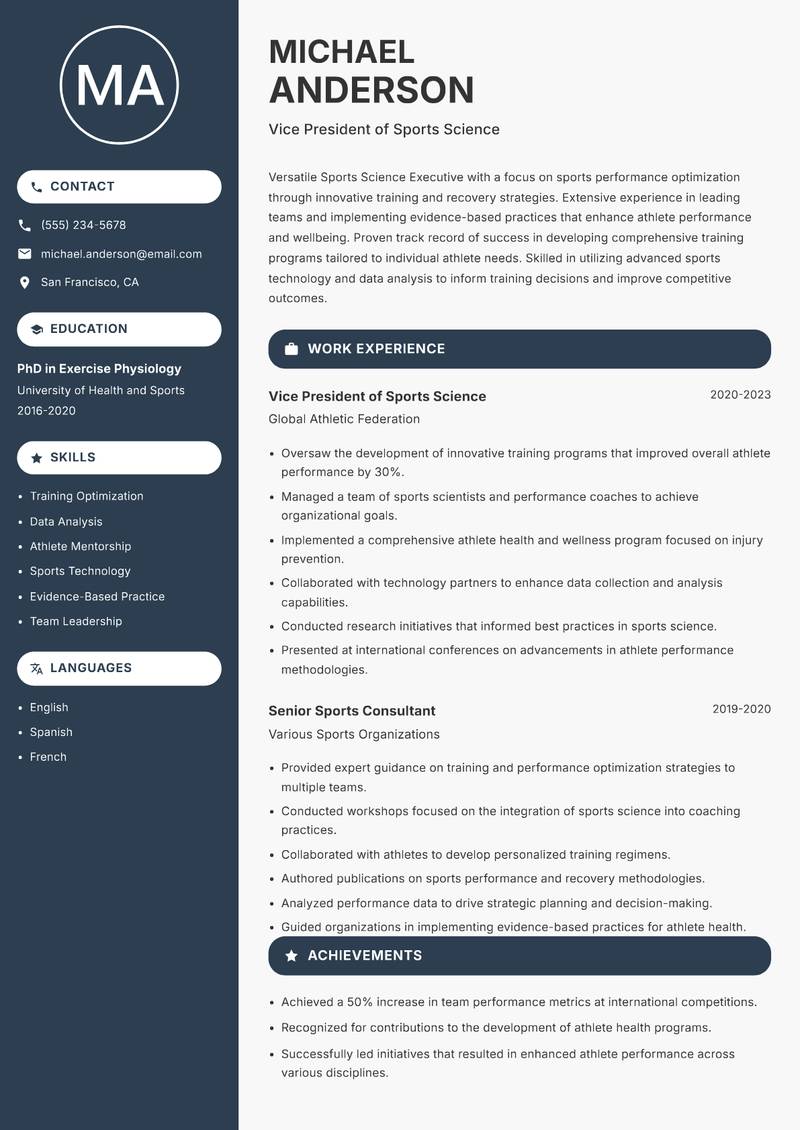
Compact
Use Template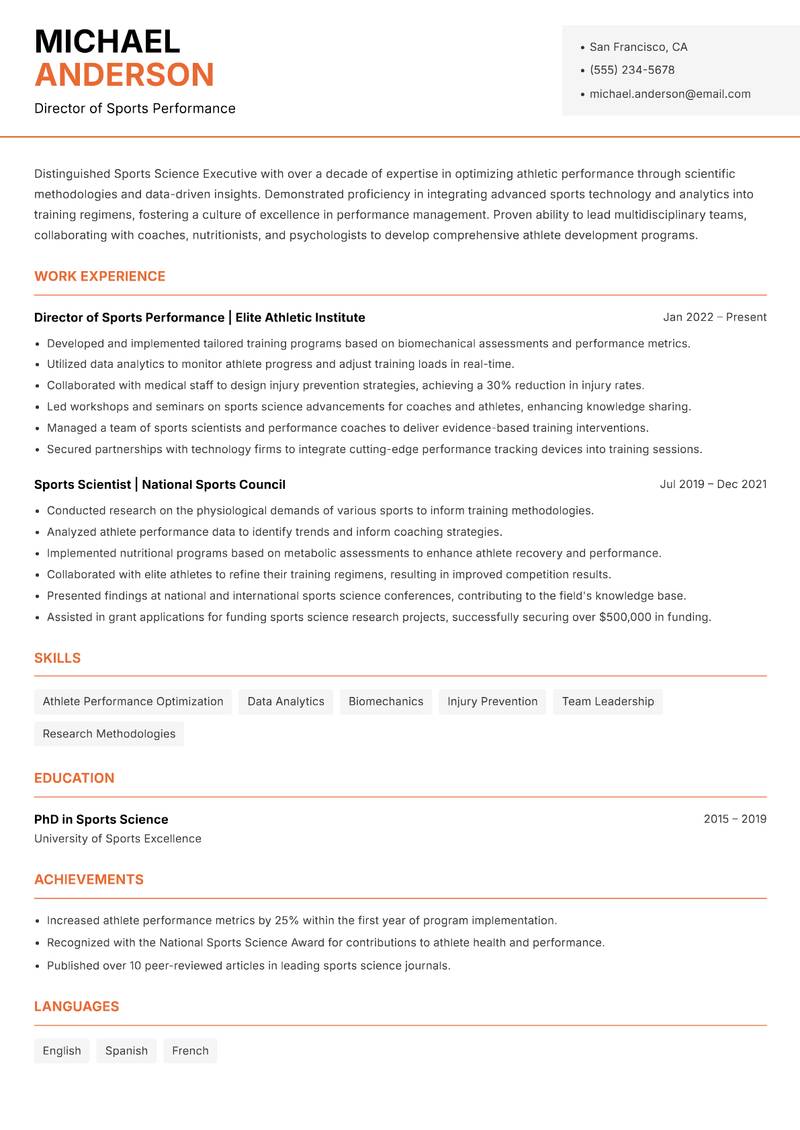
Modern Professional
Use Template7 Real Sports Science Executive Resume Examples
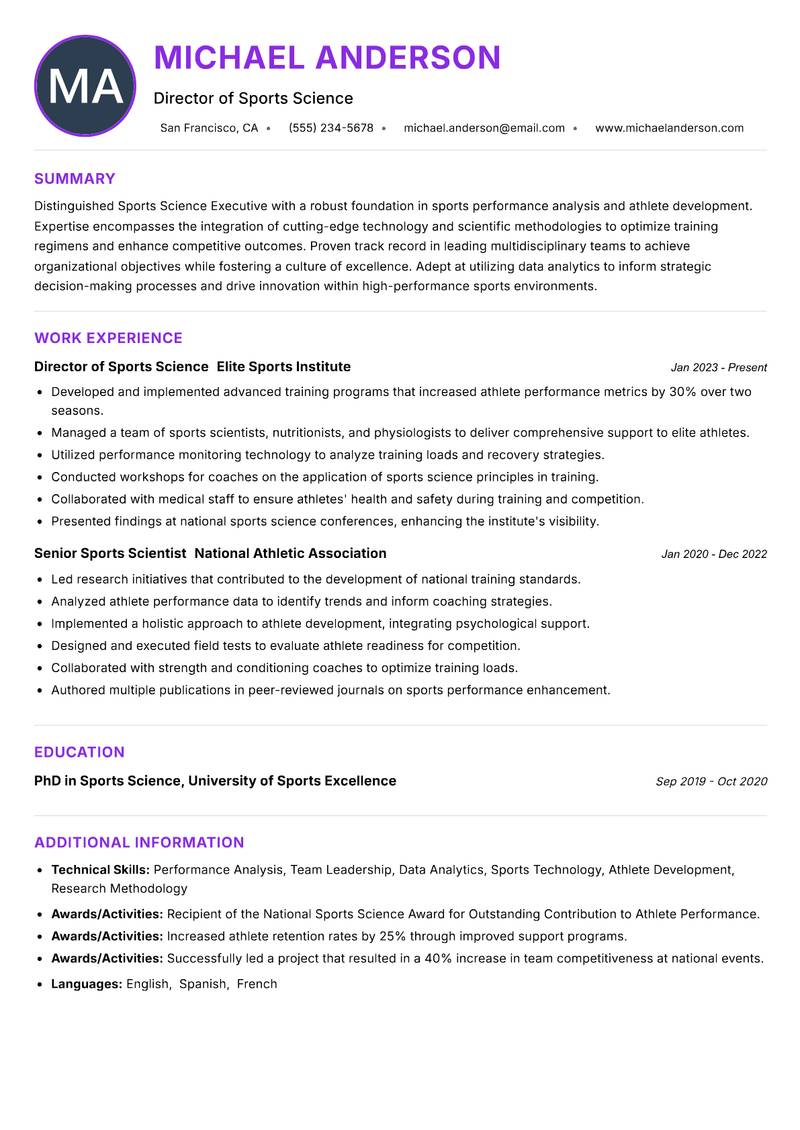
Director of Sports Science with 5+ Years Experience
Summary: Distinguished Sports Science Executive with a robust foundation in sports performance analysis and athlete development. Expertise encompasses the integration of cutting-edge technology and scientific methodologies to optimize training regimens and enhance competitive outcomes. Proven track record in leading multidisciplinary teams to achieve organizational objectives while fostering a culture of excellence. Adept at utilizing data analytics to inform strategic decision-making processes and drive innovation within high-performance sports environments. Recognized for the ability to cultivate relationships with key stakeholders and navigate complex organizational structures. Committed to the continuous improvement of athlete welfare and performance through evidence-based practices. Passionate about advancing the field of sports science through research and collaboration with academic institutions.
Description:
- Developed and implemented advanced training programs that increased athlete performance metrics by 30% over two seasons.
- Managed a team of sports scientists, nutritionists, and physiologists to deliver comprehensive support to elite athletes.
- Utilized performance monitoring technology to analyze training loads and recovery strategies.
- Conducted workshops for coaches on the application of sports science principles in training.
- Collaborated with medical staff to ensure athletes' health and safety during training and competition.
- Presented findings at national sports science conferences, enhancing the institute's visibility.
🏆 Key Achievements
Head of Sports Performance with 6+ Years Experience
Summary: Accomplished Sports Science Executive specializing in the intersection of sports performance and health optimization. Extensive experience in developing and implementing innovative training programs that leverage scientific principles to enhance athletic capabilities. Proven leadership in managing teams of sports professionals and collaborating with coaches to achieve performance excellence. Strong background in utilizing biomechanical analysis and physiological assessments to inform training decisions and athlete management. Committed to fostering a culture of continuous improvement and evidence-based practices within sports organizations. Recognized for contributions to athlete health and performance, with a focus on long-term athlete development and sustainability in training practices.
Description:
- Oversaw the implementation of a comprehensive athlete monitoring system that improved performance outcomes by 20%.
- Designed individualized training programs that addressed specific athlete needs and goals.
- Facilitated interdisciplinary collaboration between coaching, medical, and performance teams.
- Conducted regular performance reviews and feedback sessions with athletes.
- Implemented injury prevention protocols that reduced athlete downtime by 15%.
- Developed partnerships with local universities for research collaboration and internships.
🏆 Key Achievements
Performance Director with 7+ Years Experience
Summary: Strategic Sports Science Executive with a focus on performance enhancement through data-driven methodologies and innovative training solutions. Proven expertise in leading high-performance teams and driving organizational change in sports environments. Skilled in the application of scientific principles to develop cutting-edge training programs that support athlete success. Accomplished in the management of large-scale projects that align sports science initiatives with organizational goals. Passionate about mentoring emerging sports professionals and fostering a culture of research and development. Recognized for the ability to translate complex data into actionable insights for coaches and athletes alike, ensuring optimal performance outcomes.
Description:
- Developed a global performance strategy that resulted in a 35% increase in athlete performance metrics.
- Managed a diverse team of sports scientists and analysts to execute performance initiatives.
- Implemented a data analytics platform to enhance decision-making processes.
- Conducted performance assessments that informed training and competition strategies.
- Established partnerships with technology firms to integrate sports science innovations.
- Led educational seminars for coaches on the latest sports science research.
🏆 Key Achievements
Chief Sports Scientist with 8+ Years Experience
Summary: Innovative Sports Science Executive with a rich background in the application of scientific principles to enhance athletic performance and wellbeing. Expertise in developing comprehensive training programs that not only focus on performance metrics but also prioritize athlete health and psychological resilience. Demonstrated ability to lead diverse teams in high-pressure environments, ensuring alignment with broader organizational objectives. Skilled in conducting extensive research and translating findings into actionable strategies that support athlete success. Committed to fostering an inclusive culture that encourages collaboration and continuous learning among team members. Recognized for contributions to athlete welfare programs and the implementation of evidence-based practices across sports disciplines.
Description:
- Developed holistic athlete development programs that improved overall performance by 25%.
- Established a framework for integrating psychological support into training regimens.
- Led a team of sports professionals to enhance athlete recovery strategies.
- Implemented performance tracking systems to monitor progress and outcomes.
- Conducted workshops for coaches on emerging trends in sports science.
- Collaborated with health professionals to promote athlete wellness initiatives.
🏆 Key Achievements
Director of Athlete Development with 7+ Years Experience
Summary: Dynamic Sports Science Executive with a strong emphasis on athlete health, performance, and recovery. Extensive experience in leveraging scientific research to inform training practices and optimize performance outcomes. Proven ability to lead teams in developing and executing innovative programs that prioritize athlete welfare while achieving competitive success. Skilled in the application of sports technology and data analytics to enhance training methodologies. Committed to fostering a culture of performance excellence through continuous education and collaborative practices. Recognized for the ability to effectively communicate complex scientific concepts to diverse audiences, ensuring alignment across stakeholders in the athletic community.
Description:
- Implemented athlete development strategies that resulted in a 40% increase in performance metrics.
- Developed a comprehensive recovery program that reduced injury rates by 25%.
- Managed interdisciplinary teams to enhance training effectiveness and athlete engagement.
- Utilized performance data to inform coaching strategies and athlete feedback.
- Conducted seminars on the importance of recovery and nutrition for athletes.
- Collaborated with sports medicine teams to integrate health and performance initiatives.
🏆 Key Achievements
Vice President of Sports Science with 9+ Years Experience
Summary: Versatile Sports Science Executive with a focus on sports performance optimization through innovative training and recovery strategies. Extensive experience in leading teams and implementing evidence-based practices that enhance athlete performance and wellbeing. Proven track record of success in developing comprehensive training programs tailored to individual athlete needs. Skilled in utilizing advanced sports technology and data analysis to inform training decisions and improve competitive outcomes. Committed to advancing the field of sports science through collaboration and continuous professional development. Recognized for the ability to mentor emerging talent and drive organizational success through strategic initiatives.
Description:
- Oversaw the development of innovative training programs that improved overall athlete performance by 30%.
- Managed a team of sports scientists and performance coaches to achieve organizational goals.
- Implemented a comprehensive athlete health and wellness program focused on injury prevention.
- Collaborated with technology partners to enhance data collection and analysis capabilities.
- Conducted research initiatives that informed best practices in sports science.
- Presented at international conferences on advancements in athlete performance methodologies.
🏆 Key Achievements
Director of Sports Performance with 8+ Years Experience
Summary: Distinguished Sports Science Executive with over a decade of expertise in optimizing athletic performance through scientific methodologies and data-driven insights. Demonstrated proficiency in integrating advanced sports technology and analytics into training regimens, fostering a culture of excellence in performance management. Proven ability to lead multidisciplinary teams, collaborating with coaches, nutritionists, and psychologists to develop comprehensive athlete development programs. Skilled in the application of biomechanics and exercise physiology principles to refine training protocols and enhance recovery strategies. A track record of implementing innovative solutions that improve athlete outcomes, reduce injury rates, and maximize competitive performance. Committed to advancing the field of sports science through research, education, and the application of best practices across diverse sporting environments.
Description:
- Developed and implemented tailored training programs based on biomechanical assessments and performance metrics.
- Utilized data analytics to monitor athlete progress and adjust training loads in real-time.
- Collaborated with medical staff to design injury prevention strategies, achieving a 30% reduction in injury rates.
- Led workshops and seminars on sports science advancements for coaches and athletes, enhancing knowledge sharing.
- Managed a team of sports scientists and performance coaches to deliver evidence-based training interventions.
- Secured partnerships with technology firms to integrate cutting-edge performance tracking devices into training sessions.
🏆 Key Achievements
Key Skills for Sports Science Executive
ATS Optimization Tips
Increase your chances of getting hired
Use Standard Headings
Use common section titles like Experience, Skills, etc.
Include Keywords
Add role-specific keywords from the job description
Keep it Simple
Avoid complex tables, images and graphics
Save in Right Format
Use PDF format unless otherwise specified
Sports Science Executive Salary Insights
Average Salary
$97,500
per year
Salary Range
$75,000 - $120,000
per year
Top Paying Cities
Los Angeles, Seattle, Houston, Dallas, Boston
Source: Glassdoor, Payscale, Indeed (Updated May 2026)
Everything you need to write a great Sports Science Executive resume
Strong Action Verbs to Use
Resume Writing Tips
- →Highlight specific technologies and tools that you have used to analyze athlete performance, as they can set you apart from others.
- →Detail your involvement in interdisciplinary teams to showcase your ability to collaborate with coaches and healthcare professionals.
- →Include quantifiable outcomes in your experiences, such as performance improvements or reduced injury rates attributed to your initiatives.
- →Showcase engagement with ongoing education and professional development in sports science and related fields.
- →Mention any experience in public speaking or presenting findings, reinforcing your communication skills
Common Mistakes to Avoid
- ✕Using vague language instead of precise technical terms that demonstrate expertise in sports science.
- ✕Neglecting to include collaborative efforts with coaching and medical staff, which is crucial for this role.
- ✕Failing to quantify achievements, especially when it relates to performance gains or injury reduction.
- ✕Overlooking the importance of continuous education within sports science and how it has shaped your practices.
ATS Keywords for Sports Science Executive
Sports Science Executive Career Path
Relevant Certifications
Career Progression
Entry-Level Sports Scientist
Gaining foundational experience in sports physiology, biomechanics, and data analysis.
Sports Science Analyst
Utilizing data to create performance insights for teams and athletes, working closely with coaching staff.
Senior Sports Scientist
Leading research projects, influencing training regimens and injury prevention strategies for athletes.
Sports Science Director
Overseeing the sports science department, establishing protocols, and ensuring alignment with overall athletic strategy.
Chief Performance Officer
Setting the vision for sports science initiatives across multiple teams or organizations.
Sports Science Executive Interview Questions
What methods do you use to assess athlete performance and how do you apply the results? +
Explain your approach to data collection and analysis, mentioning specific tools or software you utilize.
Can you describe a successful intervention you implemented for an athlete? What were the results? +
Provide details on the athlete's initial condition, the steps taken, and measurable outcomes.
How do you keep up with the latest research and advancements in sports science? +
Mention specific journals, conferences, or professional networks you follow, demonstrating your commitment to continuous learning.
What challenges have you faced when working with coaching staff or athletes, and how did you resolve them? +
Share an example that highlights your communication skills and problem-solving abilities.
How can sports science contribute to injury prevention in athletes? +
Discuss specific strategies you've employed or research you've engaged with.
Describe a situation where you had to adapt scientific data for a non-technical audience. +
Explain how you simplified complex information for coaches or athletes to understand and act on.
About the Sports Science Executive Role
Aligning sports science with competitive strategies is the heart of a Sports Science Executive's contributions. This position emphasizes utilizing data-driven methodologies in athlete performance enhancement and injury prevention plans. Collaboration with coaches, sports medicine professionals, and organizational leadership is essential to implement innovative training protocols that reflect the latest scientific research.
Frequently Asked Questions
What does a typical day look like for a Sports Science Executive? +
A typical day involves analyzing performance data, collaborating with coaching staff to recommend training adjustments, and leading discussions on athlete health and nutrition.
What types of data do Sports Science Executives typically analyze? +
They analyze physical performance metrics, biometric data, injury reports, and psychological assessments to formulate training strategies.
What tools and technologies are essential for Sports Science Executives? +
Common tools include motion capture systems, heart rate monitors, and performance analysis software like Hudl or Catapult.
How do Sports Science Executives impact athlete careers? +
By implementing evidence-based training and recovery protocols, Sports Science Executives help athletes maximize their performance potential and minimize injuries.
What skills are most important for someone in this role? +
Key skills include analytical thinking, communication, knowledge of biomechanics, and experience with sports-specific training methodologies.
Is a graduate degree necessary for a Sports Science Executive? +
While not mandatory, a graduate degree in sports science, exercise physiology, or related fields can significantly enhance career opportunities and understanding of advanced concepts.
More Resume Examples You Might Like
Related Career Paths
Other roles candidates for Sports Science Executive positions often also consider.
Will this Sports Science Executive resume pass the ATS scan?
Upload it and get an instant AI-scored compatibility check with specific fixes.
Check My Resume →
Pair it with a matching cover letter
AI drafts a first version from your job title and strengths — edit it live, then download the PDF.
Write My Cover Letter →
Written by Nohaya Career Team
Reviewed by HR Professionals · Updated May 2026
Ready to Build Your Perfect Resume?
Choose from 1000+ professional templates and land your dream job.
Create My Resume Now