Build an ATS-Friendly
Sports Psychology Scientist Resume
That Gets Interviews
Combining rigorous research with applied practice, a Sports Psychology Scientist cultivates mental strategies tailored to enhance athlete performance. Through the development and implementation of evidence-based programs, they address issues such as competition anxiety and motivation. Expertise in measurement tools…
Sports Psychology Scientist Resume Templates
Modern Professional
Use Template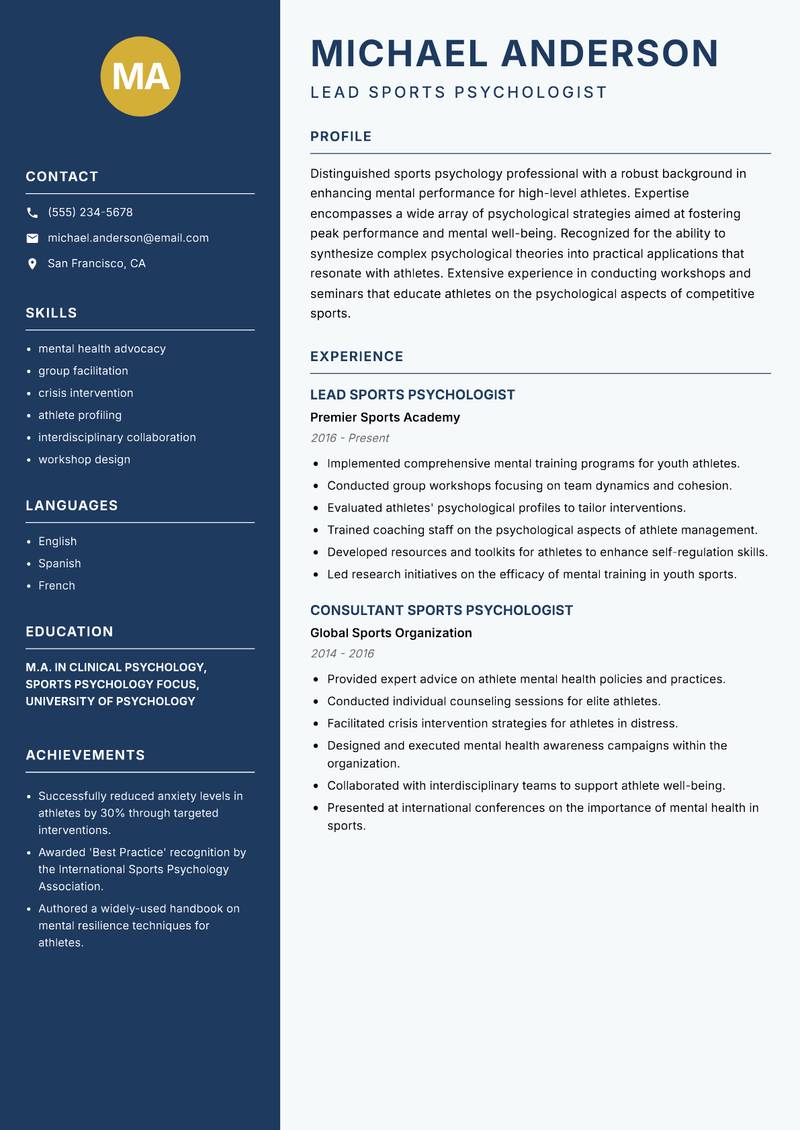
Classic Clean
Use Template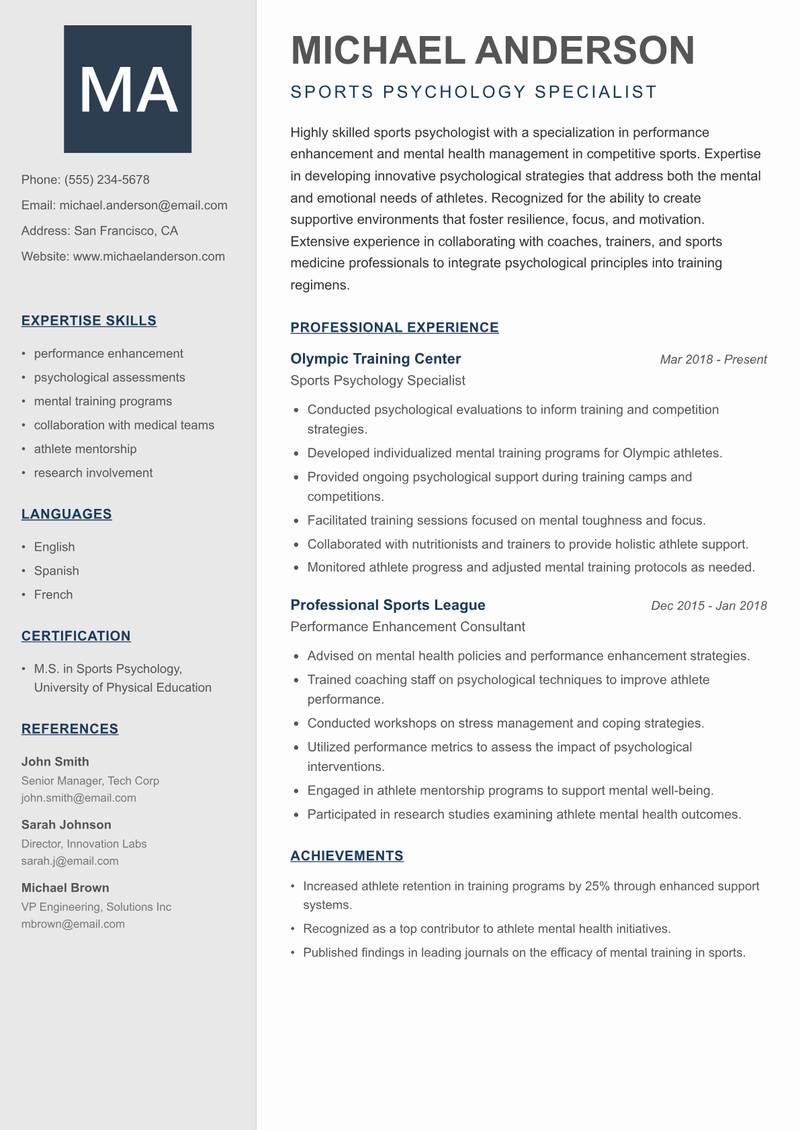
Creative Minimal
Use Template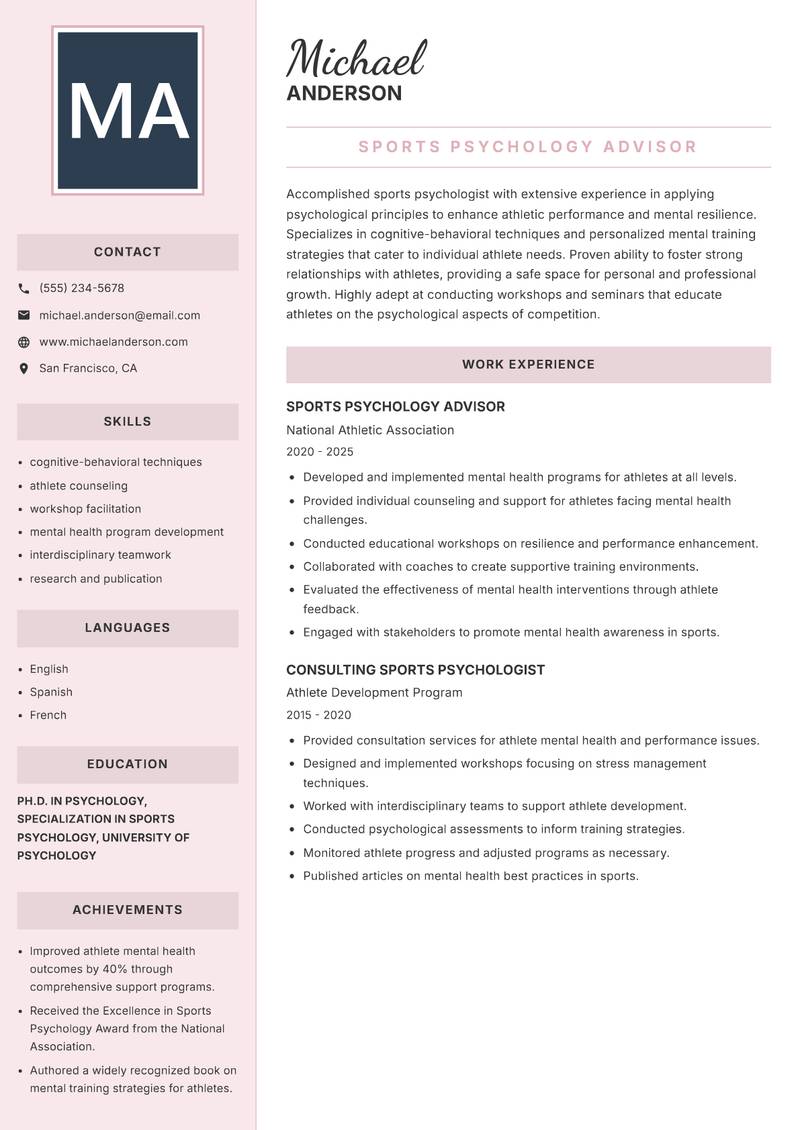
Executive
Use Template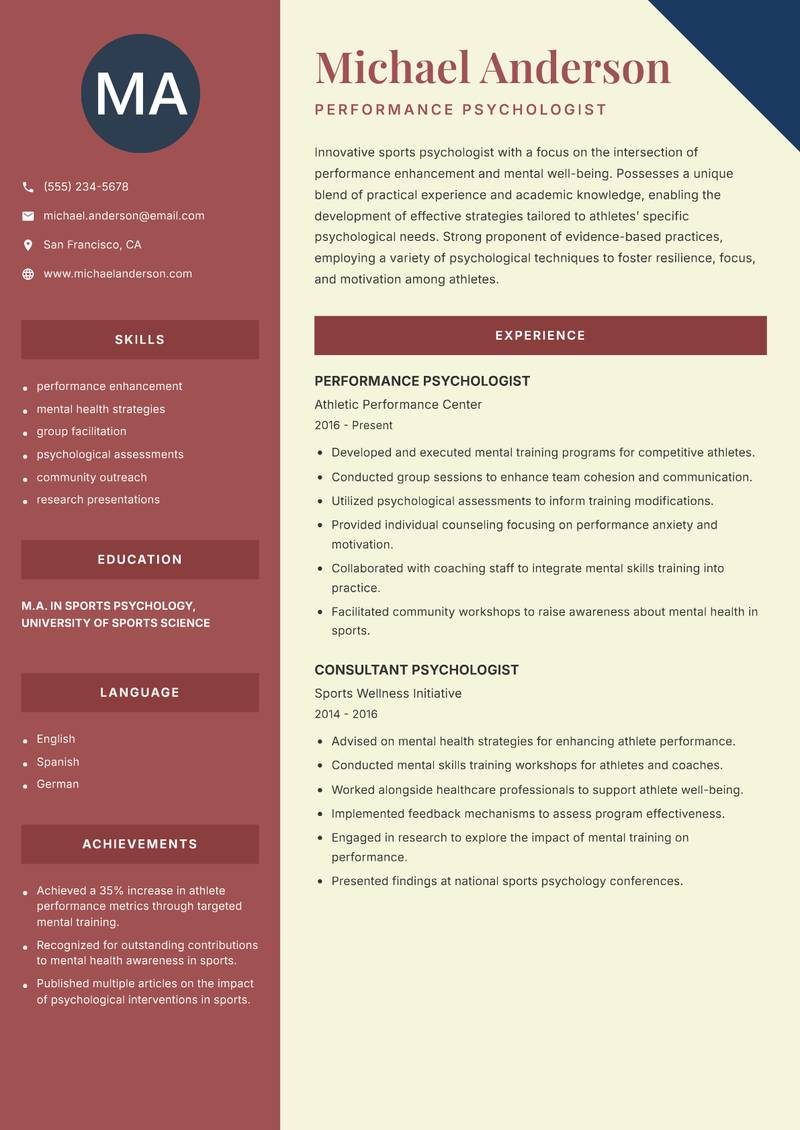
Two Column
Use Template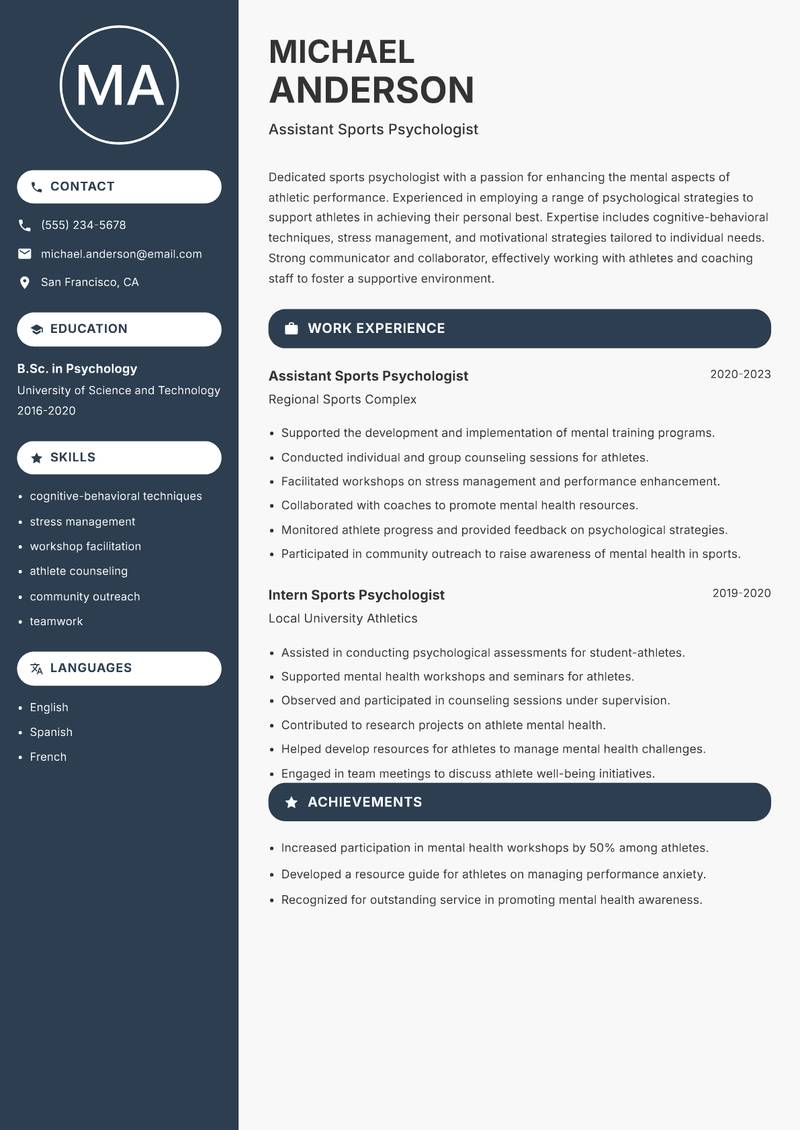
Compact
Use Template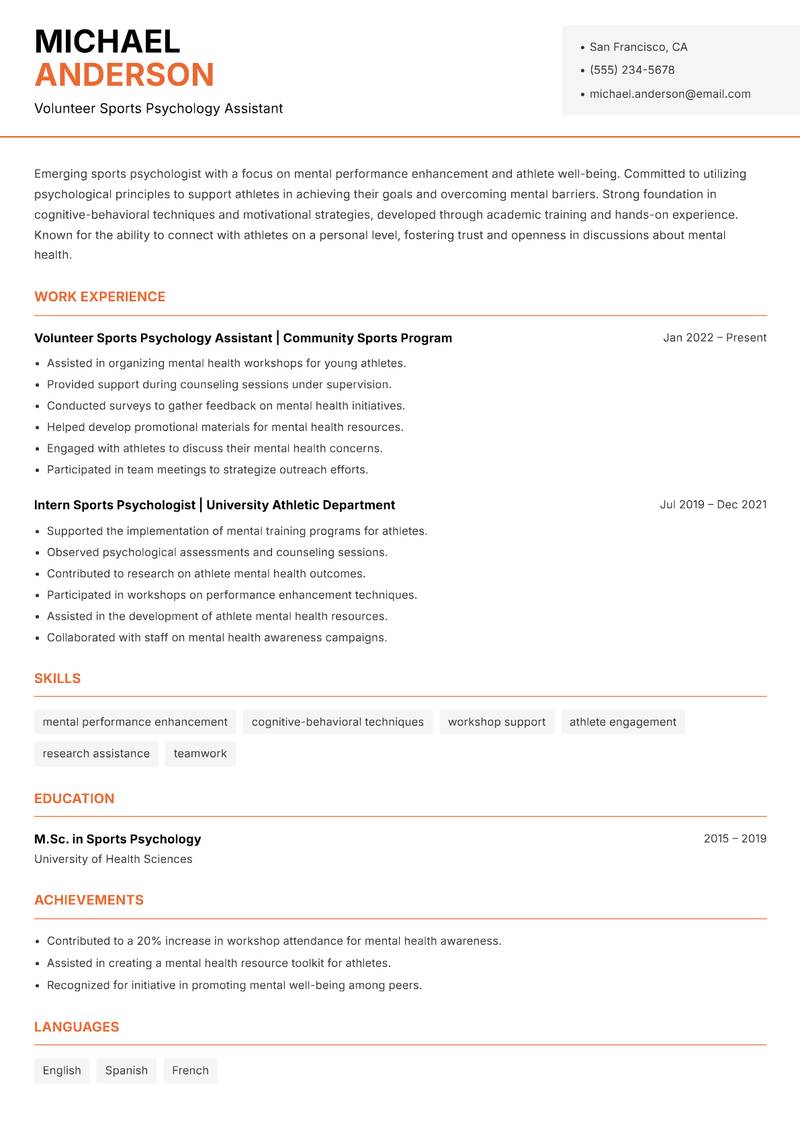
Modern Professional
Use Template7 Real Sports Psychology Scientist Resume Examples
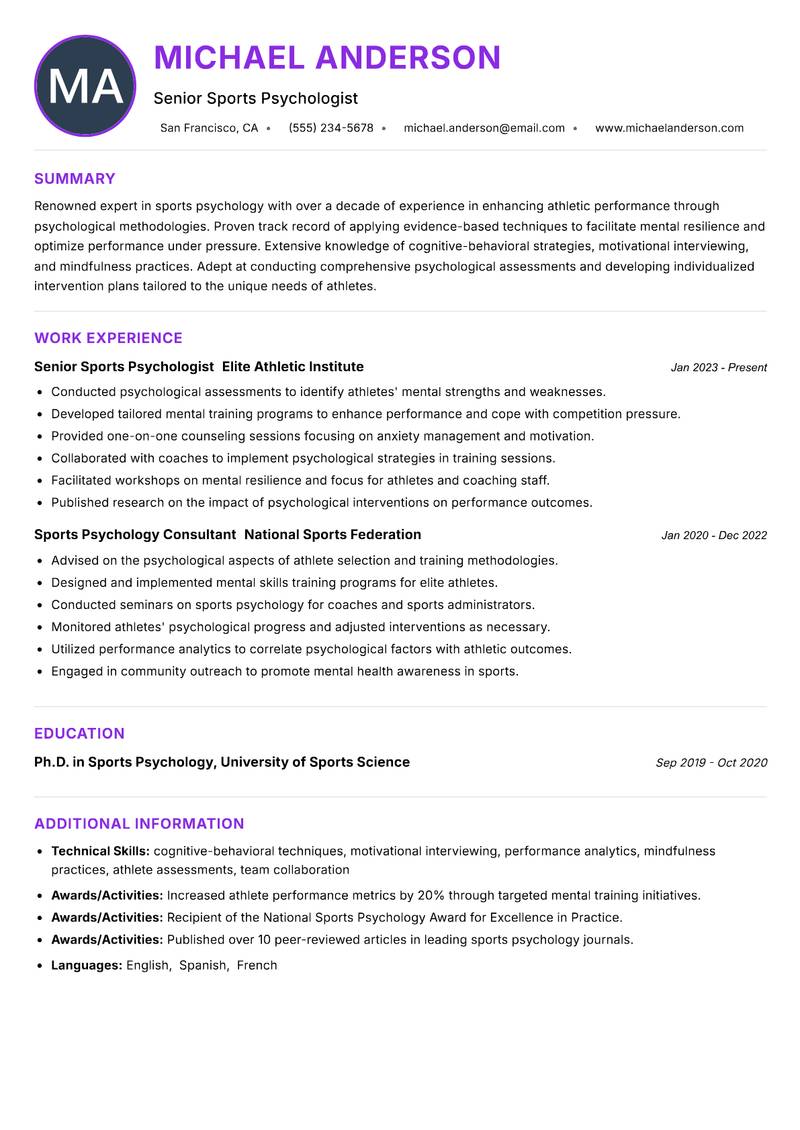
Senior Sports Psychologist with 5+ Years Experience
Summary: Renowned expert in sports psychology with over a decade of experience in enhancing athletic performance through psychological methodologies. Proven track record of applying evidence-based techniques to facilitate mental resilience and optimize performance under pressure. Extensive knowledge of cognitive-behavioral strategies, motivational interviewing, and mindfulness practices. Adept at conducting comprehensive psychological assessments and developing individualized intervention plans tailored to the unique needs of athletes. Strong background in collaborating with coaching staff to integrate psychological principles into training regimens, fostering a holistic approach to athlete development. Committed to advancing the field of sports psychology through ongoing research and professional development, ensuring the application of the latest findings in practice. Demonstrated ability to engage effectively with diverse populations, enhancing both individual and team performance in competitive environments.
Description:
- Conducted psychological assessments to identify athletes' mental strengths and weaknesses.
- Developed tailored mental training programs to enhance performance and cope with competition pressure.
- Provided one-on-one counseling sessions focusing on anxiety management and motivation.
- Collaborated with coaches to implement psychological strategies in training sessions.
- Facilitated workshops on mental resilience and focus for athletes and coaching staff.
- Published research on the impact of psychological interventions on performance outcomes.
🏆 Key Achievements
Lead Sports Psychologist with 4+ Years Experience
Summary: Distinguished sports psychology professional with a robust background in enhancing mental performance for high-level athletes. Expertise encompasses a wide array of psychological strategies aimed at fostering peak performance and mental well-being. Recognized for the ability to synthesize complex psychological theories into practical applications that resonate with athletes. Extensive experience in conducting workshops and seminars that educate athletes on the psychological aspects of competitive sports. Proven success in developing programs that not only address performance issues but also promote overall mental health. Exceptional communication skills, facilitating effective collaboration with coaches, athletes, and medical staff. Passionate advocate for the integration of mental health resources within athletic programs to support athlete development holistically.
Description:
- Implemented comprehensive mental training programs for youth athletes.
- Conducted group workshops focusing on team dynamics and cohesion.
- Evaluated athletes' psychological profiles to tailor interventions.
- Trained coaching staff on the psychological aspects of athlete management.
- Developed resources and toolkits for athletes to enhance self-regulation skills.
- Led research initiatives on the efficacy of mental training in youth sports.
🏆 Key Achievements
Sports Psychology Specialist with 3+ Years Experience
Summary: Highly skilled sports psychologist with a specialization in performance enhancement and mental health management in competitive sports. Expertise in developing innovative psychological strategies that address both the mental and emotional needs of athletes. Recognized for the ability to create supportive environments that foster resilience, focus, and motivation. Extensive experience in collaborating with coaches, trainers, and sports medicine professionals to integrate psychological principles into training regimens. Proven success in utilizing psychological assessments to guide intervention strategies and measure outcomes. Committed to continuous professional development and staying abreast of the latest research in sports psychology. Passionate about promoting a culture of mental well-being within athletic organizations.
Description:
- Conducted psychological evaluations to inform training and competition strategies.
- Developed individualized mental training programs for Olympic athletes.
- Provided ongoing psychological support during training camps and competitions.
- Facilitated training sessions focused on mental toughness and focus.
- Collaborated with nutritionists and trainers to provide holistic athlete support.
- Monitored athlete progress and adjusted mental training protocols as needed.
🏆 Key Achievements
Sports Psychology Advisor with 2+ Years Experience
Summary: Accomplished sports psychologist with extensive experience in applying psychological principles to enhance athletic performance and mental resilience. Specializes in cognitive-behavioral techniques and personalized mental training strategies that cater to individual athlete needs. Proven ability to foster strong relationships with athletes, providing a safe space for personal and professional growth. Highly adept at conducting workshops and seminars that educate athletes on the psychological aspects of competition. Strong advocate for integrating mental health practices into athletic training programs, emphasizing the importance of psychological well-being for optimal performance. Committed to leveraging research and evidence-based practices to continuously improve athlete outcomes. Recognized for contributions to the field through published works and conference presentations.
Description:
- Developed and implemented mental health programs for athletes at all levels.
- Provided individual counseling and support for athletes facing mental health challenges.
- Conducted educational workshops on resilience and performance enhancement.
- Collaborated with coaches to create supportive training environments.
- Evaluated the effectiveness of mental health interventions through athlete feedback.
- Engaged with stakeholders to promote mental health awareness in sports.
🏆 Key Achievements
Performance Psychologist with 1+ Years Experience
Summary: Innovative sports psychologist with a focus on the intersection of performance enhancement and mental well-being. Possesses a unique blend of practical experience and academic knowledge, enabling the development of effective strategies tailored to athletes’ specific psychological needs. Strong proponent of evidence-based practices, employing a variety of psychological techniques to foster resilience, focus, and motivation among athletes. Demonstrated success in creating workshops that engage athletes and promote mental health awareness. Adept at building trust and rapport with clients, facilitating open discussions about mental health challenges. Committed to ongoing professional development and contributing to the field through research and community outreach. Recognized for implementing successful mental training programs that have significantly improved athlete performance.
Description:
- Developed and executed mental training programs for competitive athletes.
- Conducted group sessions to enhance team cohesion and communication.
- Utilized psychological assessments to inform training modifications.
- Provided individual counseling focusing on performance anxiety and motivation.
- Collaborated with coaching staff to integrate mental skills training into practice.
- Facilitated community workshops to raise awareness about mental health in sports.
🏆 Key Achievements
Assistant Sports Psychologist
Summary: Dedicated sports psychologist with a passion for enhancing the mental aspects of athletic performance. Experienced in employing a range of psychological strategies to support athletes in achieving their personal best. Expertise includes cognitive-behavioral techniques, stress management, and motivational strategies tailored to individual needs. Strong communicator and collaborator, effectively working with athletes and coaching staff to foster a supportive environment. Committed to promoting mental health awareness and integrating psychological resources into athletic training programs. Recognized for the ability to create engaging workshops that empower athletes to take charge of their mental well-being. Continuously seeking opportunities for professional growth and contributing to the field through research and practice.
Description:
- Supported the development and implementation of mental training programs.
- Conducted individual and group counseling sessions for athletes.
- Facilitated workshops on stress management and performance enhancement.
- Collaborated with coaches to promote mental health resources.
- Monitored athlete progress and provided feedback on psychological strategies.
- Participated in community outreach to raise awareness of mental health in sports.
🏆 Key Achievements
Volunteer Sports Psychology Assistant
Summary: Emerging sports psychologist with a focus on mental performance enhancement and athlete well-being. Committed to utilizing psychological principles to support athletes in achieving their goals and overcoming mental barriers. Strong foundation in cognitive-behavioral techniques and motivational strategies, developed through academic training and hands-on experience. Known for the ability to connect with athletes on a personal level, fostering trust and openness in discussions about mental health. Eager to contribute to the field through innovative practices and research initiatives. Recognized for a proactive approach to mental health awareness in sports environments. Aiming to leverage skills in a dynamic setting that prioritizes athlete development and psychological support.
Description:
- Assisted in organizing mental health workshops for young athletes.
- Provided support during counseling sessions under supervision.
- Conducted surveys to gather feedback on mental health initiatives.
- Helped develop promotional materials for mental health resources.
- Engaged with athletes to discuss their mental health concerns.
- Participated in team meetings to strategize outreach efforts.
🏆 Key Achievements
Key Skills for Sports Psychology Scientist
ATS Optimization Tips
Increase your chances of getting hired
Use Standard Headings
Use common section titles like Experience, Skills, etc.
Include Keywords
Add role-specific keywords from the job description
Keep it Simple
Avoid complex tables, images and graphics
Save in Right Format
Use PDF format unless otherwise specified
Sports Psychology Scientist Salary Insights
Average Salary
$95,000
per year
Salary Range
$70,000 - $120,000
per year
Top Paying Cities
Los Angeles, Seattle, Houston, Dallas, Boston
Source: Glassdoor, Payscale, Indeed (Updated May 2026)
Everything you need to write a great Sports Psychology Scientist resume
Strong Action Verbs to Use
Resume Writing Tips
- →Highlight specific interventions or programs developed for athletes.
- →Emphasize collaborative projects with athletic teams or organizations.
- →Detail experience with specific assessment tools used in sports psychology.
- →Include metrics or outcomes from your previous work to showcase impact.
- →Mention contributions to publications or presentations in the field.
Common Mistakes to Avoid
- ✕Listing generic skills without demonstrating how they apply to sports psychology.
- ✕Failing to mention specific sports-related experiences or knowledge.
- ✕Using vague language instead of concrete examples of past work.
- ✕Neglecting to highlight certifications that are particularly relevant to sports.
ATS Keywords for Sports Psychology Scientist
Sports Psychology Scientist Career Path
Relevant Certifications
Career Progression
Entry-Level Sports Psychology Researcher
Focuses on assisting with data collection, participant recruitment, and preliminary analysis, often in academic or clinical settings.
Sports Psychology Consultant
Works directly with athletes or teams, providing strategies for mental performance enhancement and psychological resilience.
Senior Sports Psychology Scientist
Leads research projects, develops interventions, and collaborates with coaching staff to integrate psychological findings into training regimes.
Director of Sports Performance Psychology
Oversees a team of psychologists, specializes in program development for varied sports organizations, and drives strategic initiatives for athlete well-being.
Chief Sports Psychologist
Sets the strategic vision for sports psychology within an organization, ensuring best practices across programs aimed at improving mental health and performance.
Sports Psychology Scientist Interview Questions
Can you describe a specific instance where you helped an athlete overcome a mental block? +
Provide an example that highlights your methodology and the results achieved.
What psychological theories do you apply when working with athletes under pressure? +
Discuss theories that are particularly relevant to sports performance.
How do you assess the mental health of athletes effectively? +
Mention tools, techniques, or frameworks you utilize for evaluations.
How do you integrate research findings into practical applications for athletes? +
Give examples of how research has informed your practice.
What is your approach to collaborating with coaches and sports staff? +
Explore ways you've partnered with non-psychology professionals in sports.
How do you tailor your strategies for different sports disciplines? +
Discuss specific adaptations you've made based on the sport's demands.
About the Sports Psychology Scientist Role
Combining rigorous research with applied practice, a Sports Psychology Scientist cultivates mental strategies tailored to enhance athlete performance. Through the development and implementation of evidence-based programs, they address issues such as competition anxiety and motivation. Expertise in measurement tools and data interpretation allows them to provide personalized insights that inform training methodologies and athlete support systems.
Frequently Asked Questions
What educational background is required for a Sports Psychology Scientist? +
Typically, a Doctorate in Psychology or Sports Science, with a concentration in psychology, is required, along with specialized training in sports contexts.
How do Sports Psychology Scientists differ from sports coaches? +
Sports Psychology Scientists focus on the mental and emotional aspects of performance, while coaches usually concentrate on physical training and tactical skill development.
What research methods do Sports Psychology Scientists employ? +
They often utilize mixed methods, incorporating quantitative data analysis and qualitative interviews to assess athlete behavior and performance.
Is clinical experience required to work as a Sports Psychology Scientist? +
While not always required, clinical experience can be beneficial for applying psychological principles to real-world athlete scenarios.
What role do Sports Psychology Scientists play in injury recovery? +
They assist athletes in mental preparedness, coping strategies, and maintaining motivation during recovery processes.
Can Sports Psychology Scientists work independently? +
Yes, many Sports Psychology Scientists operate as consultants to sports teams and organizations or offer private practice to athletes.
More Resume Examples You Might Like
Related Career Paths
Other roles candidates for Sports Psychology Scientist positions often also consider.
Will this Sports Psychology Scientist resume pass the ATS scan?
Upload it and get an instant AI-scored compatibility check with specific fixes.
Check My Resume →
Pair it with a matching cover letter
AI drafts a first version from your job title and strengths — edit it live, then download the PDF.
Write My Cover Letter →
Written by Nohaya Career Team
Reviewed by HR Professionals · Updated May 2026
Ready to Build Your Perfect Resume?
Choose from 1000+ professional templates and land your dream job.
Create My Resume Now