Build an ATS-Friendly
Seismic Engineer Resume
That Gets Interviews
Creating sustainable structures that can withstand the unpredictable forces of an earthquake, a Seismic Engineer employs advanced analytical techniques and tools. They apply their expertise to address both the theoretical and practical aspects of seismic performance, ensuring that buildings and bridges not only meet…
Seismic Engineer Resume Templates
Modern Professional
Use Template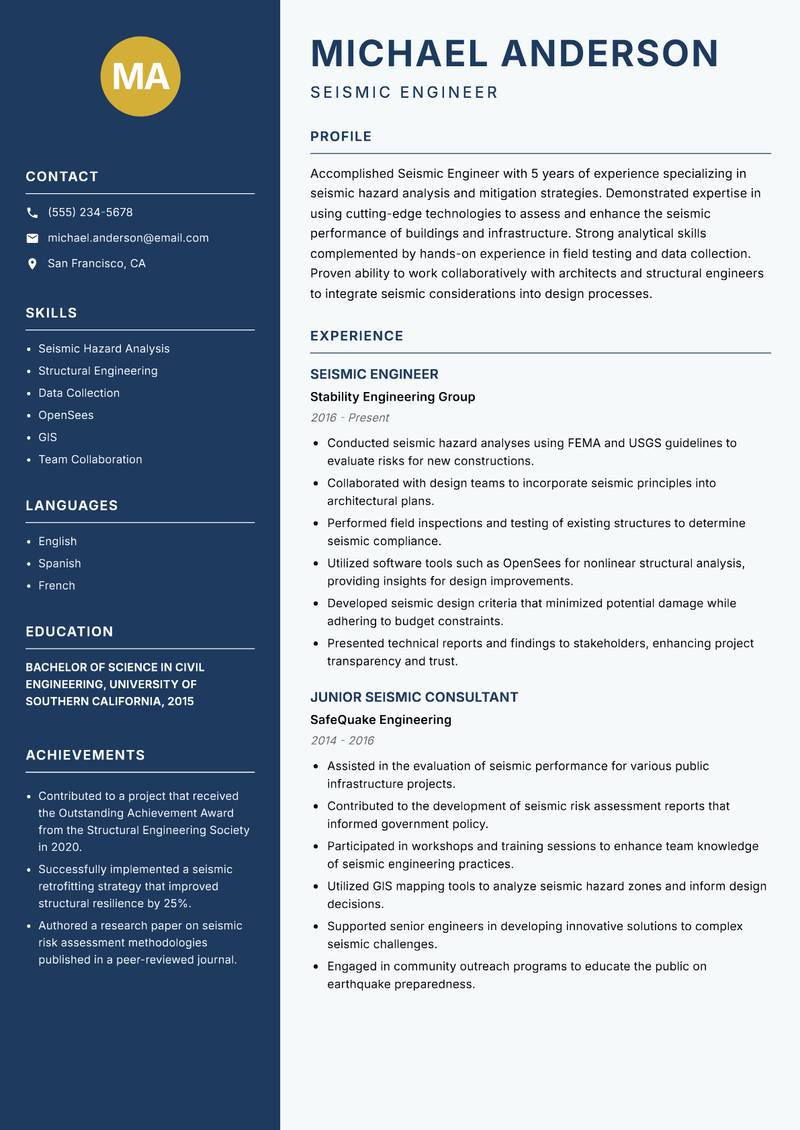
Classic Clean
Use Template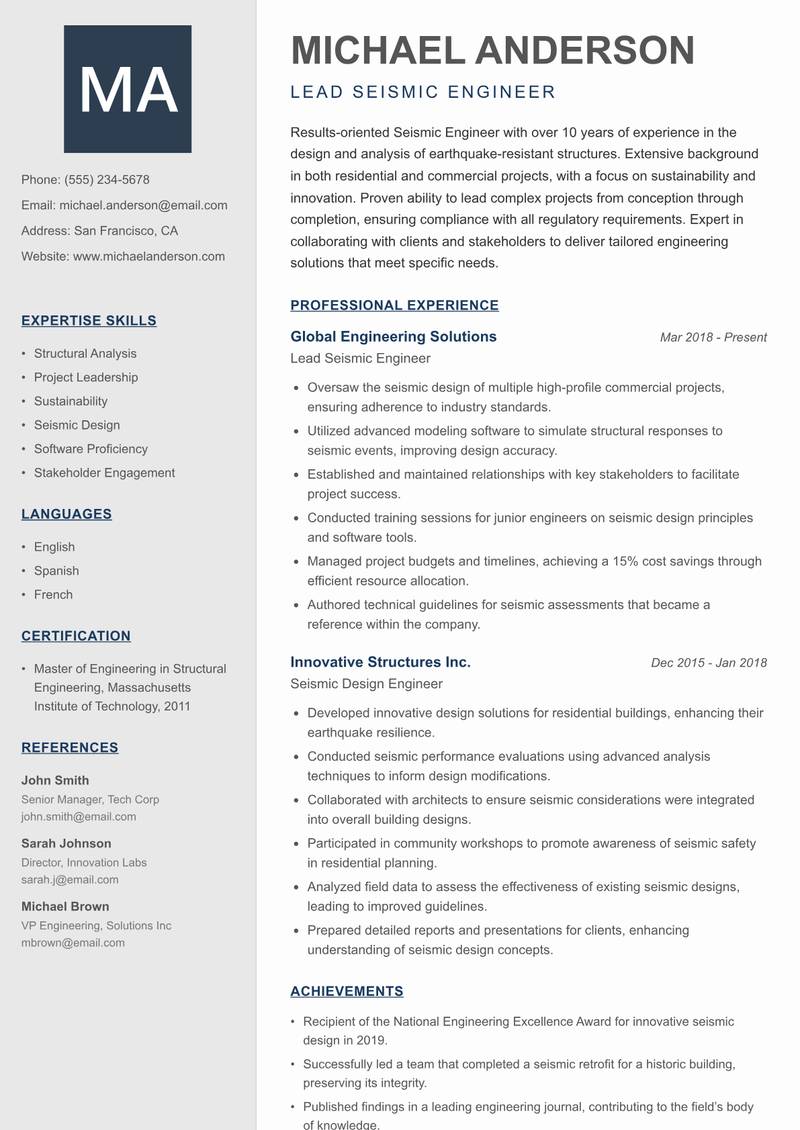
Creative Minimal
Use Template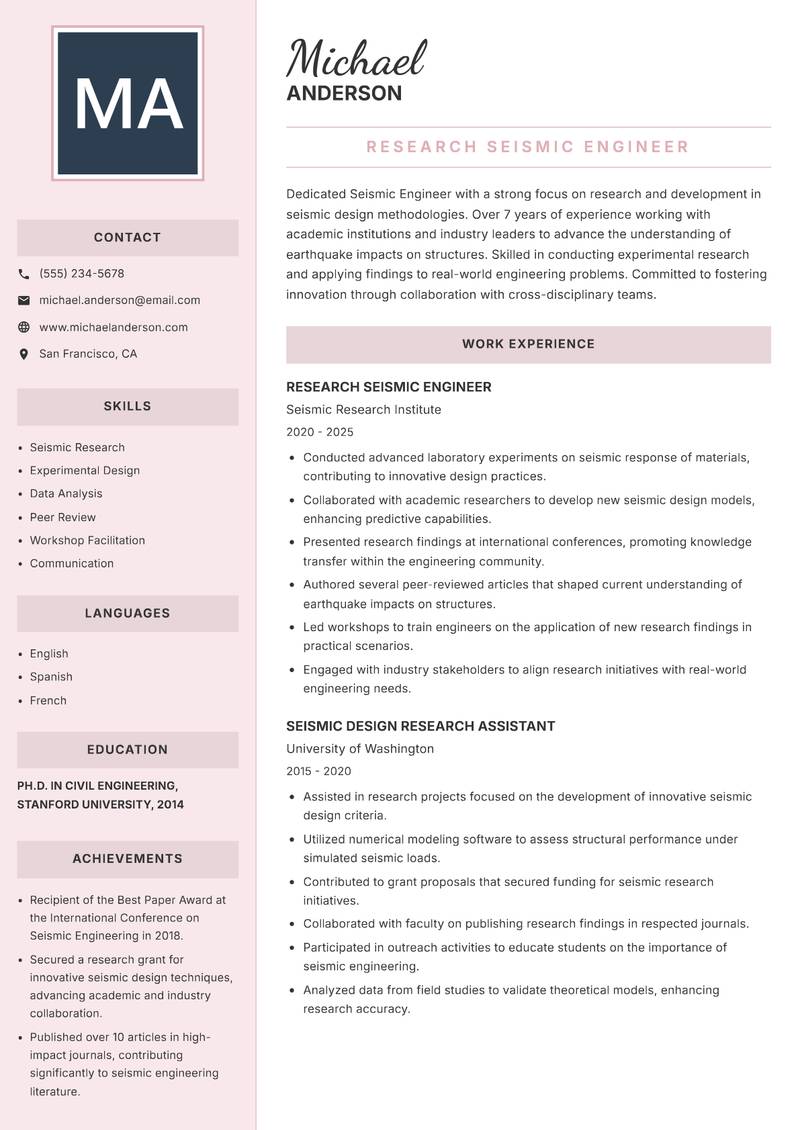
Executive
Use Template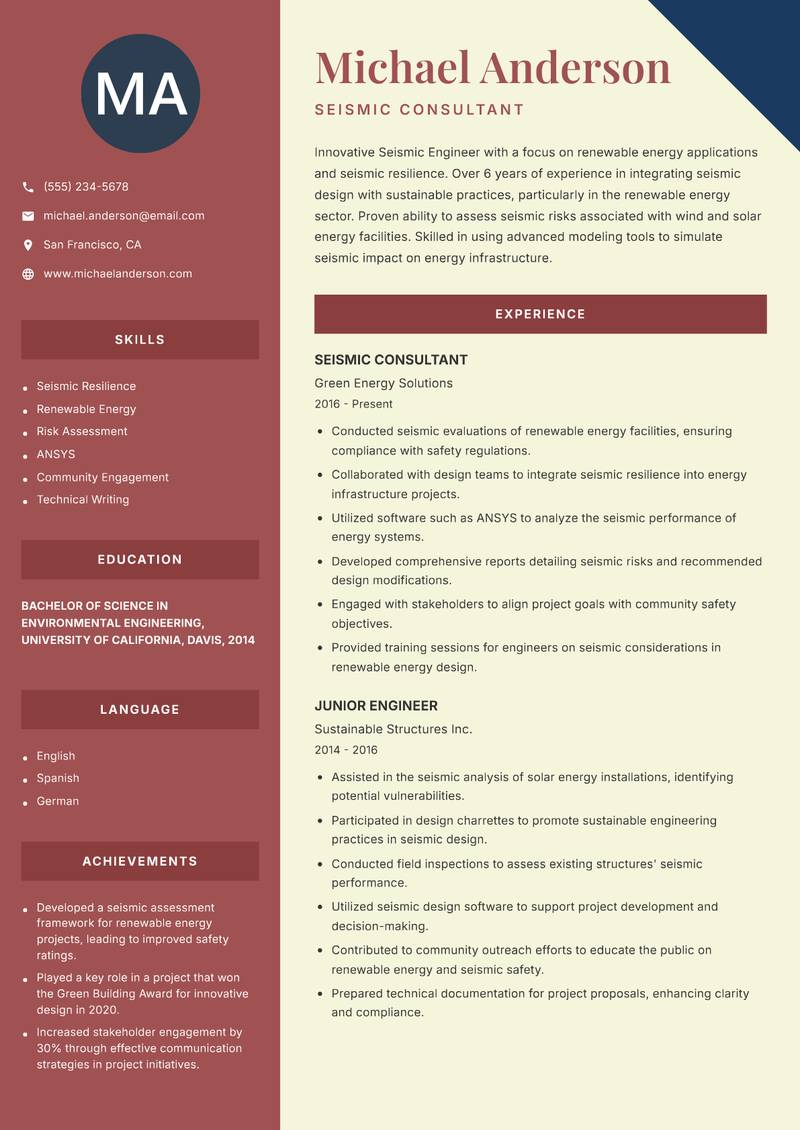
Two Column
Use Template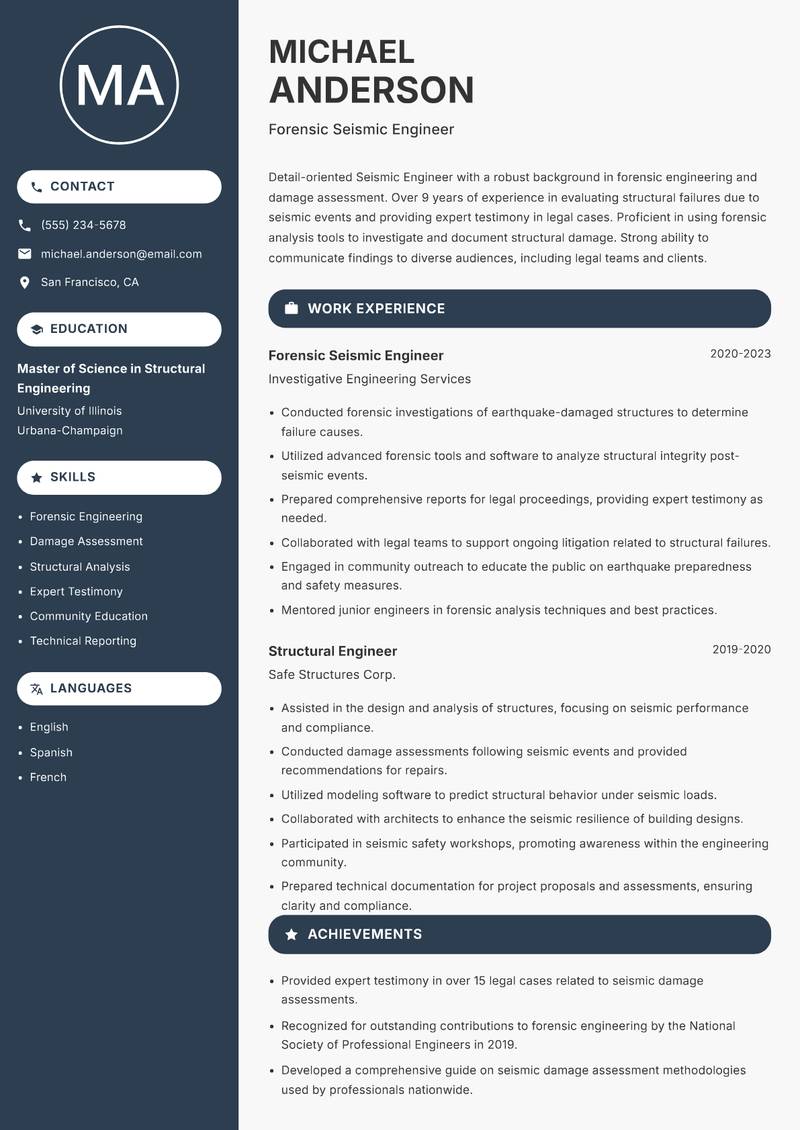
Compact
Use Template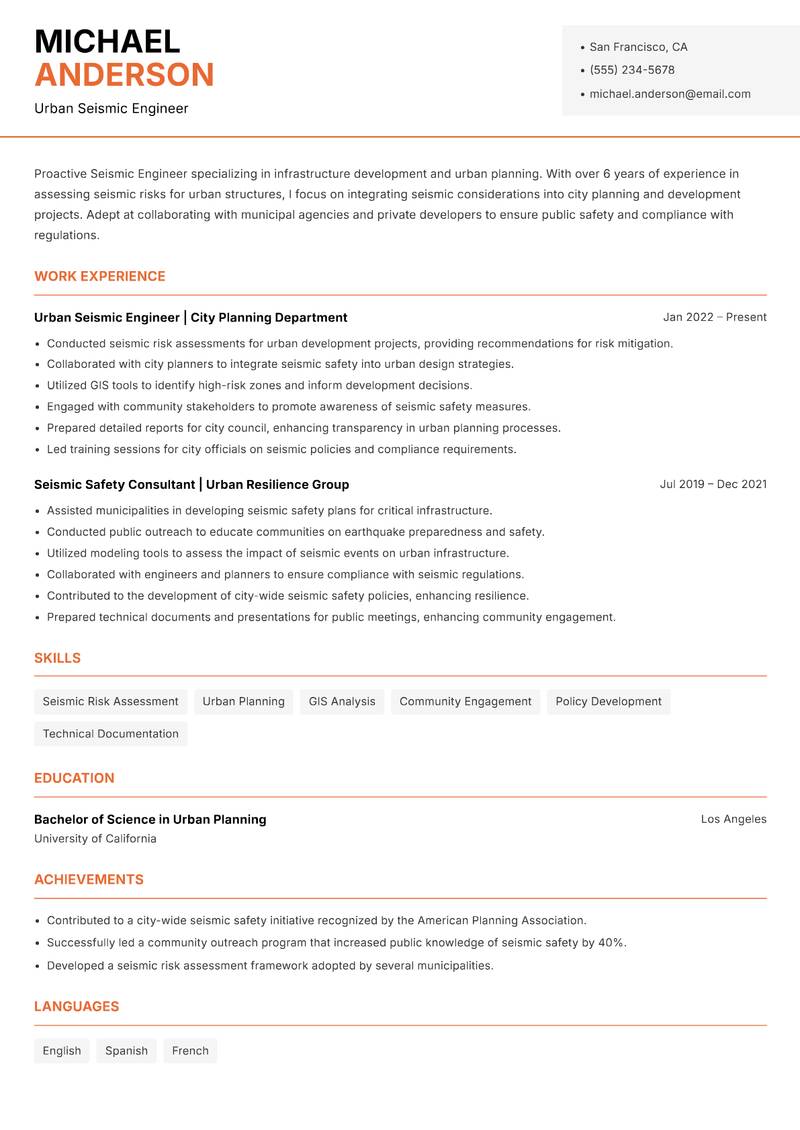
Modern Professional
Use Template7 Real Seismic Engineer Resume Examples
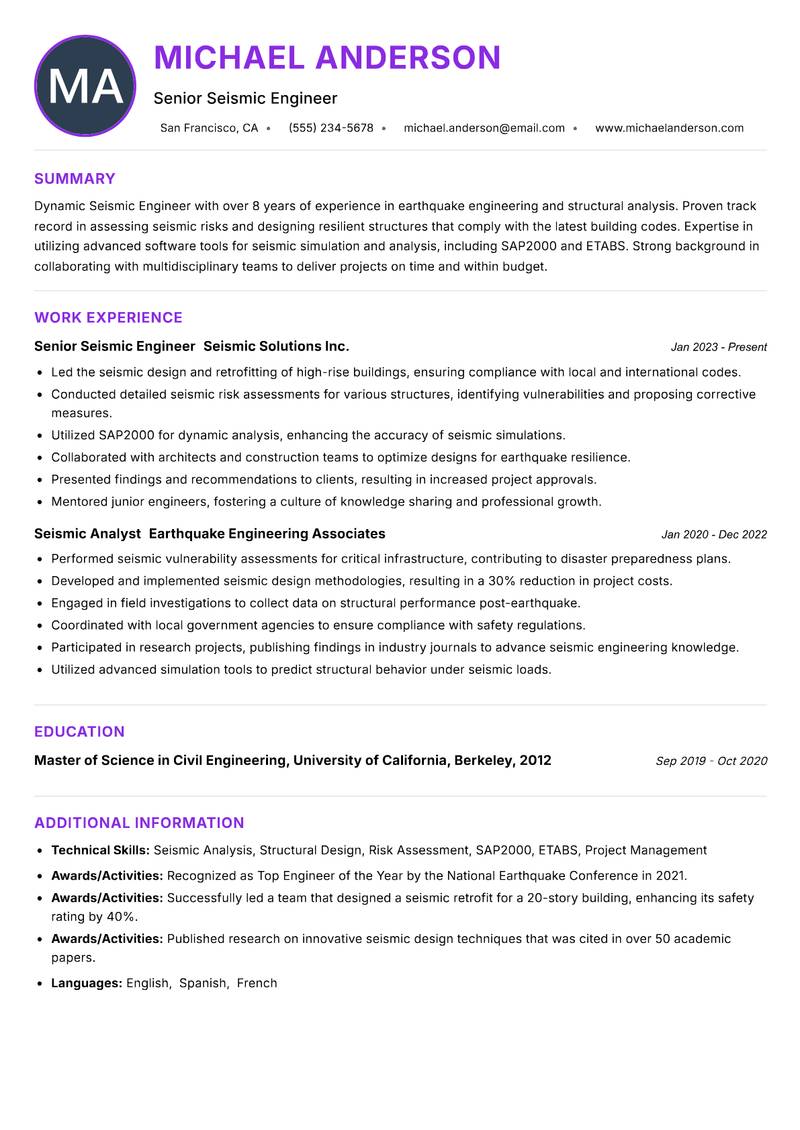
Senior Seismic Engineer with 8+ Years Experience
Summary: Dynamic Seismic Engineer with over 8 years of experience in earthquake engineering and structural analysis. Proven track record in assessing seismic risks and designing resilient structures that comply with the latest building codes. Expertise in utilizing advanced software tools for seismic simulation and analysis, including SAP2000 and ETABS. Strong background in collaborating with multidisciplinary teams to deliver projects on time and within budget. Adept at conducting field investigations and preparing comprehensive reports to support project goals. Committed to continuous professional development and staying updated with emerging technologies and methodologies in seismic engineering.
Description:
- Led the seismic design and retrofitting of high-rise buildings, ensuring compliance with local and international codes.
- Conducted detailed seismic risk assessments for various structures, identifying vulnerabilities and proposing corrective measures.
- Utilized SAP2000 for dynamic analysis, enhancing the accuracy of seismic simulations.
- Collaborated with architects and construction teams to optimize designs for earthquake resilience.
- Presented findings and recommendations to clients, resulting in increased project approvals.
- Mentored junior engineers, fostering a culture of knowledge sharing and professional growth.
🏆 Key Achievements
Seismic Engineer with 5+ Years Experience
Summary: Accomplished Seismic Engineer with 5 years of experience specializing in seismic hazard analysis and mitigation strategies. Demonstrated expertise in using cutting-edge technologies to assess and enhance the seismic performance of buildings and infrastructure. Strong analytical skills complemented by hands-on experience in field testing and data collection. Proven ability to work collaboratively with architects and structural engineers to integrate seismic considerations into design processes. Passionate about advancing earthquake-resistant design practices and contributing to community safety through innovative engineering solutions.
Description:
- Conducted seismic hazard analyses using FEMA and USGS guidelines to evaluate risks for new constructions.
- Collaborated with design teams to incorporate seismic principles into architectural plans.
- Performed field inspections and testing of existing structures to determine seismic compliance.
- Utilized software tools such as OpenSees for nonlinear structural analysis, providing insights for design improvements.
- Developed seismic design criteria that minimized potential damage while adhering to budget constraints.
- Presented technical reports and findings to stakeholders, enhancing project transparency and trust.
🏆 Key Achievements
Lead Seismic Engineer with 10+ Years Experience
Summary: Accomplished Seismic Engineer with over 10 years of experience in the design and analysis of earthquake-resistant structures. Extensive background in both residential and commercial projects, with a focus on sustainability and innovation. Proven ability to lead complex projects from conception through completion, ensuring compliance with all regulatory requirements. Expert in collaborating with clients and stakeholders to deliver tailored engineering solutions that meet specific needs. Dedicated to ongoing professional development and contributing to advancements in seismic engineering practices.
Description:
- Oversaw the seismic design of multiple high-profile commercial projects, ensuring adherence to industry standards.
- Utilized advanced modeling software to simulate structural responses to seismic events, improving design accuracy.
- Established and maintained relationships with key stakeholders to facilitate project success.
- Conducted training sessions for junior engineers on seismic design principles and software tools.
- Managed project budgets and timelines, achieving a 15% cost savings through efficient resource allocation.
- Authored technical guidelines for seismic assessments that became a reference within the company.
🏆 Key Achievements
Research Seismic Engineer with 7+ Years Experience
Summary: Dedicated Seismic Engineer with a strong focus on research and development in seismic design methodologies. Over 7 years of experience working with academic institutions and industry leaders to advance the understanding of earthquake impacts on structures. Skilled in conducting experimental research and applying findings to real-world engineering problems. Committed to fostering innovation through collaboration with cross-disciplinary teams. Strong communication skills, enabling effective dissemination of complex engineering concepts to diverse audiences.
Description:
- Conducted advanced laboratory experiments on seismic response of materials, contributing to innovative design practices.
- Collaborated with academic researchers to develop new seismic design models, enhancing predictive capabilities.
- Presented research findings at international conferences, promoting knowledge transfer within the engineering community.
- Authored several peer-reviewed articles that shaped current understanding of earthquake impacts on structures.
- Led workshops to train engineers on the application of new research findings in practical scenarios.
- Engaged with industry stakeholders to align research initiatives with real-world engineering needs.
🏆 Key Achievements
Seismic Consultant with 6+ Years Experience
Summary: Innovative Seismic Engineer with a focus on renewable energy applications and seismic resilience. Over 6 years of experience in integrating seismic design with sustainable practices, particularly in the renewable energy sector. Proven ability to assess seismic risks associated with wind and solar energy facilities. Skilled in using advanced modeling tools to simulate seismic impact on energy infrastructure. Passionate about contributing to the development of resilient energy solutions that meet the challenges of climate change.
Description:
- Conducted seismic evaluations of renewable energy facilities, ensuring compliance with safety regulations.
- Collaborated with design teams to integrate seismic resilience into energy infrastructure projects.
- Utilized software such as ANSYS to analyze the seismic performance of energy systems.
- Developed comprehensive reports detailing seismic risks and recommended design modifications.
- Engaged with stakeholders to align project goals with community safety objectives.
- Provided training sessions for engineers on seismic considerations in renewable energy design.
🏆 Key Achievements
Forensic Seismic Engineer with 9+ Years Experience
Summary: Detail-oriented Seismic Engineer with a robust background in forensic engineering and damage assessment. Over 9 years of experience in evaluating structural failures due to seismic events and providing expert testimony in legal cases. Proficient in using forensic analysis tools to investigate and document structural damage. Strong ability to communicate findings to diverse audiences, including legal teams and clients. Committed to enhancing public safety through thorough investigations and detailed reporting.
Description:
- Conducted forensic investigations of earthquake-damaged structures to determine failure causes.
- Utilized advanced forensic tools and software to analyze structural integrity post-seismic events.
- Prepared comprehensive reports for legal proceedings, providing expert testimony as needed.
- Collaborated with legal teams to support ongoing litigation related to structural failures.
- Engaged in community outreach to educate the public on earthquake preparedness and safety measures.
- Mentored junior engineers in forensic analysis techniques and best practices.
🏆 Key Achievements
Urban Seismic Engineer with 6+ Years Experience
Summary: Driven Seismic Engineer specializing in infrastructure development and urban planning. With over 6 years of experience in assessing seismic risks for urban structures, I focus on integrating seismic considerations into city planning and development projects. Adept at collaborating with municipal agencies and private developers to ensure public safety and compliance with regulations. Strong analytical skills and a passion for improving urban resilience against seismic events. Committed to fostering sustainable development practices that enhance community safety.
Description:
- Conducted seismic risk assessments for urban development projects, providing recommendations for risk mitigation.
- Collaborated with city planners to integrate seismic safety into urban design strategies.
- Utilized GIS tools to identify high-risk zones and inform development decisions.
- Engaged with community stakeholders to promote awareness of seismic safety measures.
- Prepared detailed reports for city council, enhancing transparency in urban planning processes.
- Led training sessions for city officials on seismic policies and compliance requirements.
🏆 Key Achievements
Key Skills for Seismic Engineer
ATS Optimization Tips
Increase your chances of getting hired
Use Standard Headings
Use common section titles like Experience, Skills, etc.
Include Keywords
Add role-specific keywords from the job description
Keep it Simple
Avoid complex tables, images and graphics
Save in Right Format
Use PDF format unless otherwise specified
Seismic Engineer Salary Insights
Average Salary
$100,000
per year
Salary Range
$70,000 - $130,000
per year
Top Paying Cities
Los Angeles, Seattle, Houston, Dallas, Boston
Source: Glassdoor, Payscale, Indeed (Updated June 2025)
Everything you need to write a great Seismic Engineer resume
Strong Action Verbs to Use
Resume Writing Tips
- →Showcase any experience with seismic retrofitting projects, emphasizing specific techniques used.
- →Include software proficiency, particularly in modeling tools relevant to seismic analysis.
- →Highlight teamwork roles in interdisciplinary projects to demonstrate your collaborative skills.
- →Detail any unique personal contributions to projects, like innovative design solutions or risk assessment methodologies.
- →Tailor your summary statement to reflect a passion for earthquake resilience and public safety.
Common Mistakes to Avoid
- ✕Presenting vague project experience without detailing specific achievements or roles.
- ✕Ignoring the incorporation of seismic design standards and principles in the resume.
- ✕Using generic job titles that might not reflect your specialization in seismic engineering.
- ✕Failing to quantify your impact on projects, such as improvements made by your designs.
ATS Keywords for Seismic Engineer
Seismic Engineer Career Path
Relevant Certifications
Career Progression
Junior Seismic Engineer
Assists senior engineers in evaluating designs for seismic resilience and performs basic analysis with supervision.
Seismic Engineer
Conducts detailed seismic assessments of buildings and bridges, developing models to predict behavior during earthquakes.
Senior Seismic Engineer
Leads complex projects, mentoring junior staff and ensuring compliance with safety regulations and building codes.
Seismic Project Manager
Oversees seismic engineering projects from concept to completion, managing budgets, timelines, and stakeholder communication.
Director of Seismic Engineering
Sets strategic direction for seismic engineering initiatives within the organization, liaising with government entities and influencing policy.
Seismic Engineer Interview Questions
Can you describe a challenging seismic analysis project you've worked on? +
Highlight specific techniques, tools, and the outcomes you achieved.
How do local building codes influence seismic design in your projects? +
Discuss familiarity with various codes and their applications.
What simulation software are you proficient in for seismic analysis? +
Mention specific software like SAP2000, SeismoStruct, or ABAQUS and provide context.
Describe your approach to risk assessment in seismic engineering. How do you prioritize risk factors? +
Focus on your methodology for identifying and quantifying potential risks.
How do you ensure that your designs comply with both safety and performance standards? +
Discuss your knowledge of standards and how you implement them.
What steps do you take to stay updated with advancements in seismic engineering? +
Mention relevant publications, associations, or educational opportunities.
Explain your experience with interdisciplinary teams in the context of seismic projects. +
Provide examples of collaboration, communication strategies, and project integration.
About the Seismic Engineer Role
Creating sustainable structures that can withstand the unpredictable forces of an earthquake, a Seismic Engineer employs advanced analytical techniques and tools. They apply their expertise to address both the theoretical and practical aspects of seismic performance, ensuring that buildings and bridges not only meet regulatory requirements but also prioritize public safety in quake-prone areas. Collaboration with architects and construction teams is crucial, as these engineers provide essential insights into material selection, design adjustments, and recommended best practices for seismic resilience.
Frequently Asked Questions
View all →What skills are essential for a successful Seismic Engineer? +
Critical thinking, analytical skills, strong knowledge of structural dynamics, and proficiency in modeling software are essential.
Is a Master's degree necessary to become a Seismic Engineer? +
While not strictly required, a Master's degree can enhance job prospects and provide deeper knowledge in seismic analysis.
How important is certified training in seismic engineering? +
Certifications can demonstrate your commitment to the field and expertise in specific areas, making you more competitive.
What industries employ Seismic Engineers? +
Seismic Engineers find roles in construction, government agencies, research institutions, and private consulting firms.
What are common design considerations in seismic engineering? +
Load paths, shear walls, and ductility of materials are key design parameters that influence structural integrity during an earthquake.
How do Seismic Engineers collaborate with other professionals? +
Effective communication with architects, project managers, and environmental engineers ensures seamless integration of seismic considerations into designs.
What are the main challenges faced by Seismic Engineers today? +
Keeping up with evolving regulations, technological advancements, and the increasing impact of climate change on seismic activity.
More Resume Examples You Might Like
Related Career Paths
Other roles candidates for Seismic Engineer positions often also consider.
Will this Seismic Engineer resume pass the ATS scan?
Upload it and get an instant AI-scored compatibility check with specific fixes.
Check My Resume →
Pair it with a matching cover letter
AI drafts a first version from your job title and strengths — edit it live, then download the PDF.
Write My Cover Letter →
Written by Nohaya Career Team
Reviewed by HR Professionals · Updated June 2025
Ready to Build Your Perfect Resume?
Choose from 1000+ professional templates and land your dream job.
Create My Resume Now