Build an ATS-Friendly
Recirculating Aquaculture Systems Engineer Resume
That Gets Interviews
This position centers on the innovative design and implementation of recirculating aquaculture systems (RAS), which are essential in sustainable fish farming practices. Responsibilities include rigorous analysis of system efficiency, water quality, and species-specific needs to enhance productivity while minimizing…
Recirculating Aquaculture Systems Engineer Resume Templates
Modern Professional
Use Template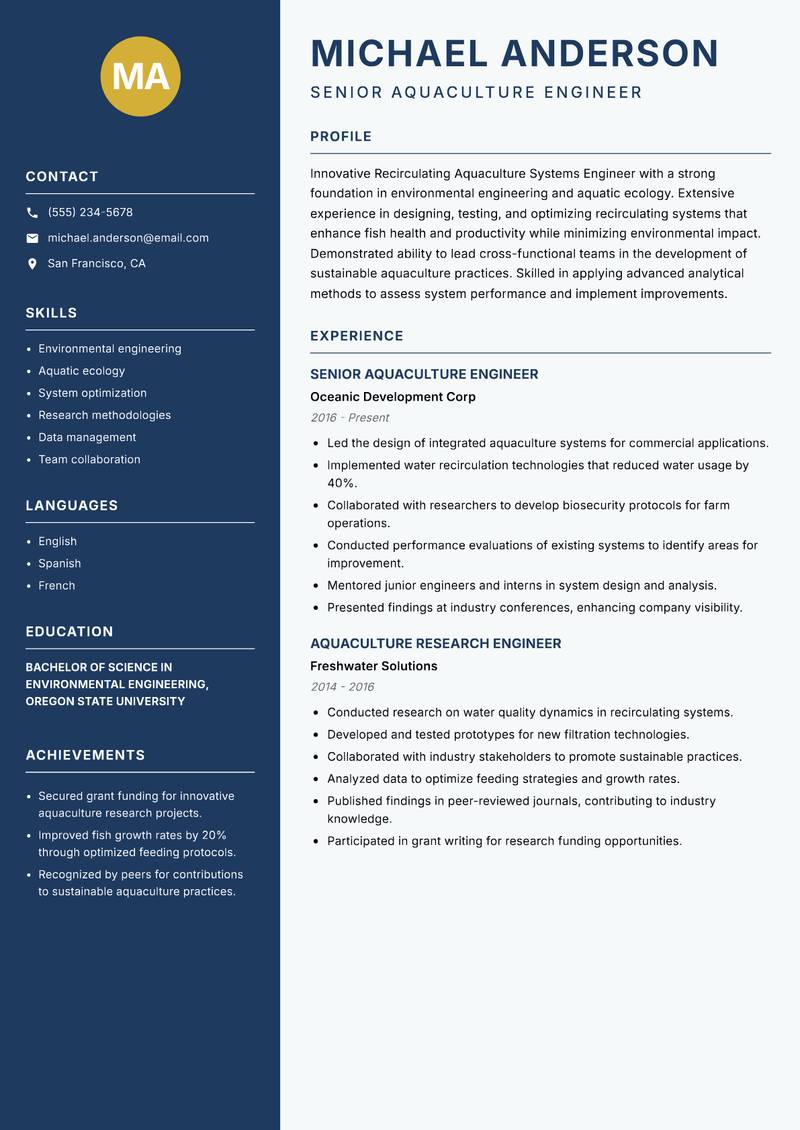
Classic Clean
Use Template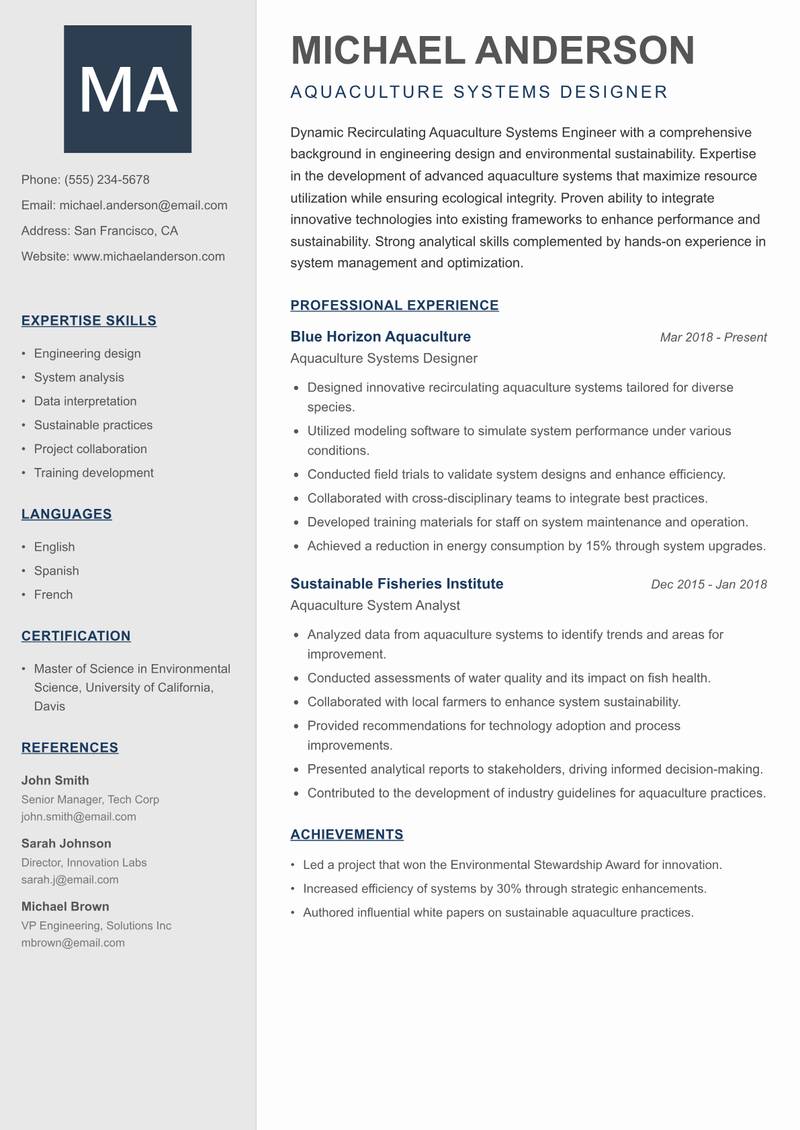
Creative Minimal
Use Template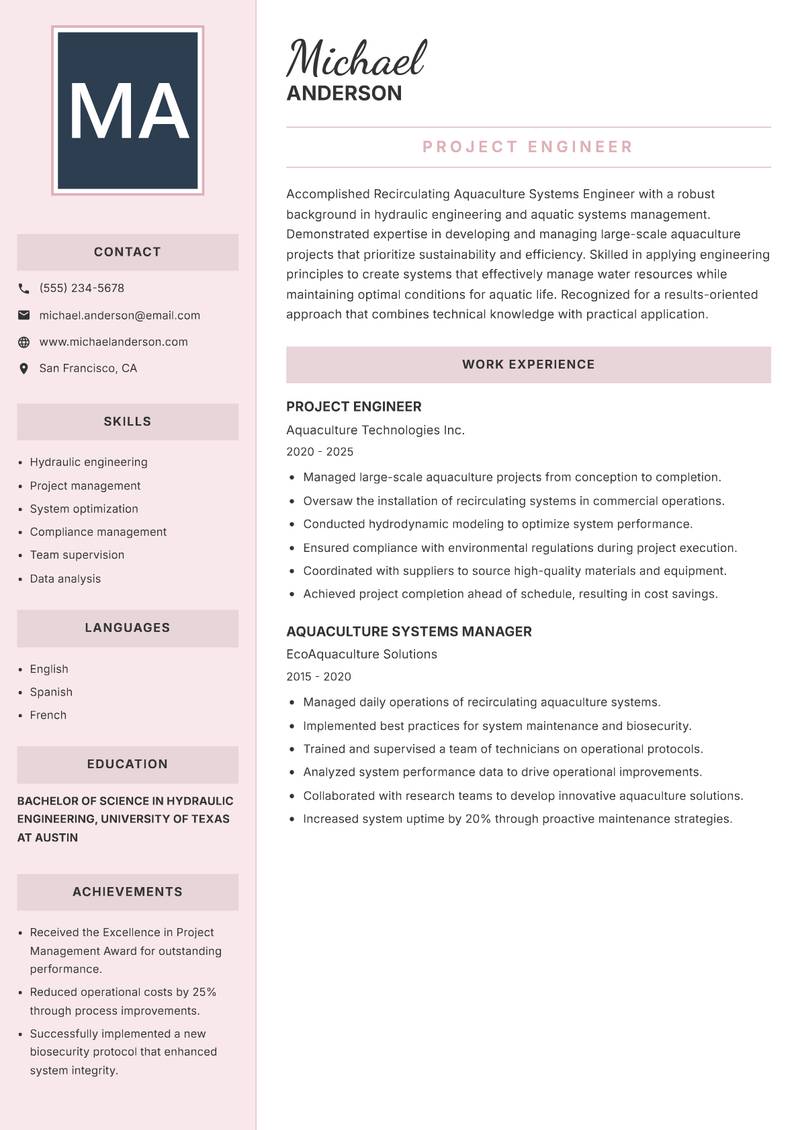
Executive
Use Template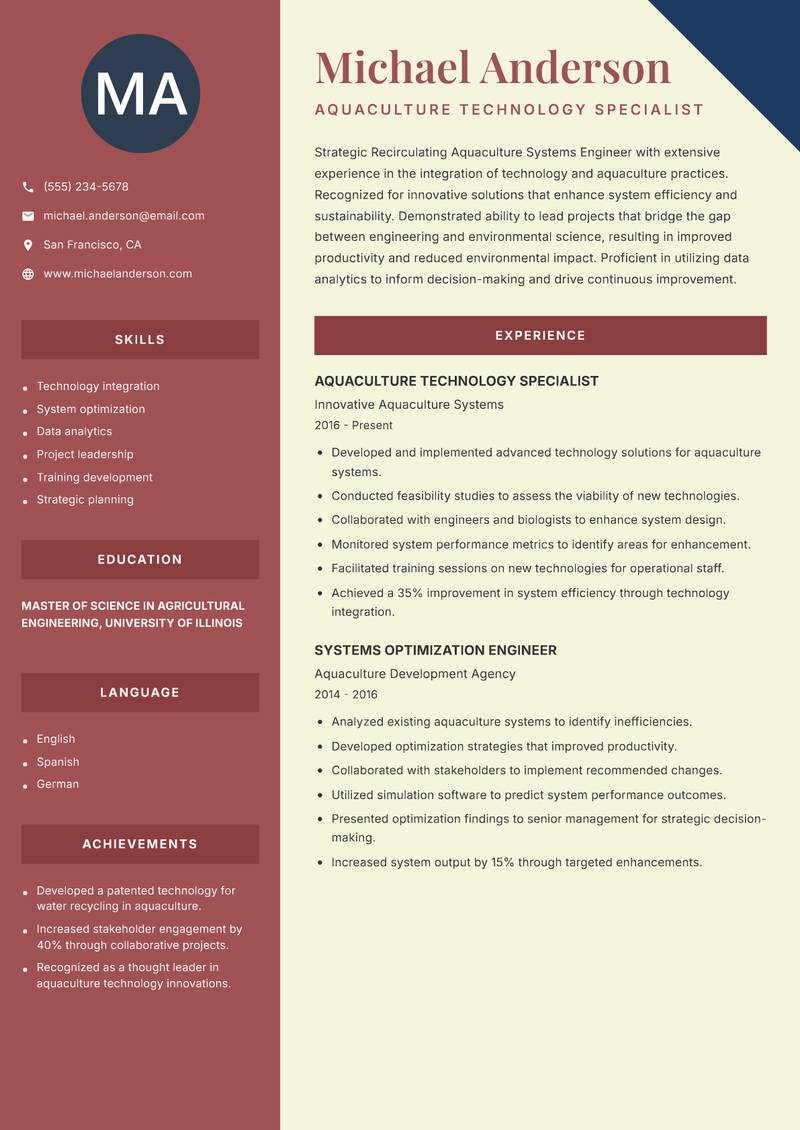
Two Column
Use Template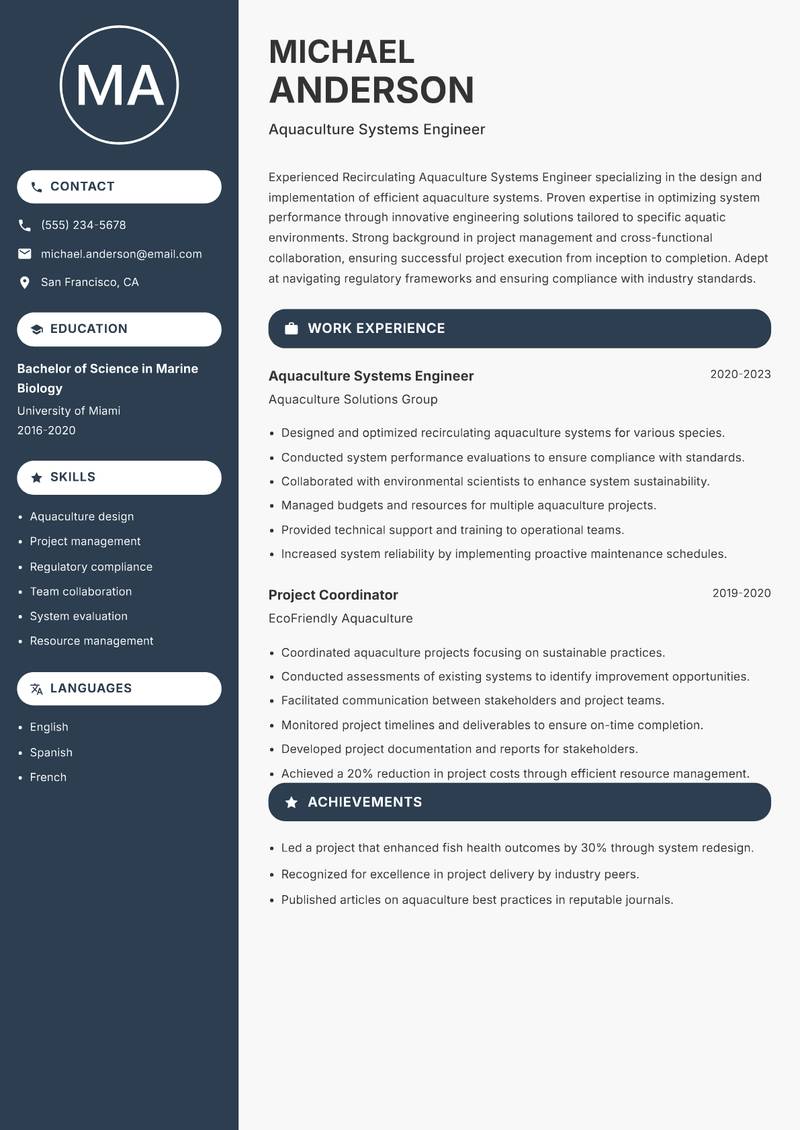
Compact
Use Template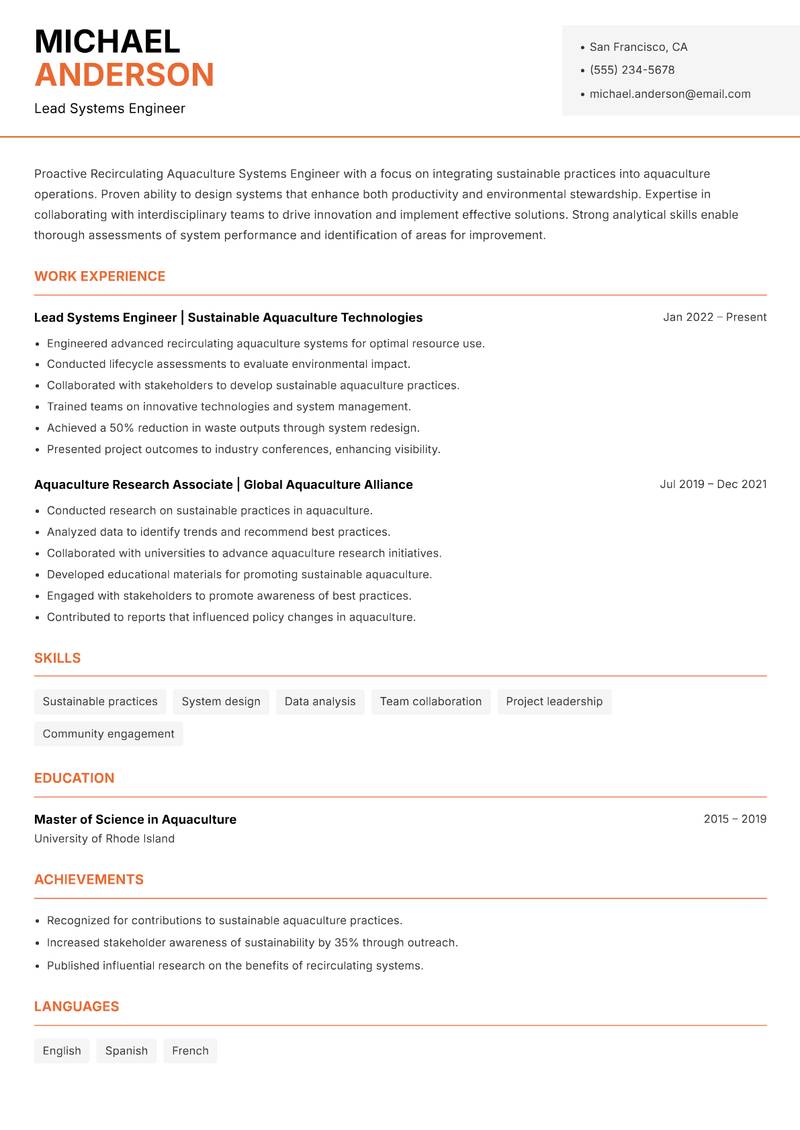
Modern Professional
Use Template7 Real Recirculating Aquaculture Systems Engineer Resume Examples
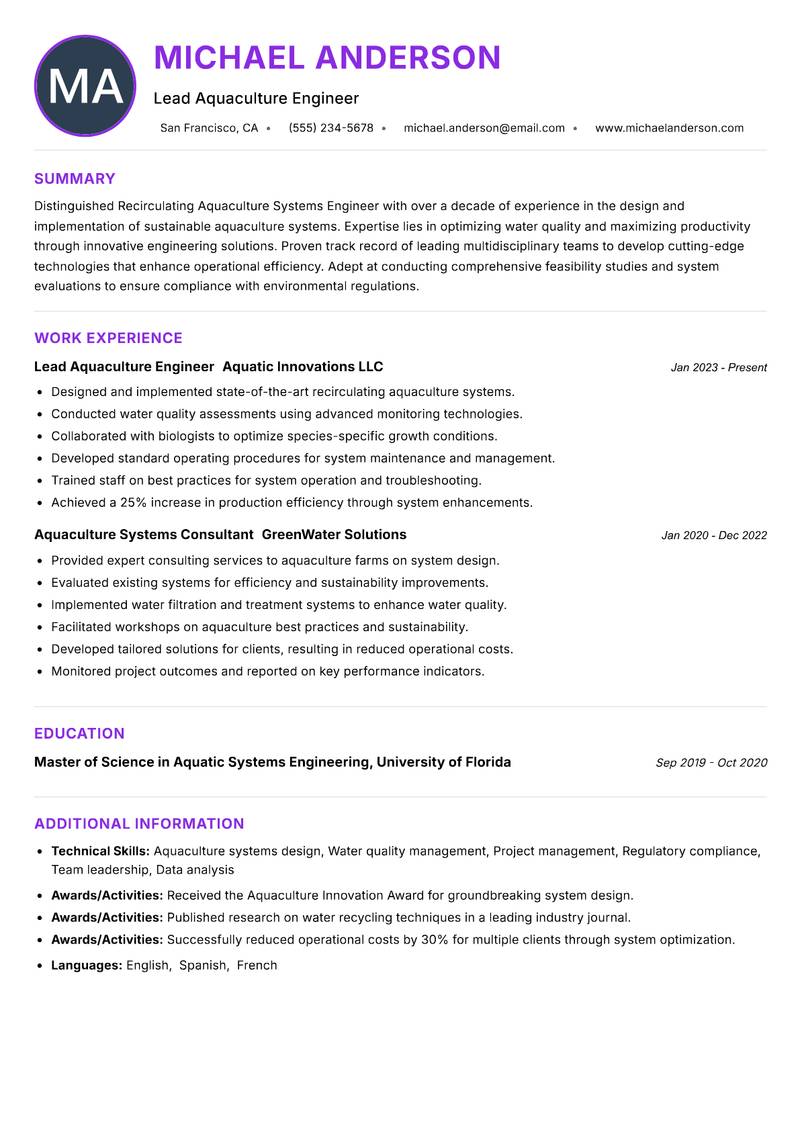
Lead Aquaculture Engineer with 8+ Years Experience
Summary: Distinguished Recirculating Aquaculture Systems Engineer with over a decade of experience in the design and implementation of sustainable aquaculture systems. Expertise lies in optimizing water quality and maximizing productivity through innovative engineering solutions. Proven track record of leading multidisciplinary teams to develop cutting-edge technologies that enhance operational efficiency. Adept at conducting comprehensive feasibility studies and system evaluations to ensure compliance with environmental regulations. Possesses a robust understanding of aquatic biology and engineering principles, enabling the creation of systems that support diverse aquatic species. Committed to advancing the aquaculture industry through research and development initiatives that prioritize ecological balance and resource conservation.
Description:
- Designed and implemented state-of-the-art recirculating aquaculture systems.
- Conducted water quality assessments using advanced monitoring technologies.
- Collaborated with biologists to optimize species-specific growth conditions.
- Developed standard operating procedures for system maintenance and management.
- Trained staff on best practices for system operation and troubleshooting.
- Achieved a 25% increase in production efficiency through system enhancements.
🏆 Key Achievements
Senior Aquaculture Engineer with 5+ Years Experience
Summary: Innovative Recirculating Aquaculture Systems Engineer with a strong foundation in environmental engineering and aquatic ecology. Extensive experience in designing, testing, and optimizing recirculating systems that enhance fish health and productivity while minimizing environmental impact. Demonstrated ability to lead cross-functional teams in the development of sustainable aquaculture practices. Skilled in applying advanced analytical methods to assess system performance and implement improvements. Committed to fostering collaboration between engineering and biological sciences to promote sustainable aquaculture solutions. Actively engages in ongoing professional development to stay at the forefront of industry trends and technologies.
Description:
- Led the design of integrated aquaculture systems for commercial applications.
- Implemented water recirculation technologies that reduced water usage by 40%.
- Collaborated with researchers to develop biosecurity protocols for farm operations.
- Conducted performance evaluations of existing systems to identify areas for improvement.
- Mentored junior engineers and interns in system design and analysis.
- Presented findings at industry conferences, enhancing company visibility.
🏆 Key Achievements
Aquaculture Systems Designer with 7+ Years Experience
Summary: Dynamic Recirculating Aquaculture Systems Engineer with a comprehensive background in engineering design and environmental sustainability. Expertise in the development of advanced aquaculture systems that maximize resource utilization while ensuring ecological integrity. Proven ability to integrate innovative technologies into existing frameworks to enhance performance and sustainability. Strong analytical skills complemented by hands-on experience in system management and optimization. Recognized for a collaborative approach that fosters teamwork and drives project success. Passionate about leveraging engineering principles to address complex challenges in the aquaculture sector.
Description:
- Designed innovative recirculating aquaculture systems tailored for diverse species.
- Utilized modeling software to simulate system performance under various conditions.
- Conducted field trials to validate system designs and enhance efficiency.
- Collaborated with cross-disciplinary teams to integrate best practices.
- Developed training materials for staff on system maintenance and operation.
- Achieved a reduction in energy consumption by 15% through system upgrades.
🏆 Key Achievements
Project Engineer with 6+ Years Experience
Summary: Accomplished Recirculating Aquaculture Systems Engineer with a robust background in hydraulic engineering and aquatic systems management. Demonstrated expertise in developing and managing large-scale aquaculture projects that prioritize sustainability and efficiency. Skilled in applying engineering principles to create systems that effectively manage water resources while maintaining optimal conditions for aquatic life. Recognized for a results-oriented approach that combines technical knowledge with practical application. Committed to fostering innovation and excellence in aquaculture through continuous improvement and stakeholder engagement.
Description:
- Managed large-scale aquaculture projects from conception to completion.
- Oversaw the installation of recirculating systems in commercial operations.
- Conducted hydrodynamic modeling to optimize system performance.
- Ensured compliance with environmental regulations during project execution.
- Coordinated with suppliers to source high-quality materials and equipment.
- Achieved project completion ahead of schedule, resulting in cost savings.
🏆 Key Achievements
Aquaculture Technology Specialist with 5+ Years Experience
Summary: Strategic Recirculating Aquaculture Systems Engineer with extensive experience in the integration of technology and aquaculture practices. Recognized for innovative solutions that enhance system efficiency and sustainability. Demonstrated ability to lead projects that bridge the gap between engineering and environmental science, resulting in improved productivity and reduced environmental impact. Proficient in utilizing data analytics to inform decision-making and drive continuous improvement. Committed to advancing the aquaculture industry through research and collaboration, with a focus on long-term sustainability and resource management.
Description:
- Developed and implemented advanced technology solutions for aquaculture systems.
- Conducted feasibility studies to assess the viability of new technologies.
- Collaborated with engineers and biologists to enhance system design.
- Monitored system performance metrics to identify areas for enhancement.
- Facilitated training sessions on new technologies for operational staff.
- Achieved a 35% improvement in system efficiency through technology integration.
🏆 Key Achievements
Aquaculture Systems Engineer with 7+ Years Experience
Summary: Experienced Recirculating Aquaculture Systems Engineer specializing in the design and implementation of efficient aquaculture systems. Proven expertise in optimizing system performance through innovative engineering solutions tailored to specific aquatic environments. Strong background in project management and cross-functional collaboration, ensuring successful project execution from inception to completion. Adept at navigating regulatory frameworks and ensuring compliance with industry standards. Committed to continuous learning and adaptation in the fast-evolving aquaculture landscape, with a focus on sustainable practices and resource efficiency.
Description:
- Designed and optimized recirculating aquaculture systems for various species.
- Conducted system performance evaluations to ensure compliance with standards.
- Collaborated with environmental scientists to enhance system sustainability.
- Managed budgets and resources for multiple aquaculture projects.
- Provided technical support and training to operational teams.
- Increased system reliability by implementing proactive maintenance schedules.
🏆 Key Achievements
Lead Systems Engineer with 4+ Years Experience
Summary: Driven Recirculating Aquaculture Systems Engineer with a focus on integrating sustainable practices into aquaculture operations. Proven ability to design systems that enhance both productivity and environmental stewardship. Expertise in collaborating with interdisciplinary teams to drive innovation and implement effective solutions. Strong analytical skills enable thorough assessments of system performance and identification of areas for improvement. Committed to advancing aquaculture technologies that promote ecological balance while meeting industry demands. Actively participates in community initiatives to raise awareness about sustainable aquaculture practices.
Description:
- Engineered advanced recirculating aquaculture systems for optimal resource use.
- Conducted lifecycle assessments to evaluate environmental impact.
- Collaborated with stakeholders to develop sustainable aquaculture practices.
- Trained teams on innovative technologies and system management.
- Achieved a 50% reduction in waste outputs through system redesign.
- Presented project outcomes to industry conferences, enhancing visibility.
🏆 Key Achievements
Key Skills for Recirculating Aquaculture Systems Engineer
ATS Optimization Tips
Increase your chances of getting hired
Use Standard Headings
Use common section titles like Experience, Skills, etc.
Include Keywords
Add role-specific keywords from the job description
Keep it Simple
Avoid complex tables, images and graphics
Save in Right Format
Use PDF format unless otherwise specified
Recirculating Aquaculture Systems Engineer Salary Insights
Average Salary
$95,000
per year
Salary Range
$70,000 - $120,000
per year
Top Paying Cities
Los Angeles, Seattle, Houston, Dallas, Boston
Source: Glassdoor, Payscale, Indeed (Updated August 2025)
Everything you need to write a great Recirculating Aquaculture Systems Engineer resume
Strong Action Verbs to Use
Resume Writing Tips
- →Highlight experience with specific types of RAS designs and their corresponding technologies.
- →Include quantitative data showcasing improvements in system performance under your design.
- →Mention collaboration with hatcheries or fish farms to demonstrate industry knowledge and partnerships.
- →Detail any specific software used for modeling or analysis in RAS design for technical credibility.
- →List projects that incorporate sustainability practices or innovative designs to stand out in the niche market.
Common Mistakes to Avoid
- ✕Neglecting to specify the types of fish species worked with when detailing aquaculture experience.
- ✕Using vague language instead of concrete achievements related to RAS optimization.
- ✕Failing to mention regulatory compliance knowledge relevant to aquaculture systems.
- ✕Overlooking the importance of collaboration with cross-functional teams in project descriptions.
ATS Keywords for Recirculating Aquaculture Systems Engineer
Recirculating Aquaculture Systems Engineer Career Path
Relevant Certifications
Career Progression
Entry-Level RAS Technician
Works under supervision to assist in the maintenance and operation of recirculating aquaculture systems, gaining hands-on experience.
Mid-Level RAS Engineer
Designs and implements RAS projects, optimizing system performance, and collaborating with aquaculture producers to improve yield.
Lead RAS Engineer
Takes charge of large-scale RAS implementations, guiding teams, managing schedules, and ensuring project delivery meets industry standards.
Senior Aquaculture Systems Consultant
Provides expert advice on the strategic implementation of aquaculture systems across multiple sites, often involved in innovative research in RAS technology.
Aquaculture Research Scientist
Conducts advanced research on recirculating system efficiency, environmental impact, and breeding practices, publishing findings to advance the industry.
Recirculating Aquaculture Systems Engineer Interview Questions
What are the key parameters to monitor in a recirculating aquaculture system for optimal fish health? +
Discuss parameters like dissolved oxygen levels, ammonia concentration, and water temperature.
Can you explain how you approach the design and layout of a new recirculating system? +
Elaborate on considerations like fish species, water turnover rate, and the integration of filtration technologies.
What experience do you have with system troubleshooting and maintenance in RAS environments? +
Provide examples of past challenges you faced and how you resolved them.
How do you ensure compliance with environmental regulations in your projects? +
Mention specific regulations relevant to aquaculture and provide examples of how you've applied them.
Describe a successful project you've led involving recirculating aquaculture. What were the challenges and the outcomes? +
Focus on project details, team coordination, and measurable results.
How do you stay updated with the latest advancements in aquaculture technology? +
Discuss methods like continuing education, attendance at conferences, or collaboration with research institutions.
About the Recirculating Aquaculture Systems Engineer Role
This position centers on the innovative design and implementation of recirculating aquaculture systems (RAS), which are essential in sustainable fish farming practices. Responsibilities include rigorous analysis of system efficiency, water quality, and species-specific needs to enhance productivity while minimizing ecological impact. Collaborating with stakeholders, such as farm managers and environmental regulators, is critical to ensure system compliance and operability. Engineers in this role frequently use advanced simulation software and data analytics tools to drive performance improvements and optimize facility layouts.
Frequently Asked Questions
What is a typical work environment for a Recirculating Aquaculture Systems Engineer? +
Engineers typically work in office settings combined with field sites, including aquaculture farms and research institutions, surrounded by systems requiring maintenance and design oversight.
What role does technology play in this job? +
Advanced technology is crucial, with engineers using simulation software, automated monitoring systems, and data management tools to optimize and troubleshoot RAS.
How does one progress in a career as a Recirculating Aquaculture Systems Engineer? +
Career progression often involves gaining practical experience, pursuing relevant certifications, and transitioning into project management or consultant roles.
What environmental considerations must be accounted for in RAS design? +
Key considerations include water reuse strategies, waste management, and impacts on local ecosystems to achieve sustainability.
Are there opportunities for research in this field? +
Yes, many engineers transition into research roles focusing on enhancing RAS efficiency or exploring new aquaculture species.
What is RAS and why is it important? +
Recirculating Aquaculture Systems are land-based farming methods that significantly reduce water usage and environmental impact while providing a controlled environment for fish production.
More Resume Examples You Might Like
Related Career Paths
Other roles candidates for Recirculating Aquaculture Systems Engineer positions often also consider.
Will this Recirculating Aquaculture Systems Engineer resume pass the ATS scan?
Upload it and get an instant AI-scored compatibility check with specific fixes.
Check My Resume →
Pair it with a matching cover letter
AI drafts a first version from your job title and strengths — edit it live, then download the PDF.
Write My Cover Letter →
Written by Nohaya Career Team
Reviewed by HR Professionals · Updated August 2025
Ready to Build Your Perfect Resume?
Choose from 1000+ professional templates and land your dream job.
Create My Resume Now