Build an ATS-Friendly
Plant Pathologist Resume
That Gets Interviews
Evaluating the adverse effects of pathogens on various crops involves a systematic approach to plant pathology. This includes the integration of clinical diagnostics and field-based assessments to understand disease dynamics in specific environments. Precise communication with farmers and agronomists ensures…
Plant Pathologist Resume Templates
Modern Professional
Use Template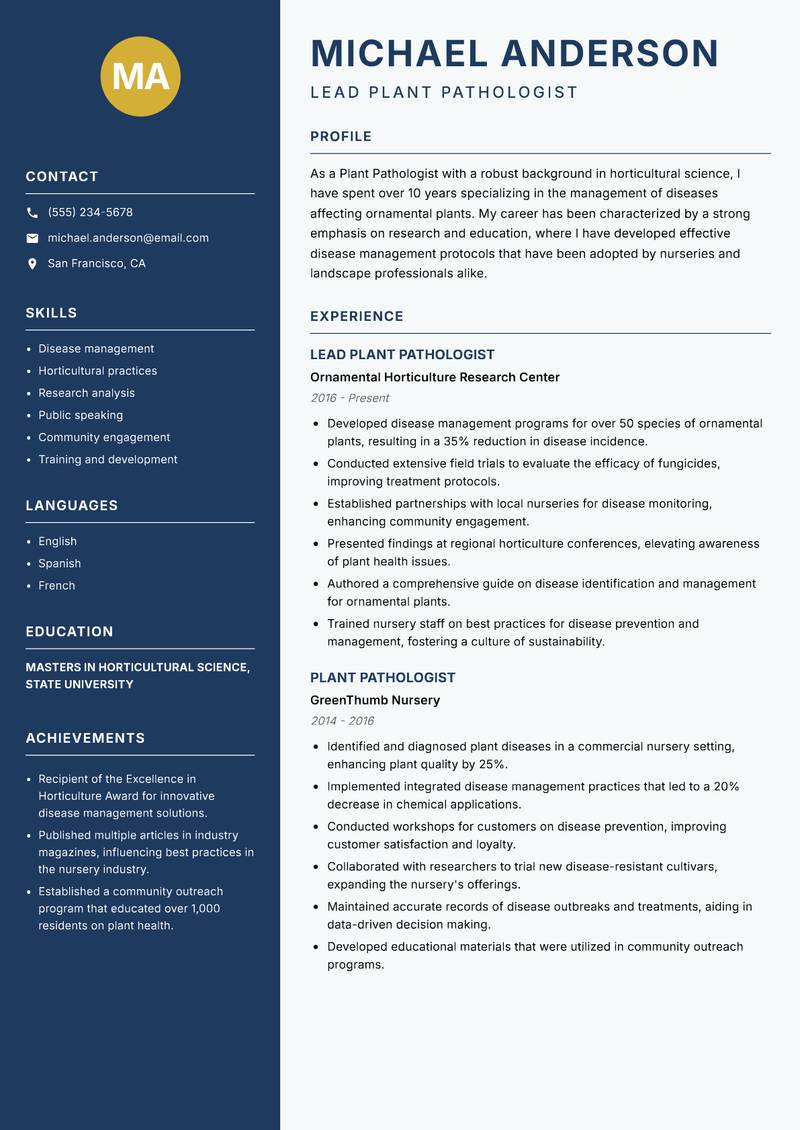
Classic Clean
Use Template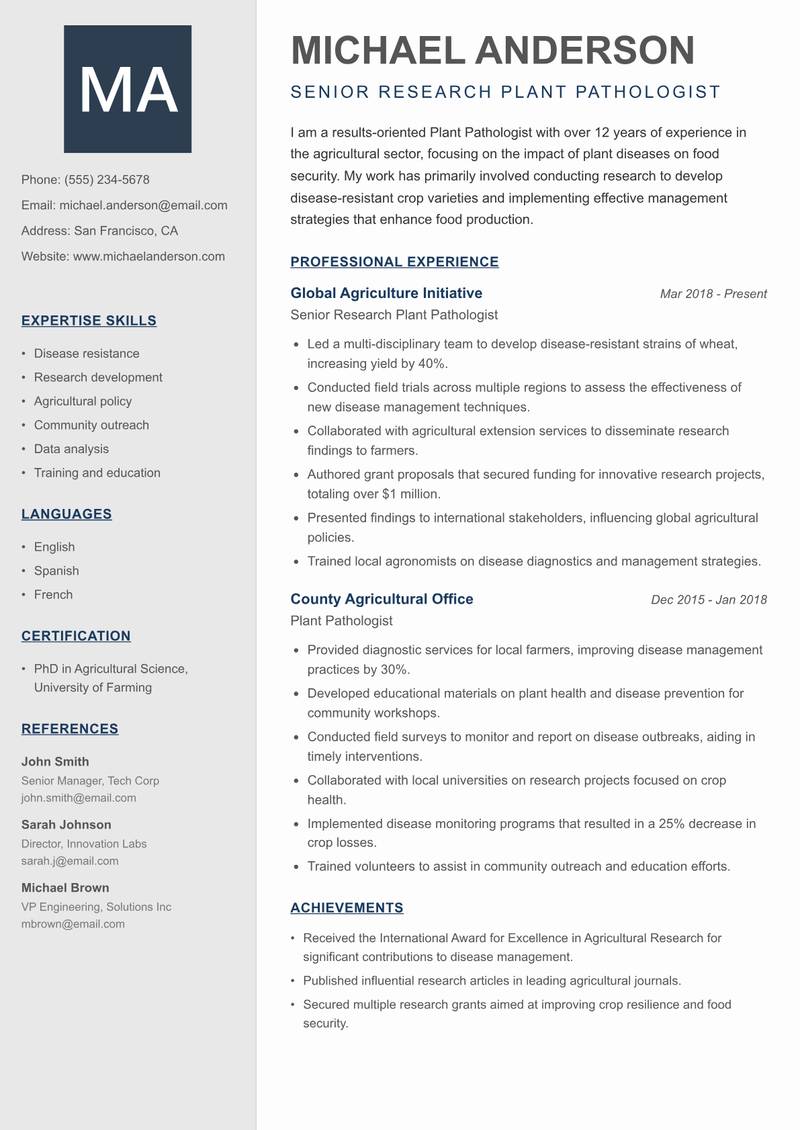
Creative Minimal
Use Template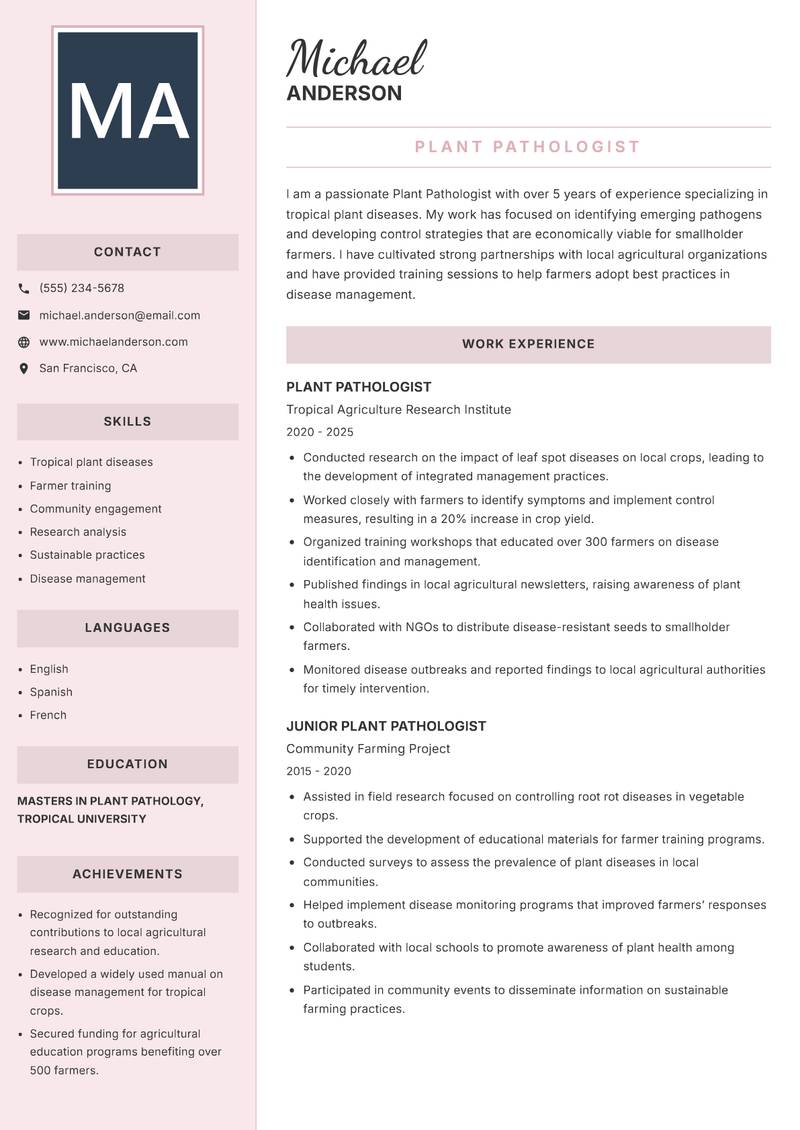
Executive
Use Template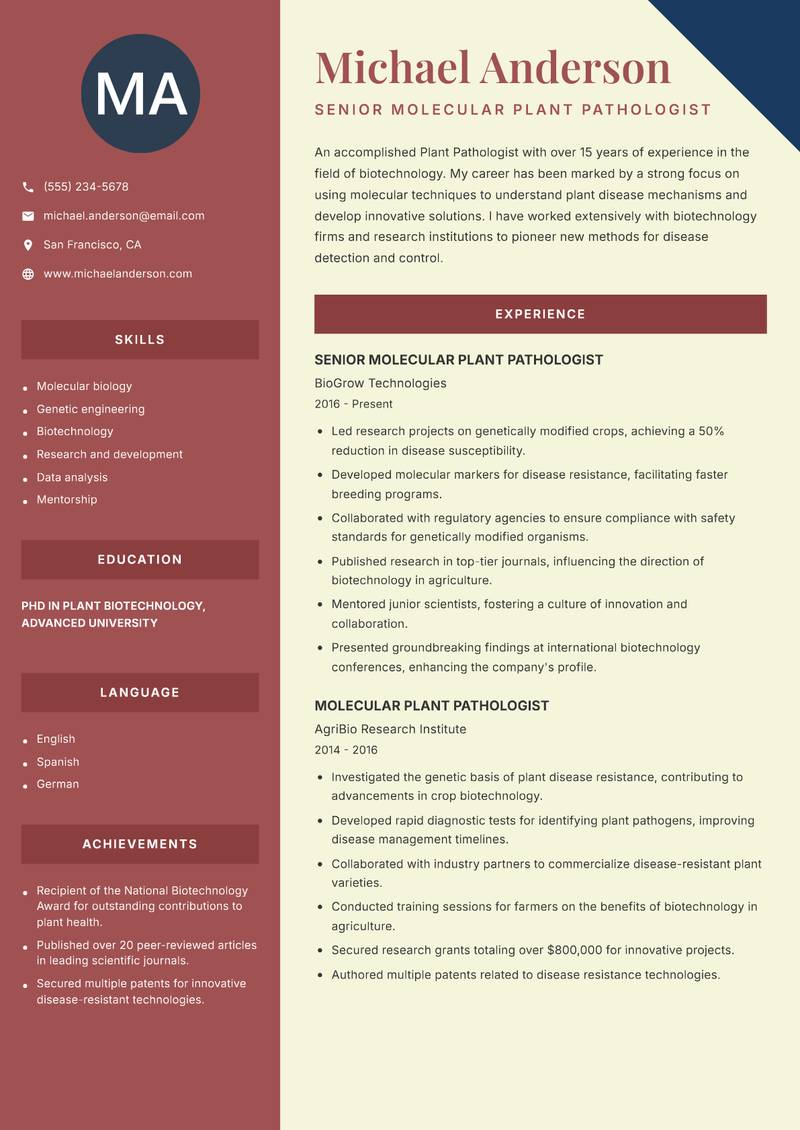
Two Column
Use Template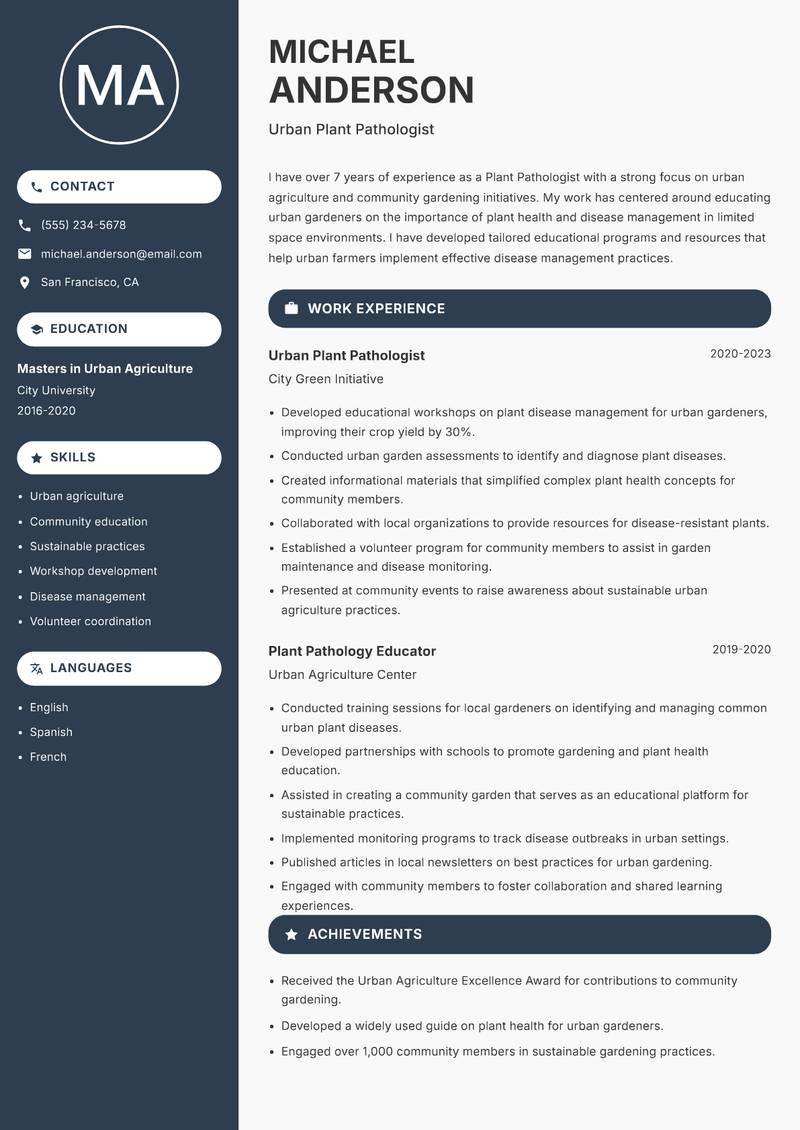
Compact
Use Template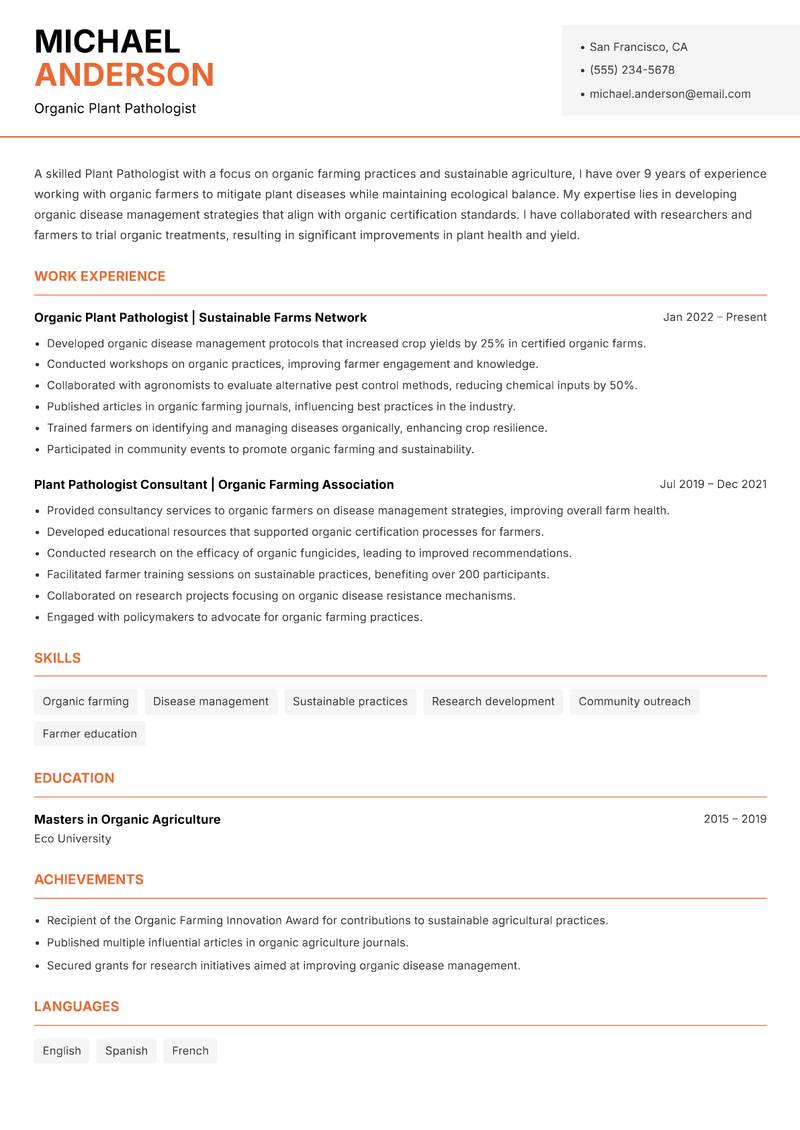
Modern Professional
Use Template7 Real Plant Pathologist Resume Examples
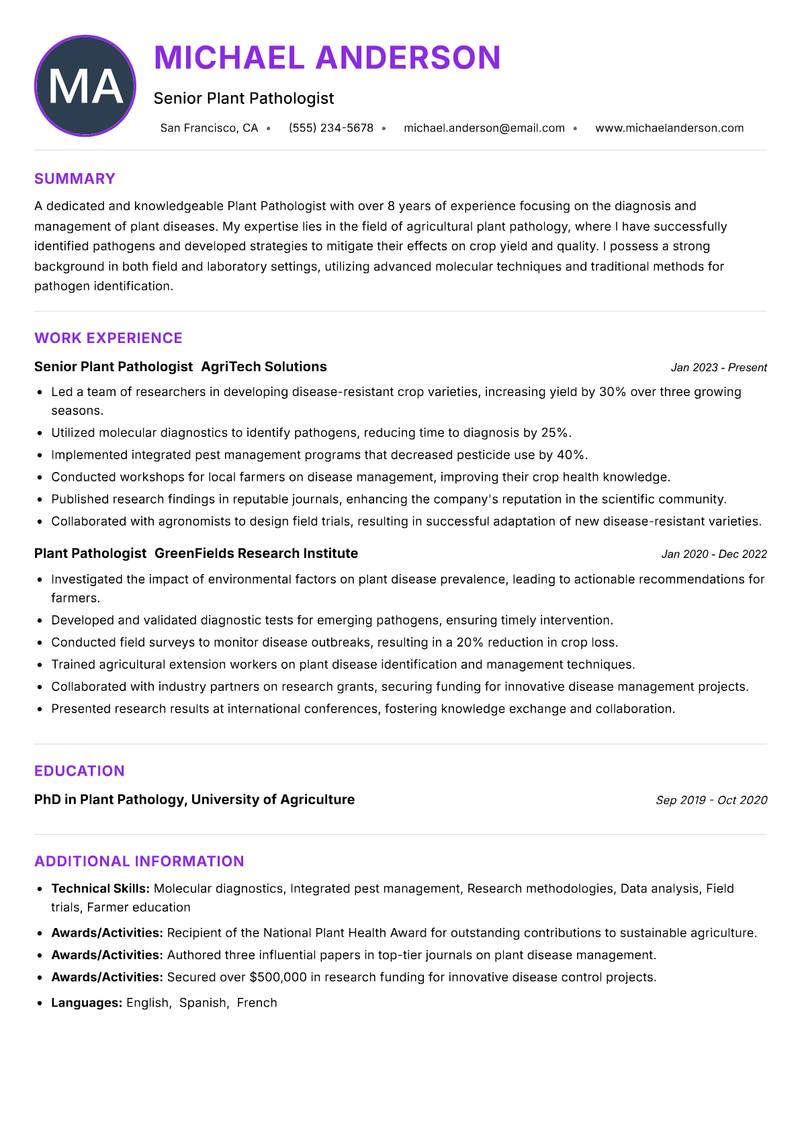
Senior Plant Pathologist with 8+ Years Experience
Summary: A dedicated and knowledgeable Plant Pathologist with over 8 years of experience focusing on the diagnosis and management of plant diseases. My expertise lies in the field of agricultural plant pathology, where I have successfully identified pathogens and developed strategies to mitigate their effects on crop yield and quality. I possess a strong background in both field and laboratory settings, utilizing advanced molecular techniques and traditional methods for pathogen identification. In my previous roles, I have conducted significant research on disease resistance in various crops, authored multiple peer-reviewed articles, and contributed to the development of integrated pest management strategies. My passion for sustainable agriculture drives my commitment to improving crop health and resilience through innovative practices and collaborative research. I thrive in dynamic environments and enjoy working with multidisciplinary teams to promote plant health and sustainable farming practices.
Description:
- Led a team of researchers in developing disease-resistant crop varieties, increasing yield by 30% over three growing seasons.
- Utilized molecular diagnostics to identify pathogens, reducing time to diagnosis by 25%.
- Implemented integrated pest management programs that decreased pesticide use by 40%.
- Conducted workshops for local farmers on disease management, improving their crop health knowledge.
- Published research findings in reputable journals, enhancing the company's reputation in the scientific community.
- Collaborated with agronomists to design field trials, resulting in successful adaptation of new disease-resistant varieties.
🏆 Key Achievements
Lead Plant Pathologist with 10+ Years Experience
Summary: As a Plant Pathologist with a robust background in horticultural science, I have spent over 10 years specializing in the management of diseases affecting ornamental plants. My career has been characterized by a strong emphasis on research and education, where I have developed effective disease management protocols that have been adopted by nurseries and landscape professionals alike. I have successfully led projects that involve field research, laboratory analysis, and collaboration with stakeholders to improve plant health. My passion for promoting sustainable practices extends to educating the next generation of horticulturists through workshops and seminars. With a keen eye for detail and a commitment to excellence, I aim to bridge the gap between scientific research and practical application in the field of ornamental horticulture.
Description:
- Developed disease management programs for over 50 species of ornamental plants, resulting in a 35% reduction in disease incidence.
- Conducted extensive field trials to evaluate the efficacy of fungicides, improving treatment protocols.
- Established partnerships with local nurseries for disease monitoring, enhancing community engagement.
- Presented findings at regional horticulture conferences, elevating awareness of plant health issues.
- Authored a comprehensive guide on disease identification and management for ornamental plants.
- Trained nursery staff on best practices for disease prevention and management, fostering a culture of sustainability.
🏆 Key Achievements
Senior Research Plant Pathologist with 12+ Years Experience
Summary: I am a results-oriented Plant Pathologist with over 12 years of experience in the agricultural sector, focusing on the impact of plant diseases on food security. My work has primarily involved conducting research to develop disease-resistant crop varieties and implementing effective management strategies that enhance food production. I have collaborated with various agricultural organizations to promote sustainable farming practices that not only address current plant health issues but also anticipate future challenges. My strong analytical skills and ability to communicate complex scientific concepts to farmers have enabled me to make significant contributions to the agricultural community. I am passionate about leveraging science to ensure a sustainable food supply and support farmers in maximizing their production potential.
Description:
- Led a multi-disciplinary team to develop disease-resistant strains of wheat, increasing yield by 40%.
- Conducted field trials across multiple regions to assess the effectiveness of new disease management techniques.
- Collaborated with agricultural extension services to disseminate research findings to farmers.
- Authored grant proposals that secured funding for innovative research projects, totaling over $1 million.
- Presented findings to international stakeholders, influencing global agricultural policies.
- Trained local agronomists on disease diagnostics and management strategies.
🏆 Key Achievements
Plant Pathologist with 5+ Years Experience
Summary: I am a passionate Plant Pathologist with over 5 years of experience specializing in tropical plant diseases. My work has focused on identifying emerging pathogens and developing control strategies that are economically viable for smallholder farmers. I have cultivated strong partnerships with local agricultural organizations and have provided training sessions to help farmers adopt best practices in disease management. My research has led to the development of locally adapted disease control methods that respect indigenous knowledge and practices. I am committed to sustainable agriculture and believe in empowering farmers through education and practical support to enhance their livelihoods and ensure food security.
Description:
- Conducted research on the impact of leaf spot diseases on local crops, leading to the development of integrated management practices.
- Worked closely with farmers to identify symptoms and implement control measures, resulting in a 20% increase in crop yield.
- Organized training workshops that educated over 300 farmers on disease identification and management.
- Published findings in local agricultural newsletters, raising awareness of plant health issues.
- Collaborated with NGOs to distribute disease-resistant seeds to smallholder farmers.
- Monitored disease outbreaks and reported findings to local agricultural authorities for timely intervention.
🏆 Key Achievements
Senior Molecular Plant Pathologist with 15+ Years Experience
Summary: An accomplished Plant Pathologist with over 15 years of experience in the field of biotechnology. My career has been marked by a strong focus on using molecular techniques to understand plant disease mechanisms and develop innovative solutions. I have worked extensively with biotechnology firms and research institutions to pioneer new methods for disease detection and control. My expertise in genetic engineering has led to the successful development of genetically modified crops with enhanced disease resistance. I am committed to advancing plant health through science and technology, and I enjoy mentoring young scientists in the field. My goal is to continue contributing to groundbreaking research that impacts global food security and agricultural sustainability.
Description:
- Led research projects on genetically modified crops, achieving a 50% reduction in disease susceptibility.
- Developed molecular markers for disease resistance, facilitating faster breeding programs.
- Collaborated with regulatory agencies to ensure compliance with safety standards for genetically modified organisms.
- Published research in top-tier journals, influencing the direction of biotechnology in agriculture.
- Mentored junior scientists, fostering a culture of innovation and collaboration.
- Presented groundbreaking findings at international biotechnology conferences, enhancing the company's profile.
🏆 Key Achievements
Urban Plant Pathologist with 7+ Years Experience
Summary: I have over 7 years of experience as a Plant Pathologist with a strong focus on urban agriculture and community gardening initiatives. My work has centered around educating urban gardeners on the importance of plant health and disease management in limited space environments. I have developed tailored educational programs and resources that help urban farmers implement effective disease management practices. My engagement with local communities has not only improved plant health but has also fostered a sense of community and collaboration among urban gardeners. I am dedicated to promoting sustainable practices that enhance food production and access in urban settings, contributing to the overall health and wellbeing of urban populations.
Description:
- Developed educational workshops on plant disease management for urban gardeners, improving their crop yield by 30%.
- Conducted urban garden assessments to identify and diagnose plant diseases.
- Created informational materials that simplified complex plant health concepts for community members.
- Collaborated with local organizations to provide resources for disease-resistant plants.
- Established a volunteer program for community members to assist in garden maintenance and disease monitoring.
- Presented at community events to raise awareness about sustainable urban agriculture practices.
🏆 Key Achievements
Organic Plant Pathologist with 9+ Years Experience
Summary: A skilled Plant Pathologist with a focus on organic farming practices and sustainable agriculture, I have over 9 years of experience working with organic farmers to mitigate plant diseases while maintaining ecological balance. My expertise lies in developing organic disease management strategies that align with organic certification standards. I have collaborated with researchers and farmers to trial organic treatments, resulting in significant improvements in plant health and yield. My work emphasizes education and outreach, empowering farmers to adopt practices that are both environmentally sustainable and economically viable. I am passionate about the role of plant pathology in supporting organic farming and enhancing food security through sustainable practices.
Description:
- Developed organic disease management protocols that increased crop yields by 25% in certified organic farms.
- Conducted workshops on organic practices, improving farmer engagement and knowledge.
- Collaborated with agronomists to evaluate alternative pest control methods, reducing chemical inputs by 50%.
- Published articles in organic farming journals, influencing best practices in the industry.
- Trained farmers on identifying and managing diseases organically, enhancing crop resilience.
- Participated in community events to promote organic farming and sustainability.
🏆 Key Achievements
Key Skills for Plant Pathologist
ATS Optimization Tips
Increase your chances of getting hired
Use Standard Headings
Use common section titles like Experience, Skills, etc.
Include Keywords
Add role-specific keywords from the job description
Keep it Simple
Avoid complex tables, images and graphics
Save in Right Format
Use PDF format unless otherwise specified
Plant Pathologist Salary Insights
Average Salary
$75,500
per year
Salary Range
$56,000 - $95,000
per year
Top Paying Cities
Los Angeles, Seattle, Houston, Dallas, Boston
Source: Glassdoor, Payscale, Indeed (Updated May 2025)
Everything you need to write a great Plant Pathologist resume
Strong Action Verbs to Use
Resume Writing Tips
- →Highlight specific experiences with pathogen identification and disease modeling.
- →Include metrics or results from your research to demonstrate impact, such as yield improvements or cost savings.
- →Emphasize your ability to communicate findings to non-scientific stakeholders in your resume.
- →Showcase any interdisciplinary collaborations that expanded your role and influence within agricultural systems.
- →Tailor your resume to reflect knowledge of regional agricultural challenges and pathogen issues relevant to the job you're applying for.
Common Mistakes to Avoid
- ✕Listing general agricultural skills without emphasizing specialized plant pathology techniques.
- ✕Focusing too heavily on laboratory work at the expense of field experience or stakeholder engagement.
- ✕Neglecting to mention experience with integrated pest management strategies relevant to the employer's operations.
- ✕Using vague terms without providing specific examples of achievements or contributions.
ATS Keywords for Plant Pathologist
Plant Pathologist Career Path
Relevant Certifications
Career Progression
Assistant Plant Pathologist
Entry-level role involving support in research and laboratory operations, often assisting with data collection and analysis.
Plant Pathologist
Managing experiments and studies to identify plant diseases, with a focus on developing disease management strategies.
Senior Plant Pathologist
Leads complex research projects, mentors junior pathologists, and collaborates with agricultural firms to implement control measures.
Research Manager
Oversees research teams, develops project proposals, and interacts with stakeholders to align research objectives with industry needs.
Director of Agricultural Research
Executes strategic research directions, liaises with government and agricultural sectors, and ensures funding and resource allocation.
Plant Pathologist Interview Questions
What methodologies do you use for diagnosing plant diseases? +
Discuss specific diagnostic tools and techniques such as ELISA, molecular methods, or microscopy.
How do you stay updated with emerging diseases and pest trends? +
Mention professional journals, conferences, or collaboration with universities.
Can you explain a particularly challenging case you handled? What was your approach? +
Detail a specific incident, focusing on your analysis and problem-solving skills.
How do you prioritize pest management strategies in your work? +
Discuss frameworks you use to evaluate the impact of pests versus economic thresholds.
Describe your experience with biological control agents. +
Share specific examples of using beneficial microbes or other natural methods to manage plant diseases.
What role do you think technology plays in modern plant pathology? +
Reflect on advancements such as remote sensing or software tools in disease management.
How have you collaborated with plant breeders in your projects? +
Provide examples of interdisciplinary work and how it influenced crop genetics.
About the Plant Pathologist Role
Evaluating the adverse effects of pathogens on various crops involves a systematic approach to plant pathology. This includes the integration of clinical diagnostics and field-based assessments to understand disease dynamics in specific environments. Precise communication with farmers and agronomists ensures effective application of disease management strategies, ultimately aiming to safeguard crop health and improve yields.
Frequently Asked Questions
View all →What skills are most important for a successful Plant Pathologist? +
Critical thinking, advanced diagnostic skills, knowledge of plant pathology principles, and effective communication are essential.
What types of plants or crops would I be working with as a Plant Pathologist? +
You could work with a wide range of crops, including staple grains, fruits, and vegetables, depending on your employer's focus.
Is fieldwork a significant component of a Plant Pathologist's job? +
Yes, fieldwork is vital for understanding disease outbreaks and interactions within ecosystems.
What type of research environment is typical for a Plant Pathologist? +
Research can occur at universities, agricultural research stations, or within corporate agricultural firms focusing on crop improvement.
Are there opportunities for advancement in the field of plant pathology? +
Yes, roles can progress from research positions to leadership roles or specialized consulting within agricultural industries.
What is the impact of climate change on plant pathology? +
Climate change can alter pathogen distribution, emergence of new diseases, and affect crop resilience, making adaptive research crucial.
How do Plant Pathologists collaborate with other scientists or farmers? +
They often work alongside agronomists, soil scientists, and farmers to develop and implement effective crop management strategies.
More Resume Examples You Might Like
Related Career Paths
Other roles candidates for Plant Pathologist positions often also consider.
Will this Plant Pathologist resume pass the ATS scan?
Upload it and get an instant AI-scored compatibility check with specific fixes.
Check My Resume →
Pair it with a matching cover letter
AI drafts a first version from your job title and strengths — edit it live, then download the PDF.
Write My Cover Letter →
Written by Nohaya Career Team
Reviewed by HR Professionals · Updated May 2025
Ready to Build Your Perfect Resume?
Choose from 1000+ professional templates and land your dream job.
Create My Resume Now