Build an ATS-Friendly
Manufacturing Productivity Engineer Resume
That Gets Interviews
Becoming a Manufacturing Productivity Engineer involves harnessing analytical skills to pinpoint inefficiencies in production processes. This role requires the integration of methodologies such as Six Sigma to design experiments that improve operational workflows, reduce cycle times, and elevate product quality.…
Manufacturing Productivity Engineer Resume Templates
Modern Professional
Use Template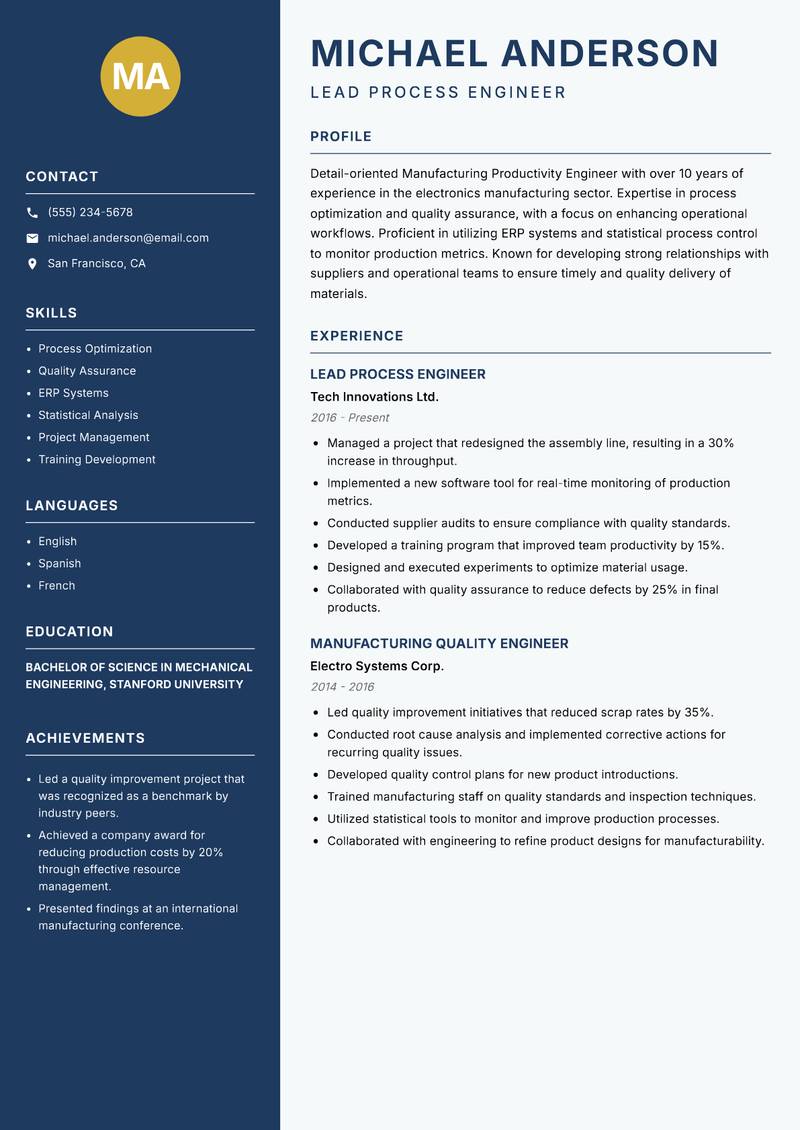
Classic Clean
Use Template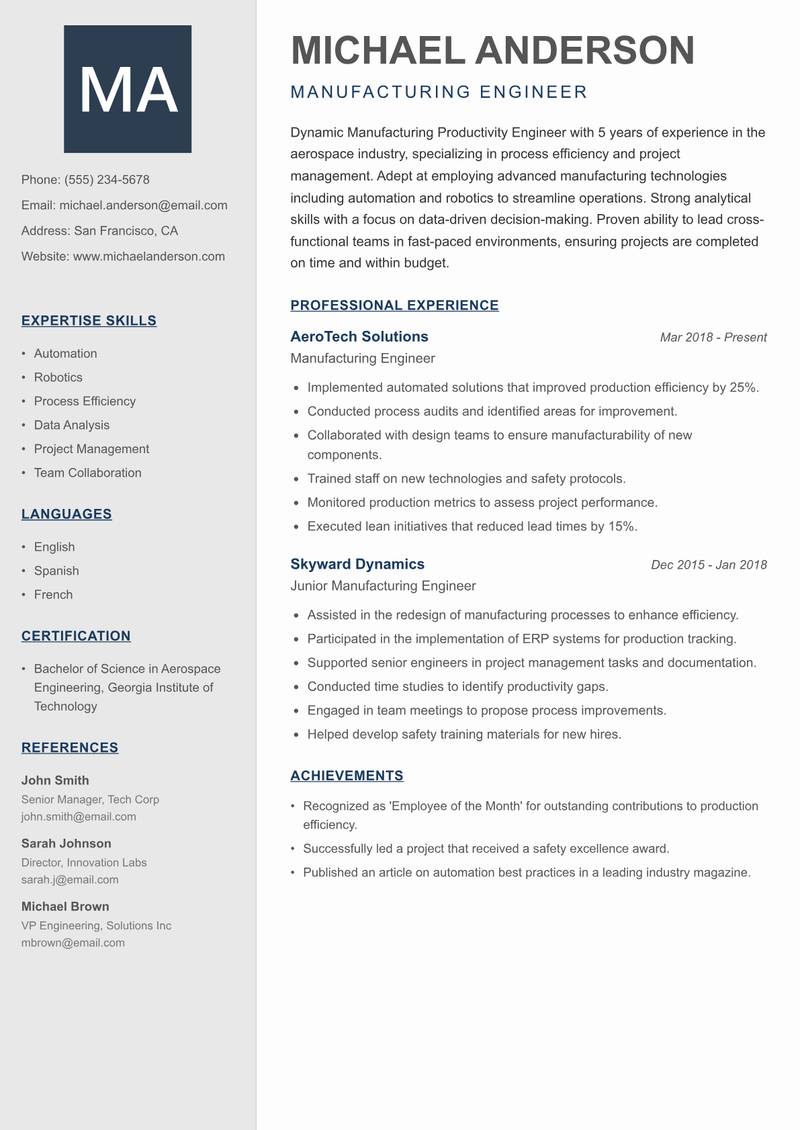
Creative Minimal
Use Template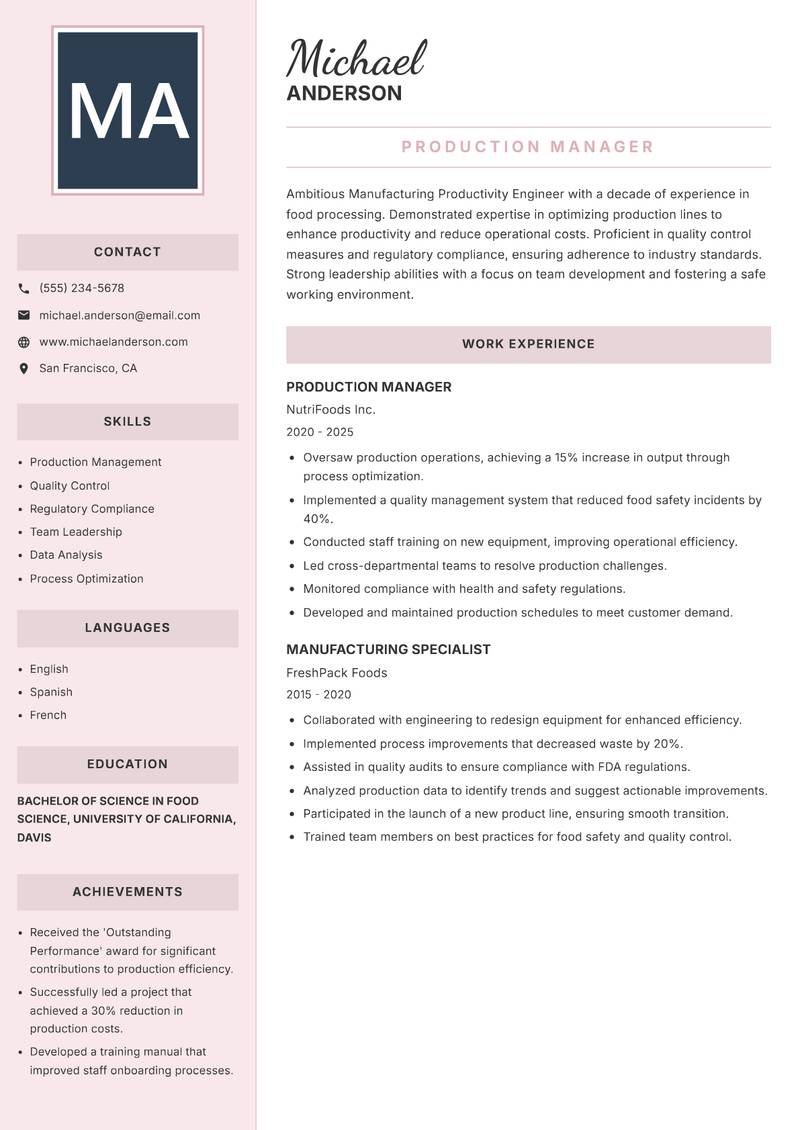
Executive
Use Template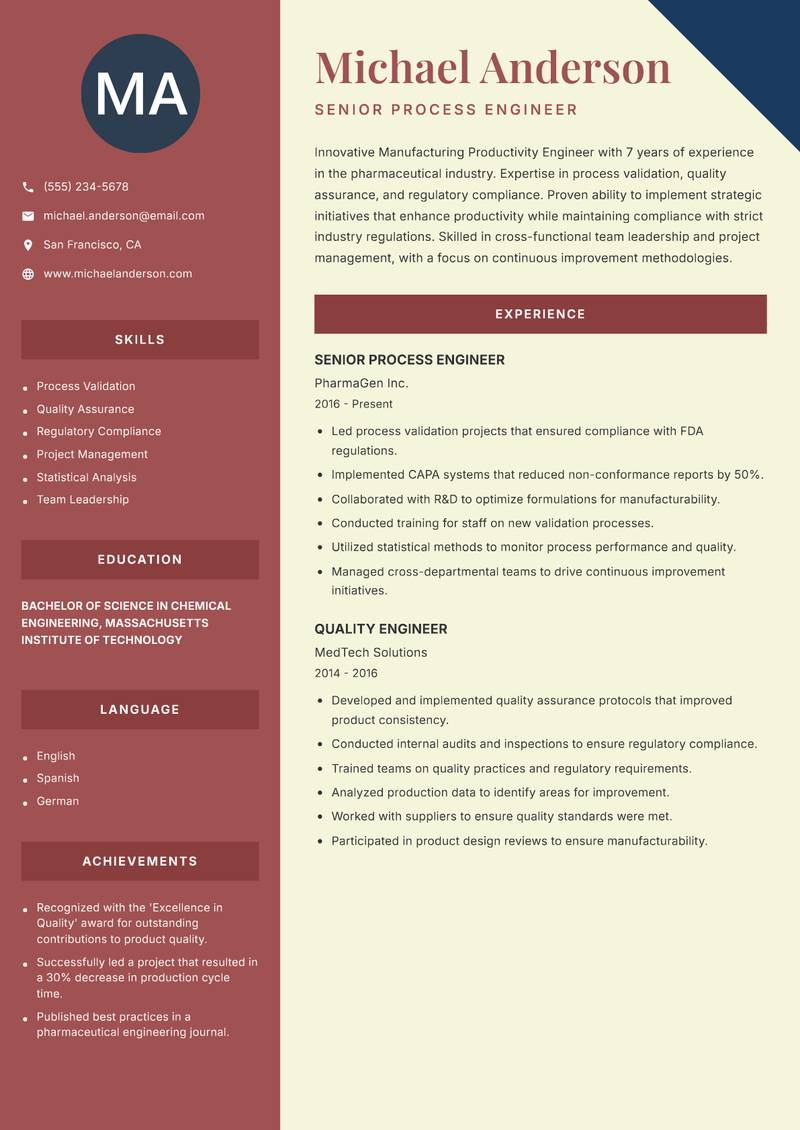
Two Column
Use Template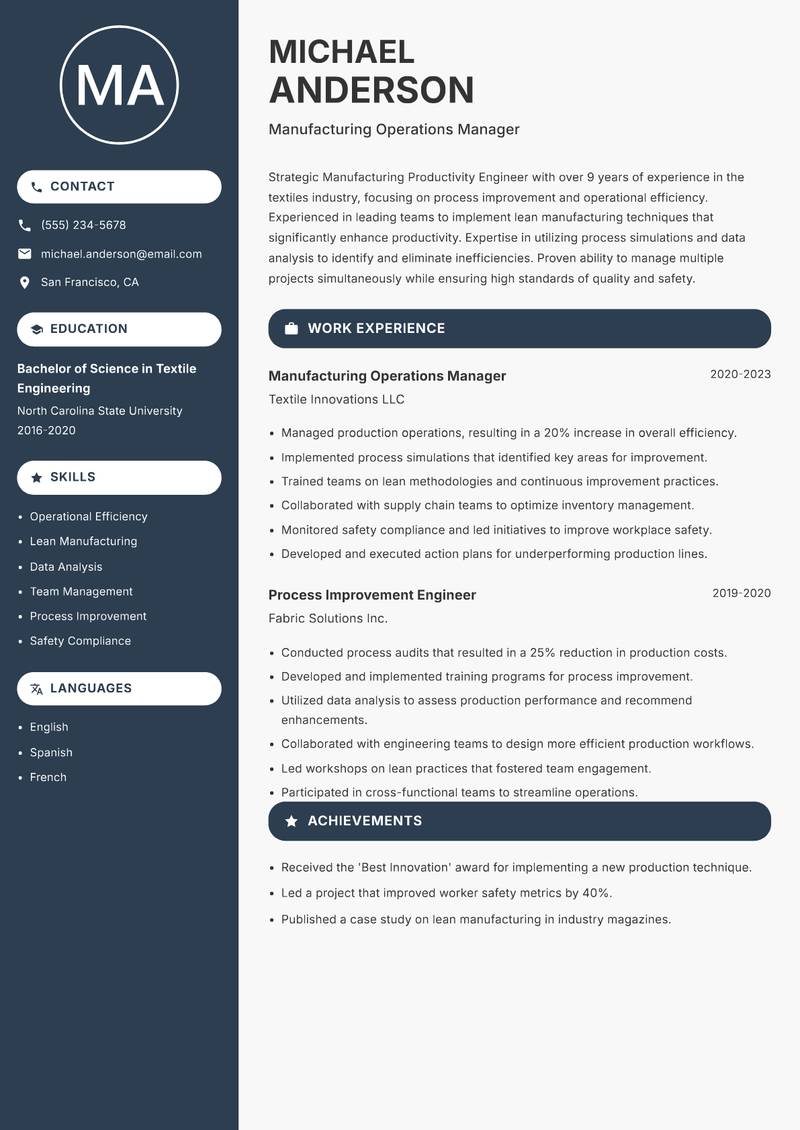
Compact
Use Template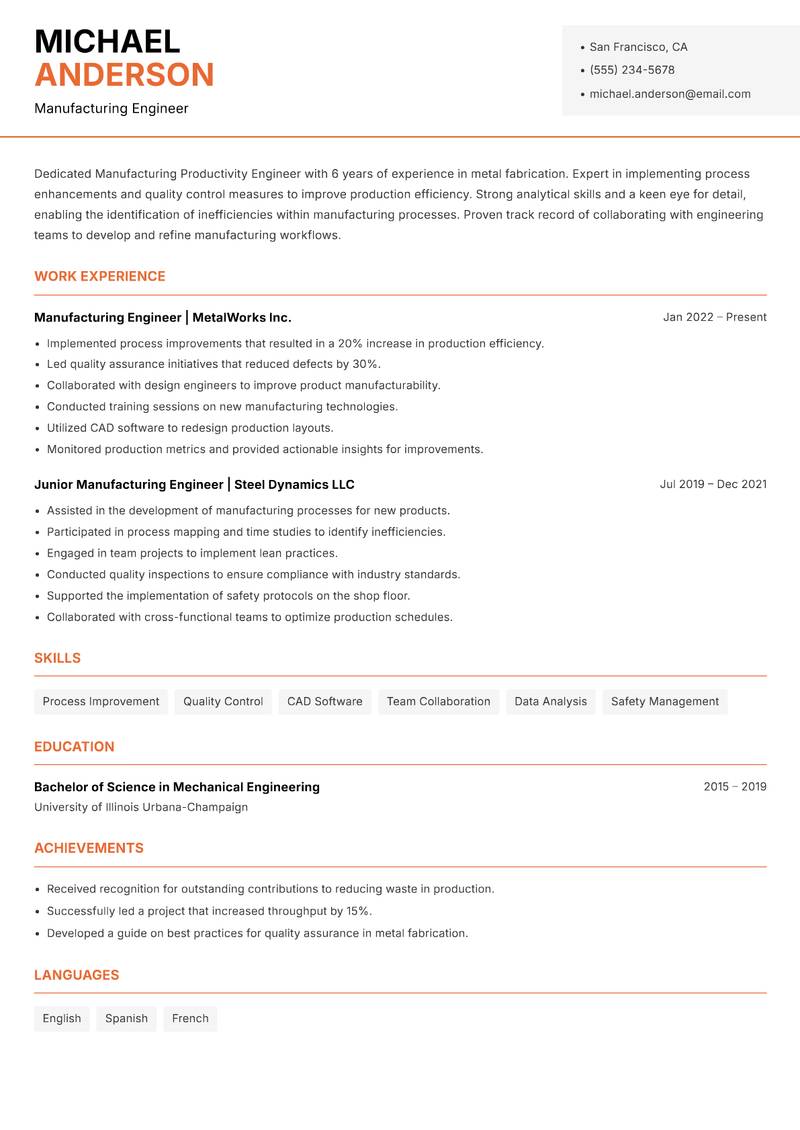
Modern Professional
Use Template7 Real Manufacturing Productivity Engineer Resume Examples
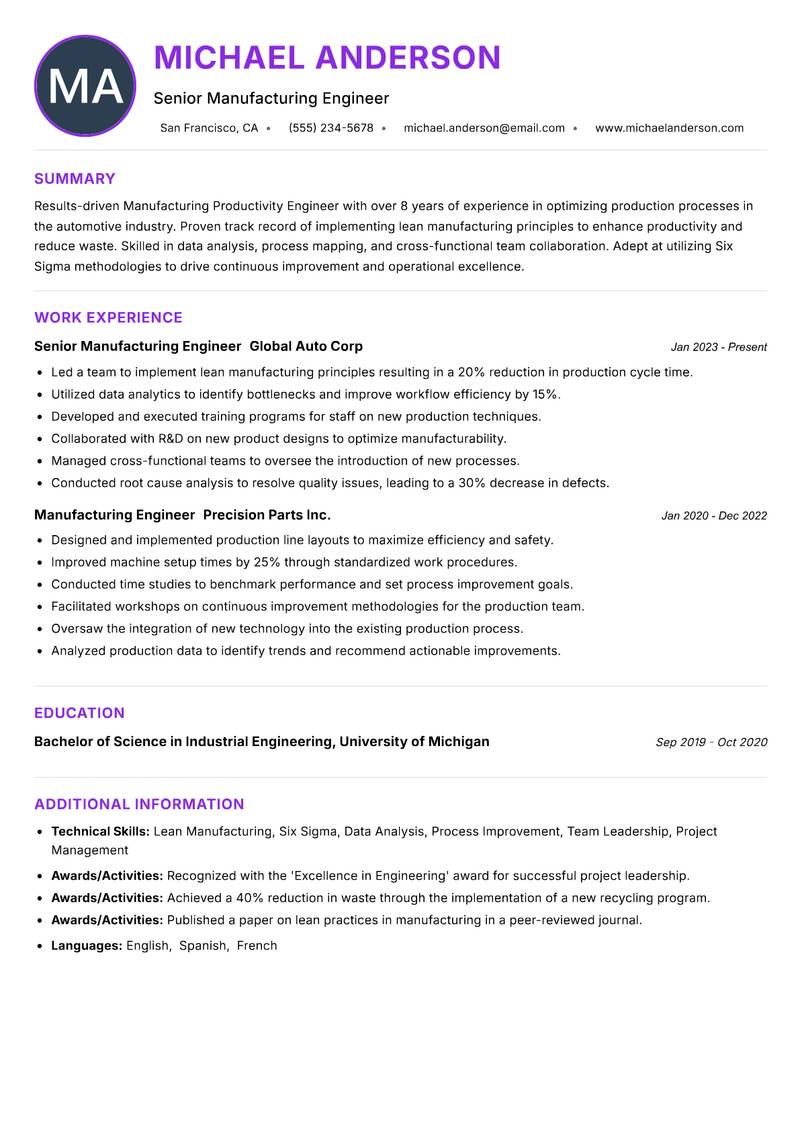
Senior Manufacturing Engineer with 8+ Years Experience
Summary: Experienced Manufacturing Productivity Engineer with over 8 years of experience in optimizing production processes in the automotive industry. Proven track record of implementing lean manufacturing principles to enhance productivity and reduce waste. Skilled in data analysis, process mapping, and cross-functional team collaboration. Adept at utilizing Six Sigma methodologies to drive continuous improvement and operational excellence. Strong ability to lead projects that result in significant cost savings and efficiency gains. Passionate about leveraging technology and innovation to streamline manufacturing operations and improve overall product quality. Committed to fostering a culture of safety and quality in the workplace.
Description:
- Led a team to implement lean manufacturing principles resulting in a 20% reduction in production cycle time.
- Utilized data analytics to identify bottlenecks and improve workflow efficiency by 15%.
- Developed and executed training programs for staff on new production techniques.
- Collaborated with R&D on new product designs to optimize manufacturability.
- Managed cross-functional teams to oversee the introduction of new processes.
- Conducted root cause analysis to resolve quality issues, leading to a 30% decrease in defects.
🏆 Key Achievements
Lead Process Engineer with 10+ Years Experience
Summary: Detail-oriented Manufacturing Productivity Engineer with over 10 years of experience in the electronics manufacturing sector. Expertise in process optimization and quality assurance, with a focus on enhancing operational workflows. Proficient in utilizing ERP systems and statistical process control to monitor production metrics. Known for developing strong relationships with suppliers and operational teams to ensure timely and quality delivery of materials. Committed to driving efficiency improvements through innovative solutions and team collaboration. Seeking to leverage my expertise to contribute to a forward-thinking organization focused on sustainable manufacturing practices.
Description:
- Managed a project that redesigned the assembly line, resulting in a 30% increase in throughput.
- Implemented a new software tool for real-time monitoring of production metrics.
- Conducted supplier audits to ensure compliance with quality standards.
- Developed a training program that improved team productivity by 15%.
- Designed and executed experiments to optimize material usage.
- Collaborated with quality assurance to reduce defects by 25% in final products.
🏆 Key Achievements
Manufacturing Engineer with 5+ Years Experience
Summary: Dynamic Manufacturing Productivity Engineer with 5 years of experience in the aerospace industry, specializing in process efficiency and project management. Adept at employing advanced manufacturing technologies including automation and robotics to streamline operations. Strong analytical skills with a focus on data-driven decision-making. Proven ability to lead cross-functional teams in fast-paced environments, ensuring projects are completed on time and within budget. Dedicated to enhancing safety protocols and fostering a culture of continuous improvement within the manufacturing floor. Looking to apply my skills to an innovative organization committed to excellence in production.
Description:
- Implemented automated solutions that improved production efficiency by 25%.
- Conducted process audits and identified areas for improvement.
- Collaborated with design teams to ensure manufacturability of new components.
- Trained staff on new technologies and safety protocols.
- Monitored production metrics to assess project performance.
- Executed lean initiatives that reduced lead times by 15%.
🏆 Key Achievements
Production Manager with 10+ Years Experience
Summary: Driven Manufacturing Productivity Engineer with a decade of experience in food processing. Demonstrated expertise in optimizing production lines to enhance productivity and reduce operational costs. Proficient in quality control measures and regulatory compliance, ensuring adherence to industry standards. Strong leadership abilities with a focus on team development and fostering a safe working environment. Skilled in using software tools for data tracking and analysis to drive process improvements. Passionate about implementing sustainable practices within manufacturing operations to minimize environmental impact.
Description:
- Oversaw production operations, achieving a 15% increase in output through process optimization.
- Implemented a quality management system that reduced food safety incidents by 40%.
- Conducted staff training on new equipment, improving operational efficiency.
- Led cross-departmental teams to resolve production challenges.
- Monitored compliance with health and safety regulations.
- Developed and maintained production schedules to meet customer demand.
🏆 Key Achievements
Senior Process Engineer with 7+ Years Experience
Summary: Innovative Manufacturing Productivity Engineer with 7 years of experience in the pharmaceutical industry. Expertise in process validation, quality assurance, and regulatory compliance. Proven ability to implement strategic initiatives that enhance productivity while maintaining compliance with strict industry regulations. Skilled in cross-functional team leadership and project management, with a focus on continuous improvement methodologies. Strong background in utilizing advanced analytics and technology to drive decision-making and optimize production processes. Eager to contribute to a company dedicated to improving health outcomes through efficient manufacturing practices.
Description:
- Led process validation projects that ensured compliance with FDA regulations.
- Implemented CAPA systems that reduced non-conformance reports by 50%.
- Collaborated with R&D to optimize formulations for manufacturability.
- Conducted training for staff on new validation processes.
- Utilized statistical methods to monitor process performance and quality.
- Managed cross-departmental teams to drive continuous improvement initiatives.
🏆 Key Achievements
Manufacturing Operations Manager with 9+ Years Experience
Summary: Strategic Manufacturing Productivity Engineer with over 9 years of experience in the textiles industry, focusing on process improvement and operational efficiency. Experienced in leading teams to implement lean manufacturing techniques that significantly enhance productivity. Expertise in utilizing process simulations and data analysis to identify and eliminate inefficiencies. Proven ability to manage multiple projects simultaneously while ensuring high standards of quality and safety. Committed to fostering a collaborative team environment and mentoring junior engineers. Seeking to leverage my skills in a challenging new role with a focus on sustainability within manufacturing.
Description:
- Managed production operations, resulting in a 20% increase in overall efficiency.
- Implemented process simulations that identified key areas for improvement.
- Trained teams on lean methodologies and continuous improvement practices.
- Collaborated with supply chain teams to optimize inventory management.
- Monitored safety compliance and led initiatives to improve workplace safety.
- Developed and executed action plans for underperforming production lines.
🏆 Key Achievements
Manufacturing Engineer with 6+ Years Experience
Summary: Dedicated Manufacturing Productivity Engineer with 6 years of experience in metal fabrication. Expert in implementing process enhancements and quality control measures to improve production efficiency. Strong analytical skills and a keen eye for detail, enabling the identification of inefficiencies within manufacturing processes. Proven track record of collaborating with engineering teams to develop and refine manufacturing workflows. Committed to fostering a culture of safety and continuous improvement within the workplace. Looking to apply my skills to a forward-thinking organization that values innovation and operational excellence.
Description:
- Implemented process improvements that resulted in a 20% increase in production efficiency.
- Led quality assurance initiatives that reduced defects by 30%.
- Collaborated with design engineers to improve product manufacturability.
- Conducted training sessions on new manufacturing technologies.
- Utilized CAD software to redesign production layouts.
- Monitored production metrics and provided actionable insights for improvements.
🏆 Key Achievements
Key Skills for Manufacturing Productivity Engineer
ATS Optimization Tips
Increase your chances of getting hired
Use Standard Headings
Use common section titles like Experience, Skills, etc.
Include Keywords
Add role-specific keywords from the job description
Keep it Simple
Avoid complex tables, images and graphics
Save in Right Format
Use PDF format unless otherwise specified
Manufacturing Productivity Engineer Salary Insights
Average Salary
$87,000
per year
Salary Range
$72,000 - $102,000
per year
Top Paying Cities
Los Angeles, Seattle, Houston, Dallas, Boston
Source: Glassdoor, Payscale, Indeed (Updated July 2025)
Everything you need to write a great Manufacturing Productivity Engineer resume
Strong Action Verbs to Use
Resume Writing Tips
- →Highlight specific software tools you are proficient with, like Minitab or AutoCAD, which are commonly used in process optimization.
- →Detail any projects where your input directly led to measurable productivity gains or cost reductions, quantified by data.
- →Include certifications prominently, especially Six Sigma or Lean certifications, to showcase your dedication to productivity principles.
- →Emphasize soft skills, particularly your capacity for teamwork and collaboration in cross-departmental projects.
- →Use action verbs specific to the manufacturing sector such as 'streamlined,' 'enhanced,' or 'engineered.'
- →Tailored examples of successful interventions in diverse manufacturing environments will enhance credibility.
- →Quantify achievements in previous roles, like percentage improvements in production efficiency or reductions in waste.
Common Mistakes to Avoid
- ✕Including overly generic statements about skills that don’t reflect manufacturing specifics, such as 'good problem-solving skills'.
- ✕Failing to mention industry-standard practices and tools that are directly relevant to manufacturing productivity.
- ✕Using vague metrics that lack clarity on actual impact, like saying 'improved processes' without specific figures.
- ✕Neglecting to customize resume content for each application by underlining how your experience relates to the potential employer's needs.
ATS Keywords for Manufacturing Productivity Engineer
Manufacturing Productivity Engineer Career Path
Relevant Certifications
Career Progression
Entry-Level Manufacturing Engineer
Focuses on learning and applying manufacturing principles and processes under supervision.
Mid-Level Manufacturing Productivity Engineer
Independently manages projects aimed at improving production efficiency and quality.
Lead Productivity Engineer
Oversees a team of engineers, guiding method improvements and implementing lean manufacturing practices.
Engineering Manager
Directs engineering projects and initiatives, managing productivity improvements and resource allocations.
Director of Manufacturing Operations
Strategically leads all operations and productivity initiatives across multiple manufacturing sites.
Manufacturing Productivity Engineer Interview Questions
What key performance indicators do you typically monitor to assess manufacturing productivity? +
Focus on specific metrics that you find invaluable in measuring success and efficiency.
Can you describe a successful project where you improved manufacturing processes? What was your approach? +
Share a specific example highlighting your methodology and the impact of your work.
How do you utilize data analysis in your role as a Manufacturing Productivity Engineer? +
Discuss tools or techniques you use to analyze production data and make informed decisions.
What methods do you prefer for identifying and eliminating waste in manufacturing processes? +
Explain your approach to implementing lean principles and how you’ve successfully applied them.
How do you manage cross-functional teams in implementing productivity improvements? +
Talk about your interpersonal skills and strategies for collaboration across departments.
What challenges have you faced in maintaining productivity during shifts in demand? +
Provide insights into strategies you’ve employed to handle fluctuations effectively.
How do you stay current with the latest trends in manufacturing technology? +
Share resources, networks, or training that contribute to your ongoing professional development.
About the Manufacturing Productivity Engineer Role
Becoming a Manufacturing Productivity Engineer involves harnessing analytical skills to pinpoint inefficiencies in production processes. This role requires the integration of methodologies such as Six Sigma to design experiments that improve operational workflows, reduce cycle times, and elevate product quality. Daily responsibilities may encompass the facilitation of Kaizen events and utilizing data analytics tools to monitor output rates and optimize production schedules.
Frequently Asked Questions
View all →What is the primary goal of a Manufacturing Productivity Engineer? +
The main goal is to identify inefficiencies and drive continuous improvement initiatives to enhance productivity and minimize waste within manufacturing processes.
What industries employ Manufacturing Productivity Engineers? +
These engineers are primarily found in automotive, aerospace, consumer goods, electronics, and any sector relying on large-scale production.
Are certifications mandatory to become a Manufacturing Productivity Engineer? +
While not mandatory, certifications like Six Sigma or Certified Manufacturing Engineer significantly enhance employability and credibility.
What software tools are essential for a Manufacturing Productivity Engineer? +
Proficiency in data analysis tools such as Excel, Minitab, and ERP systems is crucial for effective performance in this role.
What challenges do Manufacturing Productivity Engineers face? +
Common challenges include resistance to change from employees, rapidly changing technologies, and ensuring compliance with safety regulations.
How important is teamwork for this role? +
Teamwork is essential; Manufacturing Productivity Engineers often collaborate with various departments, from design to logistics, to implement improvements.
What skills are particularly valued in this role? +
Analytical skills, understanding of lean manufacturing principles, problem-solving abilities, and effective communication skills are highly valued.
More Resume Examples You Might Like
Related Career Paths
Other roles candidates for Manufacturing Productivity Engineer positions often also consider.
Will this Manufacturing Productivity Engineer resume pass the ATS scan?
Upload it and get an instant AI-scored compatibility check with specific fixes.
Check My Resume →
Pair it with a matching cover letter
AI drafts a first version from your job title and strengths — edit it live, then download the PDF.
Write My Cover Letter →
Written by Nohaya Career Team
Reviewed by HR Professionals · Updated July 2025
Ready to Build Your Perfect Resume?
Choose from 1000+ professional templates and land your dream job.
Create My Resume Now