Build an ATS-Friendly
Manufacturing Automation Engineer Resume
That Gets Interviews
Within manufacturing sectors, automation engineers influence operational efficiencies by designing and refining complex automated systems tailored to production requirements. These professionals work closely with programming tools like PLCs, creating interfaces with HMIs and integrating robotics into workflows. Their…
Manufacturing Automation Engineer Resume Templates
Modern Professional
Use Template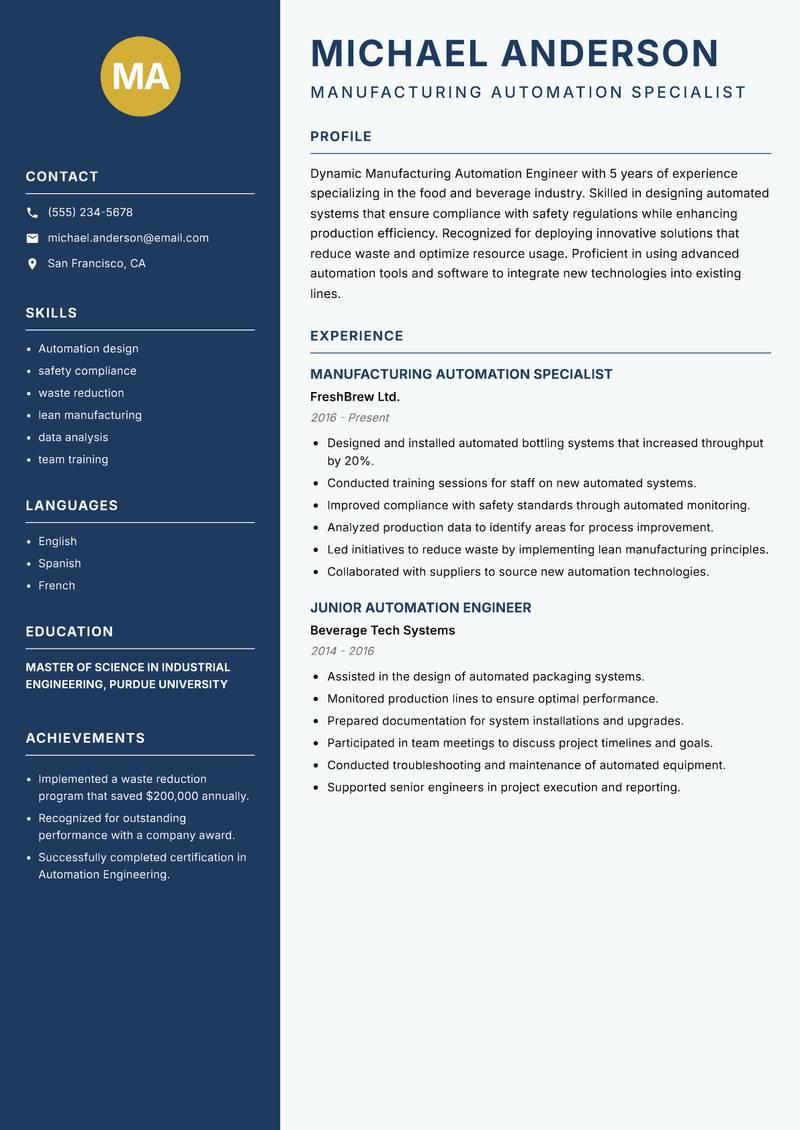
Classic Clean
Use Template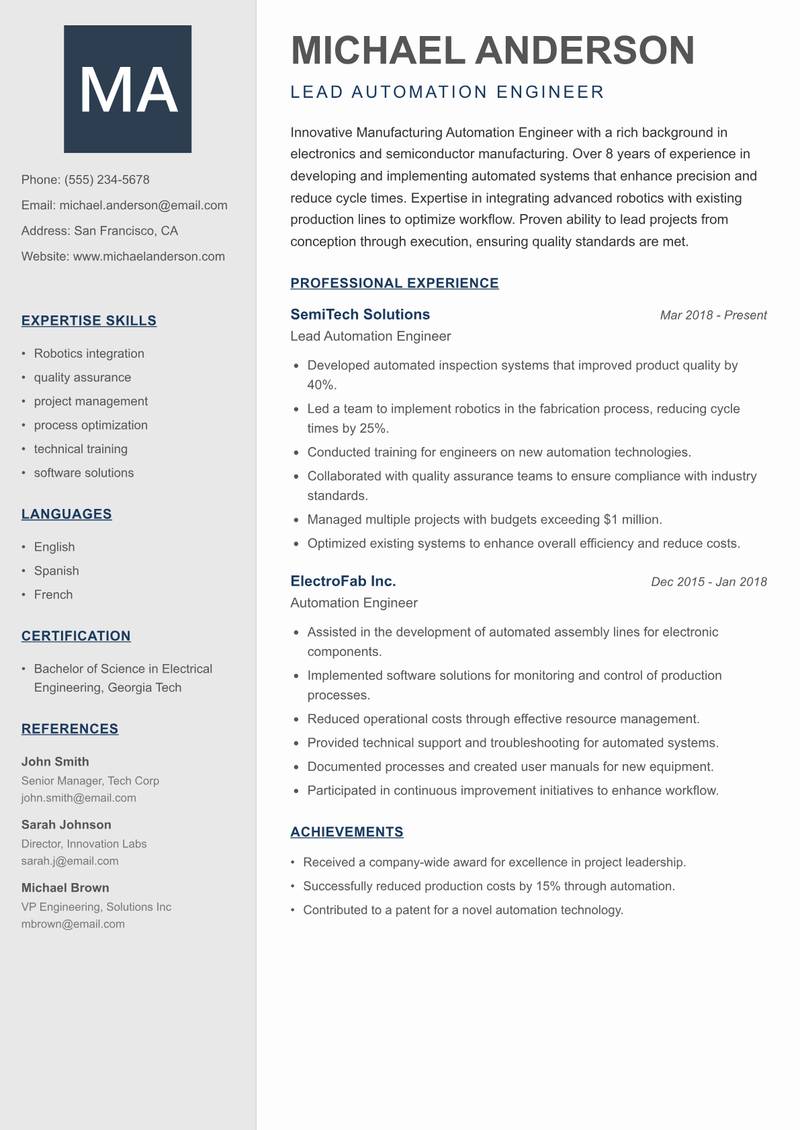
Creative Minimal
Use Template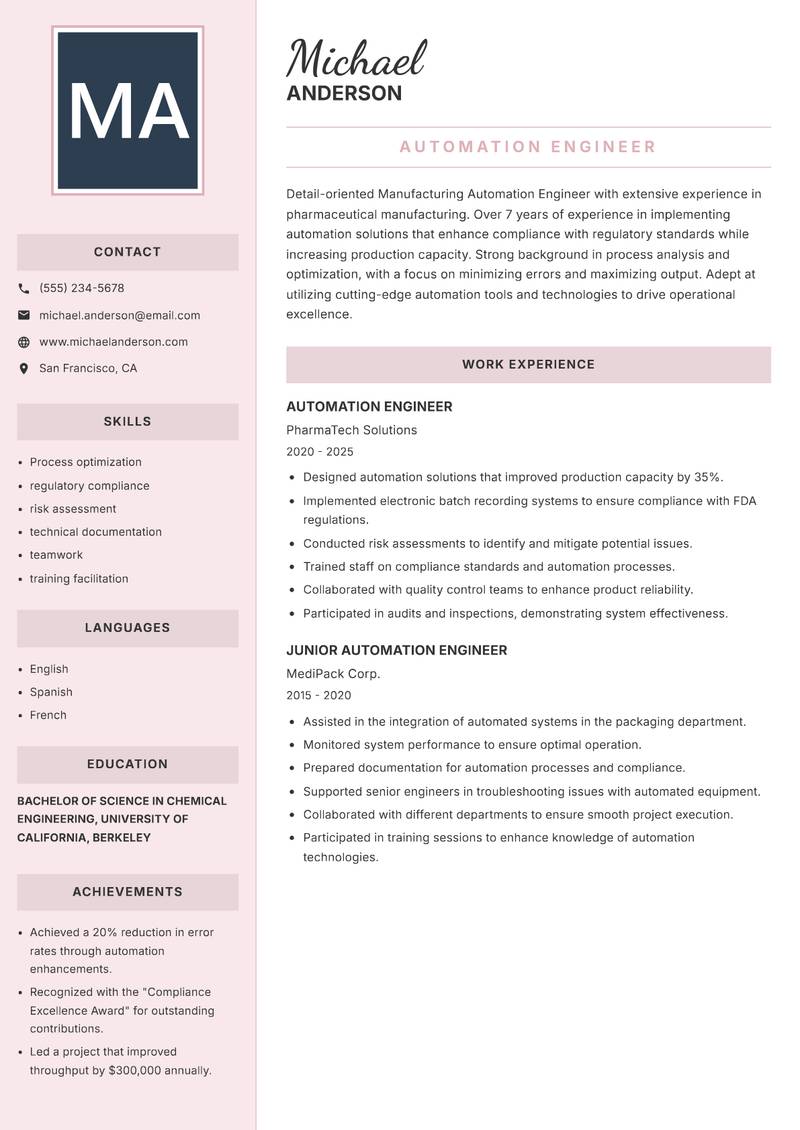
Executive
Use Template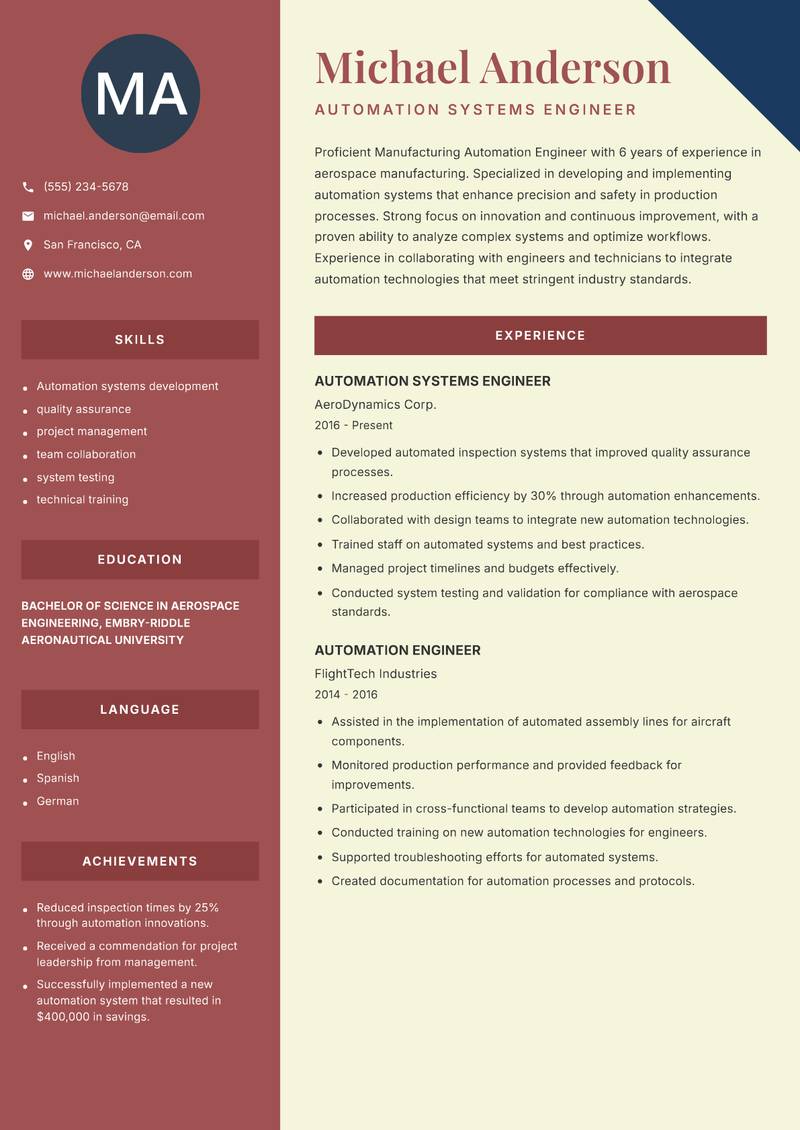
Two Column
Use Template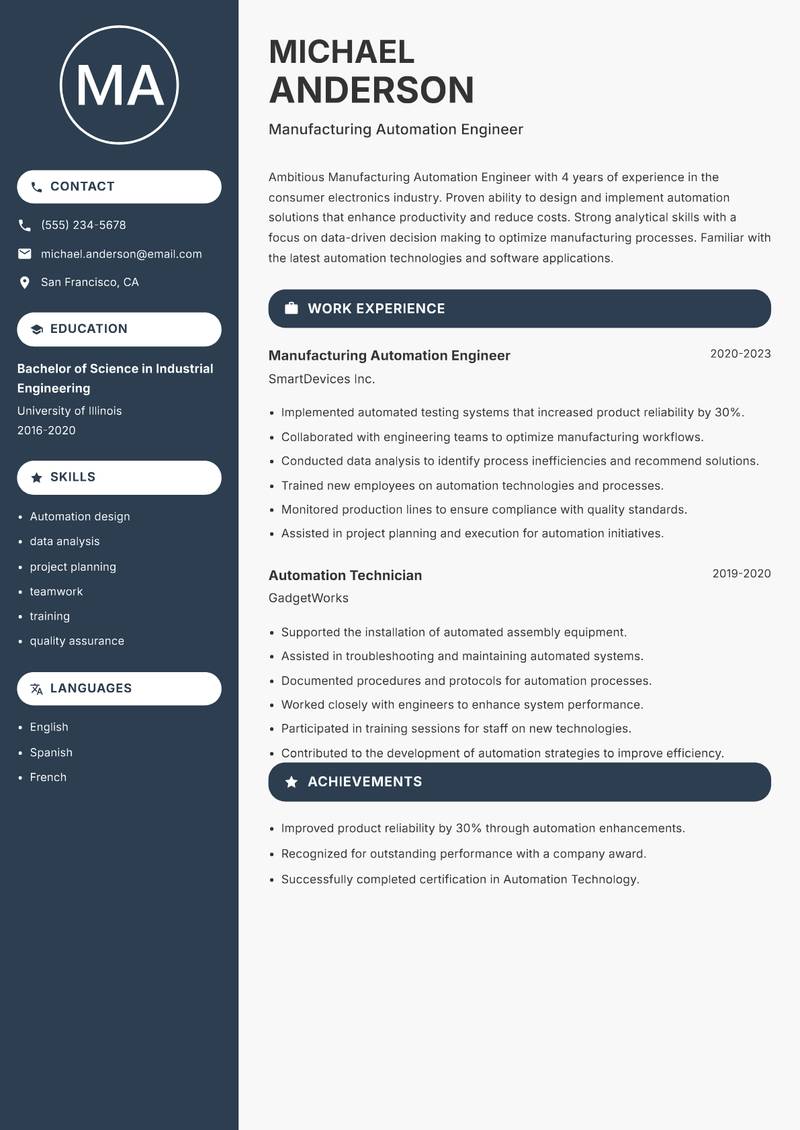
Compact
Use Template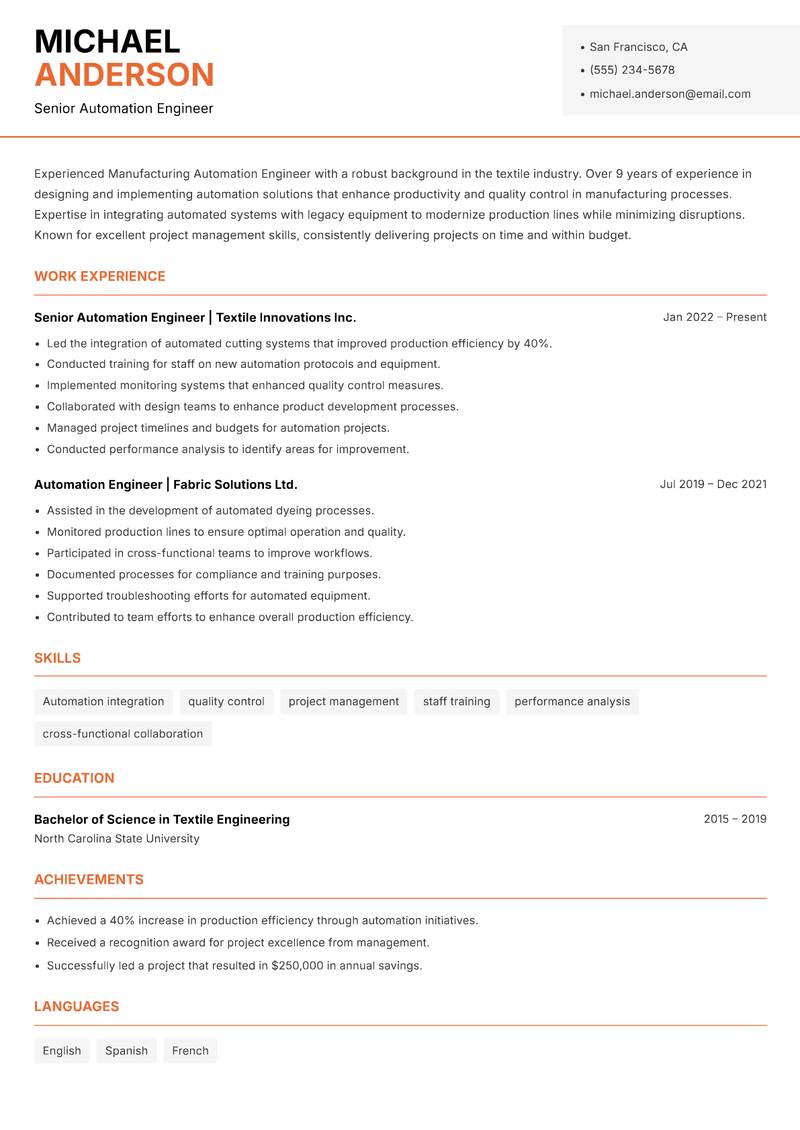
Modern Professional
Use Template7 Real Manufacturing Automation Engineer Resume Examples
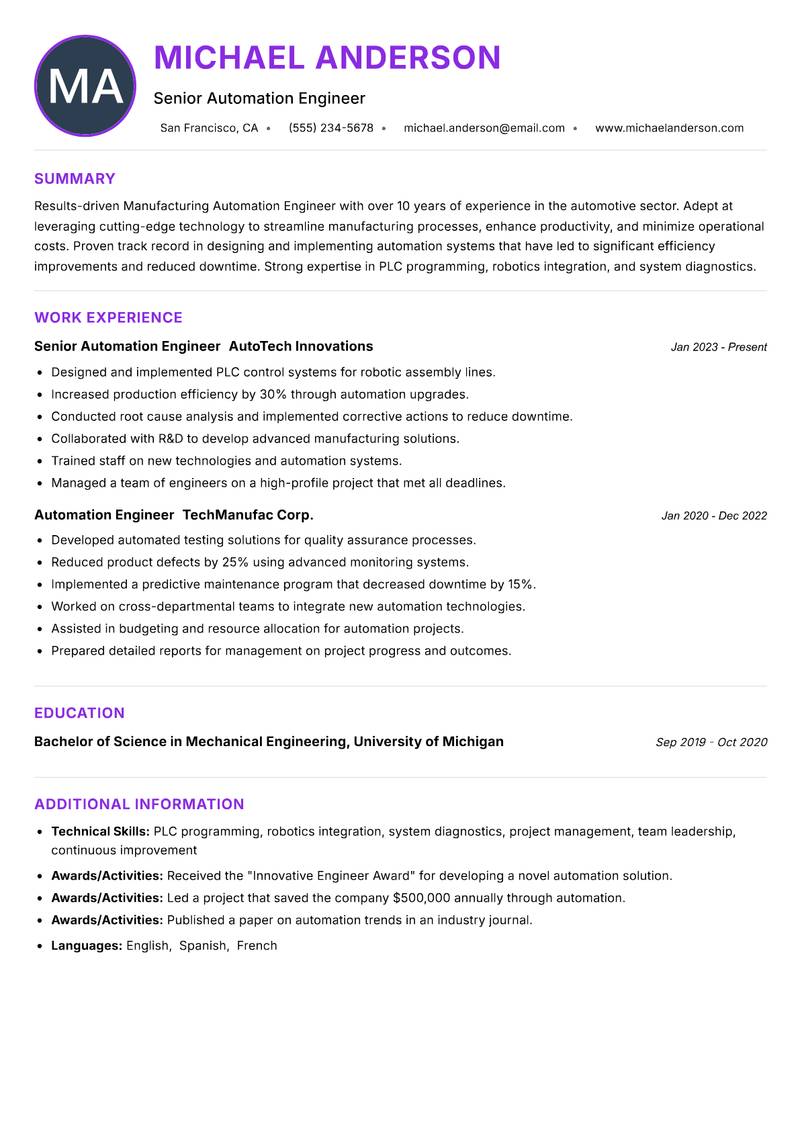
Senior Automation Engineer with 10+ Years Experience
Summary: Experienced Manufacturing Automation Engineer with over 10 years of experience in the automotive sector. Adept at leveraging cutting-edge technology to streamline manufacturing processes, enhance productivity, and minimize operational costs. Proven track record in designing and implementing automation systems that have led to significant efficiency improvements and reduced downtime. Strong expertise in PLC programming, robotics integration, and system diagnostics. Committed to driving innovation and fostering a culture of continuous improvement within teams. Recognized for ability to translate complex technical concepts into actionable strategies and collaborate with cross-functional teams to achieve organizational goals. Holds a degree in Mechanical Engineering and several certifications in automation technologies.
Description:
- Designed and implemented PLC control systems for robotic assembly lines.
- Increased production efficiency by 30% through automation upgrades.
- Conducted root cause analysis and implemented corrective actions to reduce downtime.
- Collaborated with R&D to develop advanced manufacturing solutions.
- Trained staff on new technologies and automation systems.
- Managed a team of engineers on a high-profile project that met all deadlines.
🏆 Key Achievements
Manufacturing Automation Specialist with 5+ Years Experience
Summary: Dynamic Manufacturing Automation Engineer with 5 years of experience specializing in the food and beverage industry. Skilled in designing automated systems that ensure compliance with safety regulations while enhancing production efficiency. Recognized for deploying innovative solutions that reduce waste and optimize resource usage. Proficient in using advanced automation tools and software to integrate new technologies into existing lines. Strong communicator with a knack for training and mentoring junior engineers. Committed to sustainability and implementing green manufacturing practices. Holds a Master's degree in Industrial Engineering and various industry certifications.
Description:
- Designed and installed automated bottling systems that increased throughput by 20%.
- Conducted training sessions for staff on new automated systems.
- Improved compliance with safety standards through automated monitoring.
- Analyzed production data to identify areas for process improvement.
- Led initiatives to reduce waste by implementing lean manufacturing principles.
- Collaborated with suppliers to source new automation technologies.
🏆 Key Achievements
Lead Automation Engineer with 8+ Years Experience
Summary: Innovative Manufacturing Automation Engineer with a rich background in electronics and semiconductor manufacturing. Over 8 years of experience in developing and implementing automated systems that enhance precision and reduce cycle times. Expertise in integrating advanced robotics with existing production lines to optimize workflow. Proven ability to lead projects from conception through execution, ensuring quality standards are met. Passionate about leveraging technology to improve operational efficiency and reduce costs. Holds a Bachelor's degree in Electrical Engineering and several relevant certifications in automation technologies.
Description:
- Developed automated inspection systems that improved product quality by 40%.
- Led a team to implement robotics in the fabrication process, reducing cycle times by 25%.
- Conducted training for engineers on new automation technologies.
- Collaborated with quality assurance teams to ensure compliance with industry standards.
- Managed multiple projects with budgets exceeding $1 million.
- Optimized existing systems to enhance overall efficiency and reduce costs.
🏆 Key Achievements
Automation Engineer with 7+ Years Experience
Summary: Detail-oriented Manufacturing Automation Engineer with extensive experience in pharmaceutical manufacturing. Over 7 years of experience in implementing automation solutions that enhance compliance with regulatory standards while increasing production capacity. Strong background in process analysis and optimization, with a focus on minimizing errors and maximizing output. Adept at utilizing cutting-edge automation tools and technologies to drive operational excellence. Known for excellent problem-solving skills and the ability to work collaboratively with cross-functional teams. Holds a degree in Chemical Engineering and relevant certifications in automation and quality management.
Description:
- Designed automation solutions that improved production capacity by 35%.
- Implemented electronic batch recording systems to ensure compliance with FDA regulations.
- Conducted risk assessments to identify and mitigate potential issues.
- Trained staff on compliance standards and automation processes.
- Collaborated with quality control teams to enhance product reliability.
- Participated in audits and inspections, demonstrating system effectiveness.
🏆 Key Achievements
Automation Systems Engineer with 6+ Years Experience
Summary: Proficient Manufacturing Automation Engineer with 6 years of experience in aerospace manufacturing. Specialized in developing and implementing automation systems that enhance precision and safety in production processes. Strong focus on innovation and continuous improvement, with a proven ability to analyze complex systems and optimize workflows. Experience in collaborating with engineers and technicians to integrate automation technologies that meet stringent industry standards. Excellent project management skills with the ability to lead teams and deliver projects on time. Holds a Bachelor’s degree in Aerospace Engineering and certifications in automation technology.
Description:
- Developed automated inspection systems that improved quality assurance processes.
- Increased production efficiency by 30% through automation enhancements.
- Collaborated with design teams to integrate new automation technologies.
- Trained staff on automated systems and best practices.
- Managed project timelines and budgets effectively.
- Conducted system testing and validation for compliance with aerospace standards.
🏆 Key Achievements
Manufacturing Automation Engineer with 4+ Years Experience
Summary: Driven Manufacturing Automation Engineer with 4 years of experience in the consumer electronics industry. Proven ability to design and implement automation solutions that enhance productivity and reduce costs. Strong analytical skills with a focus on data-driven decision making to optimize manufacturing processes. Familiar with the latest automation technologies and software applications. Known for strong teamwork and collaboration skills, effectively communicating with cross-functional teams to achieve project objectives. Holds a Bachelor’s degree in Industrial Engineering and relevant certifications in automation systems.
Description:
- Implemented automated testing systems that increased product reliability by 30%.
- Collaborated with engineering teams to optimize manufacturing workflows.
- Conducted data analysis to identify process inefficiencies and recommend solutions.
- Trained new employees on automation technologies and processes.
- Monitored production lines to ensure compliance with quality standards.
- Assisted in project planning and execution for automation initiatives.
🏆 Key Achievements
Senior Automation Engineer with 9+ Years Experience
Summary: Experienced Manufacturing Automation Engineer with a robust background in the textile industry. Over 9 years of experience in designing and implementing automation solutions that enhance productivity and quality control in manufacturing processes. Expertise in integrating automated systems with legacy equipment to modernize production lines while minimizing disruptions. Known for excellent project management skills, consistently delivering projects on time and within budget. Strong communicator with a focus on collaborative problem-solving and continuous improvement. Holds a degree in Textile Engineering and certifications in automation technologies.
Description:
- Led the integration of automated cutting systems that improved production efficiency by 40%.
- Conducted training for staff on new automation protocols and equipment.
- Implemented monitoring systems that enhanced quality control measures.
- Collaborated with design teams to enhance product development processes.
- Managed project timelines and budgets for automation projects.
- Conducted performance analysis to identify areas for improvement.
🏆 Key Achievements
Key Skills for Manufacturing Automation Engineer
ATS Optimization Tips
Increase your chances of getting hired
Use Standard Headings
Use common section titles like Experience, Skills, etc.
Include Keywords
Add role-specific keywords from the job description
Keep it Simple
Avoid complex tables, images and graphics
Save in Right Format
Use PDF format unless otherwise specified
Manufacturing Automation Engineer Salary Insights
Average Salary
$92,500
per year
Salary Range
$70,000 - $115,000
per year
Top Paying Cities
Los Angeles, Seattle, Houston, Dallas, Boston
Source: Glassdoor, Payscale, Indeed (Updated July 2025)
Everything you need to write a great Manufacturing Automation Engineer resume
Strong Action Verbs to Use
Resume Writing Tips
- →Layer your resume with relevant automation projects, specifying technologies used and their impact on production outcomes.
- →Incorporate measurable results, such as percentage improvements in efficiency, to showcase your contributions.
- →Highlight experience with industry-standard automation tools and methodologies to set yourself apart from other candidates.
- →Tailor your resume for each job application, aligning your skills with specific roles outlined in the job description.
- →Focus on soft skills chosen for collaboration within multi-disciplinary teams, emphasizing communication and problem-solving capabilities.
Common Mistakes to Avoid
- ✕Listing generic engineering skills without mentioning specific automation technologies or tools.
- ✕Failing to quantify achievements—such as efficiency gains resulting from implemented solutions.
- ✕Providing excessive detail on irrelevant work experiences; instead, focus on those pertinent to automation engineering.
- ✕Using a one-size-fits-all resume for diverse roles within engineering; customization is key for attracting employer attention.
ATS Keywords for Manufacturing Automation Engineer
Manufacturing Automation Engineer Career Path
Relevant Certifications
Career Progression
Entry-Level Manufacturing Automation Engineer
Typically involves assisting senior engineers with the design and implementation of automation solutions, focusing on learning company systems and tools.
Mid-Level Manufacturing Automation Engineer
In this role, engineers take on more complex projects, including designing control systems and integrating automation technology into existing processes.
Senior Manufacturing Automation Engineer
Leads automation projects and teams, responsible for the strategic development of automation methods and overseeing the implementation of production systems.
Automation Engineering Manager
Manages a team of automation engineers, coordinates projects, allocates resources, and ensures all automation strategies align with company goals.
Director of Automation Engineering
Sets the vision for automation efforts across the company, oversees engineering efforts, and collaborates with other departments to drive innovation.
Manufacturing Automation Engineer Interview Questions
What types of PLCs are you most familiar with, and how have you utilized them in past projects? +
Highlight specific PLC brands and models you've worked with and detail your responsibilities in projects involving them.
Can you describe a challenging automation project you managed and the tools you used? +
Provide a detailed account of the project's scope, your role, challenges faced, and the outcomes.
How do you ensure the reliability and safety of automated systems? +
Discuss specific protocols or methodologies you've implemented to enhance system safety.
What role does data analysis play in your automation process? +
Explain how you leverage data to refine automation strategies and enhance operational efficiency.
How have you collaborated with cross-functional teams to implement automation solutions? +
Reference specific instances where teamwork was crucial to successful project outcomes.
What trends do you see shaping the future of manufacturing automation? +
Share your insights on emerging technologies and how they might affect production processes.
About the Manufacturing Automation Engineer Role
Within manufacturing sectors, automation engineers influence operational efficiencies by designing and refining complex automated systems tailored to production requirements. These professionals work closely with programming tools like PLCs, creating interfaces with HMIs and integrating robotics into workflows. Their focus lies on enhancing productivity, reducing downtime, and ensuring quality while collaborating with production teams to identify automation needs.
Frequently Asked Questions
What does a typical day for a Manufacturing Automation Engineer look like? +
A typical day may include reviewing system performance data, troubleshooting automation issues, collaborating with cross-functional teams to optimize existing systems, and designing new automation features.
What types of industries employ Manufacturing Automation Engineers? +
Industries such as automotive, electronics, aerospace, food and beverage, and pharmaceuticals commonly require automation engineers to enhance their manufacturing processes.
What programming languages should a Manufacturing Automation Engineer be proficient in? +
Key languages include ladder logic for PLCs, structured text for programming, and potentially scripting languages like Python or Java for automation scripts.
Are there opportunities for remote work in this field? +
While hands-on roles within manufacturing plants require on-site presence, design and programming tasks may offer remote work flexibility.
What are the common challenges faced by Manufacturing Automation Engineers? +
Challenges may include integrating new technologies into legacy systems, maintaining uptime in automated processes, and ensuring safety standards are met during system design.
How crucial is continuous learning in the field of manufacturing automation? +
With rapid advancements in technology, continuous learning is essential to stay updated on new tools, methodologies, and trends in the industry.
More Resume Examples You Might Like
Related Career Paths
Other roles candidates for Manufacturing Automation Engineer positions often also consider.
Will this Manufacturing Automation Engineer resume pass the ATS scan?
Upload it and get an instant AI-scored compatibility check with specific fixes.
Check My Resume →
Pair it with a matching cover letter
AI drafts a first version from your job title and strengths — edit it live, then download the PDF.
Write My Cover Letter →
Written by Nohaya Career Team
Reviewed by HR Professionals · Updated July 2025
Ready to Build Your Perfect Resume?
Choose from 1000+ professional templates and land your dream job.
Create My Resume Now