Build an ATS-Friendly
Larval Rearing Specialist Resume
That Gets Interviews
Effective larval rearing practices hinge on an exceptional understanding of aquatic biology, particularly how environmental factors influence larval development. A Larval Rearing Specialist meticulously tunes rearing systems to optimize conditions such as light, temperature, and water quality, directly influencing…
Larval Rearing Specialist Resume Templates
Modern Professional
Use Template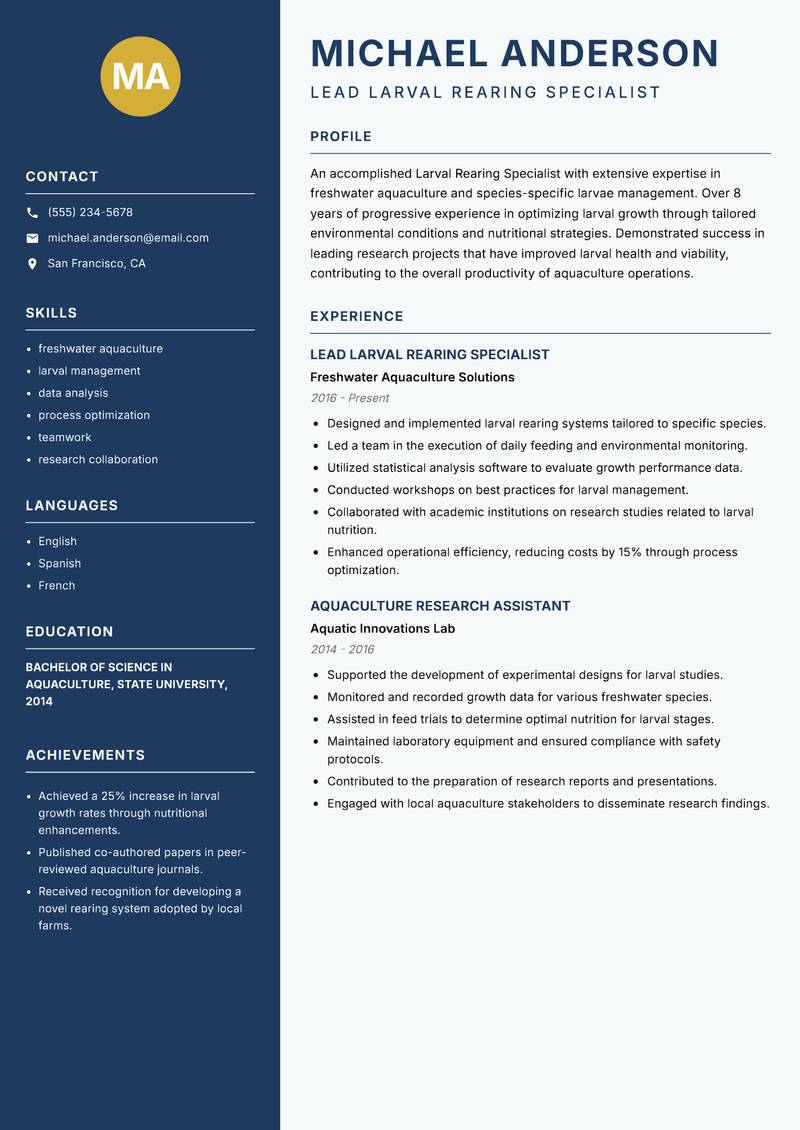
Classic Clean
Use Template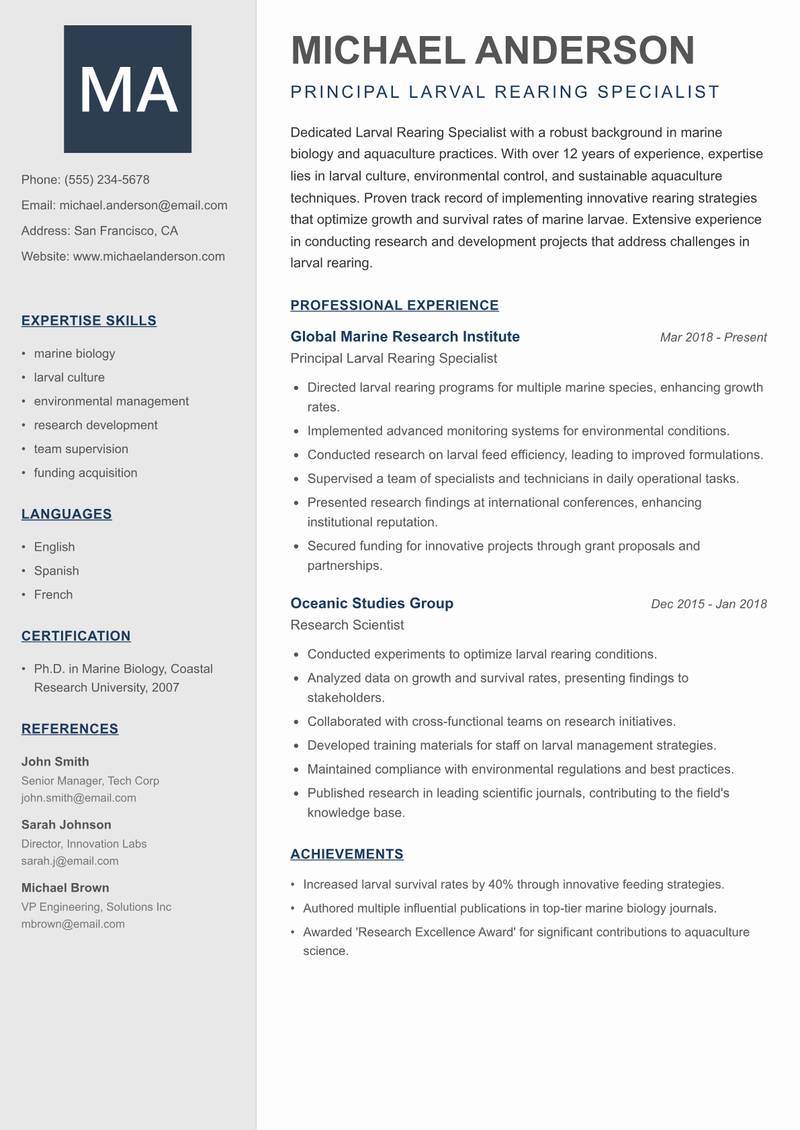
Creative Minimal
Use Template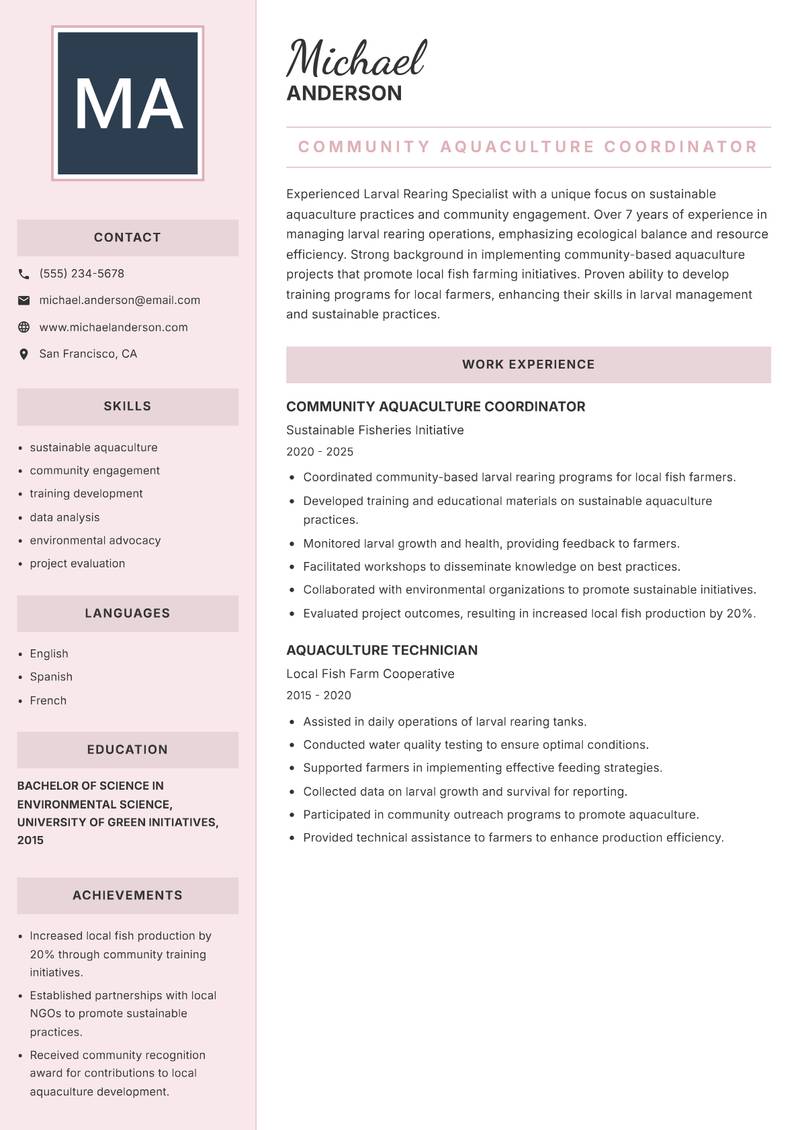
Executive
Use Template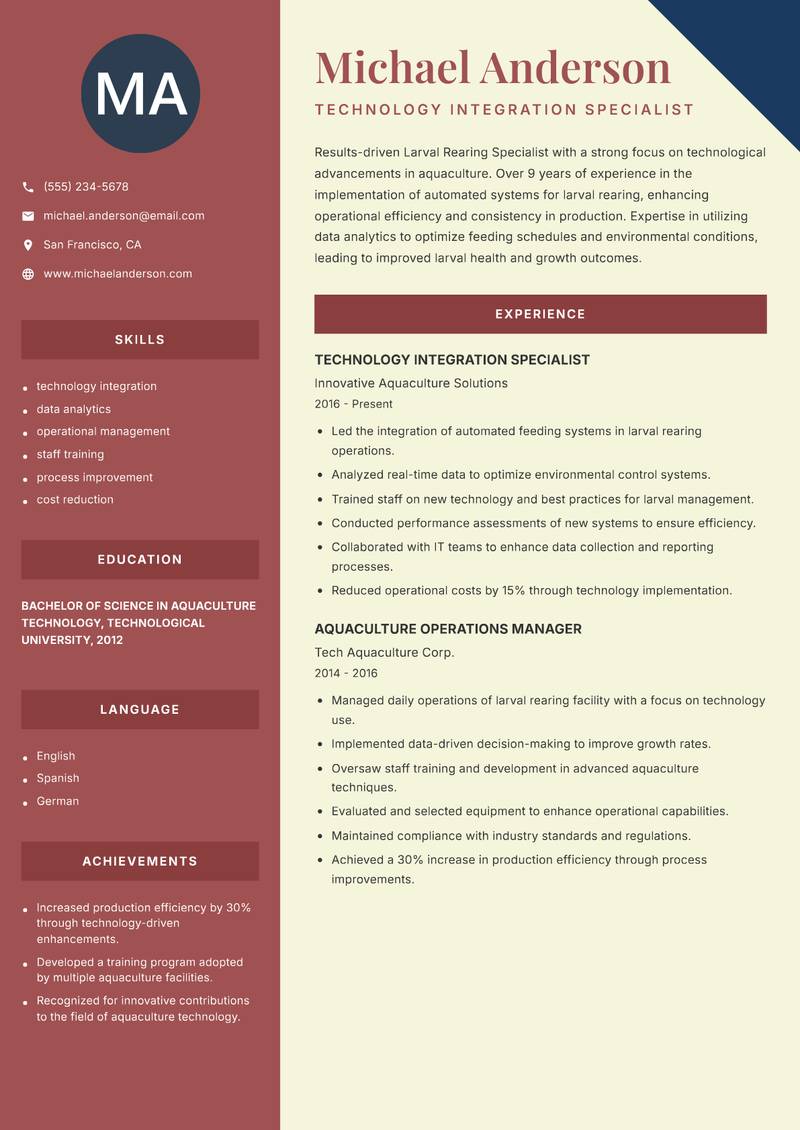
Two Column
Use Template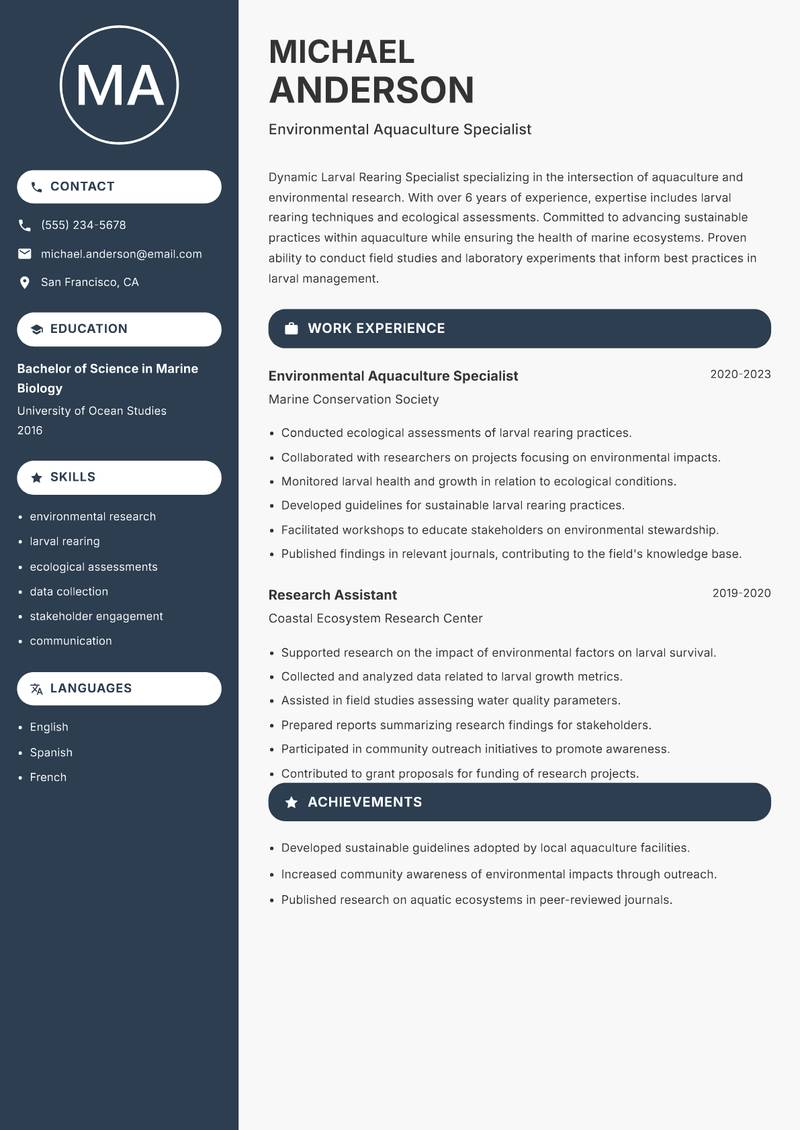
Compact
Use Template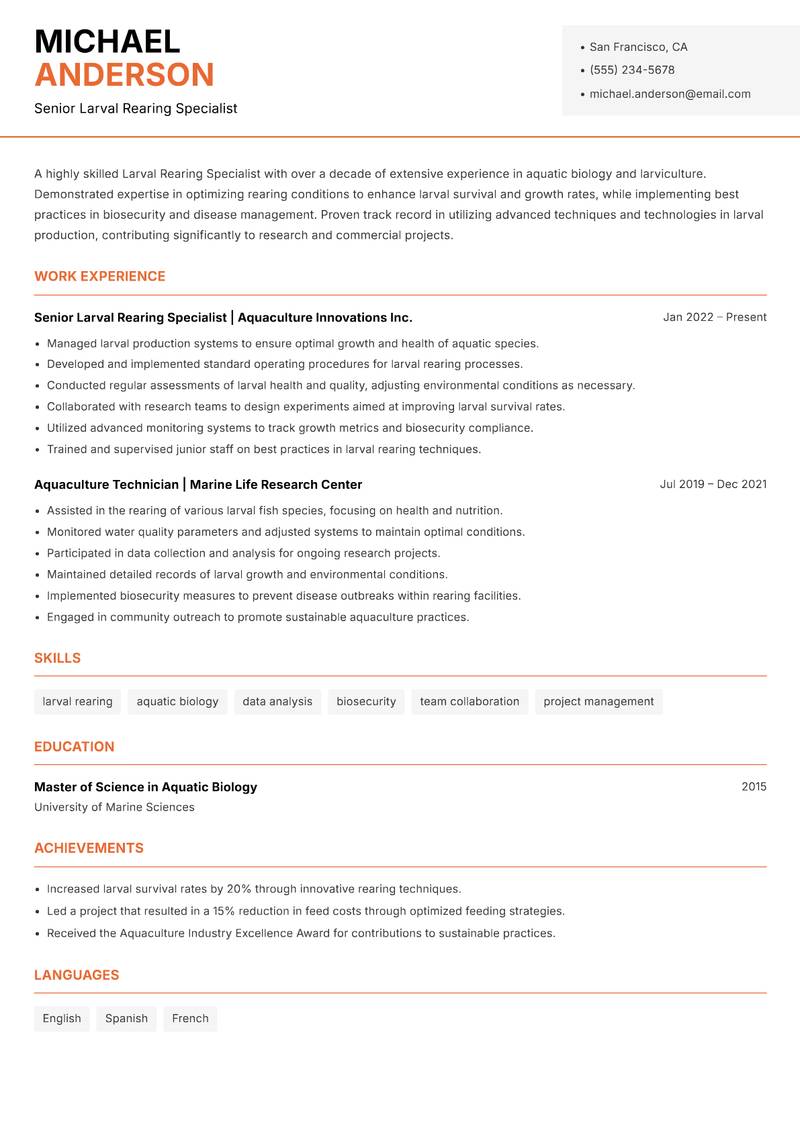
Modern Professional
Use Template7 Real Larval Rearing Specialist Resume Examples
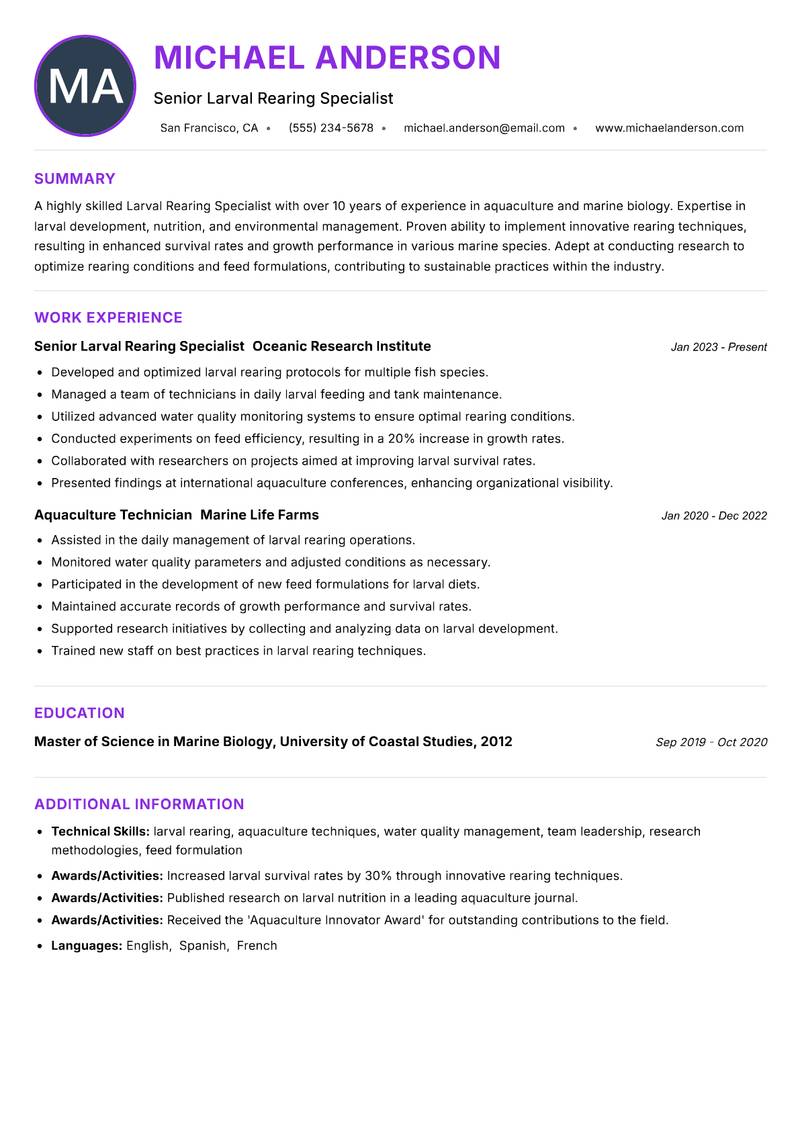
Senior Larval Rearing Specialist with 10+ Years Experience
Summary: A highly skilled Larval Rearing Specialist with over 10 years of experience in aquaculture and marine biology. Expertise in larval development, nutrition, and environmental management. Proven ability to implement innovative rearing techniques, resulting in enhanced survival rates and growth performance in various marine species. Adept at conducting research to optimize rearing conditions and feed formulations, contributing to sustainable practices within the industry. Strong analytical skills combined with a passion for marine conservation and ecosystem health. Excellent communication and leadership capabilities, fostering collaboration among multidisciplinary teams to achieve project objectives. Committed to advancing knowledge in larval rearing methodologies through continuous professional development and active participation in industry forums.
Description:
- Developed and optimized larval rearing protocols for multiple fish species.
- Managed a team of technicians in daily larval feeding and tank maintenance.
- Utilized advanced water quality monitoring systems to ensure optimal rearing conditions.
- Conducted experiments on feed efficiency, resulting in a 20% increase in growth rates.
- Collaborated with researchers on projects aimed at improving larval survival rates.
- Presented findings at international aquaculture conferences, enhancing organizational visibility.
🏆 Key Achievements
Lead Larval Rearing Specialist with 8+ Years Experience
Summary: An accomplished Larval Rearing Specialist with extensive expertise in freshwater aquaculture and species-specific larvae management. Over 8 years of progressive experience in optimizing larval growth through tailored environmental conditions and nutritional strategies. Demonstrated success in leading research projects that have improved larval health and viability, contributing to the overall productivity of aquaculture operations. Proficient in utilizing cutting-edge technology for monitoring and data analysis, ensuring precise control of rearing environments. Committed to fostering sustainable practices and enhancing operational efficiency through innovative solutions. Strong interpersonal skills facilitate effective collaboration with stakeholders and team members, driving projects to successful completion.
Description:
- Designed and implemented larval rearing systems tailored to specific species.
- Led a team in the execution of daily feeding and environmental monitoring.
- Utilized statistical analysis software to evaluate growth performance data.
- Conducted workshops on best practices for larval management.
- Collaborated with academic institutions on research studies related to larval nutrition.
- Enhanced operational efficiency, reducing costs by 15% through process optimization.
🏆 Key Achievements
Principal Larval Rearing Specialist with 12+ Years Experience
Summary: Dedicated Larval Rearing Specialist with a robust background in marine biology and aquaculture practices. With over 12 years of experience, expertise lies in larval culture, environmental control, and sustainable aquaculture techniques. Proven track record of implementing innovative rearing strategies that optimize growth and survival rates of marine larvae. Extensive experience in conducting research and development projects that address challenges in larval rearing. Strong analytical skills complemented by a commitment to environmental stewardship and conservation. A collaborative leader with the ability to inspire teams and drive projects towards successful outcomes, while maintaining a focus on best practices and industry standards.
Description:
- Directed larval rearing programs for multiple marine species, enhancing growth rates.
- Implemented advanced monitoring systems for environmental conditions.
- Conducted research on larval feed efficiency, leading to improved formulations.
- Supervised a team of specialists and technicians in daily operational tasks.
- Presented research findings at international conferences, enhancing institutional reputation.
- Secured funding for innovative projects through grant proposals and partnerships.
🏆 Key Achievements
Community Aquaculture Coordinator with 7+ Years Experience
Summary: Experienced Larval Rearing Specialist with a unique focus on sustainable aquaculture practices and community engagement. Over 7 years of experience in managing larval rearing operations, emphasizing ecological balance and resource efficiency. Strong background in implementing community-based aquaculture projects that promote local fish farming initiatives. Proven ability to develop training programs for local farmers, enhancing their skills in larval management and sustainable practices. Skilled in data collection and analysis to inform best practices in aquaculture. A proactive advocate for environmental sustainability, with a commitment to improving community livelihoods through aquaculture.
Description:
- Coordinated community-based larval rearing programs for local fish farmers.
- Developed training and educational materials on sustainable aquaculture practices.
- Monitored larval growth and health, providing feedback to farmers.
- Facilitated workshops to disseminate knowledge on best practices.
- Collaborated with environmental organizations to promote sustainable initiatives.
- Evaluated project outcomes, resulting in increased local fish production by 20%.
🏆 Key Achievements
Technology Integration Specialist with 9+ Years Experience
Summary: Experienced Larval Rearing Specialist with a strong focus on technological advancements in aquaculture. Over 9 years of experience in the implementation of automated systems for larval rearing, enhancing operational efficiency and consistency in production. Expertise in utilizing data analytics to optimize feeding schedules and environmental conditions, leading to improved larval health and growth outcomes. Demonstrated ability to lead cross-functional teams in the integration of new technologies into existing processes. A proactive approach to problem-solving combined with a commitment to continuous improvement and innovation within the aquaculture sector.
Description:
- Led the integration of automated feeding systems in larval rearing operations.
- Analyzed real-time data to optimize environmental control systems.
- Trained staff on new technology and best practices for larval management.
- Conducted performance assessments of new systems to ensure efficiency.
- Collaborated with IT teams to enhance data collection and reporting processes.
- Reduced operational costs by 15% through technology implementation.
🏆 Key Achievements
Environmental Aquaculture Specialist with 6+ Years Experience
Summary: Dynamic Larval Rearing Specialist specializing in the intersection of aquaculture and environmental research. With over 6 years of experience, expertise includes larval rearing techniques and ecological assessments. Committed to advancing sustainable practices within aquaculture while ensuring the health of marine ecosystems. Proven ability to conduct field studies and laboratory experiments that inform best practices in larval management. Strong communication skills facilitate collaboration with environmental organizations and stakeholders to promote conservation efforts. A proactive learner, continuously seeking to enhance knowledge in marine biology and aquaculture advancements.
Description:
- Conducted ecological assessments of larval rearing practices.
- Collaborated with researchers on projects focusing on environmental impacts.
- Monitored larval health and growth in relation to ecological conditions.
- Developed guidelines for sustainable larval rearing practices.
- Facilitated workshops to educate stakeholders on environmental stewardship.
- Published findings in relevant journals, contributing to the field's knowledge base.
🏆 Key Achievements
Senior Larval Rearing Specialist with 8+ Years Experience
Summary: A highly skilled Larval Rearing Specialist with over a decade of extensive experience in aquatic biology and larviculture. Demonstrated expertise in optimizing rearing conditions to enhance larval survival and growth rates, while implementing best practices in biosecurity and disease management. Proven track record in utilizing advanced techniques and technologies in larval production, contributing significantly to research and commercial projects. Adept in analyzing and interpreting data to inform decision-making and improve operational efficiency. Strong collaborative skills, with a history of working alongside multidisciplinary teams to achieve project goals and enhance overall productivity. Committed to advancing the field through continuous education and application of innovative methodologies, ensuring sustainable practices in larval rearing processes. Recognized for exceptional problem-solving abilities and a results-oriented approach, driving success within the aquaculture industry.
Description:
- Managed larval production systems to ensure optimal growth and health of aquatic species.
- Developed and implemented standard operating procedures for larval rearing processes.
- Conducted regular assessments of larval health and quality, adjusting environmental conditions as necessary.
- Collaborated with research teams to design experiments aimed at improving larval survival rates.
- Utilized advanced monitoring systems to track growth metrics and biosecurity compliance.
- Trained and supervised junior staff on best practices in larval rearing techniques.
🏆 Key Achievements
Key Skills for Larval Rearing Specialist
ATS Optimization Tips
Increase your chances of getting hired
Use Standard Headings
Use common section titles like Experience, Skills, etc.
Include Keywords
Add role-specific keywords from the job description
Keep it Simple
Avoid complex tables, images and graphics
Save in Right Format
Use PDF format unless otherwise specified
Larval Rearing Specialist Salary Insights
Average Salary
$52,500
per year
Salary Range
$40,000 - $65,000
per year
Top Paying Cities
Los Angeles, Seattle, Houston, Dallas, Boston
Source: Glassdoor, Payscale, Indeed (Updated August 2025)
Everything you need to write a great Larval Rearing Specialist resume
Strong Action Verbs to Use
Resume Writing Tips
- →Highlight specific aquatic species worked with to demonstrate niche expertise.
- →Include quantifiable achievements related to larval survival rates for impact.
- →Emphasize experience with cutting-edge rearing technologies or methods.
- →Detail any direct involvement in research projects that improved rearing processes.
- →Specify proficiency in regulatory compliance concerning animal husbandry practices.
Common Mistakes to Avoid
- ✕Listing general aquaculture experience without specifying larval rearing.
- ✕Using vague terms like 'assisted' instead of detailing specific contributions.
- ✕Neglecting to mention collaboration with scientifically-informed teams or research.
- ✕Overlooking the importance of environmental management in your achievements.
- ✕Not showcasing adaptability in protocol changes based on new techniques.
ATS Keywords for Larval Rearing Specialist
Larval Rearing Specialist Career Path
Career Progression
Entry-Level
Larval Technician, focusing on daily care and monitoring of larval stock.
Mid-Level
Larval Rearing Specialist, managing specific populations, health assessments, and feeding protocols.
Senior-Level
Aquaculture Research Scientist, overseeing research projects aimed at improving larval rearing techniques.
Expert-Level
Aquaculture Facility Manager, responsible for overall operations and staffing of a breeding and rearing facility.
Executive-Level
Director of Aquaculture Operations, directing strategic decisions at a regional or corporate level.
Larval Rearing Specialist Interview Questions
What specific methods do you utilize to improve larval survival rates? +
Discuss techniques like optimized feeding strategies and water quality management.
How do you ensure biosecurity within your larval rearing environment? +
Provide details about equipment sanitation, worker training, and monitoring practices.
Describe your experience with live feed production. What are the challenges? +
Mention specific types of live feed used and the difficulties in maintaining cultures.
How do you assess the health of larval stock? +
Talk about indicators of health and specific assessments you conduct.
Can you explain a time when you adapted your rearing protocols based on research findings? +
Share a specific scenario illustrating adaptability based on scientific literature.
What role does environmental monitoring play in your daily routine? +
Discuss specific parameters you monitor regularly and their impact.
How do you prioritize tasks during peak rearing seasons? +
Explain your strategy for time management and delegation in busy periods.
About the Larval Rearing Specialist Role
Effective larval rearing practices hinge on an exceptional understanding of aquatic biology, particularly how environmental factors influence larval development. A Larval Rearing Specialist meticulously tunes rearing systems to optimize conditions such as light, temperature, and water quality, directly influencing larval survival and growth. Collaboration with biologists and other aquaculture professionals is essential to design experiments that improve feeding protocols and health assessments, yielding critical data that shapes operational decisions.
Frequently Asked Questions
View all →What is the primary focus of a Larval Rearing Specialist? +
The primary focus is to ensure optimal growth and health of larval fish by managing their environment and feeding processes.
What qualifications are usually required for this position? +
Typically requires a background in aquatic biology or a related field, often with experience in aquaculture.
What tools are essential for a Larval Rearing Specialist's daily work? +
Common tools include water quality testing kits, larviculture tanks, and monitoring software.
How important is research in this role? +
Research is crucial for advancing rearing techniques and adapting to challenges in larval health.
What are the biggest challenges faced in larval rearing? +
Challenges include disease management, unpredictable environmental conditions, and food resource availability.
Is experience with specific fish species necessary? +
Yes, familiarity with specific species can significantly enhance the skill set for effective larval rearing.
What are the career advancement opportunities for a Larval Rearing Specialist? +
Potential advancements include roles in facility management, research leadership, or specialized technical consulting.
More Resume Examples You Might Like
Will this Larval Rearing Specialist resume pass the ATS scan?
Upload it and get an instant AI-scored compatibility check with specific fixes.
Check My Resume →
Pair it with a matching cover letter
AI drafts a first version from your job title and strengths — edit it live, then download the PDF.
Write My Cover Letter →
Written by Nohaya Career Team
Reviewed by HR Professionals · Updated August 2025
Ready to Build Your Perfect Resume?
Choose from 1000+ professional templates and land your dream job.
Create My Resume Now