Build an ATS-Friendly
Judicial Trainer Resume
That Gets Interviews
Crafting effective training for judges and court personnel requires an understanding of both legal intricacies and educational methodologies. Judicial Trainers design and deliver specialized programs that address the evolving landscape of judicial practices. Their work includes developing curriculum aligned with…

Judicial Trainer Resume Templates
Modern Professional
Use Template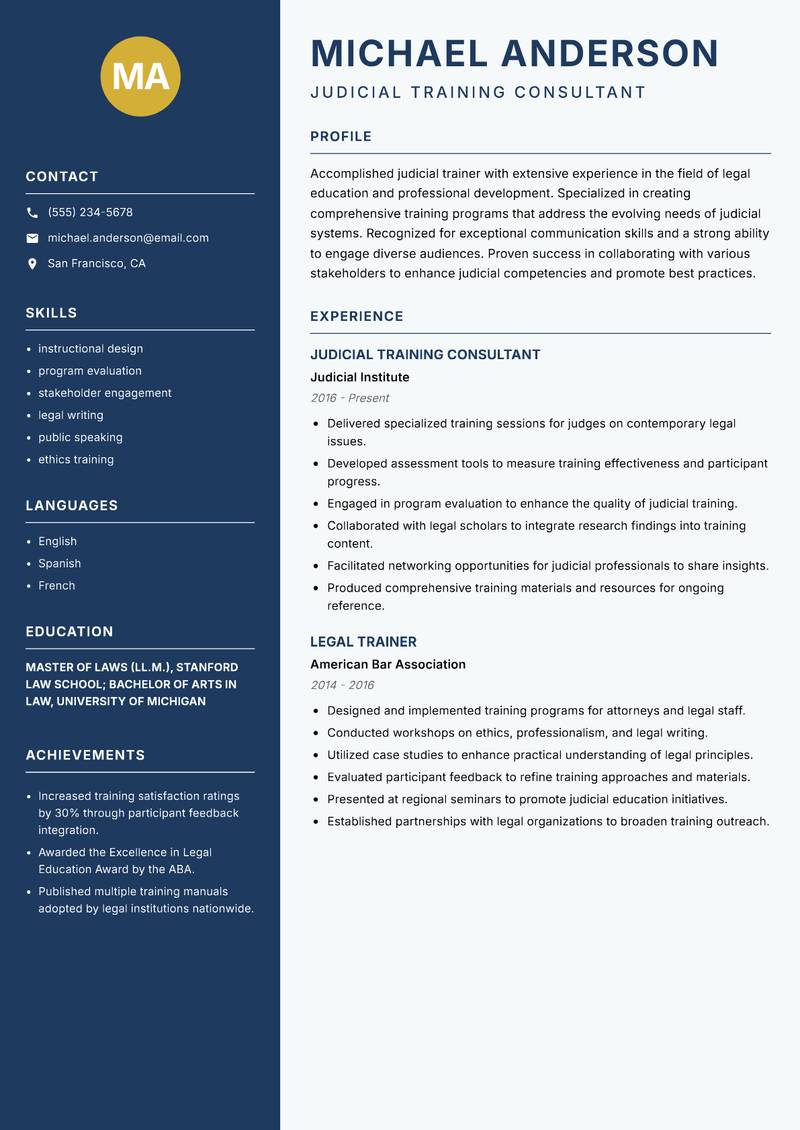
Classic Clean
Use Template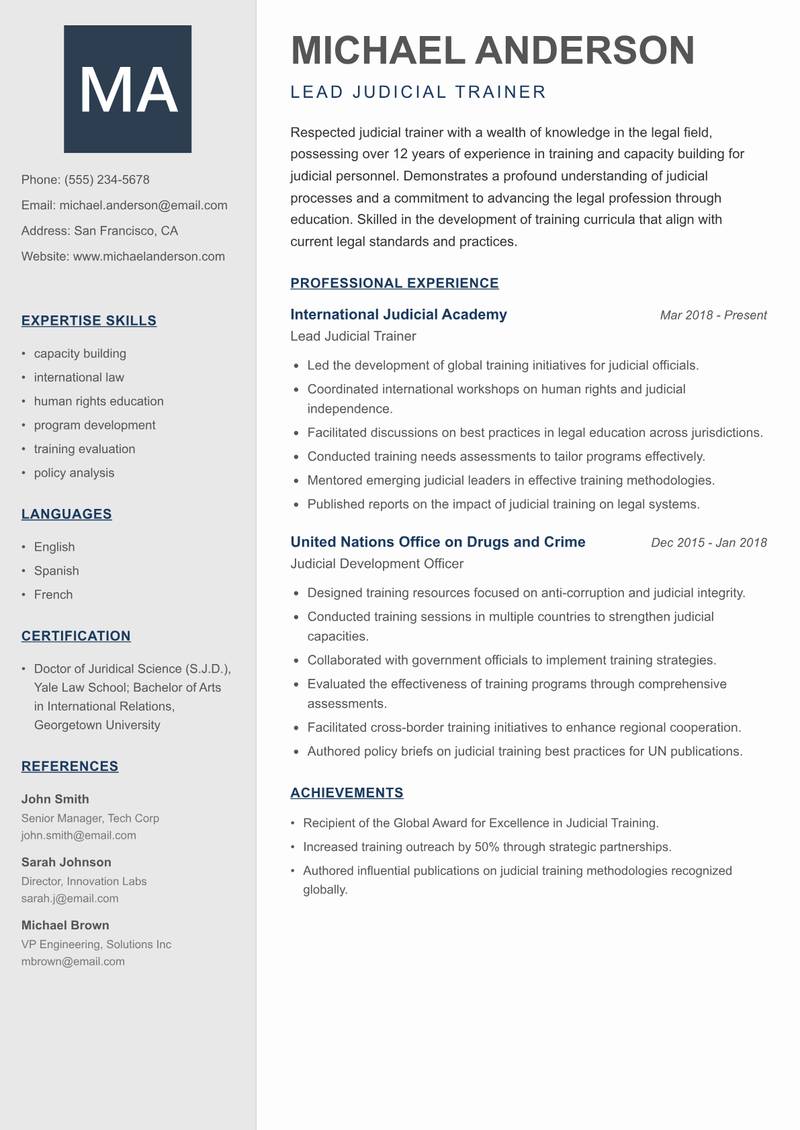
Creative Minimal
Use Template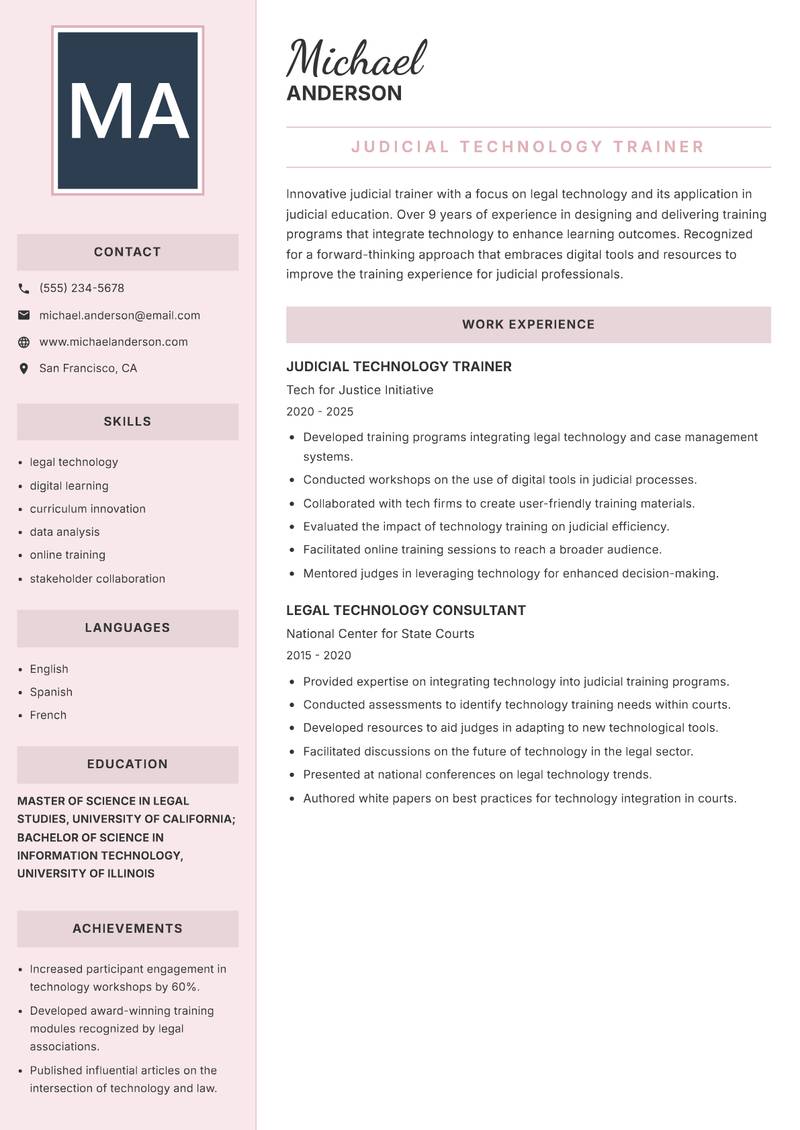
Executive
Use Template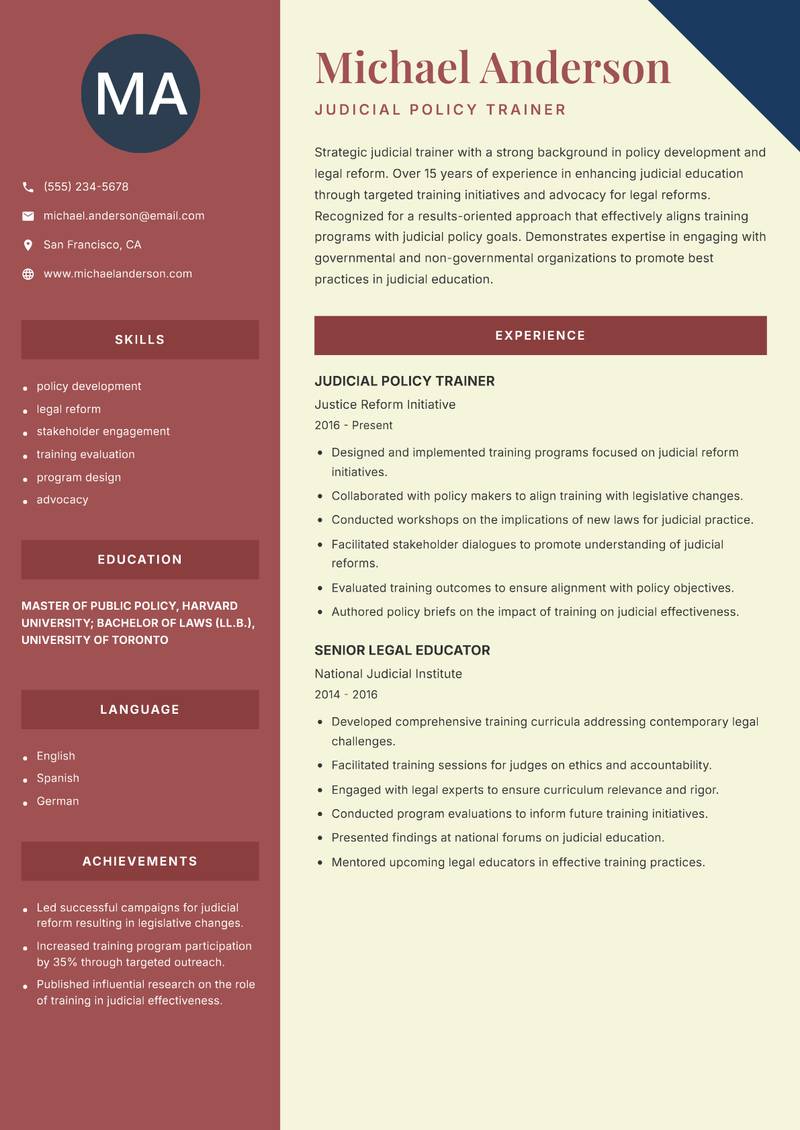
Two Column
Use Template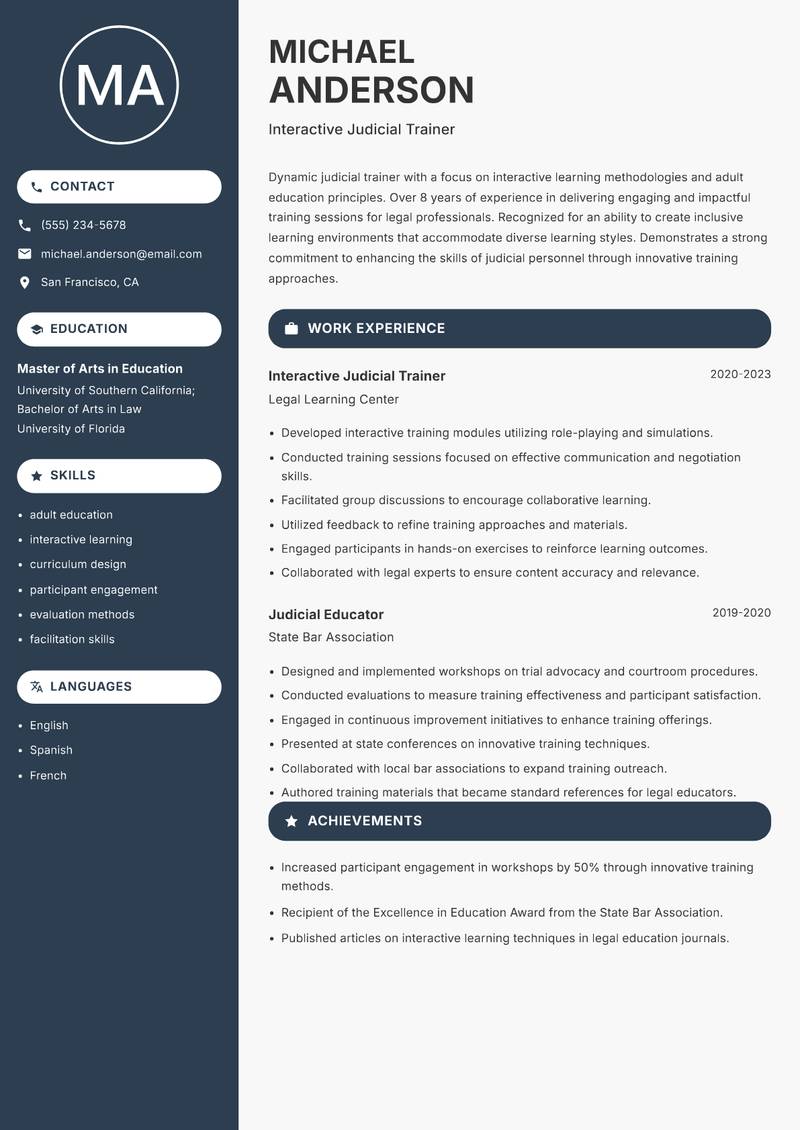
Compact
Use Template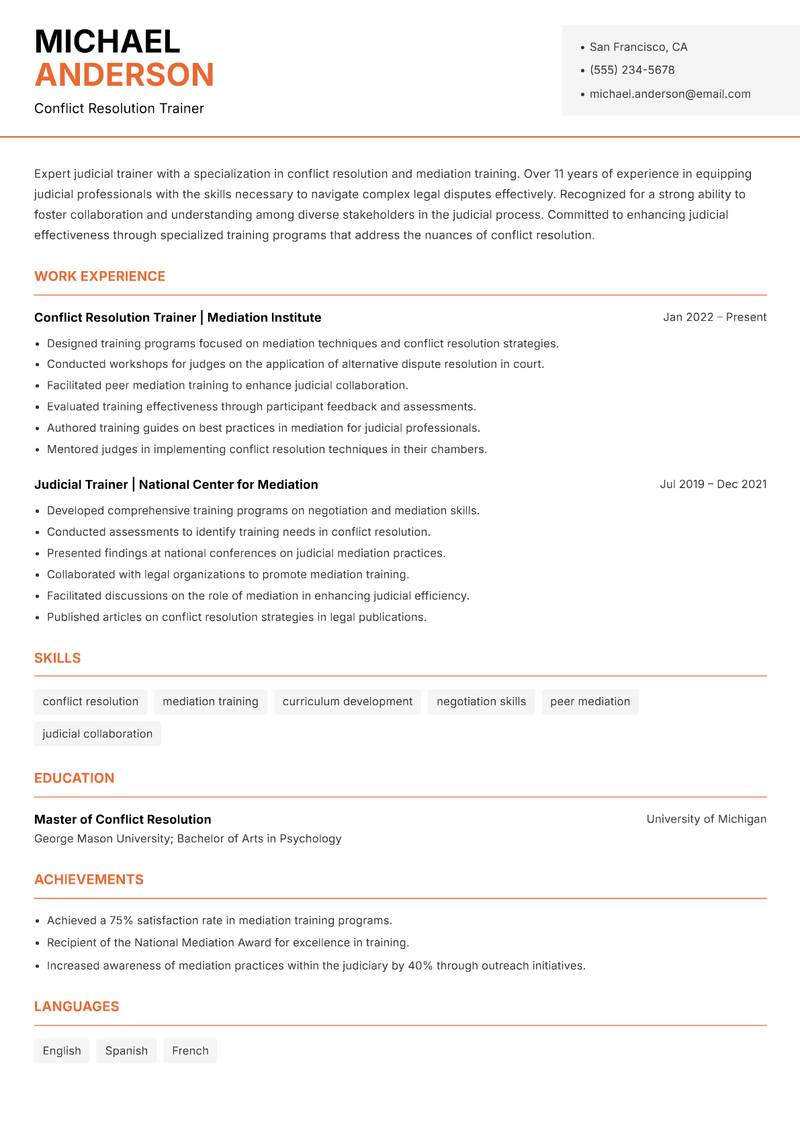
Modern Professional
Use Template7 Real Judicial Trainer Resume Examples
Senior Judicial Trainer with 8+ Years Experience
Summary: Distinguished judicial trainer with over a decade of experience in developing and implementing training programs for legal professionals. Demonstrates exceptional expertise in curriculum design and has successfully facilitated workshops that enhance judicial understanding of legal frameworks and methodologies. Recognized for a keen ability to translate complex legal concepts into accessible training materials. Proven track record in collaborating with judicial bodies to elevate the standards of legal education and practice. Committed to fostering an environment of continuous learning and professional development within the judiciary. Adept at utilizing innovative training technologies to engage participants and optimize learning outcomes. Holds a strong commitment to promoting ethical practices and adherence to legal standards through comprehensive training initiatives.
Description:
- Designed and delivered advanced training modules for judges nationwide.
- Coordinated with legal experts to ensure curriculum relevance and accuracy.
- Utilized e-learning platforms to enhance participant engagement and retention.
- Conducted evaluations to assess training effectiveness and inform future programs.
- Facilitated cross-jurisdictional workshops to share best practices in legal adjudication.
- Mentored junior trainers, fostering a culture of excellence and professionalism.
🏆 Key Achievements
Judicial Training Consultant with 6+ Years Experience
Summary: Accomplished judicial trainer with extensive experience in the field of legal education and professional development. Specialized in creating comprehensive training programs that address the evolving needs of judicial systems. Recognized for exceptional communication skills and a strong ability to engage diverse audiences. Proven success in collaborating with various stakeholders to enhance judicial competencies and promote best practices. Committed to fostering a culture of ethical decision-making and integrity within the judiciary. Experienced in utilizing a variety of instructional strategies to accommodate different learning styles and preferences. Holds a passion for continuous improvement in legal education through innovative training solutions.
Description:
- Delivered specialized training sessions for judges on contemporary legal issues.
- Developed assessment tools to measure training effectiveness and participant progress.
- Engaged in program evaluation to enhance the quality of judicial training.
- Collaborated with legal scholars to integrate research findings into training content.
- Facilitated networking opportunities for judicial professionals to share insights.
- Produced comprehensive training materials and resources for ongoing reference.
🏆 Key Achievements
Lead Judicial Trainer with 10+ Years Experience
Summary: Respected judicial trainer with a wealth of knowledge in the legal field, possessing over 12 years of experience in training and capacity building for judicial personnel. Demonstrates a profound understanding of judicial processes and a commitment to advancing the legal profession through education. Skilled in the development of training curricula that align with current legal standards and practices. Recognized for a strategic approach to fostering collaborative learning environments that enhance judicial competencies. Proven ability to engage with a variety of stakeholders, including judges, attorneys, and legal educators. Committed to promoting diversity and inclusion within judicial training programs. Adept at utilizing technology to facilitate learning and ensure accessibility for all participants.
Description:
- Led the development of global training initiatives for judicial officials.
- Coordinated international workshops on human rights and judicial independence.
- Facilitated discussions on best practices in legal education across jurisdictions.
- Conducted training needs assessments to tailor programs effectively.
- Mentored emerging judicial leaders in effective training methodologies.
- Published reports on the impact of judicial training on legal systems.
🏆 Key Achievements
Judicial Technology Trainer with 7+ Years Experience
Summary: Innovative judicial trainer with a focus on legal technology and its application in judicial education. Over 9 years of experience in designing and delivering training programs that integrate technology to enhance learning outcomes. Recognized for a forward-thinking approach that embraces digital tools and resources to improve the training experience for judicial professionals. Demonstrates a strong commitment to continuous improvement and adaptation in the ever-evolving legal landscape. Proven success in collaborating with legal technology firms to develop training materials that reflect current trends and advancements. Skilled in utilizing data analytics to assess training effectiveness and inform future curriculum development. Passionate about fostering a culture of technological proficiency within the judiciary.
Description:
- Developed training programs integrating legal technology and case management systems.
- Conducted workshops on the use of digital tools in judicial processes.
- Collaborated with tech firms to create user-friendly training materials.
- Evaluated the impact of technology training on judicial efficiency.
- Facilitated online training sessions to reach a broader audience.
- Mentored judges in leveraging technology for enhanced decision-making.
🏆 Key Achievements
Judicial Policy Trainer with 15+ Years Experience
Summary: Strategic judicial trainer with a strong background in policy development and legal reform. Over 15 years of experience in enhancing judicial education through targeted training initiatives and advocacy for legal reforms. Recognized for a results-oriented approach that effectively aligns training programs with judicial policy goals. Demonstrates expertise in engaging with governmental and non-governmental organizations to promote best practices in judicial education. Proven ability to analyze and interpret complex legal policies and translate them into actionable training content. Committed to fostering a culture of accountability and transparency within the judiciary. Skilled in crafting training programs that address systemic issues and promote equitable access to justice.
Description:
- Designed and implemented training programs focused on judicial reform initiatives.
- Collaborated with policy makers to align training with legislative changes.
- Conducted workshops on the implications of new laws for judicial practice.
- Facilitated stakeholder dialogues to promote understanding of judicial reforms.
- Evaluated training outcomes to ensure alignment with policy objectives.
- Authored policy briefs on the impact of training on judicial effectiveness.
🏆 Key Achievements
Interactive Judicial Trainer with 8+ Years Experience
Summary: Dynamic judicial trainer with a focus on interactive learning methodologies and adult education principles. Over 8 years of experience in delivering engaging and impactful training sessions for legal professionals. Recognized for an ability to create inclusive learning environments that accommodate diverse learning styles. Demonstrates a strong commitment to enhancing the skills of judicial personnel through innovative training approaches. Proven success in utilizing participatory techniques to facilitate knowledge sharing and peer learning. Skilled in developing interactive training materials that resonate with participants. Passionate about fostering professional growth and development within the legal community.
Description:
- Developed interactive training modules utilizing role-playing and simulations.
- Conducted training sessions focused on effective communication and negotiation skills.
- Facilitated group discussions to encourage collaborative learning.
- Utilized feedback to refine training approaches and materials.
- Engaged participants in hands-on exercises to reinforce learning outcomes.
- Collaborated with legal experts to ensure content accuracy and relevance.
🏆 Key Achievements
Conflict Resolution Trainer with 11+ Years Experience
Summary: Expert judicial trainer with a specialization in conflict resolution and mediation training. Over 11 years of experience in equipping judicial professionals with the skills necessary to navigate complex legal disputes effectively. Recognized for a strong ability to foster collaboration and understanding among diverse stakeholders in the judicial process. Committed to enhancing judicial effectiveness through specialized training programs that address the nuances of conflict resolution. Proven success in the development of training curricula that align with best practices in mediation and negotiation. Adept at creating supportive learning environments that encourage open dialogue and skill development. Holds a passion for promoting alternative dispute resolution methods within the judiciary.
Description:
- Designed training programs focused on mediation techniques and conflict resolution strategies.
- Conducted workshops for judges on the application of alternative dispute resolution in court.
- Facilitated peer mediation training to enhance judicial collaboration.
- Evaluated training effectiveness through participant feedback and assessments.
- Authored training guides on best practices in mediation for judicial professionals.
- Mentored judges in implementing conflict resolution techniques in their chambers.
🏆 Key Achievements
Key Skills for Judicial Trainer
ATS Optimization Tips
Increase your chances of getting hired
Use Standard Headings
Use common section titles like Experience, Skills, etc.
Include Keywords
Add role-specific keywords from the job description
Keep it Simple
Avoid complex tables, images and graphics
Save in Right Format
Use PDF format unless otherwise specified
Judicial Trainer Salary Insights
Average Salary
$82,500
per year
Salary Range
$65,000 - $100,000
per year
Top Paying Cities
Los Angeles, Seattle, Houston, Dallas, Boston
Source: Glassdoor, Payscale, Indeed (Updated November 2025)
Everything you need to write a great Judicial Trainer resume
Strong Action Verbs to Use
Resume Writing Tips
- →Highlight specific training programs you designed or delivered.
- →Include metrics that demonstrate the impact of your training (e.g., participant satisfaction scores).
- →Emphasize collaboration with judiciary stakeholders that ensured training relevance.
- →Detail any technology platforms you used that support training development.
- →Mention your ability to adapt training based on evolving legal standards or feedback.
Common Mistakes to Avoid
- ✕Using generic teaching methods without specifying legal relevance.
- ✕Failing to provide evidence of training effectiveness (e.g., participant surveys).
- ✕Omitting details about collaboration with judges or legal experts.
- ✕Neglecting to update qualifications or certifications relevant to judicial training.
- ✕Not tailoring training examples to specific judicial processes or state requirements.
ATS Keywords for Judicial Trainer
Judicial Trainer Career Path
Relevant Certifications
Career Progression
Entry Level
Curriculum Assistant, focusing on support roles in judicial training environments.
Mid Level
Judicial Trainer, developing training programs and materials for judiciary staff.
Senior Level
Lead Judicial Trainer, overseeing multiple training initiatives and mentoring junior trainers.
Management Level
Training Director, managing overall training strategy for judicial education at a state or federal level.
Strategic Level
Chief Officer of Judicial Education, setting policy and direction for long-term educational aims within the judiciary.
Judicial Trainer Interview Questions
Can you describe a successful training initiative you developed for judicial staff? +
Focus on the objectives, outcomes, and any challenges you overcame.
What methods do you use to assess the effectiveness of judicial training programs? +
Include specific metrics or feedback mechanisms you implement.
How do you keep up with changes in laws and judicial practices to ensure training remains relevant? +
Discuss resources, networking, and continuous professional education.
In what ways do you incorporate technology into your training sessions? +
Mention specific tools or platforms that enhance engagement.
Can you share an experience where you adapted training to meet the diverse needs of judges? +
Highlight your approach to inclusivity and customization.
What role do you think stakeholder feedback plays in refining judicial training programs? +
Provide examples of how you’ve engaged stakeholders like judges or court staff.
About the Judicial Trainer Role
Crafting effective training for judges and court personnel requires an understanding of both legal intricacies and educational methodologies. Judicial Trainers design and deliver specialized programs that address the evolving landscape of judicial practices. Their work includes developing curriculum aligned with current legal standards and utilizing innovative techniques to engage diverse audiences effectively. They collaborate with legal experts to ensure the relevance of programming, often adapting materials based on feedback from judicial attendees, fostering a culture of continual learning in the courts.
Frequently Asked Questions
What educational background is necessary to become a Judicial Trainer? +
Most Judicial Trainers hold at least a bachelor's degree in law, education, or a related field, often complemented by relevant certifications.
How can I improve my chances of becoming a Judicial Trainer? +
Gaining experience in legal education, networking within the judiciary, and pursuing relevant certifications can enhance your profile significantly.
What challenges do Judicial Trainers typically face? +
Key challenges include adapting training materials to rapidly changing laws and ensuring engagement from diverse judicial audiences.
Are there opportunities for remote training sessions in this role? +
Yes, many trainers are integrating technology for remote learning, particularly in light of the COVID-19 pandemic.
What is the typical structure of a training session for judges? +
Sessions often include presentations, interactive exercises, and discussions to encourage participation and knowledge sharing.
How do Judicial Trainers measure the success of their training? +
Success is often measured using participant feedback, assessment scores, and application of learning in real judicial contexts.
More Resume Examples You Might Like
Related Career Paths
Other roles candidates for Judicial Trainer positions often also consider.
Will this Judicial Trainer resume pass the ATS scan?
Upload it and get an instant AI-scored compatibility check with specific fixes.
Check My Resume →
Pair it with a matching cover letter
AI drafts a first version from your job title and strengths — edit it live, then download the PDF.
Write My Cover Letter →
Written by Nohaya Career Team
Reviewed by HR Professionals · Updated November 2025
Ready to Build Your Perfect Resume?
Choose from 1000+ professional templates and land your dream job.
Create My Resume Now