Build an ATS-Friendly
Judicial Educator Resume
That Gets Interviews
Judicial Educators develop and deliver specialized training modules designed to enhance the legal knowledge and practical skills of judiciary personnel. By employing adult learning techniques, they create engaging workshops that address the unique challenges faced by the legal system today. Collaborating with judges,…
Judicial Educator Resume Templates
Modern Professional
Use Template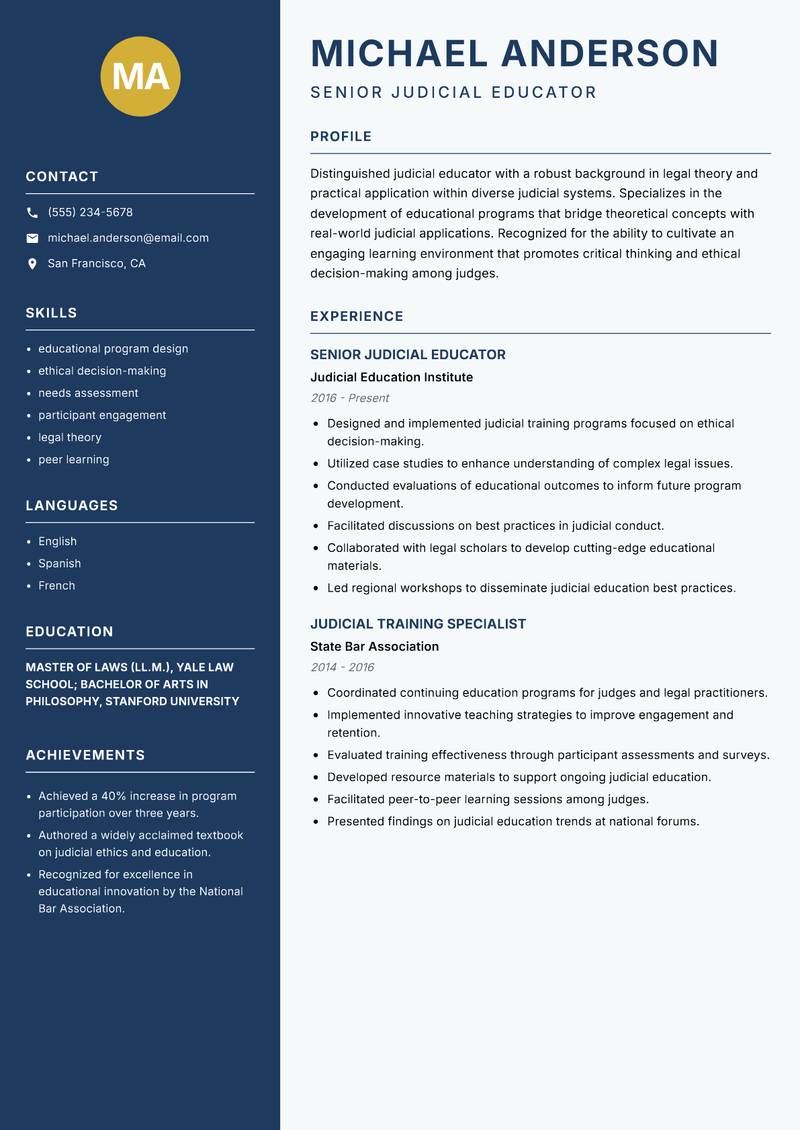
Classic Clean
Use Template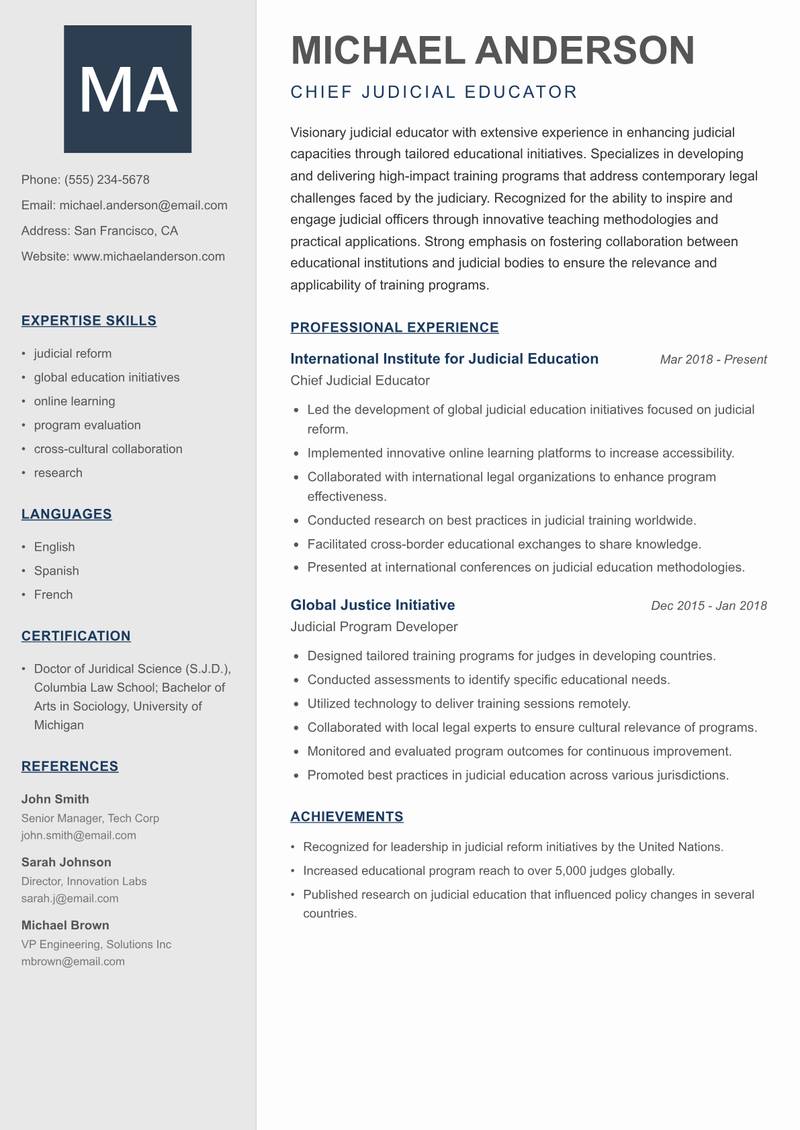
Creative Minimal
Use Template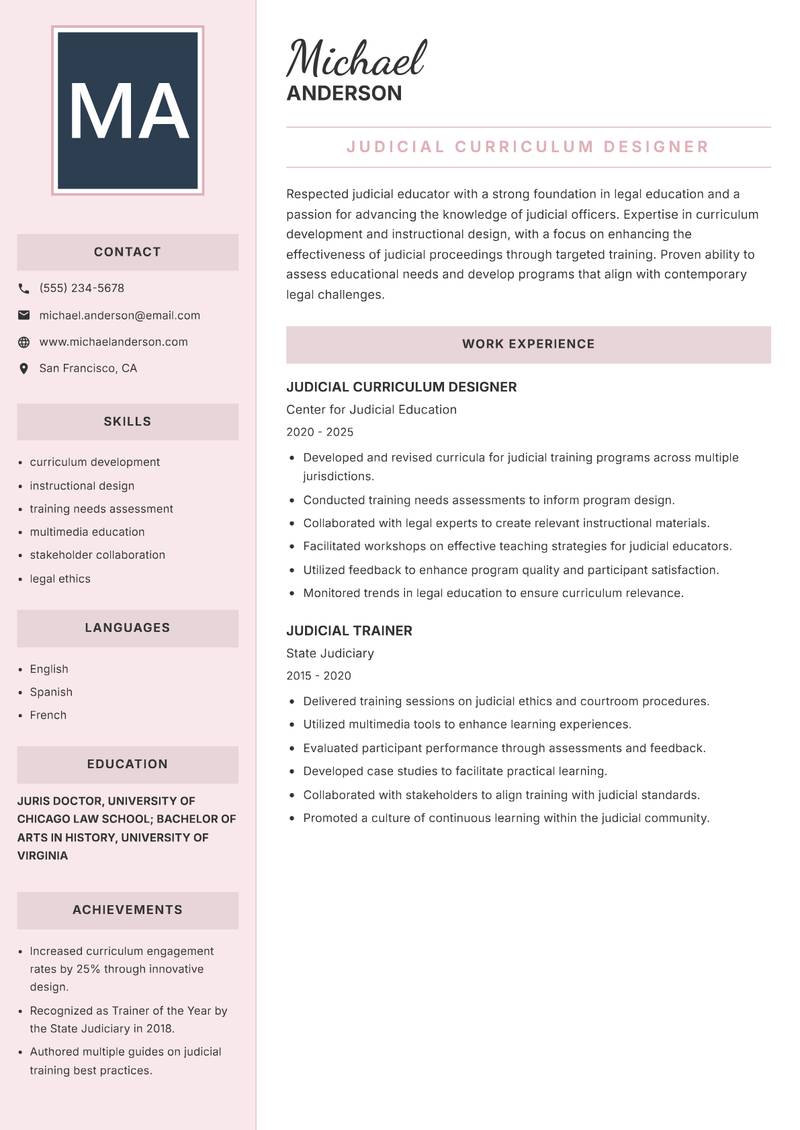
Executive
Use Template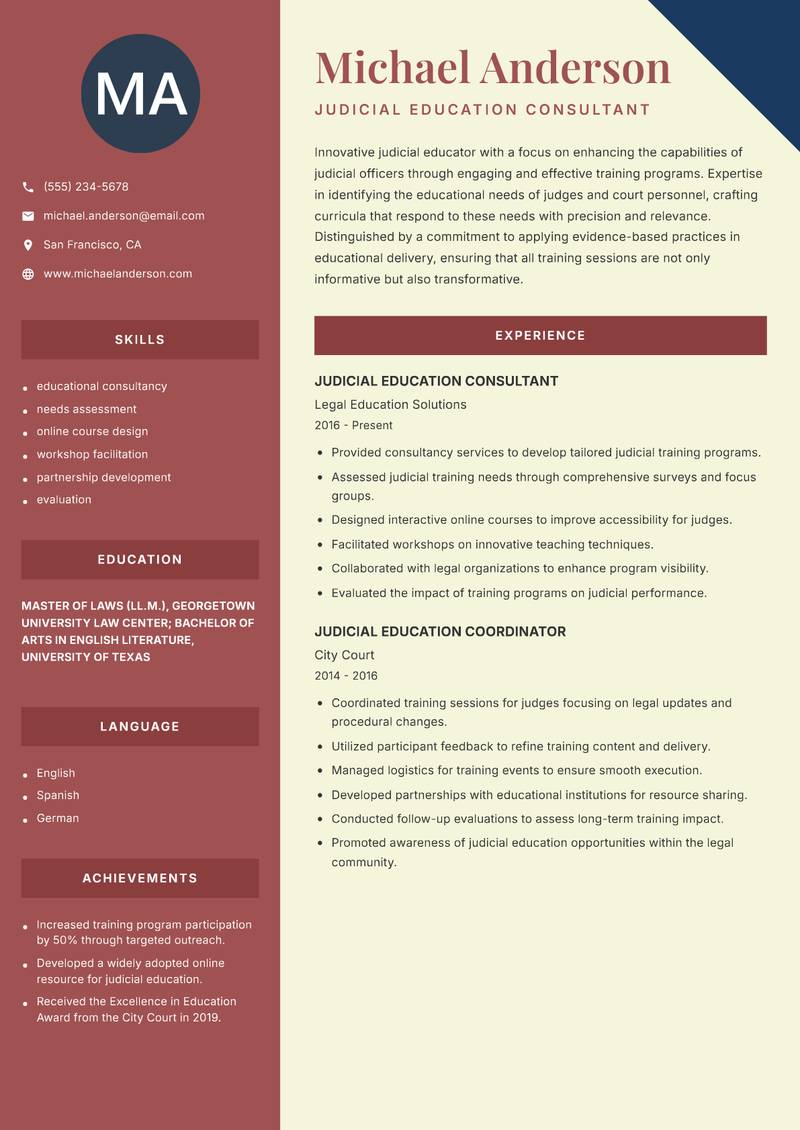
Two Column
Use Template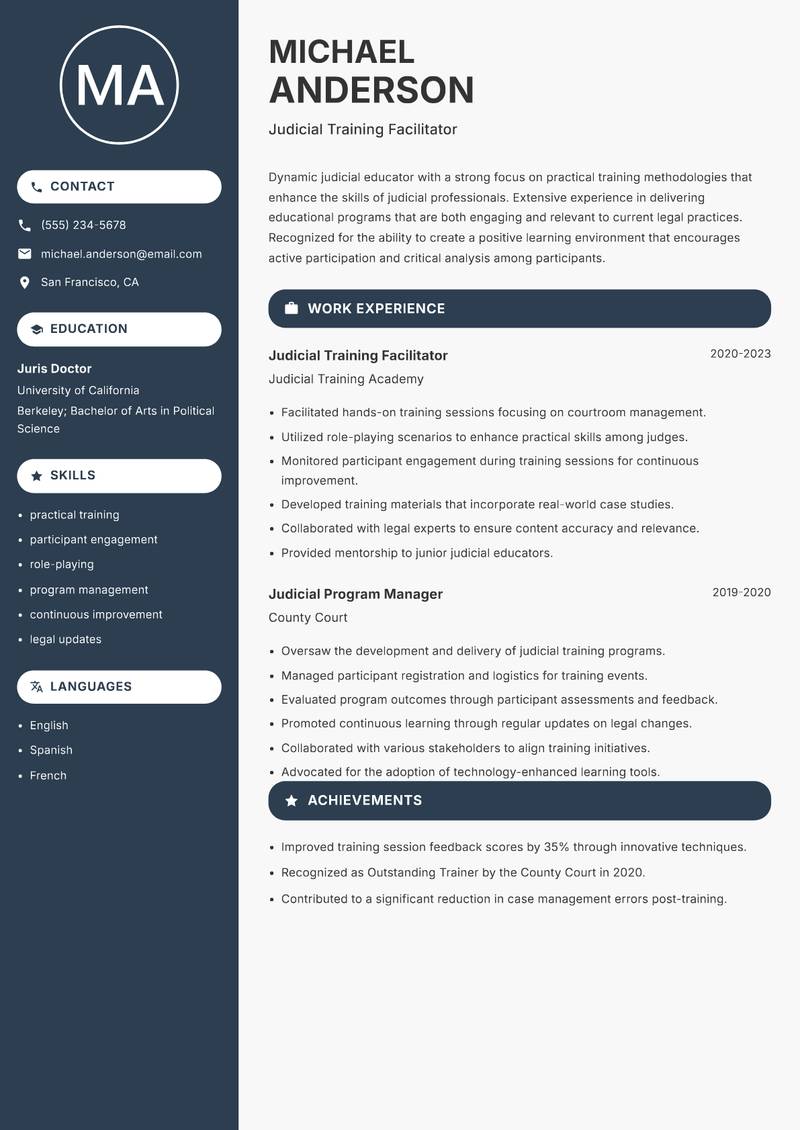
Compact
Use Template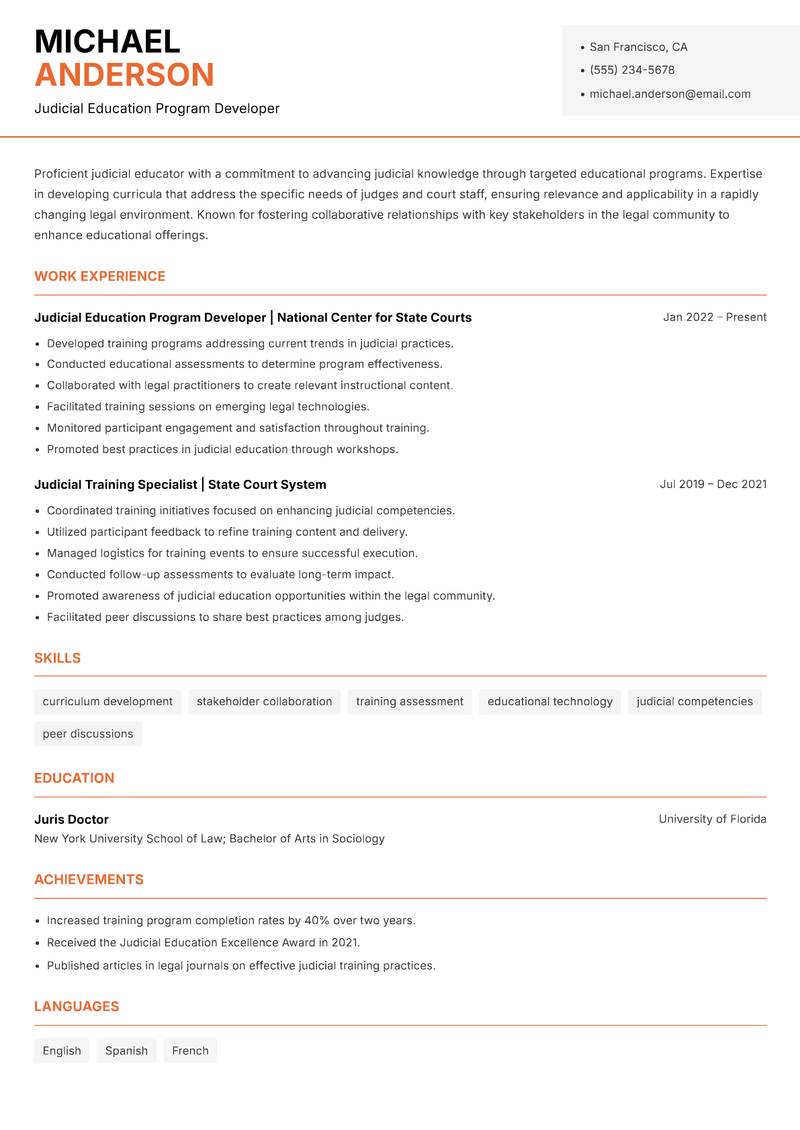
Modern Professional
Use Template7 Real Judicial Educator Resume Examples
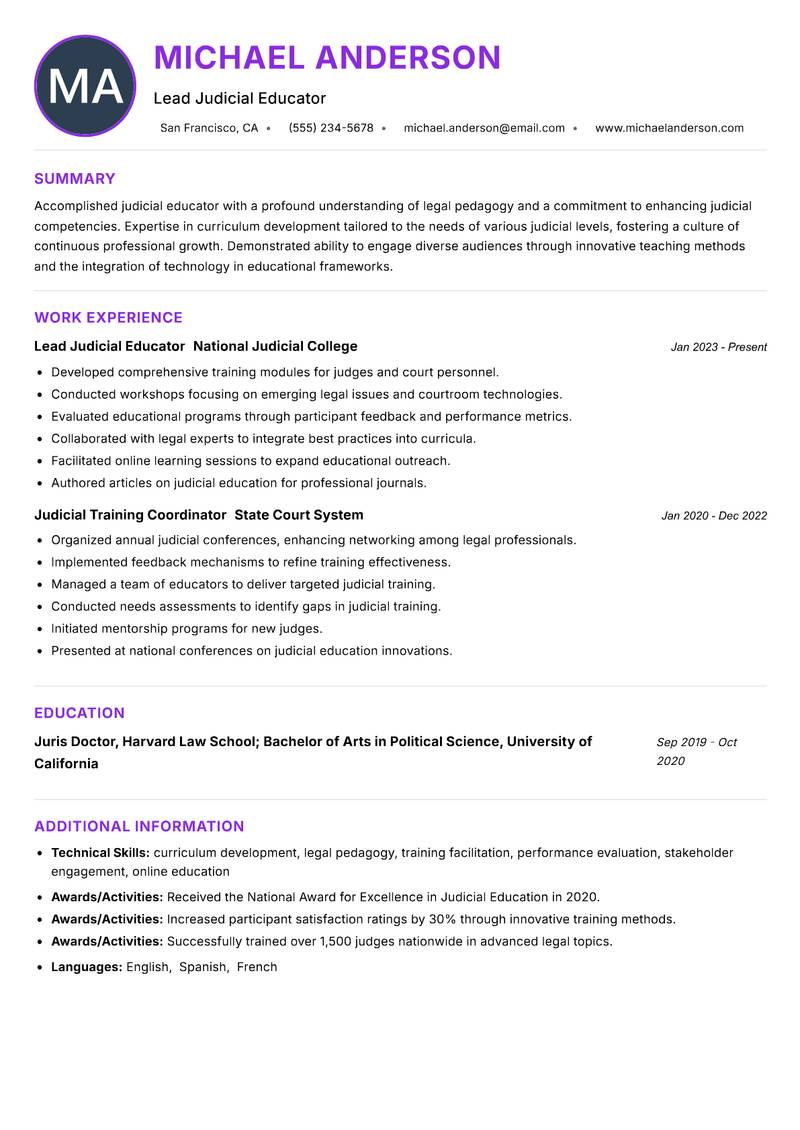
Lead Judicial Educator with 8+ Years Experience
Summary: Accomplished judicial educator with a profound understanding of legal pedagogy and a commitment to enhancing judicial competencies. Expertise in curriculum development tailored to the needs of various judicial levels, fostering a culture of continuous professional growth. Demonstrated ability to engage diverse audiences through innovative teaching methods and the integration of technology in educational frameworks. Proven track record of designing impactful training programs that improve judicial decision-making and case management. Adept at collaborating with legal institutions to ensure alignment with current legal standards and practices. A visionary leader in promoting judicial education as a pivotal component of a fair and effective justice system.
Description:
- Developed comprehensive training modules for judges and court personnel.
- Conducted workshops focusing on emerging legal issues and courtroom technologies.
- Evaluated educational programs through participant feedback and performance metrics.
- Collaborated with legal experts to integrate best practices into curricula.
- Facilitated online learning sessions to expand educational outreach.
- Authored articles on judicial education for professional journals.
🏆 Key Achievements
Senior Judicial Educator with 10+ Years Experience
Summary: Distinguished judicial educator with a robust background in legal theory and practical application within diverse judicial systems. Specializes in the development of educational programs that bridge theoretical concepts with real-world judicial applications. Recognized for the ability to cultivate an engaging learning environment that promotes critical thinking and ethical decision-making among judges. Extensive experience in assessing educational needs and tailoring programs to address specific judicial challenges. Strong advocate for the integration of technology in judicial education to enhance accessibility and effectiveness. Committed to fostering a culture of excellence within judicial education through innovative approaches and comprehensive training methodologies.
Description:
- Designed and implemented judicial training programs focused on ethical decision-making.
- Utilized case studies to enhance understanding of complex legal issues.
- Conducted evaluations of educational outcomes to inform future program development.
- Facilitated discussions on best practices in judicial conduct.
- Collaborated with legal scholars to develop cutting-edge educational materials.
- Led regional workshops to disseminate judicial education best practices.
🏆 Key Achievements
Chief Judicial Educator with 8+ Years Experience
Summary: Visionary judicial educator with extensive experience in enhancing judicial capacities through tailored educational initiatives. Specializes in developing and delivering high-impact training programs that address contemporary legal challenges faced by the judiciary. Recognized for the ability to inspire and engage judicial officers through innovative teaching methodologies and practical applications. Strong emphasis on fostering collaboration between educational institutions and judicial bodies to ensure the relevance and applicability of training programs. Demonstrates a commitment to continual improvement in judicial education, with a focus on measurable outcomes and participant satisfaction. A thought leader in the field of judicial education, advocating for progressive reforms and the integration of technology in learning.
Description:
- Led the development of global judicial education initiatives focused on judicial reform.
- Implemented innovative online learning platforms to increase accessibility.
- Collaborated with international legal organizations to enhance program effectiveness.
- Conducted research on best practices in judicial training worldwide.
- Facilitated cross-border educational exchanges to share knowledge.
- Presented at international conferences on judicial education methodologies.
🏆 Key Achievements
Judicial Curriculum Designer with 8+ Years Experience
Summary: Respected judicial educator with a strong foundation in legal education and a passion for advancing the knowledge of judicial officers. Expertise in curriculum development and instructional design, with a focus on enhancing the effectiveness of judicial proceedings through targeted training. Proven ability to assess educational needs and develop programs that align with contemporary legal challenges. Strong advocate for the use of technology in educational delivery and participant engagement. Recognized for fostering collaborative relationships with legal institutions and stakeholders to enhance educational offerings. Committed to the continuous professional development of judges and court personnel, ensuring they remain well-equipped to meet the demands of an evolving legal landscape.
Description:
- Developed and revised curricula for judicial training programs across multiple jurisdictions.
- Conducted training needs assessments to inform program design.
- Collaborated with legal experts to create relevant instructional materials.
- Facilitated workshops on effective teaching strategies for judicial educators.
- Utilized feedback to enhance program quality and participant satisfaction.
- Monitored trends in legal education to ensure curriculum relevance.
🏆 Key Achievements
Judicial Education Consultant with 7+ Years Experience
Summary: Innovative judicial educator with a focus on enhancing the capabilities of judicial officers through engaging and effective training programs. Expertise in identifying the educational needs of judges and court personnel, crafting curricula that respond to these needs with precision and relevance. Distinguished by a commitment to applying evidence-based practices in educational delivery, ensuring that all training sessions are not only informative but also transformative. A strong proponent of interdisciplinary approaches in judicial education, fostering collaboration across various legal fields to enrich the learning experience. Proven ability to leverage technology to expand access to educational resources and facilitate ongoing professional development.
Description:
- Provided consultancy services to develop tailored judicial training programs.
- Assessed judicial training needs through comprehensive surveys and focus groups.
- Designed interactive online courses to improve accessibility for judges.
- Facilitated workshops on innovative teaching techniques.
- Collaborated with legal organizations to enhance program visibility.
- Evaluated the impact of training programs on judicial performance.
🏆 Key Achievements
Judicial Training Facilitator with 8+ Years Experience
Summary: Dynamic judicial educator with a strong focus on practical training methodologies that enhance the skills of judicial professionals. Extensive experience in delivering educational programs that are both engaging and relevant to current legal practices. Recognized for the ability to create a positive learning environment that encourages active participation and critical analysis among participants. Committed to continuous improvement in educational offerings through ongoing research and feedback collection. A proactive leader in judicial education reform, advocating for the integration of new technologies and innovative practices to meet the evolving needs of the judiciary. A dedicated professional with a passion for empowering judges through knowledge and skills development.
Description:
- Facilitated hands-on training sessions focusing on courtroom management.
- Utilized role-playing scenarios to enhance practical skills among judges.
- Monitored participant engagement during training sessions for continuous improvement.
- Developed training materials that incorporate real-world case studies.
- Collaborated with legal experts to ensure content accuracy and relevance.
- Provided mentorship to junior judicial educators.
🏆 Key Achievements
Judicial Education Program Developer with 7+ Years Experience
Summary: Proficient judicial educator with a commitment to advancing judicial knowledge through targeted educational programs. Expertise in developing curricula that address the specific needs of judges and court staff, ensuring relevance and applicability in a rapidly changing legal environment. Known for fostering collaborative relationships with key stakeholders in the legal community to enhance educational offerings. Demonstrates a strong ability to assess training effectiveness and implement improvements based on feedback. Advocates for the integration of technology in judicial education to facilitate broader access to resources. A dedicated professional with a focus on empowering judicial officers through knowledge and skills enhancement.
Description:
- Developed training programs addressing current trends in judicial practices.
- Conducted educational assessments to determine program effectiveness.
- Collaborated with legal practitioners to create relevant instructional content.
- Facilitated training sessions on emerging legal technologies.
- Monitored participant engagement and satisfaction throughout training.
- Promoted best practices in judicial education through workshops.
🏆 Key Achievements
Key Skills for Judicial Educator
ATS Optimization Tips
Increase your chances of getting hired
Use Standard Headings
Use common section titles like Experience, Skills, etc.
Include Keywords
Add role-specific keywords from the job description
Keep it Simple
Avoid complex tables, images and graphics
Save in Right Format
Use PDF format unless otherwise specified
Judicial Educator Salary Insights
Average Salary
$70,000
per year
Salary Range
$55,000 - $85,000
per year
Top Paying Cities
Los Angeles, Seattle, Houston, Dallas, Boston
Source: Glassdoor, Payscale, Indeed (Updated November 2025)
Everything you need to write a great Judicial Educator resume
Strong Action Verbs to Use
Resume Writing Tips
- →Highlight specific training programs you've developed that resulted in tangible improvements within the judiciary.
- →Emphasize your understanding of adult learning principles and how you apply them in your educational strategies.
- →Include metrics or feedback that showcase the success of your training initiatives, such as participant satisfaction ratings.
- →Showcase any technology skills, especially in eLearning platforms or virtual training tools, relevant to modern judicial education.
- →List any direct collaborations with judicial bodies or legal experts that enhance your credibility as an educator.
Common Mistakes to Avoid
- ✕Using overly generic descriptions of education roles that fail to highlight unique judicial aspects of the role.
- ✕Neglecting to mention specific educational techniques or methodologies relevant to adult learners in the judiciary.
- ✕Failing to provide quantifiable outcomes from previous training programs, which can undermine the perceived impact of your work.
- ✕Omitting relevant certifications that could enhance qualification credibility in the legal education field.
ATS Keywords for Judicial Educator
Judicial Educator Career Path
Relevant Certifications
Career Progression
Entry-Level Judicial Educator
Supports senior educators in developing training materials and assists in the delivery of workshops on judicial procedures.
Judicial Educator II
Designs and presents educational programs for judiciary staff, promoting best practices and compliance with legal standards.
Senior Judicial Educator
Leads curriculum development initiatives, collaborates with court administrators, and mentors junior educators.
Judicial Education Manager
Oversees the judicial education department, strategizing growth and ensuring alignment with organizational goals.
Chief Judicial Educator
Directs and revises national educational policies for the judiciary, influences statewide training strategies.
Judicial Educator Interview Questions
How do you stay updated with changes in judicial procedures and laws? +
Discuss specific resources, networks, or continuing education courses you engage with.
Can you describe your experience in developing training programs for judiciary personnel? +
Provide examples of programs you developed and their outcomes.
What strategies do you employ to address varying levels of legal knowledge among trainees? +
Explain your approach to tailoring content to meet diverse needs.
How do you measure the effectiveness of your training sessions? +
Highlight any evaluation methods or feedback mechanisms you use.
Describe a challenging training situation you encountered and how you resolved it. +
Be specific about the challenge and the steps you took.
What role does technology play in your educational initiatives? +
Mention any specific tools or software that enhance your programs.
How do you engage with stakeholders in the judiciary to assess training needs? +
Discuss how you gather input and adjust programs accordingly.
About the Judicial Educator Role
Judicial Educators develop and deliver specialized training modules designed to enhance the legal knowledge and practical skills of judiciary personnel. By employing adult learning techniques, they create engaging workshops that address the unique challenges faced by the legal system today. Collaborating with judges, clerks, and legal professionals, Judicial Educators ensure that the judiciary remains well-informed and compliant with evolving laws and procedures.
Frequently Asked Questions
View all →What types of training do Judicial Educators typically provide? +
Judicial Educators often provide training in areas such as legal updates, court procedures, ethical standards, and soft skills like communication and conflict resolution.
Is there a demand for Judicial Educators in the current legal climate? +
Yes, as legal frameworks continuously evolve, there is a growing need for specialized training to keep judicial personnel informed and compliant.
What background is most beneficial for a Judicial Educator? +
A strong background in law, combined with experience in adult education or training, is ideal for this role.
Do Judicial Educators work independently or as part of a team? +
They typically collaborate with other legal professionals, educational departments, and stakeholders within the judiciary to develop and implement training programs.
What skills are essential for success as a Judicial Educator? +
Essential skills include strong public speaking, curriculum development, knowledge of legal practices, and the ability to engage diverse audiences.
Can Judicial Educators influence policy changes in the judiciary? +
While they primarily focus on education, their insights and training feedback can play a role in shaping policy decisions by highlighting areas of need.
What growth opportunities are available for Judicial Educators? +
Career advancement may lead to roles in court administration, policy development, or national-level judicial training initiatives.
More Resume Examples You Might Like
Related Career Paths
Other roles candidates for Judicial Educator positions often also consider.
Will this Judicial Educator resume pass the ATS scan?
Upload it and get an instant AI-scored compatibility check with specific fixes.
Check My Resume →
Pair it with a matching cover letter
AI drafts a first version from your job title and strengths — edit it live, then download the PDF.
Write My Cover Letter →
Written by Nohaya Career Team
Reviewed by HR Professionals · Updated November 2025
Ready to Build Your Perfect Resume?
Choose from 1000+ professional templates and land your dream job.
Create My Resume Now