Build an ATS-Friendly
Fisheries Research Scientist Resume
That Gets Interviews
Navigating complex aquatic ecosystems falls squarely on the shoulders of the Fisheries Research Scientist, who employs a mix of empirical research and hands-on fieldwork to monitor and understand fish populations. Tasks include deploying and maintaining equipment like gill nets and sonar to gather data, and applying…
Fisheries Research Scientist Resume Templates
Modern Professional
Use Template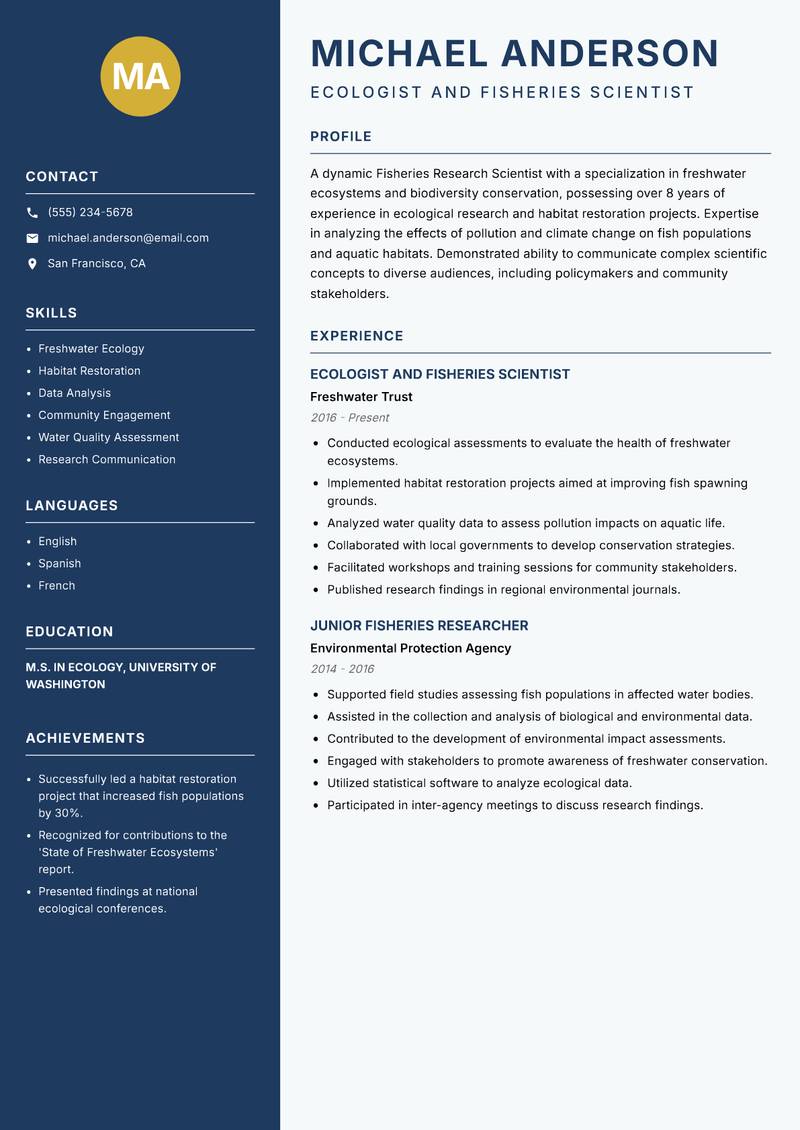
Classic Clean
Use Template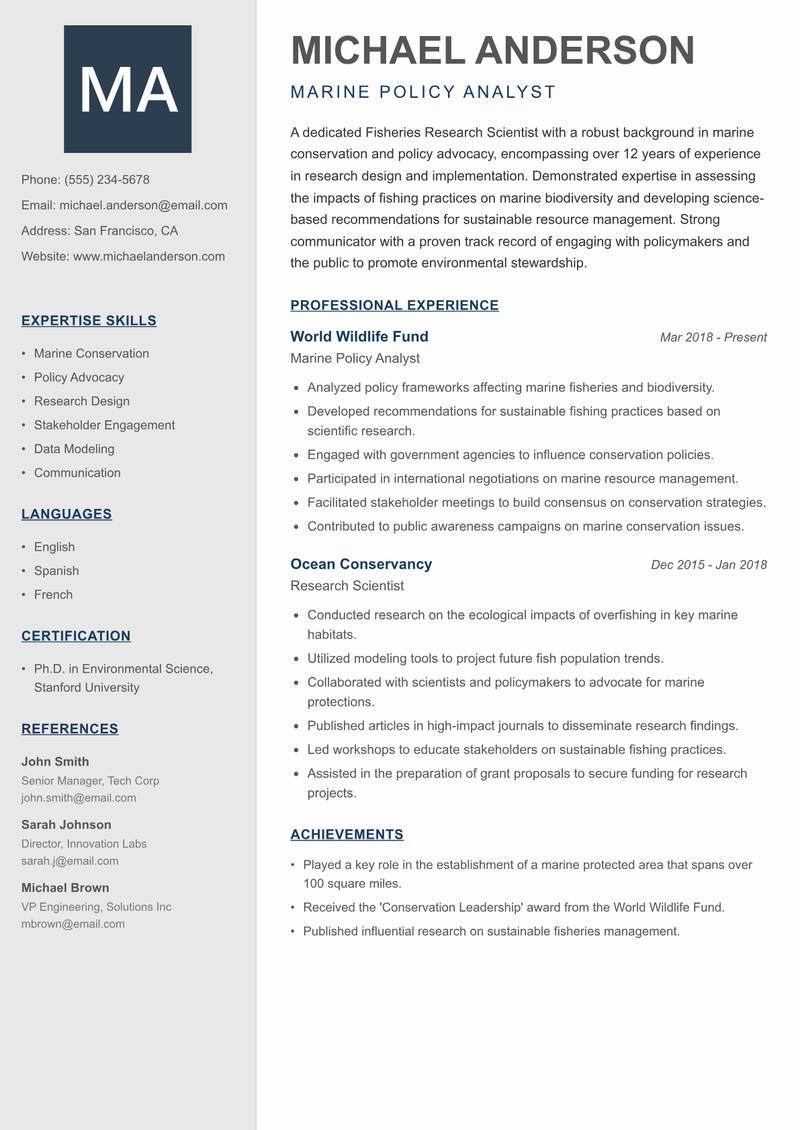
Creative Minimal
Use Template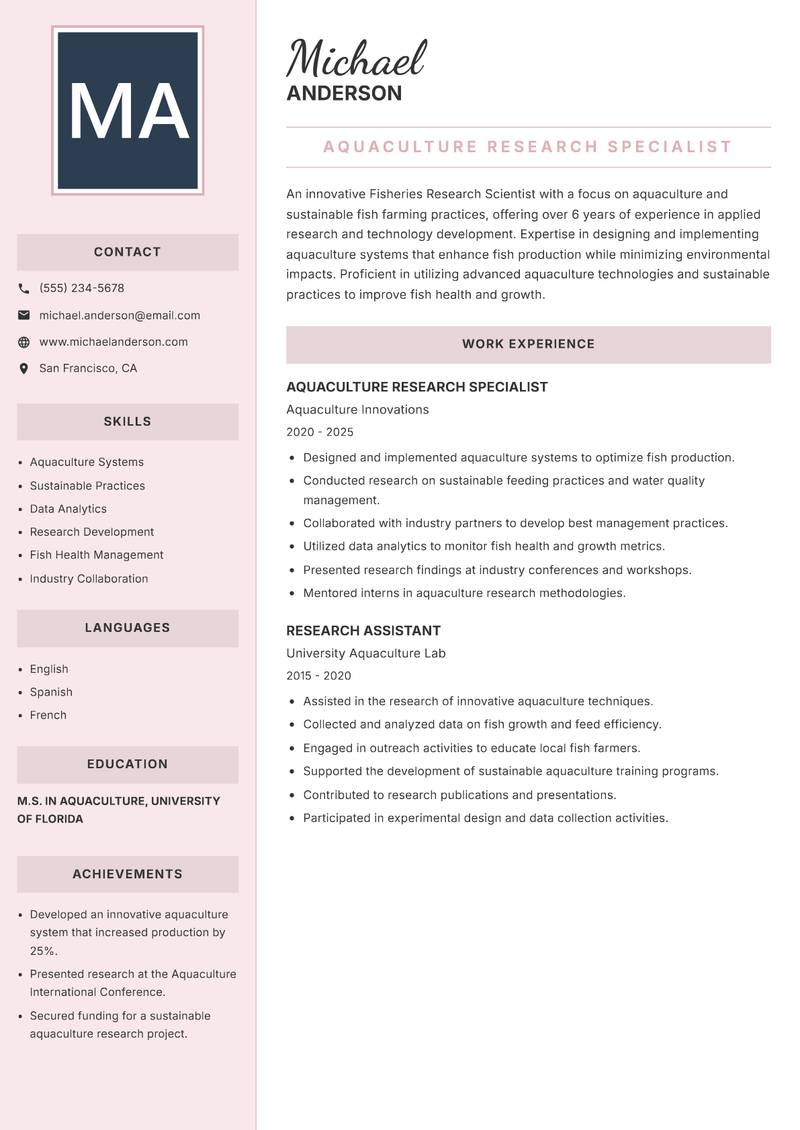
Executive
Use Template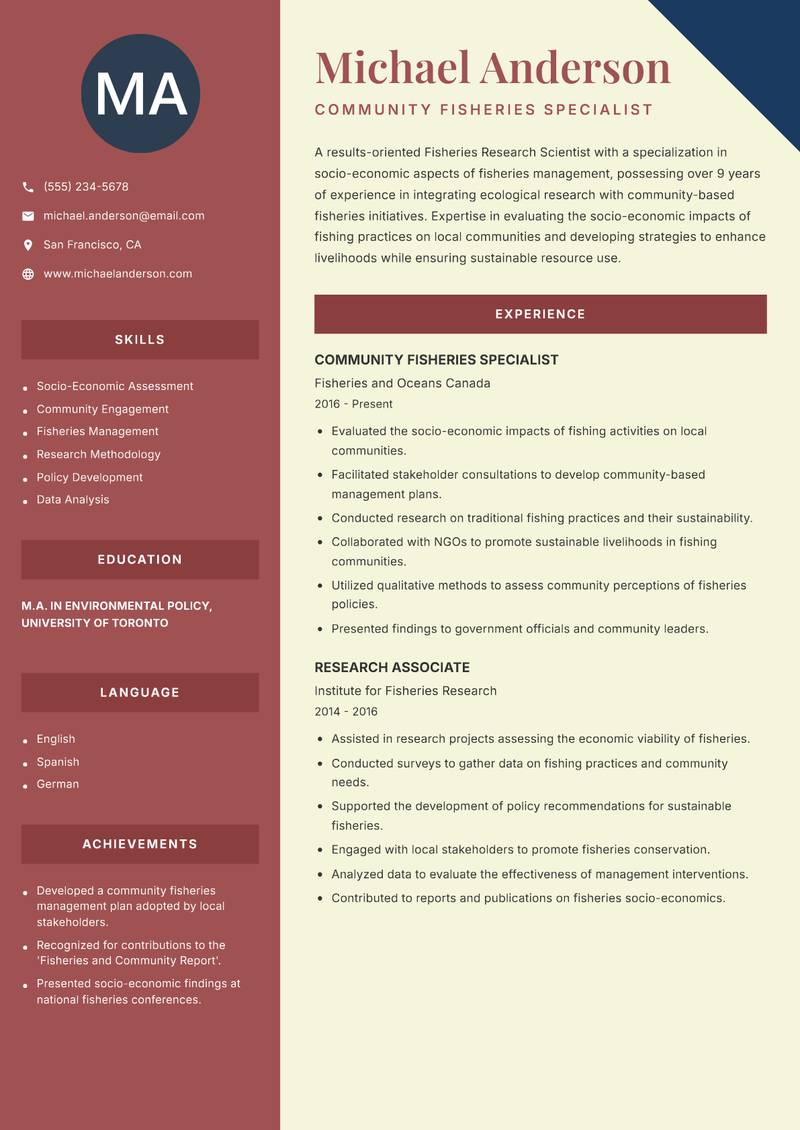
Two Column
Use Template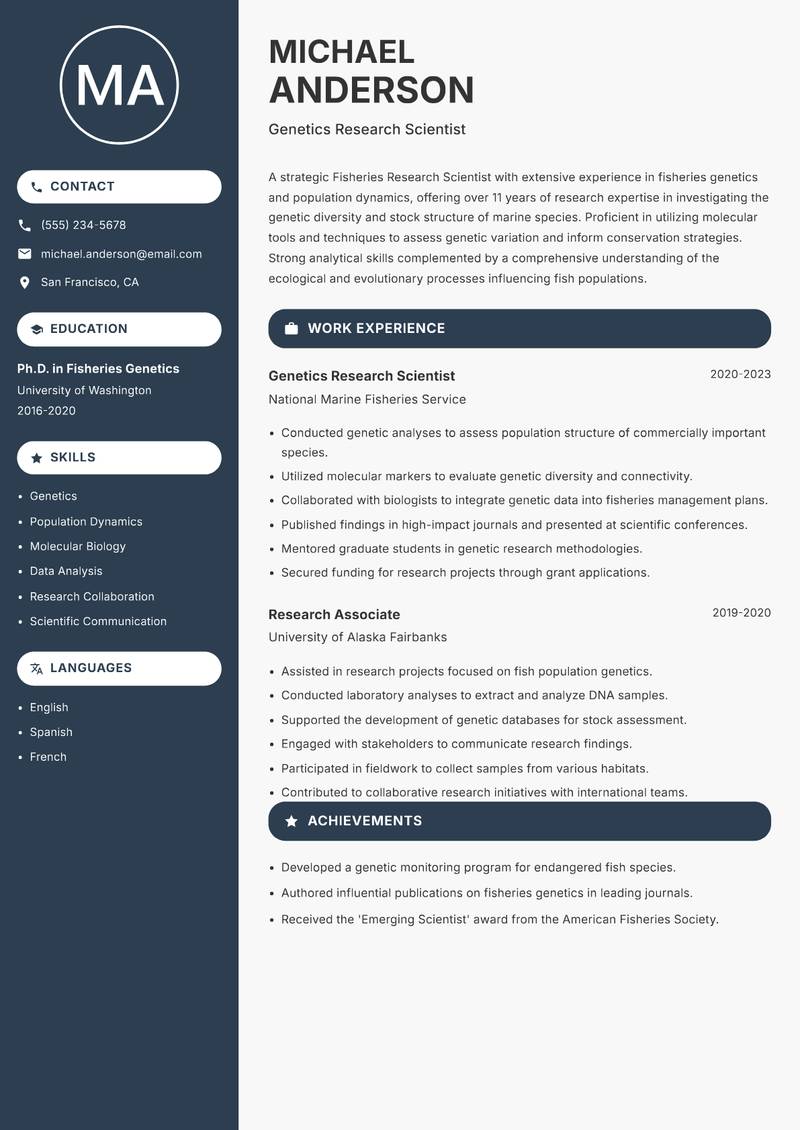
Compact
Use Template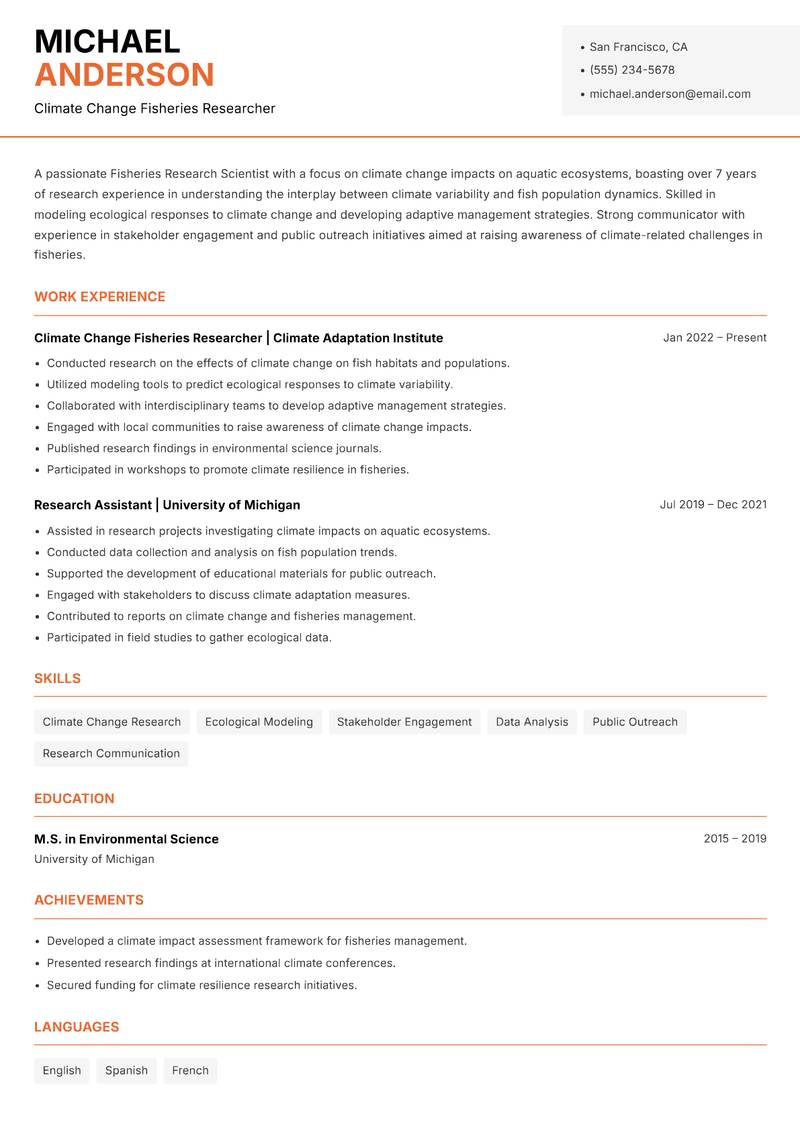
Modern Professional
Use Template7 Real Fisheries Research Scientist Resume Examples
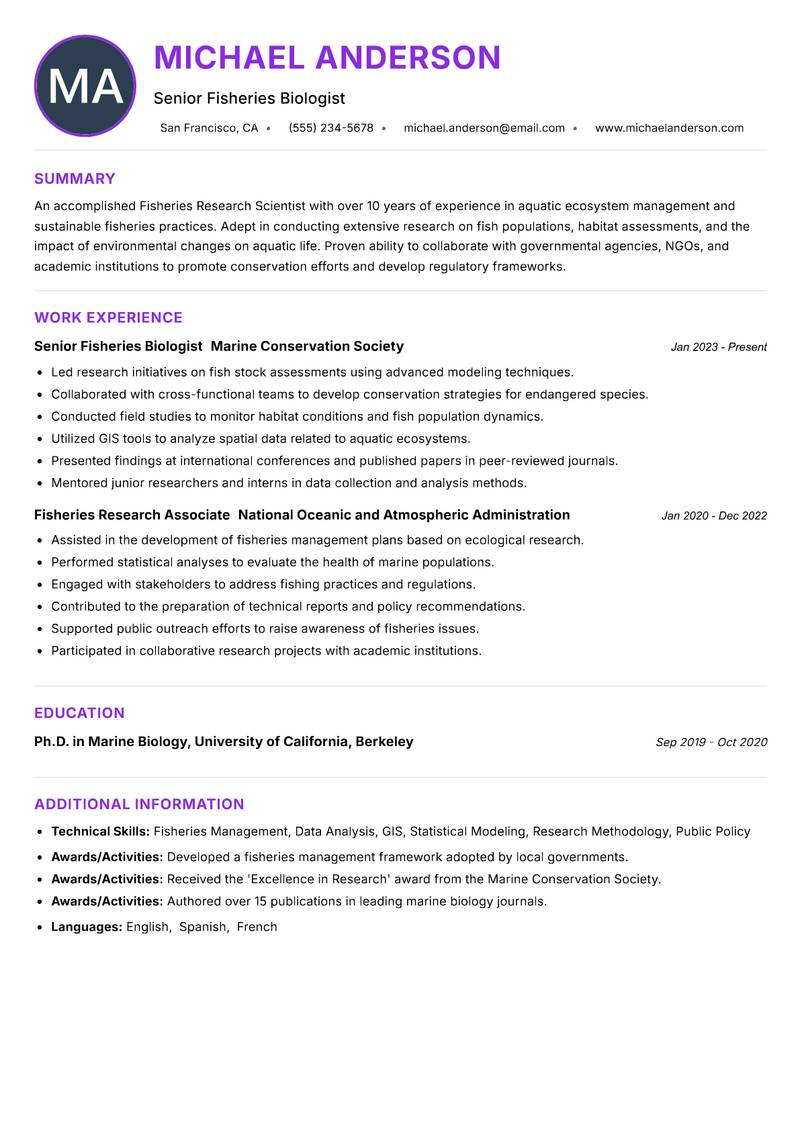
Senior Fisheries Biologist with 11+ Years Experience
Summary: An accomplished Fisheries Research Scientist with over 10 years of experience in aquatic ecosystem management and sustainable fisheries practices. Adept in conducting extensive research on fish populations, habitat assessments, and the impact of environmental changes on aquatic life. Proven ability to collaborate with governmental agencies, NGOs, and academic institutions to promote conservation efforts and develop regulatory frameworks. Expertise in utilizing advanced statistical models and data analysis tools to inform decision-making processes. Committed to enhancing the understanding of marine biology and ensuring the sustainability of fisheries resources through rigorous scientific methodologies and innovative research projects.
Description:
- Led research initiatives on fish stock assessments using advanced modeling techniques.
- Collaborated with cross-functional teams to develop conservation strategies for endangered species.
- Conducted field studies to monitor habitat conditions and fish population dynamics.
- Utilized GIS tools to analyze spatial data related to aquatic ecosystems.
- Presented findings at international conferences and published papers in peer-reviewed journals.
- Mentored junior researchers and interns in data collection and analysis methods.
🏆 Key Achievements
Ecologist and Fisheries Scientist with 9+ Years Experience
Summary: A dynamic Fisheries Research Scientist with a specialization in freshwater ecosystems and biodiversity conservation, possessing over 8 years of experience in ecological research and habitat restoration projects. Expertise in analyzing the effects of pollution and climate change on fish populations and aquatic habitats. Demonstrated ability to communicate complex scientific concepts to diverse audiences, including policymakers and community stakeholders. Skilled in leveraging innovative research techniques and collaborating with interdisciplinary teams to drive impactful conservation initiatives. Committed to advancing the field of fisheries science through rigorous research and community engagement.
Description:
- Conducted ecological assessments to evaluate the health of freshwater ecosystems.
- Implemented habitat restoration projects aimed at improving fish spawning grounds.
- Analyzed water quality data to assess pollution impacts on aquatic life.
- Collaborated with local governments to develop conservation strategies.
- Facilitated workshops and training sessions for community stakeholders.
- Published research findings in regional environmental journals.
🏆 Key Achievements
Marine Policy Analyst with 12+ Years Experience
Summary: A dedicated Fisheries Research Scientist with a robust background in marine conservation and policy advocacy, encompassing over 12 years of experience in research design and implementation. Demonstrated expertise in assessing the impacts of fishing practices on marine biodiversity and developing science-based recommendations for sustainable resource management. Strong communicator with a proven track record of engaging with policymakers and the public to promote environmental stewardship. Possesses a deep understanding of marine ecosystems and the socio-economic factors influencing fisheries. Committed to fostering collaborative research initiatives that address pressing marine conservation challenges.
Description:
- Analyzed policy frameworks affecting marine fisheries and biodiversity.
- Developed recommendations for sustainable fishing practices based on scientific research.
- Engaged with government agencies to influence conservation policies.
- Participated in international negotiations on marine resource management.
- Facilitated stakeholder meetings to build consensus on conservation strategies.
- Contributed to public awareness campaigns on marine conservation issues.
🏆 Key Achievements
Aquaculture Research Specialist with 7+ Years Experience
Summary: An innovative Fisheries Research Scientist with a focus on aquaculture and sustainable fish farming practices, offering over 6 years of experience in applied research and technology development. Expertise in designing and implementing aquaculture systems that enhance fish production while minimizing environmental impacts. Proficient in utilizing advanced aquaculture technologies and sustainable practices to improve fish health and growth. Strong analytical skills complemented by a commitment to advancing the aquaculture sector through research and development initiatives. Dedicated to fostering partnerships with industry stakeholders to promote sustainable practices in fish farming.
Description:
- Designed and implemented aquaculture systems to optimize fish production.
- Conducted research on sustainable feeding practices and water quality management.
- Collaborated with industry partners to develop best management practices.
- Utilized data analytics to monitor fish health and growth metrics.
- Presented research findings at industry conferences and workshops.
- Mentored interns in aquaculture research methodologies.
🏆 Key Achievements
Community Fisheries Specialist with 9+ Years Experience
Summary: A results-oriented Fisheries Research Scientist with a specialization in socio-economic aspects of fisheries management, possessing over 9 years of experience in integrating ecological research with community-based fisheries initiatives. Expertise in evaluating the socio-economic impacts of fishing practices on local communities and developing strategies to enhance livelihoods while ensuring sustainable resource use. Proven ability to facilitate stakeholder engagement and promote participatory approaches to fisheries management. Committed to advancing knowledge and practices that balance ecological integrity with community needs through targeted research and collaboration.
Description:
- Evaluated the socio-economic impacts of fishing activities on local communities.
- Facilitated stakeholder consultations to develop community-based management plans.
- Conducted research on traditional fishing practices and their sustainability.
- Collaborated with NGOs to promote sustainable livelihoods in fishing communities.
- Utilized qualitative methods to assess community perceptions of fisheries policies.
- Presented findings to government officials and community leaders.
🏆 Key Achievements
Genetics Research Scientist with 12+ Years Experience
Summary: A strategic Fisheries Research Scientist with extensive experience in fisheries genetics and population dynamics, offering over 11 years of research expertise in investigating the genetic diversity and stock structure of marine species. Proficient in utilizing molecular tools and techniques to assess genetic variation and inform conservation strategies. Strong analytical skills complemented by a comprehensive understanding of the ecological and evolutionary processes influencing fish populations. Committed to advancing fisheries science through innovative research and collaboration with academic and conservation organizations.
Description:
- Conducted genetic analyses to assess population structure of commercially important species.
- Utilized molecular markers to evaluate genetic diversity and connectivity.
- Collaborated with biologists to integrate genetic data into fisheries management plans.
- Published findings in high-impact journals and presented at scientific conferences.
- Mentored graduate students in genetic research methodologies.
- Secured funding for research projects through grant applications.
🏆 Key Achievements
Climate Change Fisheries Researcher with 8+ Years Experience
Summary: A passionate Fisheries Research Scientist with a focus on climate change impacts on aquatic ecosystems, boasting over 7 years of research experience in understanding the interplay between climate variability and fish population dynamics. Skilled in modeling ecological responses to climate change and developing adaptive management strategies. Strong communicator with experience in stakeholder engagement and public outreach initiatives aimed at raising awareness of climate-related challenges in fisheries. Dedicated to advancing scientific understanding through collaborative research efforts that promote resilience in aquatic ecosystems.
Description:
- Conducted research on the effects of climate change on fish habitats and populations.
- Utilized modeling tools to predict ecological responses to climate variability.
- Collaborated with interdisciplinary teams to develop adaptive management strategies.
- Engaged with local communities to raise awareness of climate change impacts.
- Published research findings in environmental science journals.
- Participated in workshops to promote climate resilience in fisheries.
🏆 Key Achievements
Key Skills for Fisheries Research Scientist
ATS Optimization Tips
Increase your chances of getting hired
Use Standard Headings
Use common section titles like Experience, Skills, etc.
Include Keywords
Add role-specific keywords from the job description
Keep it Simple
Avoid complex tables, images and graphics
Save in Right Format
Use PDF format unless otherwise specified
Fisheries Research Scientist Salary Insights
Average Salary
$80,000
per year
Salary Range
$60,000 - $100,000
per year
Top Paying Cities
Los Angeles, Seattle, Houston, Dallas, Boston
Source: Glassdoor, Payscale, Indeed (Updated July 2025)
Everything you need to write a great Fisheries Research Scientist resume
Strong Action Verbs to Use
Resume Writing Tips
- →Detail specific field equipment you are proficient in, such as sonar devices or water quality testers.
- →Include research project titles and the types of data you analyzed to demonstrate hands-on experience.
- →Highlight any interdisciplinary collaborations with ecologists or conservation groups to show breadth of experience.
- →Mention your ability to present complex research findings to diverse audiences, emphasizing your communication skills.
- →List software skills relevant to data analysis, such as R, ArcGIS, or specialized scientific databases.
Common Mistakes to Avoid
- ✕Neglecting to quantify research contributions, such as the number of published papers or project sizes.
- ✕Using vague terminology without clarifying the specific fish species or ecosystems studied.
- ✕Focusing too heavily on administrative tasks while skipping essential fieldwork experience.
- ✕Failing to mention specific collaborations that reflect teamwork in research projects.
ATS Keywords for Fisheries Research Scientist
Fisheries Research Scientist Career Path
Relevant Certifications
Career Progression
Entry-Level Fisheries Scientist
Assist in data collection and habitat assessments; collaborate on field projects.
Fisheries Biologist
Conduct independent studies and analyze fish populations and habitats, often preparing reports for stakeholders.
Senior Fisheries Research Scientist
Lead complex research projects, providing strategic direction and overseeing junior scientists.
Research Program Manager
Manage multiple research initiatives, allocate resources, and ensure compliance with environmental regulations.
Director of Fisheries Research Programs
Establish research priorities, oversee research funding, and liaise with government agencies and conservation organizations.
Fisheries Research Scientist Interview Questions
Can you describe your experience with fieldwork in various aquatic ecosystems? +
Highlight specific locations, types of data collected, and any challenges faced.
What statistical methods do you use for analyzing fisheries data? +
Mention specific software tools like R or Python, and types of analyses conducted.
How do you ensure ethical considerations in your research? +
Discuss protocols you follow and any training you've received.
Describe a situation where your research impacted management decisions. What was the outcome? +
Provide concrete examples where your work led to changes in policy or practice.
What methodologies do you prefer for monitoring fish populations? +
Explain specific techniques (e.g., electrofishing, gill netting) and why you select them.
How do you communicate your findings to non-scientific stakeholders? +
Provide examples of reports or presentations and how you tailored the message.
What are your thoughts on the future challenges facing fisheries research? +
Address environmental changes, overfishing, or habitat loss in your analysis.
About the Fisheries Research Scientist Role
Navigating complex aquatic ecosystems falls squarely on the shoulders of the Fisheries Research Scientist, who employs a mix of empirical research and hands-on fieldwork to monitor and understand fish populations. Tasks include deploying and maintaining equipment like gill nets and sonar to gather data, and applying statistical models to determine population health and sustainability. Partnerships with governmental and non-profit organizations are crucial, as findings can influence fishing regulations and conservation efforts impacting both local communities and marine biodiversity.
Frequently Asked Questions
What kind of work environments do Fisheries Research Scientists typically work in? +
They often work in outdoor settings, such as lakes, rivers, and oceans, but can also be found in laboratories and offices analyzing data.
What educational background is most common for this role? +
A master’s or Ph.D. in fisheries biology, aquatic ecology, or environmental science is typically necessary.
How important is fieldwork in the role of a Fisheries Research Scientist? +
Fieldwork is essential, as it provides the primary data needed for most research projects and population assessments.
What advancements are currently influencing fisheries research? +
Technological advancements, such as environmental DNA (eDNA) assessment methods, are revolutionizing how species monitoring is conducted.
Do Fisheries Research Scientists work with policymakers? +
Yes, they often provide data and recommendations that help shape fishing regulations and conservation policies.
What types of research projects do Fisheries Research Scientists typically undertake? +
Projects can range from studying fish stock assessments to the impacts of pollution and habitat destruction on aquatic life.
More Resume Examples You Might Like
Related Career Paths
Other roles candidates for Fisheries Research Scientist positions often also consider.
Will this Fisheries Research Scientist resume pass the ATS scan?
Upload it and get an instant AI-scored compatibility check with specific fixes.
Check My Resume →
Pair it with a matching cover letter
AI drafts a first version from your job title and strengths — edit it live, then download the PDF.
Write My Cover Letter →
Written by Nohaya Career Team
Reviewed by HR Professionals · Updated July 2025
Ready to Build Your Perfect Resume?
Choose from 1000+ professional templates and land your dream job.
Create My Resume Now