Build an ATS-Friendly
Fish Population Biologist Resume
That Gets Interviews
Fish Population Biologists analyze population trends and dynamics within aquatic ecosystems, using innovative statistical methods to inform sustainable fisheries management. Working closely with state and federal agencies, they assess the effects of environmental changes on fish stocks. This role demands intensive…
Fish Population Biologist Resume Templates
Modern Professional
Use Template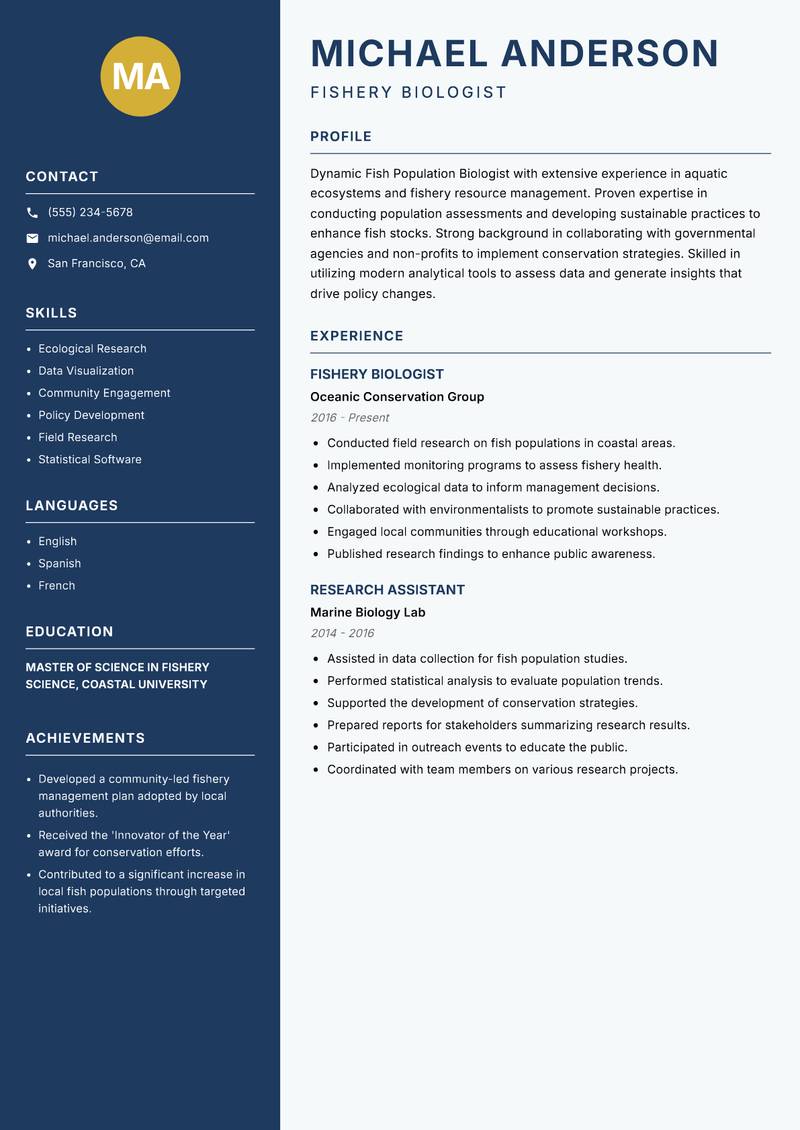
Classic Clean
Use Template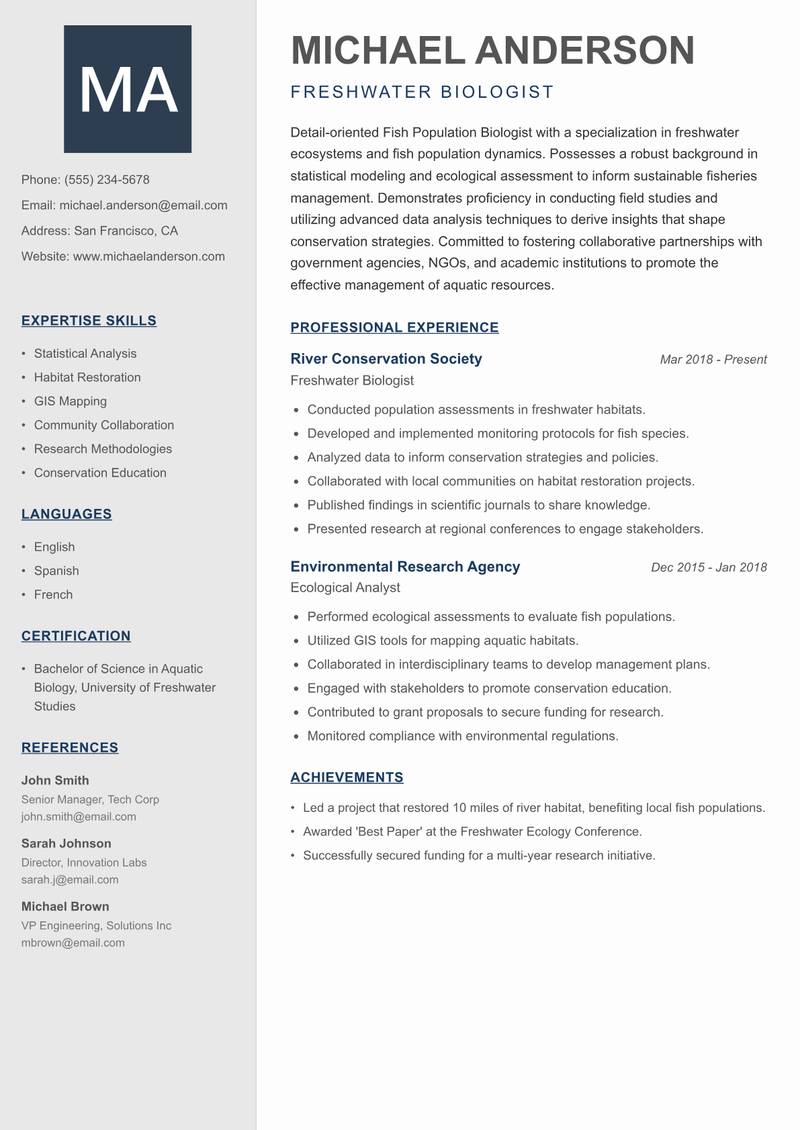
Creative Minimal
Use Template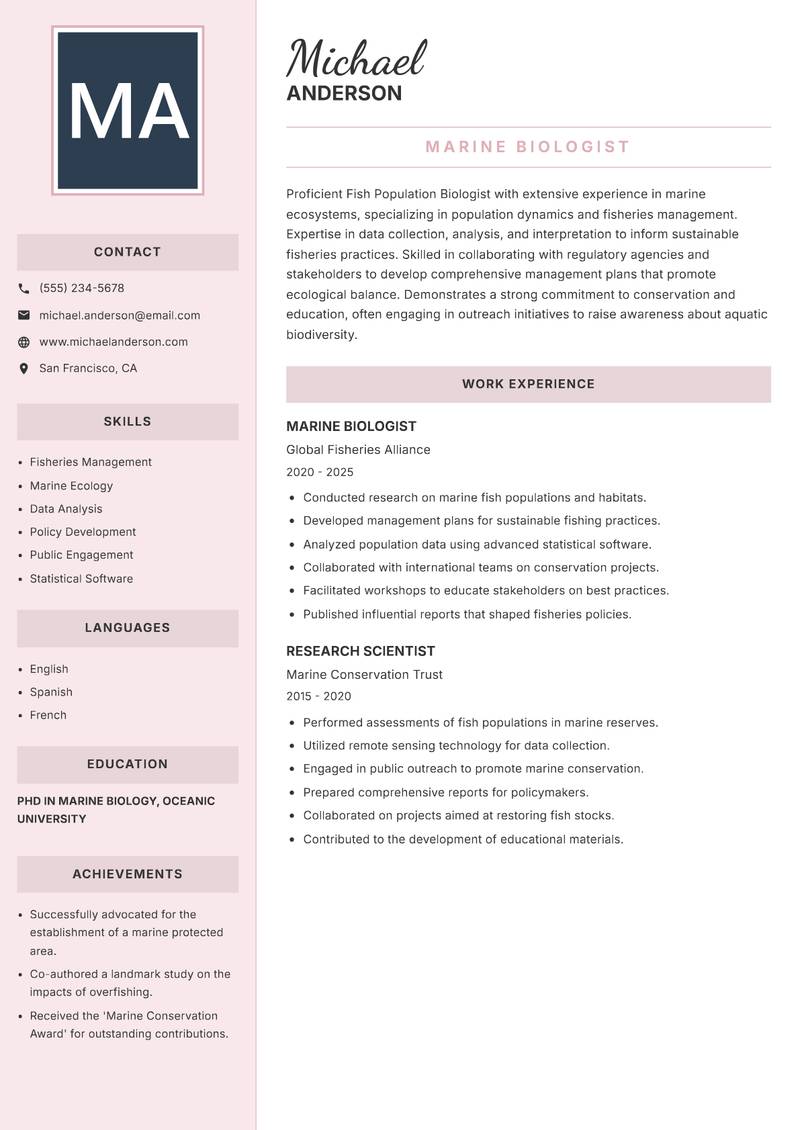
Executive
Use Template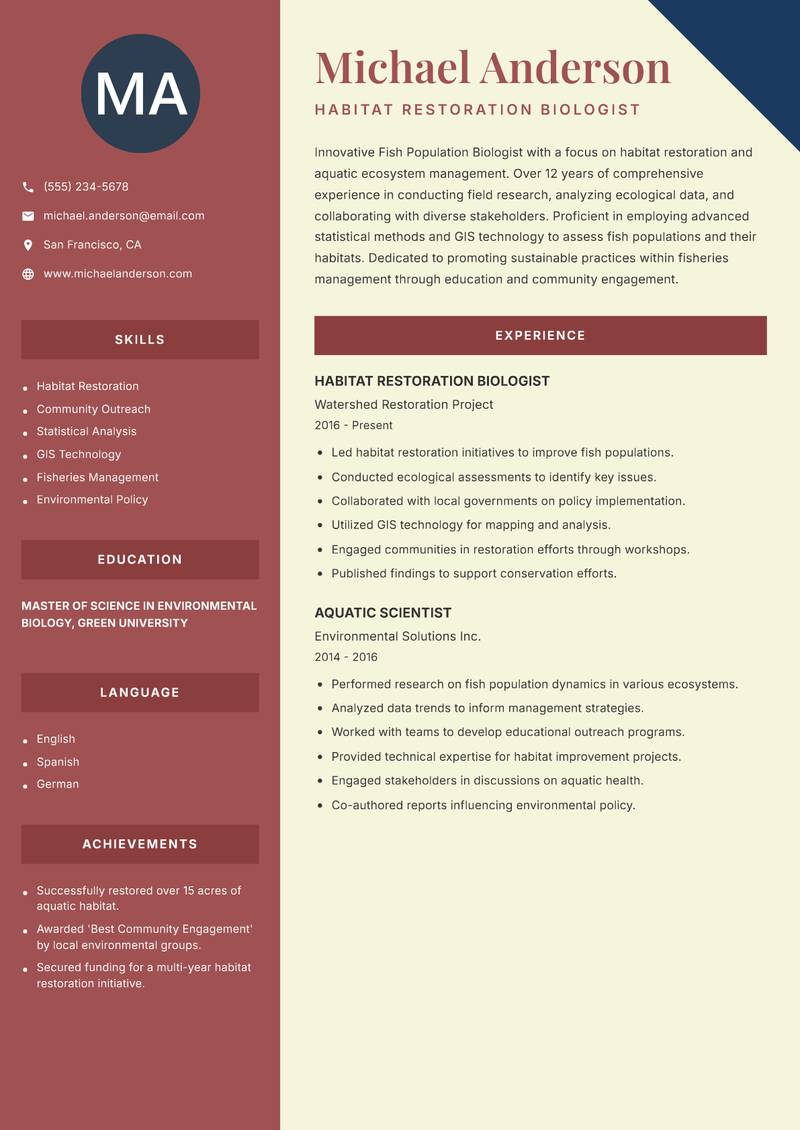
Two Column
Use Template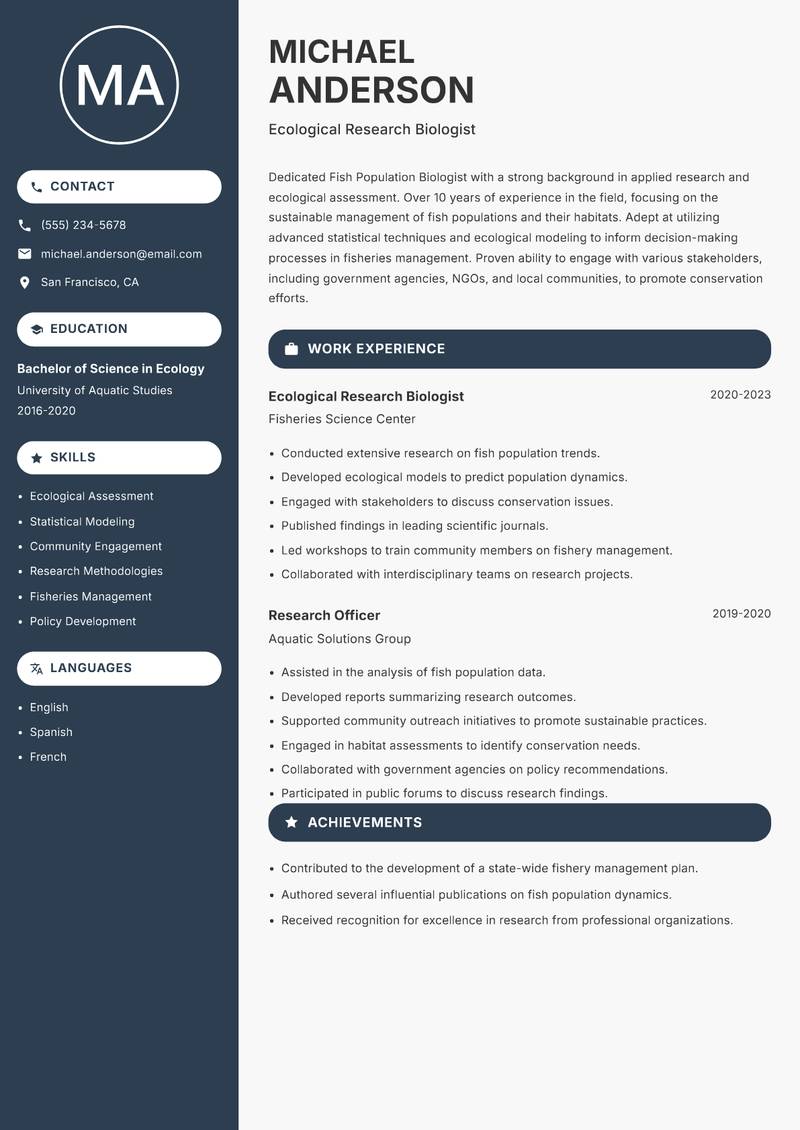
Compact
Use Template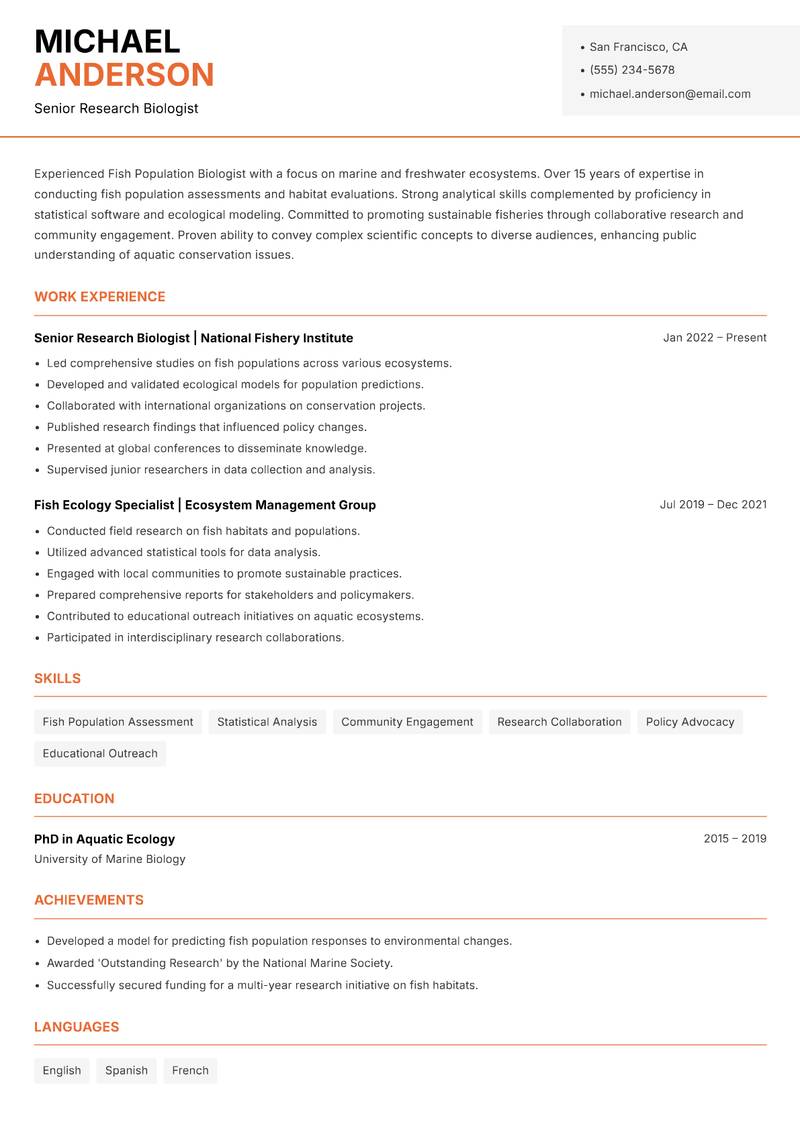
Modern Professional
Use Template7 Real Fish Population Biologist Resume Examples
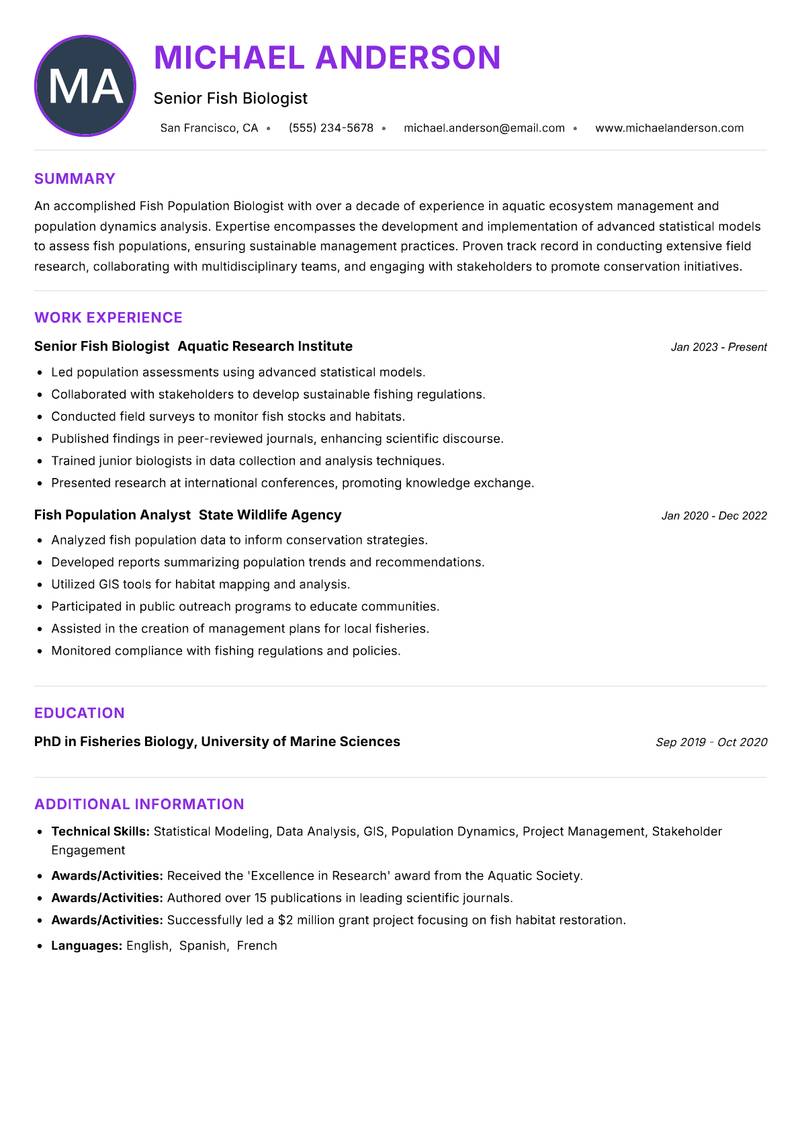
Senior Fish Biologist with 13+ Years Experience
Summary: An accomplished Fish Population Biologist with over a decade of experience in aquatic ecosystem management and population dynamics analysis. Expertise encompasses the development and implementation of advanced statistical models to assess fish populations, ensuring sustainable management practices. Proven track record in conducting extensive field research, collaborating with multidisciplinary teams, and engaging with stakeholders to promote conservation initiatives. Demonstrated ability to synthesize complex data into actionable insights, fostering informed decision-making in fisheries management. Highly skilled in utilizing various software tools for data analysis and visualization, alongside a strong understanding of regulatory frameworks governing aquatic resources. Committed to advancing scientific knowledge and advocating for the preservation of aquatic biodiversity through innovative research methodologies and community engagement.
Description:
- Led population assessments using advanced statistical models.
- Collaborated with stakeholders to develop sustainable fishing regulations.
- Conducted field surveys to monitor fish stocks and habitats.
- Published findings in peer-reviewed journals, enhancing scientific discourse.
- Trained junior biologists in data collection and analysis techniques.
- Presented research at international conferences, promoting knowledge exchange.
🏆 Key Achievements
Fishery Biologist with 8+ Years Experience
Summary: Dynamic Fish Population Biologist with extensive experience in aquatic ecosystems and fishery resource management. Proven expertise in conducting population assessments and developing sustainable practices to enhance fish stocks. Strong background in collaborating with governmental agencies and non-profits to implement conservation strategies. Skilled in utilizing modern analytical tools to assess data and generate insights that drive policy changes. Demonstrates a commitment to public education and stakeholder engagement, ensuring that research findings are translated into effective conservation initiatives. Recognized for innovative approaches to problem-solving and ability to work effectively in interdisciplinary teams.
Description:
- Conducted field research on fish populations in coastal areas.
- Implemented monitoring programs to assess fishery health.
- Analyzed ecological data to inform management decisions.
- Collaborated with environmentalists to promote sustainable practices.
- Engaged local communities through educational workshops.
- Published research findings to enhance public awareness.
🏆 Key Achievements
Freshwater Biologist with 9+ Years Experience
Summary: Detail-oriented Fish Population Biologist with a specialization in freshwater ecosystems and fish population dynamics. Possesses a robust background in statistical modeling and ecological assessment to inform sustainable fisheries management. Demonstrates proficiency in conducting field studies and utilizing advanced data analysis techniques to derive insights that shape conservation strategies. Committed to fostering collaborative partnerships with government agencies, NGOs, and academic institutions to promote the effective management of aquatic resources. Adept at communicating complex scientific findings to diverse audiences, ensuring stakeholder buy-in for conservation initiatives. Recognized for a proactive approach to problem-solving and dedication to advancing the field of fisheries biology.
Description:
- Conducted population assessments in freshwater habitats.
- Developed and implemented monitoring protocols for fish species.
- Analyzed data to inform conservation strategies and policies.
- Collaborated with local communities on habitat restoration projects.
- Published findings in scientific journals to share knowledge.
- Presented research at regional conferences to engage stakeholders.
🏆 Key Achievements
Marine Biologist with 11+ Years Experience
Summary: Proficient Fish Population Biologist with extensive experience in marine ecosystems, specializing in population dynamics and fisheries management. Expertise in data collection, analysis, and interpretation to inform sustainable fisheries practices. Skilled in collaborating with regulatory agencies and stakeholders to develop comprehensive management plans that promote ecological balance. Demonstrates a strong commitment to conservation and education, often engaging in outreach initiatives to raise awareness about aquatic biodiversity. Adept in using modern technologies and statistical tools to enhance research methodologies. Recognized for contributions to significant policy changes in fishery management through rigorous scientific research.
Description:
- Conducted research on marine fish populations and habitats.
- Developed management plans for sustainable fishing practices.
- Analyzed population data using advanced statistical software.
- Collaborated with international teams on conservation projects.
- Facilitated workshops to educate stakeholders on best practices.
- Published influential reports that shaped fisheries policies.
🏆 Key Achievements
Habitat Restoration Biologist with 13+ Years Experience
Summary: Innovative Fish Population Biologist with a focus on habitat restoration and aquatic ecosystem management. Over 12 years of comprehensive experience in conducting field research, analyzing ecological data, and collaborating with diverse stakeholders. Proficient in employing advanced statistical methods and GIS technology to assess fish populations and their habitats. Dedicated to promoting sustainable practices within fisheries management through education and community engagement. Known for developing effective outreach programs that foster public awareness of aquatic conservation issues. Holds a strong commitment to scientific integrity and continuous professional development in the field of fisheries biology.
Description:
- Led habitat restoration initiatives to improve fish populations.
- Conducted ecological assessments to identify key issues.
- Collaborated with local governments on policy implementation.
- Utilized GIS technology for mapping and analysis.
- Engaged communities in restoration efforts through workshops.
- Published findings to support conservation efforts.
🏆 Key Achievements
Ecological Research Biologist with 10+ Years Experience
Summary: Dedicated Fish Population Biologist with a strong background in applied research and ecological assessment. Over 10 years of experience in the field, focusing on the sustainable management of fish populations and their habitats. Adept at utilizing advanced statistical techniques and ecological modeling to inform decision-making processes in fisheries management. Proven ability to engage with various stakeholders, including government agencies, NGOs, and local communities, to promote conservation efforts. Committed to enhancing public awareness and understanding of aquatic ecosystems through educational programs and outreach activities. Recognized for contributions to research that informs policy and conservation strategies.
Description:
- Conducted extensive research on fish population trends.
- Developed ecological models to predict population dynamics.
- Engaged with stakeholders to discuss conservation issues.
- Published findings in leading scientific journals.
- Led workshops to train community members on fishery management.
- Collaborated with interdisciplinary teams on research projects.
🏆 Key Achievements
Senior Research Biologist with 15+ Years Experience
Summary: Experienced Fish Population Biologist with a focus on marine and freshwater ecosystems. Over 15 years of expertise in conducting fish population assessments and habitat evaluations. Strong analytical skills complemented by proficiency in statistical software and ecological modeling. Committed to promoting sustainable fisheries through collaborative research and community engagement. Proven ability to convey complex scientific concepts to diverse audiences, enhancing public understanding of aquatic conservation issues. Recognized for innovative research methodologies that have led to significant advancements in fisheries management practices. Dedicated to continuous professional growth and contributing to the field through impactful research.
Description:
- Led comprehensive studies on fish populations across various ecosystems.
- Developed and validated ecological models for population predictions.
- Collaborated with international organizations on conservation projects.
- Published research findings that influenced policy changes.
- Presented at global conferences to disseminate knowledge.
- Supervised junior researchers in data collection and analysis.
🏆 Key Achievements
Key Skills for Fish Population Biologist
ATS Optimization Tips
Increase your chances of getting hired
Use Standard Headings
Use common section titles like Experience, Skills, etc.
Include Keywords
Add role-specific keywords from the job description
Keep it Simple
Avoid complex tables, images and graphics
Save in Right Format
Use PDF format unless otherwise specified
Fish Population Biologist Salary Insights
Average Salary
$67,500
per year
Salary Range
$50,000 - $85,000
per year
Top Paying Cities
Los Angeles, Seattle, Houston, Dallas, Boston
Source: Glassdoor, Payscale, Indeed (Updated July 2025)
Everything you need to write a great Fish Population Biologist resume
Strong Action Verbs to Use
Resume Writing Tips
- →Highlight field research experience and specific fish sampling techniques used in previous positions.
- →Emphasize your knowledge of local aquatic ecosystems and applicable regulations in your area.
- →Use quantifiable achievements, such as increased population estimates or successful management outcomes, to demonstrate impact.
- →Showcase collaboration with stakeholders, particularly in community-focused conservation initiatives.
- →Detail experience with statistical software relevant to population modeling, such as R or SAS.
Common Mistakes to Avoid
- ✕Neglecting to mention specific aquatic environments (freshwater vs. marine) in the resume qualifications.
- ✕Overly general descriptions of prior duties instead of detailing specific methods and projects undertaken.
- ✕Failing to tailor the resume to highlight experience with relevant fish species or fisheries management regulations.
- ✕Not including results from conservation efforts or management plans that were successfully implemented.
ATS Keywords for Fish Population Biologist
Fish Population Biologist Career Path
Career Progression
Entry-level Fish Population Biologist
Focuses on data collection and initial analysis under the guidance of senior biologists. Engages in fieldwork and utilizes fish sampling techniques.
Fish Population Biologist
Conducts independent research projects, develops population models, and analyzes data collected from diverse aquatic environments. Collaborates with teams to create management plans.
Senior Fish Population Biologist
Leads research initiatives, coordinates field studies, and mentors junior staff. Presents findings to stakeholders, including governmental agencies and conservation organizations.
Fishery Manager
Oversees the management of fish stocks and habitats, integrating scientific data with regulatory compliance and community engagement.
Fishery Consultant
Provides expert analysis and recommendations for sustainable fish population management in commercial and recreational fisheries.
Fish Population Biologist Interview Questions
How do you assess fish population health in a given ecosystem? +
Discuss methods such as biomass assessments, length-frequency analysis, and catch-per-unit-effort metrics.
Describe a time when your research influenced fishery management policies. +
Provide an example addressing challenges you faced and how your findings were communicated to stakeholders.
What techniques do you use for population modeling? +
Mention specific models like the Thompson & Kope model or CPUE models and the data inputs required for accurate predictions.
How would you handle a situation where data contradicts existing fishery management practices? +
Explain your approach to validating data and discussing changes with management authorities.
What role does community involvement play in sustainable fish management? +
Highlight examples of engaging with local communities and integrating their knowledge into management plans.
Can you explain the significance of bycatch reduction in fisheries? +
Discuss environmental impacts of bycatch and methods for minimizing it in fishing practices.
About the Fish Population Biologist Role
Fish Population Biologists analyze population trends and dynamics within aquatic ecosystems, using innovative statistical methods to inform sustainable fisheries management. Working closely with state and federal agencies, they assess the effects of environmental changes on fish stocks. This role demands intensive fieldwork, including fish tagging and habitat assessment, to collect vital data that supports ecological balance and biodiversity preservation.
Frequently Asked Questions
What educational background is required for a Fish Population Biologist? +
Typically, a Bachelor's degree in biology, marine science, or a related field is required, with a Master's or Ph.D. preferred for advanced roles.
What kind of fieldwork is involved in this role? +
Fieldwork often includes fish sampling, habitat assessments, and data collection in varying aquatic environments.
Are there opportunities for advancement within this field? +
Yes, Fish Population Biologists can advance to senior positions or specialize in areas such as fishery management or ecosystem consulting.
What types of organizations hire Fish Population Biologists? +
They may work for government agencies, conservation organizations, research institutions, or private consulting firms.
How do Fish Population Biologists contribute to environmental conservation? +
By understanding and managing fish populations, they help ensure sustainable fishing practices that protect aquatic ecosystems.
More Resume Examples You Might Like
Related Career Paths
Other roles candidates for Fish Population Biologist positions often also consider.
Will this Fish Population Biologist resume pass the ATS scan?
Upload it and get an instant AI-scored compatibility check with specific fixes.
Check My Resume →
Pair it with a matching cover letter
AI drafts a first version from your job title and strengths — edit it live, then download the PDF.
Write My Cover Letter →
Written by Nohaya Career Team
Reviewed by HR Professionals · Updated July 2025
Ready to Build Your Perfect Resume?
Choose from 1000+ professional templates and land your dream job.
Create My Resume Now