Build an ATS-Friendly
Cognitive Neuroscience Researcher Resume
That Gets Interviews
At the intersection of psychology and neural science, Cognitive Neuroscience Researchers examine how the brain supports complex cognitive functions such as language, decision-making, and spatial awareness. Engaging in a blend of theoretical frameworks and empirical research, these professionals employ methods like…
Cognitive Neuroscience Researcher Resume Templates
Modern Professional
Use Template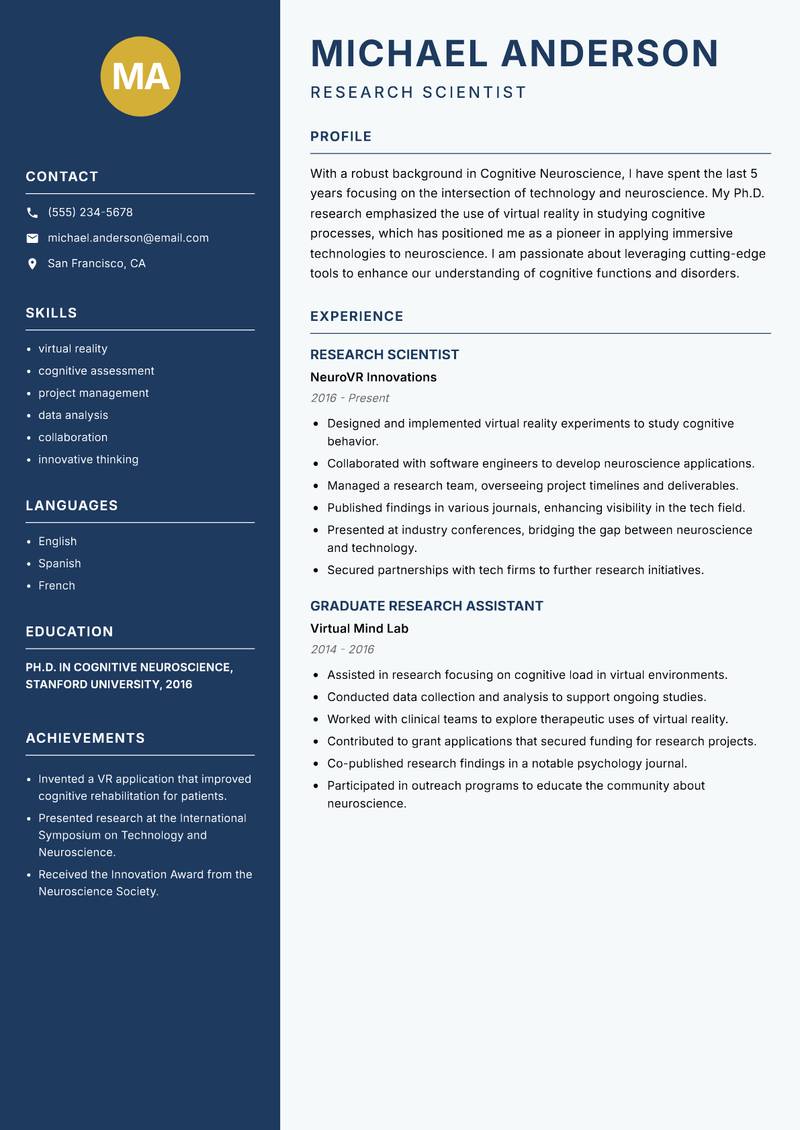
Classic Clean
Use Template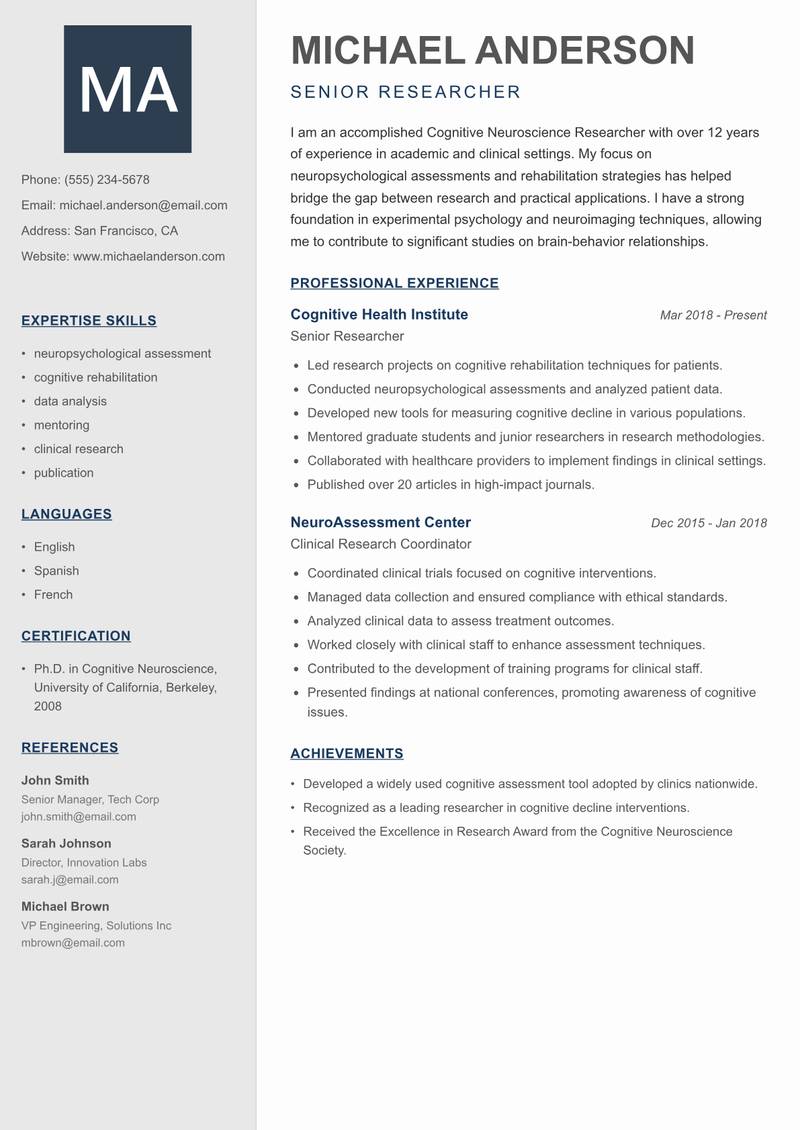
Creative Minimal
Use Template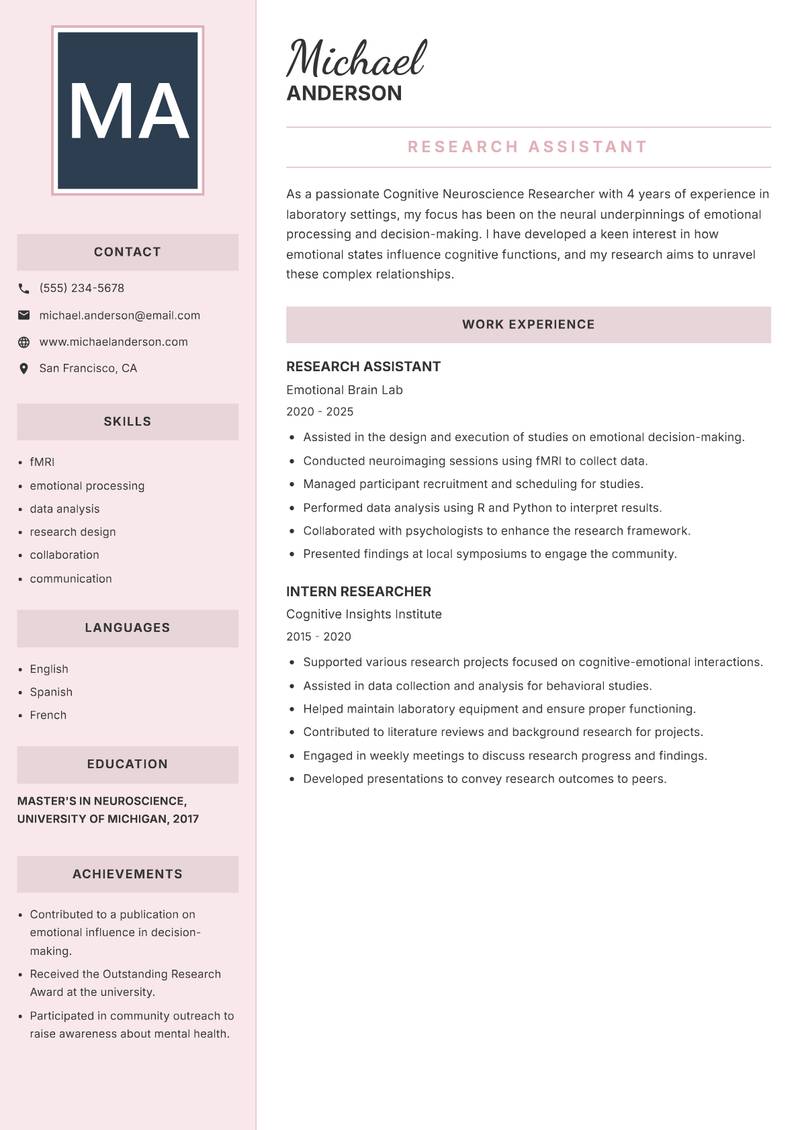
Executive
Use Template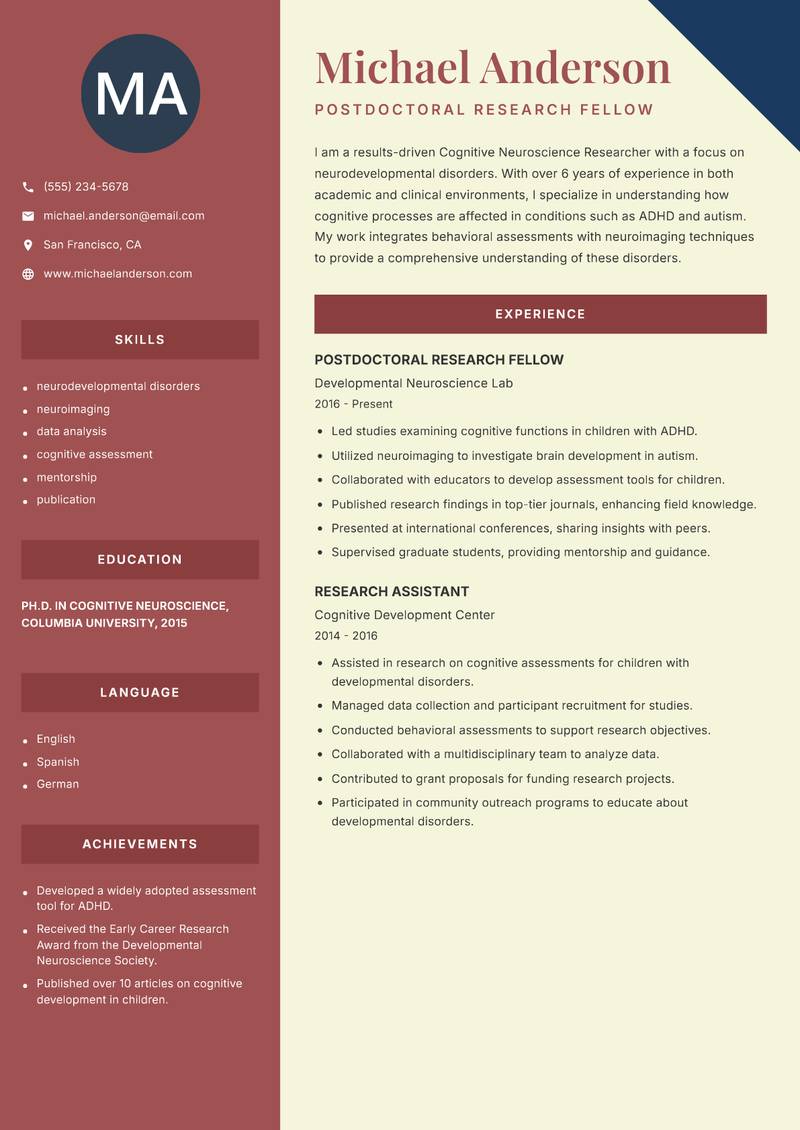
Two Column
Use Template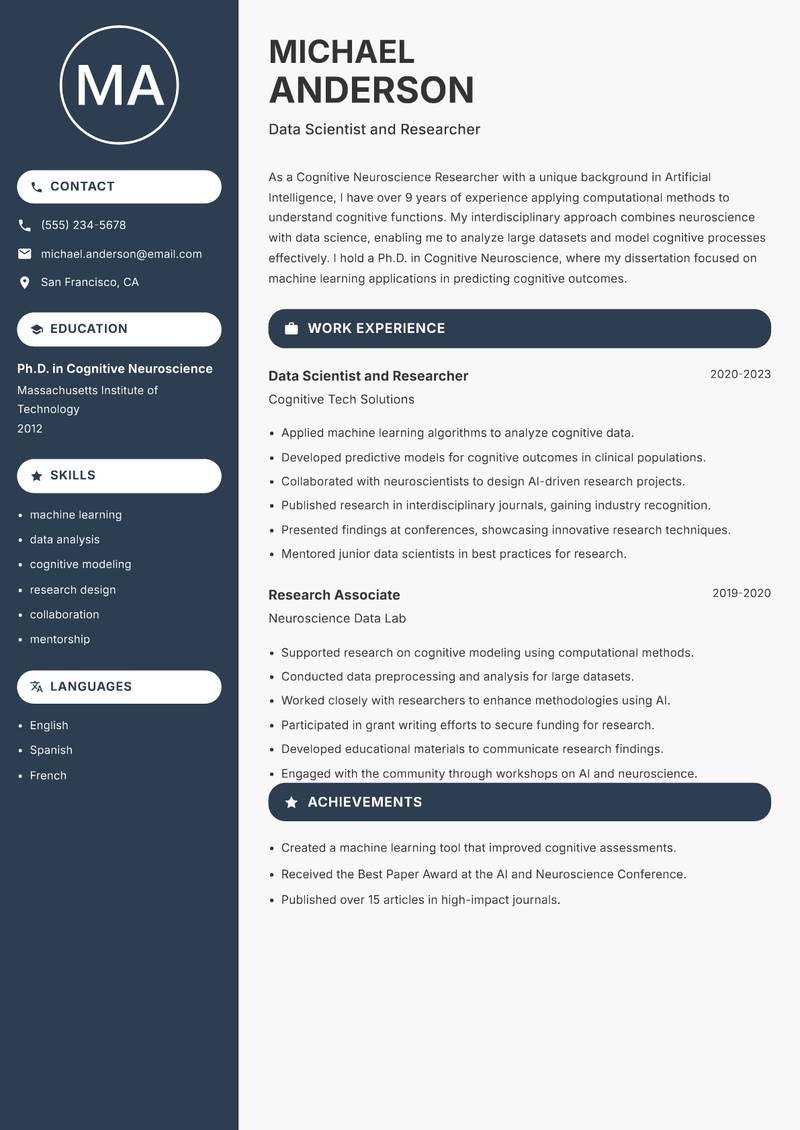
Compact
Use Template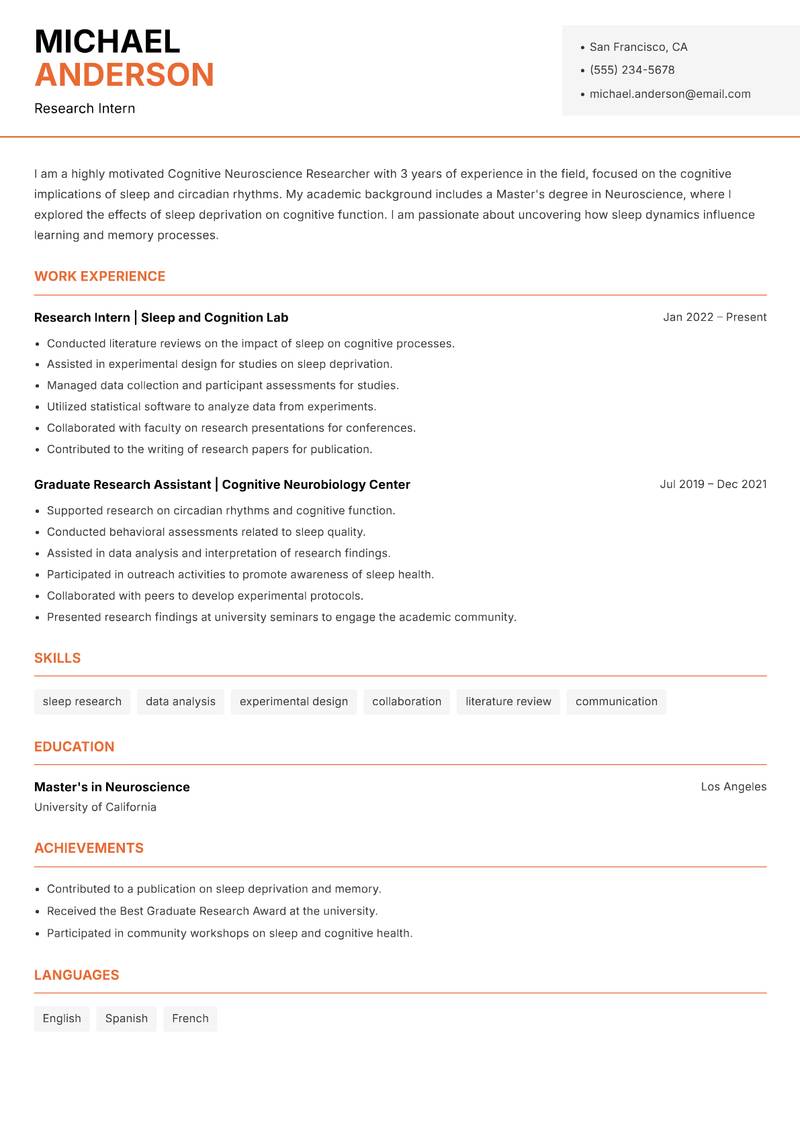
Modern Professional
Use Template7 Real Cognitive Neuroscience Researcher Resume Examples
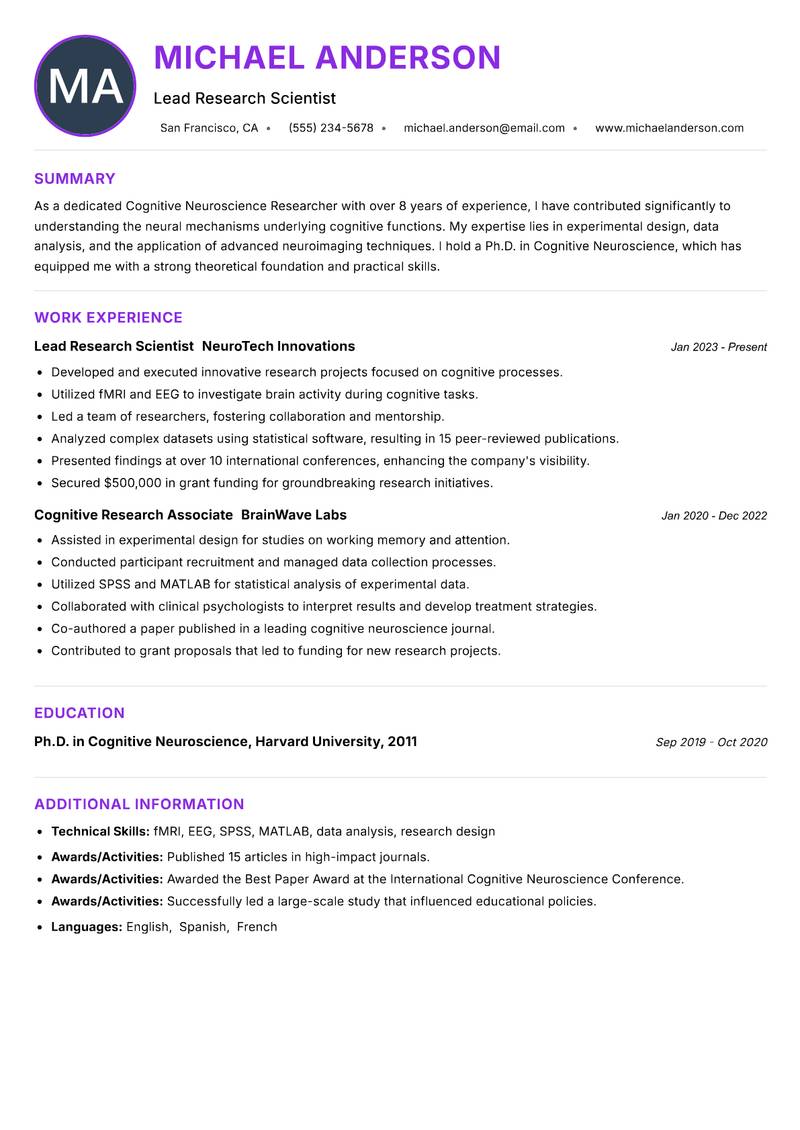
Lead Research Scientist with 10+ Years Experience
Summary: As a dedicated Cognitive Neuroscience Researcher with over 8 years of experience, I have contributed significantly to understanding the neural mechanisms underlying cognitive functions. My expertise lies in experimental design, data analysis, and the application of advanced neuroimaging techniques. I hold a Ph.D. in Cognitive Neuroscience, which has equipped me with a strong theoretical foundation and practical skills. Throughout my career, I have collaborated with interdisciplinary teams to investigate topics such as memory, attention, and decision-making. My research results have been published in peer-reviewed journals, and I have presented my findings at national and international conferences. I am passionate about translating complex scientific concepts into actionable insights that can benefit educational and clinical practices. I strive to foster an environment of innovation and critical thinking in my research teams, ensuring that we remain at the forefront of cognitive neuroscience research. My goal is to contribute to groundbreaking studies that improve our understanding of the human brain and its functions.
Description:
- Developed and executed innovative research projects focused on cognitive processes.
- Utilized fMRI and EEG to investigate brain activity during cognitive tasks.
- Led a team of researchers, fostering collaboration and mentorship.
- Analyzed complex datasets using statistical software, resulting in 15 peer-reviewed publications.
- Presented findings at over 10 international conferences, enhancing the company's visibility.
- Secured $500,000 in grant funding for groundbreaking research initiatives.
🏆 Key Achievements
Research Scientist with 7+ Years Experience
Summary: With a robust background in Cognitive Neuroscience, I have spent the last 5 years focusing on the intersection of technology and neuroscience. My Ph.D. research emphasized the use of virtual reality in studying cognitive processes, which has positioned me as a pioneer in applying immersive technologies to neuroscience. I am passionate about leveraging cutting-edge tools to enhance our understanding of cognitive functions and disorders. My work has led to innovative approaches in therapy for anxiety and PTSD using virtual environments. I have collaborated with tech companies to create applications that bridge the gap between neuroscience research and practical solutions. I thrive in dynamic environments where I can apply my analytical skills and creativity to solve complex problems. Ultimately, my goal is to continue pushing the boundaries of cognitive neuroscience through technology, ensuring that our findings translate into real-world benefits.
Description:
- Designed and implemented virtual reality experiments to study cognitive behavior.
- Collaborated with software engineers to develop neuroscience applications.
- Managed a research team, overseeing project timelines and deliverables.
- Published findings in various journals, enhancing visibility in the tech field.
- Presented at industry conferences, bridging the gap between neuroscience and technology.
- Secured partnerships with tech firms to further research initiatives.
🏆 Key Achievements
Senior Researcher with 12+ Years Experience
Summary: I am an accomplished Cognitive Neuroscience Researcher with over 12 years of experience in academic and clinical settings. My focus on neuropsychological assessments and rehabilitation strategies has helped bridge the gap between research and practical applications. I have a strong foundation in experimental psychology and neuroimaging techniques, allowing me to contribute to significant studies on brain-behavior relationships. My research has been instrumental in developing assessment tools used in clinical practice for individuals with cognitive impairments. I possess a strong publication record and have been actively involved in mentoring junior researchers and students. I believe in the importance of an interdisciplinary approach, collaborating with experts from various fields to enhance the quality of research outcomes. I aim to continue my work in cognitive rehabilitation, focusing on evidence-based practices that improve the quality of life for individuals with cognitive challenges.
Description:
- Led research projects on cognitive rehabilitation techniques for patients.
- Conducted neuropsychological assessments and analyzed patient data.
- Developed new tools for measuring cognitive decline in various populations.
- Mentored graduate students and junior researchers in research methodologies.
- Collaborated with healthcare providers to implement findings in clinical settings.
- Published over 20 articles in high-impact journals.
🏆 Key Achievements
Research Assistant with 4+ Years Experience
Summary: As a passionate Cognitive Neuroscience Researcher with 4 years of experience in laboratory settings, my focus has been on the neural underpinnings of emotional processing and decision-making. I have developed a keen interest in how emotional states influence cognitive functions, and my research aims to unravel these complex relationships. I have hands-on experience with various neuroimaging techniques, including fMRI and PET scans, which I have used to explore the brain's response to emotional stimuli. My academic background includes a Master's degree in Neuroscience, and I am committed to pursuing a Ph.D. to further my expertise. I enjoy collaborating with multidisciplinary teams to bring diverse perspectives to research questions. I strive to communicate my findings effectively to both scientific and non-scientific audiences, believing that research should have a meaningful impact on society. I am eager to contribute to innovative studies that enhance our understanding of cognitive-emotional interactions and their implications for mental health.
Description:
- Assisted in the design and execution of studies on emotional decision-making.
- Conducted neuroimaging sessions using fMRI to collect data.
- Managed participant recruitment and scheduling for studies.
- Performed data analysis using R and Python to interpret results.
- Collaborated with psychologists to enhance the research framework.
- Presented findings at local symposiums to engage the community.
🏆 Key Achievements
Postdoctoral Research Fellow with 6+ Years Experience
Summary: I am a results-driven Cognitive Neuroscience Researcher with a focus on neurodevelopmental disorders. With over 6 years of experience in both academic and clinical environments, I specialize in understanding how cognitive processes are affected in conditions such as ADHD and autism. My work integrates behavioral assessments with neuroimaging techniques to provide a comprehensive understanding of these disorders. I have been involved in several research projects that have resulted in actionable insights used in clinical settings. I am dedicated to translating research findings into practical applications, working closely with clinicians to develop effective intervention strategies. I have a strong track record of publishing my research, contributing to the academic community, and presenting my findings at various conferences. My goal is to continue advancing the field of cognitive neuroscience, particularly in the area of neurodevelopmental disorders, and to help improve the lives of individuals affected by these conditions.
Description:
- Led studies examining cognitive functions in children with ADHD.
- Utilized neuroimaging to investigate brain development in autism.
- Collaborated with educators to develop assessment tools for children.
- Published research findings in top-tier journals, enhancing field knowledge.
- Presented at international conferences, sharing insights with peers.
- Supervised graduate students, providing mentorship and guidance.
🏆 Key Achievements
Data Scientist and Researcher with 9+ Years Experience
Summary: As a Cognitive Neuroscience Researcher with a unique background in Artificial Intelligence, I have over 9 years of experience applying computational methods to understand cognitive functions. My interdisciplinary approach combines neuroscience with data science, enabling me to analyze large datasets and model cognitive processes effectively. I hold a Ph.D. in Cognitive Neuroscience, where my dissertation focused on machine learning applications in predicting cognitive outcomes. I have collaborated with tech companies to develop AI-driven tools that enhance research methodologies and improve cognitive assessments. My work has resulted in innovative solutions that merge technology and neuroscience, paving the way for new research directions. I am committed to publishing my findings and sharing insights with both academic and industry audiences. As I continue my career, I aim to further explore the role of AI in cognitive neuroscience and its potential to transform the field.
Description:
- Applied machine learning algorithms to analyze cognitive data.
- Developed predictive models for cognitive outcomes in clinical populations.
- Collaborated with neuroscientists to design AI-driven research projects.
- Published research in interdisciplinary journals, gaining industry recognition.
- Presented findings at conferences, showcasing innovative research techniques.
- Mentored junior data scientists in best practices for research.
🏆 Key Achievements
Research Intern with 3+ Years Experience
Summary: I am a highly motivated Cognitive Neuroscience Researcher with 3 years of experience in the field, focused on the cognitive implications of sleep and circadian rhythms. My academic background includes a Master's degree in Neuroscience, where I explored the effects of sleep deprivation on cognitive function. I am passionate about uncovering how sleep dynamics influence learning and memory processes. I aim to contribute to the growing body of research in this area, collaborating with others to enhance our understanding of sleep's role in cognitive health. My approach combines both experimental methods and quantitative analysis, allowing me to derive meaningful insights from research findings. I am eager to continue my academic journey, pursuing a Ph.D. and participating in impactful research projects that can lead to practical applications in clinical settings.
Description:
- Conducted literature reviews on the impact of sleep on cognitive processes.
- Assisted in experimental design for studies on sleep deprivation.
- Managed data collection and participant assessments for studies.
- Utilized statistical software to analyze data from experiments.
- Collaborated with faculty on research presentations for conferences.
- Contributed to the writing of research papers for publication.
🏆 Key Achievements
Key Skills for Cognitive Neuroscience Researcher
ATS Optimization Tips
Increase your chances of getting hired
Use Standard Headings
Use common section titles like Experience, Skills, etc.
Include Keywords
Add role-specific keywords from the job description
Keep it Simple
Avoid complex tables, images and graphics
Save in Right Format
Use PDF format unless otherwise specified
Cognitive Neuroscience Researcher Salary Insights
Average Salary
$86,000
per year
Salary Range
$60,000 - $112,000
per year
Top Paying Cities
Los Angeles, Seattle, Houston, Dallas, Boston
Source: Glassdoor, Payscale, Indeed (Updated May 2025)
Everything you need to write a great Cognitive Neuroscience Researcher resume
Strong Action Verbs to Use
Resume Writing Tips
- →Highlight any interdisciplinary research experiences as they showcase versatility and collaborative skills.
- →Include specific neuroimaging techniques you have proficiency in to attract relevant positions.
- →Quantify your contributions to research papers and grants in terms of funding amounts or number of published articles.
- →Mention collaboration with professionals from other fields, demonstrating breadth in your research impact.
- →Tailor descriptions of your projects to show how they link back to cognitive processes relevant to potential employers.
Common Mistakes to Avoid
- ✕Using vague language that does not highlight specific tools or methodologies used in research.
- ✕Failing to quantify achievements, such as the number of participants involved in a study or impact factors of published work.
- ✕Overloading with jargon without clarifying your specific contributions or roles in the projects.
- ✕Neglecting to mention funding sources for research, which can indicate credibility and success in writing grant proposals.
ATS Keywords for Cognitive Neuroscience Researcher
Cognitive Neuroscience Researcher Career Path
Relevant Certifications
Career Progression
Entry-Level Cognitive Neuroscientist
Typically involve roles that include laboratory assistant or research technician tasks, where experience is gained through direct support of primary research activities.
Cognitive Neuroscience Research Associate
In these positions, individuals contribute to research design, data collection, and preliminary analysis, often focusing on specific cognitive functions.
Senior Cognitive Neuroscientist
Senior roles lead independent studies, manage research teams, and author influential publications while collaborating with interdisciplinary teams.
Principal Investigator
Responsible for securing grants, overseeing multi-faceted research projects, and driving innovation within the field, often while mentoring junior researchers.
Director of Research
Leads research initiatives at academic institutions or corporate research centers, guiding strategic direction and fostering collaborations with industry and academia.
Cognitive Neuroscience Researcher Interview Questions
Can you explain the role of neuroimaging in your research? +
Discuss specific techniques you've used like fMRI or EEG and how they advanced your studies.
Describe a challenging research project you managed. What were the outcomes? +
Focus on your leadership, decision-making, and results achieved in the project.
How do you handle conflicting data in your research findings? +
Describe your approach to data validation and how to resolve discrepancies.
What ethical considerations do you take into account during your research? +
Emphasize your commitment to ethical practices and patient confidentiality.
Can you provide an example of a successful collaboration with other research disciplines? +
Highlight an interdisciplinary project and the skills that were beneficial in the collaboration.
What statistical tools do you prefer for analyzing cognitive data? +
Mention specific software like SPSS or R and your familiarity with different statistical tests.
How do you stay current with advancements in cognitive neuroscience? +
Discuss methods such as attending conferences, reading journals, or engaging with professional networks.
About the Cognitive Neuroscience Researcher Role
At the intersection of psychology and neural science, Cognitive Neuroscience Researchers examine how the brain supports complex cognitive functions such as language, decision-making, and spatial awareness. Engaging in a blend of theoretical frameworks and empirical research, these professionals employ methods like neuroimaging and behavioral tasks to elucidate brain-behavior interactions. Their findings significantly advance our understanding of cognitive disorders and contribute to the development of therapeutic strategies.
Frequently Asked Questions
What educational background is required for a Cognitive Neuroscience Researcher? +
Typically, a PhD in Cognitive Neuroscience, Psychology, or a related field is required, often preceded by a relevant undergraduate degree.
What programming skills are important for this role? +
Proficiency in statistical programming languages like R or Python is highly beneficial for data analysis.
Are there opportunities for growth in this field? +
Yes, career paths can lead to senior research positions, teaching roles in academia, or leadership in corporate research settings.
What types of organizations hire Cognitive Neuroscience Researchers? +
Academia, healthcare institutions, private research firms, and government agencies often seek these professionals.
What is the importance of publishing research findings? +
Publishing enhances visibility in the field, contributes to scientific knowledge, and can influence funding opportunities.
More Resume Examples You Might Like
Related Career Paths
Other roles candidates for Cognitive Neuroscience Researcher positions often also consider.
Will this Cognitive Neuroscience Researcher resume pass the ATS scan?
Upload it and get an instant AI-scored compatibility check with specific fixes.
Check My Resume →
Pair it with a matching cover letter
AI drafts a first version from your job title and strengths — edit it live, then download the PDF.
Write My Cover Letter →
Written by Nohaya Career Team
Reviewed by HR Professionals · Updated May 2025
Ready to Build Your Perfect Resume?
Choose from 1000+ professional templates and land your dream job.
Create My Resume Now