Build an ATS-Friendly
Aquaculture Research Scientist Resume
That Gets Interviews
An Aquaculture Research Scientist conducts experiments to optimize the cultivation and breeding of aquatic species, tackling issues such as fish health, environmental sustainability, and resource management. This role involves extensive field research, laboratory analysis, and statistical modeling to evaluate growth…
Aquaculture Research Scientist Resume Templates
Modern Professional
Use Template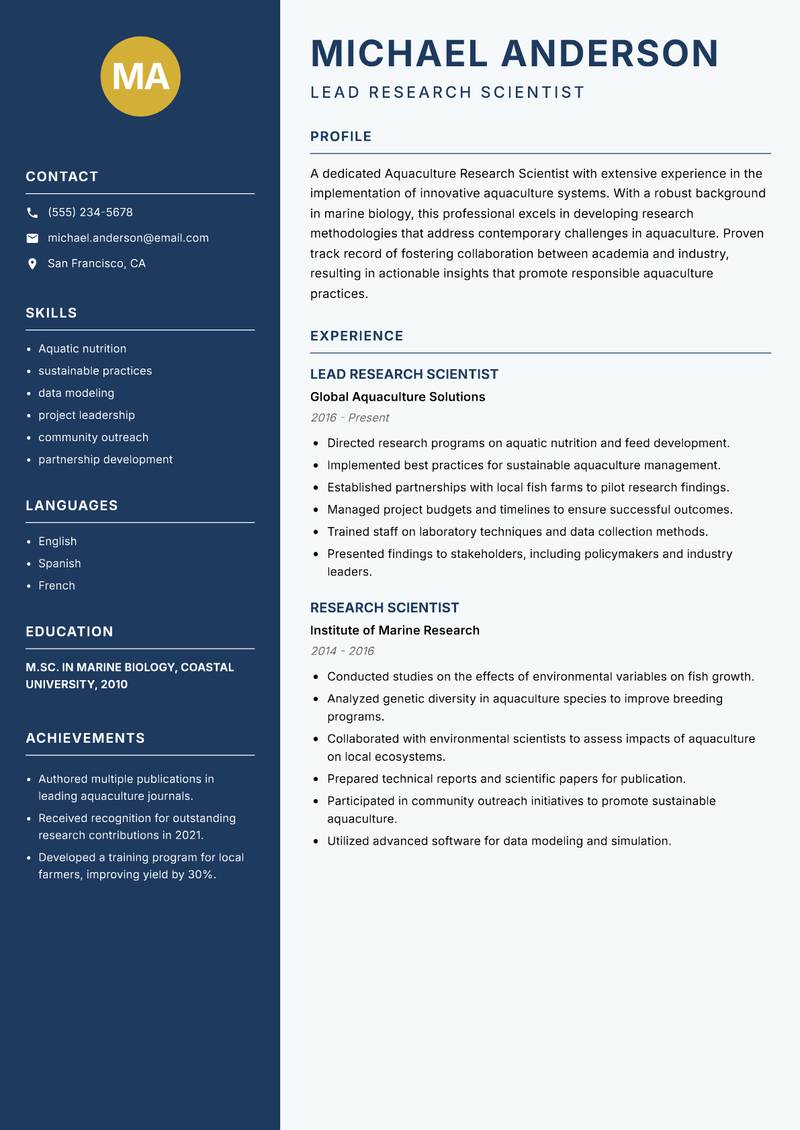
Classic Clean
Use Template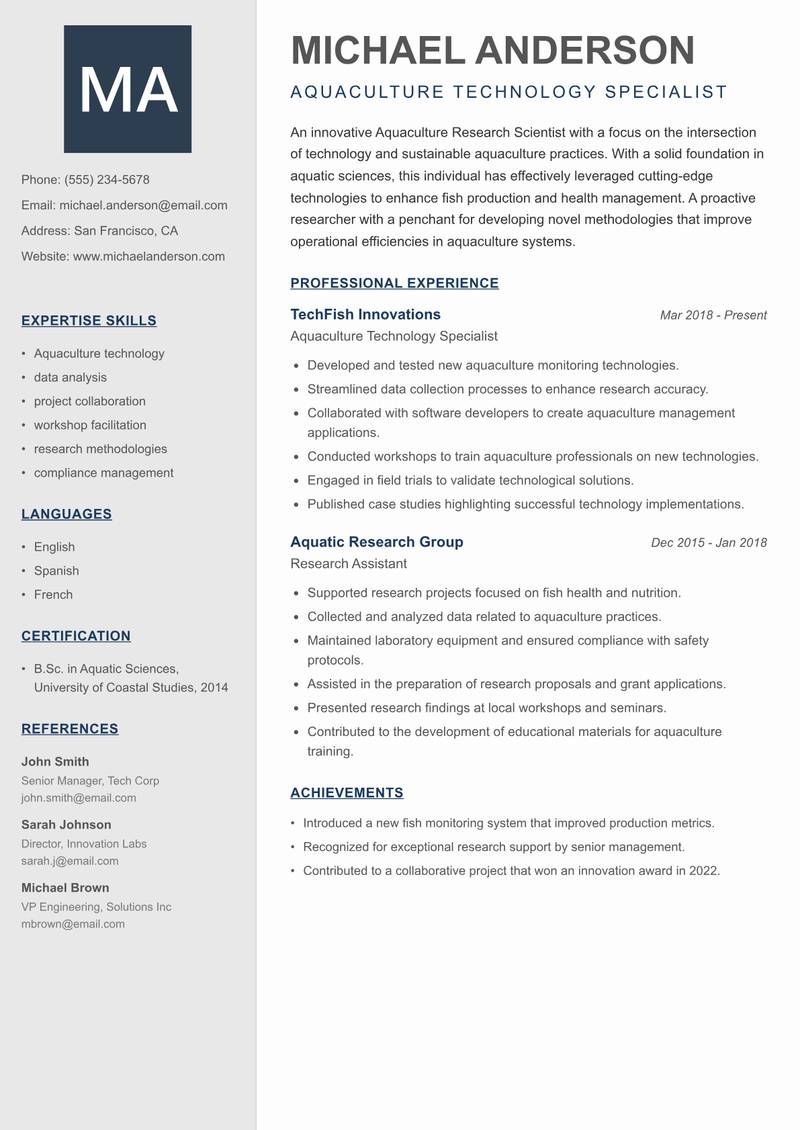
Creative Minimal
Use Template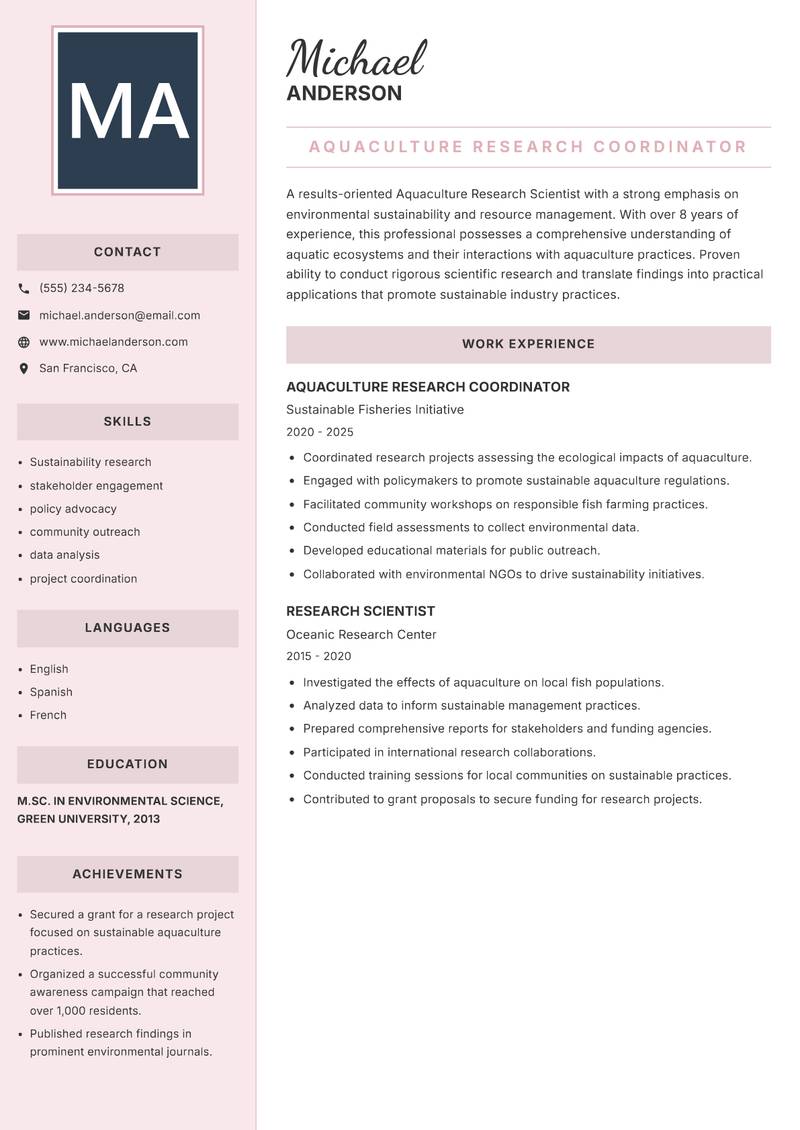
Executive
Use Template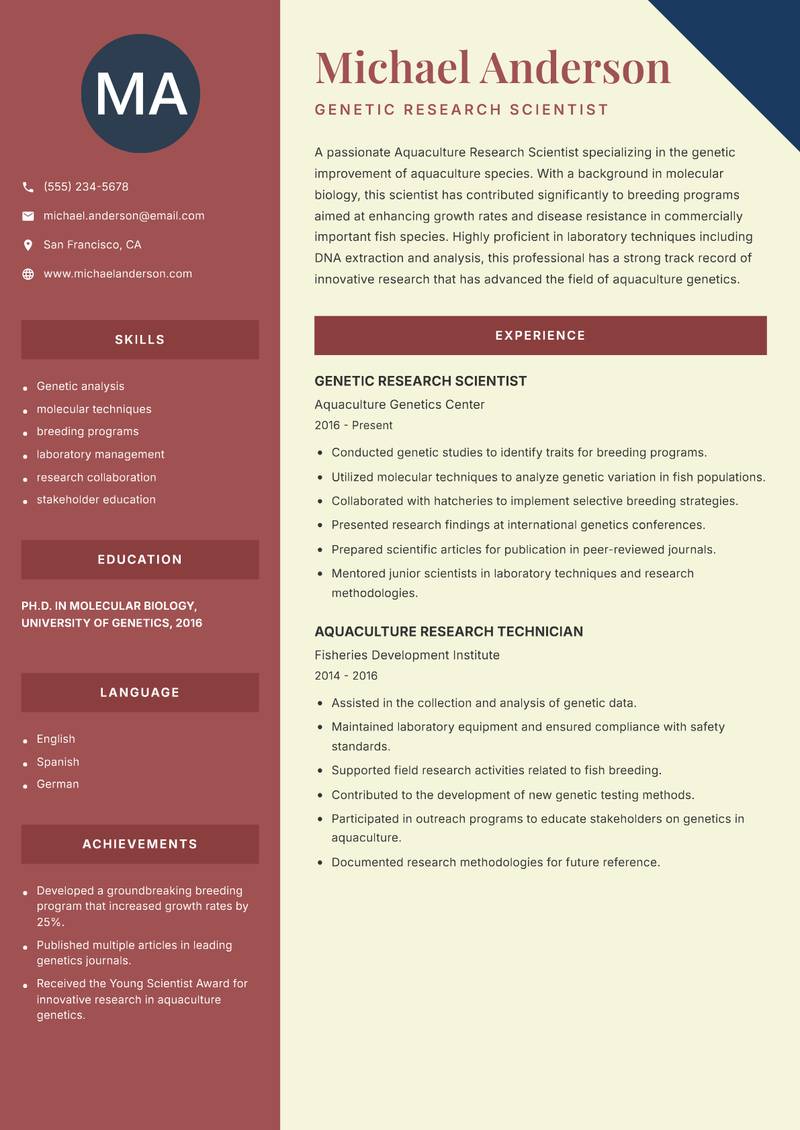
Two Column
Use Template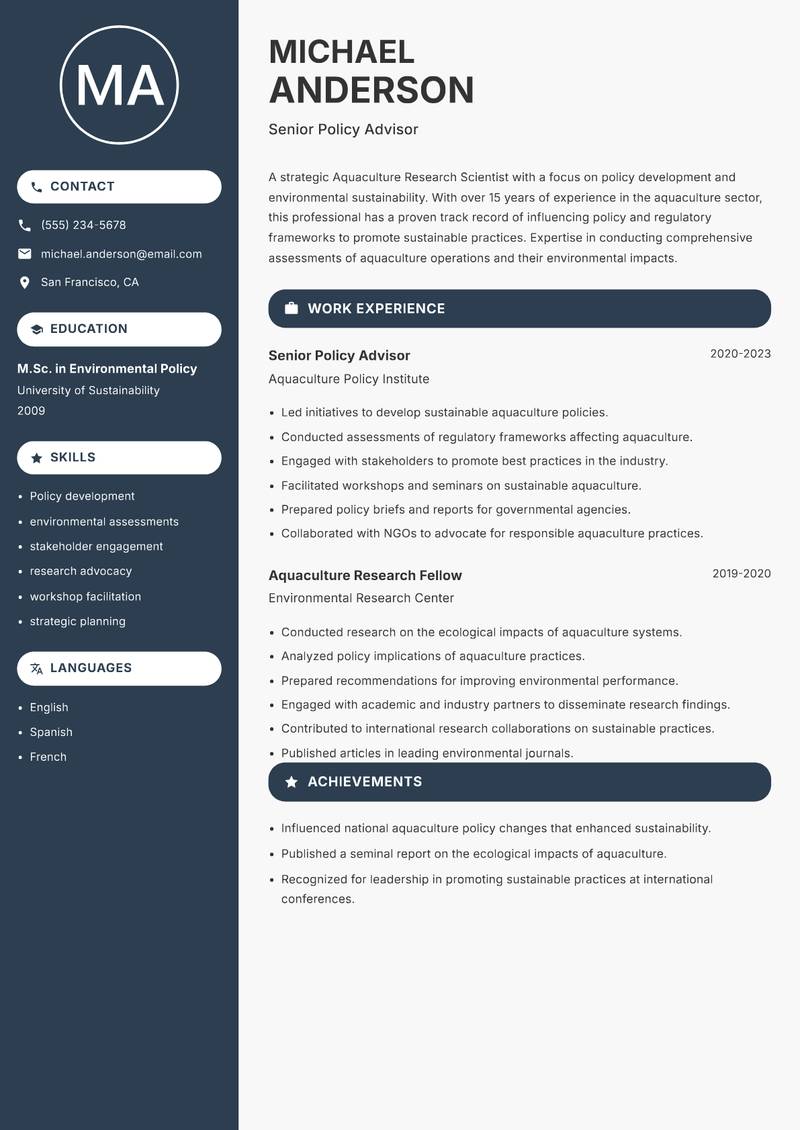
Compact
Use Template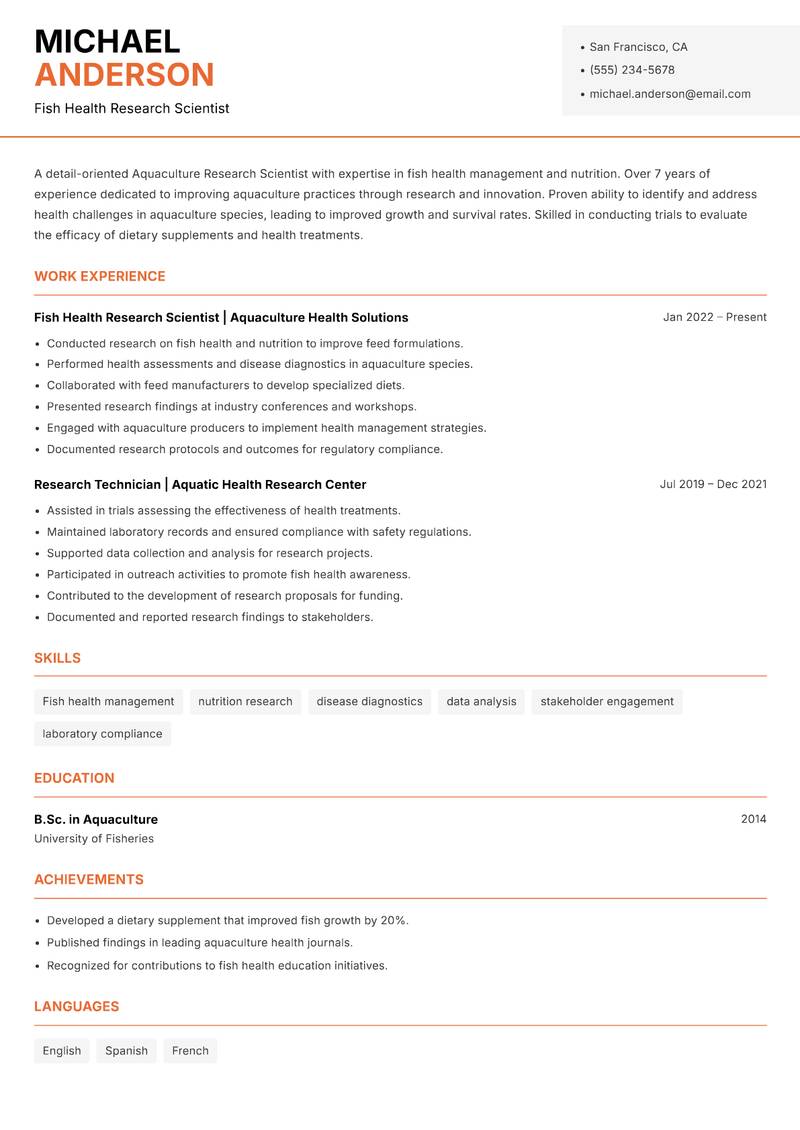
Modern Professional
Use Template7 Real Aquaculture Research Scientist Resume Examples
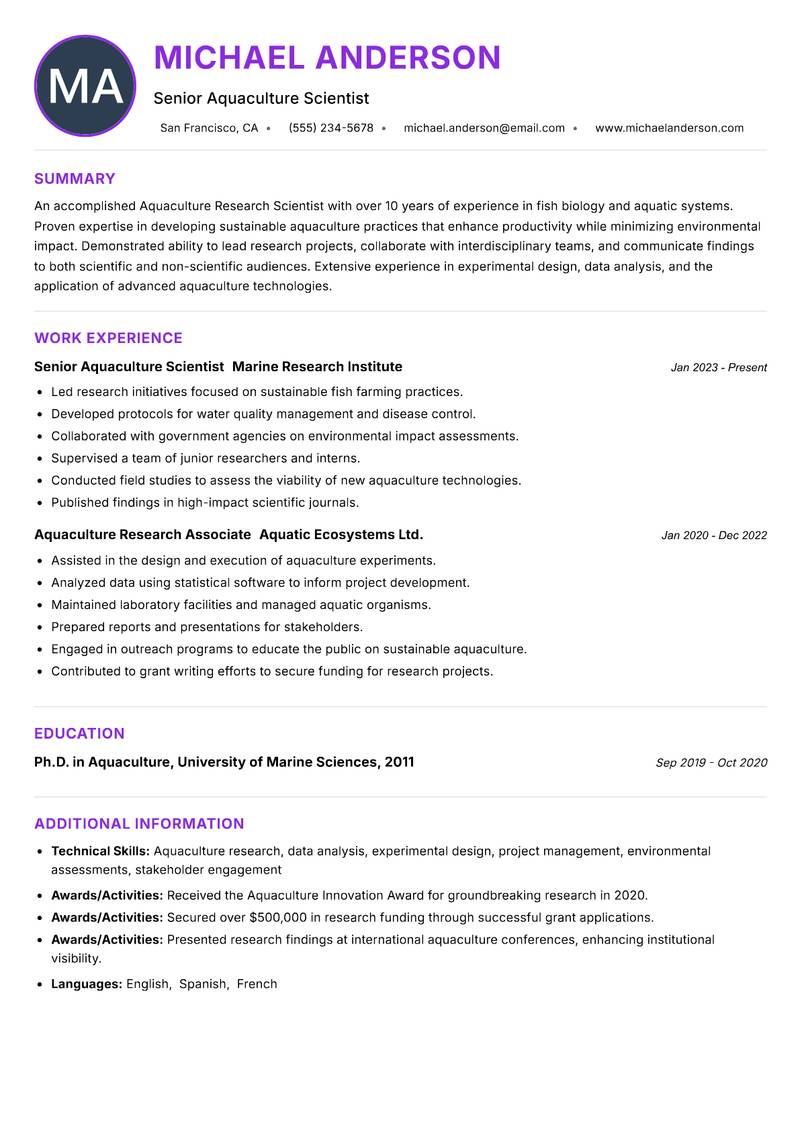
Senior Aquaculture Scientist with 11+ Years Experience
Summary: An accomplished Aquaculture Research Scientist with over 10 years of experience in fish biology and aquatic systems. Proven expertise in developing sustainable aquaculture practices that enhance productivity while minimizing environmental impact. Demonstrated ability to lead research projects, collaborate with interdisciplinary teams, and communicate findings to both scientific and non-scientific audiences. Extensive experience in experimental design, data analysis, and the application of advanced aquaculture technologies. Committed to the advancement of aquaculture through innovative research and development. Recognized for contributions to peer-reviewed journals and international conferences, showcasing the ability to translate complex scientific concepts into actionable strategies for industry stakeholders.
Description:
- Led research initiatives focused on sustainable fish farming practices.
- Developed protocols for water quality management and disease control.
- Collaborated with government agencies on environmental impact assessments.
- Supervised a team of junior researchers and interns.
- Conducted field studies to assess the viability of new aquaculture technologies.
- Published findings in high-impact scientific journals.
🏆 Key Achievements
Lead Research Scientist with 12+ Years Experience
Summary: A dedicated Aquaculture Research Scientist with extensive experience in the implementation of innovative aquaculture systems. With a robust background in marine biology, this professional excels in developing research methodologies that address contemporary challenges in aquaculture. Proven track record of fostering collaboration between academia and industry, resulting in actionable insights that promote responsible aquaculture practices. Renowned for analytical skills and the ability to synthesize complex data into compelling recommendations. A strong advocate for sustainable practices, with a commitment to enhancing food security through aquaculture. Exhibits a passion for education and outreach, empowering communities to engage in sustainable fish farming.
Description:
- Directed research programs on aquatic nutrition and feed development.
- Implemented best practices for sustainable aquaculture management.
- Established partnerships with local fish farms to pilot research findings.
- Managed project budgets and timelines to ensure successful outcomes.
- Trained staff on laboratory techniques and data collection methods.
- Presented findings to stakeholders, including policymakers and industry leaders.
🏆 Key Achievements
Aquaculture Technology Specialist with 9+ Years Experience
Summary: An innovative Aquaculture Research Scientist with a focus on the intersection of technology and sustainable aquaculture practices. With a solid foundation in aquatic sciences, this individual has effectively leveraged cutting-edge technologies to enhance fish production and health management. A proactive researcher with a penchant for developing novel methodologies that improve operational efficiencies in aquaculture systems. Demonstrated success in collaborating with cross-functional teams to bring research outcomes to market. Strong analytical and problem-solving skills, combined with a commitment to educating stakeholders about sustainable practices. Recognized for contributions to the field through published research and presentations at industry conferences.
Description:
- Developed and tested new aquaculture monitoring technologies.
- Streamlined data collection processes to enhance research accuracy.
- Collaborated with software developers to create aquaculture management applications.
- Conducted workshops to train aquaculture professionals on new technologies.
- Engaged in field trials to validate technological solutions.
- Published case studies highlighting successful technology implementations.
🏆 Key Achievements
Aquaculture Research Coordinator with 9+ Years Experience
Summary: A results-oriented Aquaculture Research Scientist with a strong emphasis on environmental sustainability and resource management. With over 8 years of experience, this professional possesses a comprehensive understanding of aquatic ecosystems and their interactions with aquaculture practices. Proven ability to conduct rigorous scientific research and translate findings into practical applications that promote sustainable industry practices. Highly skilled in stakeholder engagement and policy advocacy, ensuring research outcomes align with regulatory frameworks and community needs. A passionate educator, committed to raising awareness about sustainable aquaculture among various audiences. Recognized for excellence in research and community service initiatives.
Description:
- Coordinated research projects assessing the ecological impacts of aquaculture.
- Engaged with policymakers to promote sustainable aquaculture regulations.
- Facilitated community workshops on responsible fish farming practices.
- Conducted field assessments to collect environmental data.
- Developed educational materials for public outreach.
- Collaborated with environmental NGOs to drive sustainability initiatives.
🏆 Key Achievements
Genetic Research Scientist with 9+ Years Experience
Summary: A passionate Aquaculture Research Scientist specializing in the genetic improvement of aquaculture species. With a background in molecular biology, this scientist has contributed significantly to breeding programs aimed at enhancing growth rates and disease resistance in commercially important fish species. Highly proficient in laboratory techniques including DNA extraction and analysis, this professional has a strong track record of innovative research that has advanced the field of aquaculture genetics. Adept at collaborating with industry partners to translate research findings into practical breeding strategies. A committed advocate for sustainable aquaculture practices, with a focus on improving food security through scientific advancement.
Description:
- Conducted genetic studies to identify traits for breeding programs.
- Utilized molecular techniques to analyze genetic variation in fish populations.
- Collaborated with hatcheries to implement selective breeding strategies.
- Presented research findings at international genetics conferences.
- Prepared scientific articles for publication in peer-reviewed journals.
- Mentored junior scientists in laboratory techniques and research methodologies.
🏆 Key Achievements
Senior Policy Advisor with 15+ Years Experience
Summary: A strategic Aquaculture Research Scientist with a focus on policy development and environmental sustainability. With over 15 years of experience in the aquaculture sector, this professional has a proven track record of influencing policy and regulatory frameworks to promote sustainable practices. Expertise in conducting comprehensive assessments of aquaculture operations and their environmental impacts. Highly skilled in stakeholder engagement, fostering collaboration between government, industry, and community organizations. Committed to advancing sustainable aquaculture through research, advocacy, and education. Recognized as a thought leader in the field, with numerous publications and presentations at international forums.
Description:
- Led initiatives to develop sustainable aquaculture policies.
- Conducted assessments of regulatory frameworks affecting aquaculture.
- Engaged with stakeholders to promote best practices in the industry.
- Facilitated workshops and seminars on sustainable aquaculture.
- Prepared policy briefs and reports for governmental agencies.
- Collaborated with NGOs to advocate for responsible aquaculture practices.
🏆 Key Achievements
Fish Health Research Scientist with 8+ Years Experience
Summary: A detail-oriented Aquaculture Research Scientist with expertise in fish health management and nutrition. Over 7 years of experience dedicated to improving aquaculture practices through research and innovation. Proven ability to identify and address health challenges in aquaculture species, leading to improved growth and survival rates. Skilled in conducting trials to evaluate the efficacy of dietary supplements and health treatments. Strong communicator, adept at translating complex scientific information into practical recommendations for aquaculture practitioners. Committed to advancing the field through research, education, and community engagement initiatives.
Description:
- Conducted research on fish health and nutrition to improve feed formulations.
- Performed health assessments and disease diagnostics in aquaculture species.
- Collaborated with feed manufacturers to develop specialized diets.
- Presented research findings at industry conferences and workshops.
- Engaged with aquaculture producers to implement health management strategies.
- Documented research protocols and outcomes for regulatory compliance.
🏆 Key Achievements
Key Skills for Aquaculture Research Scientist
ATS Optimization Tips
Increase your chances of getting hired
Use Standard Headings
Use common section titles like Experience, Skills, etc.
Include Keywords
Add role-specific keywords from the job description
Keep it Simple
Avoid complex tables, images and graphics
Save in Right Format
Use PDF format unless otherwise specified
Aquaculture Research Scientist Salary Insights
Average Salary
$75,000
per year
Salary Range
$60,000 - $90,000
per year
Top Paying Cities
Los Angeles, Seattle, Houston, Dallas, Boston
Source: Glassdoor, Payscale, Indeed (Updated August 2025)
Everything you need to write a great Aquaculture Research Scientist resume
Strong Action Verbs to Use
Resume Writing Tips
- →Highlight any fieldwork experience specifically related to different aquatic environments.
- →Include technical proficiencies in specialized software used for statistical analysis and data modeling like R or SAS.
- →Showcase publications or presentations given at aquaculture conferences, emphasizing contributions to the field.
- →Mention any cross-disciplinary collaborations, such as with environmental science or marine biology peers.
- →Focus on results-oriented achievements, like improving growth rates or reducing costs within aquaculture operations.
Common Mistakes to Avoid
- ✕Listing generic laboratory skills; instead, specify techniques relevant to aquatic research like PCR or fish tagging.
- ✕Omitting the importance of sustainability; emphasize experience in developing eco-friendly aquaculture practices.
- ✕Failing to highlight interdisciplinary projects that demonstrate versatility; showcase collaborations outside of classic research boundaries.
- ✕Using vague job descriptions that don't detail specific contributions to research outcomes; highlight measurable impacts produced.
ATS Keywords for Aquaculture Research Scientist
Aquaculture Research Scientist Career Path
Relevant Certifications
Career Progression
Entry-Level Research Associate
Focus on assisting in laboratory experiments and field studies, often collaborating with senior scientists.
Aquaculture Research Scientist
Conduct independent research projects, analyze aquatic species' growth and health, and contribute to publications.
Senior Aquaculture Scientist
Lead and mentor junior researchers, develop research proposals, and establish partnerships with industry stakeholders.
Research Program Manager
Oversee multiple research projects, manage budgets, and coordinate teams to achieve scientific objectives.
Director of Aquaculture Research
Shape the strategic direction of research initiatives, drive funding applications, and represent the organization at conferences.
Aquaculture Research Scientist Interview Questions
What techniques do you use for assessing water quality and its impact on aquatic life? +
Discuss specific water testing methods, parameters you measure, and tools you utilize.
Can you describe a recent research project you worked on and its outcomes? +
Provide details about the project's objectives, methodology, results, and significance to the industry.
How do you stay current with advancements in aquaculture research? +
Mention relevant journals, online forums, or conferences you attend and what you glean from them.
What strategies do you employ to ensure ethical research practices within aquatic environments? +
Focus on compliance with regulations and best practices for animal welfare.
Have you collaborated with any governmental or regulatory bodies? If so, how? +
Share experiences involving partnerships and how they impacted your research.
Describe how you manage time and resources when conducting long-term studies in aquaculture. +
Emphasize your planning process, coordination with teams, and budgeting skills.
About the Aquaculture Research Scientist Role
An Aquaculture Research Scientist conducts experiments to optimize the cultivation and breeding of aquatic species, tackling issues such as fish health, environmental sustainability, and resource management. This role involves extensive field research, laboratory analysis, and statistical modeling to evaluate growth patterns and nutrient requirements. Collaborating with environmental agencies and industry partners is key to developing innovative solutions that align with sustainable practices in fish and shellfish production.
Frequently Asked Questions
What computer skills are essential for an Aquaculture Research Scientist? +
Proficiency in data analysis software, database management, and modeling programs such as R, SQL, or Python is critical.
What are the most important qualities for success in this role? +
Analytical thinking, attention to detail, strong communication skills, and a commitment to sustainable practices are essential.
Is there a high demand for Aquaculture Research Scientists in the job market? +
Yes, as the global population grows and demand for sustainable seafood increases, the need for skilled researchers in aquaculture is escalating.
What are some environmental challenges Aquaculture Research Scientists must address? +
Key issues include managing fish health in varying conditions, controlling pollution and disease outbreaks, and implementing sustainable feeding strategies.
What kind of experiments do Aquaculture Research Scientists conduct? +
Experiments often involve testing different feed types, observing species interactions, and assessing water quality impacts on growth.
Are there opportunities for advancement in this field? +
Yes, there are clear paths for advancement into management, specialized research roles, and partnerships with governmental agencies.
More Resume Examples You Might Like
Related Career Paths
Other roles candidates for Aquaculture Research Scientist positions often also consider.
Will this Aquaculture Research Scientist resume pass the ATS scan?
Upload it and get an instant AI-scored compatibility check with specific fixes.
Check My Resume →
Pair it with a matching cover letter
AI drafts a first version from your job title and strengths — edit it live, then download the PDF.
Write My Cover Letter →
Written by Nohaya Career Team
Reviewed by HR Professionals · Updated August 2025
Ready to Build Your Perfect Resume?
Choose from 1000+ professional templates and land your dream job.
Create My Resume Now