Build an ATS-Friendly
Aquaculture Monitoring Analyst Resume
That Gets Interviews
Data-driven insights fuel decisions in the life of an Aquaculture Monitoring Analyst. This role centers on the systematic observation of aquatic ecosystems, focusing on precise measurements of water parameters, fish health assessments, and environmental impacts. Analysts engage in real-time monitoring using sensor…
Aquaculture Monitoring Analyst Resume Templates
Modern Professional
Use Template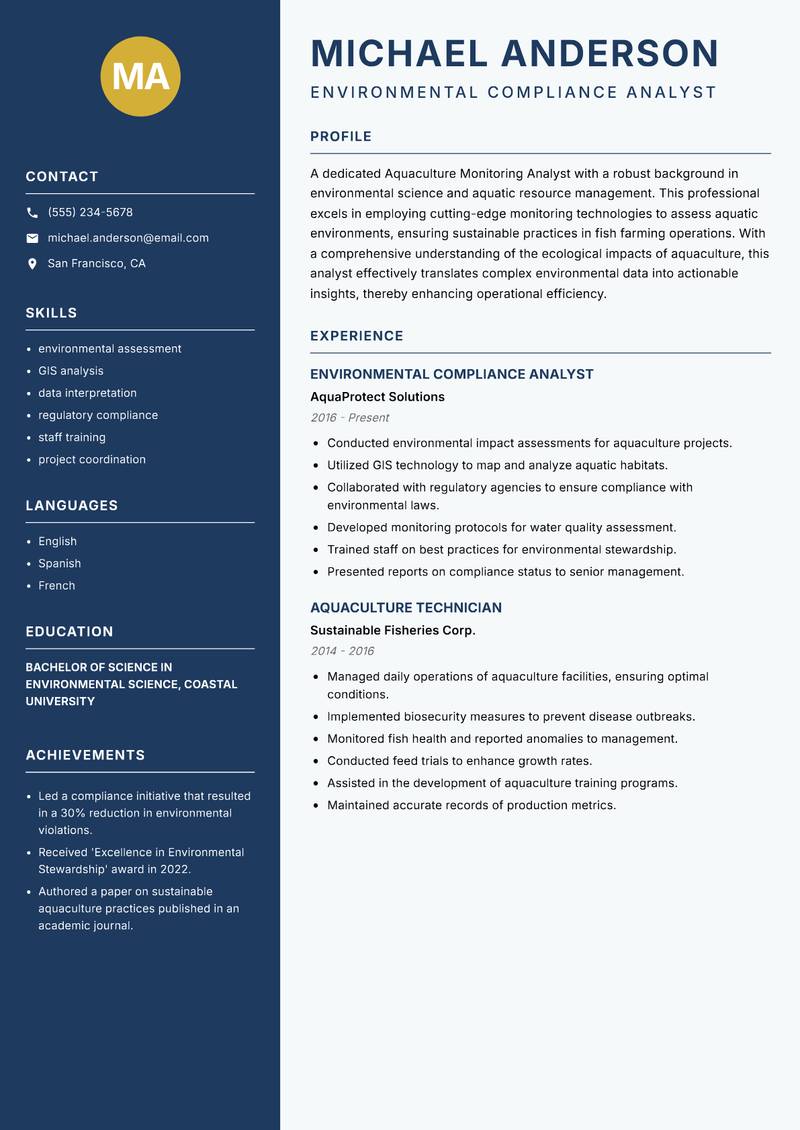
Classic Clean
Use Template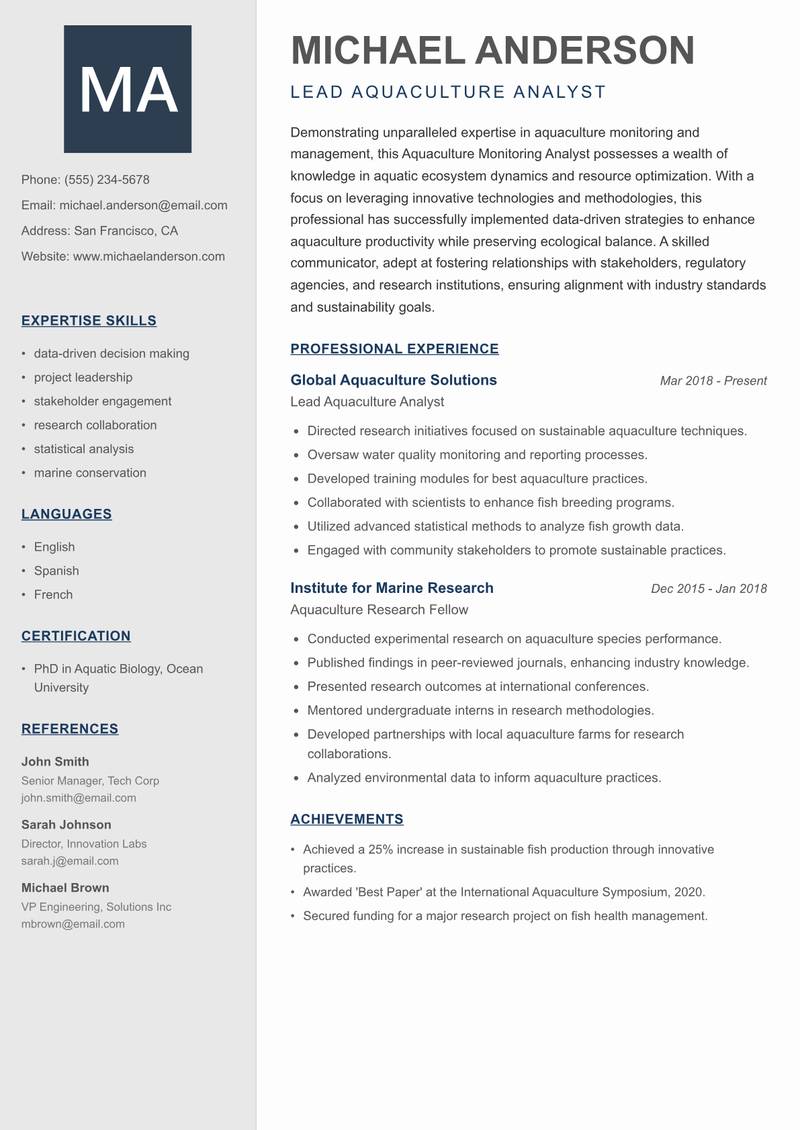
Creative Minimal
Use Template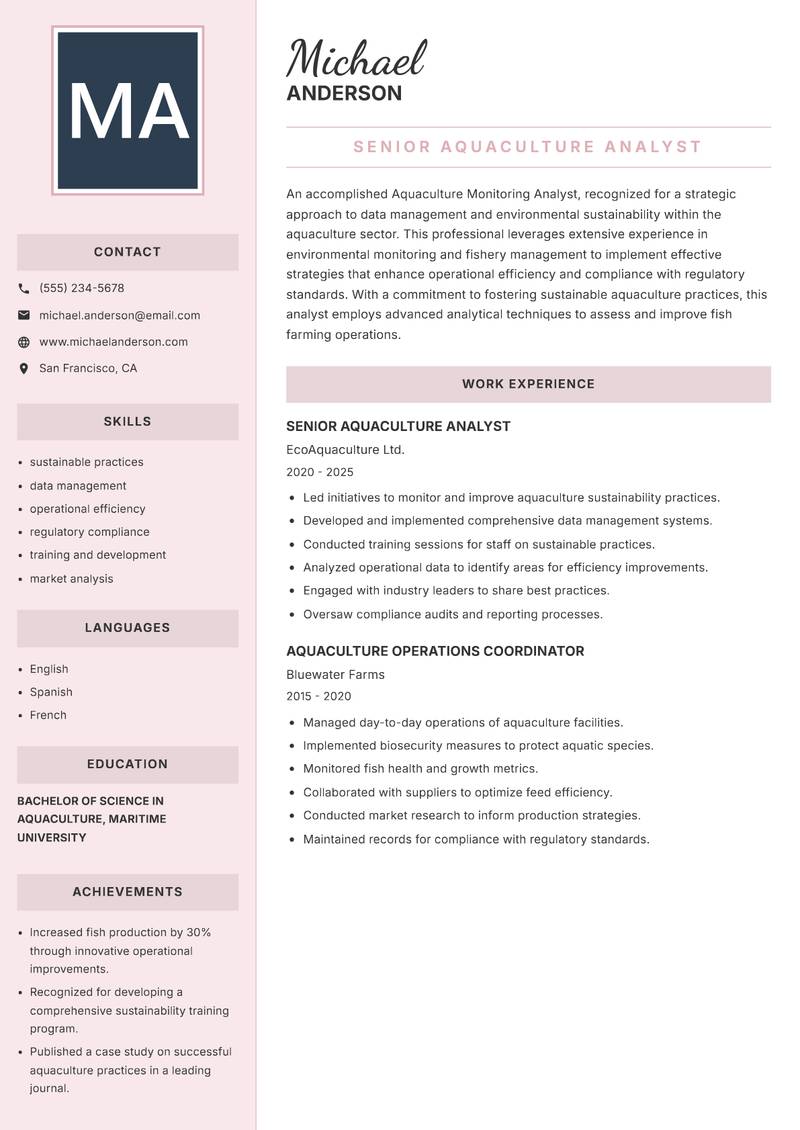
Executive
Use Template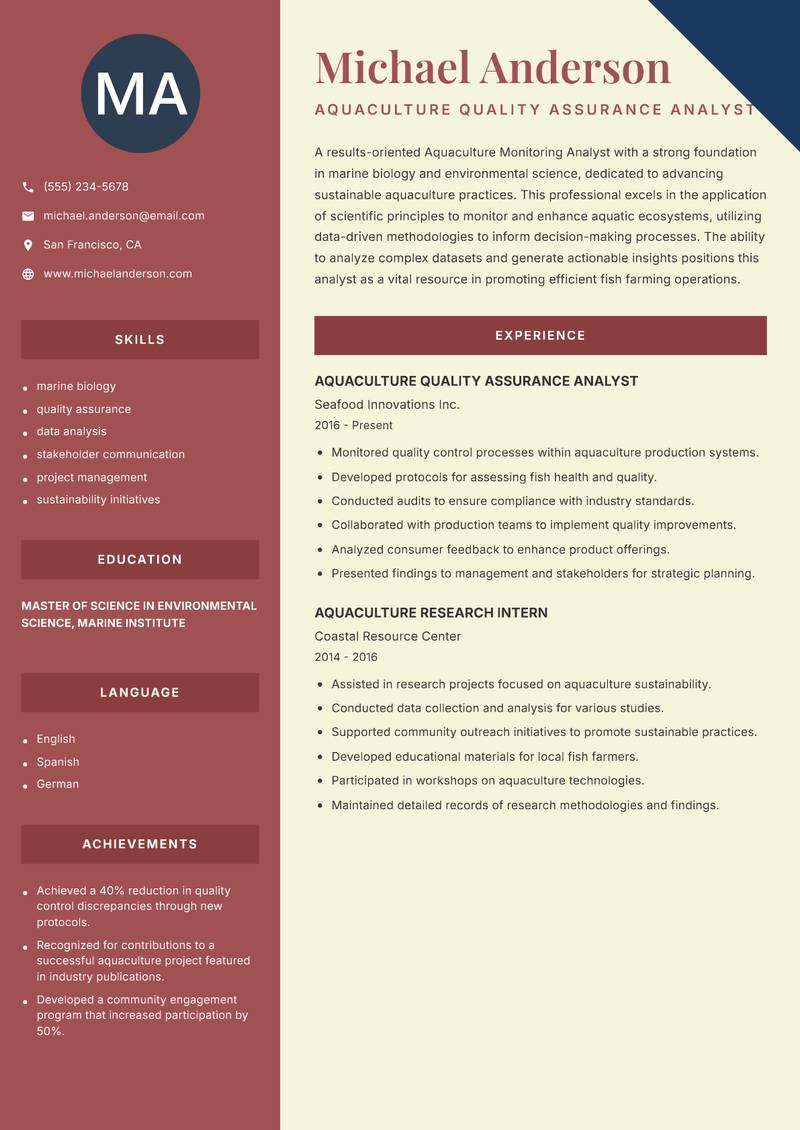
Two Column
Use Template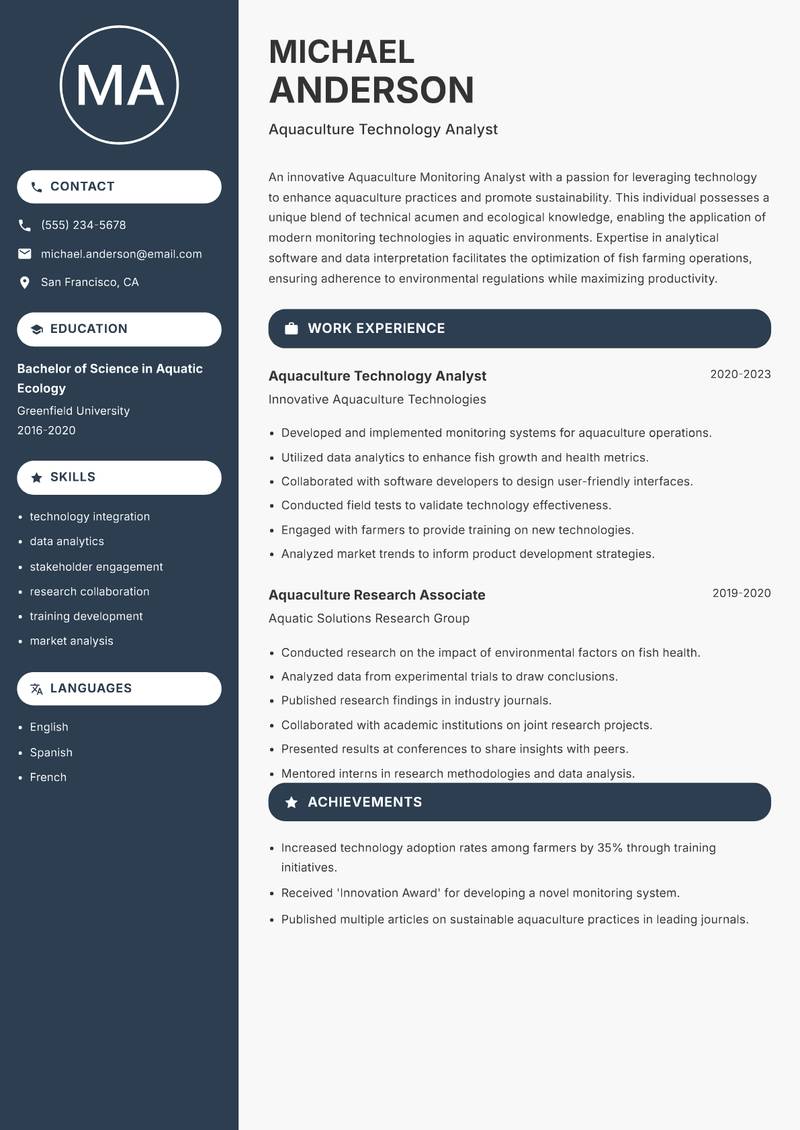
Compact
Use Template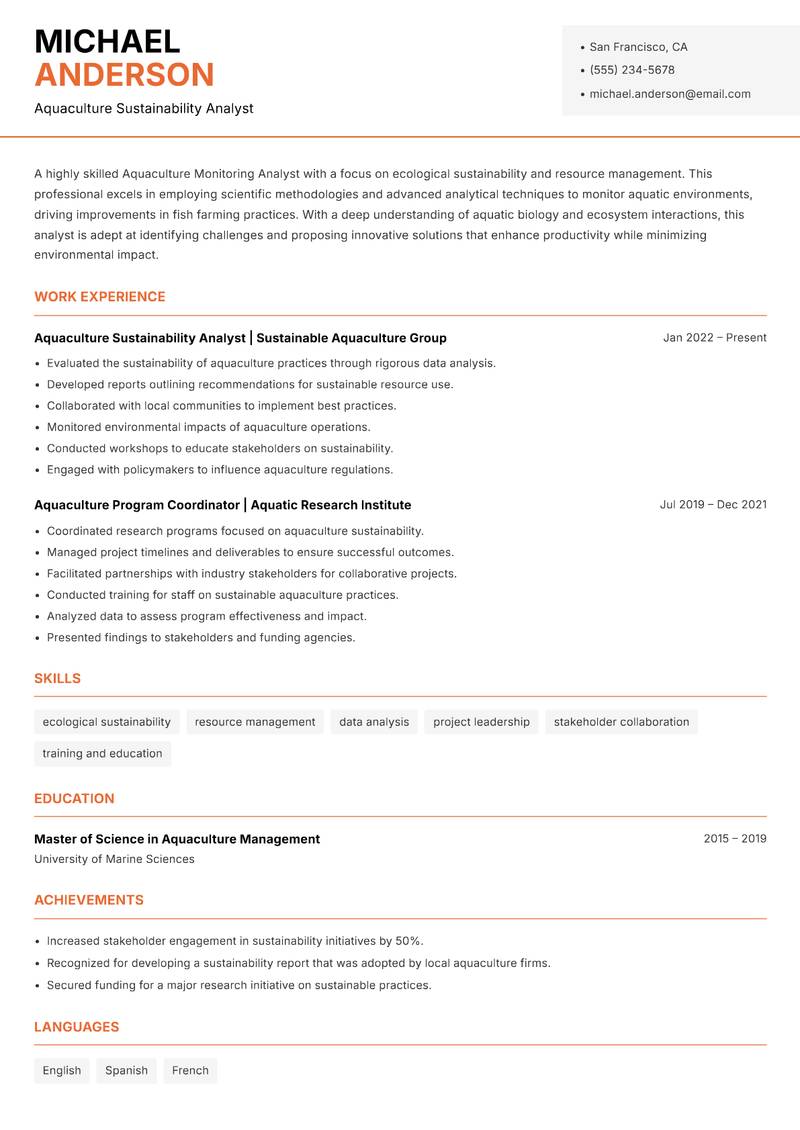
Modern Professional
Use Template7 Real Aquaculture Monitoring Analyst Resume Examples
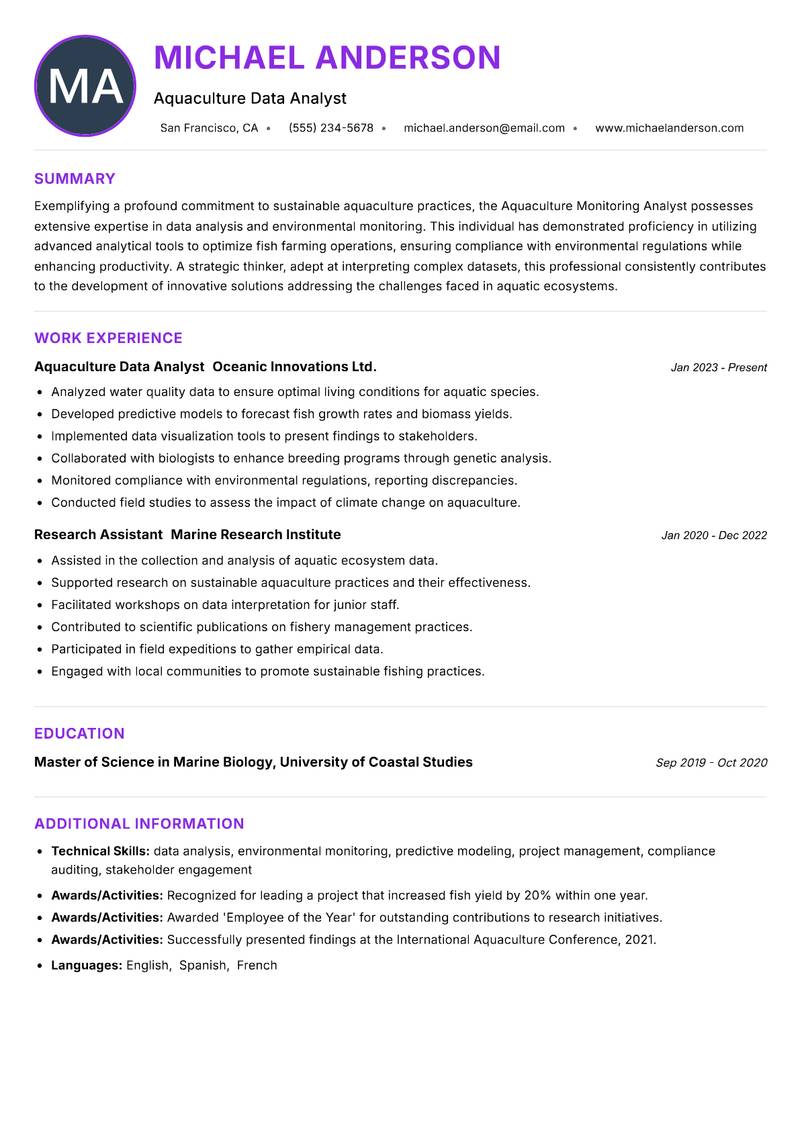
Aquaculture Data Analyst with 6+ Years Experience
Summary: Exemplifying a profound commitment to sustainable aquaculture practices, the Aquaculture Monitoring Analyst possesses extensive expertise in data analysis and environmental monitoring. This individual has demonstrated proficiency in utilizing advanced analytical tools to optimize fish farming operations, ensuring compliance with environmental regulations while enhancing productivity. A strategic thinker, adept at interpreting complex datasets, this professional consistently contributes to the development of innovative solutions addressing the challenges faced in aquatic ecosystems. The ability to collaborate with multidisciplinary teams and communicate findings effectively has resulted in significant advancements in aquaculture methodologies. Furthermore, a robust understanding of marine biology and ecosystem dynamics underpins the analytical approach, driving improvements in fish health management and resource allocation. Proven track record in managing large-scale projects, this analyst embodies a proactive approach to problem-solving, fostering a culture of continuous improvement within organizations.
Description:
- Analyzed water quality data to ensure optimal living conditions for aquatic species.
- Developed predictive models to forecast fish growth rates and biomass yields.
- Implemented data visualization tools to present findings to stakeholders.
- Collaborated with biologists to enhance breeding programs through genetic analysis.
- Monitored compliance with environmental regulations, reporting discrepancies.
- Conducted field studies to assess the impact of climate change on aquaculture.
🏆 Key Achievements
Environmental Compliance Analyst with 6+ Years Experience
Summary: A dedicated Aquaculture Monitoring Analyst with a robust background in environmental science and aquatic resource management. This professional excels in employing cutting-edge monitoring technologies to assess aquatic environments, ensuring sustainable practices in fish farming operations. With a comprehensive understanding of the ecological impacts of aquaculture, this analyst effectively translates complex environmental data into actionable insights, thereby enhancing operational efficiency. The ability to engage with regulatory bodies and industry stakeholders ensures adherence to best practices and compliance with environmental standards. A detail-oriented individual, proficient in utilizing GIS and remote sensing technologies to monitor and manage aquatic resources, fostering the development of sustainable aquaculture strategies. This professional's commitment to continuous learning and adaptation to emerging technologies positions them as a pivotal asset in the field of aquaculture.
Description:
- Conducted environmental impact assessments for aquaculture projects.
- Utilized GIS technology to map and analyze aquatic habitats.
- Collaborated with regulatory agencies to ensure compliance with environmental laws.
- Developed monitoring protocols for water quality assessment.
- Trained staff on best practices for environmental stewardship.
- Presented reports on compliance status to senior management.
🏆 Key Achievements
Lead Aquaculture Analyst with 8+ Years Experience
Summary: Demonstrating unparalleled expertise in aquaculture monitoring and management, this Aquaculture Monitoring Analyst possesses a wealth of knowledge in aquatic ecosystem dynamics and resource optimization. With a focus on leveraging innovative technologies and methodologies, this professional has successfully implemented data-driven strategies to enhance aquaculture productivity while preserving ecological balance. A skilled communicator, adept at fostering relationships with stakeholders, regulatory agencies, and research institutions, ensuring alignment with industry standards and sustainability goals. The ability to synthesize complex information into clear, actionable reports underscores a commitment to informed decision-making. This analyst's proactive approach and strategic mindset have been instrumental in advancing organizational objectives, driving improvements in fish health management, and optimizing resource allocation. A proven track record in project leadership and a passion for marine conservation position this individual as a key contributor to the future of sustainable aquaculture.
Description:
- Directed research initiatives focused on sustainable aquaculture techniques.
- Oversaw water quality monitoring and reporting processes.
- Developed training modules for best aquaculture practices.
- Collaborated with scientists to enhance fish breeding programs.
- Utilized advanced statistical methods to analyze fish growth data.
- Engaged with community stakeholders to promote sustainable practices.
🏆 Key Achievements
Senior Aquaculture Analyst with 8+ Years Experience
Summary: An accomplished Aquaculture Monitoring Analyst, recognized for a strategic approach to data management and environmental sustainability within the aquaculture sector. This professional leverages extensive experience in environmental monitoring and fishery management to implement effective strategies that enhance operational efficiency and compliance with regulatory standards. With a commitment to fostering sustainable aquaculture practices, this analyst employs advanced analytical techniques to assess and improve fish farming operations. The capacity to synthesize complex data into coherent reports facilitates informed decision-making among stakeholders, ensuring alignment with ecological best practices. A proactive leader, adept at navigating the challenges of the aquaculture industry, this individual is dedicated to promoting innovations that drive productivity while safeguarding aquatic ecosystems. The integration of technology into monitoring processes exemplifies a forward-thinking mindset, essential for advancing the field of aquaculture.
Description:
- Led initiatives to monitor and improve aquaculture sustainability practices.
- Developed and implemented comprehensive data management systems.
- Conducted training sessions for staff on sustainable practices.
- Analyzed operational data to identify areas for efficiency improvements.
- Engaged with industry leaders to share best practices.
- Oversaw compliance audits and reporting processes.
🏆 Key Achievements
Aquaculture Quality Assurance Analyst with 5+ Years Experience
Summary: A results-oriented Aquaculture Monitoring Analyst with a strong foundation in marine biology and environmental science, dedicated to advancing sustainable aquaculture practices. This professional excels in the application of scientific principles to monitor and enhance aquatic ecosystems, utilizing data-driven methodologies to inform decision-making processes. The ability to analyze complex datasets and generate actionable insights positions this analyst as a vital resource in promoting efficient fish farming operations. Exceptional communication skills facilitate collaboration with diverse stakeholders, ensuring the alignment of objectives with environmental sustainability goals. A proactive approach to problem-solving and project management has yielded significant improvements in aquaculture productivity and compliance with regulatory frameworks. Recognized for a commitment to continuous improvement and innovation, this analyst remains at the forefront of emerging trends and technologies within the aquaculture industry.
Description:
- Monitored quality control processes within aquaculture production systems.
- Developed protocols for assessing fish health and quality.
- Conducted audits to ensure compliance with industry standards.
- Collaborated with production teams to implement quality improvements.
- Analyzed consumer feedback to enhance product offerings.
- Presented findings to management and stakeholders for strategic planning.
🏆 Key Achievements
Aquaculture Technology Analyst with 7+ Years Experience
Summary: An innovative Aquaculture Monitoring Analyst with a passion for leveraging technology to enhance aquaculture practices and promote sustainability. This individual possesses a unique blend of technical acumen and ecological knowledge, enabling the application of modern monitoring technologies in aquatic environments. Expertise in analytical software and data interpretation facilitates the optimization of fish farming operations, ensuring adherence to environmental regulations while maximizing productivity. A collaborative professional, adept at working alongside multidisciplinary teams to develop and implement effective monitoring strategies. This analyst's commitment to research and continuous improvement is evidenced by successful projects that have significantly advanced the understanding of aquaculture sustainability. Engaging with stakeholders and communities fosters a shared vision for responsible aquaculture, ensuring the alignment of industry practices with ecological integrity.
Description:
- Developed and implemented monitoring systems for aquaculture operations.
- Utilized data analytics to enhance fish growth and health metrics.
- Collaborated with software developers to design user-friendly interfaces.
- Conducted field tests to validate technology effectiveness.
- Engaged with farmers to provide training on new technologies.
- Analyzed market trends to inform product development strategies.
🏆 Key Achievements
Aquaculture Sustainability Analyst with 8+ Years Experience
Summary: A highly skilled Aquaculture Monitoring Analyst with a focus on ecological sustainability and resource management. This professional excels in employing scientific methodologies and advanced analytical techniques to monitor aquatic environments, driving improvements in fish farming practices. With a deep understanding of aquatic biology and ecosystem interactions, this analyst is adept at identifying challenges and proposing innovative solutions that enhance productivity while minimizing environmental impact. A strong communicator, capable of translating complex data into accessible reports, fostering collaboration among stakeholders. The ability to lead projects effectively ensures the successful implementation of sustainable practices within aquaculture operations. An advocate for continuous learning and adaptation, this analyst remains engaged with the latest advancements in technology and science to enhance aquaculture methodologies.
Description:
- Evaluated the sustainability of aquaculture practices through rigorous data analysis.
- Developed reports outlining recommendations for sustainable resource use.
- Collaborated with local communities to implement best practices.
- Monitored environmental impacts of aquaculture operations.
- Conducted workshops to educate stakeholders on sustainability.
- Engaged with policymakers to influence aquaculture regulations.
🏆 Key Achievements
Key Skills for Aquaculture Monitoring Analyst
ATS Optimization Tips
Increase your chances of getting hired
Use Standard Headings
Use common section titles like Experience, Skills, etc.
Include Keywords
Add role-specific keywords from the job description
Keep it Simple
Avoid complex tables, images and graphics
Save in Right Format
Use PDF format unless otherwise specified
Aquaculture Monitoring Analyst Salary Insights
Average Salary
$65,000
per year
Salary Range
$50,000 - $80,000
per year
Top Paying Cities
Los Angeles, Seattle, Houston, Dallas, Boston
Source: Glassdoor, Payscale, Indeed (Updated August 2025)
Everything you need to write a great Aquaculture Monitoring Analyst resume
Strong Action Verbs to Use
Resume Writing Tips
- →Highlight specific software knowledge relevant to aquaculture analytics, such as AQUACOP or PHABSIM.
- →Emphasize hands-on field experience that includes water sampling and species monitoring.
- →Showcase collaboration with interdisciplinary teams and successful project outcomes within aquaculture.
- →Detail any research projects or papers you've contributed to, illustrating engagement with the scientific community.
- →Mention the impact of your findings on decision-making or policy within experienced roles.
Common Mistakes to Avoid
- ✕Listing generic responsibilities instead of specific tasks performed within aquaculture settings.
- ✕Failing to quantify achievements, like improved growth rates or disease reduction in monitored fish populations.
- ✕Omitting relevant certifications that bolster credibility in aquaculture practices.
- ✕Neglecting to adapt the resume language to include terms commonly used in aquaculture, such as 'biomass prediction' or 'ecological balance.'
ATS Keywords for Aquaculture Monitoring Analyst
Aquaculture Monitoring Analyst Career Path
Relevant Certifications
Career Progression
Entry-Level Analyst
Assists with data collection and preliminary analysis, gaining experience in monitoring aquatic ecosystems.
Aquaculture Monitoring Analyst
Conducts detailed evaluations of aquatic environments, regularly reports on health metrics, and collaborates with fisheries biologists.
Senior Analyst
Leads research initiatives to enhance sustainability practices and optimize fish stock management, mentoring junior analysts.
Aquaculture Project Manager
Oversees comprehensive aquaculture projects, ensuring compliance with environmental regulations and stakeholder objectives.
Research Director
Directs large-scale aquaculture programs, formulates research agendas, and establishes partnerships with research institutions.
Aquaculture Monitoring Analyst Interview Questions
What methods do you use for water quality assessment in aquaculture? +
Be specific about the parameters you measure and the tools used, such as pH meters, dissolved oxygen sensors, and nutrient analysis.
Can you describe a challenging situation you faced in a past project? How did you handle it? +
Share a specific instance that demonstrates problem-solving skills and resilience in an aquaculture context.
How do you ensure that aquaculture practices align with sustainable environmental standards? +
Discuss specific frameworks or regulations you've worked with, highlighting your ability to adapt and innovate.
What role does data analysis play in your daily tasks as an Aquaculture Monitoring Analyst? +
Provide examples of software or statistical methods you frequently employ to interpret data.
How do you communicate findings to stakeholders who may not have a technical background? +
Illustrate your approach for simplifying complex data for various audiences.
What are the most critical parameters to monitor for fish health in aquaculture systems? +
List and explain parameters, such as disease indicators, growth rates, and behavioral observations.
Describe your experience with field sampling techniques in aquatic environments. +
Mention specific techniques and tools you've used, such as netting, traps, or telemetry.
About the Aquaculture Monitoring Analyst Role
Data-driven insights fuel decisions in the life of an Aquaculture Monitoring Analyst. This role centers on the systematic observation of aquatic ecosystems, focusing on precise measurements of water parameters, fish health assessments, and environmental impacts. Analysts engage in real-time monitoring using sensor technologies and laboratory analyses, collaborating closely with researchers and regulatory bodies to ensure the sustainability of aquaculture operations.
Frequently Asked Questions
View all →What educational background is ideal for becoming an Aquaculture Monitoring Analyst? +
Typically, a degree in marine biology, aquaculture science, or environmental science is highly beneficial, along with coursework in data analysis.
Are there any specific tools or software an Aquaculture Monitoring Analyst should be familiar with? +
Yes, familiarity with data analysis software like R or MATLAB, as well as aquaculture management applications, is crucial.
What types of environments might I work in as an Aquaculture Monitoring Analyst? +
You'll likely work in aquaculture farms, hatcheries, research laboratories, and possibly field environments to conduct assessments.
How important is stakeholder engagement in this role? +
It’s essential, as communicating findings and recommendations to various stakeholders—including aquaculture businesses and regulatory agencies—is crucial.
What are some key challenges faced in this field? +
Challenges include managing environmental impacts, addressing fish health concerns, and navigating regulatory compliance effectively.
How often do Aquaculture Monitoring Analysts need to be on-site? +
Site visits can be frequent, especially for real-time monitoring and assessments, depending on the operational requirements.
What career growth opportunities exist for Aquaculture Monitoring Analysts? +
With experience, one can advance to senior analyst roles, project management, or specialized research positions focusing on sustainability.
More Resume Examples You Might Like
Related Career Paths
Other roles candidates for Aquaculture Monitoring Analyst positions often also consider.
Will this Aquaculture Monitoring Analyst resume pass the ATS scan?
Upload it and get an instant AI-scored compatibility check with specific fixes.
Check My Resume →
Pair it with a matching cover letter
AI drafts a first version from your job title and strengths — edit it live, then download the PDF.
Write My Cover Letter →
Written by Nohaya Career Team
Reviewed by HR Professionals · Updated August 2025
Ready to Build Your Perfect Resume?
Choose from 1000+ professional templates and land your dream job.
Create My Resume Now