Build an ATS-Friendly
Veterinary Epidemiologist Resume
That Gets Interviews
The role of a Veterinary Epidemiologist involves the systematic study of disease dynamics in animal populations, often employing field data and laboratory results to identify trends in veterinary public health. These professionals specialize in risk assessments to evaluate animal health risks and their potential…
Veterinary Epidemiologist Resume Templates
Modern Professional
Use Template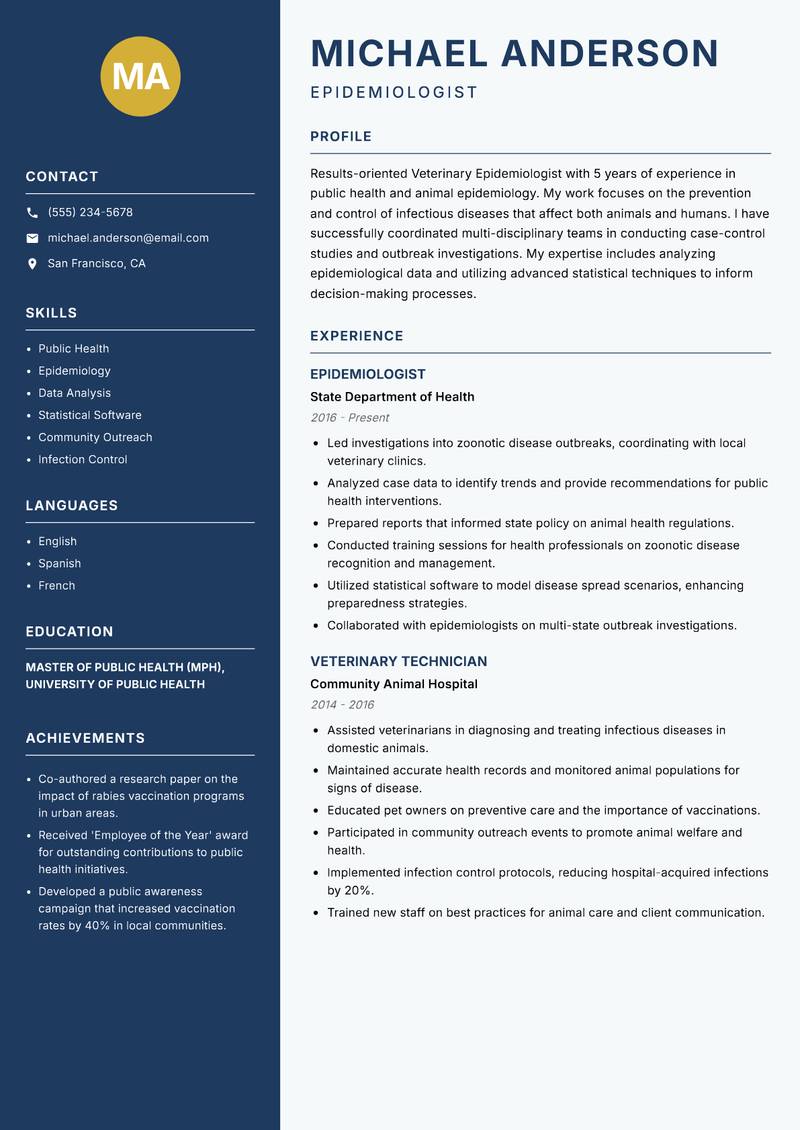
Classic Clean
Use Template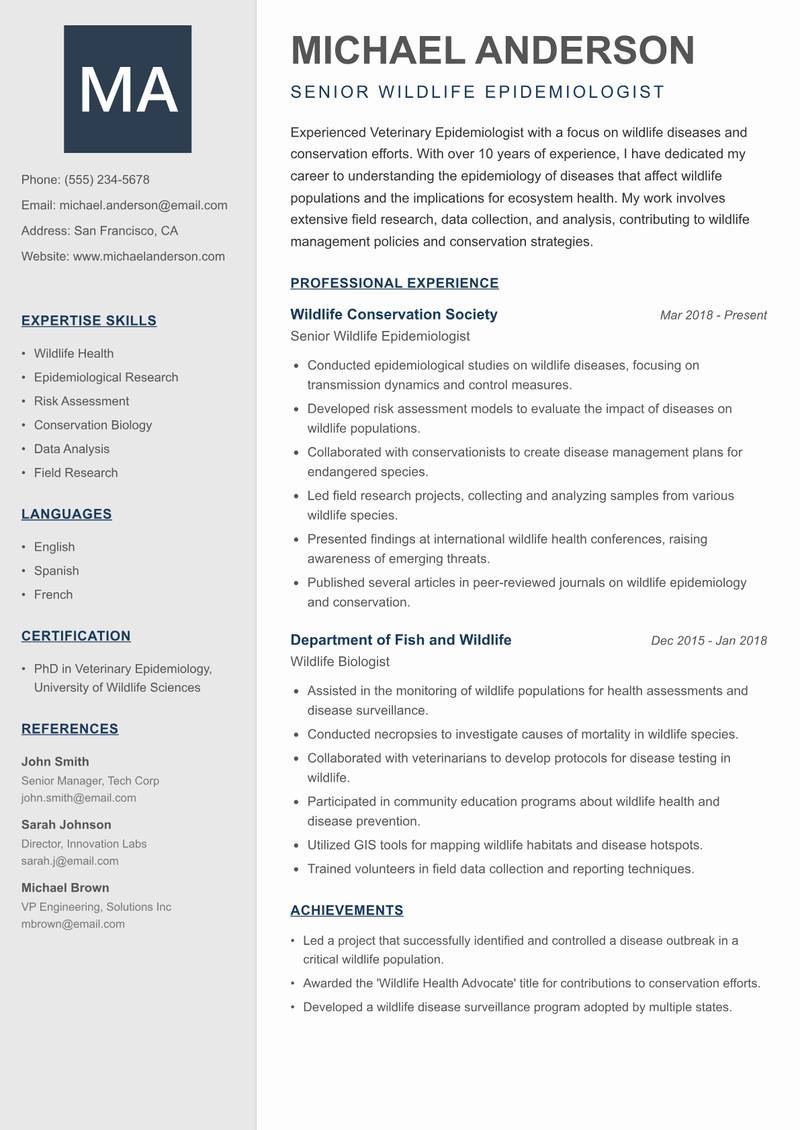
Creative Minimal
Use Template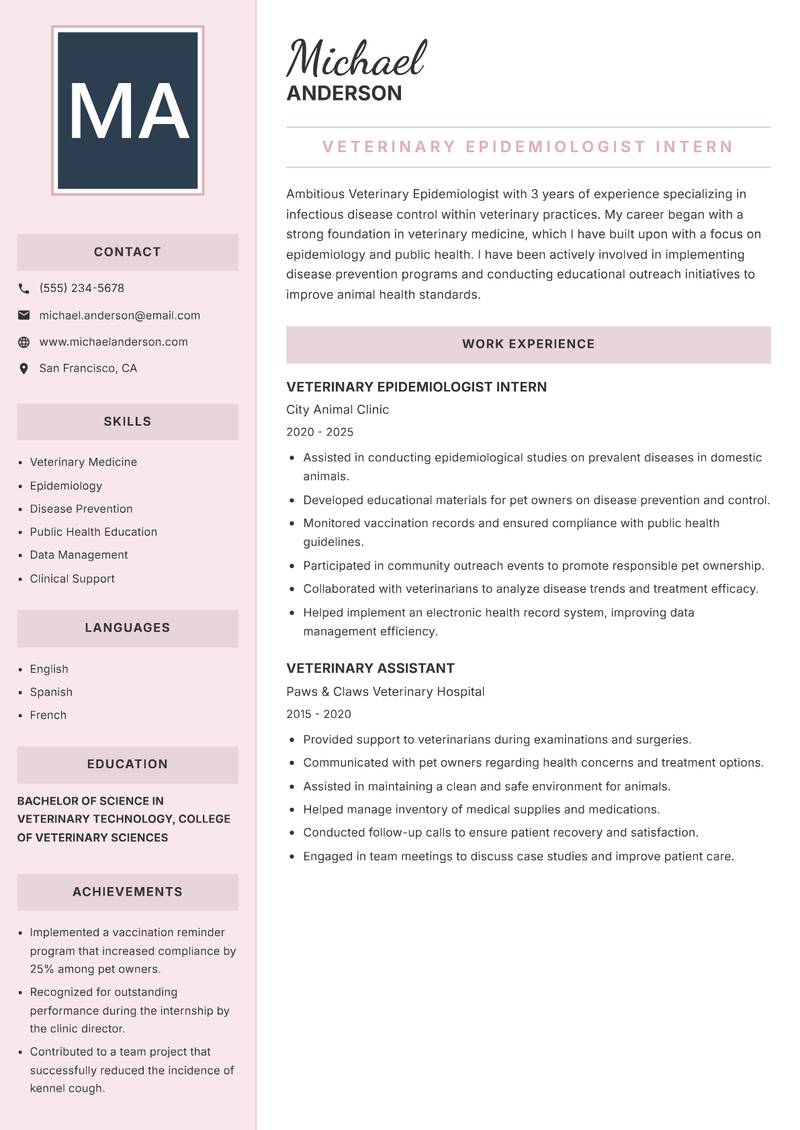
Executive
Use Template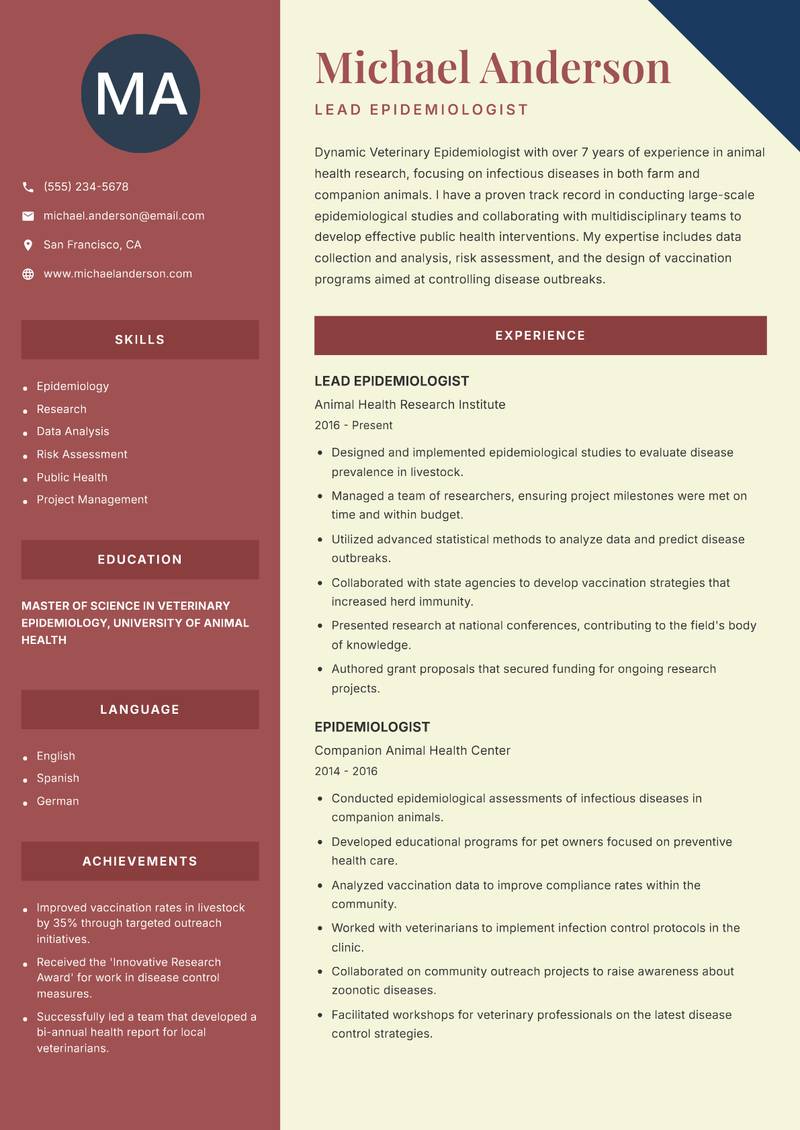
Two Column
Use Template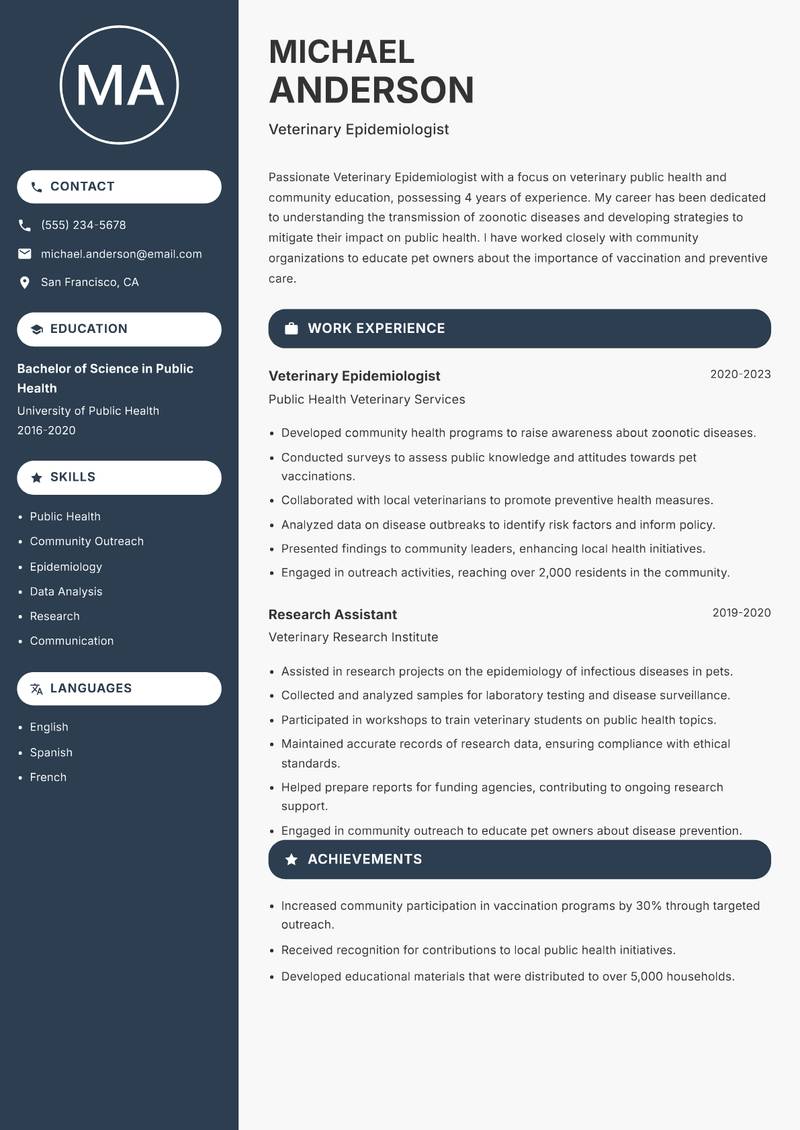
Compact
Use Template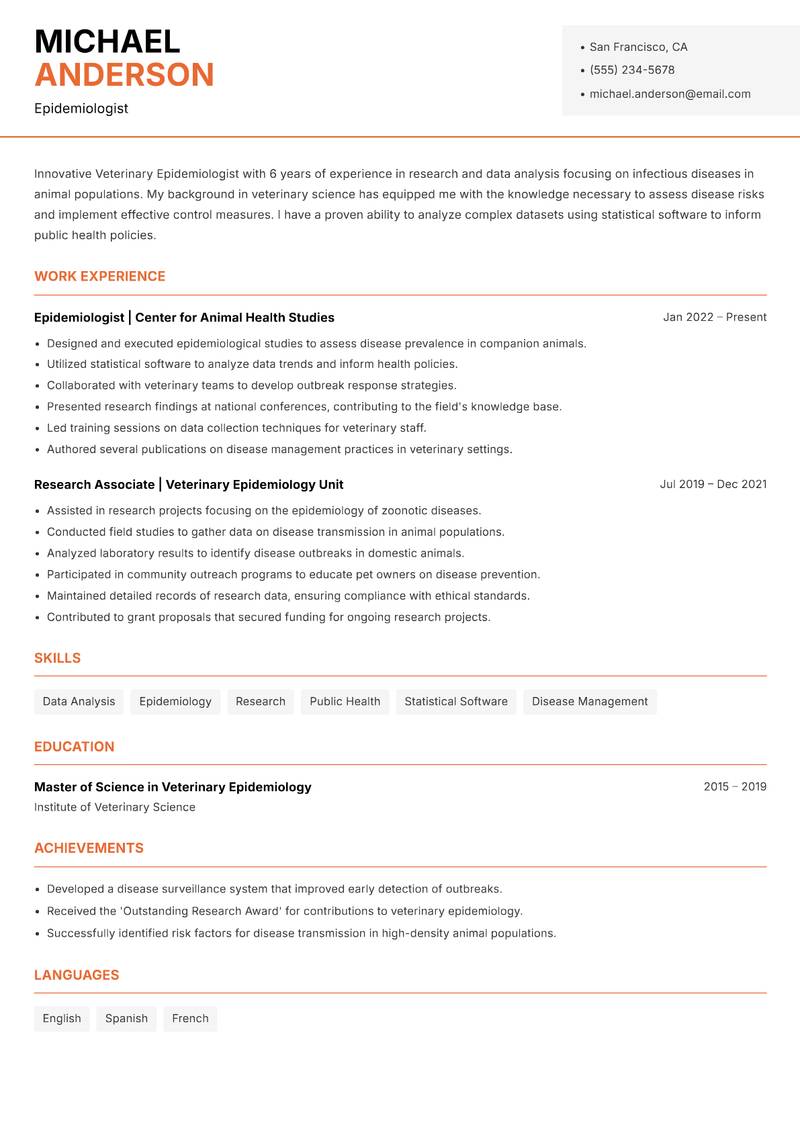
Modern Professional
Use Template7 Real Veterinary Epidemiologist Resume Examples
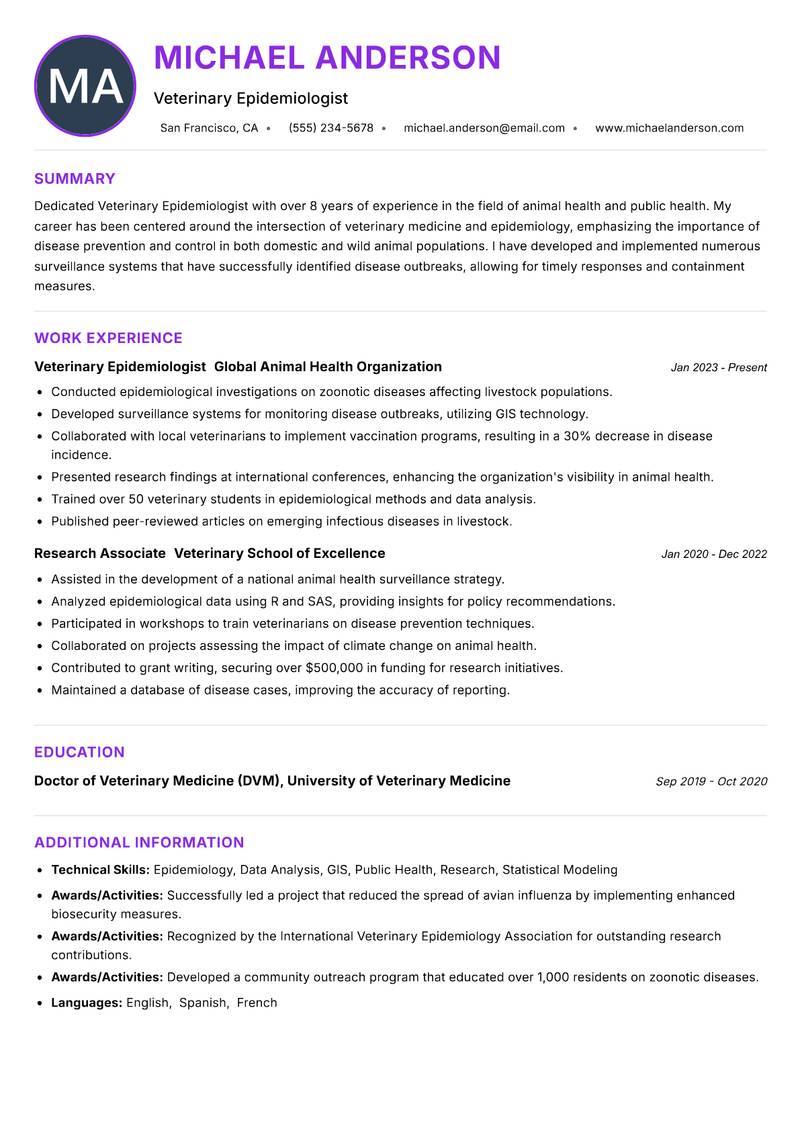
Veterinary Epidemiologist with 8+ Years Experience
Summary: Dedicated Veterinary Epidemiologist with over 8 years of experience in the field of animal health and public health. My career has been centered around the intersection of veterinary medicine and epidemiology, emphasizing the importance of disease prevention and control in both domestic and wild animal populations. I have developed and implemented numerous surveillance systems that have successfully identified disease outbreaks, allowing for timely responses and containment measures. My strong analytical skills, coupled with a solid background in statistical modeling, have enabled me to conduct thorough research and provide actionable insights to stakeholders. I have collaborated with governmental and non-governmental organizations, enhancing partnerships that promote animal health and welfare. I am passionate about leveraging my expertise to improve veterinary practices and contribute to global health initiatives. My goal is to utilize my knowledge to educate communities about zoonotic diseases and advocate for policies that safeguard both animal and human health.
Description:
- Conducted epidemiological investigations on zoonotic diseases affecting livestock populations.
- Developed surveillance systems for monitoring disease outbreaks, utilizing GIS technology.
- Collaborated with local veterinarians to implement vaccination programs, resulting in a 30% decrease in disease incidence.
- Presented research findings at international conferences, enhancing the organization's visibility in animal health.
- Trained over 50 veterinary students in epidemiological methods and data analysis.
- Published peer-reviewed articles on emerging infectious diseases in livestock.
🏆 Key Achievements
Epidemiologist with 5+ Years Experience
Summary: Accomplished Veterinary Epidemiologist with 5 years of experience in public health and animal epidemiology. My work focuses on the prevention and control of infectious diseases that affect both animals and humans. I have successfully coordinated multi-disciplinary teams in conducting case-control studies and outbreak investigations. My expertise includes analyzing epidemiological data and utilizing advanced statistical techniques to inform decision-making processes. Throughout my career, I have forged strong relationships with local health departments and veterinary practices, facilitating effective communication and collaboration in disease control efforts. My commitment to continuous learning and professional development has kept me abreast of the latest advancements in veterinary science and epidemiology. I am particularly interested in zoonotic diseases and their impact on public health, and I strive to enhance community awareness and preparedness for potential outbreaks through educational initiatives.
Description:
- Led investigations into zoonotic disease outbreaks, coordinating with local veterinary clinics.
- Analyzed case data to identify trends and provide recommendations for public health interventions.
- Prepared reports that informed state policy on animal health regulations.
- Conducted training sessions for health professionals on zoonotic disease recognition and management.
- Utilized statistical software to model disease spread scenarios, enhancing preparedness strategies.
- Collaborated with epidemiologists on multi-state outbreak investigations.
🏆 Key Achievements
Senior Wildlife Epidemiologist with 10+ Years Experience
Summary: Experienced Veterinary Epidemiologist with a focus on wildlife diseases and conservation efforts. With over 10 years of experience, I have dedicated my career to understanding the epidemiology of diseases that affect wildlife populations and the implications for ecosystem health. My work involves extensive field research, data collection, and analysis, contributing to wildlife management policies and conservation strategies. I have collaborated with governmental agencies, NGOs, and academic institutions to assess disease risks and propose mitigation measures. My strong communication skills enable me to effectively engage with diverse stakeholders, from local communities to international organizations, fostering collaborative efforts in wildlife health. I am passionate about using my expertise to promote sustainable practices that protect wildlife and their habitats while also addressing public health concerns related to zoonotic diseases.
Description:
- Conducted epidemiological studies on wildlife diseases, focusing on transmission dynamics and control measures.
- Developed risk assessment models to evaluate the impact of diseases on wildlife populations.
- Collaborated with conservationists to create disease management plans for endangered species.
- Led field research projects, collecting and analyzing samples from various wildlife species.
- Presented findings at international wildlife health conferences, raising awareness of emerging threats.
- Published several articles in peer-reviewed journals on wildlife epidemiology and conservation.
🏆 Key Achievements
Veterinary Epidemiologist Intern with 3+ Years Experience
Summary: Driven Veterinary Epidemiologist with 3 years of experience specializing in infectious disease control within veterinary practices. My career began with a strong foundation in veterinary medicine, which I have built upon with a focus on epidemiology and public health. I have been actively involved in implementing disease prevention programs and conducting educational outreach initiatives to improve animal health standards. My hands-on experience in clinical settings has equipped me with a practical understanding of disease management, while my passion for research drives my efforts to stay updated on the latest trends in veterinary epidemiology. I am eager to expand my knowledge and skills further, contributing to the advancement of veterinary public health and ensuring the well-being of both animals and humans.
Description:
- Assisted in conducting epidemiological studies on prevalent diseases in domestic animals.
- Developed educational materials for pet owners on disease prevention and control.
- Monitored vaccination records and ensured compliance with public health guidelines.
- Participated in community outreach events to promote responsible pet ownership.
- Collaborated with veterinarians to analyze disease trends and treatment efficacy.
- Helped implement an electronic health record system, improving data management efficiency.
🏆 Key Achievements
Lead Epidemiologist with 7+ Years Experience
Summary: Dynamic Veterinary Epidemiologist with over 7 years of experience in animal health research, focusing on infectious diseases in both farm and companion animals. I have a proven track record in conducting large-scale epidemiological studies and collaborating with multidisciplinary teams to develop effective public health interventions. My expertise includes data collection and analysis, risk assessment, and the design of vaccination programs aimed at controlling disease outbreaks. I have successfully led initiatives that improved animal health outcomes and reduced the spread of infectious diseases within communities. My commitment to advancing veterinary science is matched by my dedication to educating stakeholders on the importance of disease prevention and control. I am proficient in using statistical software and GIS tools to inform decision-making and policy development in animal health.
Description:
- Designed and implemented epidemiological studies to evaluate disease prevalence in livestock.
- Managed a team of researchers, ensuring project milestones were met on time and within budget.
- Utilized advanced statistical methods to analyze data and predict disease outbreaks.
- Collaborated with state agencies to develop vaccination strategies that increased herd immunity.
- Presented research at national conferences, contributing to the field's body of knowledge.
- Authored grant proposals that secured funding for ongoing research projects.
🏆 Key Achievements
Veterinary Epidemiologist with 4+ Years Experience
Summary: Dedicated Veterinary Epidemiologist with a focus on veterinary public health and community education, possessing 4 years of experience. My career has been dedicated to understanding the transmission of zoonotic diseases and developing strategies to mitigate their impact on public health. I have worked closely with community organizations to educate pet owners about the importance of vaccination and preventive care. My strong interpersonal skills allow me to effectively engage with diverse audiences, fostering collaboration between veterinary professionals and the community. I am adept at utilizing data-driven approaches to identify health trends and inform educational initiatives. My commitment to animal welfare and public health drives my work, and I am eager to further my contributions to veterinary epidemiology and community health.
Description:
- Developed community health programs to raise awareness about zoonotic diseases.
- Conducted surveys to assess public knowledge and attitudes towards pet vaccinations.
- Collaborated with local veterinarians to promote preventive health measures.
- Analyzed data on disease outbreaks to identify risk factors and inform policy.
- Presented findings to community leaders, enhancing local health initiatives.
- Engaged in outreach activities, reaching over 2,000 residents in the community.
🏆 Key Achievements
Epidemiologist with 6+ Years Experience
Summary: Innovative Veterinary Epidemiologist with 6 years of experience in research and data analysis focusing on infectious diseases in animal populations. My background in veterinary science has equipped me with the knowledge necessary to assess disease risks and implement effective control measures. I have a proven ability to analyze complex datasets using statistical software to inform public health policies. My work has included developing surveillance systems and conducting outbreak investigations, leading to significant improvements in disease management. I am committed to advancing the field of veterinary epidemiology through research and collaboration with stakeholders across sectors. My strong analytical skills and attention to detail have been crucial in identifying trends and making data-driven decisions that enhance animal health and public safety.
Description:
- Designed and executed epidemiological studies to assess disease prevalence in companion animals.
- Utilized statistical software to analyze data trends and inform health policies.
- Collaborated with veterinary teams to develop outbreak response strategies.
- Presented research findings at national conferences, contributing to the field's knowledge base.
- Led training sessions on data collection techniques for veterinary staff.
- Authored several publications on disease management practices in veterinary settings.
🏆 Key Achievements
Key Skills for Veterinary Epidemiologist
ATS Optimization Tips
Increase your chances of getting hired
Use Standard Headings
Use common section titles like Experience, Skills, etc.
Include Keywords
Add role-specific keywords from the job description
Keep it Simple
Avoid complex tables, images and graphics
Save in Right Format
Use PDF format unless otherwise specified
Veterinary Epidemiologist Salary Insights
Average Salary
$95,000
per year
Salary Range
$70,000 - $120,000
per year
Top Paying Cities
Los Angeles, Seattle, Houston, Dallas, Boston
Source: Glassdoor, Payscale, Indeed (Updated April 2025)
Everything you need to write a great Veterinary Epidemiologist resume
Strong Action Verbs to Use
Resume Writing Tips
- →Emphasize specific case studies you've managed to showcase your analytical capabilities and impact on disease prevention.
- →Highlight technical skills in statistical software like SAS or R to reflect your data analysis expertise in the field.
- →Include any collaborations with public health agencies to illustrate your interdisciplinary approach.
- →Showcase familiarity with zoonotic diseases specific to your region’s livestock or wildlife populations.
- →Detail your community outreach initiatives aimed at educating stakeholders on the importance of veterinary epidemiology.
Common Mistakes to Avoid
- ✕Failing to specify which diseases or health issues you have worked with in your previous roles.
- ✕Not including hands-on research experience or specific methodologies employed in your studies.
- ✕Listing generic skills without connecting them to veterinary epidemiology or public health contexts.
- ✕Using overly technical jargon without explaining terminology that may not be universally understood by all readers.
ATS Keywords for Veterinary Epidemiologist
Veterinary Epidemiologist Career Path
Career Progression
Entry-Level Veterinary Epidemiologist
Assists in data collection and analysis under the guidance of senior epidemiologists, working closely with local veterinary clinics.
Veterinary Epidemiologist
Independently manages epidemiological studies, conducting research on zoonotic diseases and collaborating with public health officials.
Senior Veterinary Epidemiologist
Leads large-scale epidemiological investigations and develops strategic initiatives for wildlife and livestock disease prevention.
Director of Epidemiology
Oversees departmental strategies for disease surveillance and public health interventions on a regional or national level.
Chief Veterinary Epidemiologist
Shapes policy and research direction at the organizational level, representing veterinary epidemiology in public health discussions.
Veterinary Epidemiologist Interview Questions
Can you describe a previous epidemiological study you conducted and its outcomes? +
Highlight your methodology, challenges faced, and how you analyzed the results.
What tools do you commonly use in your work as a veterinary epidemiologist? +
Mention specific data analysis software or field sampling tools and their applications.
How do you incorporate stakeholder input into your research projects? +
Discuss examples of collaboration with veterinary professionals or public health officials.
Describe a challenging disease outbreak you investigated. What steps did you take? +
Detail your approach to investigate, gather data, and implement control measures.
How do you ensure accuracy and reliability in your epidemiological data? +
Talk about your methods for validation and peer review.
Explain the significance of the One Health approach in veterinary epidemiology. +
Provide a clear explanation of the interconnectivity between human, animal, and environmental health.
About the Veterinary Epidemiologist Role
The role of a Veterinary Epidemiologist involves the systematic study of disease dynamics in animal populations, often employing field data and laboratory results to identify trends in veterinary public health. These professionals specialize in risk assessments to evaluate animal health risks and their potential impacts on public health. Collaborating closely with veterinary specialists, government agencies, and wildlife organizations, they guide targeted interventions aimed at disease prevention and control within animal populations. Their work is crucial during outbreak investigations, where they apply their analytical skills to formulate evidence-based decisions to mitigate risks.
Frequently Asked Questions
What qualifications are recommended for becoming a Veterinary Epidemiologist? +
A DVM (Doctor of Veterinary Medicine) or a PhD in epidemiology, public health, or related fields is typically required.
What kinds of organizations employ Veterinary Epidemiologists? +
These professionals are often employed by government agencies, universities, NGOs, and private sector companies specializing in animal health.
How do Veterinary Epidemiologists impact public health? +
They identify disease patterns that affect both animal and human health, thereby informing public health policies and intervention strategies.
What is the role of technology in veterinary epidemiology? +
Technology facilitates data collection, analysis, and modeling of disease trends, allowing for more effective surveillance and response planning.
Are there any special certifications for Veterinary Epidemiologists? +
While there are no mandatory certifications, specialized training in epidemiological methods can be beneficial.
What are the main challenges faced in veterinary epidemiology? +
Challenges include data collection in remote areas, rapid disease outbreaks, and the integration of veterinary and public health data.
More Resume Examples You Might Like
Will this Veterinary Epidemiologist resume pass the ATS scan?
Upload it and get an instant AI-scored compatibility check with specific fixes.
Check My Resume →
Pair it with a matching cover letter
AI drafts a first version from your job title and strengths — edit it live, then download the PDF.
Write My Cover Letter →
Written by Nohaya Career Team
Reviewed by HR Professionals · Updated April 2025
Ready to Build Your Perfect Resume?
Choose from 1000+ professional templates and land your dream job.
Create My Resume Now