Build an ATS-Friendly
Veterinary Anesthesiologist Resume
That Gets Interviews
Managing the delicate anesthesia needs for various animal species during surgical procedures is a critical aspect of a veterinary anesthesiologist's duties. With a focus on safety and efficacy, these professionals develop tailored anesthetic plans based on individual patient assessments. They integrate advanced…
Veterinary Anesthesiologist Resume Templates
Modern Professional
Use Template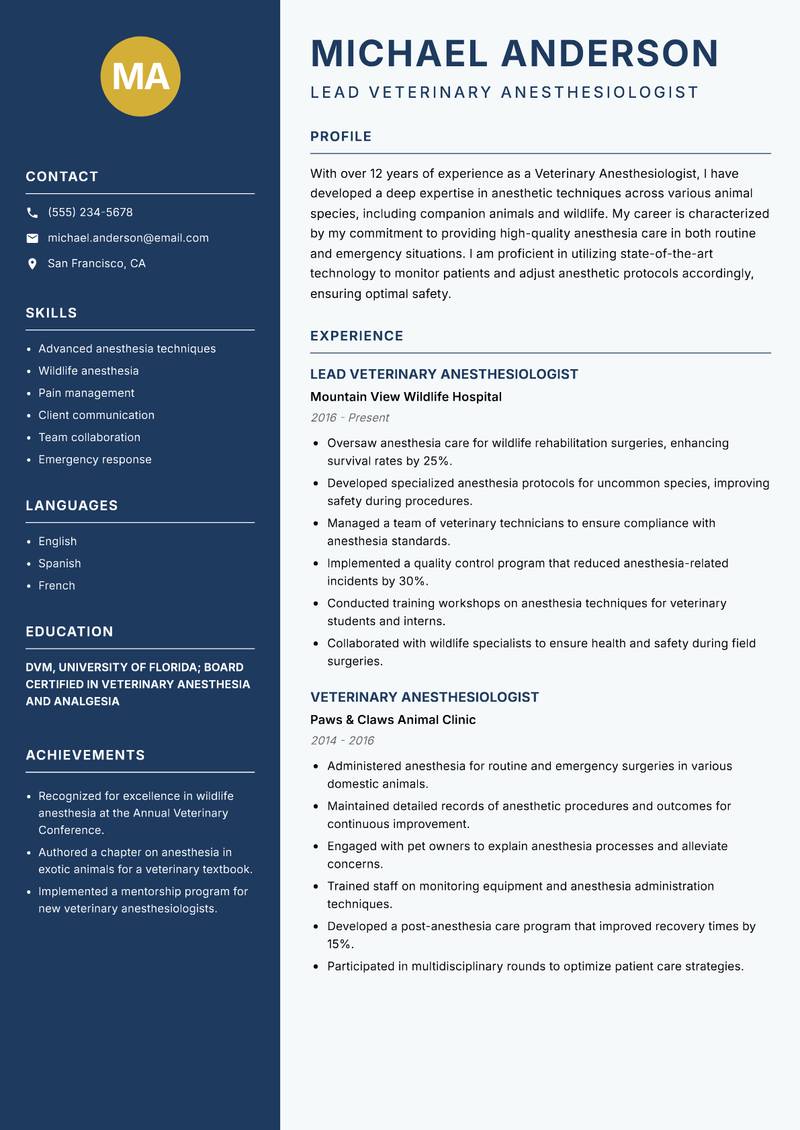
Classic Clean
Use Template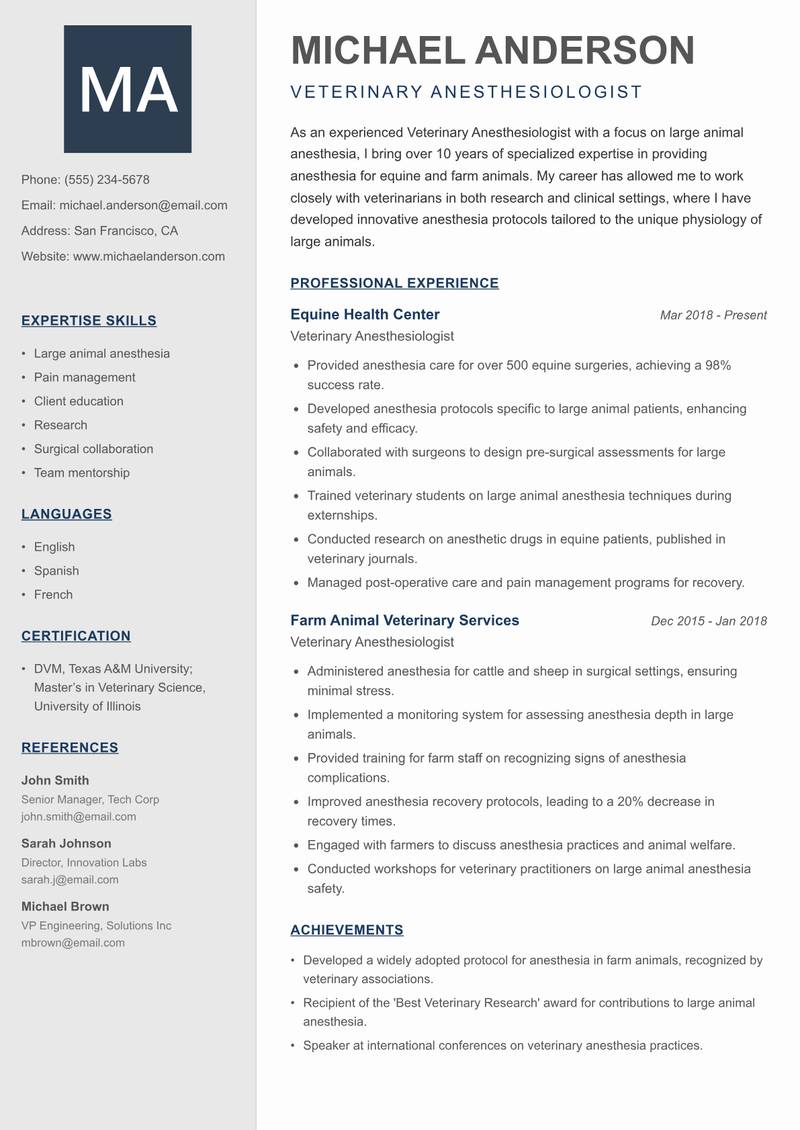
Creative Minimal
Use Template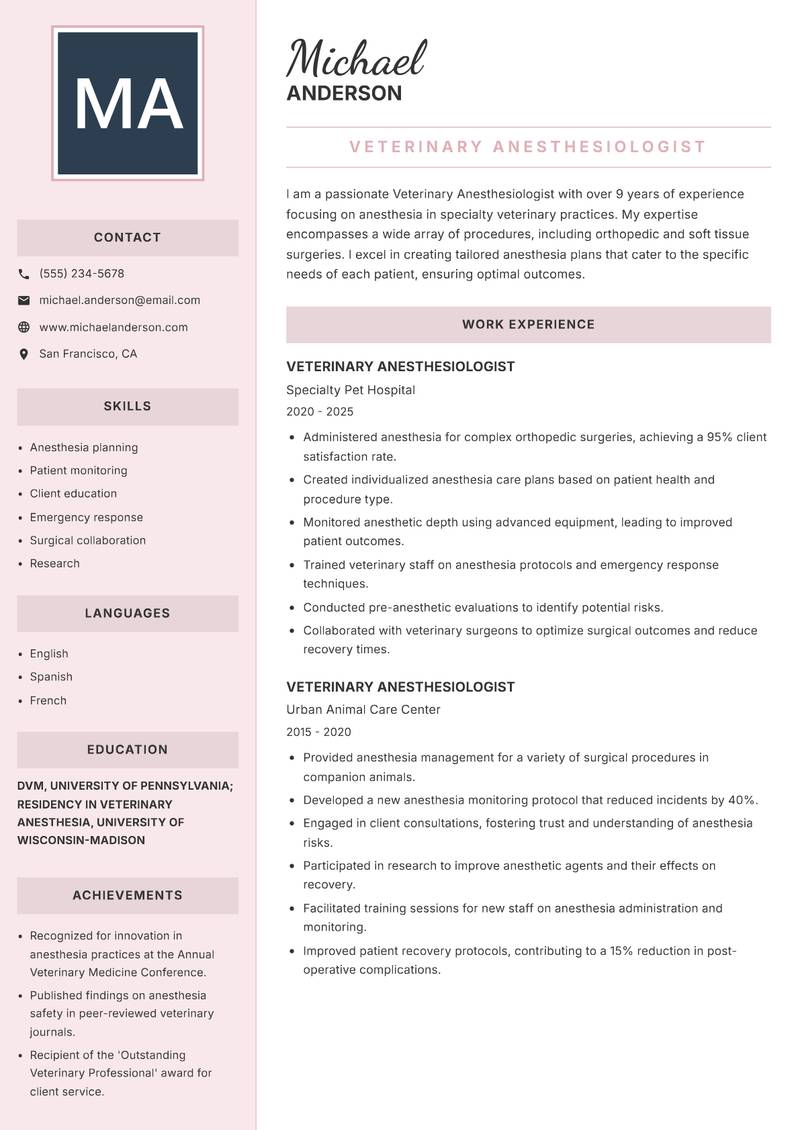
Executive
Use Template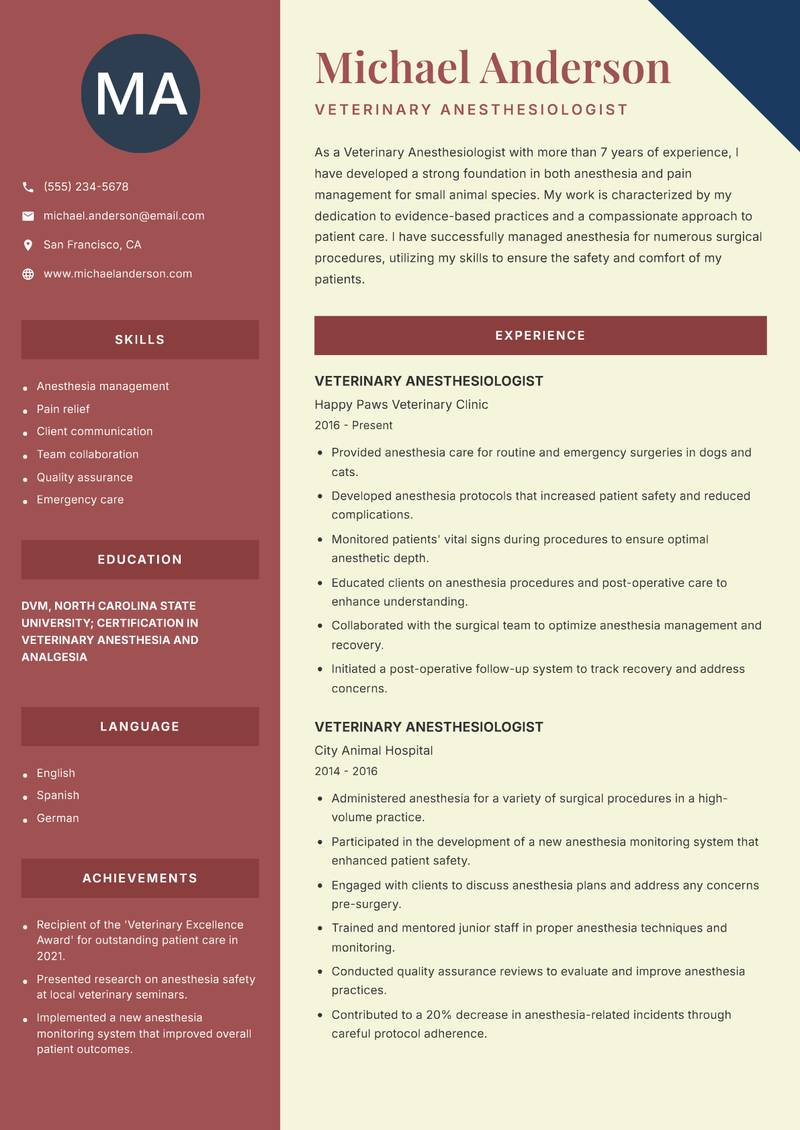
Two Column
Use Template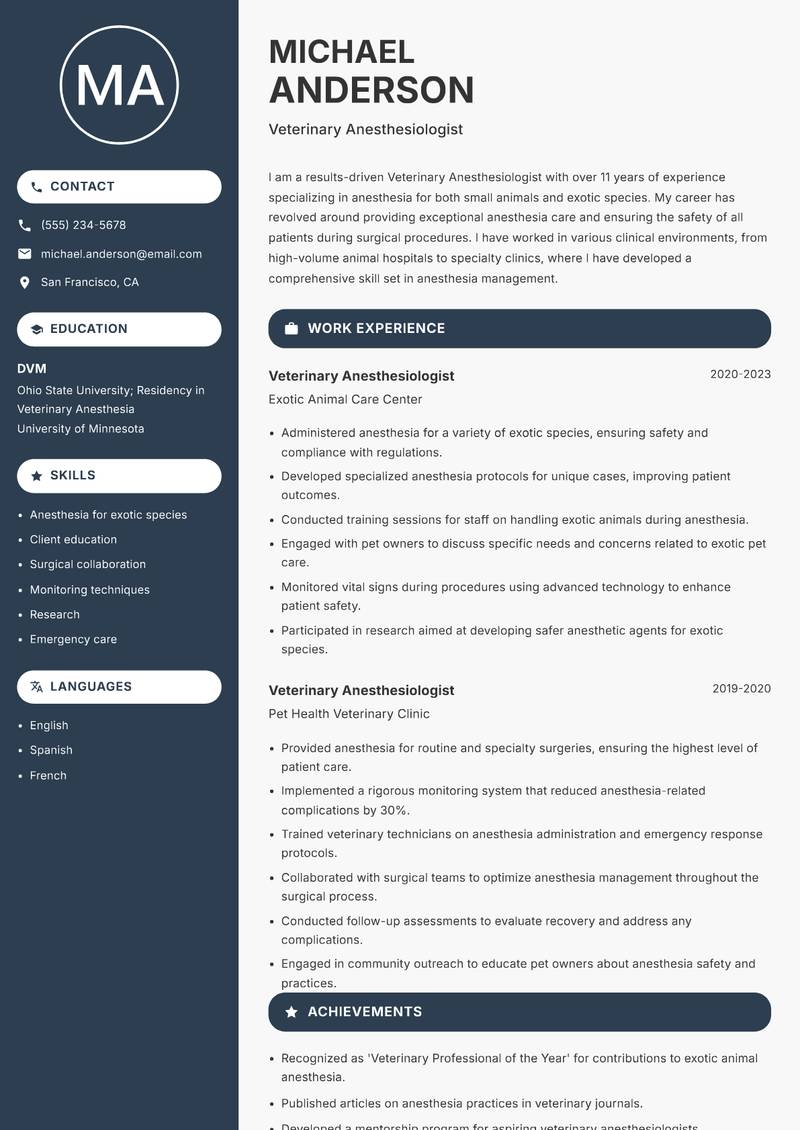
Compact
Use Template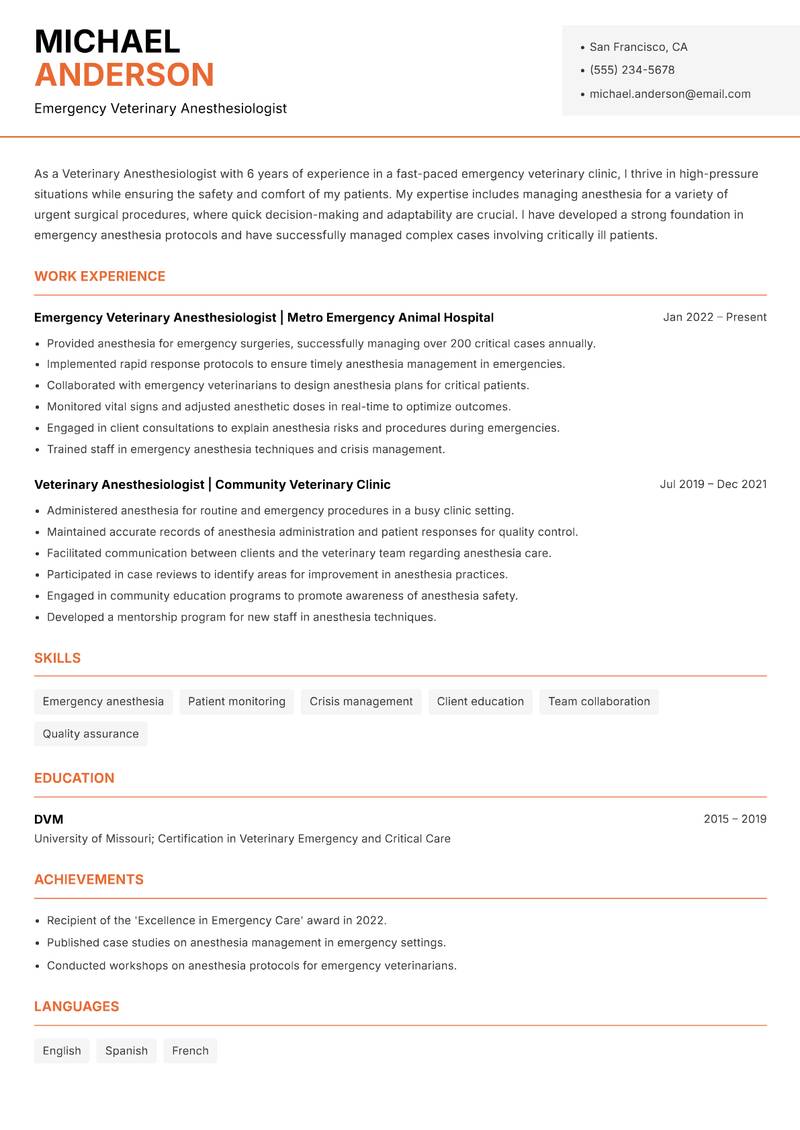
Modern Professional
Use Template7 Real Veterinary Anesthesiologist Resume Examples
Senior Veterinary Anesthesiologist with 8+ Years Experience
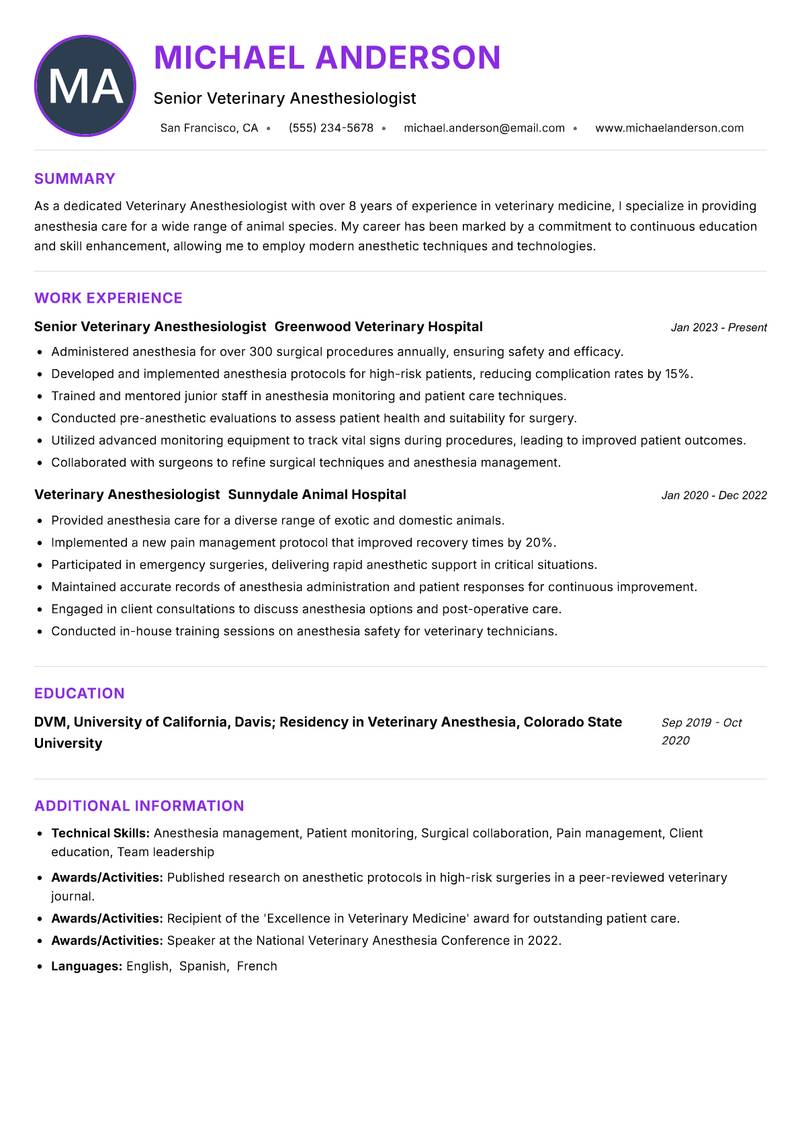
Summary: As a dedicated Veterinary Anesthesiologist with over 8 years of experience in veterinary medicine, I specialize in providing anesthesia care for a wide range of animal species. My career has been marked by a commitment to continuous education and skill enhancement, allowing me to employ modern anesthetic techniques and technologies. I have worked in various clinical settings, from emergency care clinics to specialized veterinary hospitals, where I have honed my ability to manage complex anesthetic protocols and monitor patient vitals meticulously. My approach combines a passion for animal welfare with a strong focus on client education and support. I am skilled in collaborating with multidisciplinary teams to ensure the best possible outcomes for our patients. My goal is to further advance the field of veterinary anesthesiology by adopting evidence-based practices and contributing to the ongoing education of my peers. I am actively involved in research initiatives aimed at improving anesthetic safety and efficacy in veterinary medicine, which underscores my commitment to the profession and the health of our animal patients.
Description:
- Administered anesthesia for over 300 surgical procedures annually, ensuring safety and efficacy.
- Developed and implemented anesthesia protocols for high-risk patients, reducing complication rates by 15%.
- Trained and mentored junior staff in anesthesia monitoring and patient care techniques.
- Conducted pre-anesthetic evaluations to assess patient health and suitability for surgery.
- Utilized advanced monitoring equipment to track vital signs during procedures, leading to improved patient outcomes.
- Collaborated with surgeons to refine surgical techniques and anesthesia management.
🏆 Key Achievements
Lead Veterinary Anesthesiologist with 12+ Years Experience
Summary: With over 12 years of experience as a Veterinary Anesthesiologist, I have developed a deep expertise in anesthetic techniques across various animal species, including companion animals and wildlife. My career is characterized by my commitment to providing high-quality anesthesia care in both routine and emergency situations. I am proficient in utilizing state-of-the-art technology to monitor patients and adjust anesthetic protocols accordingly, ensuring optimal safety. My passion for veterinary medicine drives me to stay updated with the latest advancements in anesthesia and pain management. I have collaborated with numerous specialists to create tailored anesthesia plans that accommodate individual patient needs. Additionally, I actively participate in community outreach programs, educating pet owners about the importance of pre-anesthetic evaluations and post-operative care. As a leader in my field, I aim to foster a culture of continuous learning and improvement among my peers.
Description:
- Oversaw anesthesia care for wildlife rehabilitation surgeries, enhancing survival rates by 25%.
- Developed specialized anesthesia protocols for uncommon species, improving safety during procedures.
- Managed a team of veterinary technicians to ensure compliance with anesthesia standards.
- Implemented a quality control program that reduced anesthesia-related incidents by 30%.
- Conducted training workshops on anesthesia techniques for veterinary students and interns.
- Collaborated with wildlife specialists to ensure health and safety during field surgeries.
🏆 Key Achievements
Veterinary Anesthesiologist with 10+ Years Experience
Summary: As an experienced Veterinary Anesthesiologist with a focus on large animal anesthesia, I bring over 10 years of specialized expertise in providing anesthesia for equine and farm animals. My career has allowed me to work closely with veterinarians in both research and clinical settings, where I have developed innovative anesthesia protocols tailored to the unique physiology of large animals. I prioritize animal welfare and safety, ensuring that each patient receives the highest standard of care. My background in agricultural practices complements my veterinary training, enabling me to address the specific needs of livestock anesthesia. I actively contribute to veterinary education by participating in seminars and workshops aimed at sharing best practices in large animal anesthesia. My goal is to improve the standards of care in veterinary medicine, particularly for large animal patients, through collaboration and continuous learning.
Description:
- Provided anesthesia care for over 500 equine surgeries, achieving a 98% success rate.
- Developed anesthesia protocols specific to large animal patients, enhancing safety and efficacy.
- Collaborated with surgeons to design pre-surgical assessments for large animals.
- Trained veterinary students on large animal anesthesia techniques during externships.
- Conducted research on anesthetic drugs in equine patients, published in veterinary journals.
- Managed post-operative care and pain management programs for recovery.
🏆 Key Achievements
Veterinary Anesthesiologist with 9+ Years Experience
Summary: I am a passionate Veterinary Anesthesiologist with over 9 years of experience focusing on anesthesia in specialty veterinary practices. My expertise encompasses a wide array of procedures, including orthopedic and soft tissue surgeries. I excel in creating tailored anesthesia plans that cater to the specific needs of each patient, ensuring optimal outcomes. My commitment to advancing veterinary anesthesia practices is reflected in my participation in ongoing training and research initiatives. I pride myself on my ability to communicate effectively with clients, educating them about the anesthesia process and addressing any concerns. Additionally, I work closely with surgical teams to enhance collaboration and ensure cohesive patient care. My goal is to contribute to the veterinary field by promoting best practices in anesthesia management and improving patient safety.
Description:
- Administered anesthesia for complex orthopedic surgeries, achieving a 95% client satisfaction rate.
- Created individualized anesthesia care plans based on patient health and procedure type.
- Monitored anesthetic depth using advanced equipment, leading to improved patient outcomes.
- Trained veterinary staff on anesthesia protocols and emergency response techniques.
- Conducted pre-anesthetic evaluations to identify potential risks.
- Collaborated with veterinary surgeons to optimize surgical outcomes and reduce recovery times.
🏆 Key Achievements
Veterinary Anesthesiologist with 7+ Years Experience
Summary: As a Veterinary Anesthesiologist with more than 7 years of experience, I have developed a strong foundation in both anesthesia and pain management for small animal species. My work is characterized by my dedication to evidence-based practices and a compassionate approach to patient care. I have successfully managed anesthesia for numerous surgical procedures, utilizing my skills to ensure the safety and comfort of my patients. My experience includes collaborating with surgeons and technicians to create comprehensive anesthesia plans tailored to individual patient needs. I am passionate about educating pet owners about the anesthesia process, helping to alleviate their concerns and ensure informed decisions. My goal is to continue developing my expertise in veterinary anesthesiology and to contribute positively to the veterinary community.
Description:
- Provided anesthesia care for routine and emergency surgeries in dogs and cats.
- Developed anesthesia protocols that increased patient safety and reduced complications.
- Monitored patients' vital signs during procedures to ensure optimal anesthetic depth.
- Educated clients on anesthesia procedures and post-operative care to enhance understanding.
- Collaborated with the surgical team to optimize anesthesia management and recovery.
- Initiated a post-operative follow-up system to track recovery and address concerns.
🏆 Key Achievements
Veterinary Anesthesiologist with 11+ Years Experience
Summary: I am a results-driven Veterinary Anesthesiologist with over 11 years of experience specializing in anesthesia for both small animals and exotic species. My career has revolved around providing exceptional anesthesia care and ensuring the safety of all patients during surgical procedures. I have worked in various clinical environments, from high-volume animal hospitals to specialty clinics, where I have developed a comprehensive skill set in anesthesia management. My commitment to professional growth and staying abreast of technological advancements allows me to implement the best practices in veterinary anesthesia. I take pride in my ability to communicate effectively with clients, educating them on the anesthesia process and addressing any concerns they may have. My goal is to contribute to the veterinary community by promoting innovative approaches to anesthesia and enhancing patient care.
Description:
- Administered anesthesia for a variety of exotic species, ensuring safety and compliance with regulations.
- Developed specialized anesthesia protocols for unique cases, improving patient outcomes.
- Conducted training sessions for staff on handling exotic animals during anesthesia.
- Engaged with pet owners to discuss specific needs and concerns related to exotic pet care.
- Monitored vital signs during procedures using advanced technology to enhance patient safety.
- Participated in research aimed at developing safer anesthetic agents for exotic species.
🏆 Key Achievements
Emergency Veterinary Anesthesiologist with 6+ Years Experience
Summary: As a Veterinary Anesthesiologist with 6 years of experience in a fast-paced emergency veterinary clinic, I thrive in high-pressure situations while ensuring the safety and comfort of my patients. My expertise includes managing anesthesia for a variety of urgent surgical procedures, where quick decision-making and adaptability are crucial. I have developed a strong foundation in emergency anesthesia protocols and have successfully managed complex cases involving critically ill patients. My commitment to continuous learning drives me to stay current with the latest advances in veterinary anesthesia. I prioritize clear communication with both pet owners and the veterinary team to ensure a cohesive approach to patient care. My goal is to enhance my skills in emergency veterinary medicine and contribute to the advancement of anesthesia practices in high-stress environments.
Description:
- Provided anesthesia for emergency surgeries, successfully managing over 200 critical cases annually.
- Implemented rapid response protocols to ensure timely anesthesia management in emergencies.
- Collaborated with emergency veterinarians to design anesthesia plans for critical patients.
- Monitored vital signs and adjusted anesthetic doses in real-time to optimize outcomes.
- Engaged in client consultations to explain anesthesia risks and procedures during emergencies.
- Trained staff in emergency anesthesia techniques and crisis management.
🏆 Key Achievements
Key Skills for Veterinary Anesthesiologist
ATS Optimization Tips
Increase your chances of getting hired
Use Standard Headings
Use common section titles like Experience, Skills, etc.
Include Keywords
Add role-specific keywords from the job description
Keep it Simple
Avoid complex tables, images and graphics
Save in Right Format
Use PDF format unless otherwise specified
Veterinary Anesthesiologist Salary Insights
Average Salary
$135,000
per year
Salary Range
$90,000 - $180,000
per year
Top Paying Cities
Los Angeles, Seattle, Houston, Dallas, Boston
Source: Glassdoor, Payscale, Indeed (Updated April 2025)
Everything you need to write a great Veterinary Anesthesiologist resume
Strong Action Verbs to Use
Resume Writing Tips
- →Highlight specific anesthesia techniques you've mastered, like protocols for exotic animals or advanced monitoring technologies.
- →Tailor your resume to showcase direct experiences managing anesthesia in high-risk cases, such as those requiring emergency surgeries.
- →Include quantitative outcomes as a result of your anesthesia management, such as reduced recovery times or improved postoperative pain control.
- →Mention any collaborative efforts with surgery teams, emphasizing your role in achieving successful surgical outcomes.
- →If applicable, list presentations or publications related to veterinary anesthesiology to establish thought leadership in the field.
Common Mistakes to Avoid
- ✕Focusing solely on generic veterinary skills without detailing anesthesia-specific experiences.
- ✕Using overly technical jargon without clarifying terms that a broader audience might not understand.
- ✕Neglecting to mention experience with diverse animal species, which is essential for veterinary anesthesiology.
- ✕Listing duties rather than outcomes; emphasize the impact of your work on patient recovery and team collaboration.
ATS Keywords for Veterinary Anesthesiologist
Veterinary Anesthesiologist Career Path
Relevant Certifications
Career Progression
Junior Veterinary Anesthesiologist
Engages in supervised anesthesia practices, gaining experience in pre-anesthetic assessments and drug protocols.
Veterinary Anesthesiologist
Independently administers anesthesia, ensures patient safety, and monitors vital parameters during surgical procedures.
Senior Veterinary Anesthesiologist
Oversees anesthesia department operations, mentors junior staff, and leads advanced anesthesia cases.
Veterinary Critical Care Specialist
Handles high-acuity cases requiring complex anesthesia management and multi-modal pain relief strategies.
Anesthesia Consultant
Provides expert guidance on anesthesia protocols to veterinary clinics and hospitals.
Veterinary Anesthesiologist Interview Questions
What protocols do you follow for anesthesia induction in different species? +
Share your experience with varied anesthesia protocols tailored to specific species' physiological needs.
How do you handle complications that arise during surgery? +
Describe a situation where quick thinking led to an effective response to an unexpected complication.
What is your approach to pain management before, during, and after surgical procedures? +
Explain your methodologies for ensuring animal comfort and reducing distress.
Can you discuss the importance of vital signs monitoring during anesthesia? +
Highlight your techniques for monitoring and responding to vital sign changes.
Describe your experience with anesthesia equipment and technology. +
Discuss the types of machines and monitoring tools you are proficient with.
How do you collaborate with veterinarians and surgical teams? +
Discuss your communication strategies and teamwork experiences in high-pressure environments.
What are some emerging trends in veterinary anesthesiology that you've implemented? +
Mention recent advancements you've adopted and their impact on practice.
How do you remain current with changes in veterinary anesthetic guidelines? +
Talk about your continuing education efforts and relevant certifications.
About the Veterinary Anesthesiologist Role
Managing the delicate anesthesia needs for various animal species during surgical procedures is a critical aspect of a veterinary anesthesiologist's duties. With a focus on safety and efficacy, these professionals develop tailored anesthetic plans based on individual patient assessments. They integrate advanced monitoring equipment to track vital signs continuously, adjusting protocols proactively to ensure an optimal recovery process for their furry patients.
Frequently Asked Questions
What is the difference between a veterinary anesthesiologist and a regular veterinarian? +
Veterinary anesthesiologists spend additional years in specialized training focused on anesthesia practices, pain management, and critical care specific to multiple species.
How does one become a veterinary anesthesiologist? +
A veterinarian typically completes a residency program and obtains board certification from the American College of Veterinary Anesthesia and Analgesia.
What types of animals do veterinary anesthesiologists work with? +
They work with a wide range of species, including domestic pets like dogs and cats, as well as exotic animals, livestock, and even wildlife.
What are common challenges faced in veterinary anesthesiology? +
Managing the unique responses of different species to anesthetic agents and addressing complications during procedures can be particularly challenging.
What advancements are being made in veterinary anesthesiology? +
Emerging practices include newer anesthetic drugs, enhanced monitoring tools, and improved pain management strategies using multimodal approaches.
Is continuing education important for veterinary anesthesiologists? +
Yes, staying updated with latest anesthesia practices, drugs, and techniques is crucial for ensuring patient safety and effective care.
More Resume Examples You Might Like
Related Career Paths
Other roles candidates for Veterinary Anesthesiologist positions often also consider.
Will this Veterinary Anesthesiologist resume pass the ATS scan?
Upload it and get an instant AI-scored compatibility check with specific fixes.
Check My Resume →
Pair it with a matching cover letter
AI drafts a first version from your job title and strengths — edit it live, then download the PDF.
Write My Cover Letter →
Written by Nohaya Career Team
Reviewed by HR Professionals · Updated April 2025
Ready to Build Your Perfect Resume?
Choose from 1000+ professional templates and land your dream job.
Create My Resume Now