Build an ATS-Friendly
Thermal Systems Engineer Resume
That Gets Interviews
In the automotive sector, a Thermal Systems Engineer expertly designs and implements thermal management strategies to ensure the efficiency and safety of vehicles. This role involves simulating thermal conditions, conducting rigorous testing, and optimizing heat dissipation solutions for internal combustion engines…
Thermal Systems Engineer Resume Templates
Modern Professional
Use Template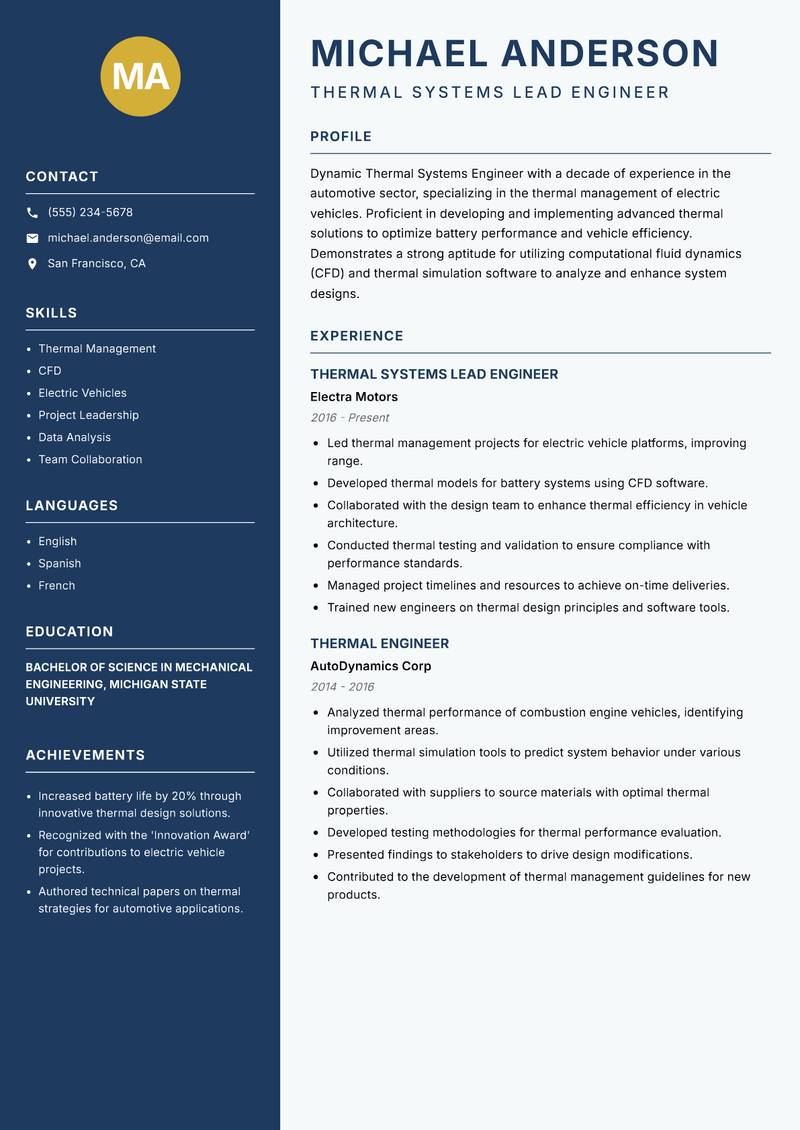
Classic Clean
Use Template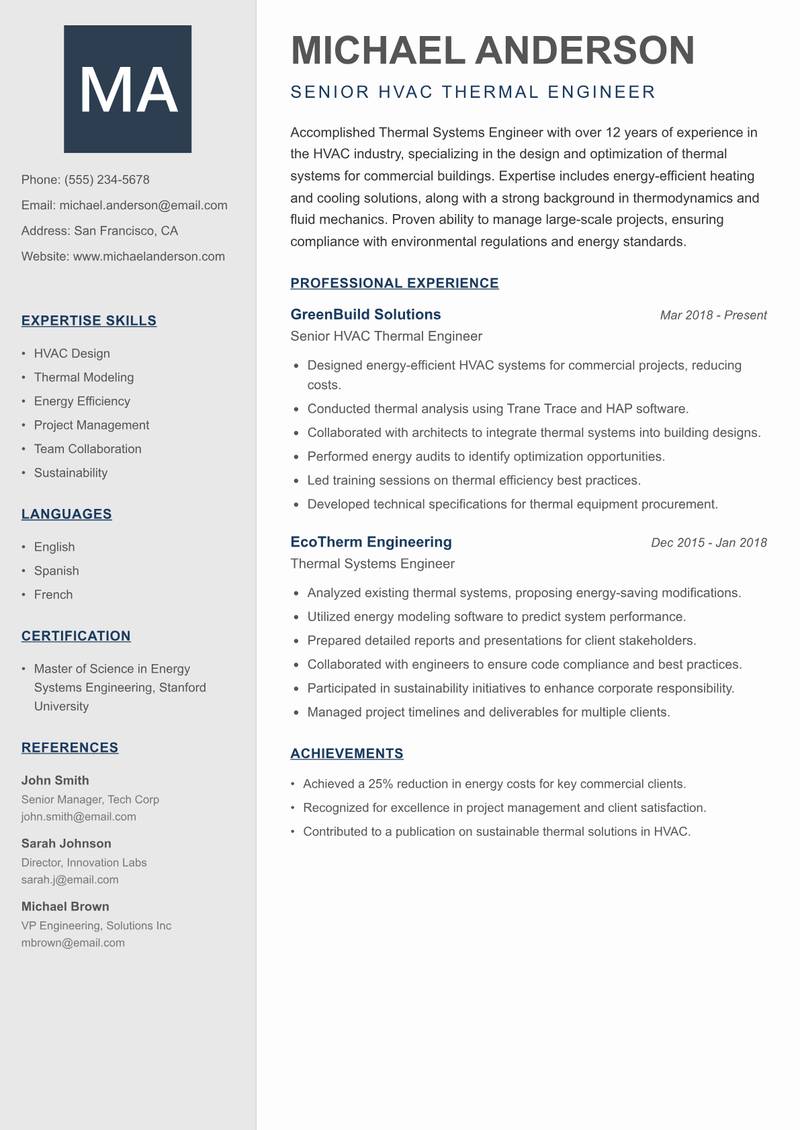
Creative Minimal
Use Template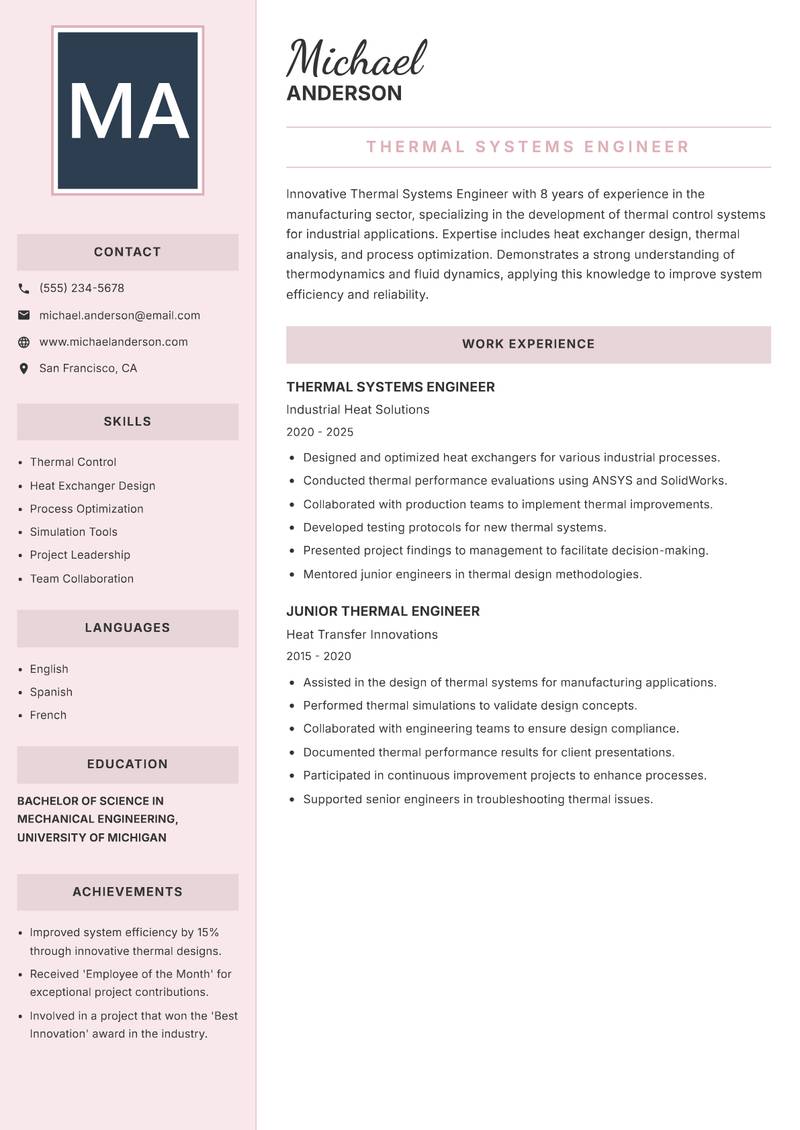
Executive
Use Template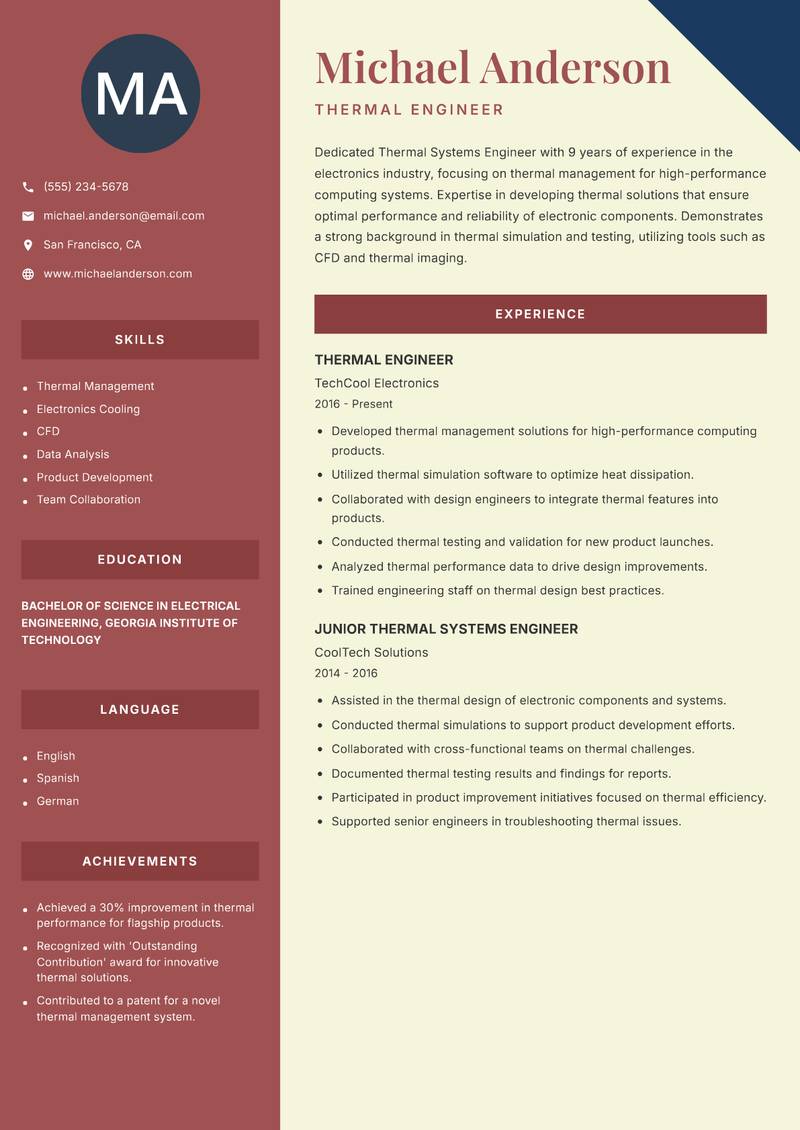
Two Column
Use Template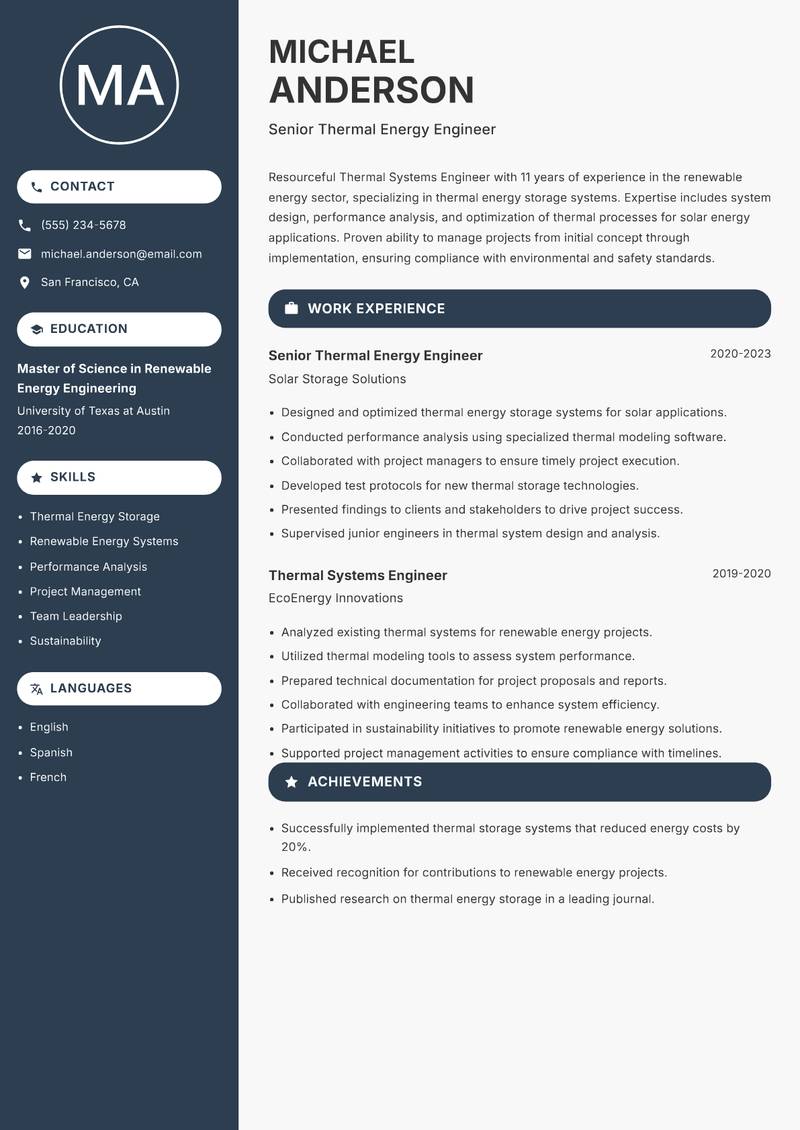
Compact
Use Template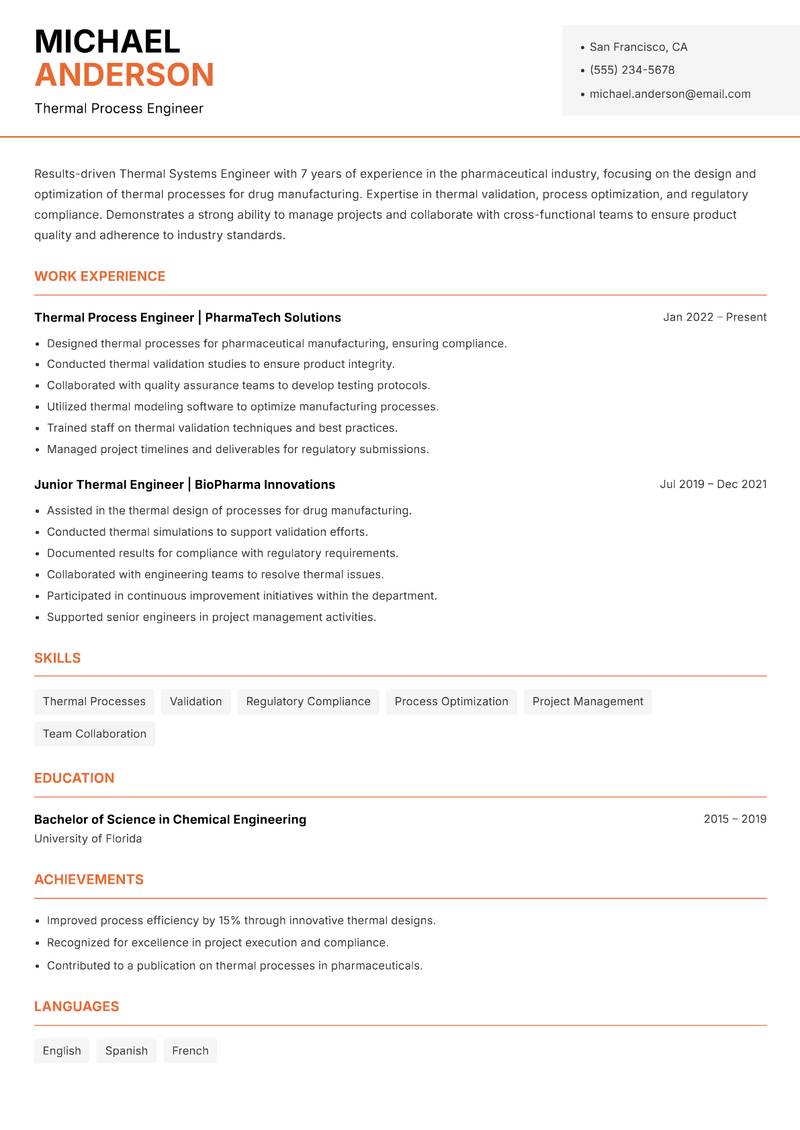
Modern Professional
Use Template7 Real Thermal Systems Engineer Resume Examples
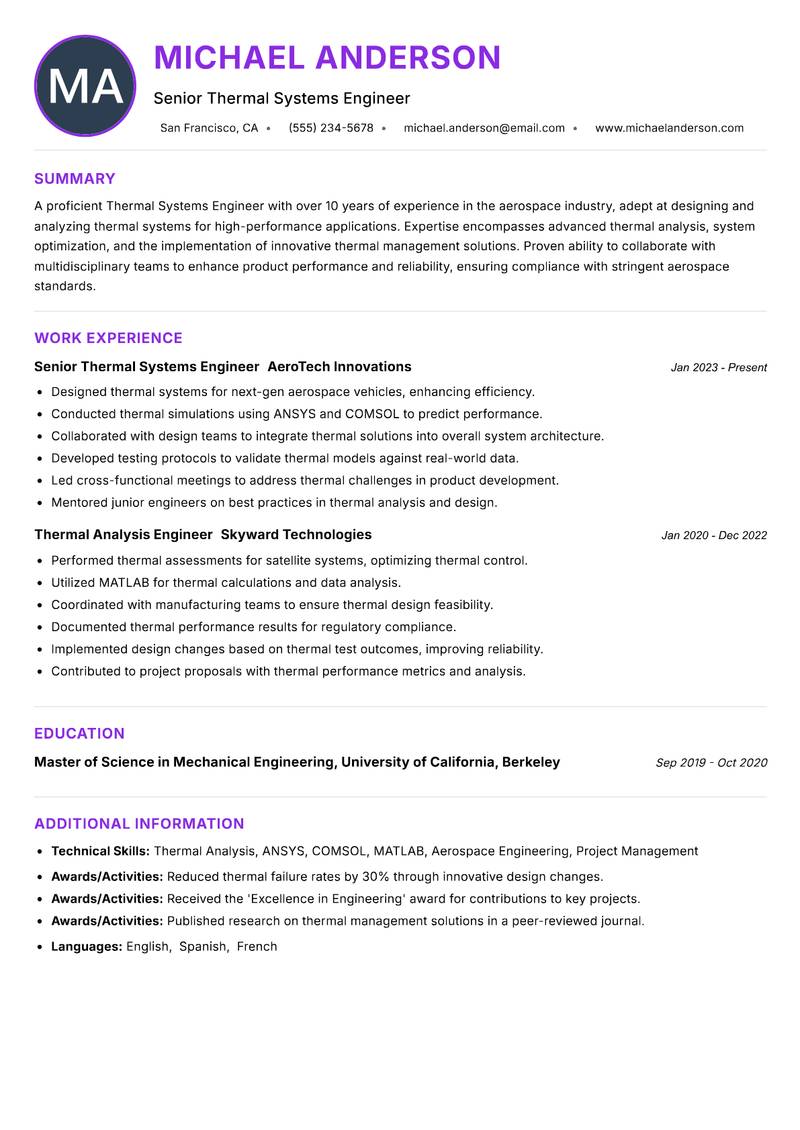
Senior Thermal Systems Engineer with 11+ Years Experience
Summary: A proficient Thermal Systems Engineer with over 10 years of experience in the aerospace industry, adept at designing and analyzing thermal systems for high-performance applications. Expertise encompasses advanced thermal analysis, system optimization, and the implementation of innovative thermal management solutions. Proven ability to collaborate with multidisciplinary teams to enhance product performance and reliability, ensuring compliance with stringent aerospace standards. Recognized for leveraging simulation tools and experimental methods to validate thermal models, contributing to significant cost reductions and performance improvements. A strong communicator, capable of articulating complex thermal concepts to stakeholders, facilitating informed decision-making. Committed to continuous professional development, staying abreast of the latest advancements in thermal engineering and related technologies. Holds a Master’s degree in Mechanical Engineering with a focus on thermal systems.
Description:
- Designed thermal systems for next-gen aerospace vehicles, enhancing efficiency.
- Conducted thermal simulations using ANSYS and COMSOL to predict performance.
- Collaborated with design teams to integrate thermal solutions into overall system architecture.
- Developed testing protocols to validate thermal models against real-world data.
- Led cross-functional meetings to address thermal challenges in product development.
- Mentored junior engineers on best practices in thermal analysis and design.
🏆 Key Achievements
Thermal Systems Lead Engineer with 10+ Years Experience
Summary: Dynamic Thermal Systems Engineer with a decade of experience in the automotive sector, specializing in the thermal management of electric vehicles. Proficient in developing and implementing advanced thermal solutions to optimize battery performance and vehicle efficiency. Demonstrates a strong aptitude for utilizing computational fluid dynamics (CFD) and thermal simulation software to analyze and enhance system designs. Proven track record in leading projects from conception through production, ensuring adherence to industry standards and customer specifications. Adept at cross-functional collaboration, fostering teamwork among engineering, manufacturing, and quality assurance departments. Committed to innovation and sustainability, consistently seeking ways to reduce environmental impact through improved thermal strategies. Holds a Bachelor’s degree in Mechanical Engineering with a focus on energy systems.
Description:
- Led thermal management projects for electric vehicle platforms, improving range.
- Developed thermal models for battery systems using CFD software.
- Collaborated with the design team to enhance thermal efficiency in vehicle architecture.
- Conducted thermal testing and validation to ensure compliance with performance standards.
- Managed project timelines and resources to achieve on-time deliveries.
- Trained new engineers on thermal design principles and software tools.
🏆 Key Achievements
Senior HVAC Thermal Engineer with 12+ Years Experience
Summary: Accomplished Thermal Systems Engineer with over 12 years of experience in the HVAC industry, specializing in the design and optimization of thermal systems for commercial buildings. Expertise includes energy-efficient heating and cooling solutions, along with a strong background in thermodynamics and fluid mechanics. Proven ability to manage large-scale projects, ensuring compliance with environmental regulations and energy standards. Skilled in utilizing industry-standard software for thermal modeling and analysis, resulting in significant energy savings for clients. Adept at conducting site assessments and collaborating with multidisciplinary teams to deliver tailored solutions that meet client needs. Committed to sustainability and continuous improvement in thermal system performance. Holds a Master’s degree in Energy Systems Engineering.
Description:
- Designed energy-efficient HVAC systems for commercial projects, reducing costs.
- Conducted thermal analysis using Trane Trace and HAP software.
- Collaborated with architects to integrate thermal systems into building designs.
- Performed energy audits to identify optimization opportunities.
- Led training sessions on thermal efficiency best practices.
- Developed technical specifications for thermal equipment procurement.
🏆 Key Achievements
Thermal Systems Engineer with 8+ Years Experience
Summary: Innovative Thermal Systems Engineer with 8 years of experience in the manufacturing sector, specializing in the development of thermal control systems for industrial applications. Expertise includes heat exchanger design, thermal analysis, and process optimization. Demonstrates a strong understanding of thermodynamics and fluid dynamics, applying this knowledge to improve system efficiency and reliability. Proven track record of successfully leading cross-functional teams to achieve project goals within tight deadlines. Skilled in utilizing advanced simulation tools for thermal modeling and performance testing, resulting in enhanced operational efficiency. Committed to driving continuous improvement initiatives and fostering a culture of innovation. Holds a Bachelor’s degree in Mechanical Engineering.
Description:
- Designed and optimized heat exchangers for various industrial processes.
- Conducted thermal performance evaluations using ANSYS and SolidWorks.
- Collaborated with production teams to implement thermal improvements.
- Developed testing protocols for new thermal systems.
- Presented project findings to management to facilitate decision-making.
- Mentored junior engineers in thermal design methodologies.
🏆 Key Achievements
Thermal Engineer with 9+ Years Experience
Summary: Dedicated Thermal Systems Engineer with 9 years of experience in the electronics industry, focusing on thermal management for high-performance computing systems. Expertise in developing thermal solutions that ensure optimal performance and reliability of electronic components. Demonstrates a strong background in thermal simulation and testing, utilizing tools such as CFD and thermal imaging. Proven ability to work collaboratively with product development teams to integrate thermal considerations into design processes. Committed to driving innovation and enhancing product performance through effective thermal management strategies. Holds a Bachelor’s degree in Electrical Engineering with a specialization in thermal systems.
Description:
- Developed thermal management solutions for high-performance computing products.
- Utilized thermal simulation software to optimize heat dissipation.
- Collaborated with design engineers to integrate thermal features into products.
- Conducted thermal testing and validation for new product launches.
- Analyzed thermal performance data to drive design improvements.
- Trained engineering staff on thermal design best practices.
🏆 Key Achievements
Senior Thermal Energy Engineer with 11+ Years Experience
Summary: Resourceful Thermal Systems Engineer with 11 years of experience in the renewable energy sector, specializing in thermal energy storage systems. Expertise includes system design, performance analysis, and optimization of thermal processes for solar energy applications. Proven ability to manage projects from initial concept through implementation, ensuring compliance with environmental and safety standards. Demonstrates strong analytical skills and a commitment to sustainability, continuously seeking innovative solutions to enhance system efficiency. Adept at collaborating with engineering teams and stakeholders to deliver effective thermal solutions that meet project goals. Holds a Master’s degree in Renewable Energy Engineering.
Description:
- Designed and optimized thermal energy storage systems for solar applications.
- Conducted performance analysis using specialized thermal modeling software.
- Collaborated with project managers to ensure timely project execution.
- Developed test protocols for new thermal storage technologies.
- Presented findings to clients and stakeholders to drive project success.
- Supervised junior engineers in thermal system design and analysis.
🏆 Key Achievements
Thermal Process Engineer with 7+ Years Experience
Summary: Experienced Thermal Systems Engineer with 7 years of experience in the pharmaceutical industry, focusing on the design and optimization of thermal processes for drug manufacturing. Expertise in thermal validation, process optimization, and regulatory compliance. Demonstrates a strong ability to manage projects and collaborate with cross-functional teams to ensure product quality and adherence to industry standards. Skilled in utilizing thermal modeling and simulation tools to enhance process efficiency and reliability. Committed to continuous improvement and innovation in thermal systems. Holds a Bachelor’s degree in Chemical Engineering with a focus on thermal processes.
Description:
- Designed thermal processes for pharmaceutical manufacturing, ensuring compliance.
- Conducted thermal validation studies to ensure product integrity.
- Collaborated with quality assurance teams to develop testing protocols.
- Utilized thermal modeling software to optimize manufacturing processes.
- Trained staff on thermal validation techniques and best practices.
- Managed project timelines and deliverables for regulatory submissions.
🏆 Key Achievements
Key Skills for Thermal Systems Engineer
ATS Optimization Tips
Increase your chances of getting hired
Use Standard Headings
Use common section titles like Experience, Skills, etc.
Include Keywords
Add role-specific keywords from the job description
Keep it Simple
Avoid complex tables, images and graphics
Save in Right Format
Use PDF format unless otherwise specified
Thermal Systems Engineer Salary Insights
Average Salary
$100,000
per year
Salary Range
$80,000 - $120,000
per year
Top Paying Cities
Los Angeles, Seattle, Houston, Dallas, Boston
Source: Glassdoor, Payscale, Indeed (Updated July 2025)
Everything you need to write a great Thermal Systems Engineer resume
Strong Action Verbs to Use
Resume Writing Tips
- →Highlight your experience with heat transfer simulations and thermal modeling software, like ANSYS or SolidWorks.
- →Emphasize your familiarity with both electric and combustion engine systems, showcasing versatility.
- →Detail any successful projects related to thermal management improvements that resulted in energy efficiency or performance gains.
- →Include jargon specific to automotive heating and cooling systems to attract attention from ATS software.
- →List any collaborations with other engineering disciplines, demonstrating your ability to work within diverse teams.
Common Mistakes to Avoid
- ✕Failing to quantify the results of previous thermal management projects, such as percentages of performance improvements.
- ✕Overlooking mention of specific software and tools used for thermal analysis, which can get past ATS screening.
- ✕Using vague language that doesn't convey technical proficiency relevant to the specific role.
- ✕Including non-relevant work experience that distracts from your thermal systems expertise.
ATS Keywords for Thermal Systems Engineer
Thermal Systems Engineer Career Path
Relevant Certifications
Career Progression
Junior Thermal Systems Engineer
Usually involved in simulation and testing of thermal components, providing support to senior engineers.
Thermal Systems Engineer
Designs and analyzes thermal management solutions for automotive applications, engaging in cross-disciplinary collaboration.
Senior Thermal Systems Engineer
Leads projects for advanced thermal system designs and mentors junior engineers, overseeing complex systems integration.
Principal Thermal Engineer
Drives strategic initiatives in thermal management technology development, interfacing with executives and stakeholders.
Thermal Systems Engineering Manager
Oversees the thermal engineering team, aligning project activities with corporate objectives and managing budgets.
Thermal Systems Engineer Interview Questions
What techniques do you use for thermal analysis in automotive systems? +
Be specific about the software and methodologies, such as finite element analysis or computational fluid dynamics.
Can you describe a challenging thermal issue you successfully resolved in a project? +
Focus on the problem-solving process and the technologies applied.
How do you ensure effective thermal management during the design phase of a new vehicle? +
Discuss the approach for integrating thermal considerations early in the design.
Which automotive regulations impact your thermal system design and testing? +
Mention specific standards and how they influence your work.
What role does simulation play in your thermal engineering process? +
Explain the types of simulations you're familiar with and their objectives.
How do you collaborate cross-functionally with other engineering teams? +
Share examples that highlight successful teamwork across disciplines, such as electrical or mechanical engineering.
About the Thermal Systems Engineer Role
In the automotive sector, a Thermal Systems Engineer expertly designs and implements thermal management strategies to ensure the efficiency and safety of vehicles. This role involves simulating thermal conditions, conducting rigorous testing, and optimizing heat dissipation solutions for internal combustion engines and electric powertrains. Engineers will often collaborate with design, electrical, and manufacturing teams to develop innovative temperature control systems that meet regulatory requirements and enhance vehicle performance.
Frequently Asked Questions
What educational background is typically required for a Thermal Systems Engineer? +
A bachelor's degree in mechanical engineering, automotive engineering, or a related field is usually required, with many engineers also holding advanced degrees.
What software skills are essential for this role? +
Proficiency with software such as MATLAB, ANSYS, and CATIA for thermal analysis and modeling is crucial.
How can I transition into a Thermal Systems Engineer position from another engineering field? +
Gaining experience in thermal dynamics, pursuing certification, or completing relevant coursework can facilitate the transition.
What opportunities for advancement exist within thermal systems engineering? +
With experience, engineers can progress to senior positions, managerial roles, or specialize in areas like thermal system research and development.
What emerging technologies should Thermal Systems Engineers be aware of? +
Familiarity with electric vehicle systems, heat pumps, and thermal management technologies for advanced driver-assistance systems is becoming increasingly important.
More Resume Examples You Might Like
Related Career Paths
Other roles candidates for Thermal Systems Engineer positions often also consider.
Will this Thermal Systems Engineer resume pass the ATS scan?
Upload it and get an instant AI-scored compatibility check with specific fixes.
Check My Resume →
Pair it with a matching cover letter
AI drafts a first version from your job title and strengths — edit it live, then download the PDF.
Write My Cover Letter →
Written by Nohaya Career Team
Reviewed by HR Professionals · Updated July 2025
Ready to Build Your Perfect Resume?
Choose from 1000+ professional templates and land your dream job.
Create My Resume Now