Build an ATS-Friendly
Stress Engineer Resume
That Gets Interviews
Stress Engineers perform critical evaluations of mechanical components by applying principles of mechanics to assess structural integrity under various load conditions. They leverage advanced simulation tools such as ANSYS or Abaqus to model and analyze stresses, ensuring designs comply with safety and regulatory…
Stress Engineer Resume Templates
Modern Professional
Use Template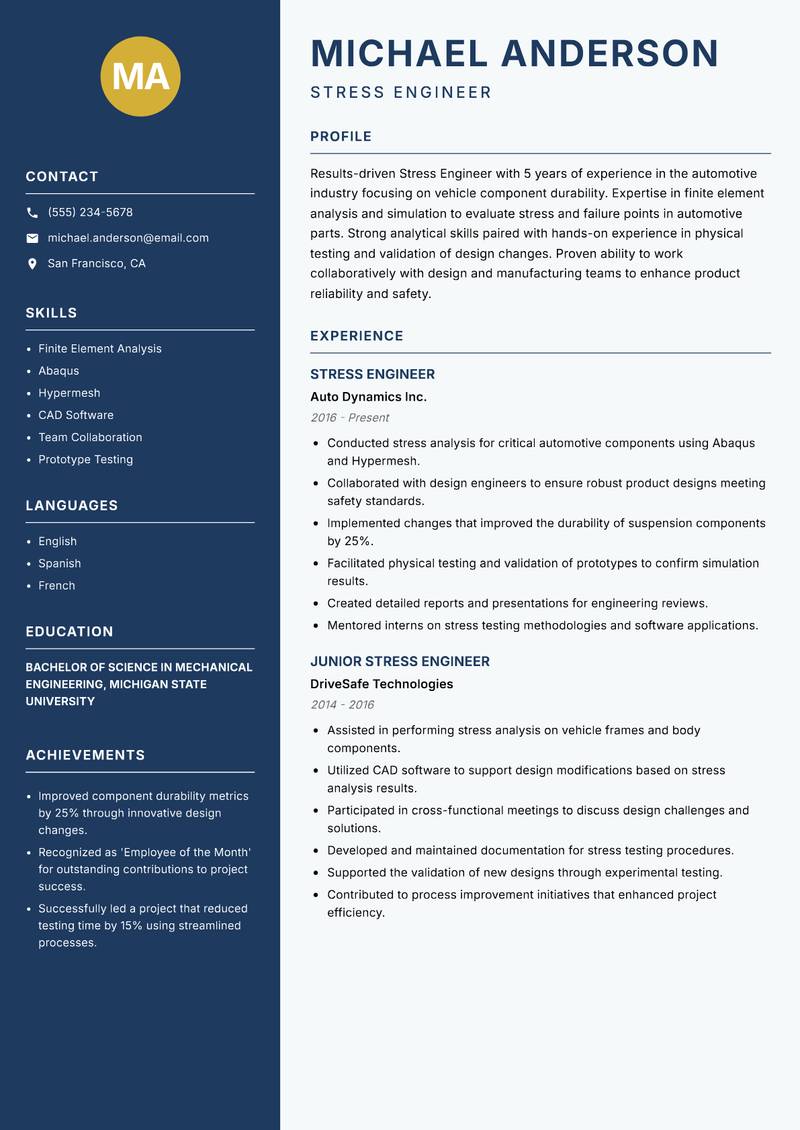
Classic Clean
Use Template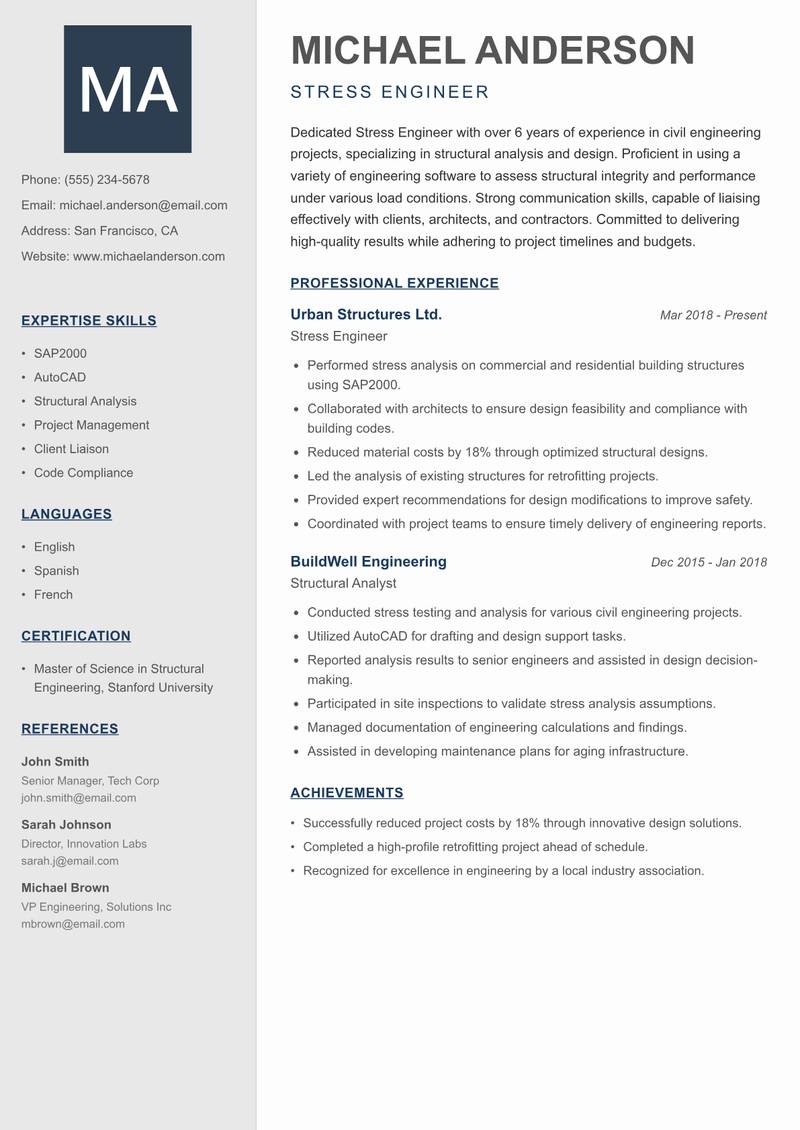
Creative Minimal
Use Template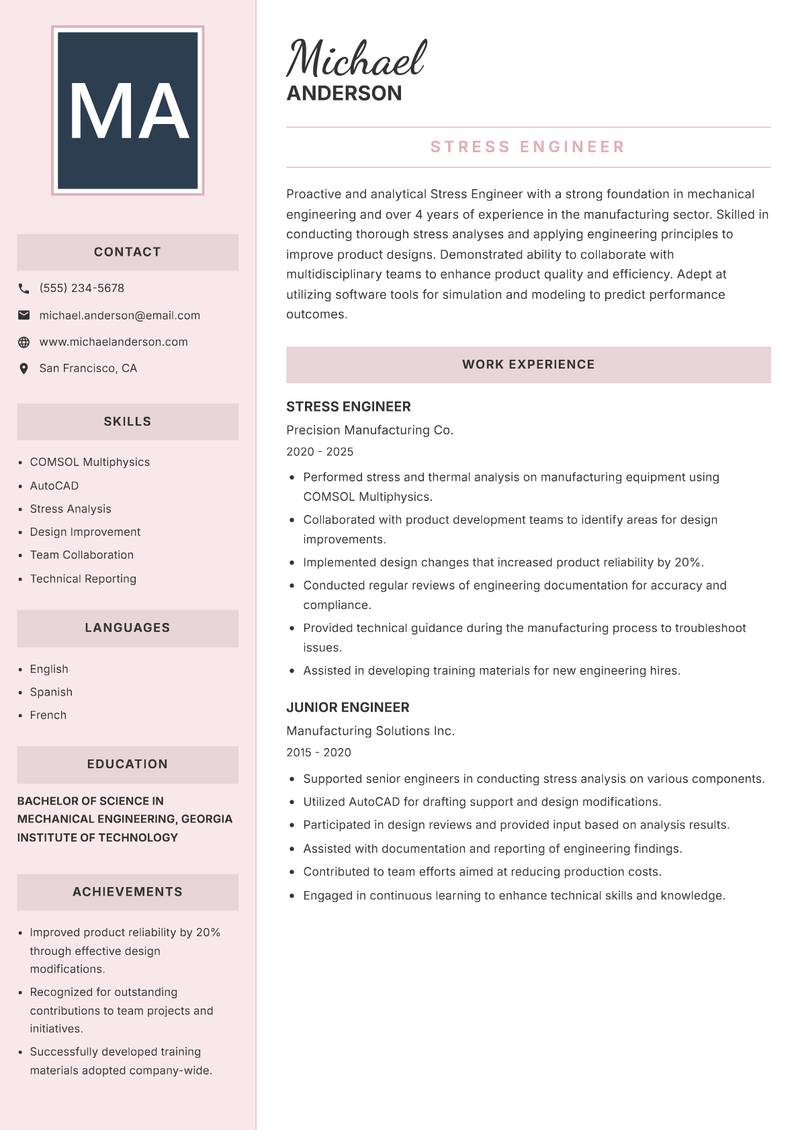
Executive
Use Template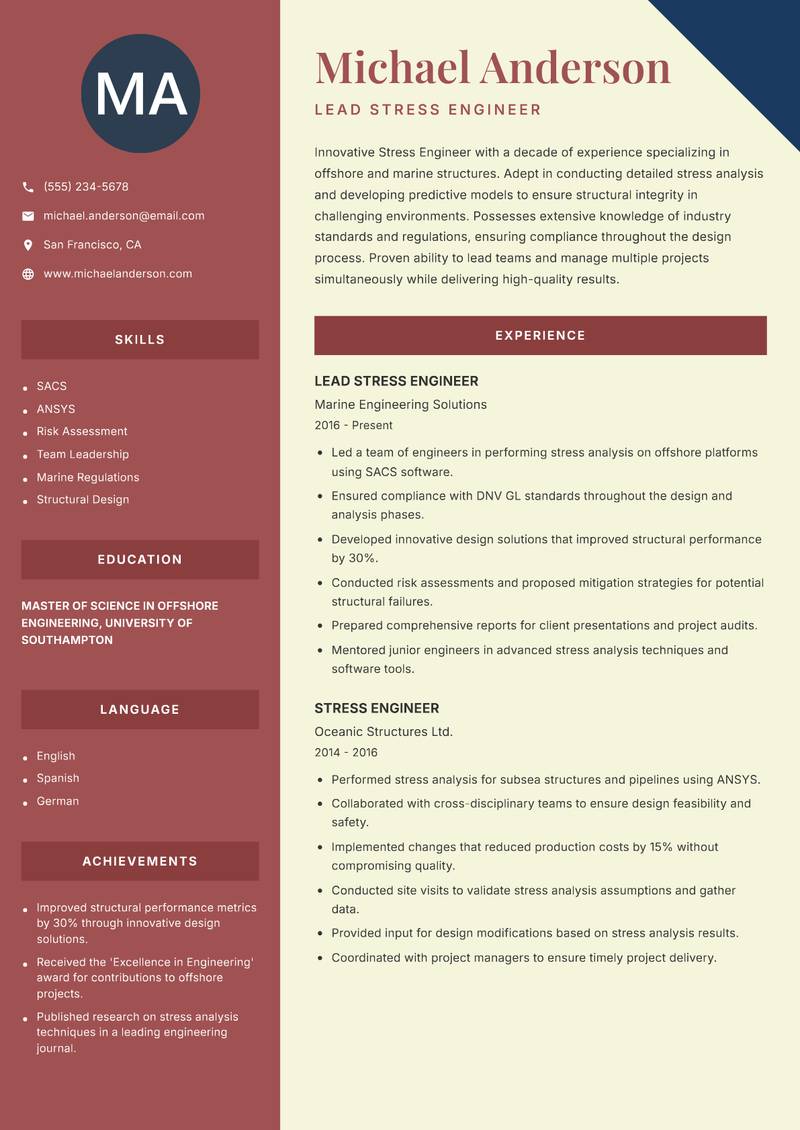
Two Column
Use Template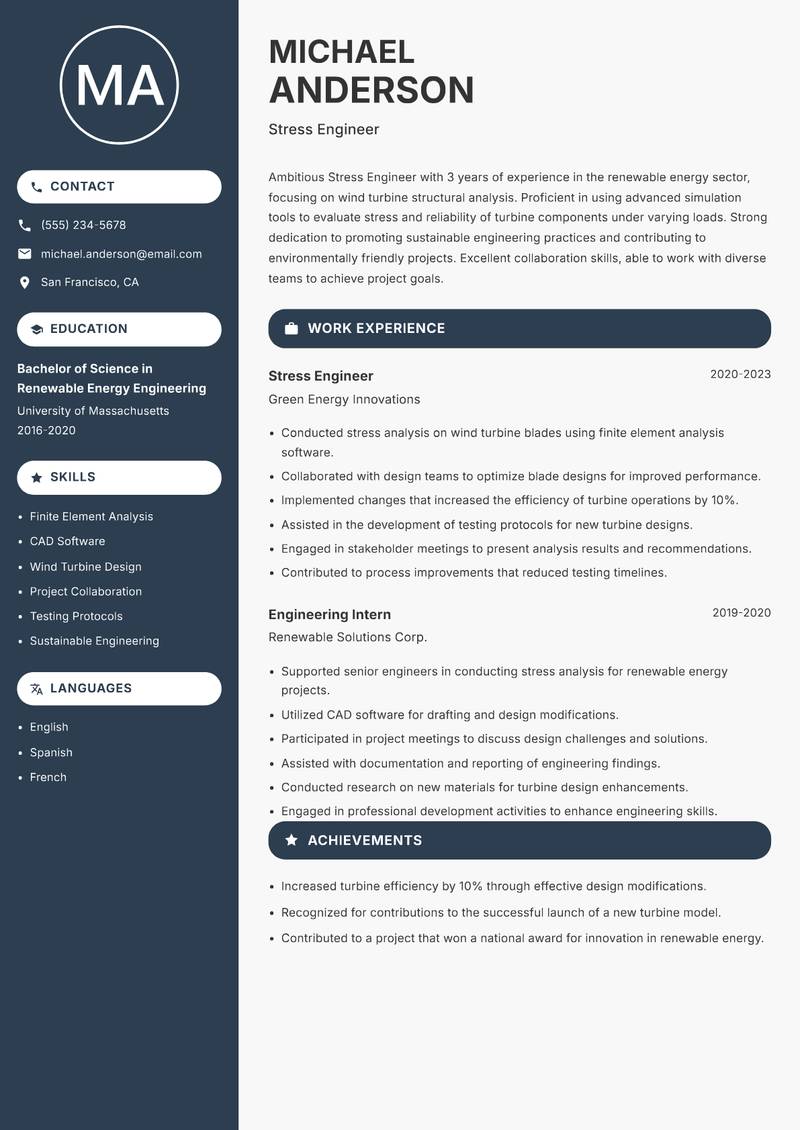
Compact
Use Template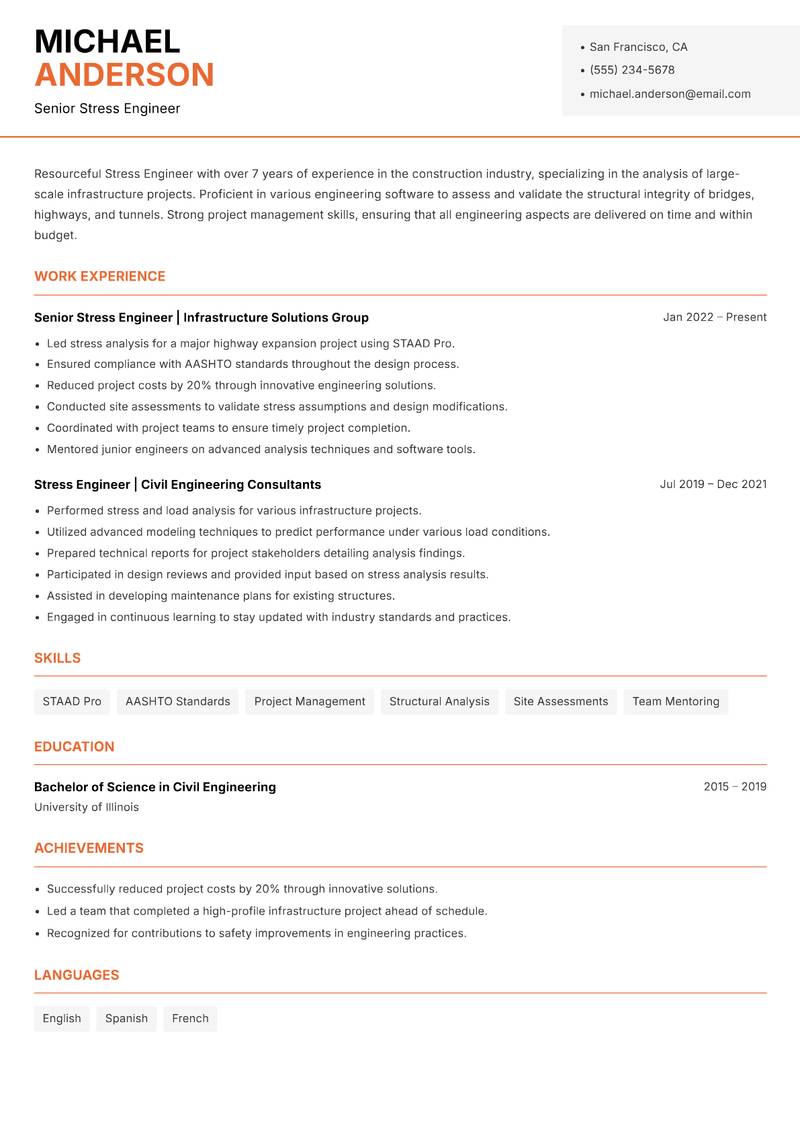
Modern Professional
Use Template7 Real Stress Engineer Resume Examples
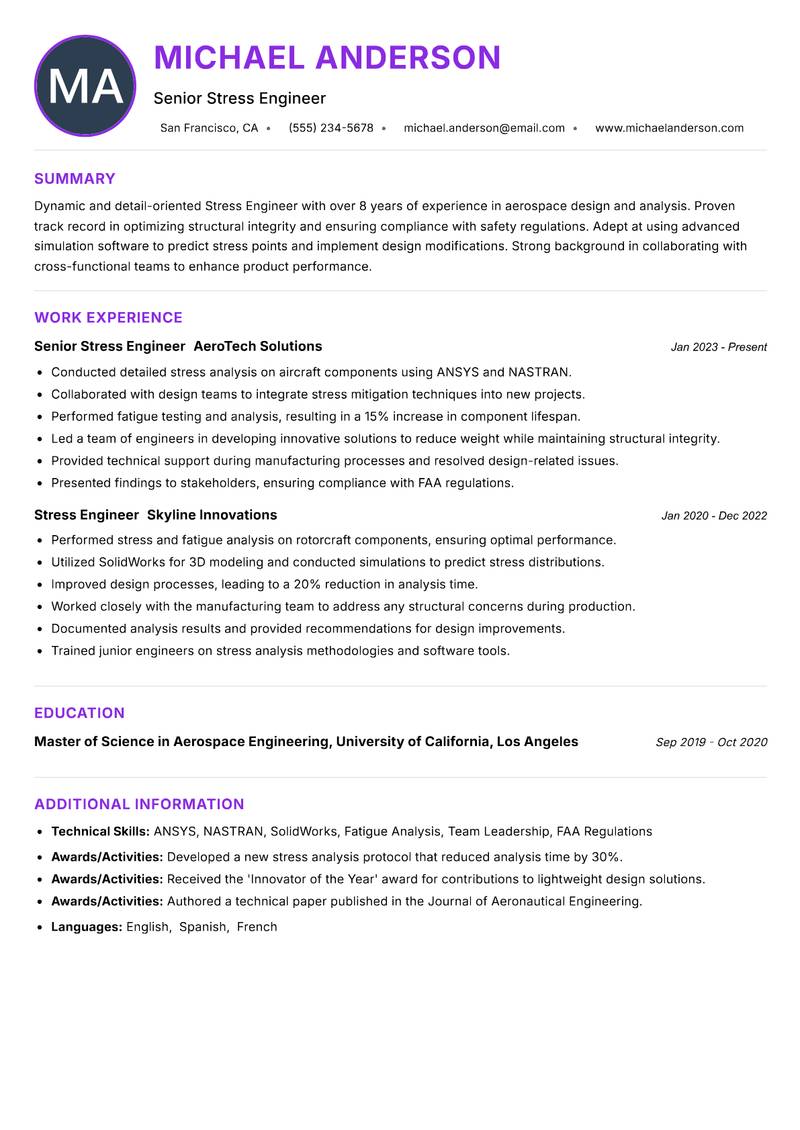
Senior Stress Engineer with 8+ Years Experience
Summary: Dynamic and detail-oriented Stress Engineer with over 8 years of experience in aerospace design and analysis. Proven track record in optimizing structural integrity and ensuring compliance with safety regulations. Adept at using advanced simulation software to predict stress points and implement design modifications. Strong background in collaborating with cross-functional teams to enhance product performance. Committed to continuous learning and staying updated with industry advancements. Excellent problem-solving skills and the ability to make informed decisions under pressure. Passionate about mentoring junior engineers and promoting a culture of safety and innovation within the workplace.
Description:
- Conducted detailed stress analysis on aircraft components using ANSYS and NASTRAN.
- Collaborated with design teams to integrate stress mitigation techniques into new projects.
- Performed fatigue testing and analysis, resulting in a 15% increase in component lifespan.
- Led a team of engineers in developing innovative solutions to reduce weight while maintaining structural integrity.
- Provided technical support during manufacturing processes and resolved design-related issues.
- Presented findings to stakeholders, ensuring compliance with FAA regulations.
🏆 Key Achievements
Stress Engineer with 5+ Years Experience
Summary: Experienced Stress Engineer with 5 years of experience in the automotive industry focusing on vehicle component durability. Expertise in finite element analysis and simulation to evaluate stress and failure points in automotive parts. Strong analytical skills paired with hands-on experience in physical testing and validation of design changes. Proven ability to work collaboratively with design and manufacturing teams to enhance product reliability and safety. Enthusiastic about leveraging new technologies to optimize engineering processes. Dedicated to continuous improvement and professional development within the field.
Description:
- Conducted stress analysis for critical automotive components using Abaqus and Hypermesh.
- Collaborated with design engineers to ensure robust product designs meeting safety standards.
- Implemented changes that improved the durability of suspension components by 25%.
- Facilitated physical testing and validation of prototypes to confirm simulation results.
- Created detailed reports and presentations for engineering reviews.
- Mentored interns on stress testing methodologies and software applications.
🏆 Key Achievements
Stress Engineer with 6+ Years Experience
Summary: Dedicated Stress Engineer with over 6 years of experience in civil engineering projects, specializing in structural analysis and design. Proficient in using a variety of engineering software to assess structural integrity and performance under various load conditions. Strong communication skills, capable of liaising effectively with clients, architects, and contractors. Committed to delivering high-quality results while adhering to project timelines and budgets. Recognized for a detail-oriented approach and a strong ability to solve complex engineering problems. Passionate about sustainability and incorporating eco-friendly practices into structural design.
Description:
- Performed stress analysis on commercial and residential building structures using SAP2000.
- Collaborated with architects to ensure design feasibility and compliance with building codes.
- Reduced material costs by 18% through optimized structural designs.
- Led the analysis of existing structures for retrofitting projects.
- Provided expert recommendations for design modifications to improve safety.
- Coordinated with project teams to ensure timely delivery of engineering reports.
🏆 Key Achievements
Stress Engineer with 4+ Years Experience
Summary: Driven and analytical Stress Engineer with a strong foundation in mechanical engineering and over 4 years of experience in the manufacturing sector. Skilled in conducting thorough stress analyses and applying engineering principles to improve product designs. Demonstrated ability to collaborate with multidisciplinary teams to enhance product quality and efficiency. Adept at utilizing software tools for simulation and modeling to predict performance outcomes. Committed to driving innovation and implementing cost-effective solutions in engineering projects. Excellent organizational skills and attention to detail ensure high-quality deliverables.
Description:
- Performed stress and thermal analysis on manufacturing equipment using COMSOL Multiphysics.
- Collaborated with product development teams to identify areas for design improvements.
- Implemented design changes that increased product reliability by 20%.
- Conducted regular reviews of engineering documentation for accuracy and compliance.
- Provided technical guidance during the manufacturing process to troubleshoot issues.
- Assisted in developing training materials for new engineering hires.
🏆 Key Achievements
Lead Stress Engineer with 10+ Years Experience
Summary: Innovative Stress Engineer with a decade of experience specializing in offshore and marine structures. Adept in conducting detailed stress analysis and developing predictive models to ensure structural integrity in challenging environments. Possesses extensive knowledge of industry standards and regulations, ensuring compliance throughout the design process. Proven ability to lead teams and manage multiple projects simultaneously while delivering high-quality results. Strong communicator, able to present complex technical information in an accessible manner to stakeholders. Passionate about utilizing emerging technologies to enhance engineering practices.
Description:
- Led a team of engineers in performing stress analysis on offshore platforms using SACS software.
- Ensured compliance with DNV GL standards throughout the design and analysis phases.
- Developed innovative design solutions that improved structural performance by 30%.
- Conducted risk assessments and proposed mitigation strategies for potential structural failures.
- Prepared comprehensive reports for client presentations and project audits.
- Mentored junior engineers in advanced stress analysis techniques and software tools.
🏆 Key Achievements
Stress Engineer with 3+ Years Experience
Summary: Driven Stress Engineer with 3 years of experience in the renewable energy sector, focusing on wind turbine structural analysis. Proficient in using advanced simulation tools to evaluate stress and reliability of turbine components under varying loads. Strong dedication to promoting sustainable engineering practices and contributing to environmentally friendly projects. Excellent collaboration skills, able to work with diverse teams to achieve project goals. Driven to continuously improve technical skills and stay abreast of industry trends. Committed to ensuring high standards of safety and quality in engineering designs.
Description:
- Conducted stress analysis on wind turbine blades using finite element analysis software.
- Collaborated with design teams to optimize blade designs for improved performance.
- Implemented changes that increased the efficiency of turbine operations by 10%.
- Assisted in the development of testing protocols for new turbine designs.
- Engaged in stakeholder meetings to present analysis results and recommendations.
- Contributed to process improvements that reduced testing timelines.
🏆 Key Achievements
Senior Stress Engineer with 7+ Years Experience
Summary: Resourceful Stress Engineer with over 7 years of experience in the construction industry, specializing in the analysis of large-scale infrastructure projects. Proficient in various engineering software to assess and validate the structural integrity of bridges, highways, and tunnels. Strong project management skills, ensuring that all engineering aspects are delivered on time and within budget. Excellent communication abilities, fostering collaboration among engineers, architects, and contractors. Passionate about ensuring safety and compliance with industry standards. Committed to leveraging technology to improve engineering practices and outcomes.
Description:
- Led stress analysis for a major highway expansion project using STAAD Pro.
- Ensured compliance with AASHTO standards throughout the design process.
- Reduced project costs by 20% through innovative engineering solutions.
- Conducted site assessments to validate stress assumptions and design modifications.
- Coordinated with project teams to ensure timely project completion.
- Mentored junior engineers on advanced analysis techniques and software tools.
🏆 Key Achievements
Key Skills for Stress Engineer
ATS Optimization Tips
Increase your chances of getting hired
Use Standard Headings
Use common section titles like Experience, Skills, etc.
Include Keywords
Add role-specific keywords from the job description
Keep it Simple
Avoid complex tables, images and graphics
Save in Right Format
Use PDF format unless otherwise specified
Stress Engineer Salary Insights
Average Salary
$100,000
per year
Salary Range
$80,000 - $120,000
per year
Top Paying Cities
Los Angeles, Seattle, Houston, Dallas, Boston
Source: Glassdoor, Payscale, Indeed (Updated June 2025)
Everything you need to write a great Stress Engineer resume
Strong Action Verbs to Use
Resume Writing Tips
- →Highlight specific projects where you utilized FEA software to achieve results.
- →Include metrics to demonstrate your impact, such as reduced material costs through optimized designs.
- →List any cross-disciplinary collaborations with design or manufacturing that showcase teamwork skills.
- →Emphasize continuous education or ongoing training in emerging stress analysis tools and methodologies.
- →Detail your experience with regulatory compliance that pertains to your previous employers or projects.
Common Mistakes to Avoid
- ✕Using overly generic language that fails to highlight specific technical expertise in stress analysis.
- ✕Neglecting to include the software tools you are proficient with, which are crucial for stress engineering roles.
- ✕Failing to quantify achievements or contributions in past roles, such as how your analysis improved product reliability.
- ✕Not tailoring your resume to reflect job descriptions closely, especially regarding technical skills and project experience.
ATS Keywords for Stress Engineer
Stress Engineer Career Path
Relevant Certifications
Career Progression
Junior Stress Engineer
Entry-level position focusing on assisting senior engineers in designing and analyzing mechanical components under stress.
Stress Engineer
Mid-level role involving independent responsibility for analyzing complex mechanical systems and ensuring designs meet stress and safety standards.
Senior Stress Engineer
Leads stress analysis projects, mentors junior engineers, and collaborates with cross-functional teams on critical design evaluations.
Stress Engineering Manager
Oversees thermal and stress analysis teams, develops engineering best practices, and manages project timelines with stakeholders.
Principal Engineer - Stress Analysis
Sets long-term technical direction for stress engineering, acts as a key consultant, and drives innovation within the engineering organization.
Stress Engineer Interview Questions
Can you explain the process you follow when conducting a stress analysis on a new component? +
Detail the steps involved, from initial design assessment to final report, and any specific tools you utilize.
How do you ensure compliance with industry standards during your analyses? +
Discuss specific standards relevant to mechanical engineering stress analysis, like ASME or AISC.
Describe a challenging project where you encountered unexpected stress results. How did you address them? +
Use examples that illustrate your problem-solving skills and technical expertise.
What tools and software do you regularly use for stress analysis, and how do they enhance your work? +
Mention specific software and their functionalities relevant to stress engineering.
How do thermal stresses affect mechanical designs, and how do you take them into account in your work? +
Explain the relationship between thermal expansion and mechanical stress in your designs.
Describe how you collaborate with design engineers to optimize a product's performance. +
Share your approach to interdisciplinary communication and teamwork.
About the Stress Engineer Role
Stress Engineers perform critical evaluations of mechanical components by applying principles of mechanics to assess structural integrity under various load conditions. They leverage advanced simulation tools such as ANSYS or Abaqus to model and analyze stresses, ensuring designs comply with safety and regulatory standards. Through collaboration with design and manufacturing teams, they contribute to the development of reliable and efficient products.
Frequently Asked Questions
What does a typical day look like for a Stress Engineer? +
A Stress Engineer typically spends their day performing simulations, analyzing data, meeting with design teams to address stress-related issues, and documenting their findings.
What industries employ Stress Engineers? +
Stress Engineers are commonly found in aerospace, automotive, energy, and manufacturing sectors, where machinery and structural integrity are prioritized.
What is the importance of stress analysis in product design? +
Stress analysis is vital for ensuring that components can withstand expected loads, preventing failures and ensuring safety and reliability in design.
How can I advance in my career as a Stress Engineer? +
Gaining experience in project management, pursuing certifications, and continuously updating skills in the latest software can help advance your career.
What is the difference between Stress Engineers and Structural Engineers? +
Stress Engineers focus specifically on materials and component behavior under stress, while Structural Engineers typically handle larger frameworks or systems.
Do I need a specialized degree to become a Stress Engineer? +
A degree in mechanical engineering or a closely related field is typically required, along with relevant experience in stress analysis techniques.
More Resume Examples You Might Like
Related Career Paths
Other roles candidates for Stress Engineer positions often also consider.
Will this Stress Engineer resume pass the ATS scan?
Upload it and get an instant AI-scored compatibility check with specific fixes.
Check My Resume →
Pair it with a matching cover letter
AI drafts a first version from your job title and strengths — edit it live, then download the PDF.
Write My Cover Letter →
Written by Nohaya Career Team
Reviewed by HR Professionals · Updated June 2025
Ready to Build Your Perfect Resume?
Choose from 1000+ professional templates and land your dream job.
Create My Resume Now