Build an ATS-Friendly
Software Reliability Engineer Resume
That Gets Interviews
A Software Reliability Engineer champions the infrastructure resilient to failure, enhancing software through rigorous testing methodologies and proactive monitoring. Critical to ongoing production, this role requires a blend of engineering, data analysis, and cross-team communication to drive reliability…
Software Reliability Engineer Resume Templates
Modern Professional
Use Template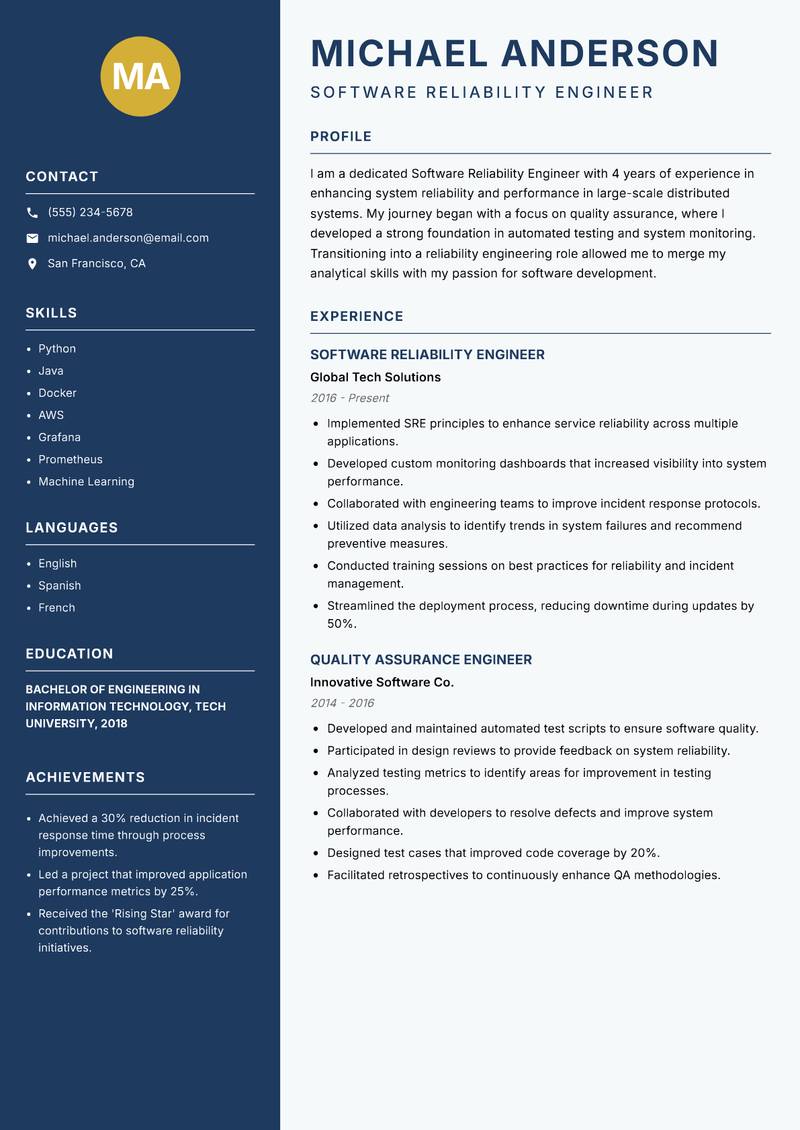
Classic Clean
Use Template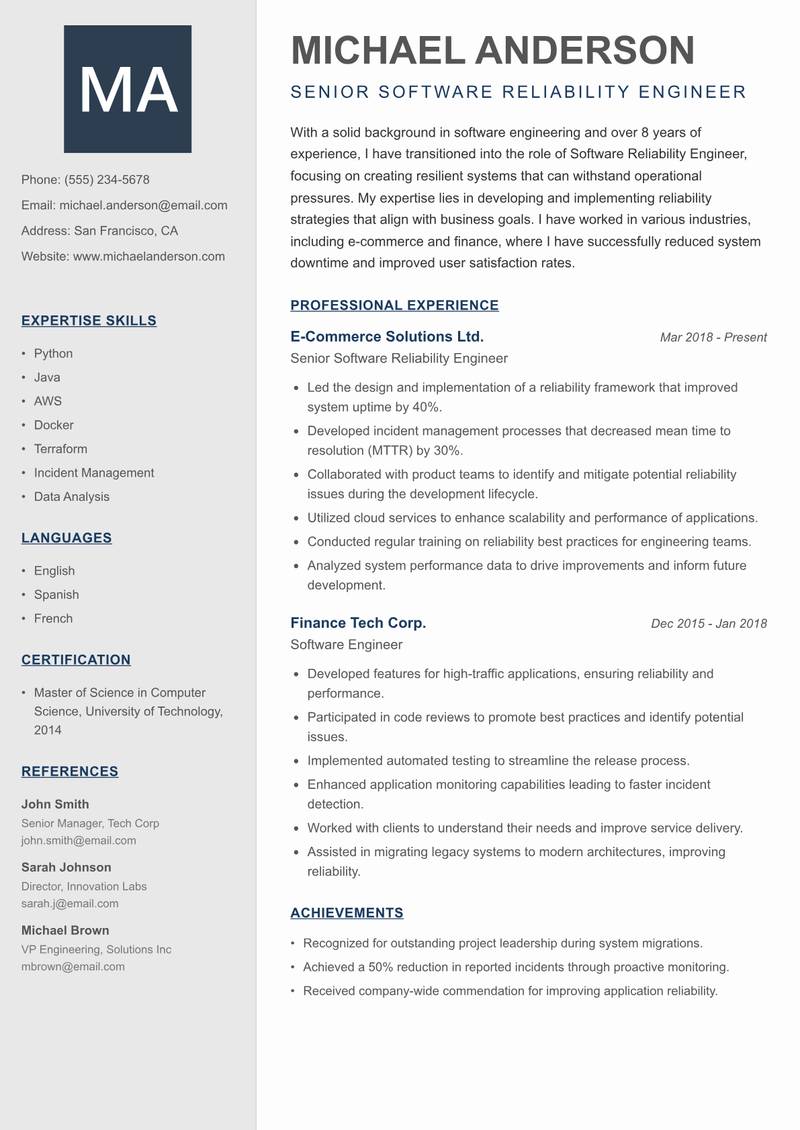
Creative Minimal
Use Template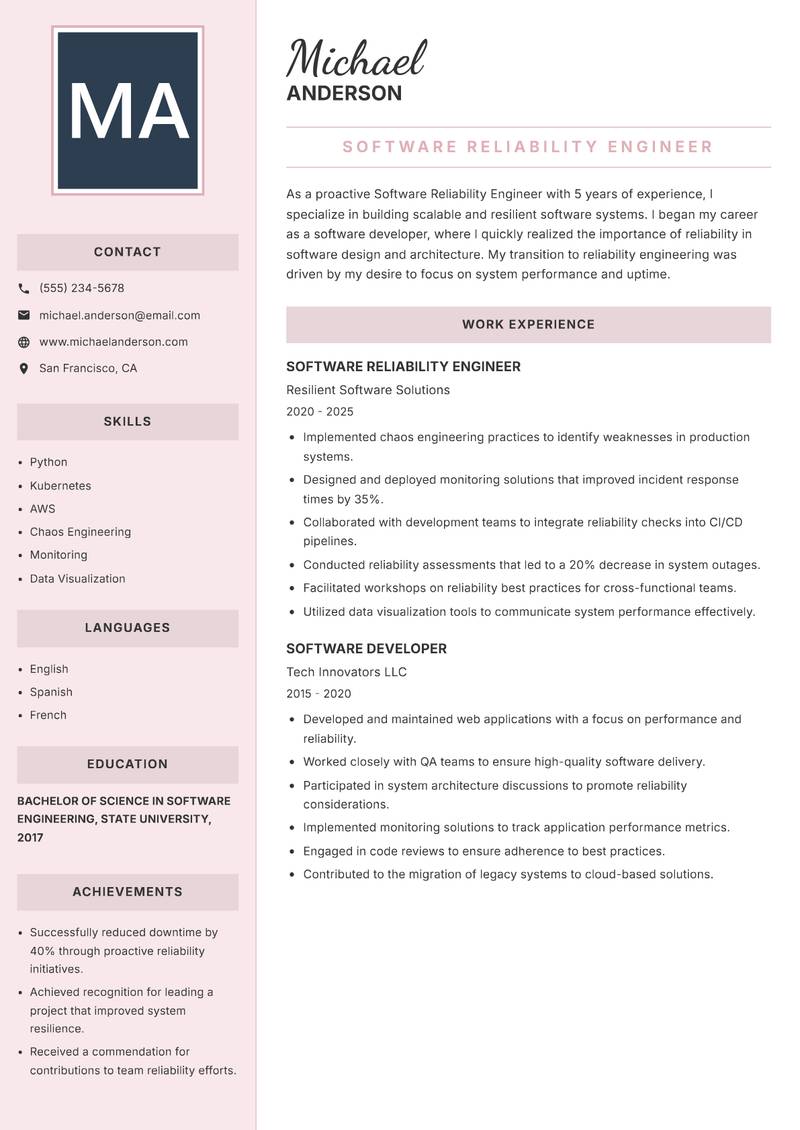
Executive
Use Template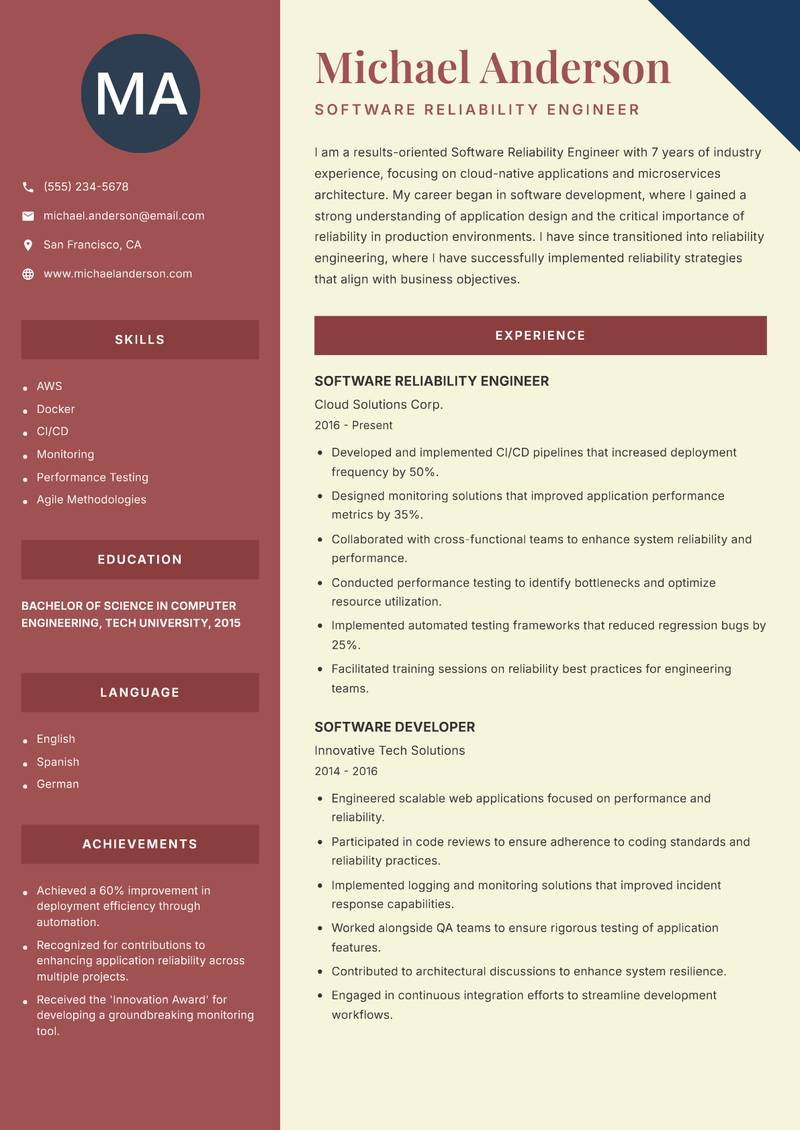
Two Column
Use Template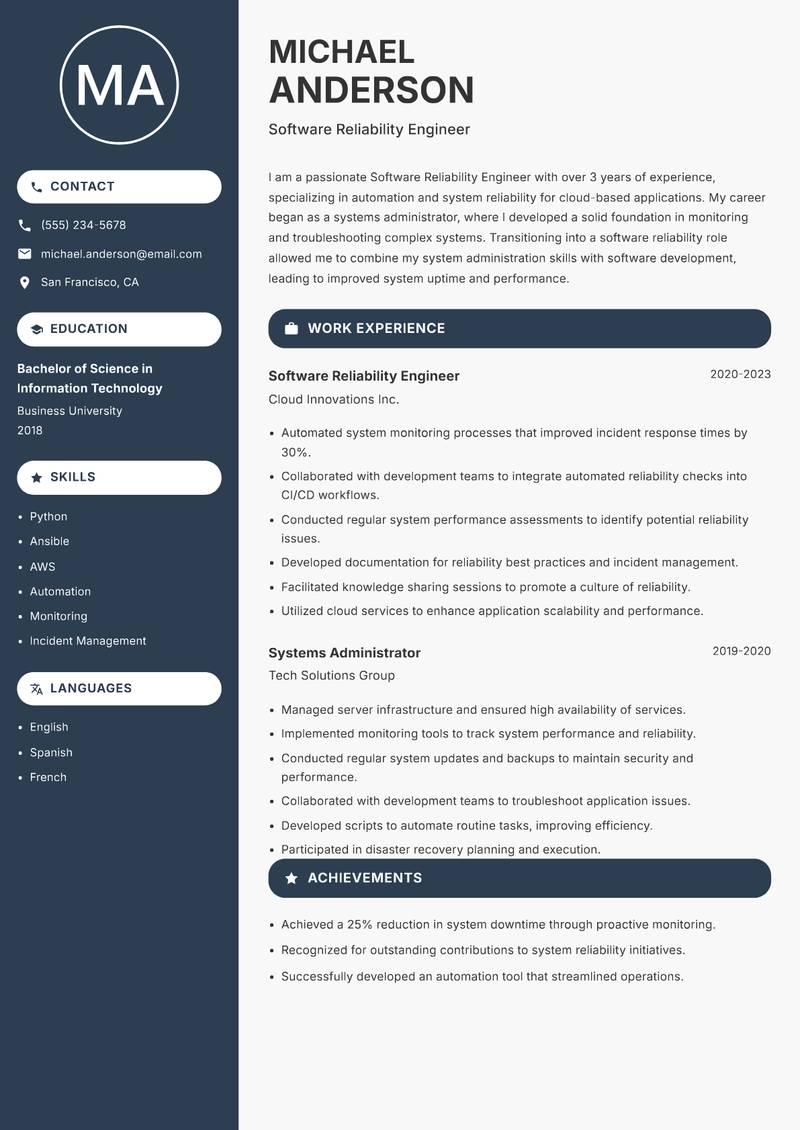
Compact
Use Template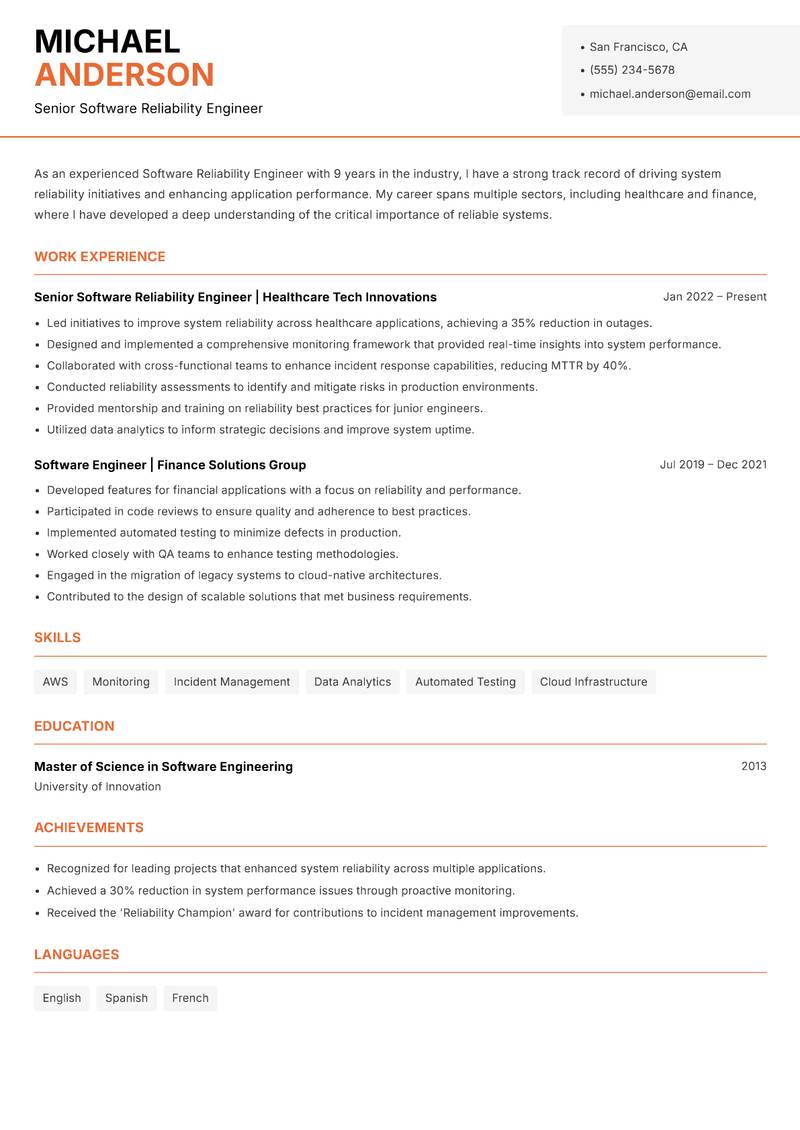
Modern Professional
Use Template7 Real Software Reliability Engineer Resume Examples
Software Reliability Engineer with 6+ Years Experience
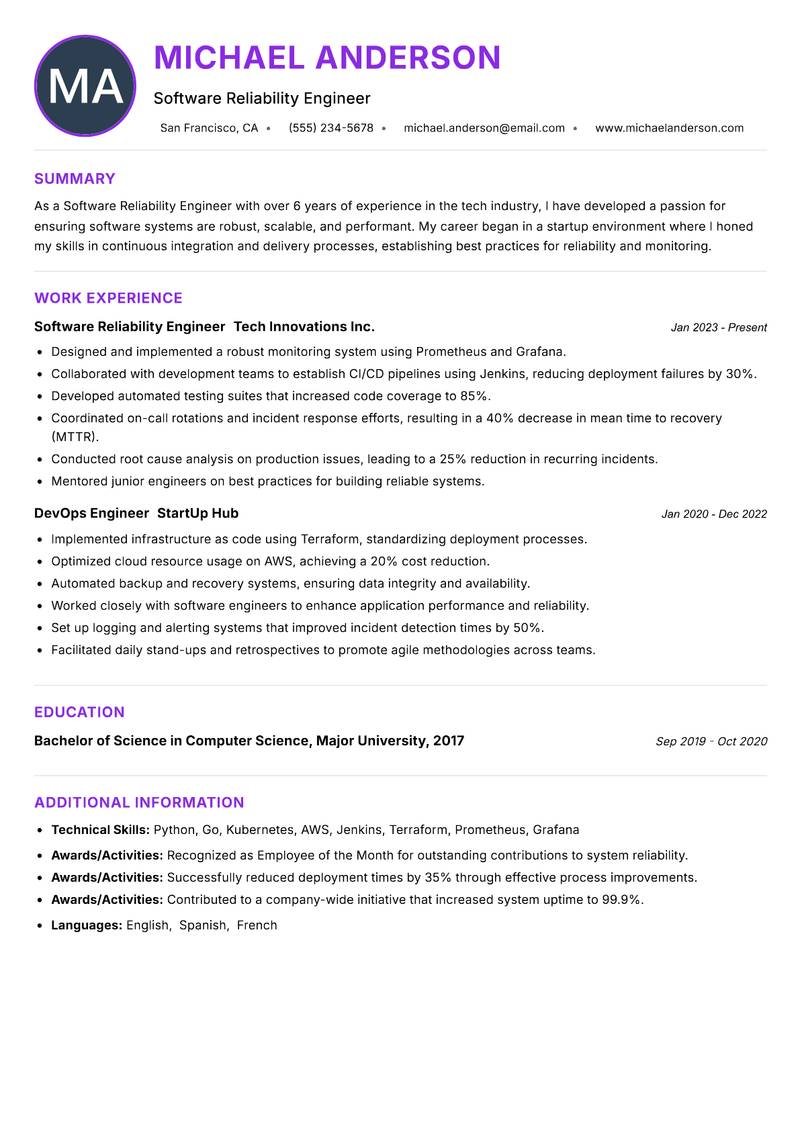
Summary: As a Software Reliability Engineer with over 6 years of experience in the tech industry, I have developed a passion for ensuring software systems are robust, scalable, and performant. My career began in a startup environment where I honed my skills in continuous integration and delivery processes, establishing best practices for reliability and monitoring. In my previous roles, I have effectively collaborated with cross-functional teams to implement automated testing frameworks, significantly reducing deployment times and improving system uptime. My expertise encompasses both backend and frontend technologies, enabling me to contribute to all layers of an application stack. I am dedicated to fostering a culture of reliability within development teams, advocating for proactive problem-solving and continuous improvement. I have a proven track record of leveraging data analysis to inform decision-making and enhance system performance. My technical toolkit includes a variety of languages and tools, such as Python, Go, Kubernetes, and AWS. Looking ahead, I am eager to take on new challenges that allow me to drive reliability initiatives and mentor upcoming engineers in best practices.
Description:
- Designed and implemented a robust monitoring system using Prometheus and Grafana.
- Collaborated with development teams to establish CI/CD pipelines using Jenkins, reducing deployment failures by 30%.
- Developed automated testing suites that increased code coverage to 85%.
- Coordinated on-call rotations and incident response efforts, resulting in a 40% decrease in mean time to recovery (MTTR).
- Conducted root cause analysis on production issues, leading to a 25% reduction in recurring incidents.
- Mentored junior engineers on best practices for building reliable systems.
🏆 Key Achievements
Software Reliability Engineer with 4+ Years Experience
Summary: I am a dedicated Software Reliability Engineer with 4 years of experience in enhancing system reliability and performance in large-scale distributed systems. My journey began with a focus on quality assurance, where I developed a strong foundation in automated testing and system monitoring. Transitioning into a reliability engineering role allowed me to merge my analytical skills with my passion for software development. I have successfully implemented SRE practices in various projects, leading to improved application performance and reduced downtime. My expertise includes using advanced monitoring tools and frameworks to proactively identify system bottlenecks and optimize resource allocation. I thrive in fast-paced environments and enjoy collaborating with diverse teams to solve complex challenges. I am particularly interested in leveraging machine learning models to predict system failures before they occur, thereby enhancing user experience and operational efficiency. My technical skills include Python, Java, Docker, and various cloud platforms. I am committed to continuous learning and am currently pursuing additional certifications to advance my knowledge in reliability engineering.
Description:
- Implemented SRE principles to enhance service reliability across multiple applications.
- Developed custom monitoring dashboards that increased visibility into system performance.
- Collaborated with engineering teams to improve incident response protocols.
- Utilized data analysis to identify trends in system failures and recommend preventive measures.
- Conducted training sessions on best practices for reliability and incident management.
- Streamlined the deployment process, reducing downtime during updates by 50%.
🏆 Key Achievements
Senior Software Reliability Engineer with 8+ Years Experience
Summary: With a solid background in software engineering and over 8 years of experience, I have transitioned into the role of Software Reliability Engineer, focusing on creating resilient systems that can withstand operational pressures. My expertise lies in developing and implementing reliability strategies that align with business goals. I have worked in various industries, including e-commerce and finance, where I have successfully reduced system downtime and improved user satisfaction rates. My technical skills include proficiency in scripting languages, cloud services, and infrastructure management tools. I am passionate about fostering a culture of reliability within teams, advocating for proactive monitoring, and establishing clear incident management protocols. Throughout my career, I have consistently utilized data-driven insights to enhance system performance and inform strategic decisions. I excel in high-stakes environments and am adept at leading cross-functional teams to achieve operational excellence. I am eager to contribute my experience and leadership skills to a forward-thinking company that values innovation and reliability.
Description:
- Led the design and implementation of a reliability framework that improved system uptime by 40%.
- Developed incident management processes that decreased mean time to resolution (MTTR) by 30%.
- Collaborated with product teams to identify and mitigate potential reliability issues during the development lifecycle.
- Utilized cloud services to enhance scalability and performance of applications.
- Conducted regular training on reliability best practices for engineering teams.
- Analyzed system performance data to drive improvements and inform future development.
🏆 Key Achievements
Software Reliability Engineer with 5+ Years Experience
Summary: As a proactive Software Reliability Engineer with 5 years of experience, I specialize in building scalable and resilient software systems. I began my career as a software developer, where I quickly realized the importance of reliability in software design and architecture. My transition to reliability engineering was driven by my desire to focus on system performance and uptime. In my current role, I have implemented various reliability strategies, including chaos engineering and automated testing, to ensure our applications remain performant under stress. I have a strong background in monitoring and alerting systems and have successfully integrated these tools into our development processes. I am committed to fostering a culture of reliability and collaboration across teams, ensuring that every member understands the importance of building systems with resilience in mind. My technical skills include proficiency in Python, Kubernetes, and cloud infrastructure. I am enthusiastic about leveraging my expertise to help organizations achieve their reliability goals and enhance user experiences.
Description:
- Implemented chaos engineering practices to identify weaknesses in production systems.
- Designed and deployed monitoring solutions that improved incident response times by 35%.
- Collaborated with development teams to integrate reliability checks into CI/CD pipelines.
- Conducted reliability assessments that led to a 20% decrease in system outages.
- Facilitated workshops on reliability best practices for cross-functional teams.
- Utilized data visualization tools to communicate system performance effectively.
🏆 Key Achievements
Software Reliability Engineer with 7+ Years Experience
Summary: I am a results-oriented Software Reliability Engineer with 7 years of industry experience, focusing on cloud-native applications and microservices architecture. My career began in software development, where I gained a strong understanding of application design and the critical importance of reliability in production environments. I have since transitioned into reliability engineering, where I have successfully implemented reliability strategies that align with business objectives. My experience includes designing and managing CI/CD pipelines, automating testing processes, and monitoring system health. I have a proven track record of improving application performance and reducing downtime across various projects. I am an advocate for DevOps practices and have worked extensively in collaborative environments to promote a culture of reliability. My technical expertise includes AWS, Docker, and various programming languages. I am passionate about leveraging my skills to build resilient systems that meet user needs and enhance operational efficiency.
Description:
- Developed and implemented CI/CD pipelines that increased deployment frequency by 50%.
- Designed monitoring solutions that improved application performance metrics by 35%.
- Collaborated with cross-functional teams to enhance system reliability and performance.
- Conducted performance testing to identify bottlenecks and optimize resource utilization.
- Implemented automated testing frameworks that reduced regression bugs by 25%.
- Facilitated training sessions on reliability best practices for engineering teams.
🏆 Key Achievements
Software Reliability Engineer with 3+ Years Experience
Summary: I am a passionate Software Reliability Engineer with over 3 years of experience, specializing in automation and system reliability for cloud-based applications. My career began as a systems administrator, where I developed a solid foundation in monitoring and troubleshooting complex systems. Transitioning into a software reliability role allowed me to combine my system administration skills with software development, leading to improved system uptime and performance. I have successfully implemented various automation tools and practices that enhance operational efficiencies and reduce manual interventions. I thrive on solving complex problems and enjoy collaborating with teams to build resilient systems. My technical skills include proficiency in Python, Ansible, and cloud services. I am committed to continuous learning and improvement, always seeking new ways to enhance system reliability and performance.
Description:
- Automated system monitoring processes that improved incident response times by 30%.
- Collaborated with development teams to integrate automated reliability checks into CI/CD workflows.
- Conducted regular system performance assessments to identify potential reliability issues.
- Developed documentation for reliability best practices and incident management.
- Facilitated knowledge sharing sessions to promote a culture of reliability.
- Utilized cloud services to enhance application scalability and performance.
🏆 Key Achievements
Senior Software Reliability Engineer with 9+ Years Experience
Summary: As an experienced Software Reliability Engineer with 9 years in the industry, I have a strong track record of driving system reliability initiatives and enhancing application performance. My career spans multiple sectors, including healthcare and finance, where I have developed a deep understanding of the critical importance of reliable systems. I specialize in designing and implementing monitoring solutions that provide real-time insights into system health, allowing teams to respond proactively to potential issues. My technical expertise includes cloud infrastructure management, automated testing, and incident response strategies. I am passionate about mentoring junior engineers and fostering a culture of reliability and collaboration within teams. I thrive in fast-paced environments, where I can leverage my problem-solving skills to ensure the availability and performance of critical systems. I am committed to continuous improvement and am always seeking innovative ways to enhance the reliability of software applications.
Description:
- Led initiatives to improve system reliability across healthcare applications, achieving a 35% reduction in outages.
- Designed and implemented a comprehensive monitoring framework that provided real-time insights into system performance.
- Collaborated with cross-functional teams to enhance incident response capabilities, reducing MTTR by 40%.
- Conducted reliability assessments to identify and mitigate risks in production environments.
- Provided mentorship and training on reliability best practices for junior engineers.
- Utilized data analytics to inform strategic decisions and improve system uptime.
🏆 Key Achievements
Key Skills for Software Reliability Engineer
ATS Optimization Tips
Increase your chances of getting hired
Use Standard Headings
Use common section titles like Experience, Skills, etc.
Include Keywords
Add role-specific keywords from the job description
Keep it Simple
Avoid complex tables, images and graphics
Save in Right Format
Use PDF format unless otherwise specified
Software Reliability Engineer Salary Insights
Average Salary
$110,000
per year
Salary Range
$90,000 - $130,000
per year
Top Paying Cities
Los Angeles, Seattle, Houston, Dallas, Boston
Source: Glassdoor, Payscale, Indeed (Updated May 2025)
Everything you need to write a great Software Reliability Engineer resume
Strong Action Verbs to Use
Resume Writing Tips
- →Highlight specific reliability projects you have led or contributed to, detailing measurable outcomes and impact on system performance.
- →Use metrics to quantify your contributions, such as improvements in uptime percentages or incident response times.
- →Demonstrate your familiarity with industry-standard tools and techniques in monitoring and testing software reliability.
- →Tailor your resume to include keywords and phrases relevant to software reliability practices, aligning with the job description.
- →Showcase collaboration with cross-functional teams, illustrating your role in bridging gaps between development and operations.
Common Mistakes to Avoid
- ✕Including too many general software engineering skills without linking them to reliability outcomes.
- ✕Overlooking the importance of specific monitoring tools and their integration in systems you have worked on.
- ✕Focusing solely on past duties without quantifying achievements in reliability metrics or system performance.
- ✕Neglecting to include certifications that enhance credibility in reliability engineering.
ATS Keywords for Software Reliability Engineer
Software Reliability Engineer Career Path
Relevant Certifications
Career Progression
Entry-Level Software Reliability Engineer
Involved in the initial stages of engineering projects, focusing on basic reliability testing and monitoring systems.
Mid-Level Software Reliability Engineer
Develops robust testing strategies, analyzes system performance data, and collaborates with developers to enhance software reliability.
Senior Software Reliability Engineer
Leads reliability initiatives, mentors junior engineers, and manages complex reliability projects across multiple teams.
Lead Software Reliability Engineer
Oversees all reliability engineering efforts, coordinates between departments, and makes high-level decisions regarding software architecture.
Engineering Manager - Reliability
Manages a team of engineers focused on reliability, ensuring adherence to best practices and coordinating with senior management on strategic goals.
Software Reliability Engineer Interview Questions
What specific tools and technologies do you use for monitoring system reliability? +
Be prepared to discuss tools like Prometheus, Grafana, or ELK stack and their applications in your day-to-day tasks.
Can you describe a challenging reliability issue you faced and how you resolved it? +
Share a detailed experience illustrating your problem-solving skills and technical knowledge.
How do you ensure your software deployments are reliable and less prone to failure? +
Discuss strategies such as feature flagging, canary releases, or rollback plans.
What metrics do you consider crucial for measuring system reliability? +
Mention metrics like mean time between failures (MTBF), mean time to recovery (MTTR), and service level objectives (SLOs).
How do you handle incidents and outages in production environments? +
Explain your incident management process, including communication with stakeholders and post-mortem analysis.
What role does automation play in your reliability engineering practices? +
Highlight aspects such as automated testing, deployment, and monitoring automation to demonstrate efficiency.
About the Software Reliability Engineer Role
A Software Reliability Engineer champions the infrastructure resilient to failure, enhancing software through rigorous testing methodologies and proactive monitoring. Critical to ongoing production, this role requires a blend of engineering, data analysis, and cross-team communication to drive reliability improvements and minimize service disruptions. Keeping software systems operational requires not just innovation but the ability to predict and mitigate potential points of failure.
Frequently Asked Questions
What types of projects do Software Reliability Engineers typically work on? +
They often engage in projects that involve creating monitoring systems, improving software resilience through testing, and developing immediate response plans for outages.
Is experience in software development necessary to become a Software Reliability Engineer? +
Yes, a solid foundation in software development helps understand the systems better, enabling more effective reliability strategies.
What skills are most important for a Software Reliability Engineer? +
Top skills include analytical thinking, proficiency with monitoring tools, script writing, and a strong grasp of cloud infrastructure.
How do Software Reliability Engineers collaborate with other roles? +
They frequently work with software developers, operations teams, and management to ensure that reliability principles are integrated into all stages of the development lifecycle.
What are some common challenges faced by Software Reliability Engineers? +
Frequent challenges include managing the demands of rapid development cycles, ensuring system uptime during major releases, and addressing legacy system weaknesses.
What is the typical career path for a Software Reliability Engineer? +
Many start as entry-level engineers, progressing through mid to senior roles, and potentially transitioning into engineering management positions.
More Resume Examples You Might Like
Related Career Paths
Other roles candidates for Software Reliability Engineer positions often also consider.
Will this Software Reliability Engineer resume pass the ATS scan?
Upload it and get an instant AI-scored compatibility check with specific fixes.
Check My Resume →
Pair it with a matching cover letter
AI drafts a first version from your job title and strengths — edit it live, then download the PDF.
Write My Cover Letter →
Written by Nohaya Career Team
Reviewed by HR Professionals · Updated May 2025
Ready to Build Your Perfect Resume?
Choose from 1000+ professional templates and land your dream job.
Create My Resume Now