Build an ATS-Friendly
Smart Factory Engineer Resume
That Gets Interviews
A Smart Factory Engineer harnesses advanced technologies such as IIoT, automation, and data analytics to transform traditional manufacturing environments into interconnected smart factories. This role focuses on optimizing production processes through digital transformation and real-time data integration, enhancing…
Smart Factory Engineer Resume Templates
Modern Professional
Use Template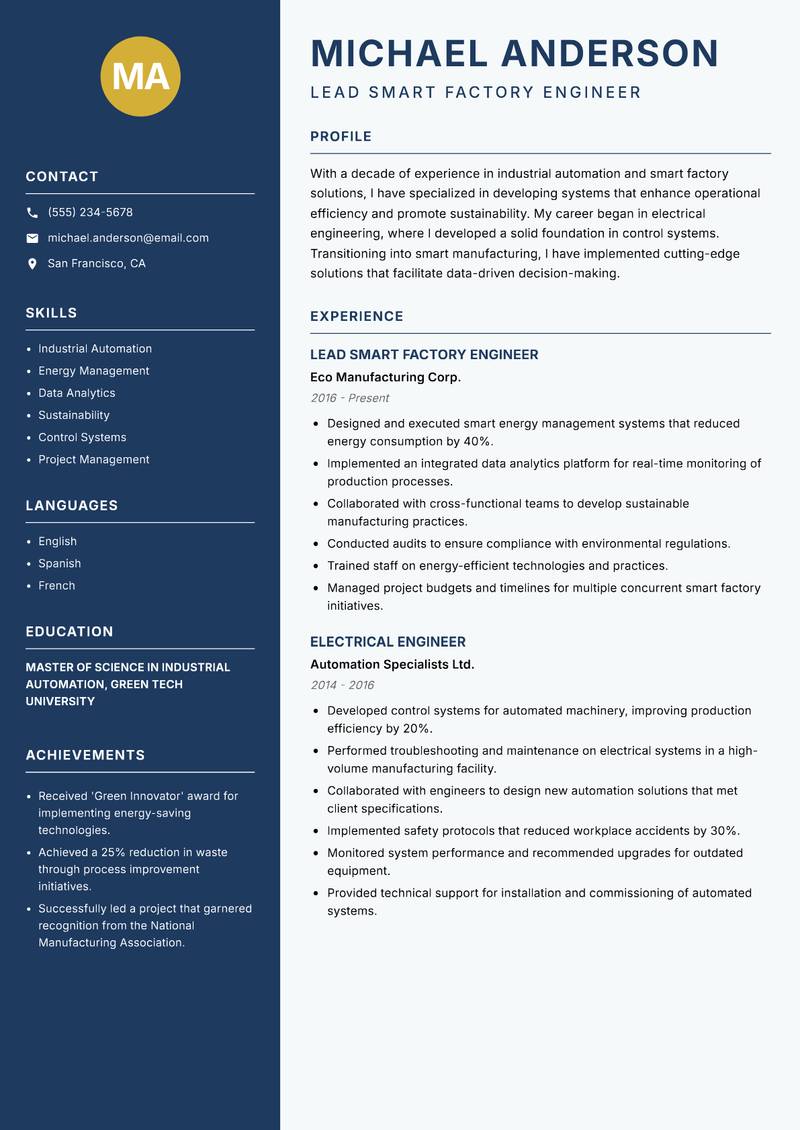
Classic Clean
Use Template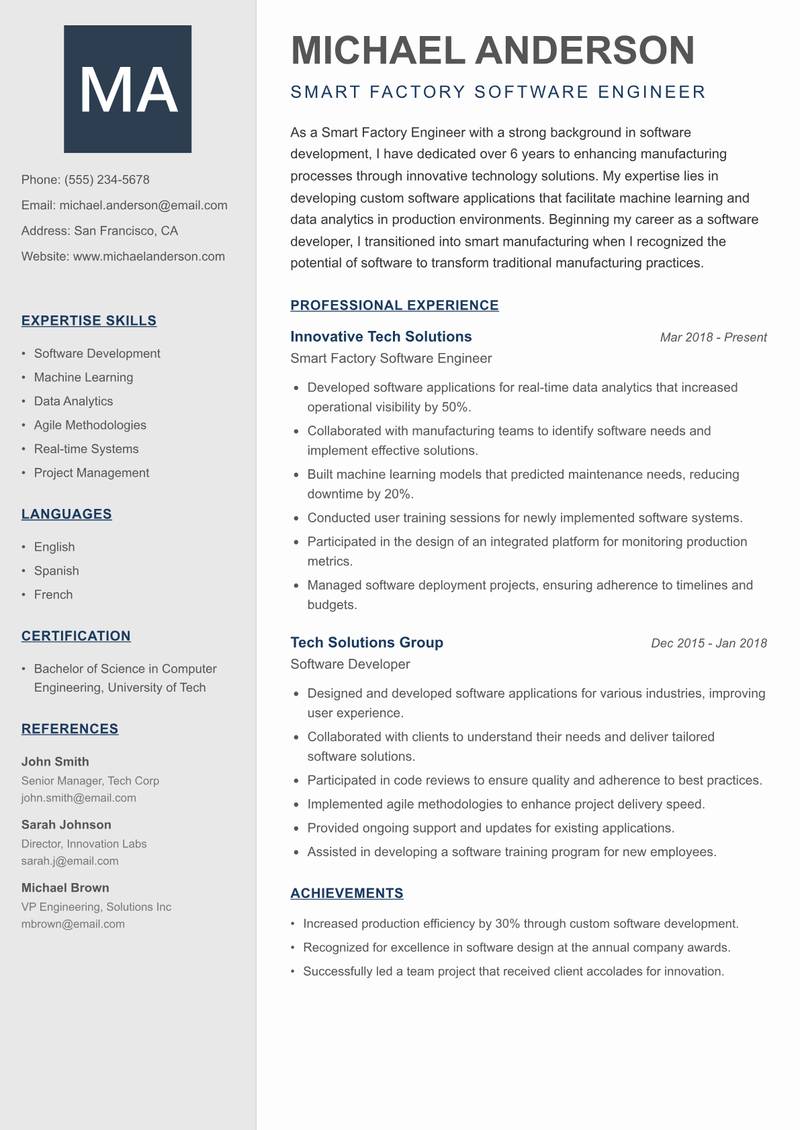
Creative Minimal
Use Template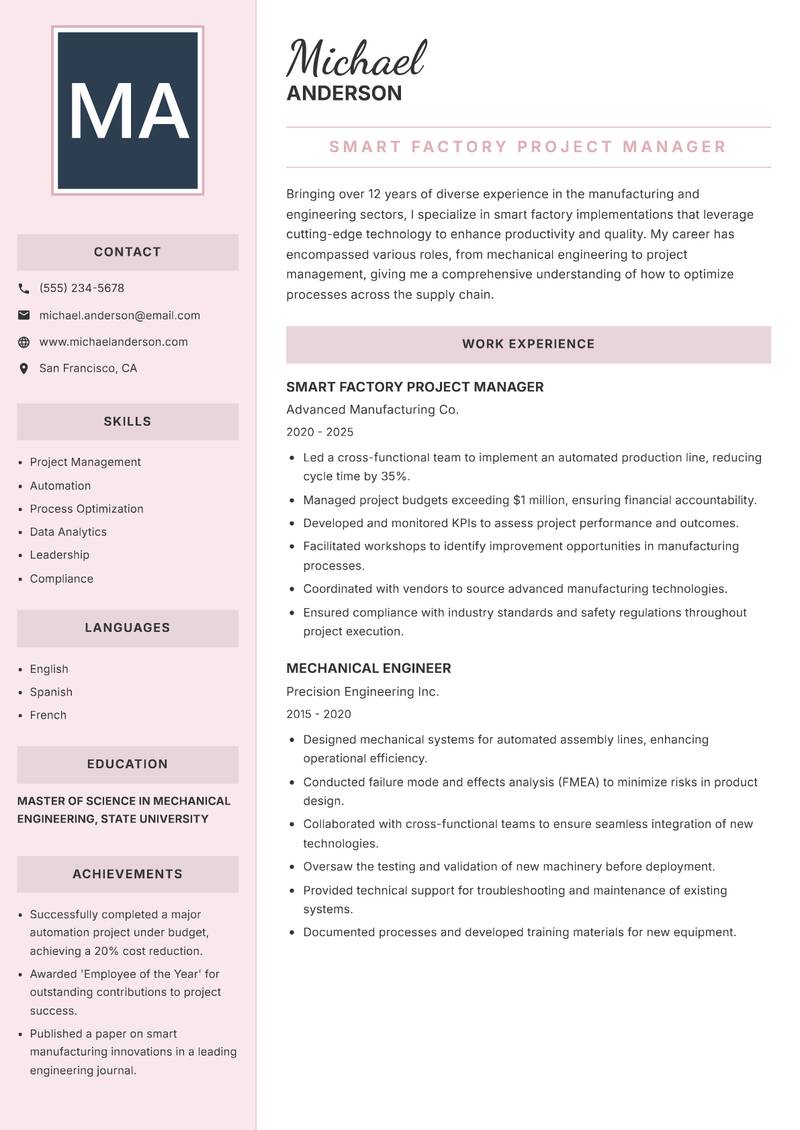
Executive
Use Template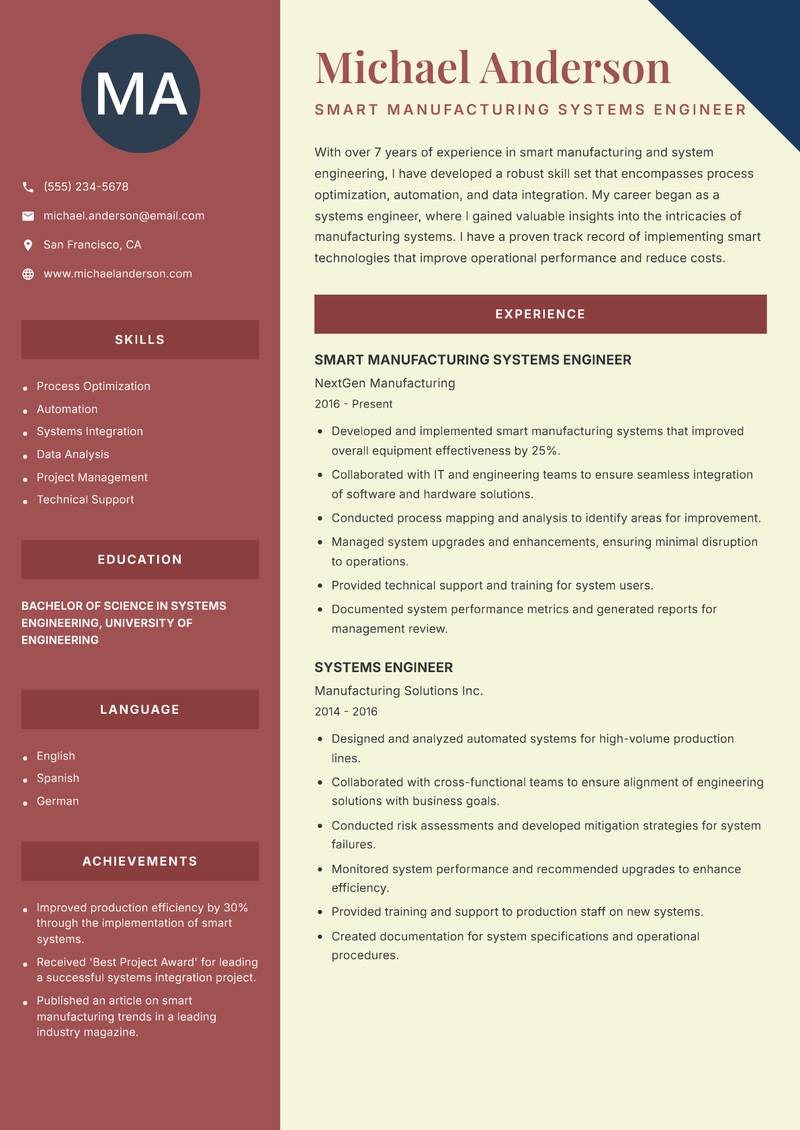
Two Column
Use Template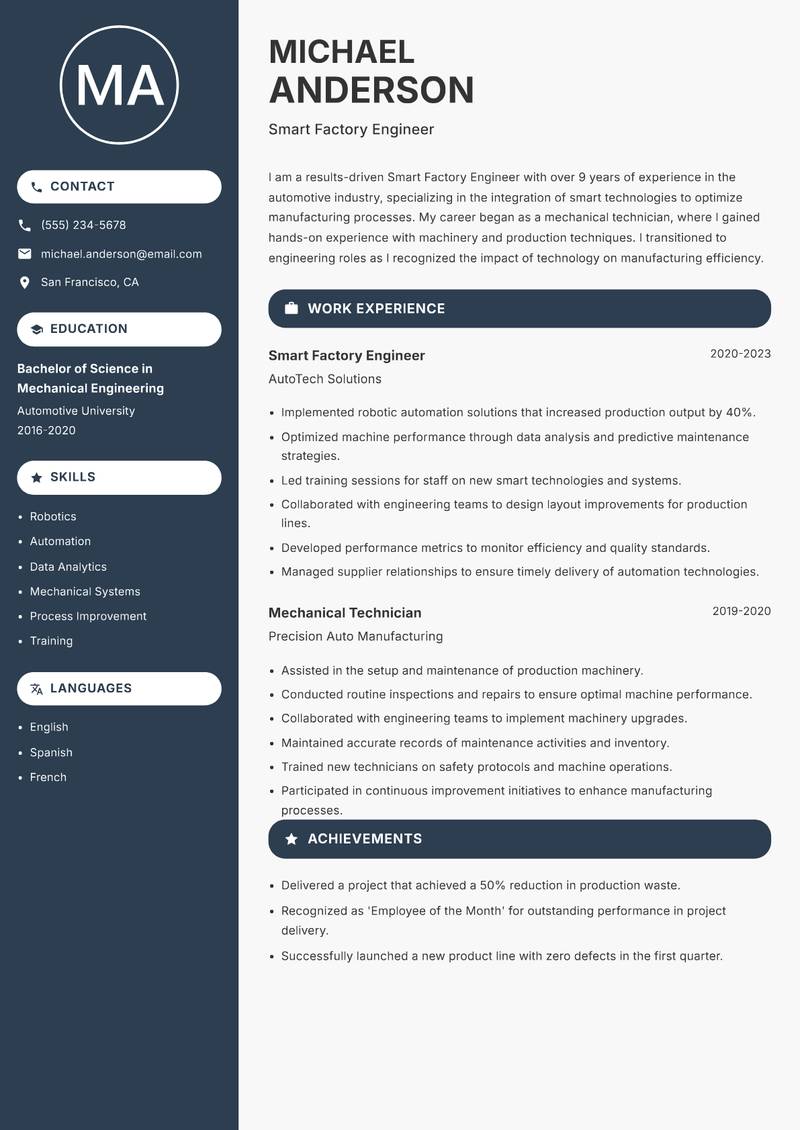
Compact
Use Template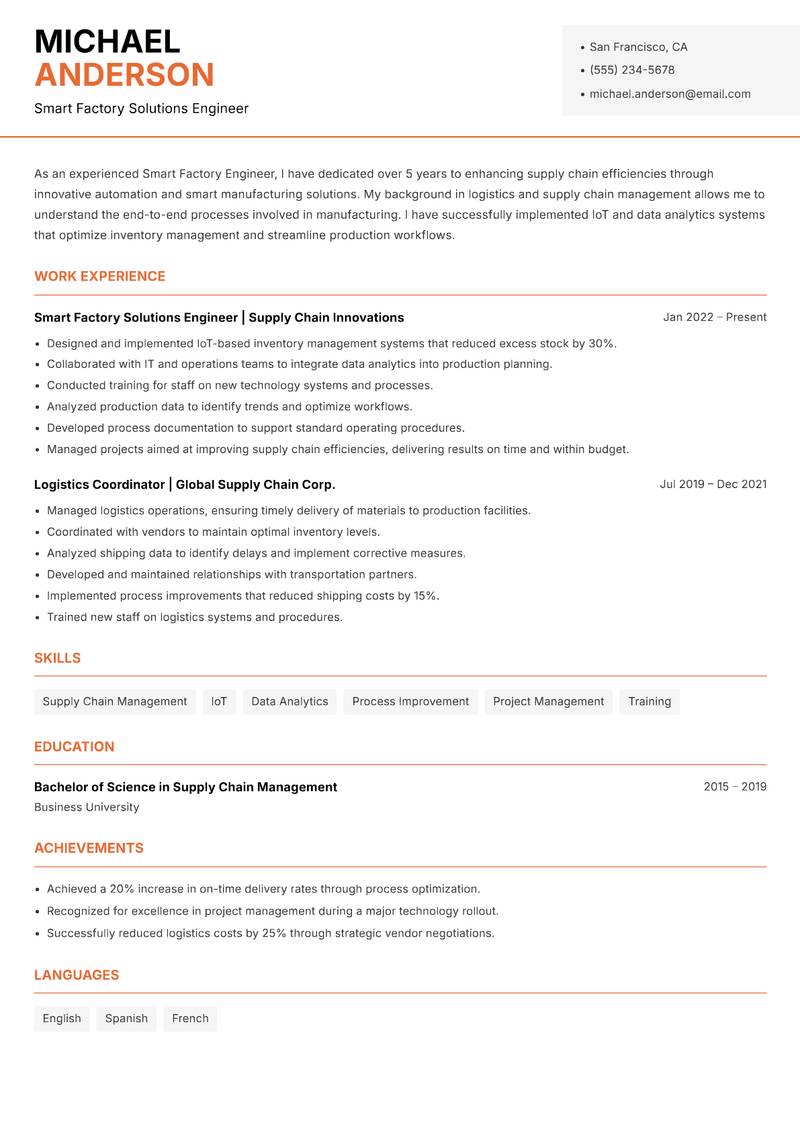
Modern Professional
Use Template7 Real Smart Factory Engineer Resume Examples
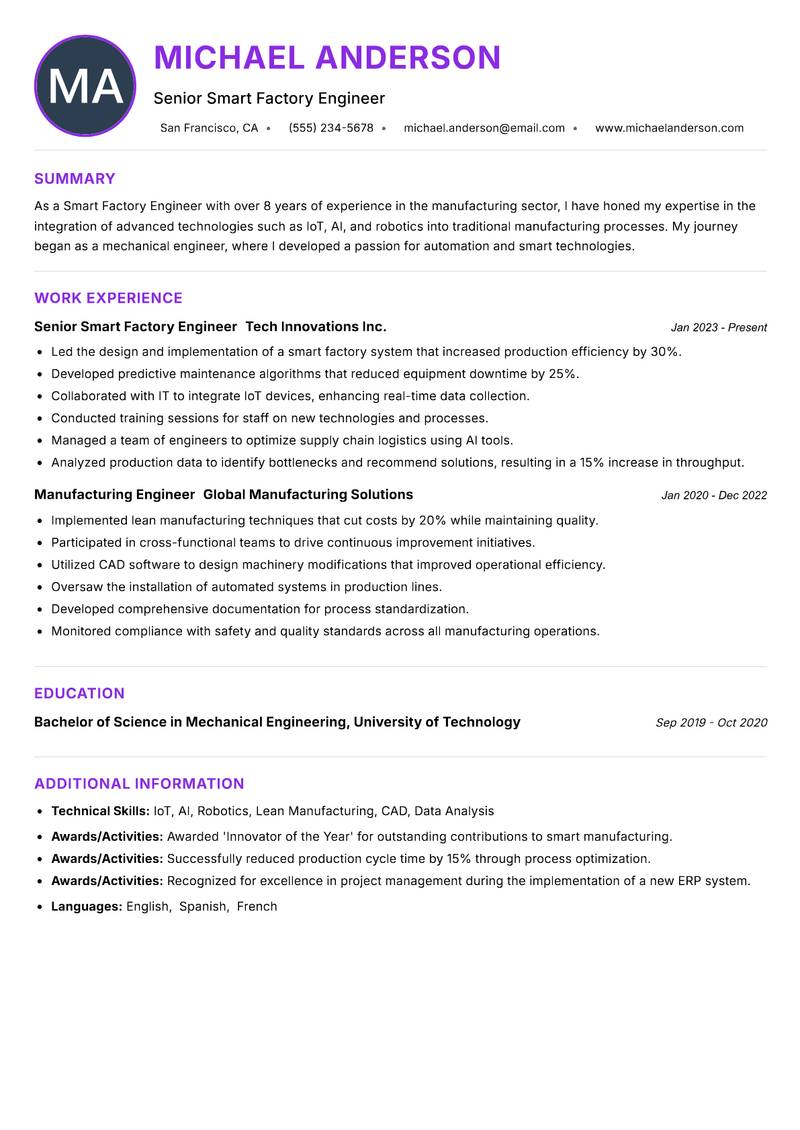
Senior Smart Factory Engineer with 8+ Years Experience
Summary: As a Smart Factory Engineer with over 8 years of experience in the manufacturing sector, I have honed my expertise in the integration of advanced technologies such as IoT, AI, and robotics into traditional manufacturing processes. My journey began as a mechanical engineer, where I developed a passion for automation and smart technologies. I have successfully led multiple projects aimed at optimizing production efficiency, reducing downtime, and enhancing product quality. My strong analytical skills enable me to assess complex systems and implement innovative solutions that drive operational excellence. I thrive in collaborative environments where I can work with cross-functional teams to achieve shared goals. My commitment to continuous improvement and professional development has kept me abreast of emerging trends and technologies in smart manufacturing. I am looking forward to leveraging my skills in a challenging role that allows me to contribute to the transformation of manufacturing into a more intelligent and responsive industry.
Description:
- Led the design and implementation of a smart factory system that increased production efficiency by 30%.
- Developed predictive maintenance algorithms that reduced equipment downtime by 25%.
- Collaborated with IT to integrate IoT devices, enhancing real-time data collection.
- Conducted training sessions for staff on new technologies and processes.
- Managed a team of engineers to optimize supply chain logistics using AI tools.
- Analyzed production data to identify bottlenecks and recommend solutions, resulting in a 15% increase in throughput.
🏆 Key Achievements
Lead Smart Factory Engineer with 10+ Years Experience
Summary: With a decade of experience in industrial automation and smart factory solutions, I have specialized in developing systems that enhance operational efficiency and promote sustainability. My career began in electrical engineering, where I developed a solid foundation in control systems. Transitioning into smart manufacturing, I have implemented cutting-edge solutions that facilitate data-driven decision-making. I possess a strong understanding of the challenges faced by modern manufacturing environments and have a proven track record of delivering projects that align with business objectives. My expertise in systems integration allows me to connect various technologies seamlessly, ensuring that manufacturing processes are not only efficient but also adaptable to market changes. I am passionate about leveraging technology to create smarter, greener factories that benefit both the economy and the environment.
Description:
- Designed and executed smart energy management systems that reduced energy consumption by 40%.
- Implemented an integrated data analytics platform for real-time monitoring of production processes.
- Collaborated with cross-functional teams to develop sustainable manufacturing practices.
- Conducted audits to ensure compliance with environmental regulations.
- Trained staff on energy-efficient technologies and practices.
- Managed project budgets and timelines for multiple concurrent smart factory initiatives.
🏆 Key Achievements
Smart Factory Software Engineer with 6+ Years Experience
Summary: As a Smart Factory Engineer with a strong background in software development, I have dedicated over 6 years to enhancing manufacturing processes through innovative technology solutions. My expertise lies in developing custom software applications that facilitate machine learning and data analytics in production environments. Beginning my career as a software developer, I transitioned into smart manufacturing when I recognized the potential of software to transform traditional manufacturing practices. I have a keen eye for identifying inefficiencies and creating tailored solutions that increase productivity and drive profitability. My collaborative approach allows me to work effectively with both software and manufacturing teams, ensuring that technology implementations are seamless and impactful. I am committed to pushing the boundaries of what is possible in smart factories and continuously seek opportunities for professional growth and learning.
Description:
- Developed software applications for real-time data analytics that increased operational visibility by 50%.
- Collaborated with manufacturing teams to identify software needs and implement effective solutions.
- Built machine learning models that predicted maintenance needs, reducing downtime by 20%.
- Conducted user training sessions for newly implemented software systems.
- Participated in the design of an integrated platform for monitoring production metrics.
- Managed software deployment projects, ensuring adherence to timelines and budgets.
🏆 Key Achievements
Smart Factory Project Manager with 12+ Years Experience
Summary: Bringing over 12 years of diverse experience in the manufacturing and engineering sectors, I specialize in smart factory implementations that leverage cutting-edge technology to enhance productivity and quality. My career has encompassed various roles, from mechanical engineering to project management, giving me a comprehensive understanding of how to optimize processes across the supply chain. I have been instrumental in leading initiatives that incorporate automation, data analytics, and IoT solutions, resulting in significant cost savings and efficiency gains. My strong leadership skills enable me to mentor junior engineers and guide teams through complex projects. I am passionate about fostering a culture of innovation and continuous improvement within organizations, ensuring that they remain competitive in the fast-evolving manufacturing landscape. I seek to utilize my extensive experience to drive transformational change in a forward-thinking organization.
Description:
- Led a cross-functional team to implement an automated production line, reducing cycle time by 35%.
- Managed project budgets exceeding $1 million, ensuring financial accountability.
- Developed and monitored KPIs to assess project performance and outcomes.
- Facilitated workshops to identify improvement opportunities in manufacturing processes.
- Coordinated with vendors to source advanced manufacturing technologies.
- Ensured compliance with industry standards and safety regulations throughout project execution.
🏆 Key Achievements
Smart Manufacturing Systems Engineer with 7+ Years Experience
Summary: With over 7 years of experience in smart manufacturing and system engineering, I have developed a robust skill set that encompasses process optimization, automation, and data integration. My career began as a systems engineer, where I gained valuable insights into the intricacies of manufacturing systems. I have a proven track record of implementing smart technologies that improve operational performance and reduce costs. I possess strong problem-solving skills and a detail-oriented mindset, which allows me to identify inefficiencies and devise effective solutions. I thrive in dynamic environments where I can lead projects from conception to completion, ensuring that all aspects of implementation are executed flawlessly. My goal is to contribute to the evolution of manufacturing practices by integrating innovative technologies that enhance productivity and sustainability.
Description:
- Developed and implemented smart manufacturing systems that improved overall equipment effectiveness by 25%.
- Collaborated with IT and engineering teams to ensure seamless integration of software and hardware solutions.
- Conducted process mapping and analysis to identify areas for improvement.
- Managed system upgrades and enhancements, ensuring minimal disruption to operations.
- Provided technical support and training for system users.
- Documented system performance metrics and generated reports for management review.
🏆 Key Achievements
Smart Factory Engineer with 9+ Years Experience
Summary: I am a results-driven Smart Factory Engineer with over 9 years of experience in the automotive industry, specializing in the integration of smart technologies to optimize manufacturing processes. My career began as a mechanical technician, where I gained hands-on experience with machinery and production techniques. I transitioned to engineering roles as I recognized the impact of technology on manufacturing efficiency. I have successfully led projects that incorporate automation, robotics, and data analytics to enhance productivity and quality. My ability to analyze complex problems and implement practical solutions has been key to my success. I am passionate about advancing manufacturing practices through innovative technology and continuous improvement methodologies. I seek to apply my skills in a forward-thinking organization where I can drive impactful changes.
Description:
- Implemented robotic automation solutions that increased production output by 40%.
- Optimized machine performance through data analysis and predictive maintenance strategies.
- Led training sessions for staff on new smart technologies and systems.
- Collaborated with engineering teams to design layout improvements for production lines.
- Developed performance metrics to monitor efficiency and quality standards.
- Managed supplier relationships to ensure timely delivery of automation technologies.
🏆 Key Achievements
Smart Factory Solutions Engineer with 5+ Years Experience
Summary: As an experienced Smart Factory Engineer, I have dedicated over 5 years to enhancing supply chain efficiencies through innovative automation and smart manufacturing solutions. My background in logistics and supply chain management allows me to understand the end-to-end processes involved in manufacturing. I have successfully implemented IoT and data analytics systems that optimize inventory management and streamline production workflows. I am adept at collaborating with cross-functional teams, ensuring that technology solutions align with business objectives. My analytical mindset and problem-solving skills enable me to identify and resolve operational challenges effectively. I am passionate about utilizing my expertise to contribute to the development of smart factories that are agile, efficient, and capable of adapting to changing market demands.
Description:
- Designed and implemented IoT-based inventory management systems that reduced excess stock by 30%.
- Collaborated with IT and operations teams to integrate data analytics into production planning.
- Conducted training for staff on new technology systems and processes.
- Analyzed production data to identify trends and optimize workflows.
- Developed process documentation to support standard operating procedures.
- Managed projects aimed at improving supply chain efficiencies, delivering results on time and within budget.
🏆 Key Achievements
Key Skills for Smart Factory Engineer
ATS Optimization Tips
Increase your chances of getting hired
Use Standard Headings
Use common section titles like Experience, Skills, etc.
Include Keywords
Add role-specific keywords from the job description
Keep it Simple
Avoid complex tables, images and graphics
Save in Right Format
Use PDF format unless otherwise specified
Smart Factory Engineer Salary Insights
Average Salary
$100,000
per year
Salary Range
$80,000 - $120,000
per year
Top Paying Cities
Los Angeles, Seattle, Houston, Dallas, Boston
Source: Glassdoor, Payscale, Indeed (Updated July 2025)
Everything you need to write a great Smart Factory Engineer resume
Strong Action Verbs to Use
Resume Writing Tips
- →Highlight specific projects that demonstrate successful implementation of smart technologies in manufacturing environments.
- →Mention familiarity with specific automation and data analytics tools to catch the eye of ATS.
- →Quantify achievements, such as percentage increases in efficiency or savings generated through technology adoption.
- →Incorporate keywords from job descriptions to tailor your resume for specific smart factory roles.
- →Include certifications related to automation and data management to validate your expertise.
Common Mistakes to Avoid
- ✕Listing generic manufacturing skills instead of specific smart factory technologies used.
- ✕Failing to quantify the impact of your contributions, thus missing out on demonstrating results.
- ✕Neglecting to mention soft skills like team collaboration and project management experience in technical contexts.
- ✕Overlooking the inclusion of relevant industry certifications that highlight your professional readiness.
ATS Keywords for Smart Factory Engineer
Smart Factory Engineer Career Path
Relevant Certifications
Career Progression
Entry-Level Smart Factory Engineer
Focuses on integrating automation systems and data analytics into manufacturing processes to enhance efficiency.
Mid-Level Smart Factory Engineer
Oversees project implementation of Industry 4.0 solutions, ensuring synergy between automated machinery and the production line.
Senior Smart Factory Engineer
Leads multidisciplinary teams in the design and optimization of smart manufacturing systems, contributing to sustainable production practices.
Smart Factory Operations Manager
Manages the day-to-day operations of smart factories, emphasizing process optimization and collaboration across business units.
Smart Manufacturing Consultant
Provides expert advice on the adoption and scaling of smart factory technologies, driving innovation in manufacturing sectors.
Smart Factory Engineer Interview Questions
What experiences do you have with data integration in manufacturing systems? +
Share specific projects where you successfully integrated data platforms to improve manufacturing efficiency.
Can you describe a challenge you faced while implementing automation technologies? +
Discuss a specific problem, your approach to solving it, and the results.
How do you approach cross-functional collaboration in a smart factory environment? +
Provide examples of working with teams from different disciplines and the outcomes of those collaborations.
What tools do you consider essential for monitoring and enhancing smart factory performance? +
Highlight specific software or platforms you are proficient in using.
How do you ensure cybersecurity while working with connected devices in a smart factory? +
Explain your strategies for safeguarding critical manufacturing data.
Describe an instance when you used machine learning to optimize production processes. +
Share a specific scenario where you applied machine learning algorithms and the impact it had.
About the Smart Factory Engineer Role
A Smart Factory Engineer harnesses advanced technologies such as IIoT, automation, and data analytics to transform traditional manufacturing environments into interconnected smart factories. This role focuses on optimizing production processes through digital transformation and real-time data integration, enhancing efficiency, and reducing operational costs. Key responsibilities include deploying smart sensors, developing predictive maintenance strategies, and collaborating with IT and production teams to ensure seamless operational integration.
Frequently Asked Questions
What technologies are critical for a Smart Factory Engineer? +
Key technologies include IIoT, machine learning algorithms, data visualization tools, and robotics automation.
Is a specialized degree necessary for this role? +
While a degree in industrial engineering or a related field is typically required, hands-on experience with relevant technologies can be equally valuable.
What kind of industries employ Smart Factory Engineers? +
Industries such as automotive, electronics, food and beverage, and aerospace are increasingly adopting smart factory techniques.
How does digital transformation affect the roles of engineers in manufacturing? +
Digital transformation elevates engineers' roles to focus on innovation and strategic implementation of technologies rather than just maintenance.
What skills are most in demand for Smart Factory Engineers? +
In-demand skills include programming, data analysis, project management, and familiarity with cyber-physical systems.
Can you work remotely as a Smart Factory Engineer? +
While some aspects of the job can be done remotely, hands-on work in the factory and collaboration with teams often requires in-person presence.
More Resume Examples You Might Like
Related Career Paths
Other roles candidates for Smart Factory Engineer positions often also consider.
Will this Smart Factory Engineer resume pass the ATS scan?
Upload it and get an instant AI-scored compatibility check with specific fixes.
Check My Resume →
Pair it with a matching cover letter
AI drafts a first version from your job title and strengths — edit it live, then download the PDF.
Write My Cover Letter →
Written by Nohaya Career Team
Reviewed by HR Professionals · Updated July 2025
Ready to Build Your Perfect Resume?
Choose from 1000+ professional templates and land your dream job.
Create My Resume Now