Build an ATS-Friendly
Rural Infrastructure Engineer Resume
That Gets Interviews
Rural Infrastructure Engineers design and implement critical facilities that enhance quality of life in underrepresented communities. Frequent collaboration with local governments and community groups ensures that their projects are not only technically sound but also culturally appropriate. This role often involves…
Rural Infrastructure Engineer Resume Templates
Modern Professional
Use Template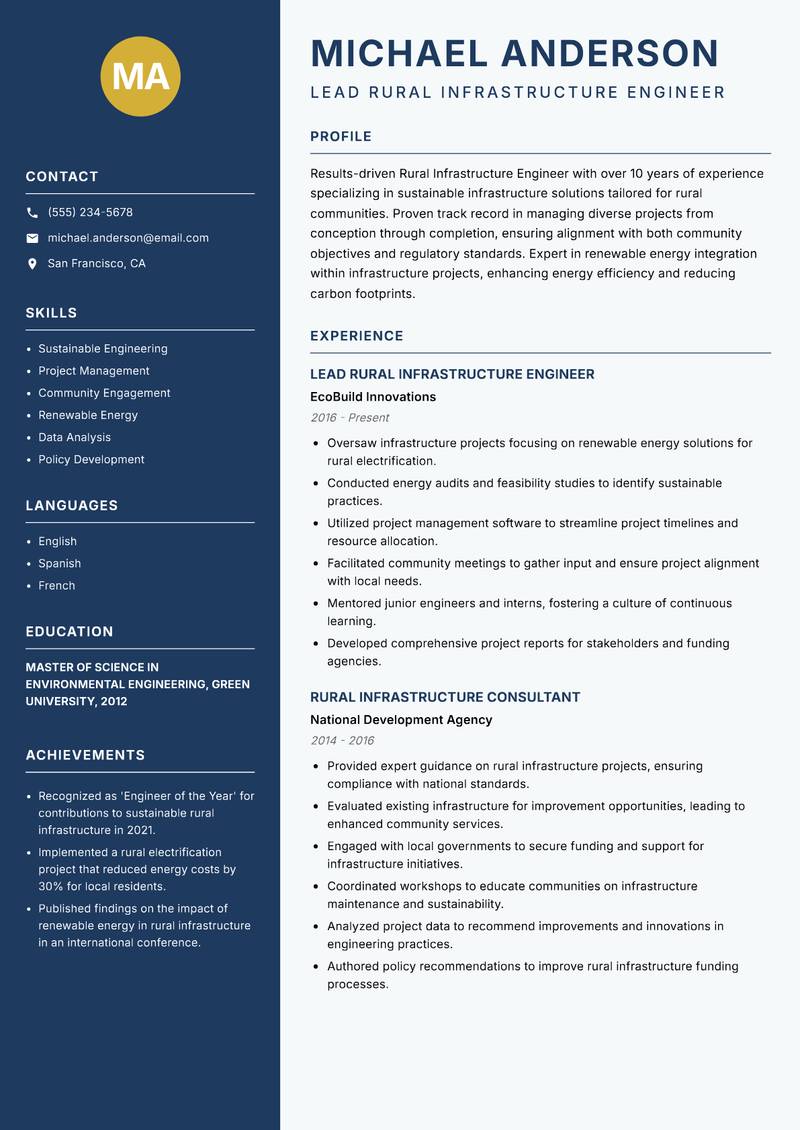
Classic Clean
Use Template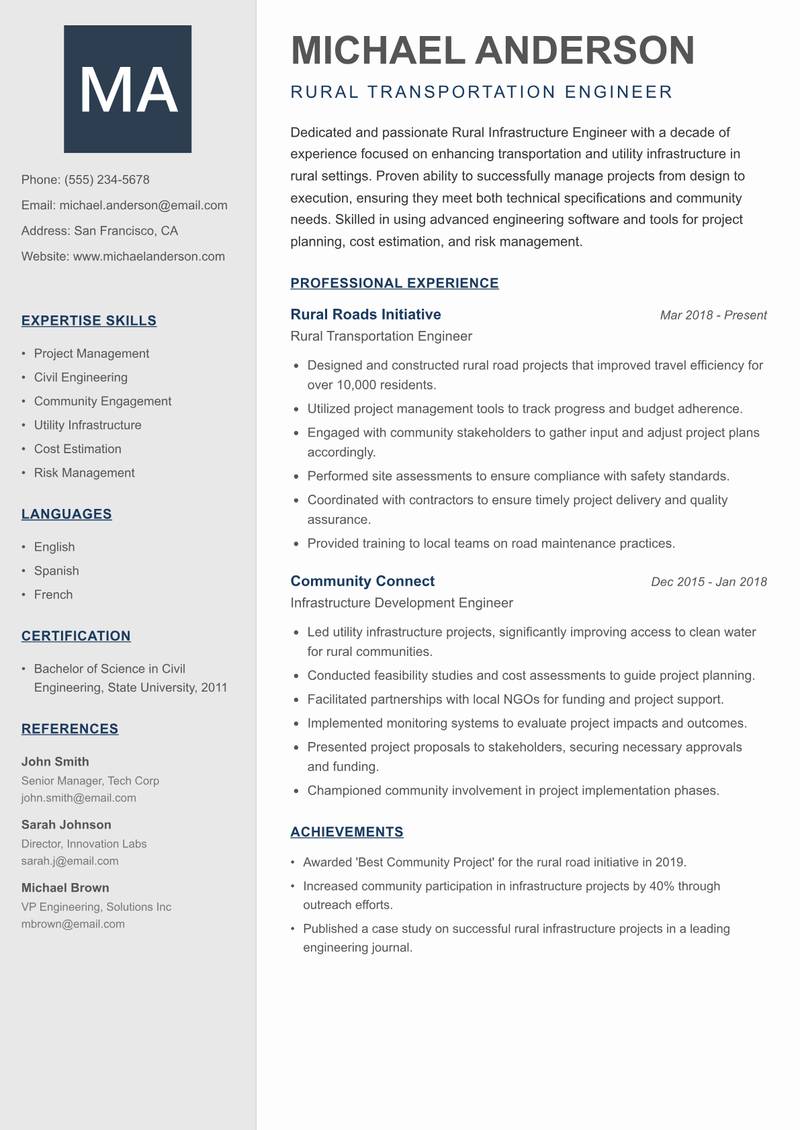
Creative Minimal
Use Template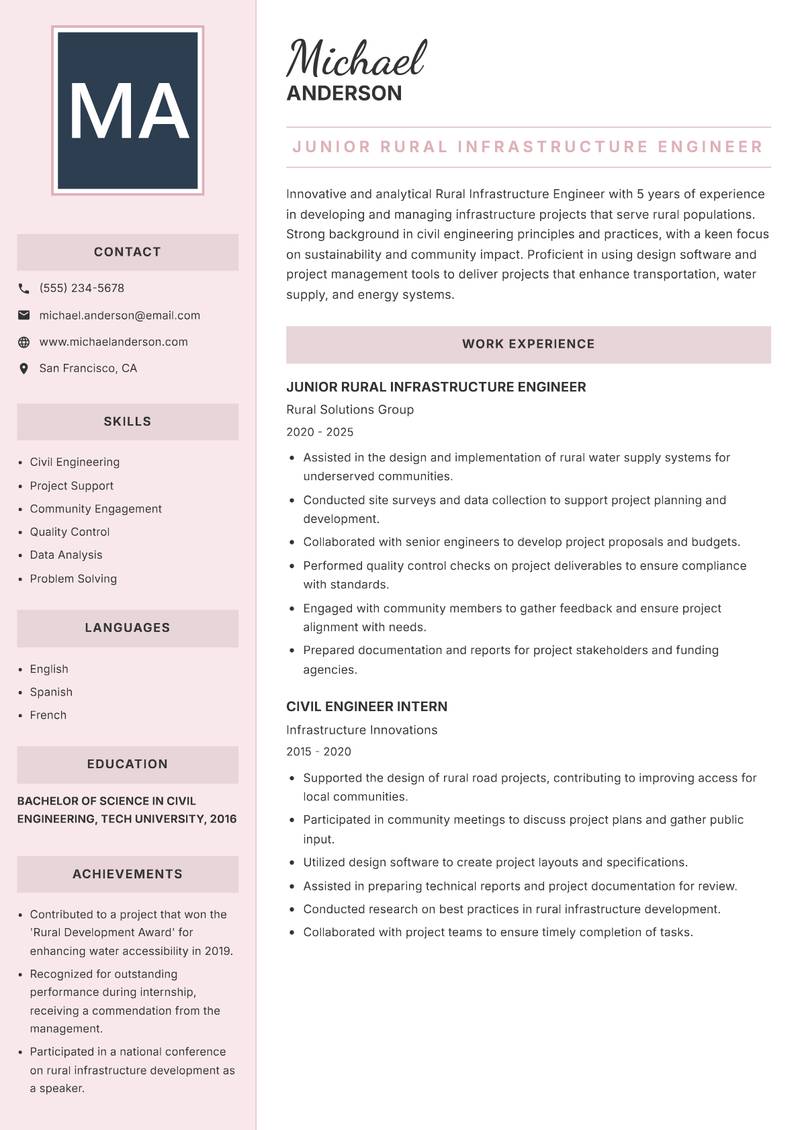
Executive
Use Template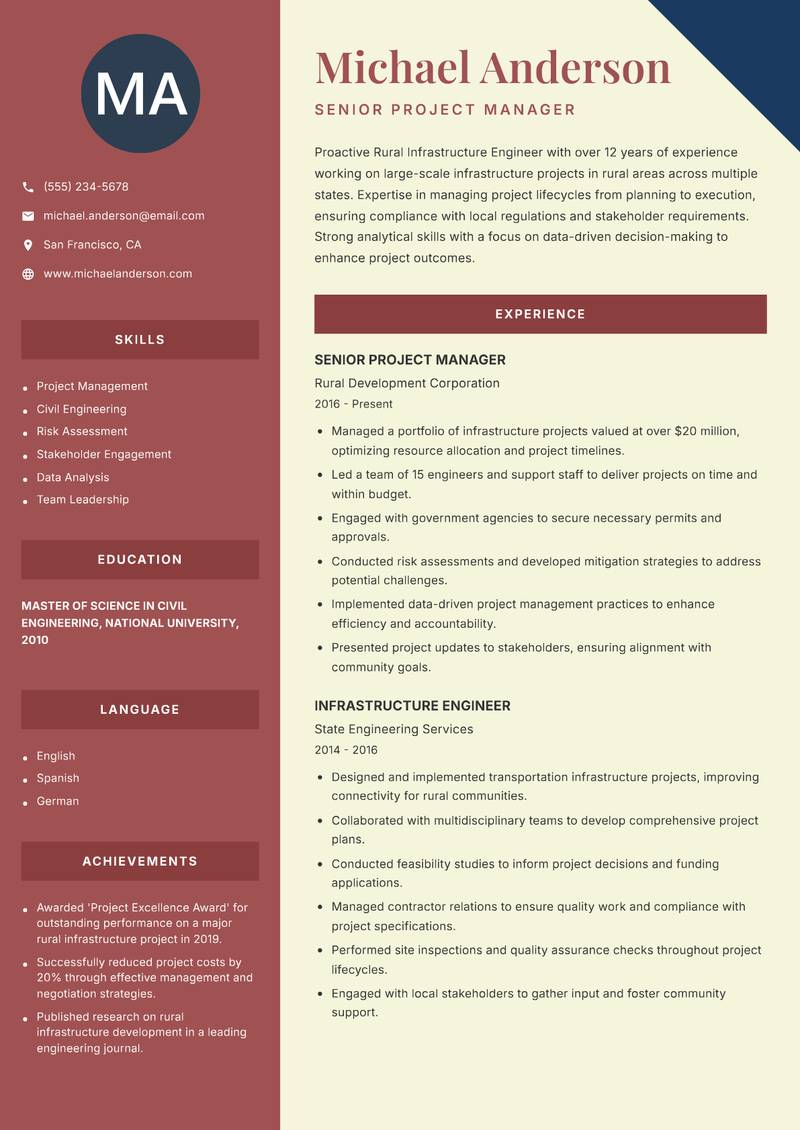
Two Column
Use Template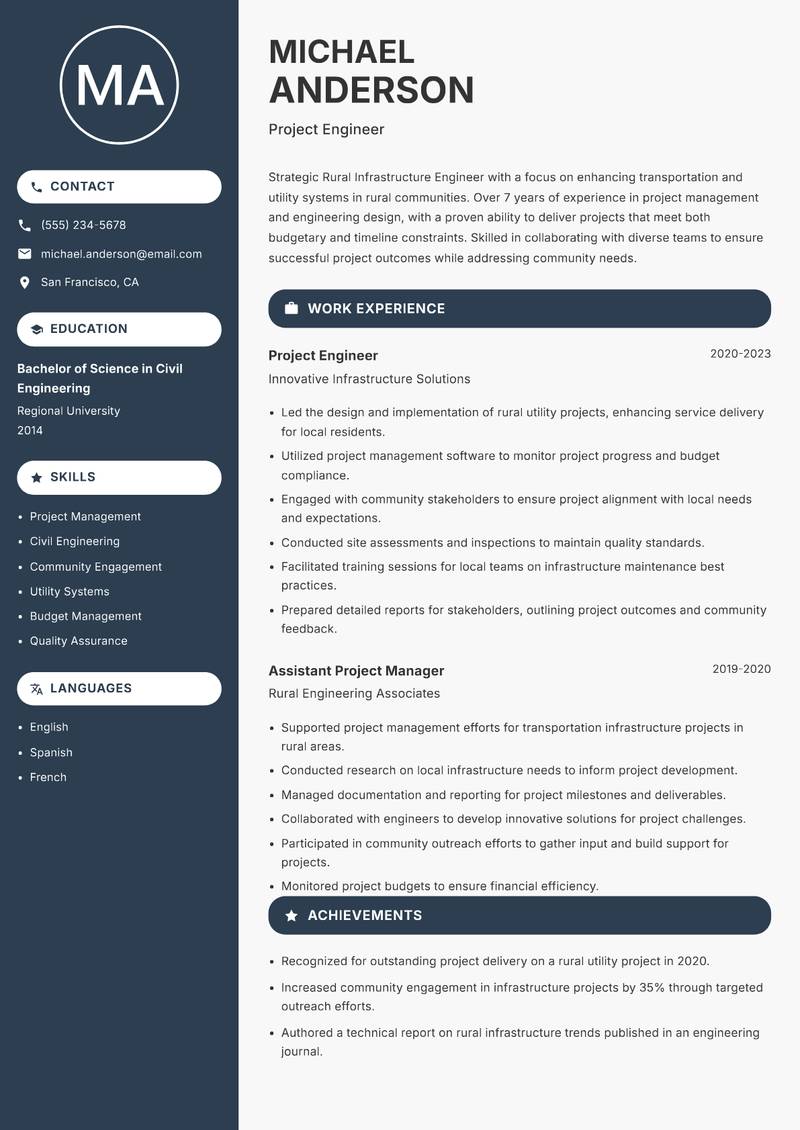
Compact
Use Template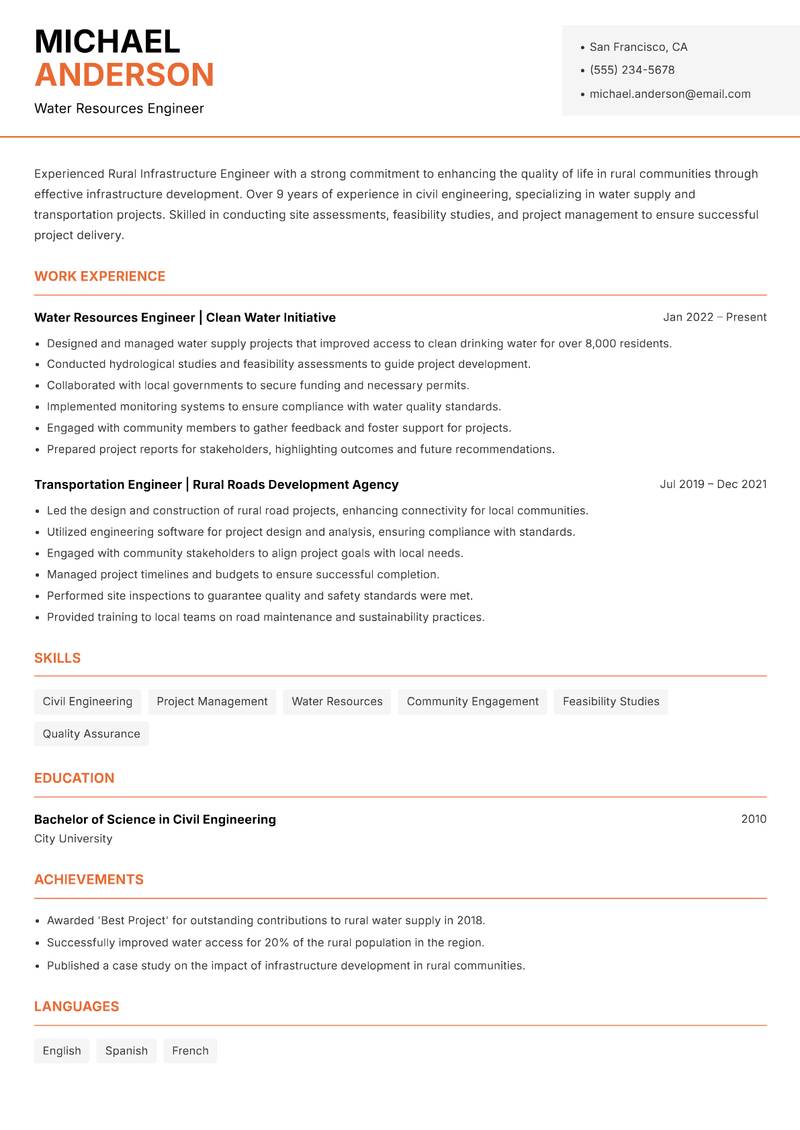
Modern Professional
Use Template7 Real Rural Infrastructure Engineer Resume Examples
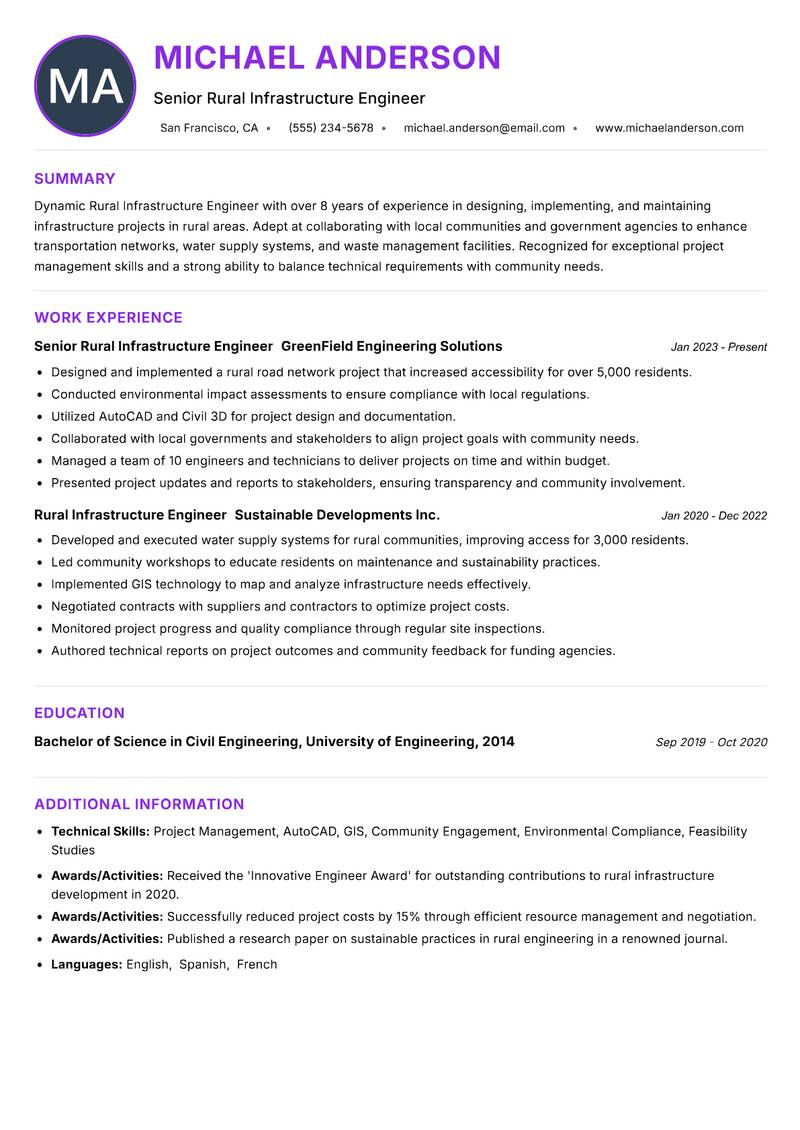
Senior Rural Infrastructure Engineer with 8+ Years Experience
Summary: Dynamic Rural Infrastructure Engineer with over 8 years of experience in designing, implementing, and maintaining infrastructure projects in rural areas. Adept at collaborating with local communities and government agencies to enhance transportation networks, water supply systems, and waste management facilities. Recognized for exceptional project management skills and a strong ability to balance technical requirements with community needs. Proficient in utilizing advanced engineering software and tools to conduct feasibility studies and develop sustainable solutions. Committed to improving the quality of life in underserved regions through innovative engineering practices and community engagement. Passionate about leveraging technology to streamline construction processes and reduce environmental impact, while ensuring compliance with safety regulations and industry standards.
Description:
- Designed and implemented a rural road network project that increased accessibility for over 5,000 residents.
- Conducted environmental impact assessments to ensure compliance with local regulations.
- Utilized AutoCAD and Civil 3D for project design and documentation.
- Collaborated with local governments and stakeholders to align project goals with community needs.
- Managed a team of 10 engineers and technicians to deliver projects on time and within budget.
- Presented project updates and reports to stakeholders, ensuring transparency and community involvement.
🏆 Key Achievements
Lead Rural Infrastructure Engineer with 10+ Years Experience
Summary: Experienced Rural Infrastructure Engineer with over 10 years of experience specializing in sustainable infrastructure solutions tailored for rural communities. Proven track record in managing diverse projects from conception through completion, ensuring alignment with both community objectives and regulatory standards. Expert in renewable energy integration within infrastructure projects, enhancing energy efficiency and reducing carbon footprints. Strong analytical skills, with a focus on data-driven decision-making to optimize project outcomes. Committed to fostering partnerships with local organizations and government entities to deliver impactful engineering solutions that enhance rural living conditions. Demonstrated ability to lead cross-functional teams and engage stakeholders effectively in all project phases.
Description:
- Oversaw infrastructure projects focusing on renewable energy solutions for rural electrification.
- Conducted energy audits and feasibility studies to identify sustainable practices.
- Utilized project management software to streamline project timelines and resource allocation.
- Facilitated community meetings to gather input and ensure project alignment with local needs.
- Mentored junior engineers and interns, fostering a culture of continuous learning.
- Developed comprehensive project reports for stakeholders and funding agencies.
🏆 Key Achievements
Rural Transportation Engineer with 10+ Years Experience
Summary: Dedicated and passionate Rural Infrastructure Engineer with a decade of experience focused on enhancing transportation and utility infrastructure in rural settings. Proven ability to successfully manage projects from design to execution, ensuring they meet both technical specifications and community needs. Skilled in using advanced engineering software and tools for project planning, cost estimation, and risk management. Known for fostering strong relationships with local stakeholders, including government agencies, non-profits, and community members, to ensure project success. Committed to creating sustainable solutions that not only meet current needs but also anticipate future challenges in rural development. Enthusiastic about mentoring young engineers and advocating for best practices in rural infrastructure development.
Description:
- Designed and constructed rural road projects that improved travel efficiency for over 10,000 residents.
- Utilized project management tools to track progress and budget adherence.
- Engaged with community stakeholders to gather input and adjust project plans accordingly.
- Performed site assessments to ensure compliance with safety standards.
- Coordinated with contractors to ensure timely project delivery and quality assurance.
- Provided training to local teams on road maintenance practices.
🏆 Key Achievements
Junior Rural Infrastructure Engineer with 5+ Years Experience
Summary: Innovative and analytical Rural Infrastructure Engineer with 5 years of experience in developing and managing infrastructure projects that serve rural populations. Strong background in civil engineering principles and practices, with a keen focus on sustainability and community impact. Proficient in using design software and project management tools to deliver projects that enhance transportation, water supply, and energy systems. Adept at collaborating with multidisciplinary teams and engaging with local communities to ensure projects meet their needs and expectations. Recognized for problem-solving skills and the ability to develop creative solutions that address complex challenges in rural settings. Eager to continue growing professionally while making significant contributions to rural infrastructure development.
Description:
- Assisted in the design and implementation of rural water supply systems for underserved communities.
- Conducted site surveys and data collection to support project planning and development.
- Collaborated with senior engineers to develop project proposals and budgets.
- Performed quality control checks on project deliverables to ensure compliance with standards.
- Engaged with community members to gather feedback and ensure project alignment with needs.
- Prepared documentation and reports for project stakeholders and funding agencies.
🏆 Key Achievements
Senior Project Manager with 12+ Years Experience
Summary: Driven Rural Infrastructure Engineer with over 12 years of experience working on large-scale infrastructure projects in rural areas across multiple states. Expertise in managing project lifecycles from planning to execution, ensuring compliance with local regulations and stakeholder requirements. Strong analytical skills with a focus on data-driven decision-making to enhance project outcomes. Skilled in utilizing advanced engineering tools and techniques to solve complex engineering challenges. Recognized for ability to build strong relationships with clients, government officials, and community members to ensure project success. Passionate about mentoring young engineers and advocating for innovative practices in rural infrastructure development.
Description:
- Managed a portfolio of infrastructure projects valued at over $20 million, optimizing resource allocation and project timelines.
- Led a team of 15 engineers and support staff to deliver projects on time and within budget.
- Engaged with government agencies to secure necessary permits and approvals.
- Conducted risk assessments and developed mitigation strategies to address potential challenges.
- Implemented data-driven project management practices to enhance efficiency and accountability.
- Presented project updates to stakeholders, ensuring alignment with community goals.
🏆 Key Achievements
Project Engineer with 7+ Years Experience
Summary: Strategic Rural Infrastructure Engineer with a focus on enhancing transportation and utility systems in rural communities. Over 7 years of experience in project management and engineering design, with a proven ability to deliver projects that meet both budgetary and timeline constraints. Skilled in collaborating with diverse teams to ensure successful project outcomes while addressing community needs. Experienced in stakeholder engagement, securing funding, and navigating regulatory processes. Committed to leveraging technology and innovative practices to improve infrastructure sustainability and resilience. Eager to contribute to projects that positively impact rural populations and enhance their quality of life.
Description:
- Led the design and implementation of rural utility projects, enhancing service delivery for local residents.
- Utilized project management software to monitor project progress and budget compliance.
- Engaged with community stakeholders to ensure project alignment with local needs and expectations.
- Conducted site assessments and inspections to maintain quality standards.
- Facilitated training sessions for local teams on infrastructure maintenance best practices.
- Prepared detailed reports for stakeholders, outlining project outcomes and community feedback.
🏆 Key Achievements
Water Resources Engineer with 9+ Years Experience
Summary: Experienced Rural Infrastructure Engineer with a strong commitment to enhancing the quality of life in rural communities through effective infrastructure development. Over 9 years of experience in civil engineering, specializing in water supply and transportation projects. Skilled in conducting site assessments, feasibility studies, and project management to ensure successful project delivery. Known for building strong relationships with local stakeholders and advocating for community-driven infrastructure solutions. Proficient in utilizing engineering software to design and implement sustainable systems. Passionate about mentoring the next generation of engineers and contributing to projects that have a lasting positive impact on rural populations.
Description:
- Designed and managed water supply projects that improved access to clean drinking water for over 8,000 residents.
- Conducted hydrological studies and feasibility assessments to guide project development.
- Collaborated with local governments to secure funding and necessary permits.
- Implemented monitoring systems to ensure compliance with water quality standards.
- Engaged with community members to gather feedback and foster support for projects.
- Prepared project reports for stakeholders, highlighting outcomes and future recommendations.
🏆 Key Achievements
Key Skills for Rural Infrastructure Engineer
ATS Optimization Tips
Increase your chances of getting hired
Use Standard Headings
Use common section titles like Experience, Skills, etc.
Include Keywords
Add role-specific keywords from the job description
Keep it Simple
Avoid complex tables, images and graphics
Save in Right Format
Use PDF format unless otherwise specified
Rural Infrastructure Engineer Salary Insights
Average Salary
$80,000
per year
Salary Range
$65,000 - $95,000
per year
Top Paying Cities
Los Angeles, Seattle, Houston, Dallas, Boston
Source: Glassdoor, Payscale, Indeed (Updated June 2025)
Everything you need to write a great Rural Infrastructure Engineer resume
Strong Action Verbs to Use
Resume Writing Tips
- →Highlight specific rural projects you've contributed to, detailing your role and the impact on local communities.
- →Include measurable outcomes from your projects, such as improved access or reduced travel time for residents.
- →Showcase your experience with stakeholder engagement and community consultation, as these are key in rural project contexts.
- →Mention proficiency in niche software that aids in rural infrastructure design, emphasizing relevance to job requirements.
- →Detail any volunteer work or community service related to infrastructure improvement in rural areas to show your commitment to the field.
Common Mistakes to Avoid
- ✕Listing general skills without relating them to rural infrastructure projects.
- ✕Failing to include specific certifications relevant to the engineering field.
- ✕Overusing jargon or technical language that may not be understood by all stakeholders.
- ✕Not incorporating quantitative data or outcomes from past projects to demonstrate effectiveness.
ATS Keywords for Rural Infrastructure Engineer
Rural Infrastructure Engineer Career Path
Relevant Certifications
Career Progression
Entry-Level Rural Infrastructure Engineer
Typically involves assisting with site assessments and performing basic design calculations under senior engineers's guidance.
Mid-Level Rural Infrastructure Engineer
Responsible for managing small projects, coordinating with local governments, and executing design plans for rural facilities.
Senior Rural Infrastructure Engineer
Leads large-scale projects, performs feasibility studies, and oversees the implementation of infrastructure projects like roads and bridges.
Project Manager for Rural Infrastructure
In charge of multiple projects, managing budgets, timelines, and stakeholder communication across various infrastructures in rural areas.
Director of Rural Infrastructure Development
Strategically oversees rural infrastructure programs, sets policy direction, and collaborates with government entities to secure funding and resources.
Rural Infrastructure Engineer Interview Questions
What methods do you use to assess the soil and land conditions in rural areas? +
Discuss specific soil sampling techniques, geotechnical analysis tools, and experience with land surveys.
Can you describe a challenging project you've worked on in rural areas and how you overcame the obstacles? +
Structure your answer around a specific project, the challenges faced, and the solutions you implemented.
How do you accommodate the needs of local communities in your infrastructure designs? +
Provide examples of stakeholder consultation processes and community involvement practices.
What software tools are you proficient in for infrastructure modeling and design? +
Mention specific software such as AutoCAD, Civil 3D, or geographical information systems (GIS) that relate to rural projects.
Describe your experience with environmental impact assessments for rural infrastructure projects. +
Focus on methodologies used and any specific projects where you've implemented these assessments.
How do you prioritize transportation needs in areas with limited resources? +
Discuss approaches to prioritize projects that maximize benefits for local communities.
What project management frameworks do you prefer when managing rural infrastructure projects? +
Reference specific methodologies such as Agile or Waterfall, and how they fit rural infrastructure.
About the Rural Infrastructure Engineer Role
Rural Infrastructure Engineers design and implement critical facilities that enhance quality of life in underrepresented communities. Frequent collaboration with local governments and community groups ensures that their projects are not only technically sound but also culturally appropriate. This role often involves conducting terrain assessments to inform decisions about roadway placement, drainage systems, and public utilities. Innovating sustainable solutions tailored to the unique geographic and social landscapes of rural areas is a cornerstone of their responsibilities.
Frequently Asked Questions
View all →What specific challenges do Rural Infrastructure Engineers face? +
Challenges include navigating regulatory environments, limited funding, and addressing diverse community needs.
What types of projects do Rural Infrastructure Engineers typically work on? +
They commonly work on road constructions, water supply systems, drainage improvements, and community facilities.
Which software is essential for a Rural Infrastructure Engineer? +
Software like AutoCAD, Civil 3D, and GIS tools are essential for planning and executing infrastructure projects.
Are there opportunities for career advancement in this field? +
Yes, career advancement can lead to senior engineering roles, project management, or leadership in rural development organizations.
What kind of education is recommended for a Rural Infrastructure Engineer? +
A bachelor's degree in Civil Engineering, with a focus on transportation or environmental engineering, is typically required.
How do Rural Infrastructure Engineers contribute to sustainability? +
They implement environmentally friendly practices in infrastructure design, promoting long-term sustainability and better resource management.
What role does community feedback play in rural infrastructure projects? +
Community feedback is crucial for ensuring that projects meet citizens' needs and are culturally sensitive.
More Resume Examples You Might Like
Related Career Paths
Other roles candidates for Rural Infrastructure Engineer positions often also consider.
Will this Rural Infrastructure Engineer resume pass the ATS scan?
Upload it and get an instant AI-scored compatibility check with specific fixes.
Check My Resume →
Pair it with a matching cover letter
AI drafts a first version from your job title and strengths — edit it live, then download the PDF.
Write My Cover Letter →
Written by Nohaya Career Team
Reviewed by HR Professionals · Updated June 2025
Ready to Build Your Perfect Resume?
Choose from 1000+ professional templates and land your dream job.
Create My Resume Now