Build an ATS-Friendly
Physical Oceanographer Resume
That Gets Interviews
Physical Oceanographers apply principles of physics to understand water motion and properties in oceans. They frequently engage in fieldwork, utilizing specialized equipment like CTD (conductivity, temperature, depth) sensors, to gather oceanographic data. Analyzing currents, temperature, and salinity variations…
Physical Oceanographer Resume Templates
Modern Professional
Use Template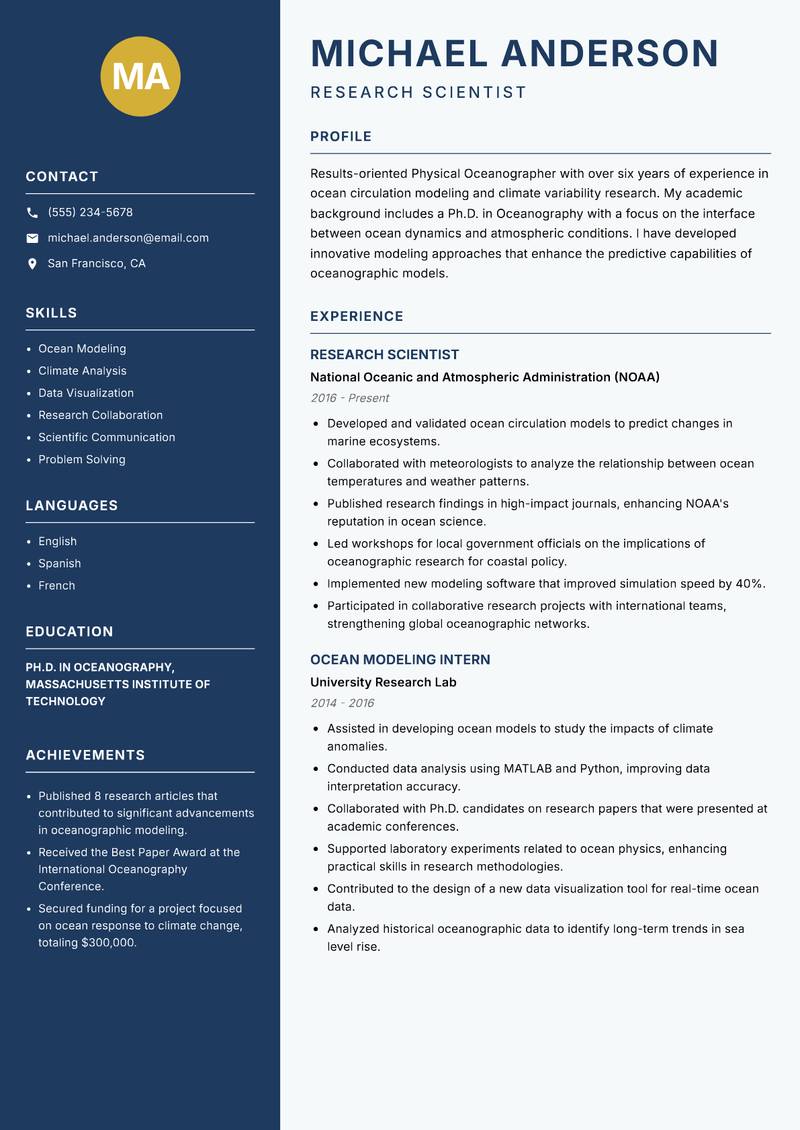
Classic Clean
Use Template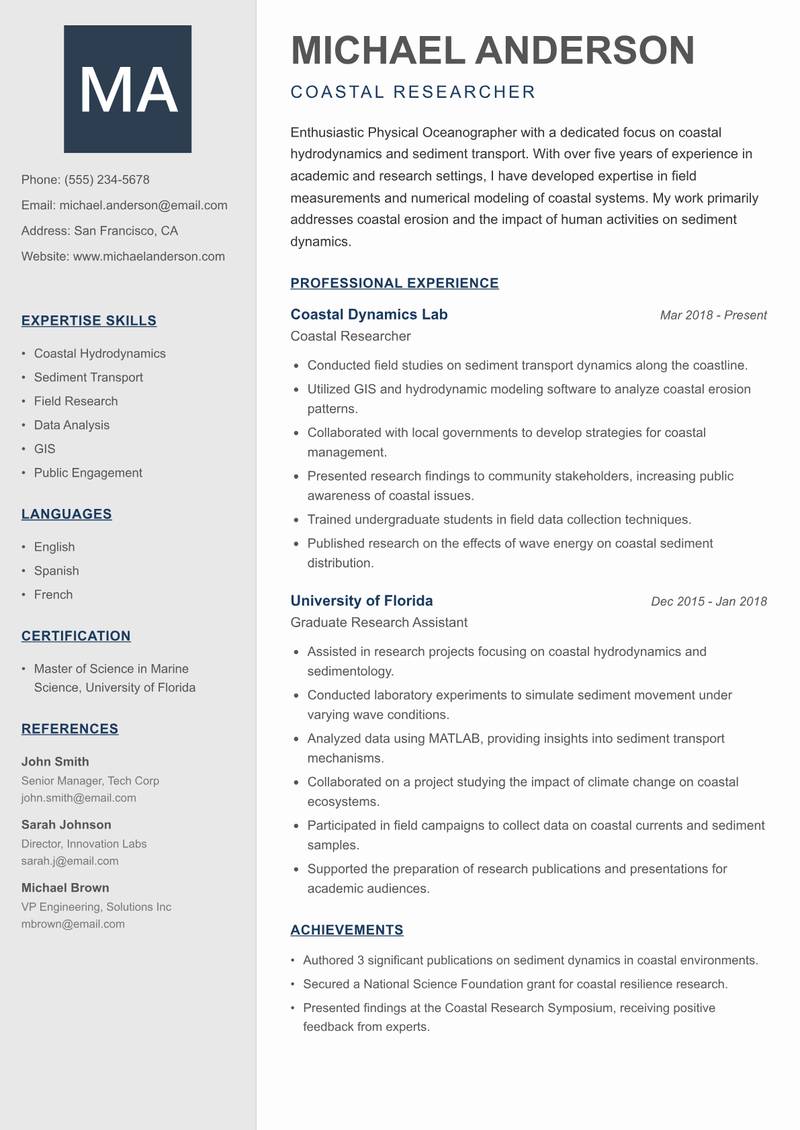
Creative Minimal
Use Template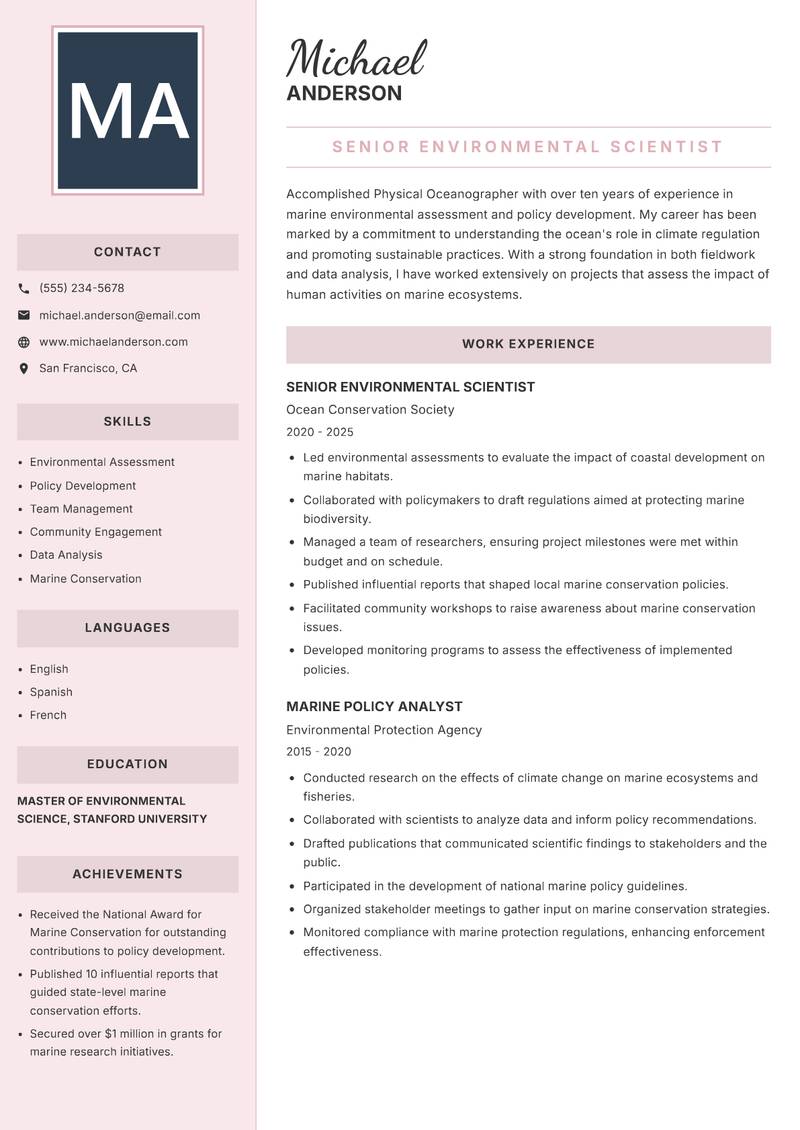
Executive
Use Template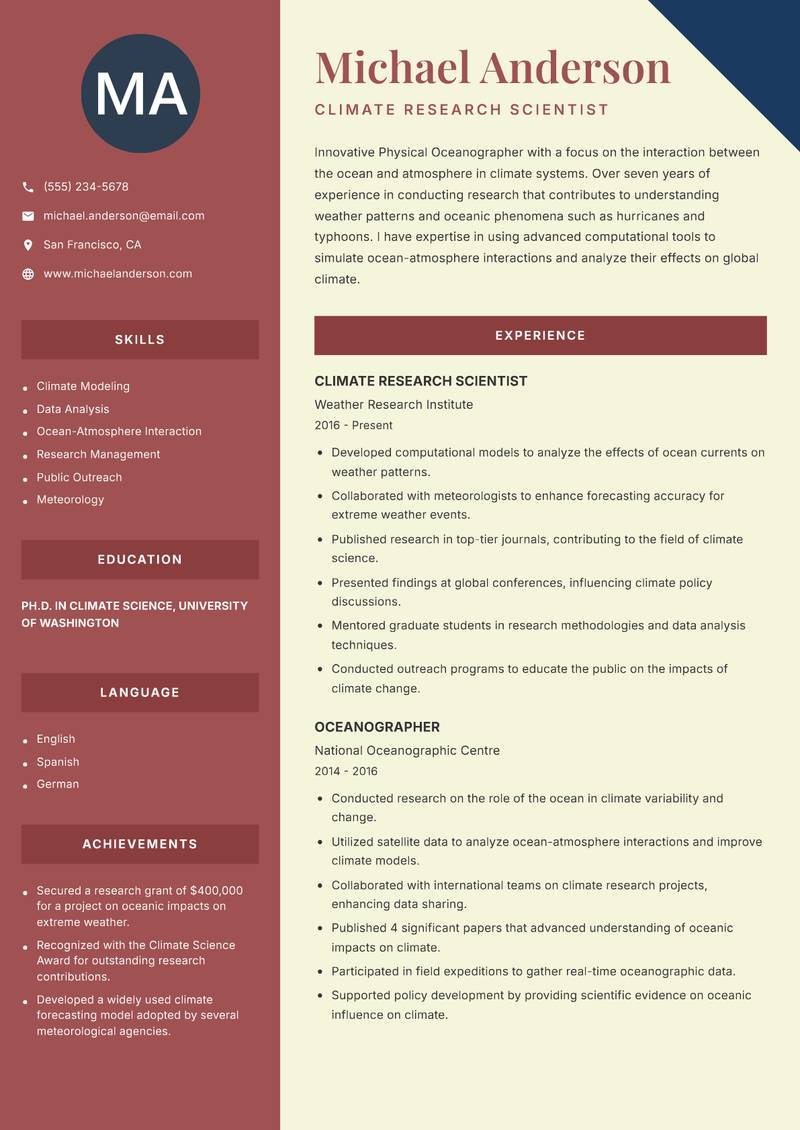
Two Column
Use Template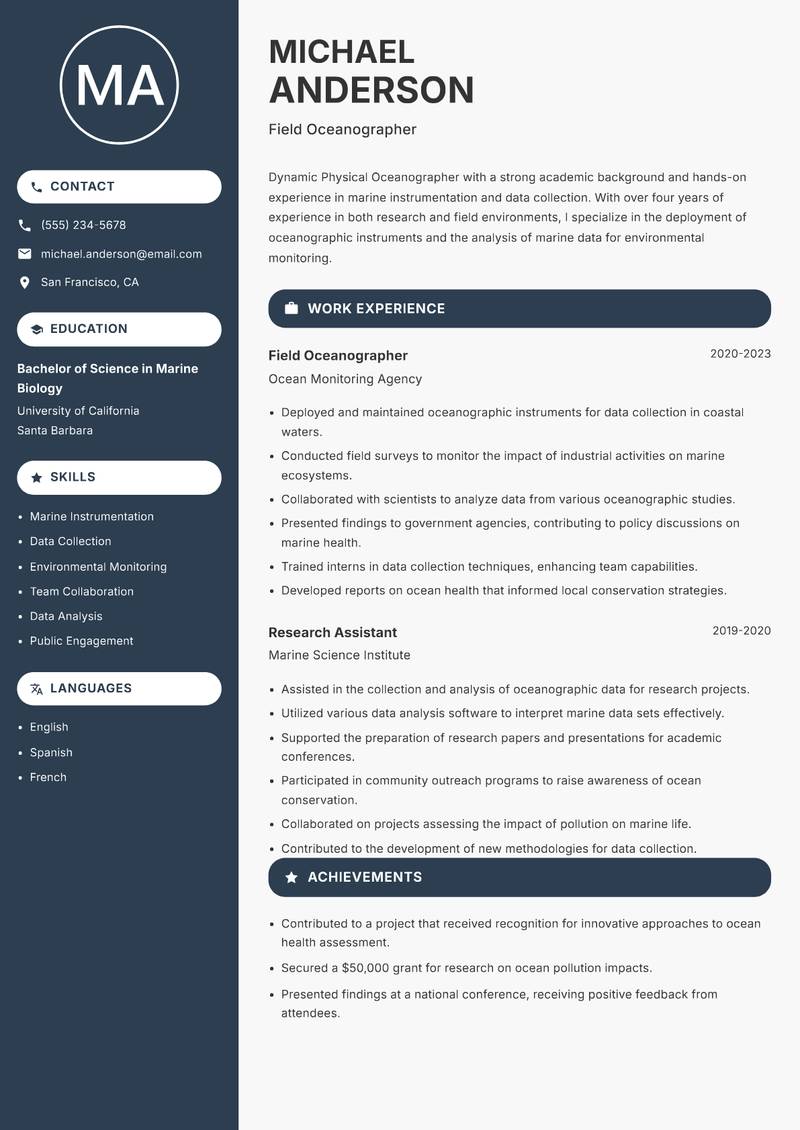
Compact
Use Template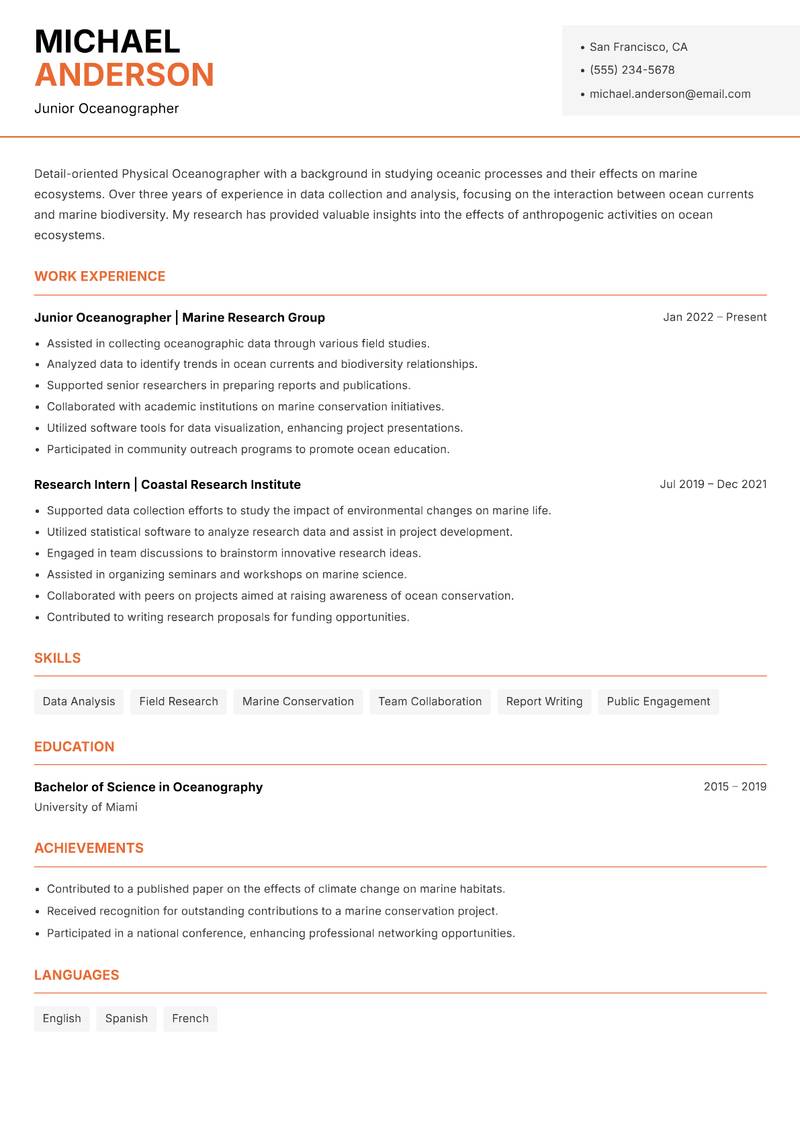
Modern Professional
Use Template7 Real Physical Oceanographer Resume Examples
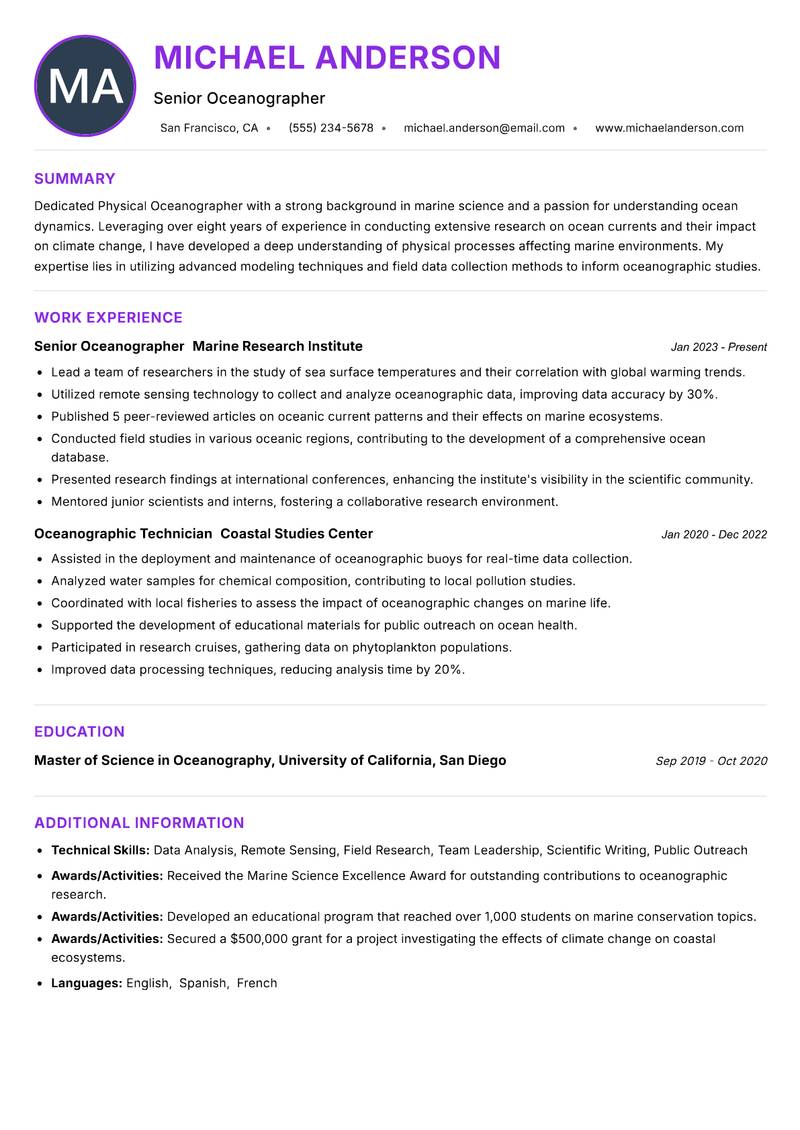
Senior Oceanographer with 8+ Years Experience
Summary: Dedicated Physical Oceanographer with a strong background in marine science and a passion for understanding ocean dynamics. Leveraging over eight years of experience in conducting extensive research on ocean currents and their impact on climate change, I have developed a deep understanding of physical processes affecting marine environments. My expertise lies in utilizing advanced modeling techniques and field data collection methods to inform oceanographic studies. I have successfully collaborated with interdisciplinary teams to publish findings in peer-reviewed journals and present at international conferences. My goal is to contribute to sustainable ocean management practices and educate the public on marine conservation through scientific outreach. With a commitment to the field, I am adept at using cutting-edge technology for data analysis and visualization, enabling better decision-making for environmental policies.
Description:
- Lead a team of researchers in the study of sea surface temperatures and their correlation with global warming trends.
- Utilized remote sensing technology to collect and analyze oceanographic data, improving data accuracy by 30%.
- Published 5 peer-reviewed articles on oceanic current patterns and their effects on marine ecosystems.
- Conducted field studies in various oceanic regions, contributing to the development of a comprehensive ocean database.
- Presented research findings at international conferences, enhancing the institute's visibility in the scientific community.
- Mentored junior scientists and interns, fostering a collaborative research environment.
🏆 Key Achievements
Research Scientist with 6+ Years Experience
Summary: Accomplished Physical Oceanographer with over six years of experience in ocean circulation modeling and climate variability research. My academic background includes a Ph.D. in Oceanography with a focus on the interface between ocean dynamics and atmospheric conditions. I have developed innovative modeling approaches that enhance the predictive capabilities of oceanographic models. My work has been instrumental in understanding El Niño and its global implications, and I have collaborated with various governmental and non-governmental organizations to inform policy decisions. I am committed to advancing oceanographic research through technology integration and interdisciplinary collaboration, and I possess strong communication skills to convey complex scientific concepts to diverse audiences.
Description:
- Developed and validated ocean circulation models to predict changes in marine ecosystems.
- Collaborated with meteorologists to analyze the relationship between ocean temperatures and weather patterns.
- Published research findings in high-impact journals, enhancing NOAA's reputation in ocean science.
- Led workshops for local government officials on the implications of oceanographic research for coastal policy.
- Implemented new modeling software that improved simulation speed by 40%.
- Participated in collaborative research projects with international teams, strengthening global oceanographic networks.
🏆 Key Achievements
Coastal Researcher with 5+ Years Experience
Summary: Enthusiastic Physical Oceanographer with a dedicated focus on coastal hydrodynamics and sediment transport. With over five years of experience in academic and research settings, I have developed expertise in field measurements and numerical modeling of coastal systems. My work primarily addresses coastal erosion and the impact of human activities on sediment dynamics. I am adept at using cutting-edge technology such as acoustic Doppler current profilers and GIS for data collection and analysis. I strive to communicate my findings to stakeholders effectively, aiming to inform local conservation efforts and sustainable practices. I am passionate about applying my knowledge to real-world problems, enhancing coastal resilience against climate change effects.
Description:
- Conducted field studies on sediment transport dynamics along the coastline.
- Utilized GIS and hydrodynamic modeling software to analyze coastal erosion patterns.
- Collaborated with local governments to develop strategies for coastal management.
- Presented research findings to community stakeholders, increasing public awareness of coastal issues.
- Trained undergraduate students in field data collection techniques.
- Published research on the effects of wave energy on coastal sediment distribution.
🏆 Key Achievements
Senior Environmental Scientist with 10+ Years Experience
Summary: Accomplished Physical Oceanographer with over ten years of experience in marine environmental assessment and policy development. My career has been marked by a commitment to understanding the ocean's role in climate regulation and promoting sustainable practices. With a strong foundation in both fieldwork and data analysis, I have worked extensively on projects that assess the impact of human activities on marine ecosystems. My experience includes collaboration with governmental agencies and non-profit organizations to develop effective environmental policies. I have a proven track record of leading multidisciplinary teams to achieve project goals and drive impactful research outcomes. My goal is to continue influencing marine policy through robust scientific evidence and community engagement.
Description:
- Led environmental assessments to evaluate the impact of coastal development on marine habitats.
- Collaborated with policymakers to draft regulations aimed at protecting marine biodiversity.
- Managed a team of researchers, ensuring project milestones were met within budget and on schedule.
- Published influential reports that shaped local marine conservation policies.
- Facilitated community workshops to raise awareness about marine conservation issues.
- Developed monitoring programs to assess the effectiveness of implemented policies.
🏆 Key Achievements
Climate Research Scientist with 7+ Years Experience
Summary: Innovative Physical Oceanographer with a focus on the interaction between the ocean and atmosphere in climate systems. Over seven years of experience in conducting research that contributes to understanding weather patterns and oceanic phenomena such as hurricanes and typhoons. I have expertise in using advanced computational tools to simulate ocean-atmosphere interactions and analyze their effects on global climate. My work has been instrumental in developing forecasting models that assist meteorologists in predicting extreme weather events. I am passionate about sharing my knowledge through outreach programs, aiming to raise public awareness of climate change issues. My goal is to continue pushing the boundaries of oceanographic research to support climate resilience efforts.
Description:
- Developed computational models to analyze the effects of ocean currents on weather patterns.
- Collaborated with meteorologists to enhance forecasting accuracy for extreme weather events.
- Published research in top-tier journals, contributing to the field of climate science.
- Presented findings at global conferences, influencing climate policy discussions.
- Mentored graduate students in research methodologies and data analysis techniques.
- Conducted outreach programs to educate the public on the impacts of climate change.
🏆 Key Achievements
Field Oceanographer with 4+ Years Experience
Summary: Dynamic Physical Oceanographer with a strong academic background and hands-on experience in marine instrumentation and data collection. With over four years of experience in both research and field environments, I specialize in the deployment of oceanographic instruments and the analysis of marine data for environmental monitoring. My work has included collaborations with various academic institutions and governmental organizations on projects aimed at understanding the impacts of pollution and human activity on ocean health. I am dedicated to advancing marine science through innovative technology and effective communication with stakeholders to foster a deeper understanding of ocean conservation issues. I aim to develop sustainable ocean management practices through my research efforts.
Description:
- Deployed and maintained oceanographic instruments for data collection in coastal waters.
- Conducted field surveys to monitor the impact of industrial activities on marine ecosystems.
- Collaborated with scientists to analyze data from various oceanographic studies.
- Presented findings to government agencies, contributing to policy discussions on marine health.
- Trained interns in data collection techniques, enhancing team capabilities.
- Developed reports on ocean health that informed local conservation strategies.
🏆 Key Achievements
Junior Oceanographer with 3+ Years Experience
Summary: Detail-oriented Physical Oceanographer with a background in studying oceanic processes and their effects on marine ecosystems. Over three years of experience in data collection and analysis, focusing on the interaction between ocean currents and marine biodiversity. My research has provided valuable insights into the effects of anthropogenic activities on ocean ecosystems. I am skilled in utilizing various oceanographic tools and software for data interpretation, which has allowed me to contribute to significant projects aimed at ocean conservation. My goal is to apply my knowledge to advance marine research and contribute to effective conservation strategies. I am committed to lifelong learning and staying updated with technological advancements in the field.
Description:
- Assisted in collecting oceanographic data through various field studies.
- Analyzed data to identify trends in ocean currents and biodiversity relationships.
- Supported senior researchers in preparing reports and publications.
- Collaborated with academic institutions on marine conservation initiatives.
- Utilized software tools for data visualization, enhancing project presentations.
- Participated in community outreach programs to promote ocean education.
🏆 Key Achievements
Key Skills for Physical Oceanographer
ATS Optimization Tips
Increase your chances of getting hired
Use Standard Headings
Use common section titles like Experience, Skills, etc.
Include Keywords
Add role-specific keywords from the job description
Keep it Simple
Avoid complex tables, images and graphics
Save in Right Format
Use PDF format unless otherwise specified
Physical Oceanographer Salary Insights
Average Salary
$85,000
per year
Salary Range
$60,000 - $110,000
per year
Top Paying Cities
Los Angeles, Seattle, Houston, Dallas, Boston
Source: Glassdoor, Payscale, Indeed (Updated April 2025)
Everything you need to write a great Physical Oceanographer resume
Strong Action Verbs to Use
Resume Writing Tips
- →Emphasize fieldwork experience and technical skills relevant to oceanographic tools.
- →Highlight any collaborative projects or research that showcases your interdisciplinary capabilities.
- →Detail your data analysis proficiency, especially using software like MATLAB or Python.
- →Include specific research outcomes and how they applied to real-world oceanic issues.
- →Mention participation in relevant conferences to demonstrate your commitment to ongoing professional development.
Common Mistakes to Avoid
- ✕Listing vague responsibilities instead of specific achievements in oceanographic research.
- ✕Neglecting to tailor the resume for specific roles within oceanography or earth sciences.
- ✕Overusing generic phrases and buzzwords rather than technical terms specific to Physical Oceanography.
- ✕Failing to highlight fieldwork, which is critical to this profession.
ATS Keywords for Physical Oceanographer
Physical Oceanographer Career Path
Relevant Certifications
Career Progression
Entry-Level Physical Oceanographer
New professionals start by assisting in data collection and basic analysis, often in research or governmental settings.
Mid-Level Ocean Analyst
After gaining experience, individuals lead field studies, interpret complex data, and contribute to published research.
Senior Physical Oceanographer
At this stage, one oversees major projects, collaborates with interdisciplinary teams, and influences environmental policy.
Research Scientist in Oceanography
In this role, a professional conducts independent research, seeking funding and publishing findings in peer-reviewed journals.
Director of Oceanographic Research Programs
At the highest level, this role involves directing large teams, managing budgets, and shaping research agendas on national and international scales.
Physical Oceanographer Interview Questions
Can you describe your experience with oceanic data collection techniques? +
Focus on specific methodologies and technologies you've used.
How do you approach modeling ocean currents and their impact on climate? +
Discuss your thought process and any relevant tools or software.
What are some significant findings from your past research projects? +
Highlight data-driven results and their implications.
How do you handle collaborative projects with interdisciplinary teams? +
Share examples of teamwork and communication skills.
What challenges have you faced in field surveys, and how did you address them? +
Provide concrete examples of problem-solving in the field.
Can you share your experience with the use of satellite data in oceanography? +
Discuss the specifics of your experience and its relevance to your research.
About the Physical Oceanographer Role
Physical Oceanographers apply principles of physics to understand water motion and properties in oceans. They frequently engage in fieldwork, utilizing specialized equipment like CTD (conductivity, temperature, depth) sensors, to gather oceanographic data. Analyzing currents, temperature, and salinity variations allows them to model climatic influences and contribute to marine conservation efforts.
Frequently Asked Questions
What educational background is required for a Physical Oceanographer? +
A bachelor’s degree in oceanography, marine sciences, or a related field is essential, with many positions requiring a master's or PhD.
What tools do Physical Oceanographers typically use? +
They often use CTDs, profilers, and satellite remotely sensed data, in addition to modeling software.
Is fieldwork a significant part of this job? +
Yes, rigorous fieldwork is critical for collecting data that informs research and policy.
What industries employ Physical Oceanographers? +
They can be found in academia, governmental research, environmental consultancies, and non-profits focused on marine and environmental policy.
How can someone transition into a Physical Oceanographer role? +
Gaining relevant educational qualifications, internships, and networking within oceanography communities can facilitate this transition.
More Resume Examples You Might Like
Related Career Paths
Other roles candidates for Physical Oceanographer positions often also consider.
Will this Physical Oceanographer resume pass the ATS scan?
Upload it and get an instant AI-scored compatibility check with specific fixes.
Check My Resume →
Pair it with a matching cover letter
AI drafts a first version from your job title and strengths — edit it live, then download the PDF.
Write My Cover Letter →
Written by Nohaya Career Team
Reviewed by HR Professionals · Updated April 2025
Ready to Build Your Perfect Resume?
Choose from 1000+ professional templates and land your dream job.
Create My Resume Now