Build an ATS-Friendly
Nanomaterials Engineer Resume
That Gets Interviews
In nanomaterials engineering, professionals explore the interplay of physical, chemical, and biological properties at the nanoscale to create materials with targeted functionalities. Their work encompasses everything from designing nanoparticle synthesis protocols to characterizing the resultant materials using…
Nanomaterials Engineer Resume Templates
Modern Professional
Use Template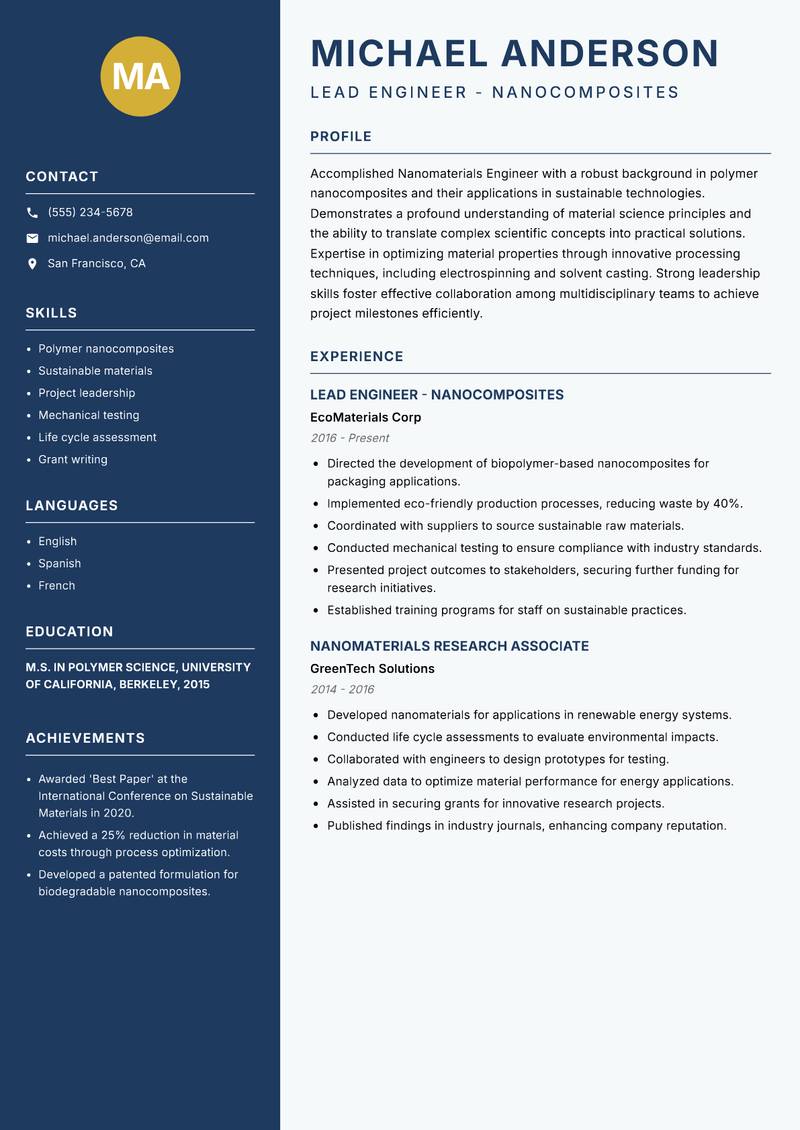
Classic Clean
Use Template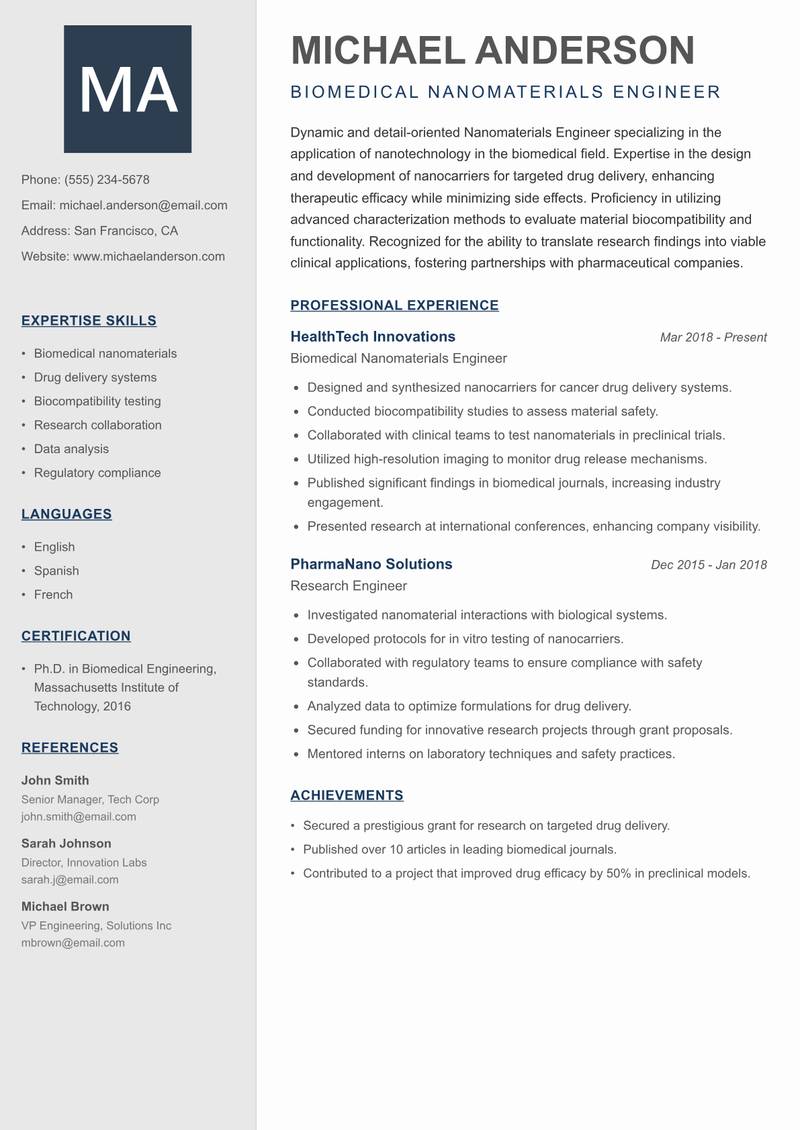
Creative Minimal
Use Template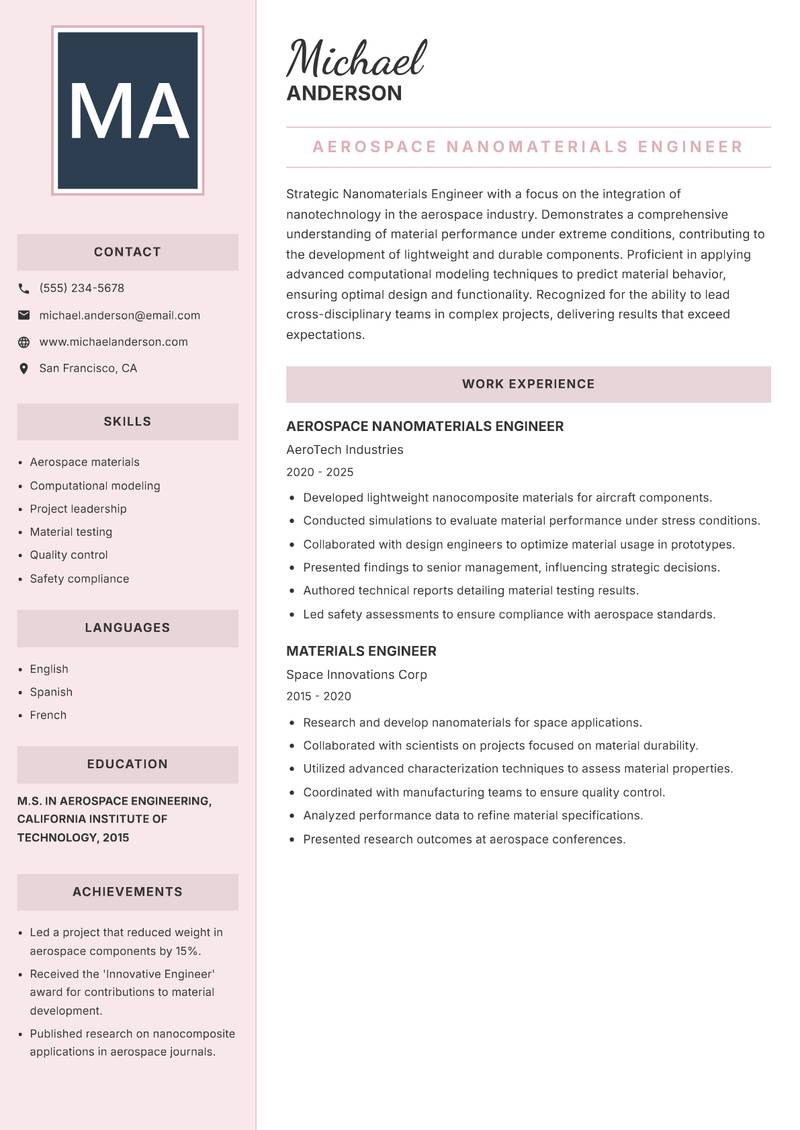
Executive
Use Template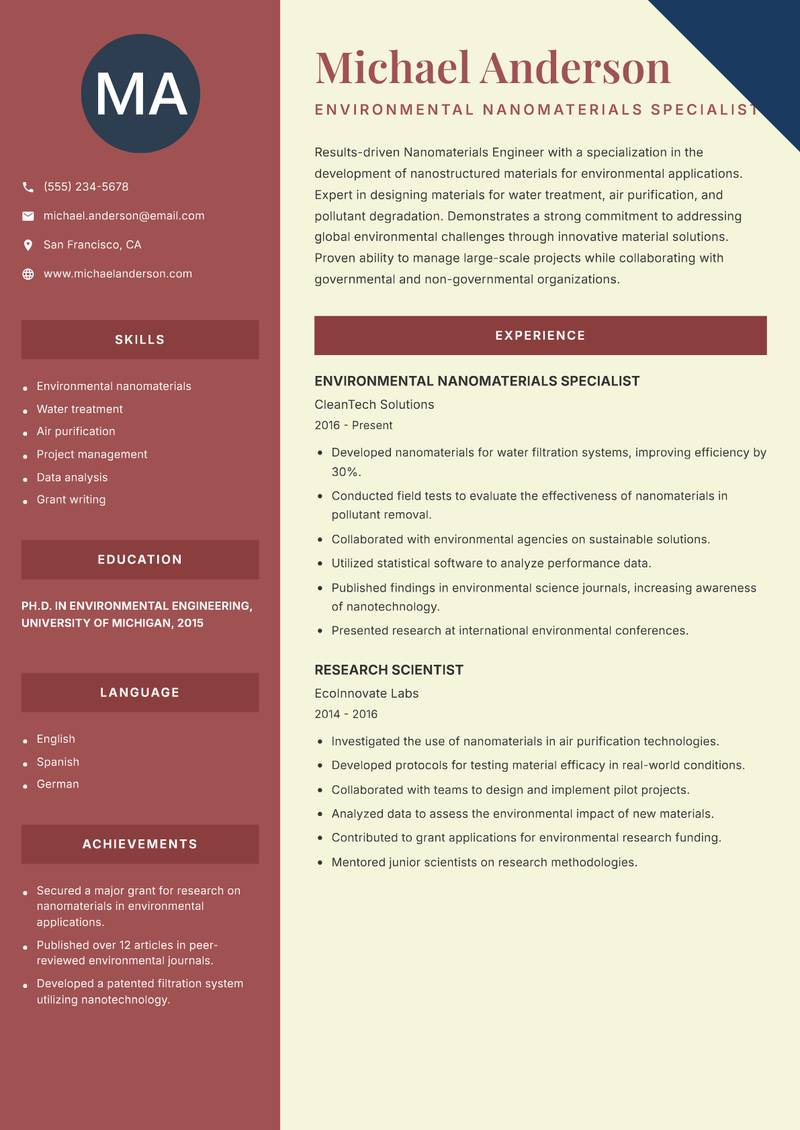
Two Column
Use Template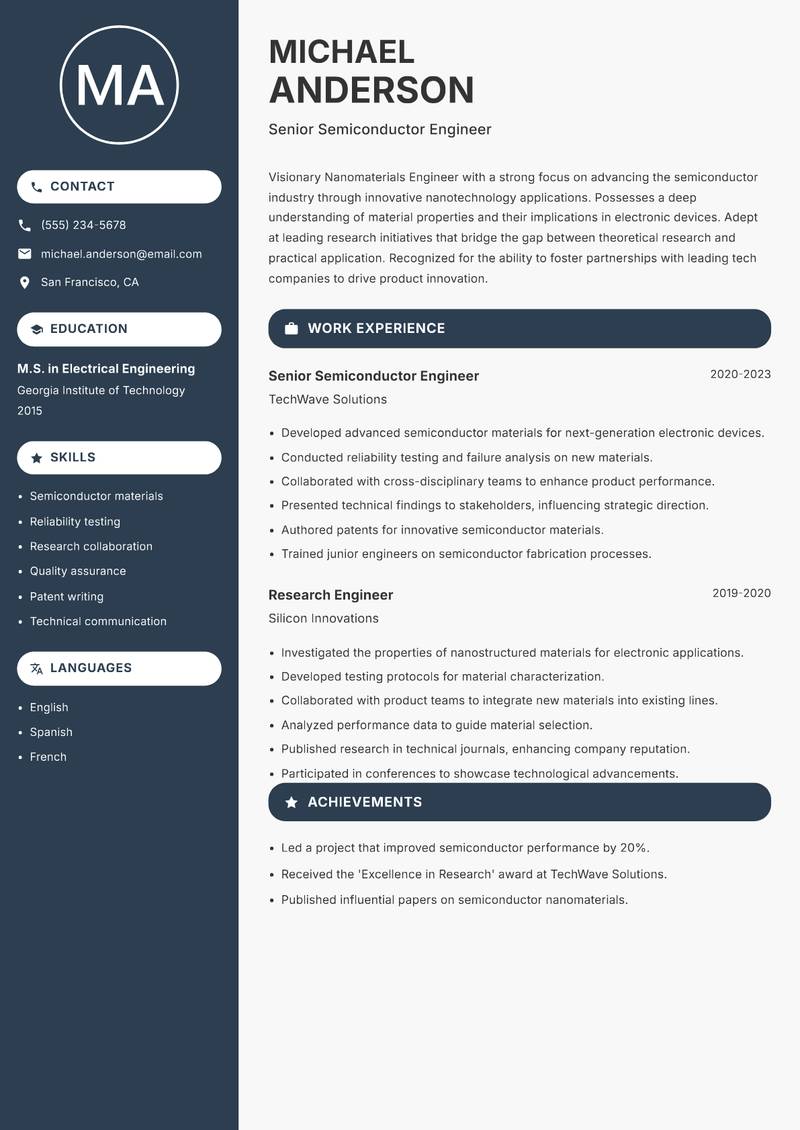
Compact
Use Template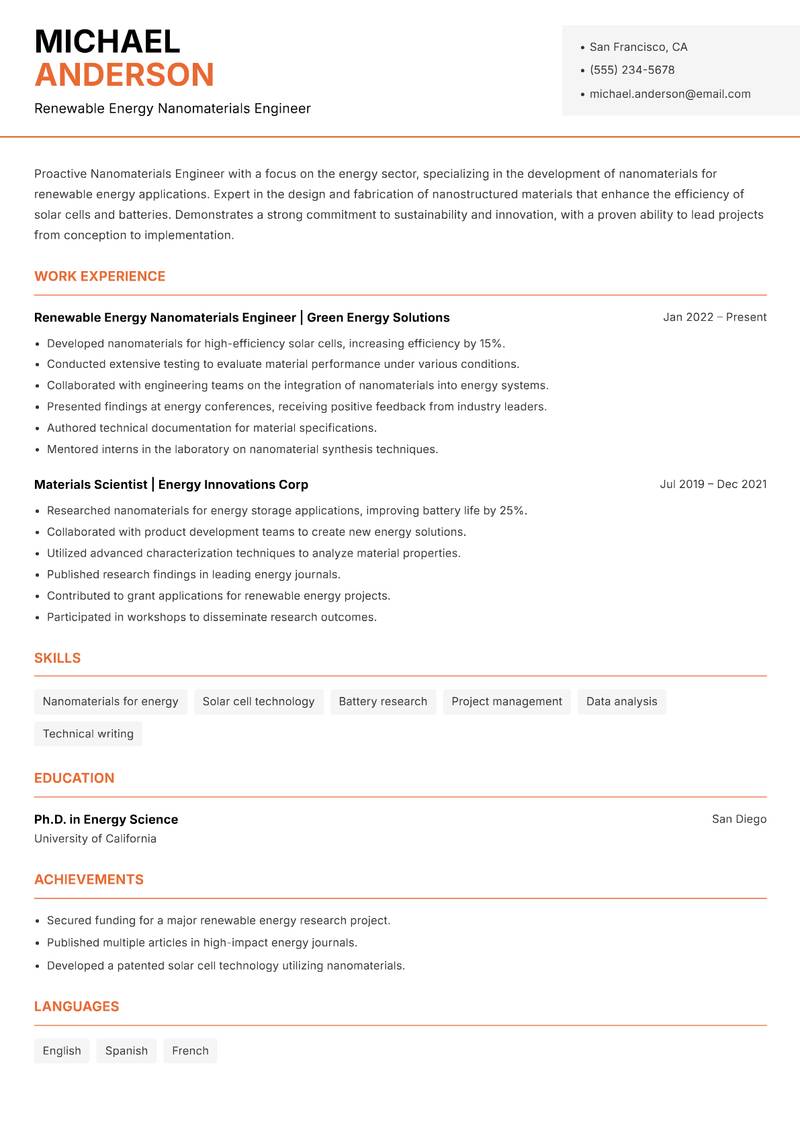
Modern Professional
Use Template7 Real Nanomaterials Engineer Resume Examples
Senior Nanomaterials Engineer with 7+ Years Experience
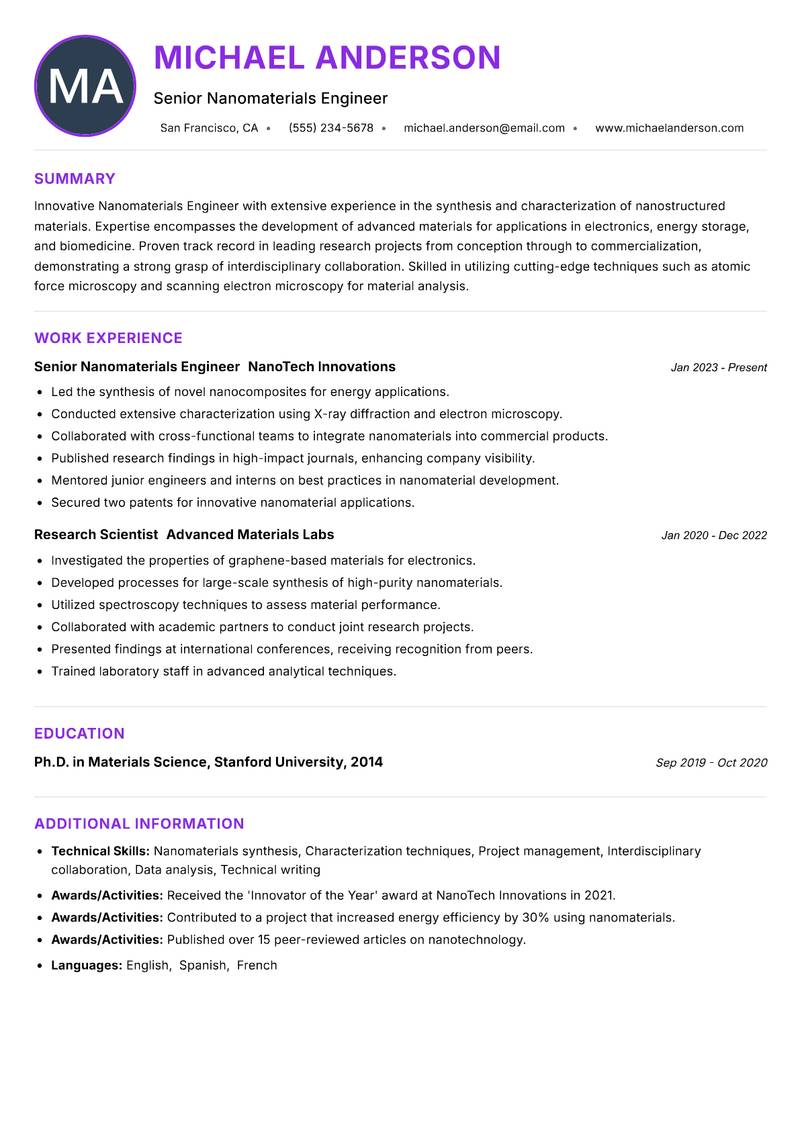
Summary: Innovative Nanomaterials Engineer with extensive experience in the synthesis and characterization of nanostructured materials. Expertise encompasses the development of advanced materials for applications in electronics, energy storage, and biomedicine. Proven track record in leading research projects from conception through to commercialization, demonstrating a strong grasp of interdisciplinary collaboration. Skilled in utilizing cutting-edge techniques such as atomic force microscopy and scanning electron microscopy for material analysis. Strong analytical abilities facilitate the optimization of material properties for specific applications. Committed to advancing the field of nanotechnology through continuous learning and application of the latest research findings.
Description:
- Led the synthesis of novel nanocomposites for energy applications.
- Conducted extensive characterization using X-ray diffraction and electron microscopy.
- Collaborated with cross-functional teams to integrate nanomaterials into commercial products.
- Published research findings in high-impact journals, enhancing company visibility.
- Mentored junior engineers and interns on best practices in nanomaterial development.
- Secured two patents for innovative nanomaterial applications.
🏆 Key Achievements
Lead Engineer - Nanocomposites with 7+ Years Experience
Summary: Accomplished Nanomaterials Engineer with a robust background in polymer nanocomposites and their applications in sustainable technologies. Demonstrates a profound understanding of material science principles and the ability to translate complex scientific concepts into practical solutions. Expertise in optimizing material properties through innovative processing techniques, including electrospinning and solvent casting. Strong leadership skills foster effective collaboration among multidisciplinary teams to achieve project milestones efficiently. Committed to integrating sustainability into product development, with a focus on reducing environmental impact through the use of bio-based materials.
Description:
- Directed the development of biopolymer-based nanocomposites for packaging applications.
- Implemented eco-friendly production processes, reducing waste by 40%.
- Coordinated with suppliers to source sustainable raw materials.
- Conducted mechanical testing to ensure compliance with industry standards.
- Presented project outcomes to stakeholders, securing further funding for research initiatives.
- Established training programs for staff on sustainable practices.
🏆 Key Achievements
Biomedical Nanomaterials Engineer with 6+ Years Experience
Summary: Dynamic and detail-oriented Nanomaterials Engineer specializing in the application of nanotechnology in the biomedical field. Expertise in the design and development of nanocarriers for targeted drug delivery, enhancing therapeutic efficacy while minimizing side effects. Proficiency in utilizing advanced characterization methods to evaluate material biocompatibility and functionality. Recognized for the ability to translate research findings into viable clinical applications, fostering partnerships with pharmaceutical companies. Strong communicator and collaborator, adept at working in fast-paced environments and managing multiple projects simultaneously.
Description:
- Designed and synthesized nanocarriers for cancer drug delivery systems.
- Conducted biocompatibility studies to assess material safety.
- Collaborated with clinical teams to test nanomaterials in preclinical trials.
- Utilized high-resolution imaging to monitor drug release mechanisms.
- Published significant findings in biomedical journals, increasing industry engagement.
- Presented research at international conferences, enhancing company visibility.
🏆 Key Achievements
Aerospace Nanomaterials Engineer with 6+ Years Experience
Summary: Strategic Nanomaterials Engineer with a focus on the integration of nanotechnology in the aerospace industry. Demonstrates a comprehensive understanding of material performance under extreme conditions, contributing to the development of lightweight and durable components. Proficient in applying advanced computational modeling techniques to predict material behavior, ensuring optimal design and functionality. Recognized for the ability to lead cross-disciplinary teams in complex projects, delivering results that exceed expectations. Committed to continuous improvement and innovation in material science applications.
Description:
- Developed lightweight nanocomposite materials for aircraft components.
- Conducted simulations to evaluate material performance under stress conditions.
- Collaborated with design engineers to optimize material usage in prototypes.
- Presented findings to senior management, influencing strategic decisions.
- Authored technical reports detailing material testing results.
- Led safety assessments to ensure compliance with aerospace standards.
🏆 Key Achievements
Environmental Nanomaterials Specialist with 6+ Years Experience
Summary: Experienced Nanomaterials Engineer with a specialization in the development of nanostructured materials for environmental applications. Expert in designing materials for water treatment, air purification, and pollutant degradation. Demonstrates a strong commitment to addressing global environmental challenges through innovative material solutions. Proven ability to manage large-scale projects while collaborating with governmental and non-governmental organizations. Strong analytical skills enable thorough assessment of material performance and environmental impact.
Description:
- Developed nanomaterials for water filtration systems, improving efficiency by 30%.
- Conducted field tests to evaluate the effectiveness of nanomaterials in pollutant removal.
- Collaborated with environmental agencies on sustainable solutions.
- Utilized statistical software to analyze performance data.
- Published findings in environmental science journals, increasing awareness of nanotechnology.
- Presented research at international environmental conferences.
🏆 Key Achievements
Senior Semiconductor Engineer with 7+ Years Experience
Summary: Visionary Nanomaterials Engineer with a strong focus on advancing the semiconductor industry through innovative nanotechnology applications. Possesses a deep understanding of material properties and their implications in electronic devices. Adept at leading research initiatives that bridge the gap between theoretical research and practical application. Recognized for the ability to foster partnerships with leading tech companies to drive product innovation. Committed to pushing the boundaries of technology and ensuring product reliability through rigorous testing and quality assurance.
Description:
- Developed advanced semiconductor materials for next-generation electronic devices.
- Conducted reliability testing and failure analysis on new materials.
- Collaborated with cross-disciplinary teams to enhance product performance.
- Presented technical findings to stakeholders, influencing strategic direction.
- Authored patents for innovative semiconductor materials.
- Trained junior engineers on semiconductor fabrication processes.
🏆 Key Achievements
Renewable Energy Nanomaterials Engineer with 7+ Years Experience
Summary: Driven Nanomaterials Engineer with a focus on the energy sector, specializing in the development of nanomaterials for renewable energy applications. Expert in the design and fabrication of nanostructured materials that enhance the efficiency of solar cells and batteries. Demonstrates a strong commitment to sustainability and innovation, with a proven ability to lead projects from conception to implementation. Adept at utilizing advanced analytical techniques to evaluate material performance and facilitate the optimization of energy systems. Recognized for contributions to research aimed at reducing the carbon footprint of energy technologies.
Description:
- Developed nanomaterials for high-efficiency solar cells, increasing efficiency by 15%.
- Conducted extensive testing to evaluate material performance under various conditions.
- Collaborated with engineering teams on the integration of nanomaterials into energy systems.
- Presented findings at energy conferences, receiving positive feedback from industry leaders.
- Authored technical documentation for material specifications.
- Mentored interns in the laboratory on nanomaterial synthesis techniques.
🏆 Key Achievements
Key Skills for Nanomaterials Engineer
ATS Optimization Tips
Increase your chances of getting hired
Use Standard Headings
Use common section titles like Experience, Skills, etc.
Include Keywords
Add role-specific keywords from the job description
Keep it Simple
Avoid complex tables, images and graphics
Save in Right Format
Use PDF format unless otherwise specified
Nanomaterials Engineer Salary Insights
Average Salary
$95,000
per year
Salary Range
$70,000 - $120,000
per year
Top Paying Cities
Los Angeles, Seattle, Houston, Dallas, Boston
Source: Glassdoor, Payscale, Indeed (Updated July 2026)
Everything you need to write a great Nanomaterials Engineer resume
Strong Action Verbs to Use
Resume Writing Tips
- →Highlight specific nanomaterials you've worked with and the relevant techniques for synthesis and characterization on your resume.
- →Include any collaborative projects that showcase your ability to work with interdisciplinary teams.
- →Quantify your achievements, such as improvements in material performance or efficiency in synthesis processes undertaken.
- →Tailor your resume to emphasize skills directly relevant to the job description, particularly in emerging nanotechnology applications.
- →Incorporate relevant publications or patents to demonstrate your contributions to the field of nanotechnology.
Common Mistakes to Avoid
- ✕Listing overly generic skills not specific to nanomaterials engineering, such as 'problem-solving' without context.
- ✕Failing to mention experience with relevant laboratory techniques specific to nanomaterials.
- ✕Using a one-size-fits-all resume format that does not highlight industry-specific contributions or achievements.
- ✕Not addressing soft skills, especially communication and project management within collaborative environments in research.
ATS Keywords for Nanomaterials Engineer
Nanomaterials Engineer Career Path
Relevant Certifications
Career Progression
Junior Nanomaterials Engineer
Supports senior engineers in synthesizing nanomaterials and conducting experiments to understand their properties.
Nanomaterials Engineer
Conducts independent research and experiments to develop new nanomaterials and enhance existing products for various applications.
Lead Nanomaterials Engineer
Oversees project teams focusing on nanomaterial technologies, ensuring effective collaboration among cross-functional teams and project stakeholders.
Nanotechnology Research Scientist
Focuses on advancing knowledge in nanotechnology through innovative research, often collaborating with universities and industry partners.
Director of Nanomaterials Research
Leads strategic initiatives in nanomaterials development, manages budgets, and drives collaborations with key industry partners and regulatory bodies.
Nanomaterials Engineer Interview Questions
What unique properties do nanomaterials exhibit compared to their bulk counterparts? +
Highlight specific examples such as increased surface area, unique optical properties, or enhanced mechanical strength.
Can you describe your experience with characterization techniques for nanomaterials? +
Discuss techniques like TEM, SEM, or AFM and relate specific projects where you've used them.
How do you ensure the scalability of nanomaterials in industrial applications? +
Emphasize processes for transitioning from lab-scale experiments to commercial production.
What role do safety and environmental considerations play in your work with nanomaterials? +
Talk about risk assessments, regulations, and safety protocols.
Describe a challenging project involving nanomaterials you worked on and how you overcame obstacles. +
Focus on problem-solving skills, teamwork, and any innovative solutions you implemented.
How do you stay updated on the latest advancements in nanotechnology? +
Mention specific journals, conferences, and online courses that keep you informed.
About the Nanomaterials Engineer Role
In nanomaterials engineering, professionals explore the interplay of physical, chemical, and biological properties at the nanoscale to create materials with targeted functionalities. Their work encompasses everything from designing nanoparticle synthesis protocols to characterizing the resultant materials using advanced techniques like electron microscopy and spectroscopy. Collaborating with researchers and industry partners, these engineers translate nanoscale phenomena into practical applications, impacting sectors like healthcare, electronics, and energy.
Frequently Asked Questions
What series of experiments does a Nanomaterials Engineer typically conduct? +
A range of experiments that include synthesis, functionalization, and characterization of nanomaterials, often involving iterative testing to optimize properties.
Which industries are examples of sectors employing Nanomaterials Engineers? +
Common sectors include electronics, pharmaceuticals, renewable energy, and environmental science.
What is the significance of nanoparticle size in engineering applications? +
The unique properties of materials at the nanoscale can lead to innovations in strength, conductivity, and chemical reactivity, which are crucial for application development.
Do Nanomaterials Engineers often work in teams? +
Yes, collaboration with other scientists, engineers, and industry experts is common to integrate nanomaterials into viable products.
What software tools are used in nanomaterials engineering? +
Tools like COMSOL Multiphysics and various molecular modeling software are frequently employed to simulate material behaviors and design experiments.
What educational background is typically expected for a Nanomaterials Engineer? +
Most positions require at least a bachelor's degree in materials science, chemical engineering, or a related field, with many roles preferring a master's or PhD.
More Resume Examples You Might Like
Related Career Paths
Other roles candidates for Nanomaterials Engineer positions often also consider.
Will this Nanomaterials Engineer resume pass the ATS scan?
Upload it and get an instant AI-scored compatibility check with specific fixes.
Check My Resume →
Pair it with a matching cover letter
AI drafts a first version from your job title and strengths — edit it live, then download the PDF.
Write My Cover Letter →
Written by Nohaya Career Team
Reviewed by HR Professionals · Updated July 2026
Ready to Build Your Perfect Resume?
Choose from 1000+ professional templates and land your dream job.
Create My Resume Now