Build an ATS-Friendly
Music Researcher Resume
That Gets Interviews
The Music Researcher is tasked with analyzing music trends, audience preferences, and cultural shifts to inform strategic decisions in music selection and marketing. This role requires a keen understanding of music genres, artist trajectories, and the impact of digital platforms on cultural consumption. A Music…
Music Researcher Resume Templates
Modern Professional
Use Template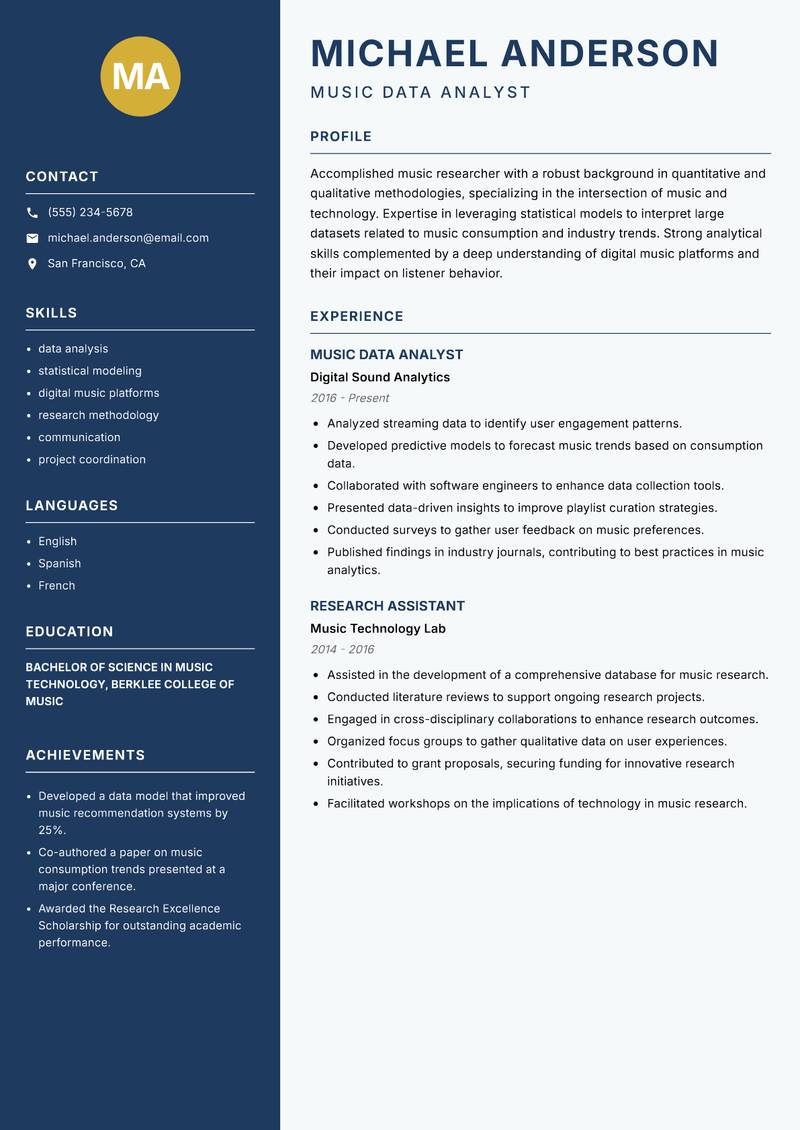
Classic Clean
Use Template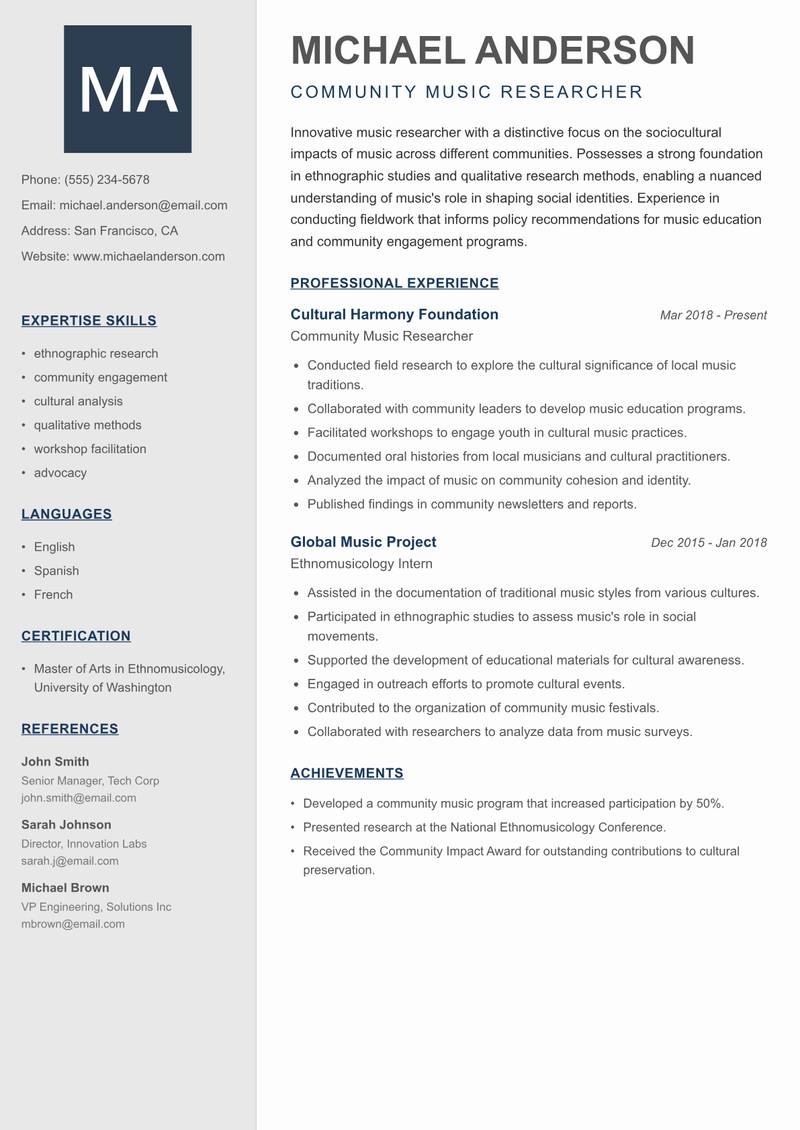
Creative Minimal
Use Template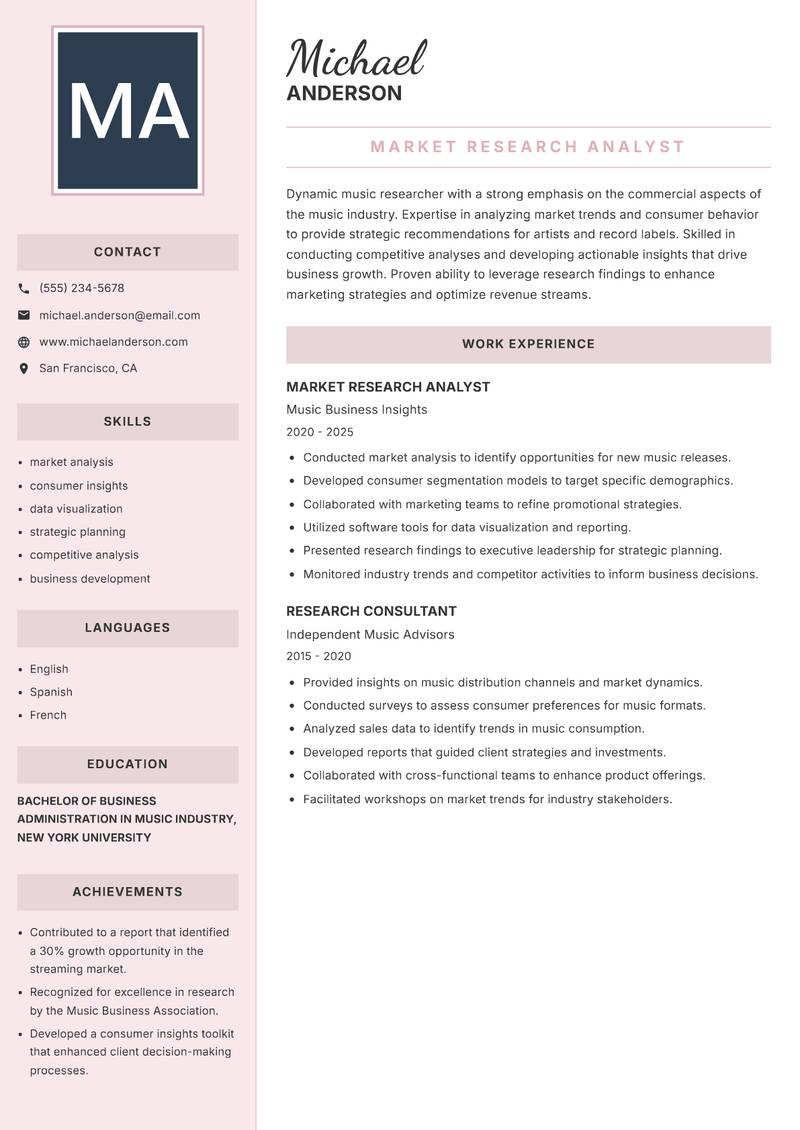
Executive
Use Template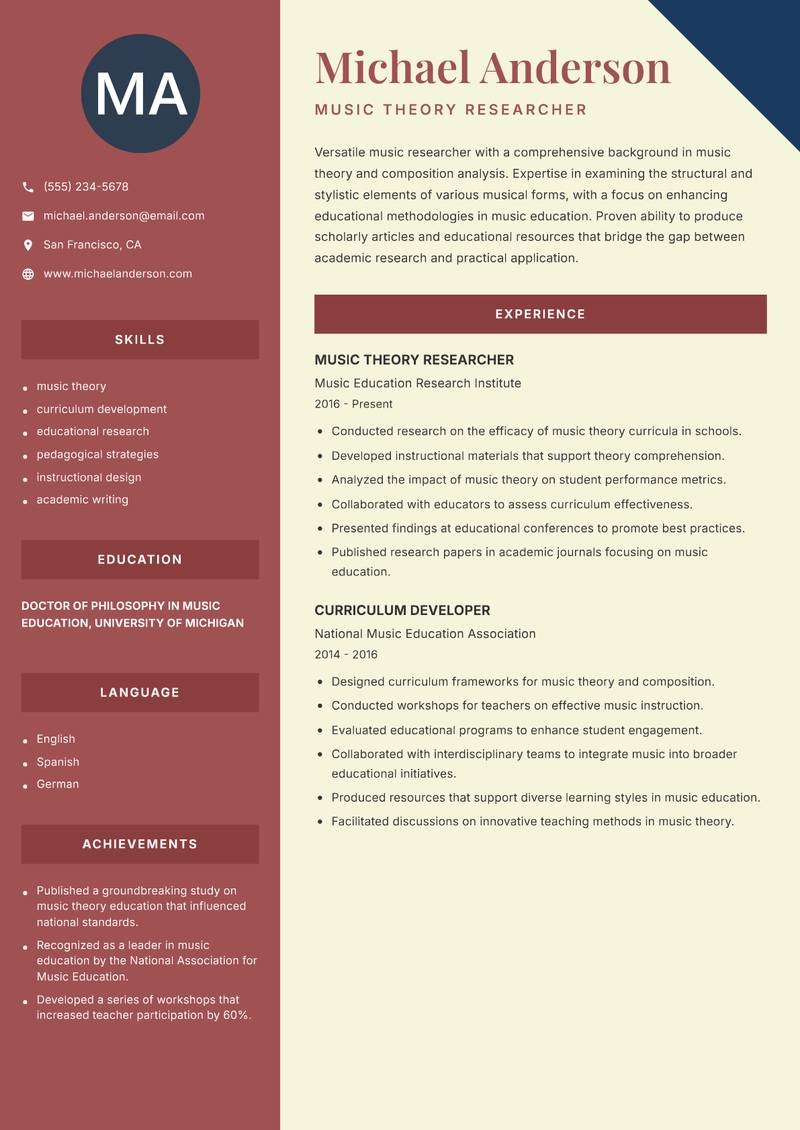
Two Column
Use Template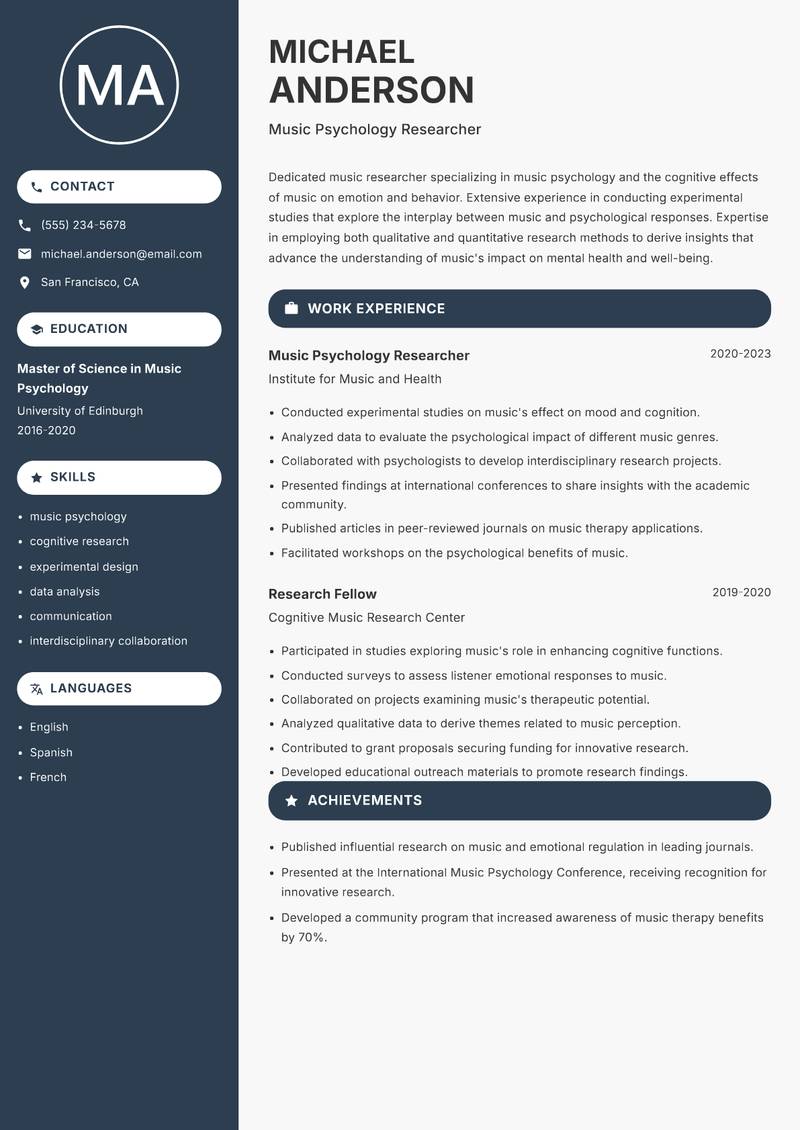
Compact
Use Template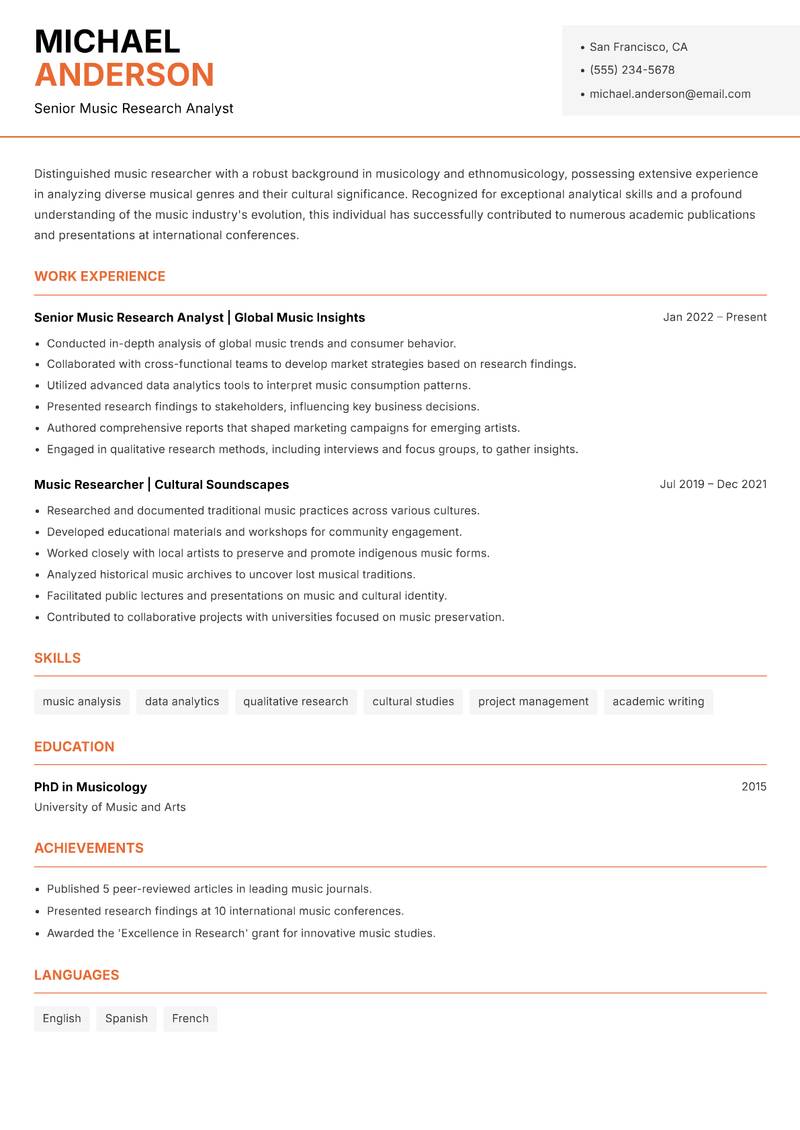
Modern Professional
Use Template7 Real Music Researcher Resume Examples
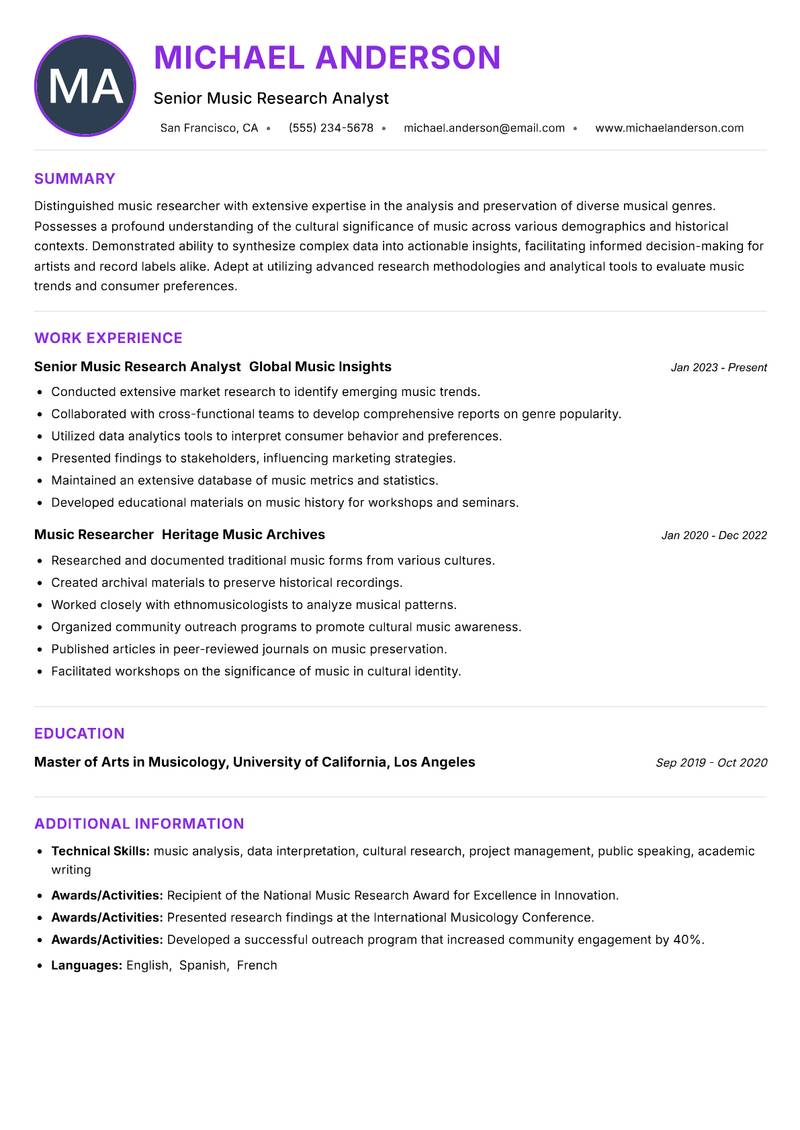
Senior Music Research Analyst with 5+ Years Experience
Summary: Distinguished music researcher with extensive expertise in the analysis and preservation of diverse musical genres. Possesses a profound understanding of the cultural significance of music across various demographics and historical contexts. Demonstrated ability to synthesize complex data into actionable insights, facilitating informed decision-making for artists and record labels alike. Adept at utilizing advanced research methodologies and analytical tools to evaluate music trends and consumer preferences. Proven track record of collaborating with industry professionals and academic institutions to enhance the understanding of music's role in society. Committed to fostering a greater appreciation for musical heritage through innovative research initiatives and public engagement.
Description:
- Conducted extensive market research to identify emerging music trends.
- Collaborated with cross-functional teams to develop comprehensive reports on genre popularity.
- Utilized data analytics tools to interpret consumer behavior and preferences.
- Presented findings to stakeholders, influencing marketing strategies.
- Maintained an extensive database of music metrics and statistics.
- Developed educational materials on music history for workshops and seminars.
🏆 Key Achievements
Music Data Analyst with 4+ Years Experience
Summary: Accomplished music researcher with a robust background in quantitative and qualitative methodologies, specializing in the intersection of music and technology. Expertise in leveraging statistical models to interpret large datasets related to music consumption and industry trends. Strong analytical skills complemented by a deep understanding of digital music platforms and their impact on listener behavior. Proven ability to communicate complex research findings to diverse audiences, including academic, corporate, and public sectors. Demonstrates a commitment to advancing the field of music research through innovative approaches and collaborative projects. Recognized for contributions to significant industry publications and conferences.
Description:
- Analyzed streaming data to identify user engagement patterns.
- Developed predictive models to forecast music trends based on consumption data.
- Collaborated with software engineers to enhance data collection tools.
- Presented data-driven insights to improve playlist curation strategies.
- Conducted surveys to gather user feedback on music preferences.
- Published findings in industry journals, contributing to best practices in music analytics.
🏆 Key Achievements
Community Music Researcher with 3+ Years Experience
Summary: Innovative music researcher with a distinctive focus on the sociocultural impacts of music across different communities. Possesses a strong foundation in ethnographic studies and qualitative research methods, enabling a nuanced understanding of music's role in shaping social identities. Experience in conducting fieldwork that informs policy recommendations for music education and community engagement programs. Demonstrated success in collaborating with local artists and organizations to promote musical heritage and diversity. Recognized for contributions to community-based research initiatives that foster inclusivity and cultural awareness. Committed to advancing social justice through music research and advocacy.
Description:
- Conducted field research to explore the cultural significance of local music traditions.
- Collaborated with community leaders to develop music education programs.
- Facilitated workshops to engage youth in cultural music practices.
- Documented oral histories from local musicians and cultural practitioners.
- Analyzed the impact of music on community cohesion and identity.
- Published findings in community newsletters and reports.
🏆 Key Achievements
Market Research Analyst with 6+ Years Experience
Summary: Dynamic music researcher with a strong emphasis on the commercial aspects of the music industry. Expertise in analyzing market trends and consumer behavior to provide strategic recommendations for artists and record labels. Skilled in conducting competitive analyses and developing actionable insights that drive business growth. Proven ability to leverage research findings to enhance marketing strategies and optimize revenue streams. Recognized for contributions to industry reports that shape market understanding and inform investment decisions. Committed to utilizing research as a tool for innovation and competitive advantage within the music sector.
Description:
- Conducted market analysis to identify opportunities for new music releases.
- Developed consumer segmentation models to target specific demographics.
- Collaborated with marketing teams to refine promotional strategies.
- Utilized software tools for data visualization and reporting.
- Presented research findings to executive leadership for strategic planning.
- Monitored industry trends and competitor activities to inform business decisions.
🏆 Key Achievements
Music Theory Researcher with 5+ Years Experience
Summary: Versatile music researcher with a comprehensive background in music theory and composition analysis. Expertise in examining the structural and stylistic elements of various musical forms, with a focus on enhancing educational methodologies in music education. Proven ability to produce scholarly articles and educational resources that bridge the gap between academic research and practical application. Strong advocate for the integration of music theory into contemporary teaching practices. Recognized for innovative approaches that inspire students and educators alike to engage deeply with music content. Committed to advancing music education through research-driven insights and curriculum development.
Description:
- Conducted research on the efficacy of music theory curricula in schools.
- Developed instructional materials that support theory comprehension.
- Analyzed the impact of music theory on student performance metrics.
- Collaborated with educators to assess curriculum effectiveness.
- Presented findings at educational conferences to promote best practices.
- Published research papers in academic journals focusing on music education.
🏆 Key Achievements
Music Psychology Researcher with 4+ Years Experience
Summary: Dedicated music researcher specializing in music psychology and the cognitive effects of music on emotion and behavior. Extensive experience in conducting experimental studies that explore the interplay between music and psychological responses. Expertise in employing both qualitative and quantitative research methods to derive insights that advance the understanding of music's impact on mental health and well-being. Strong communicator capable of translating complex findings into accessible formats for diverse audiences. Committed to fostering interdisciplinary collaborations that enhance research outcomes and promote the therapeutic use of music. Recognized for contributions to the field through publications and presentations at international conferences.
Description:
- Conducted experimental studies on music's effect on mood and cognition.
- Analyzed data to evaluate the psychological impact of different music genres.
- Collaborated with psychologists to develop interdisciplinary research projects.
- Presented findings at international conferences to share insights with the academic community.
- Published articles in peer-reviewed journals on music therapy applications.
- Facilitated workshops on the psychological benefits of music.
🏆 Key Achievements
Senior Music Research Analyst with 8+ Years Experience
Summary: Distinguished music researcher with a robust background in musicology and ethnomusicology, possessing extensive experience in analyzing diverse musical genres and their cultural significance. Recognized for exceptional analytical skills and a profound understanding of the music industry's evolution, this individual has successfully contributed to numerous academic publications and presentations at international conferences. The ability to synthesize complex information and present it in an accessible manner has led to enhanced collaboration with artists, producers, and academic institutions. Adept at utilizing advanced research methodologies and digital tools to uncover insights into music trends, this professional demonstrates a strong commitment to advancing the field of music research through innovative projects and scholarly initiatives. Proven track record of fostering relationships within the music community, ensuring that research findings are effectively communicated and implemented to benefit both artists and audiences alike.
Description:
- Conducted in-depth analysis of global music trends and consumer behavior.
- Collaborated with cross-functional teams to develop market strategies based on research findings.
- Utilized advanced data analytics tools to interpret music consumption patterns.
- Presented research findings to stakeholders, influencing key business decisions.
- Authored comprehensive reports that shaped marketing campaigns for emerging artists.
- Engaged in qualitative research methods, including interviews and focus groups, to gather insights.
🏆 Key Achievements
Key Skills for Music Researcher
ATS Optimization Tips
Increase your chances of getting hired
Use Standard Headings
Use common section titles like Experience, Skills, etc.
Include Keywords
Add role-specific keywords from the job description
Keep it Simple
Avoid complex tables, images and graphics
Save in Right Format
Use PDF format unless otherwise specified
Music Researcher Salary Insights
Average Salary
$60,000
per year
Salary Range
$40,000 - $80,000
per year
Top Paying Cities
Los Angeles, Seattle, Houston, Dallas, Boston
Source: Glassdoor, Payscale, Indeed (Updated October 2025)
Everything you need to write a great Music Researcher resume
Strong Action Verbs to Use
Resume Writing Tips
- →Highlight specific research projects you have contributed to or led, showcasing your analytical capabilities in music contexts.
- →Use precise music terminology relevant to the job description to demonstrate your insider knowledge of the industry.
- →Include examples of how your research has informed important decisions, illustrating the application of your work in real-world scenarios.
- →Tailor your experience to reflect any collaborative work with artists or marketing teams, emphasizing communication skills.
- →If applicable, list any specific musical genres or topics in which you have specialized research knowledge.
Common Mistakes to Avoid
- ✕Using generic terms instead of specific industry jargon, which may not resonate with hiring managers in music.
- ✕Neglecting to detail software or tools you're familiar with that are widely used in the music industry for research.
- ✕Not showcasing tangible outcomes from previous research projects, leading to a lack of demonstrated impact.
- ✕Forgetting to include collaboration experiences, which are crucial in creative industries where team input is valuable.
ATS Keywords for Music Researcher
Music Researcher Career Path
Relevant Certifications
Career Progression
Entry-Level Music Researcher
Often responsible for gathering data on music trends, maintaining databases of songs and artists, and assisting in preliminary research for larger projects.
Music Research Analyst
Analyzes music trends and provides insights to clients or internal teams, often involving in-depth reporting and recommendations based on research findings.
Senior Music Researcher
Leads music research projects, manages a team of researchers, and collaborates with marketing and product development to align music strategy with business goals.
Music Program Director
Designs and implements music programs, oversees large-scale music research projects, and connects with industry stakeholders to facilitate partnerships.
Music Consultant
Provides expert advice on music selection, cultural context, and licensing, often working with brands to enhance their overall musical strategy.
Music Researcher Interview Questions
What type of databases are you familiar with for music research? +
Discuss specific tools you have used like music libraries, digital platforms, or proprietary databases.
How do you stay current with music trends and artist developments? +
Provide examples of resources, networks, and strategies you utilize to maintain industry knowledge.
Can you describe a successful project where your research influenced a decision? +
Share details on the project, your research process, and the outcome to showcase your impact on the organization.
What methods do you use to analyze music consumption patterns? +
Mention any specific metrics or analytics tools and how they inform your research.
How do you approach teamwork when working with creative professionals? +
Illustrate your communication skills and how you might bridge the gap between data and artistic vision.
In your opinion, what role does music play in marketing? +
Discuss your understanding of music's influence on brand identity and consumer engagement.
About the Music Researcher Role
The Music Researcher is tasked with analyzing music trends, audience preferences, and cultural shifts to inform strategic decisions in music selection and marketing. This role requires a keen understanding of music genres, artist trajectories, and the impact of digital platforms on cultural consumption. A Music Researcher collaborates with producers, marketers, and creative teams to ensure that music strategies align with target demographics and enhance overall project goals.
Frequently Asked Questions
What skills are essential for a successful Music Researcher? +
Key skills include strong analytical abilities, knowledge of music history, familiarity with industry databases, and effective communication.
What tools do Music Researchers typically use? +
They often utilize music databases, analytical software, and industry reports to gather and analyze relevant data.
How does a Music Researcher contribute to music marketing? +
By providing insights into audience preferences, music trends, and cultural context, they help shape marketing strategies that resonate with listeners.
What industries employ Music Researchers? +
They can work in record labels, music publishing companies, advertising agencies, and media organizations.
Is a degree necessary to become a Music Researcher? +
While a degree in music, business, or a related field is advantageous, practical experience and a portfolio of research can be equally valuable.
What is the career progression for a Music Researcher? +
Career paths can lead to roles such as music consultant, program director, or even positions in music supervision for film and TV.
More Resume Examples You Might Like
Will this Music Researcher resume pass the ATS scan?
Upload it and get an instant AI-scored compatibility check with specific fixes.
Check My Resume →
Pair it with a matching cover letter
AI drafts a first version from your job title and strengths — edit it live, then download the PDF.
Write My Cover Letter →
Written by Nohaya Career Team
Reviewed by HR Professionals · Updated October 2025
Ready to Build Your Perfect Resume?
Choose from 1000+ professional templates and land your dream job.
Create My Resume Now