Build an ATS-Friendly
Medical Electronics Engineer Resume
That Gets Interviews
Creative problem-solving drives Medical Electronics Engineers as they develop advanced technology solutions for the healthcare sector. This role involves synthesizing engineering principles with biological sciences to create devices that directly impact patient care. Leveraging cutting-edge simulation software and…
Medical Electronics Engineer Resume Templates
Modern Professional
Use Template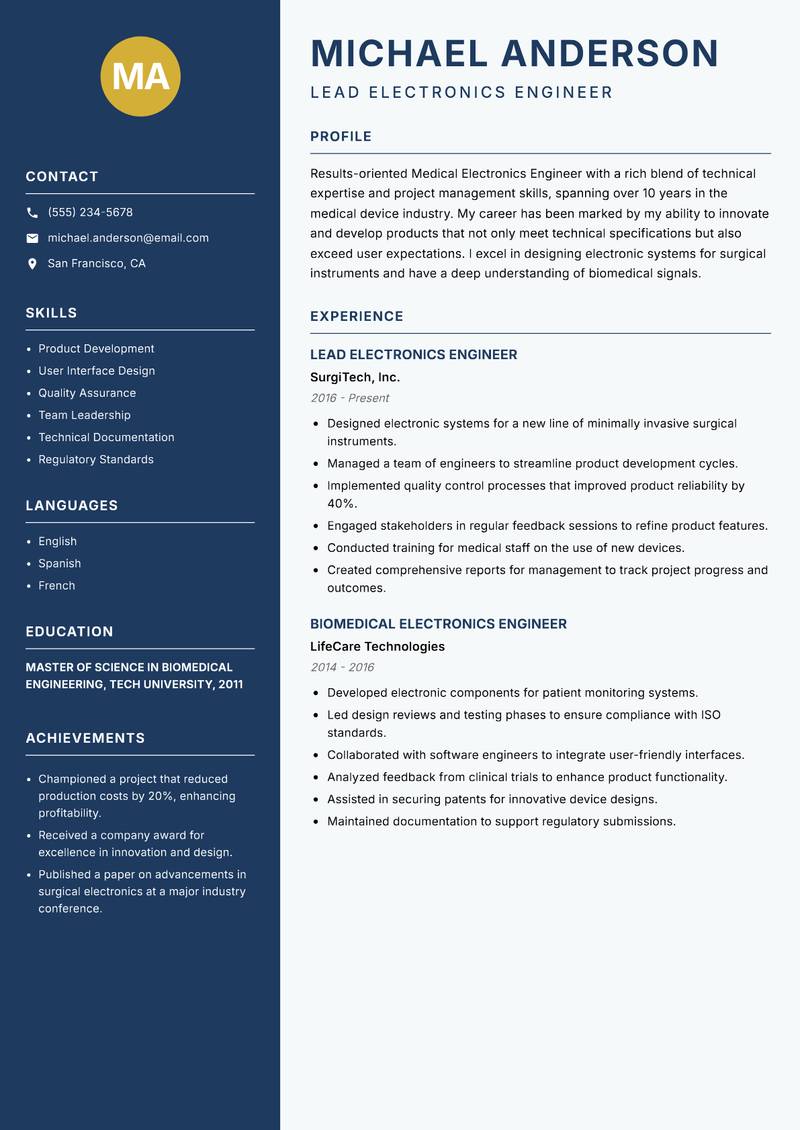
Classic Clean
Use Template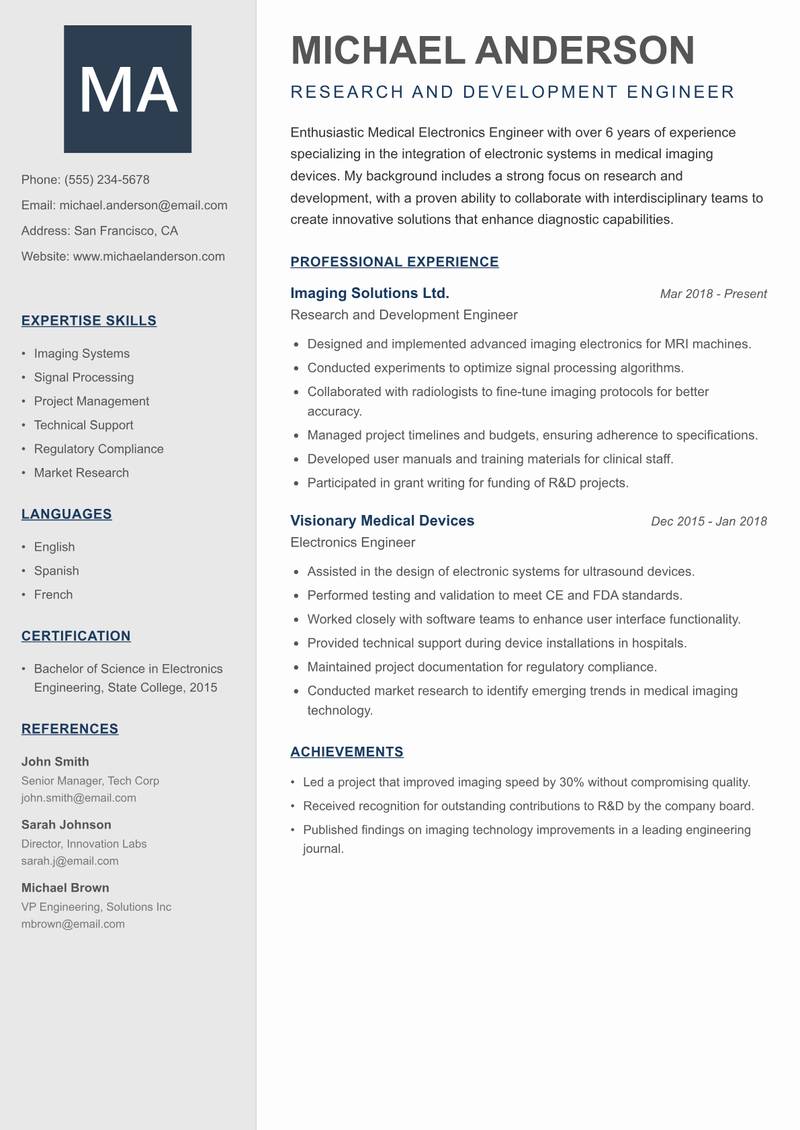
Creative Minimal
Use Template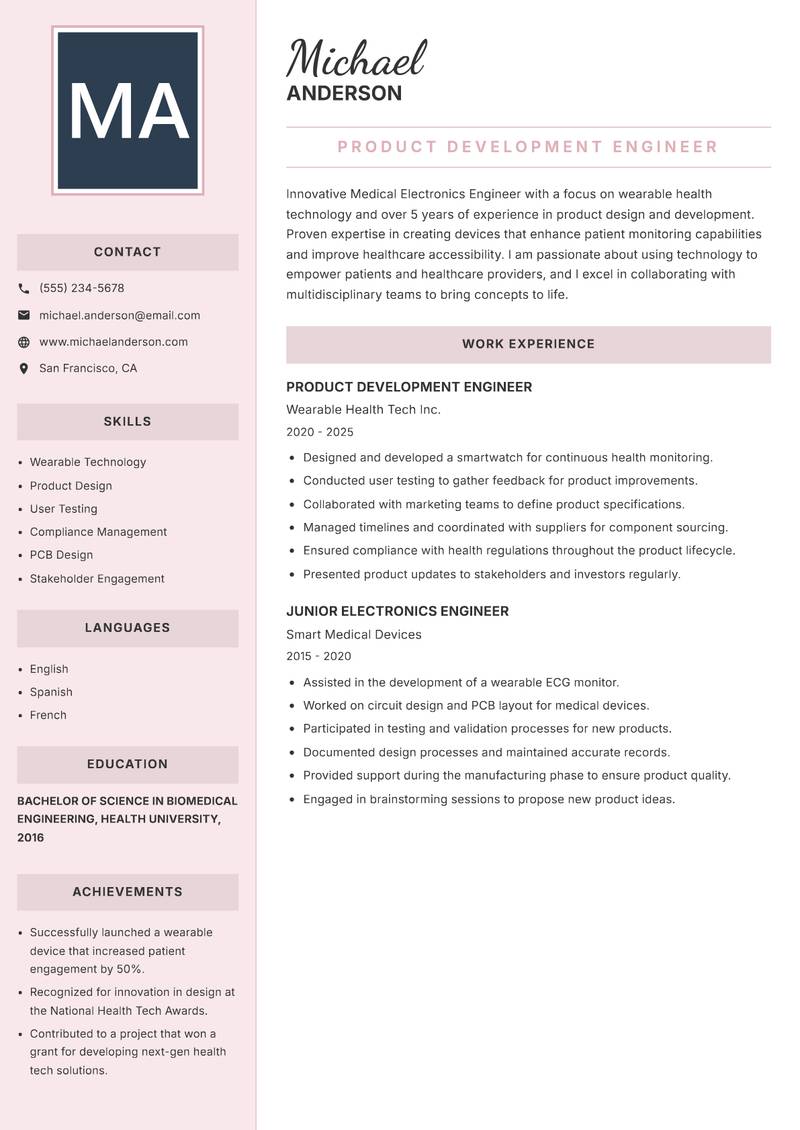
Executive
Use Template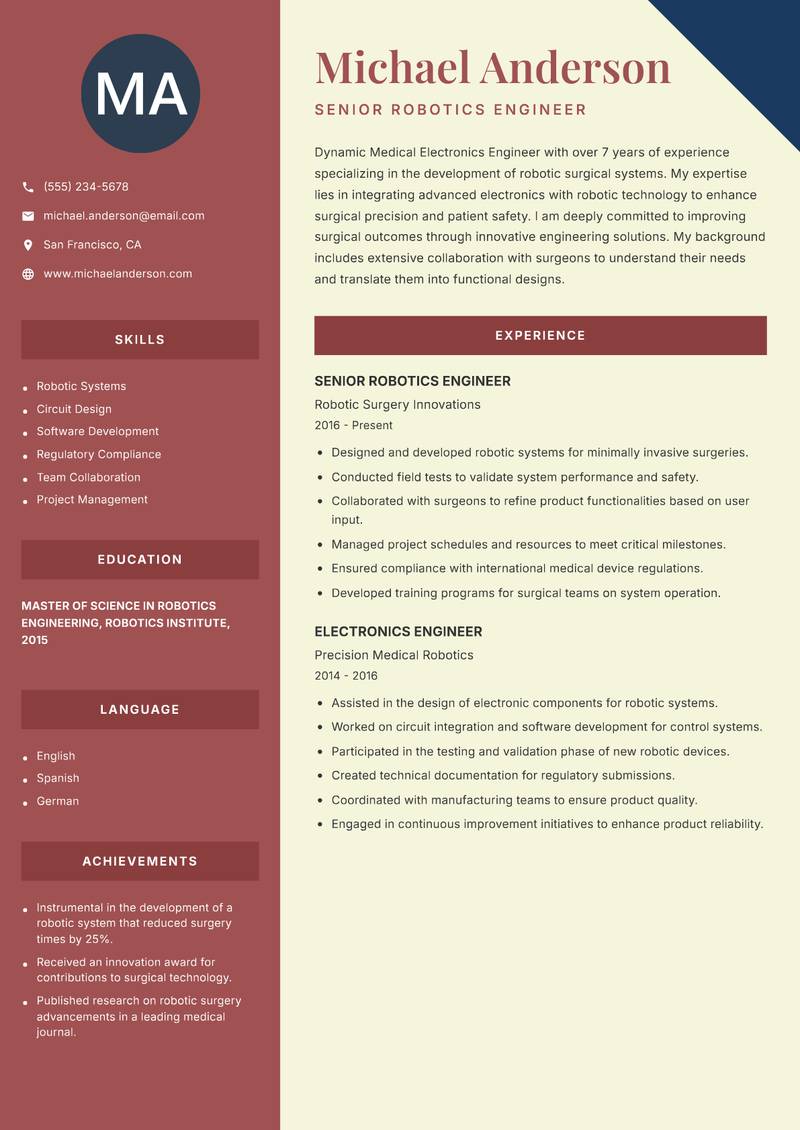
Two Column
Use Template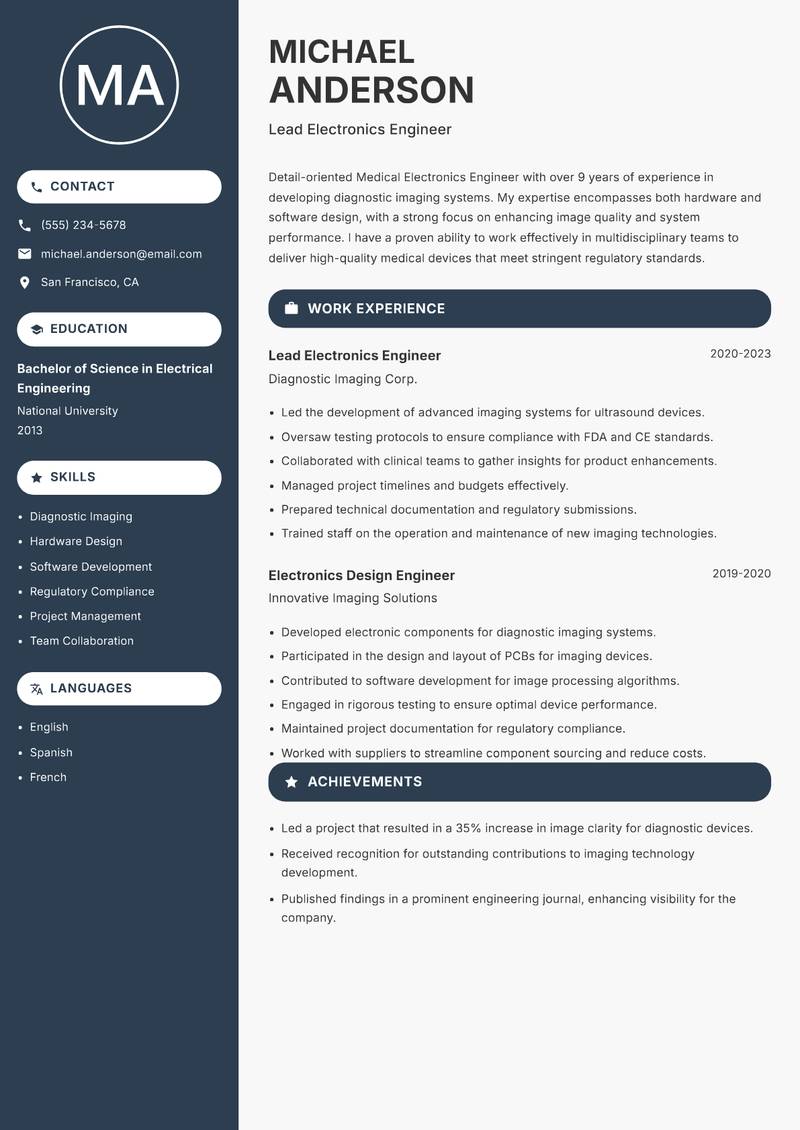
Compact
Use Template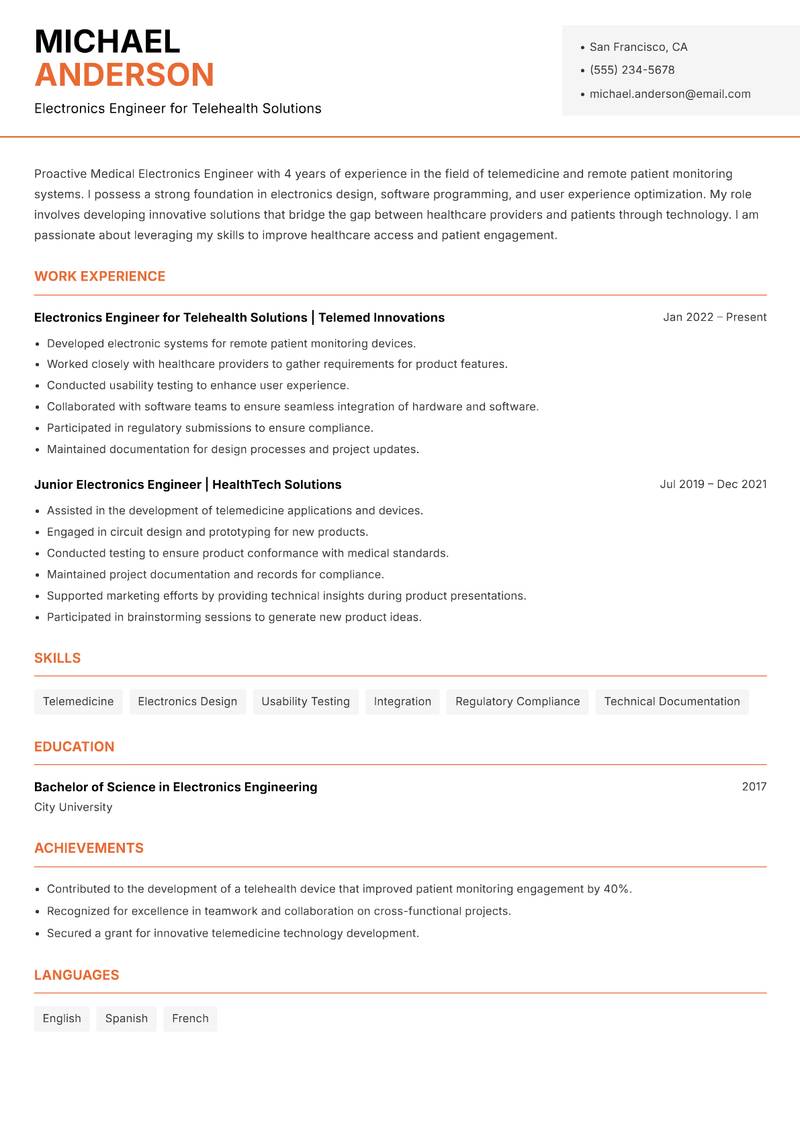
Modern Professional
Use Template7 Real Medical Electronics Engineer Resume Examples
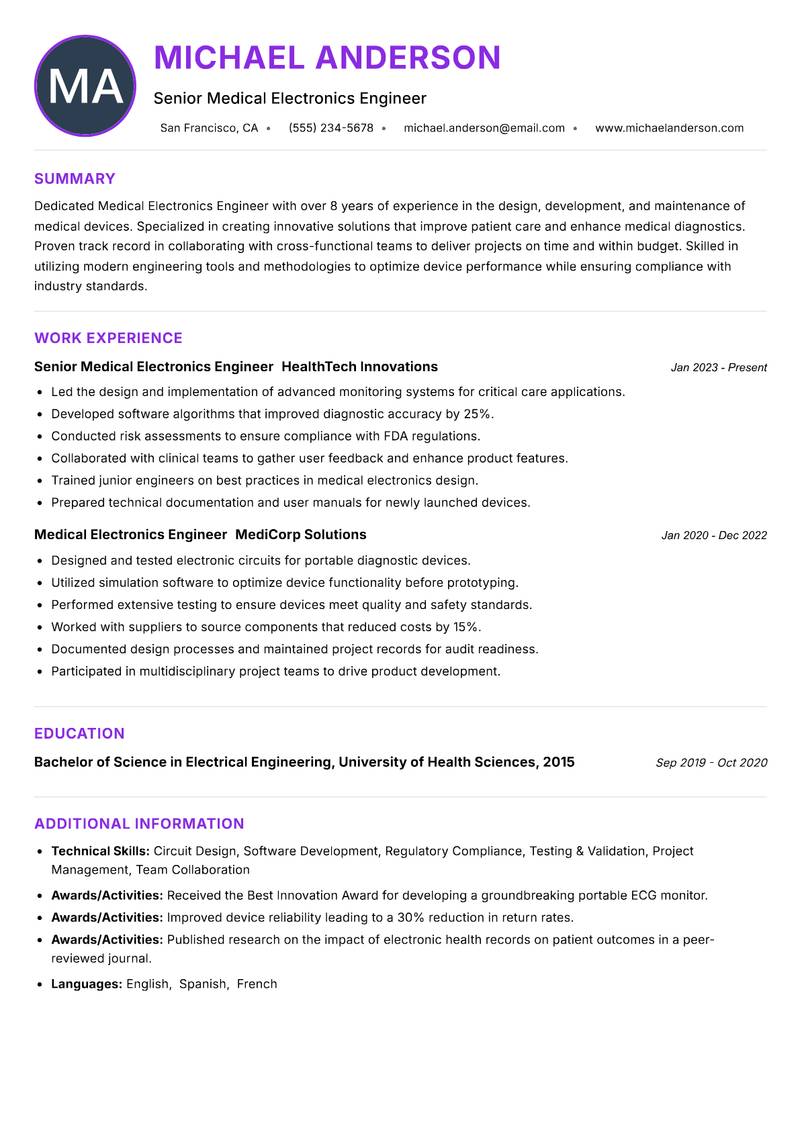
Senior Medical Electronics Engineer with 8+ Years Experience
Summary: Dedicated Medical Electronics Engineer with over 8 years of experience in the design, development, and maintenance of medical devices. Specialized in creating innovative solutions that improve patient care and enhance medical diagnostics. Proven track record in collaborating with cross-functional teams to deliver projects on time and within budget. Skilled in utilizing modern engineering tools and methodologies to optimize device performance while ensuring compliance with industry standards. Adept at problem-solving and troubleshooting complex electronic systems, with a strong focus on reliability and safety. Passionate about advancing healthcare technology and committed to continuous professional development to keep pace with emerging trends and innovations in the medical field.
Description:
- Led the design and implementation of advanced monitoring systems for critical care applications.
- Developed software algorithms that improved diagnostic accuracy by 25%.
- Conducted risk assessments to ensure compliance with FDA regulations.
- Collaborated with clinical teams to gather user feedback and enhance product features.
- Trained junior engineers on best practices in medical electronics design.
- Prepared technical documentation and user manuals for newly launched devices.
🏆 Key Achievements
Lead Electronics Engineer with 10+ Years Experience
Summary: Accomplished Medical Electronics Engineer with a rich blend of technical expertise and project management skills, spanning over 10 years in the medical device industry. My career has been marked by my ability to innovate and develop products that not only meet technical specifications but also exceed user expectations. I excel in designing electronic systems for surgical instruments and have a deep understanding of biomedical signals. My experience includes collaborating with healthcare professionals to ensure product usability and effectiveness. I am committed to driving advancements in medical technology to improve patient outcomes and enhance healthcare delivery systems.
Description:
- Designed electronic systems for a new line of minimally invasive surgical instruments.
- Managed a team of engineers to streamline product development cycles.
- Implemented quality control processes that improved product reliability by 40%.
- Engaged stakeholders in regular feedback sessions to refine product features.
- Conducted training for medical staff on the use of new devices.
- Created comprehensive reports for management to track project progress and outcomes.
🏆 Key Achievements
Research and Development Engineer with 6+ Years Experience
Summary: Enthusiastic Medical Electronics Engineer with over 6 years of experience specializing in the integration of electronic systems in medical imaging devices. My background includes a strong focus on research and development, with a proven ability to collaborate with interdisciplinary teams to create innovative solutions that enhance diagnostic capabilities. I am passionate about leveraging technology to improve patient care and have been involved in projects that have led to significant reductions in imaging times while increasing accuracy. With a keen eye for detail and a commitment to excellence, I strive to push the boundaries of what is possible in medical electronics.
Description:
- Designed and implemented advanced imaging electronics for MRI machines.
- Conducted experiments to optimize signal processing algorithms.
- Collaborated with radiologists to fine-tune imaging protocols for better accuracy.
- Managed project timelines and budgets, ensuring adherence to specifications.
- Developed user manuals and training materials for clinical staff.
- Participated in grant writing for funding of R&D projects.
🏆 Key Achievements
Product Development Engineer with 5+ Years Experience
Summary: Innovative Medical Electronics Engineer with a focus on wearable health technology and over 5 years of experience in product design and development. Proven expertise in creating devices that enhance patient monitoring capabilities and improve healthcare accessibility. I am passionate about using technology to empower patients and healthcare providers, and I excel in collaborating with multidisciplinary teams to bring concepts to life. My work has resulted in several successful product launches, and I pride myself on my ability to adapt to rapidly evolving technologies in the medical field. I am committed to continuous learning and staying abreast of industry advancements.
Description:
- Designed and developed a smartwatch for continuous health monitoring.
- Conducted user testing to gather feedback for product improvements.
- Collaborated with marketing teams to define product specifications.
- Managed timelines and coordinated with suppliers for component sourcing.
- Ensured compliance with health regulations throughout the product lifecycle.
- Presented product updates to stakeholders and investors regularly.
🏆 Key Achievements
Senior Robotics Engineer with 7+ Years Experience
Summary: Dynamic Medical Electronics Engineer with over 7 years of experience specializing in the development of robotic surgical systems. My expertise lies in integrating advanced electronics with robotic technology to enhance surgical precision and patient safety. I am deeply committed to improving surgical outcomes through innovative engineering solutions. My background includes extensive collaboration with surgeons to understand their needs and translate them into functional designs. I have a strong track record of leading projects from concept through production and ensuring compliance with stringent medical regulations. My goal is to contribute to a future where robotic assistance becomes standard in surgical procedures.
Description:
- Designed and developed robotic systems for minimally invasive surgeries.
- Conducted field tests to validate system performance and safety.
- Collaborated with surgeons to refine product functionalities based on user input.
- Managed project schedules and resources to meet critical milestones.
- Ensured compliance with international medical device regulations.
- Developed training programs for surgical teams on system operation.
🏆 Key Achievements
Lead Electronics Engineer with 9+ Years Experience
Summary: Detail-oriented Medical Electronics Engineer with over 9 years of experience in developing diagnostic imaging systems. My expertise encompasses both hardware and software design, with a strong focus on enhancing image quality and system performance. I have a proven ability to work effectively in multidisciplinary teams to deliver high-quality medical devices that meet stringent regulatory standards. Throughout my career, I have successfully managed projects from conception to deployment, ensuring that the needs of healthcare professionals are met. My commitment to continuous improvement drives me to seek out new technologies and methodologies that can enhance diagnostic capabilities and improve patient outcomes.
Description:
- Led the development of advanced imaging systems for ultrasound devices.
- Oversaw testing protocols to ensure compliance with FDA and CE standards.
- Collaborated with clinical teams to gather insights for product enhancements.
- Managed project timelines and budgets effectively.
- Prepared technical documentation and regulatory submissions.
- Trained staff on the operation and maintenance of new imaging technologies.
🏆 Key Achievements
Electronics Engineer for Telehealth Solutions with 4+ Years Experience
Summary: Driven Medical Electronics Engineer with 4 years of experience in the field of telemedicine and remote patient monitoring systems. I possess a strong foundation in electronics design, software programming, and user experience optimization. My role involves developing innovative solutions that bridge the gap between healthcare providers and patients through technology. I am passionate about leveraging my skills to improve healthcare access and patient engagement. My experience includes collaborating with healthcare professionals to understand their needs and translating those insights into effective technical solutions. I am committed to driving advancements in telehealth technology.
Description:
- Developed electronic systems for remote patient monitoring devices.
- Worked closely with healthcare providers to gather requirements for product features.
- Conducted usability testing to enhance user experience.
- Collaborated with software teams to ensure seamless integration of hardware and software.
- Participated in regulatory submissions to ensure compliance.
- Maintained documentation for design processes and project updates.
🏆 Key Achievements
Key Skills for Medical Electronics Engineer
ATS Optimization Tips
Increase your chances of getting hired
Use Standard Headings
Use common section titles like Experience, Skills, etc.
Include Keywords
Add role-specific keywords from the job description
Keep it Simple
Avoid complex tables, images and graphics
Save in Right Format
Use PDF format unless otherwise specified
Medical Electronics Engineer Salary Insights
Average Salary
$95,000
per year
Salary Range
$75,000 - $115,000
per year
Top Paying Cities
Los Angeles, Seattle, Houston, Dallas, Boston
Source: Glassdoor, Payscale, Indeed (Updated June 2025)
Everything you need to write a great Medical Electronics Engineer resume
Strong Action Verbs to Use
Resume Writing Tips
- →Highlight specific projects where you participated in medical device R&D.
- →Include any hands-on experience with prototype testing or user training.
- →Emphasize familiarity with both FDA and IEC standards relevant to your area of expertise.
- →Showcase soft skills like collaboration, as cross-disciplinary teamwork is key in this field.
- →Mention any shadowing or internships in healthcare settings, which can set you apart.
Common Mistakes to Avoid
- ✕Using vague descriptions of past roles; instead, provide clear examples of actual device development or testing work.
- ✕Failing to specify technical skills; be precise about tools and methodologies used throughout your career.
- ✕Omitting regulatory experience; compliance is crucial and should be highlighted on your resume.
- ✕Not demonstrating an understanding of clinical environments; an awareness of healthcare processes enhances your profile.
ATS Keywords for Medical Electronics Engineer
Medical Electronics Engineer Career Path
Relevant Certifications
Career Progression
Entry-Level
Fresh graduates typically assist in research and development of medical devices, learning to use design software such as MATLAB and CAD.
Mid-Level
Mid-career engineers contribute to projects from concept to prototype, often overseeing testing phases of medical electronics.
Senior Engineer
Senior Medical Electronics Engineers lead complex projects, managing teams and liaising with healthcare professionals to ensure device usability.
Project Manager
At this stage, professionals coordinate interdisciplinary teams to advance product timelines, budgets, and regulatory compliance.
Director of Engineering
In a leadership role, directors strategize the direction of medical engineering projects and align them with company goals.
Medical Electronics Engineer Interview Questions
What experience do you have with the development of medical electronic devices? +
Discuss specific projects you have worked on, including design processes and outcomes.
How do you ensure compliance with medical regulations during the development cycle? +
Explain your familiarity with FDA guidelines or ISO standards relevant to medical device manufacturing.
What troubleshooting methods do you employ when a device malfunctions? +
Provide examples of past challenges and how you approached problem-solving.
Can you describe an instance where you had to collaborate with healthcare professionals for a project? +
Focus on communication strategies and the importance of user feedback in your designs.
What tools or software do you use for device design and testing? +
Mention specific platforms like MATLAB or Altium Designer and their applications.
How do you approach project management in multidisciplinary teams? +
Speak to your experience in coordinating efforts between engineering, regulatory, and clinical teams.
What emerging technologies in medical electronics excite you? +
Showcase your industry knowledge and how you see potential advancements influencing healthcare.
About the Medical Electronics Engineer Role
Creative problem-solving drives Medical Electronics Engineers as they develop advanced technology solutions for the healthcare sector. This role involves synthesizing engineering principles with biological sciences to create devices that directly impact patient care. Leveraging cutting-edge simulation software and rigorous testing protocols, these engineers work collaboratively with healthcare professionals, ensuring that products meet clinical needs and safety standards.
Frequently Asked Questions
View all →What educational background is required for a Medical Electronics Engineer? +
A bachelor's degree in biomedical engineering, electronics engineering, or a related field is typically required. Advanced degrees can enhance career prospects.
Which industries employ Medical Electronics Engineers? +
They are primarily found in the healthcare sector, including hospitals, medical device manufacturers, and research institutions focused on medical technology.
What role does software play in medical electronics engineering? +
Software is crucial for designing, simulating, and testing devices as well as in embedded system design for functionality.
Is certification necessary for this role? +
While not always mandatory, obtaining certifications like CBET can enhance job prospects and credibility in the field.
What career advancement opportunities are available in this field? +
Pathways include transitioning into management roles, specializing in regulatory affairs, or focusing on product innovation in advanced technologies.
What skills are most valuable for success as a Medical Electronics Engineer? +
Strong analytical skills, attention to detail in testing and documentation, and effective communication with clinical staff are key to success.
How does the job outlook look for Medical Electronics Engineers? +
The demand for medical electronics engineers is expected to grow as technology in healthcare continues to advance and as the population ages.
More Resume Examples You Might Like
Related Career Paths
Other roles candidates for Medical Electronics Engineer positions often also consider.
Will this Medical Electronics Engineer resume pass the ATS scan?
Upload it and get an instant AI-scored compatibility check with specific fixes.
Check My Resume →
Pair it with a matching cover letter
AI drafts a first version from your job title and strengths — edit it live, then download the PDF.
Write My Cover Letter →
Written by Nohaya Career Team
Reviewed by HR Professionals · Updated June 2025
Ready to Build Your Perfect Resume?
Choose from 1000+ professional templates and land your dream job.
Create My Resume Now