Build an ATS-Friendly
Medical Device Engineer Resume
That Gets Interviews
Creating innovative solutions in healthcare, medical device engineers integrate engineering principles with biological science to develop devices that address complex medical needs. Their work ranges from initial concept design through to rigorous testing and validation, ensuring compliance with stringent industry…
Medical Device Engineer Resume Templates
Modern Professional
Use Template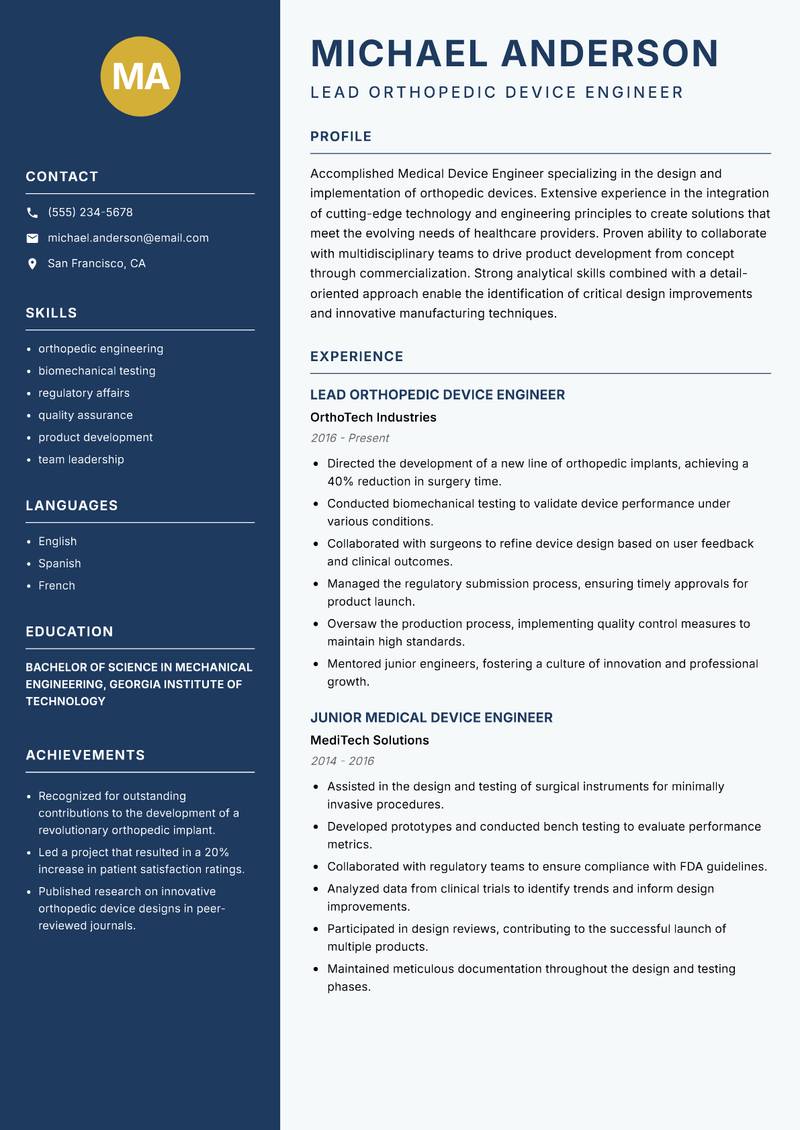
Classic Clean
Use Template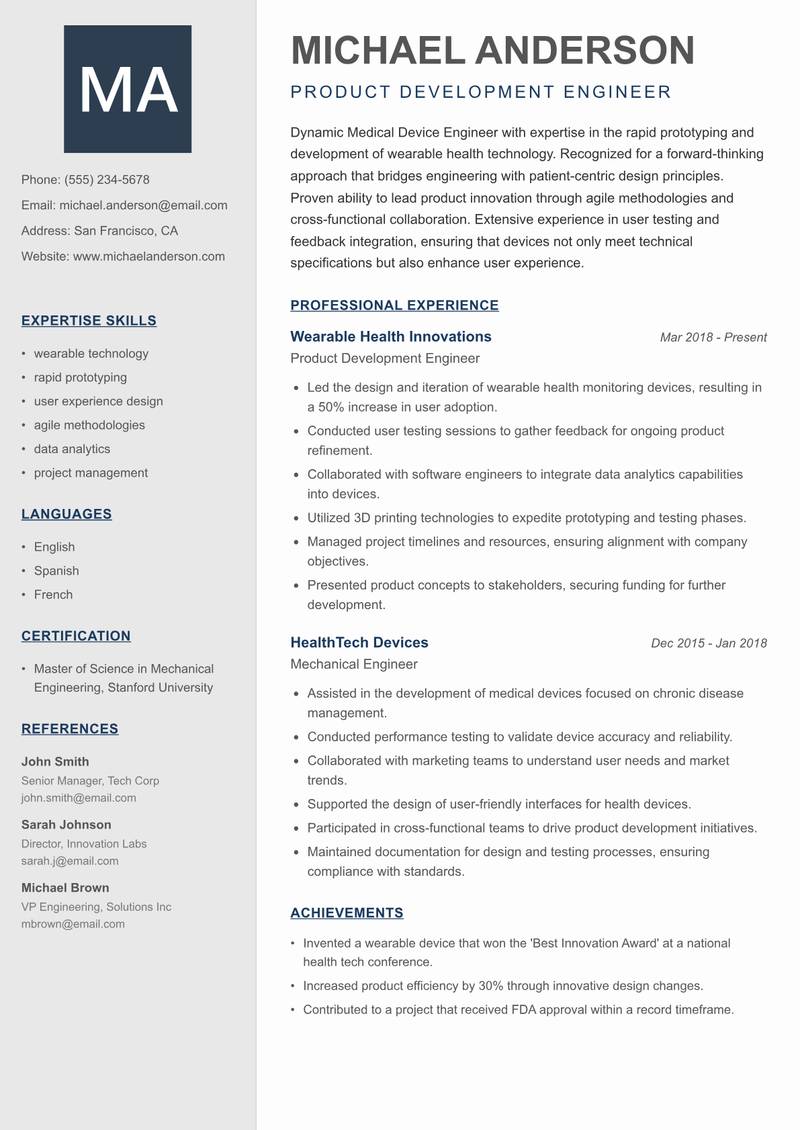
Creative Minimal
Use Template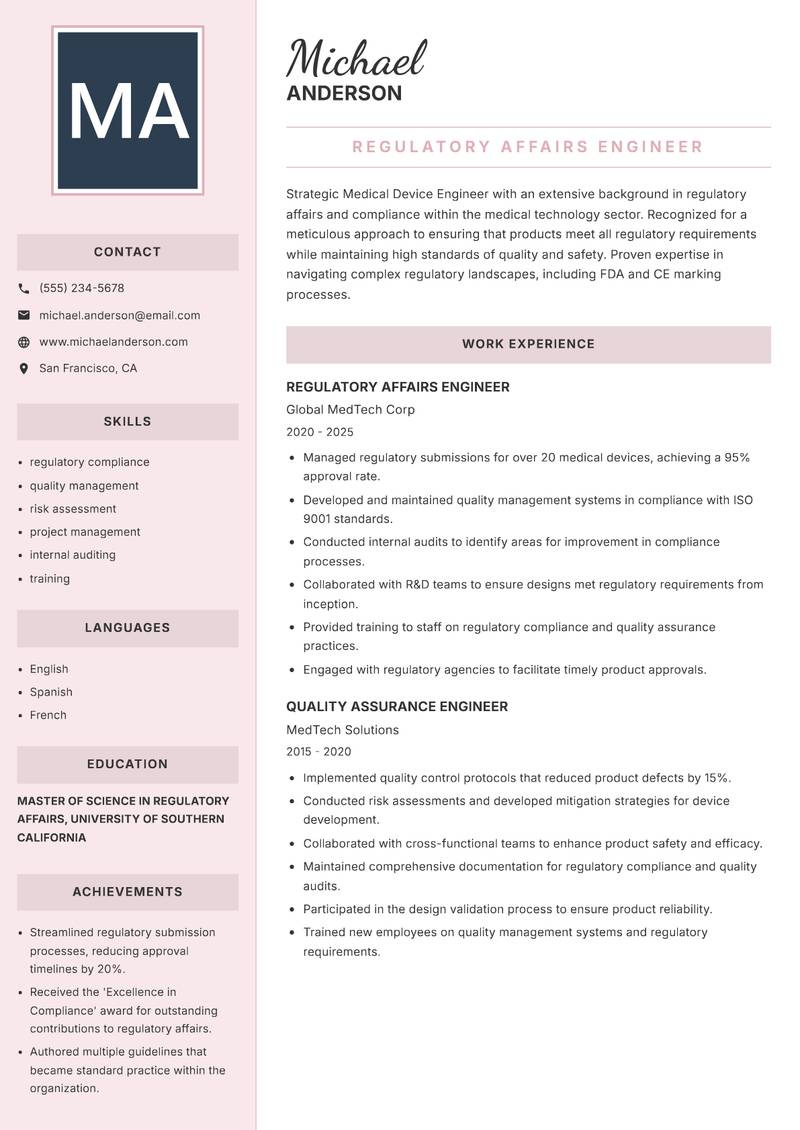
Executive
Use Template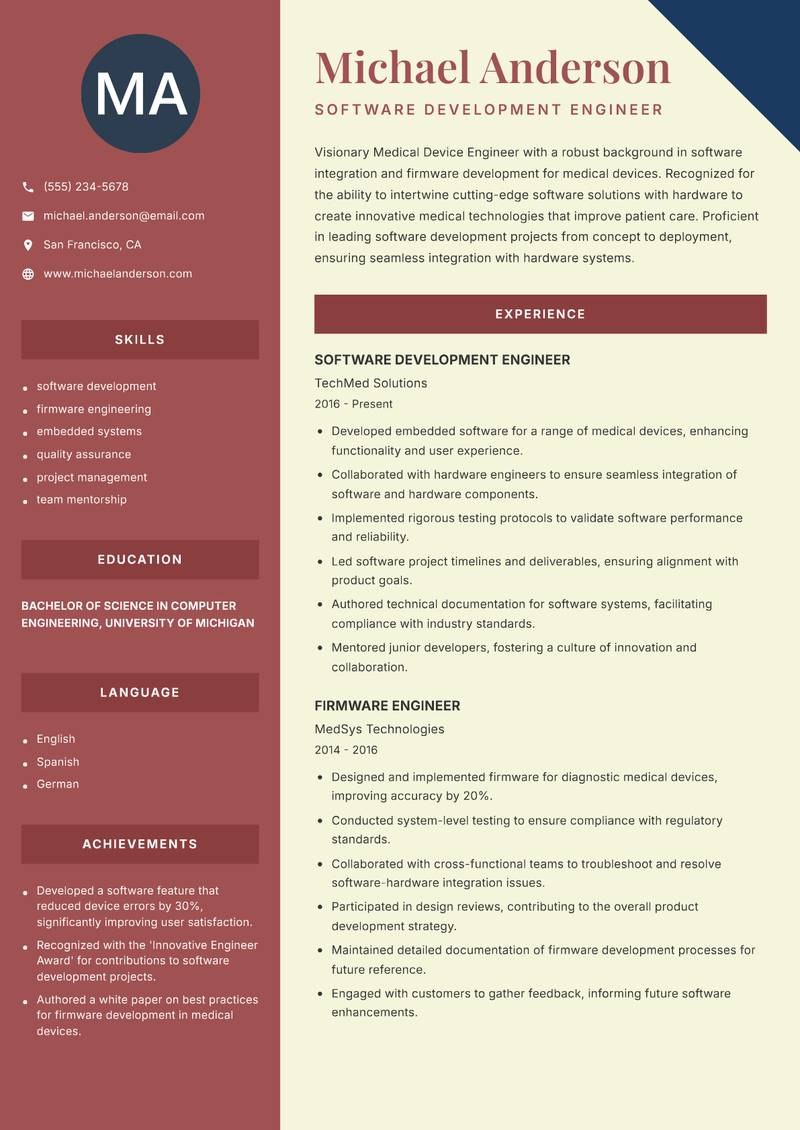
Two Column
Use Template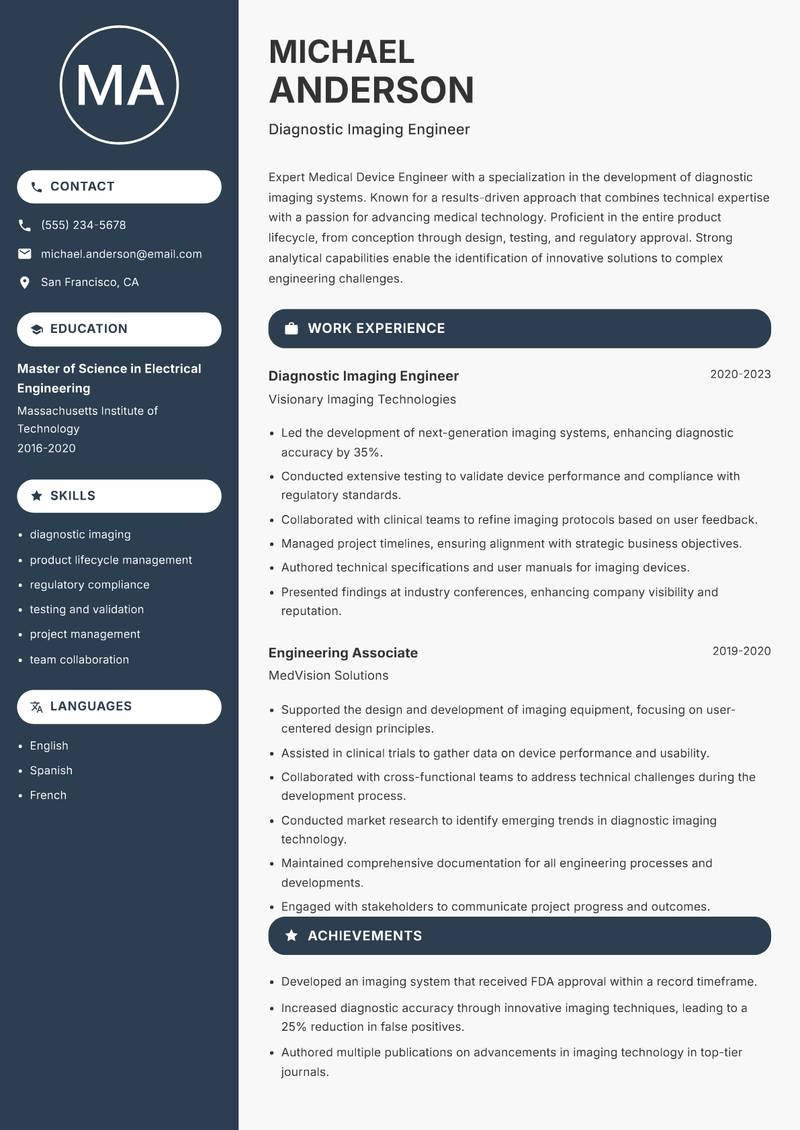
Compact
Use Template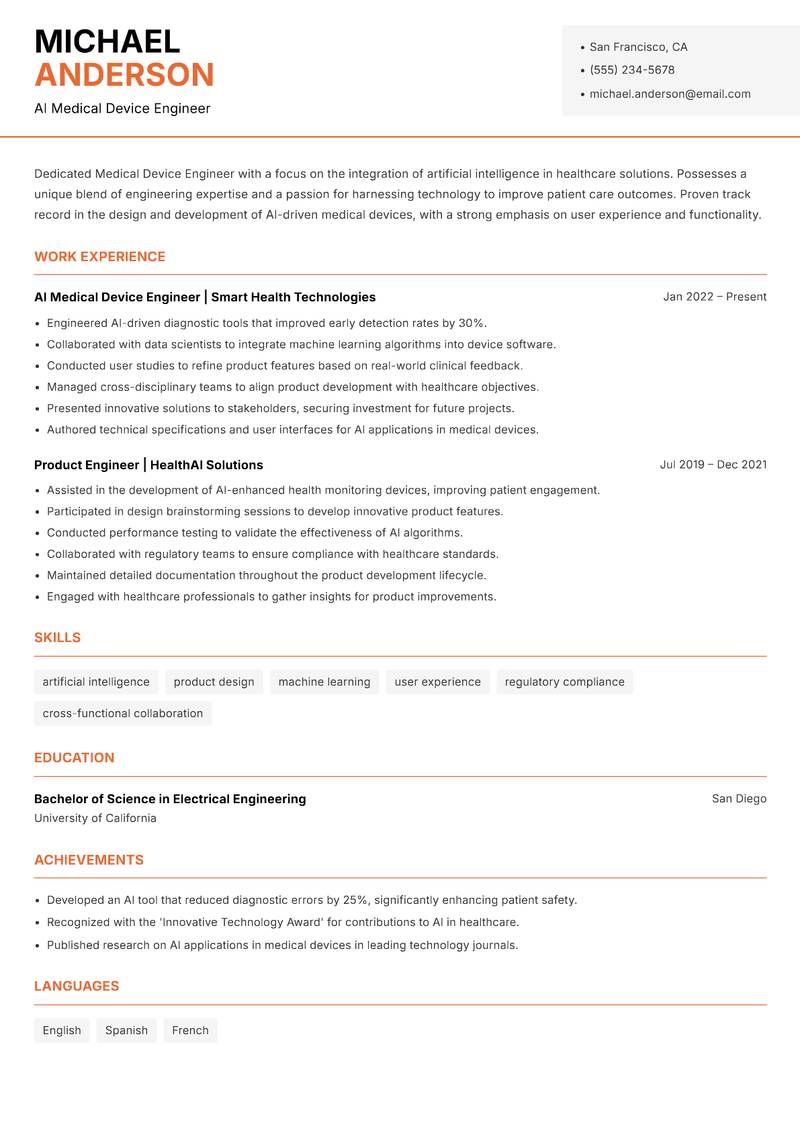
Modern Professional
Use Template7 Real Medical Device Engineer Resume Examples
Senior Medical Device Engineer with 6+ Years Experience
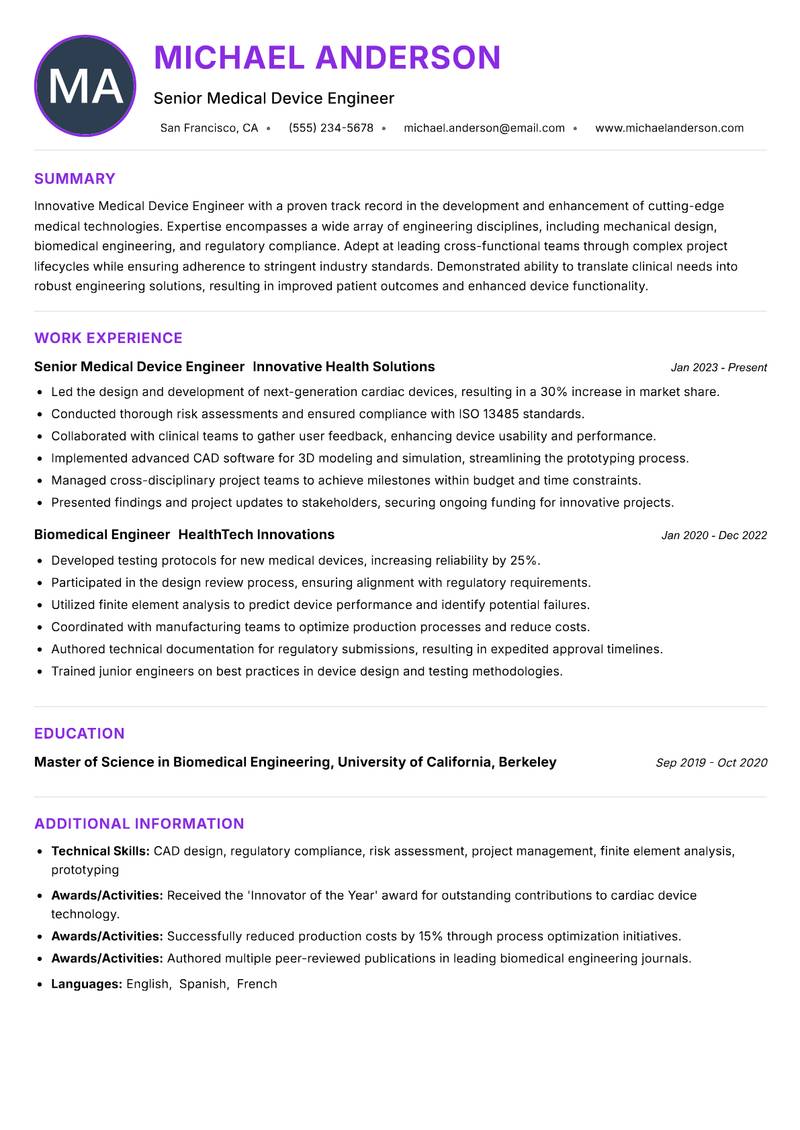
Summary: Innovative Medical Device Engineer with a proven track record in the development and enhancement of cutting-edge medical technologies. Expertise encompasses a wide array of engineering disciplines, including mechanical design, biomedical engineering, and regulatory compliance. Adept at leading cross-functional teams through complex project lifecycles while ensuring adherence to stringent industry standards. Demonstrated ability to translate clinical needs into robust engineering solutions, resulting in improved patient outcomes and enhanced device functionality. Skilled in leveraging advanced simulation tools and prototyping methods to drive product development. Committed to fostering a culture of continuous improvement and innovation within engineering teams.
Description:
- Led the design and development of next-generation cardiac devices, resulting in a 30% increase in market share.
- Conducted thorough risk assessments and ensured compliance with ISO 13485 standards.
- Collaborated with clinical teams to gather user feedback, enhancing device usability and performance.
- Implemented advanced CAD software for 3D modeling and simulation, streamlining the prototyping process.
- Managed cross-disciplinary project teams to achieve milestones within budget and time constraints.
- Presented findings and project updates to stakeholders, securing ongoing funding for innovative projects.
🏆 Key Achievements
Lead Orthopedic Device Engineer with 5+ Years Experience
Summary: Accomplished Medical Device Engineer specializing in the design and implementation of orthopedic devices. Extensive experience in the integration of cutting-edge technology and engineering principles to create solutions that meet the evolving needs of healthcare providers. Proven ability to collaborate with multidisciplinary teams to drive product development from concept through commercialization. Strong analytical skills combined with a detail-oriented approach enable the identification of critical design improvements and innovative manufacturing techniques. Committed to advancing healthcare technology through rigorous testing and validation processes, ensuring safety and efficacy.
Description:
- Directed the development of a new line of orthopedic implants, achieving a 40% reduction in surgery time.
- Conducted biomechanical testing to validate device performance under various conditions.
- Collaborated with surgeons to refine device design based on user feedback and clinical outcomes.
- Managed the regulatory submission process, ensuring timely approvals for product launch.
- Oversaw the production process, implementing quality control measures to maintain high standards.
- Mentored junior engineers, fostering a culture of innovation and professional growth.
🏆 Key Achievements
Product Development Engineer with 4+ Years Experience
Summary: Dynamic Medical Device Engineer with expertise in the rapid prototyping and development of wearable health technology. Recognized for a forward-thinking approach that bridges engineering with patient-centric design principles. Proven ability to lead product innovation through agile methodologies and cross-functional collaboration. Extensive experience in user testing and feedback integration, ensuring that devices not only meet technical specifications but also enhance user experience. Strong commitment to advancing healthcare delivery through the integration of technology and design, leading to improved patient engagement and outcomes.
Description:
- Led the design and iteration of wearable health monitoring devices, resulting in a 50% increase in user adoption.
- Conducted user testing sessions to gather feedback for ongoing product refinement.
- Collaborated with software engineers to integrate data analytics capabilities into devices.
- Utilized 3D printing technologies to expedite prototyping and testing phases.
- Managed project timelines and resources, ensuring alignment with company objectives.
- Presented product concepts to stakeholders, securing funding for further development.
🏆 Key Achievements
Regulatory Affairs Engineer with 7+ Years Experience
Summary: Strategic Medical Device Engineer with an extensive background in regulatory affairs and compliance within the medical technology sector. Recognized for a meticulous approach to ensuring that products meet all regulatory requirements while maintaining high standards of quality and safety. Proven expertise in navigating complex regulatory landscapes, including FDA and CE marking processes. Adept at developing and implementing quality management systems that bolster product reliability and market readiness. Committed to fostering relationships with regulatory bodies and stakeholders to facilitate efficient product approvals and market entry.
Description:
- Managed regulatory submissions for over 20 medical devices, achieving a 95% approval rate.
- Developed and maintained quality management systems in compliance with ISO 9001 standards.
- Conducted internal audits to identify areas for improvement in compliance processes.
- Collaborated with R&D teams to ensure designs met regulatory requirements from inception.
- Provided training to staff on regulatory compliance and quality assurance practices.
- Engaged with regulatory agencies to facilitate timely product approvals.
🏆 Key Achievements
Software Development Engineer with 5+ Years Experience
Summary: Visionary Medical Device Engineer with a robust background in software integration and firmware development for medical devices. Recognized for the ability to intertwine cutting-edge software solutions with hardware to create innovative medical technologies that improve patient care. Proficient in leading software development projects from concept to deployment, ensuring seamless integration with hardware systems. Strong analytical skills complemented by a commitment to quality assurance and software testing methodologies. A proactive approach to problem-solving and a passion for advancing healthcare technology through software innovation.
Description:
- Developed embedded software for a range of medical devices, enhancing functionality and user experience.
- Collaborated with hardware engineers to ensure seamless integration of software and hardware components.
- Implemented rigorous testing protocols to validate software performance and reliability.
- Led software project timelines and deliverables, ensuring alignment with product goals.
- Authored technical documentation for software systems, facilitating compliance with industry standards.
- Mentored junior developers, fostering a culture of innovation and collaboration.
🏆 Key Achievements
Diagnostic Imaging Engineer with 6+ Years Experience
Summary: Expert Medical Device Engineer with a specialization in the development of diagnostic imaging systems. Known for a results-driven approach that combines technical expertise with a passion for advancing medical technology. Proficient in the entire product lifecycle, from conception through design, testing, and regulatory approval. Strong analytical capabilities enable the identification of innovative solutions to complex engineering challenges. A collaborative leader who fosters teamwork and drives projects to successful completion while adhering to stringent deadlines and quality standards.
Description:
- Led the development of next-generation imaging systems, enhancing diagnostic accuracy by 35%.
- Conducted extensive testing to validate device performance and compliance with regulatory standards.
- Collaborated with clinical teams to refine imaging protocols based on user feedback.
- Managed project timelines, ensuring alignment with strategic business objectives.
- Authored technical specifications and user manuals for imaging devices.
- Presented findings at industry conferences, enhancing company visibility and reputation.
🏆 Key Achievements
AI Medical Device Engineer with 3+ Years Experience
Summary: Dedicated Medical Device Engineer with a focus on the integration of artificial intelligence in healthcare solutions. Possesses a unique blend of engineering expertise and a passion for harnessing technology to improve patient care outcomes. Proven track record in the design and development of AI-driven medical devices, with a strong emphasis on user experience and functionality. Skilled in collaborating with software developers and healthcare professionals to ensure that products meet clinical needs. Committed to advancing the field of medical technology through innovative solutions that leverage artificial intelligence.
Description:
- Engineered AI-driven diagnostic tools that improved early detection rates by 30%.
- Collaborated with data scientists to integrate machine learning algorithms into device software.
- Conducted user studies to refine product features based on real-world clinical feedback.
- Managed cross-disciplinary teams to align product development with healthcare objectives.
- Presented innovative solutions to stakeholders, securing investment for future projects.
- Authored technical specifications and user interfaces for AI applications in medical devices.
🏆 Key Achievements
Key Skills for Medical Device Engineer
ATS Optimization Tips
Increase your chances of getting hired
Use Standard Headings
Use common section titles like Experience, Skills, etc.
Include Keywords
Add role-specific keywords from the job description
Keep it Simple
Avoid complex tables, images and graphics
Save in Right Format
Use PDF format unless otherwise specified
Medical Device Engineer Salary Insights
Average Salary
$97,500
per year
Salary Range
$75,000 - $120,000
per year
Top Paying Cities
Los Angeles, Seattle, Houston, Dallas, Boston
Source: Glassdoor, Payscale, Indeed (Updated July 2026)
Everything you need to write a great Medical Device Engineer resume
Strong Action Verbs to Use
Resume Writing Tips
- →Emphasize direct experience with medical device lifecycle processes including design, prototyping, and validation.
- →Highlight your familiarity with relevant global regulations and standards such as ISO 13485 to demonstrate compliance expertise.
- →Showcase your proficiency with specific engineering software that aids in the design and simulation of medical devices.
- →Incorporate real-world accomplishments using metrics, like improvements in device reliability or reductions in manufacturing costs.
- →Tailor your resume sections based on the job description, using keywords like 'biocompatibility' or 'risk management' where applicable.
- →Include detailed examples of collaboration with cross-disciplinary teams, especially with clinical staff or regulatory bodies.
Common Mistakes to Avoid
- ✕Listing generic engineering skills that don't directly apply to medical devices; instead, focus on specific technologies and regulations relevant to healthcare.
- ✕Failing to quantify contributions; make sure to provide data that highlight improvements in efficiency, safety, or regulatory compliance.
- ✕Using jargon that may not be understood by non-engineers; ensure your resume conveys complex ideas in clear terms.
- ✕Neglecting to showcase teamwork; reflect on how collaboration with other departments advanced device development.
ATS Keywords for Medical Device Engineer
Medical Device Engineer Career Path
Relevant Certifications
Career Progression
Entry-Level
As a junior medical device engineer, individuals engage in preliminary design work and assist with testing components under the supervision of senior engineers.
Mid-Level
At the mid-level, engineers take charge of specific project segments, conducting more autonomous testing and assisting in regulatory documentation preparation.
Senior-Level
Senior engineers lead project teams, oversee the full lifecycle of product development, and ensure compliance with industry regulations while mentoring junior staff.
Lead Engineer
In a lead role, responsibilities include strategic planning for product innovation and collaboration with cross-functional teams, focusing on market needs and clinical feedback.
Manager/Director
At the managerial level, professionals guide department objectives, manage budgets and resources, and drive collaborations with stakeholders such as healthcare professionals and regulatory bodies.
Medical Device Engineer Interview Questions
Can you describe your experience with the FDA submission process for medical devices? +
Focus on specific projects where you participated in clinical trials or documentation preparation.
What design software are you proficient in, and how have you used it in your projects? +
Mention specific tools such as SolidWorks or CATIA, and discuss particular projects.
How do you ensure that your designs meet the necessary safety standards? +
Include examples of safety assessments or design iterations you implemented based on testing feedback.
Can you give an example of a challenging regulatory hurdle you encountered? +
Discuss the specific problem, your approach, and the outcome.
What methods do you use to gather and implement user feedback into your designs? +
Talk about direct experiences working with healthcare professionals or conducting user surveys.
Describe a time when you had to pivot your project significantly. What led to the change? +
Highlight critical thinking and adaptability in response to unforeseen challenges.
About the Medical Device Engineer Role
Creating innovative solutions in healthcare, medical device engineers integrate engineering principles with biological science to develop devices that address complex medical needs. Their work ranges from initial concept design through to rigorous testing and validation, ensuring compliance with stringent industry standards. Frequent collaboration with clinical teams is crucial to gather insights that inform design adjustments, enhancing both functionality and user experience.
Frequently Asked Questions
What types of projects do Medical Device Engineers typically work on? +
They work on a variety of projects ranging from implantable devices like pacemakers to diagnostics equipment and surgical instruments.
What educational background is necessary for a Medical Device Engineer? +
A degree in biomedical engineering, mechanical engineering, or a related field is typically required, along with specialized training in medical device design.
How important are certifications for someone in this role? +
Certifications, such as CQE or CBET, enhance job prospects and demonstrate expertise in quality control and biomedical equipment.
What software tools are commonly used by Medical Device Engineers? +
Common tools include SolidWorks for design and AutoCAD for drafting, alongside lab testing equipment for validation.
What are the most significant challenges faced in this field? +
Challenges often include navigating complex regulatory pathways, ensuring patient safety, and meeting market demands within tight timelines.
Is experience in clinical settings valuable for a Medical Device Engineer? +
Absolutely; firsthand clinical insights are essential for creating user-centric devices that address real-world medical challenges.
More Resume Examples You Might Like
Related Career Paths
Other roles candidates for Medical Device Engineer positions often also consider.
Will this Medical Device Engineer resume pass the ATS scan?
Upload it and get an instant AI-scored compatibility check with specific fixes.
Check My Resume →
Pair it with a matching cover letter
AI drafts a first version from your job title and strengths — edit it live, then download the PDF.
Write My Cover Letter →
Written by Nohaya Career Team
Reviewed by HR Professionals · Updated July 2026
Ready to Build Your Perfect Resume?
Choose from 1000+ professional templates and land your dream job.
Create My Resume Now