Build an ATS-Friendly
Livestock Disease Control Specialist Resume
That Gets Interviews
A Livestock Disease Control Specialist actively monitors and analyzes the health of livestock to identify and control disease outbreaks. This role involves the collection of samples and data from livestock, analyzing trends, and developing management practices aimed at minimizing disease impact. Collaborating closely…
Livestock Disease Control Specialist Resume Templates
Modern Professional
Use Template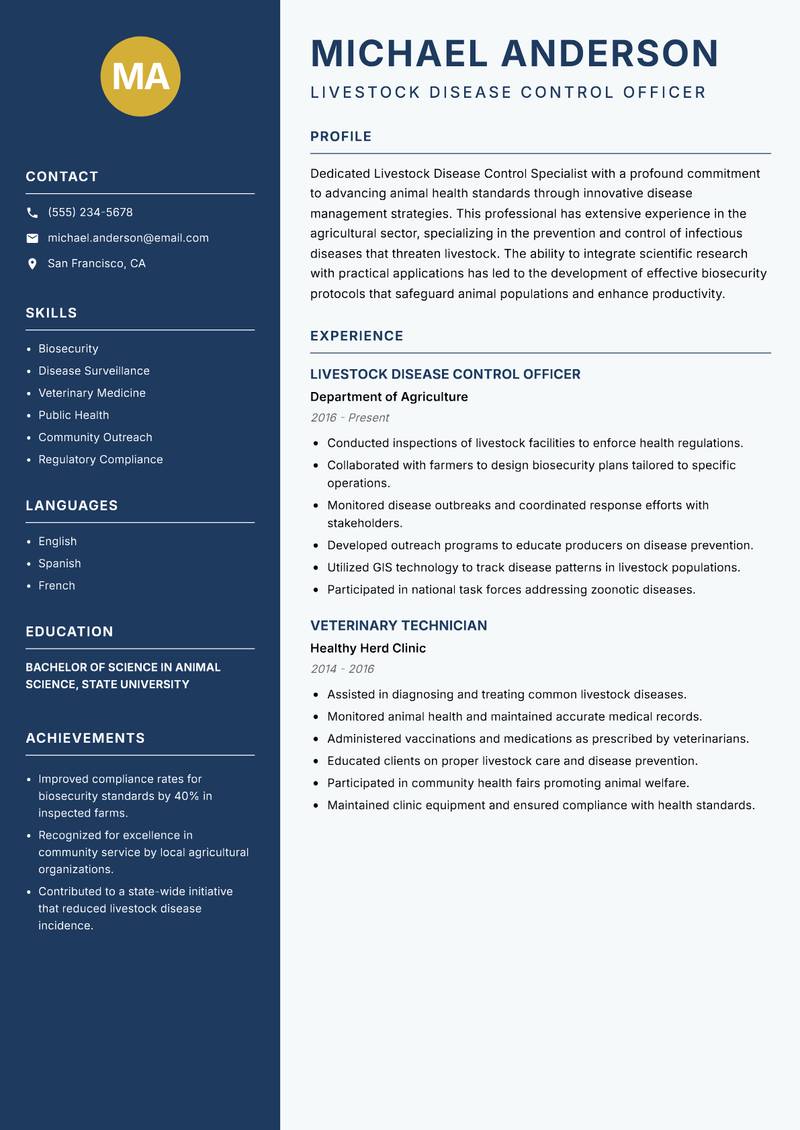
Classic Clean
Use Template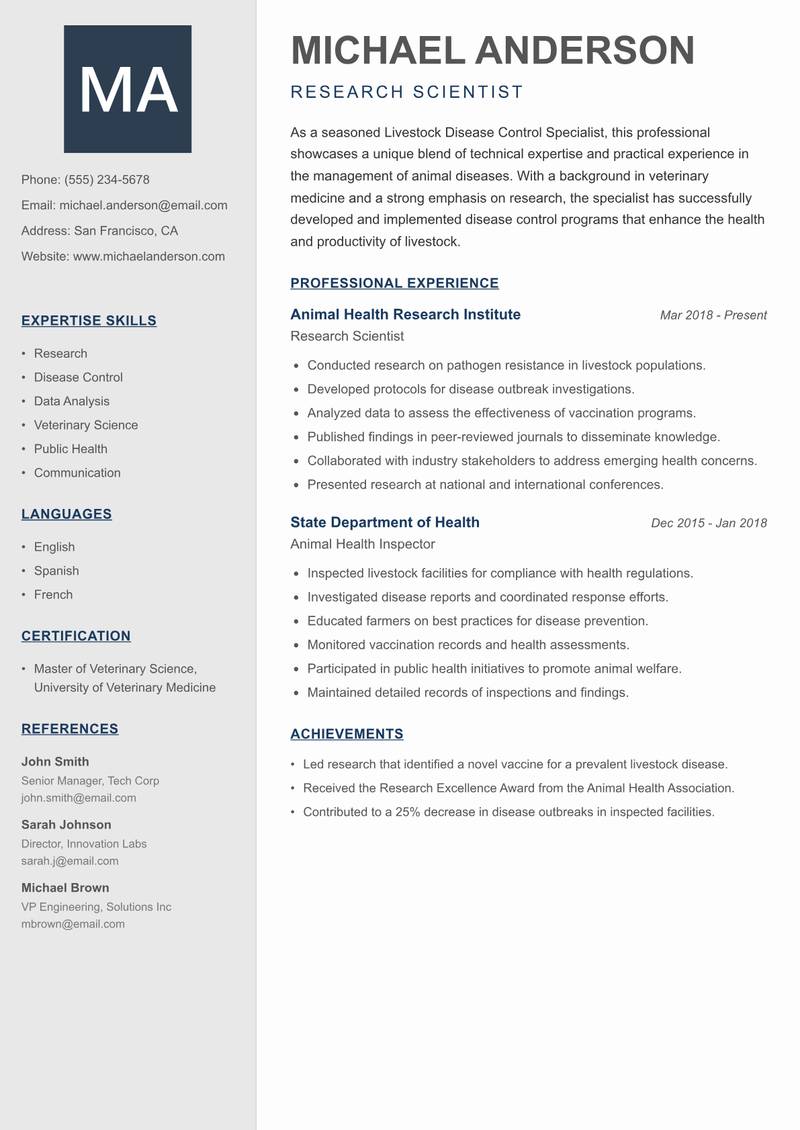
Creative Minimal
Use Template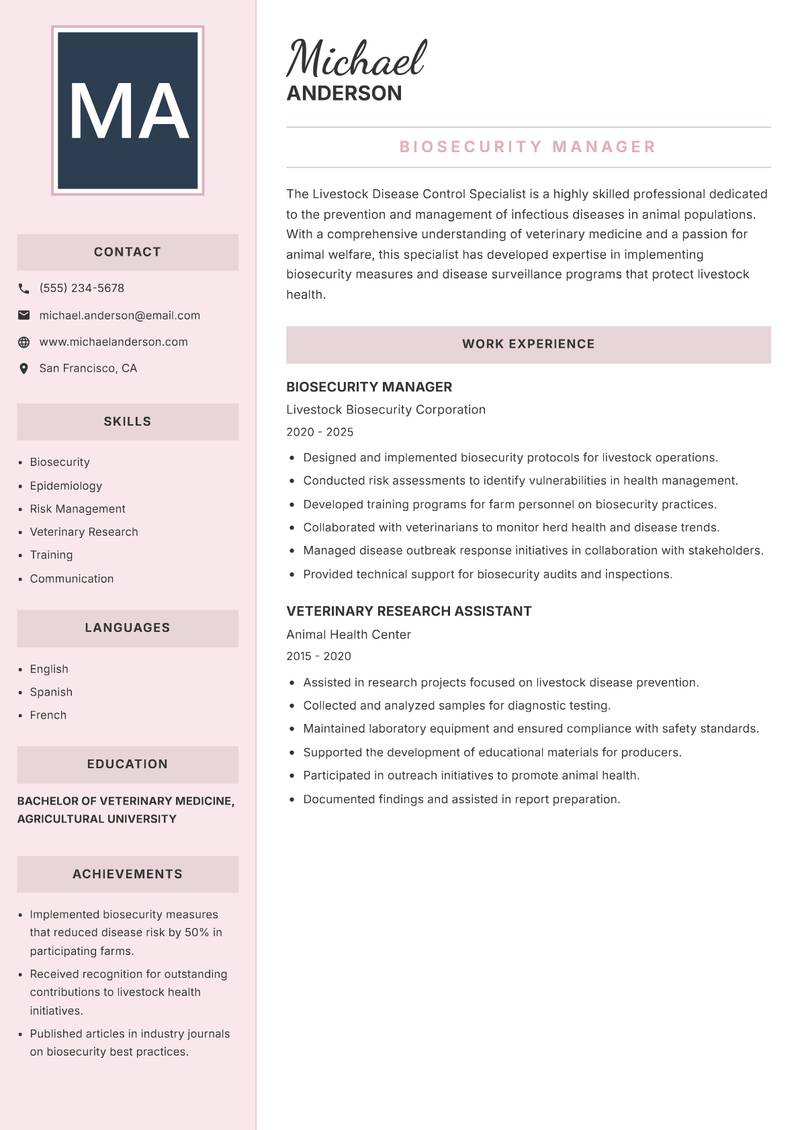
Executive
Use Template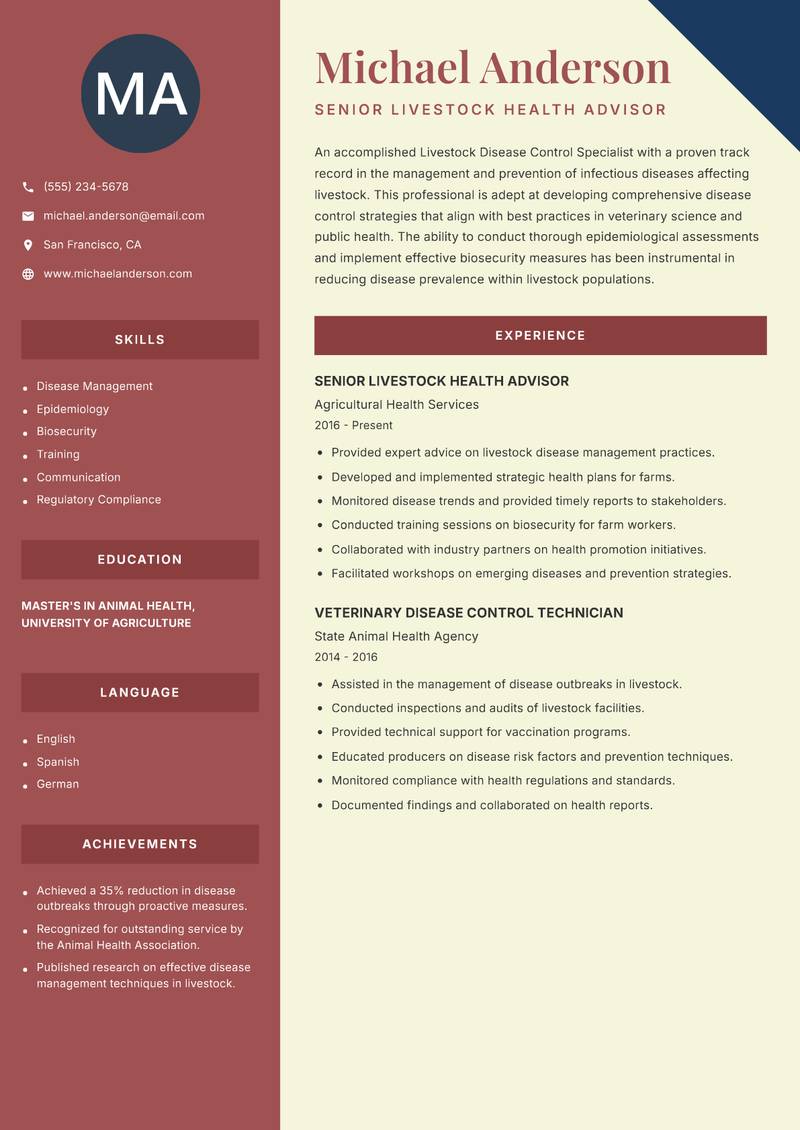
Two Column
Use Template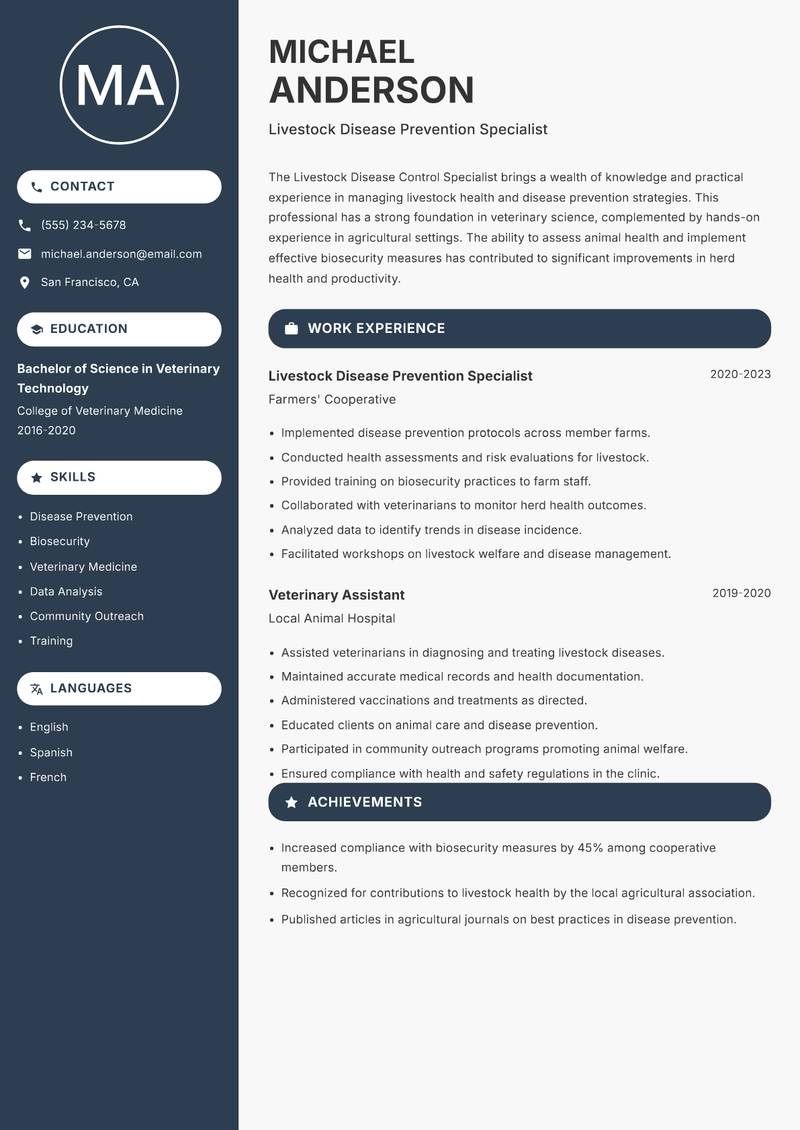
Compact
Use Template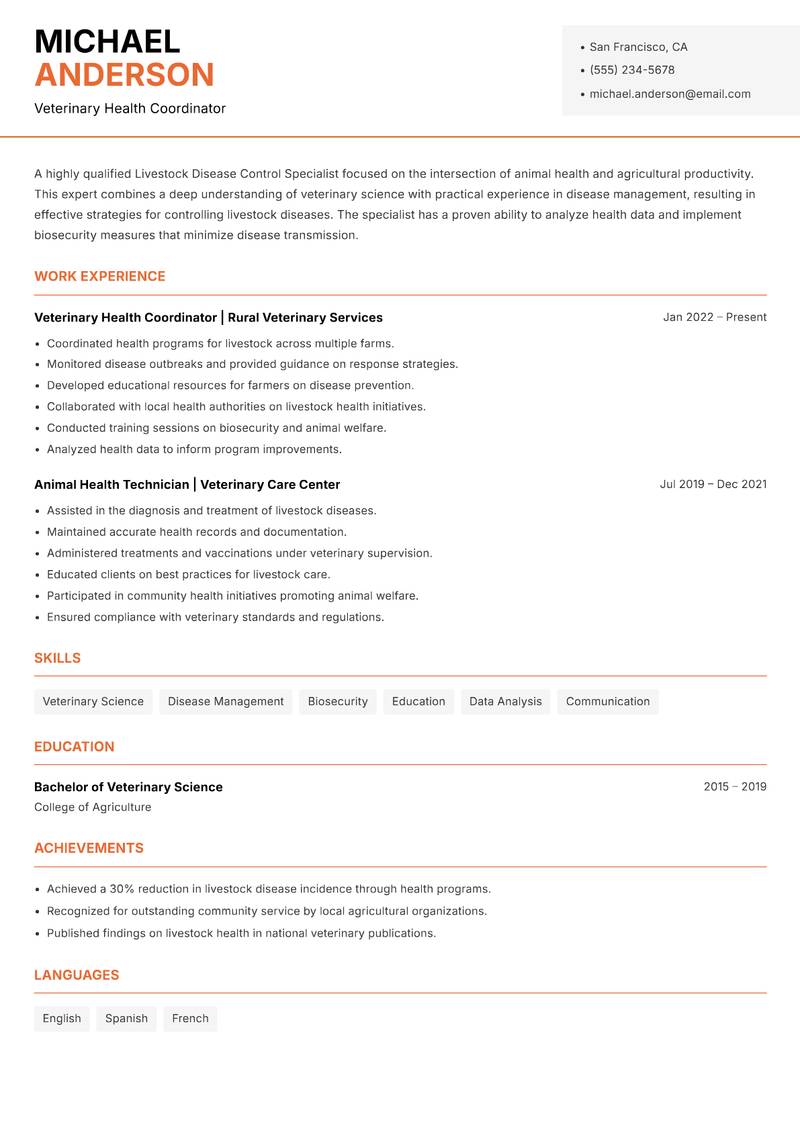
Modern Professional
Use Template7 Real Livestock Disease Control Specialist Resume Examples
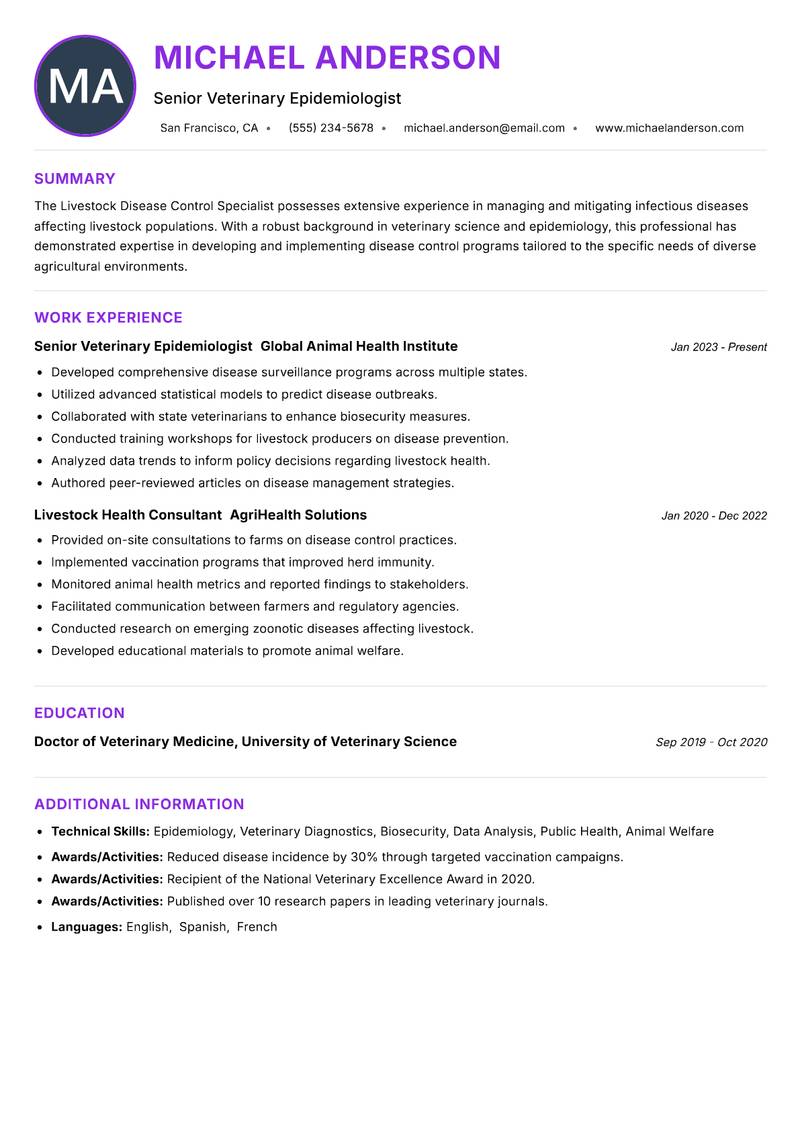
Senior Veterinary Epidemiologist with 8+ Years Experience
Summary: The Livestock Disease Control Specialist possesses extensive experience in managing and mitigating infectious diseases affecting livestock populations. With a robust background in veterinary science and epidemiology, this professional has demonstrated expertise in developing and implementing disease control programs tailored to the specific needs of diverse agricultural environments. The ability to analyze epidemiological data and collaborate effectively with farmers, veterinarians, and governmental agencies has resulted in significant advancements in herd health management and biosecurity protocols. Proficient in utilizing modern diagnostic technologies and data analytics, the specialist has successfully led initiatives that reduced disease incidence and improved livestock productivity. This role demands a commitment to continuous education and adaptation to evolving veterinary practices, ensuring the highest standards of animal welfare and public health are maintained. The specialist's strategic approach combines scientific rigor with practical solutions, fostering sustainable agricultural practices that benefit both producers and consumers.
Description:
- Developed comprehensive disease surveillance programs across multiple states.
- Utilized advanced statistical models to predict disease outbreaks.
- Collaborated with state veterinarians to enhance biosecurity measures.
- Conducted training workshops for livestock producers on disease prevention.
- Analyzed data trends to inform policy decisions regarding livestock health.
- Authored peer-reviewed articles on disease management strategies.
🏆 Key Achievements
Livestock Disease Control Officer with 6+ Years Experience
Summary: Dedicated Livestock Disease Control Specialist with a profound commitment to advancing animal health standards through innovative disease management strategies. This professional has extensive experience in the agricultural sector, specializing in the prevention and control of infectious diseases that threaten livestock. The ability to integrate scientific research with practical applications has led to the development of effective biosecurity protocols that safeguard animal populations and enhance productivity. Expertise in collaborating with multidisciplinary teams, including veterinarians, farmers, and regulatory bodies, has facilitated the implementation of successful health programs. A strong advocate for animal welfare, this specialist employs a data-driven approach to monitor disease prevalence and guide interventions. The focus remains on fostering resilient livestock systems that contribute to sustainable agricultural practices while ensuring compliance with health regulations. Through continuous professional development and engagement with the latest veterinary advancements, the specialist strives to maintain the highest standards of livestock health and safety.
Description:
- Conducted inspections of livestock facilities to enforce health regulations.
- Collaborated with farmers to design biosecurity plans tailored to specific operations.
- Monitored disease outbreaks and coordinated response efforts with stakeholders.
- Developed outreach programs to educate producers on disease prevention.
- Utilized GIS technology to track disease patterns in livestock populations.
- Participated in national task forces addressing zoonotic diseases.
🏆 Key Achievements
Research Scientist with 7+ Years Experience
Summary: As a seasoned Livestock Disease Control Specialist, this professional showcases a unique blend of technical expertise and practical experience in the management of animal diseases. With a background in veterinary medicine and a strong emphasis on research, the specialist has successfully developed and implemented disease control programs that enhance the health and productivity of livestock. The capacity to analyze complex data sets and apply evidence-based practices has resulted in improved biosecurity measures and reduced disease transmission. Through effective communication and collaboration with farmers, veterinarians, and agricultural organizations, the specialist has promoted best practices in animal health management. This role requires a commitment to ongoing education and adaptation to emerging disease threats, ensuring the implementation of innovative solutions that prioritize animal welfare and public health. By fostering a culture of health within livestock operations, the specialist contributes to the sustainability of the agricultural sector.
Description:
- Conducted research on pathogen resistance in livestock populations.
- Developed protocols for disease outbreak investigations.
- Analyzed data to assess the effectiveness of vaccination programs.
- Published findings in peer-reviewed journals to disseminate knowledge.
- Collaborated with industry stakeholders to address emerging health concerns.
- Presented research at national and international conferences.
🏆 Key Achievements
Biosecurity Manager with 6+ Years Experience
Summary: The Livestock Disease Control Specialist is a highly skilled professional dedicated to the prevention and management of infectious diseases in animal populations. With a comprehensive understanding of veterinary medicine and a passion for animal welfare, this specialist has developed expertise in implementing biosecurity measures and disease surveillance programs that protect livestock health. The ability to analyze epidemiological data and identify risk factors has led to the successful mitigation of disease outbreaks in various agricultural settings. Collaboration with farmers, veterinarians, and industry stakeholders has been essential in promoting best practices and educating the agricultural community on disease prevention strategies. This role requires a proactive approach to research and continuous improvement, ensuring that livestock operations remain resilient to emerging health threats. By fostering a culture of health and safety, the specialist contributes to the overall sustainability of the livestock industry.
Description:
- Designed and implemented biosecurity protocols for livestock operations.
- Conducted risk assessments to identify vulnerabilities in health management.
- Developed training programs for farm personnel on biosecurity practices.
- Collaborated with veterinarians to monitor herd health and disease trends.
- Managed disease outbreak response initiatives in collaboration with stakeholders.
- Provided technical support for biosecurity audits and inspections.
🏆 Key Achievements
Senior Livestock Health Advisor with 7+ Years Experience
Summary: An accomplished Livestock Disease Control Specialist with a proven track record in the management and prevention of infectious diseases affecting livestock. This professional is adept at developing comprehensive disease control strategies that align with best practices in veterinary science and public health. The ability to conduct thorough epidemiological assessments and implement effective biosecurity measures has been instrumental in reducing disease prevalence within livestock populations. With strong communication skills, the specialist collaborates effectively with farmers, veterinarians, and regulatory bodies, ensuring that all stakeholders are informed and engaged in disease prevention efforts. A commitment to ongoing professional development and research enables the specialist to stay abreast of the latest advancements in disease control methodologies. By fostering a proactive approach to animal health management, this specialist significantly contributes to the sustainability and productivity of the agricultural sector.
Description:
- Provided expert advice on livestock disease management practices.
- Developed and implemented strategic health plans for farms.
- Monitored disease trends and provided timely reports to stakeholders.
- Conducted training sessions on biosecurity for farm workers.
- Collaborated with industry partners on health promotion initiatives.
- Facilitated workshops on emerging diseases and prevention strategies.
🏆 Key Achievements
Livestock Disease Prevention Specialist with 7+ Years Experience
Summary: The Livestock Disease Control Specialist brings a wealth of knowledge and practical experience in managing livestock health and disease prevention strategies. This professional has a strong foundation in veterinary science, complemented by hands-on experience in agricultural settings. The ability to assess animal health and implement effective biosecurity measures has contributed to significant improvements in herd health and productivity. The specialist excels in collaborating with farmers, veterinarians, and agricultural organizations to develop tailored disease control programs that address specific challenges within livestock operations. By employing data-driven approaches and staying current with industry advancements, this professional ensures that livestock health management practices are effective and sustainable. A commitment to education and outreach reinforces the importance of disease prevention within the agricultural community, fostering a culture of health that benefits both animals and producers.
Description:
- Implemented disease prevention protocols across member farms.
- Conducted health assessments and risk evaluations for livestock.
- Provided training on biosecurity practices to farm staff.
- Collaborated with veterinarians to monitor herd health outcomes.
- Analyzed data to identify trends in disease incidence.
- Facilitated workshops on livestock welfare and disease management.
🏆 Key Achievements
Veterinary Health Coordinator with 6+ Years Experience
Summary: A highly qualified Livestock Disease Control Specialist focused on the intersection of animal health and agricultural productivity. This expert combines a deep understanding of veterinary science with practical experience in disease management, resulting in effective strategies for controlling livestock diseases. The specialist has a proven ability to analyze health data and implement biosecurity measures that minimize disease transmission. Collaboration with farmers, veterinarians, and industry stakeholders is paramount, ensuring that all parties are aligned in their efforts to promote animal welfare and public health. With a commitment to continuous improvement and education, this professional seeks to stay at the forefront of veterinary advancements, ensuring that livestock operations remain resilient and sustainable. Through proactive disease management and a focus on health education, the specialist significantly enhances the productivity and safety of livestock farming.
Description:
- Coordinated health programs for livestock across multiple farms.
- Monitored disease outbreaks and provided guidance on response strategies.
- Developed educational resources for farmers on disease prevention.
- Collaborated with local health authorities on livestock health initiatives.
- Conducted training sessions on biosecurity and animal welfare.
- Analyzed health data to inform program improvements.
🏆 Key Achievements
Key Skills for Livestock Disease Control Specialist
ATS Optimization Tips
Increase your chances of getting hired
Use Standard Headings
Use common section titles like Experience, Skills, etc.
Include Keywords
Add role-specific keywords from the job description
Keep it Simple
Avoid complex tables, images and graphics
Save in Right Format
Use PDF format unless otherwise specified
Livestock Disease Control Specialist Salary Insights
Average Salary
$62,500
per year
Salary Range
$50,000 - $75,000
per year
Top Paying Cities
Los Angeles, Seattle, Houston, Dallas, Boston
Source: Glassdoor, Payscale, Indeed (Updated July 2025)
Everything you need to write a great Livestock Disease Control Specialist resume
Strong Action Verbs to Use
Resume Writing Tips
- →Highlight hands-on experience with disease monitoring on farms or ranches.
- →Include specific software used for data collection and analytics in animal husbandry.
- →Showcase any direct contributions to disease outbreak management and resulting outcomes.
- →Mention collaborations with veterinarians or state animal health officials to enhance credibility.
- →Detail any public speaking or training experiences related to livestock health education.
Common Mistakes to Avoid
- ✕Ignoring the need for specific metrics or achievements related to disease control success.
- ✕Using generic farm or veterinary terminology without context to livestock management.
- ✕Focusing solely on academic qualifications without practical industry experience.
- ✕Neglecting to include knowledge of regional and local regulations affecting livestock health.
ATS Keywords for Livestock Disease Control Specialist
Livestock Disease Control Specialist Career Path
Career Progression
Entry-Level
Assist with basic disease monitoring and reporting within livestock populations.
Mid-Level
Coordinate disease management programs and collaborate with veterinarians and farm managers.
Senior-Level
Oversee comprehensive disease control strategies for large-scale livestock operations.
Managerial
Lead a team of specialists in the implementation of biosecurity measures across multiple facilities.
Director
Shape organizational policies for livestock health management and regulatory compliance.
Livestock Disease Control Specialist Interview Questions
Can you describe a disease outbreak you managed and the steps you took to control it? +
Highlight specific strategies you employed and the outcome.
What experience do you have with biosecurity protocols on livestock farms? +
Detail specific protocols you have implemented and their effectiveness.
How do you stay updated on regulatory changes concerning animal health? +
Mention specific sources or organizations you follow.
Can you discuss a time when you had to communicate difficult information to a farmer or rancher? +
Provide an example that demonstrates your communication skills.
What diagnostic tools do you find most effective for detecting livestock diseases? +
List tools and explain why they are advantageous.
How do you prioritize various tasks in a fast-paced livestock environment? +
Share your method for managing competing deadlines.
About the Livestock Disease Control Specialist Role
A Livestock Disease Control Specialist actively monitors and analyzes the health of livestock to identify and control disease outbreaks. This role involves the collection of samples and data from livestock, analyzing trends, and developing management practices aimed at minimizing disease impact. Collaborating closely with veterinarians and farm staff, the specialist implements biosecurity measures tailored to specific agricultural settings, ensuring both animal and public health are safeguarded.
Frequently Asked Questions
What skills are essential for a Livestock Disease Control Specialist? +
Critical thinking, attention to detail, communication skills, and familiarity with biosecurity protocols are vital.
How does a Livestock Disease Control Specialist interact with farmers? +
They provide advice on disease prevention strategies, training for staff, and guidance during disease outbreaks.
Are there certification programs specifically for Livestock Disease Control Specialists? +
While specific certifications may not exist, related courses in animal health and epidemiology can be beneficial.
What tools do Livestock Disease Control Specialists use? +
Common tools include diagnostic kits, data management software, and field sampling equipment for laboratory analysis.
What is the typical work environment for this role? +
Most specialists work in agricultural settings, including farms, ranches, and veterinary clinics, often outdoors and in various weather conditions.
How do Livestock Disease Control Specialists contribute to public health? +
By maintaining livestock health and preventing disease spread, they indirectly protect human health through food safety and biosecurity.
More Resume Examples You Might Like
Related Career Paths
Other roles candidates for Livestock Disease Control Specialist positions often also consider.
Will this Livestock Disease Control Specialist resume pass the ATS scan?
Upload it and get an instant AI-scored compatibility check with specific fixes.
Check My Resume →
Pair it with a matching cover letter
AI drafts a first version from your job title and strengths — edit it live, then download the PDF.
Write My Cover Letter →
Written by Nohaya Career Team
Reviewed by HR Professionals · Updated July 2025
Ready to Build Your Perfect Resume?
Choose from 1000+ professional templates and land your dream job.
Create My Resume Now