Build an ATS-Friendly
Land Degradation Analyst Resume
That Gets Interviews
By combining field data collection with advanced data analytics, a Land Degradation Analyst contributes to sustainable land management practices that protect soil integrity. Utilizing tools such as GIS and remote sensing, these professionals assess the extent and impact of degradation while collaborating with various…
Land Degradation Analyst Resume Templates
Modern Professional
Use Template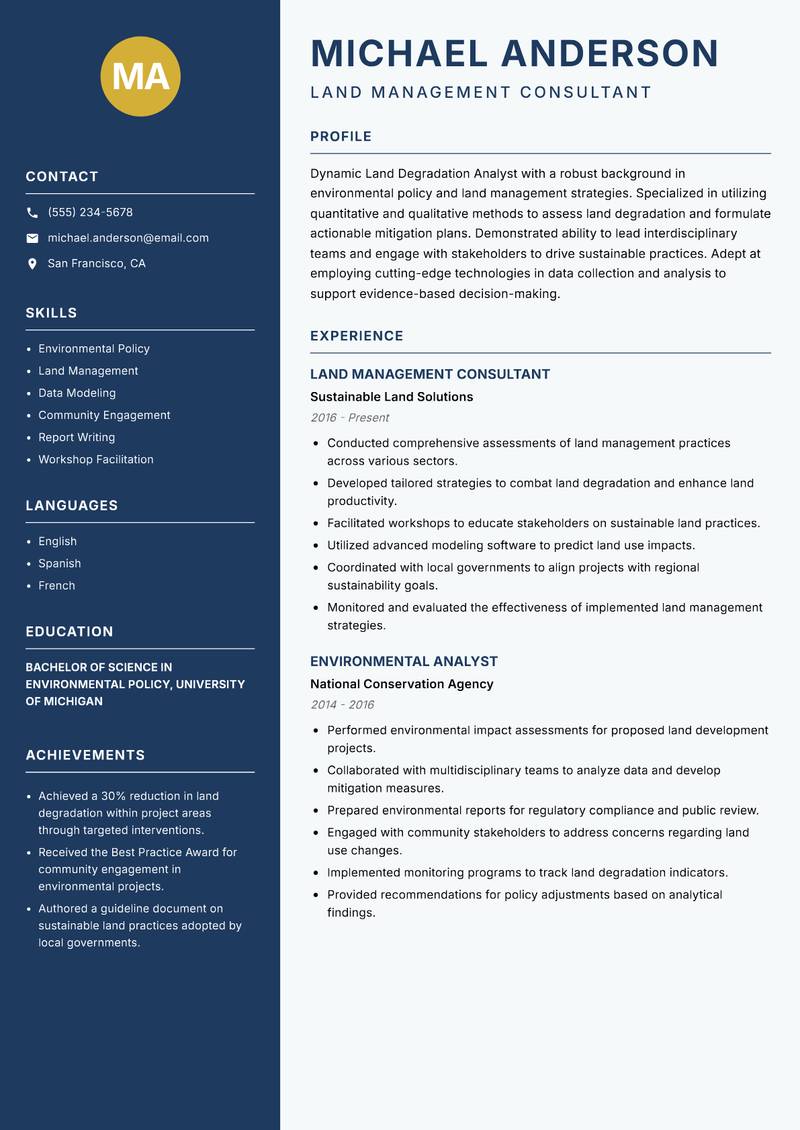
Classic Clean
Use Template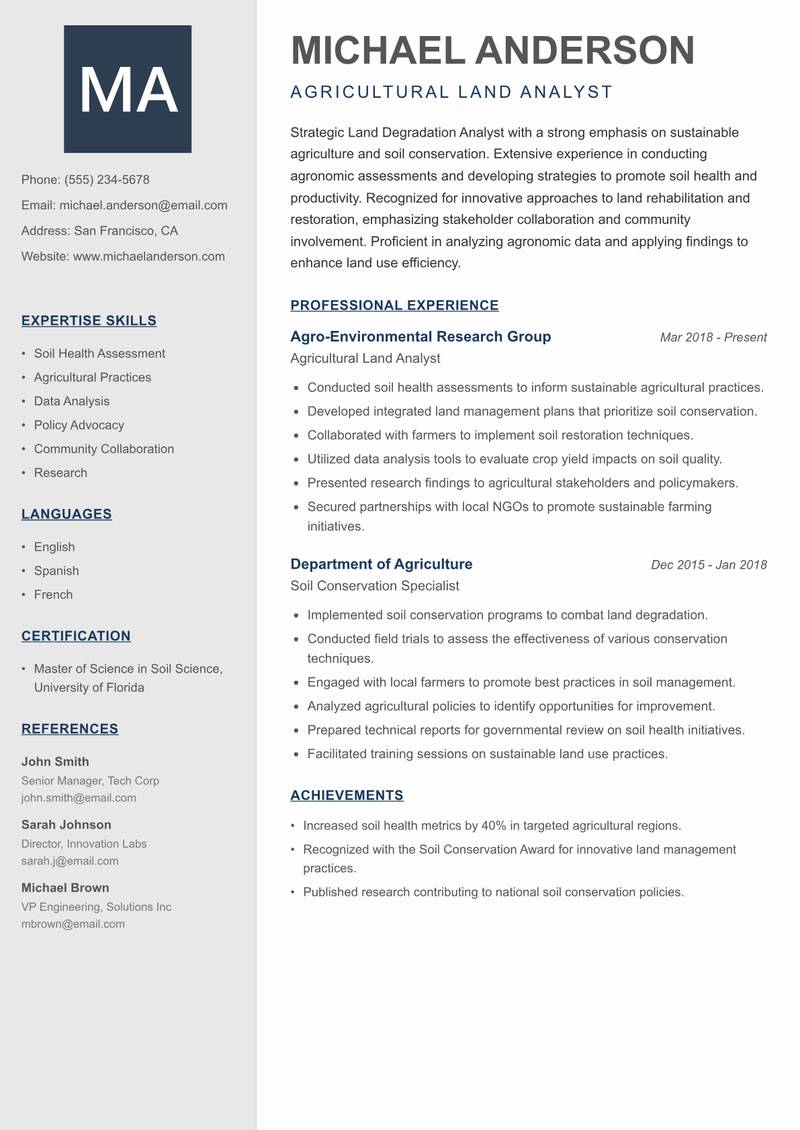
Creative Minimal
Use Template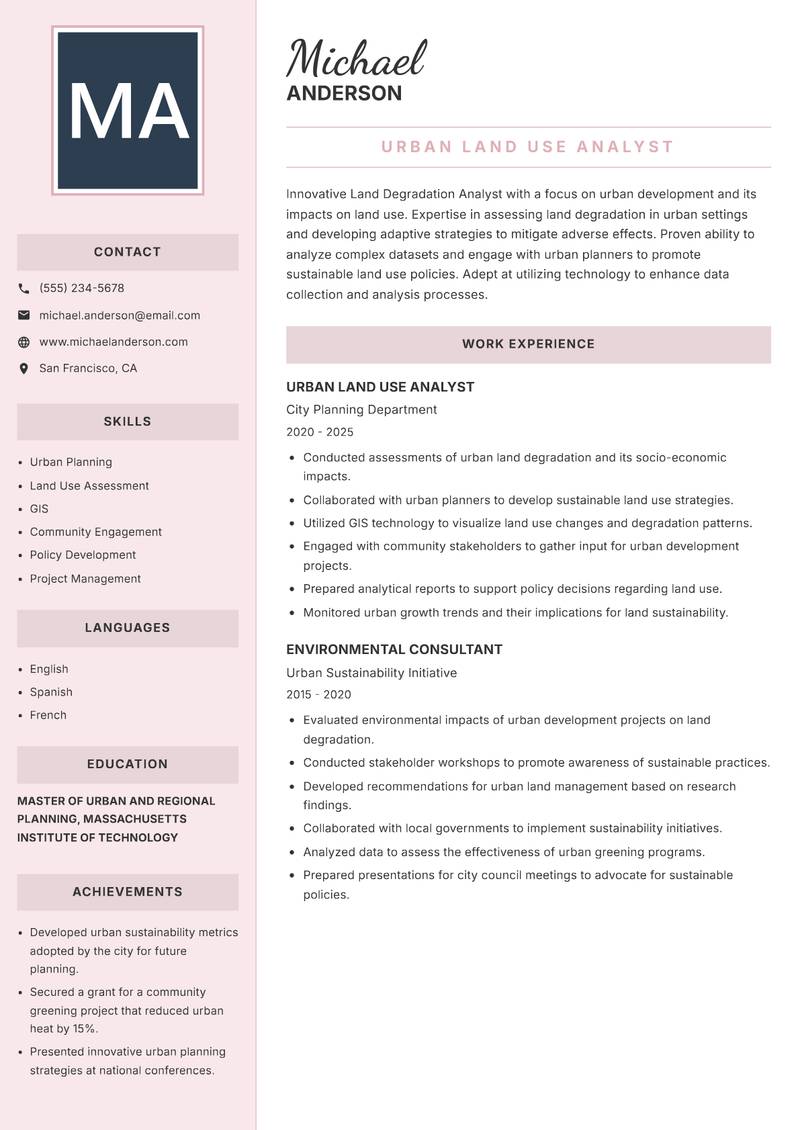
Executive
Use Template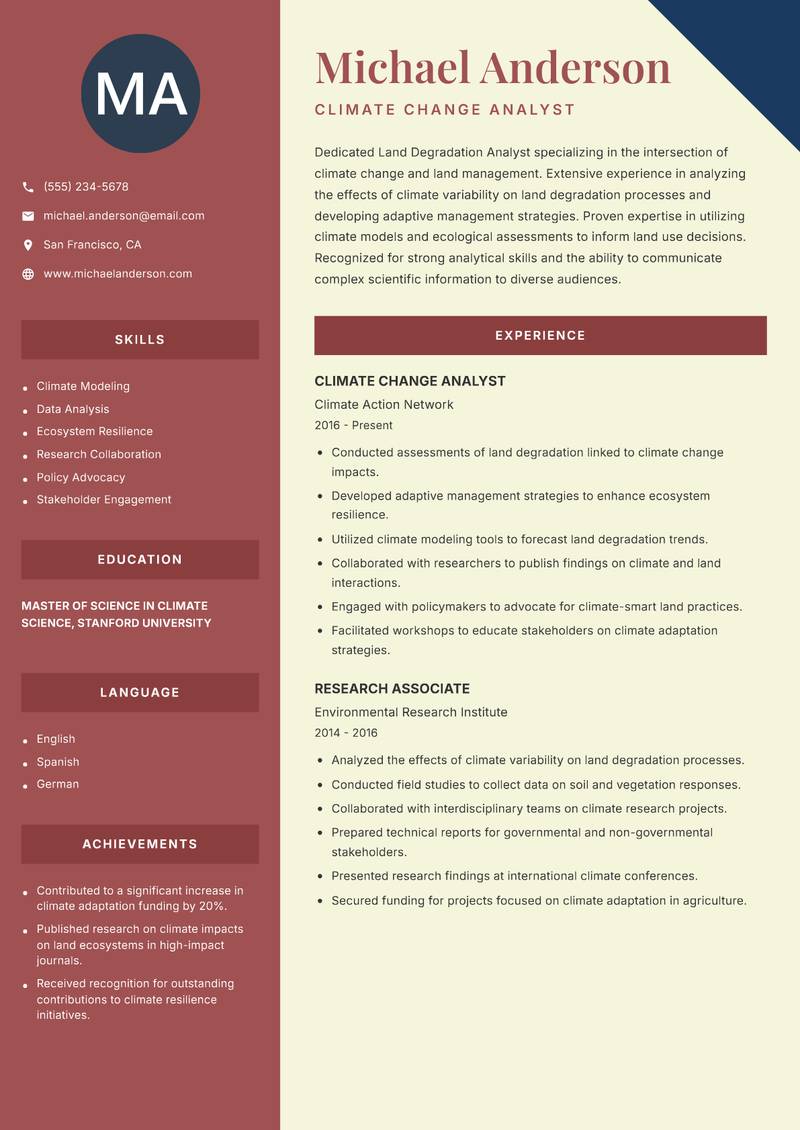
Two Column
Use Template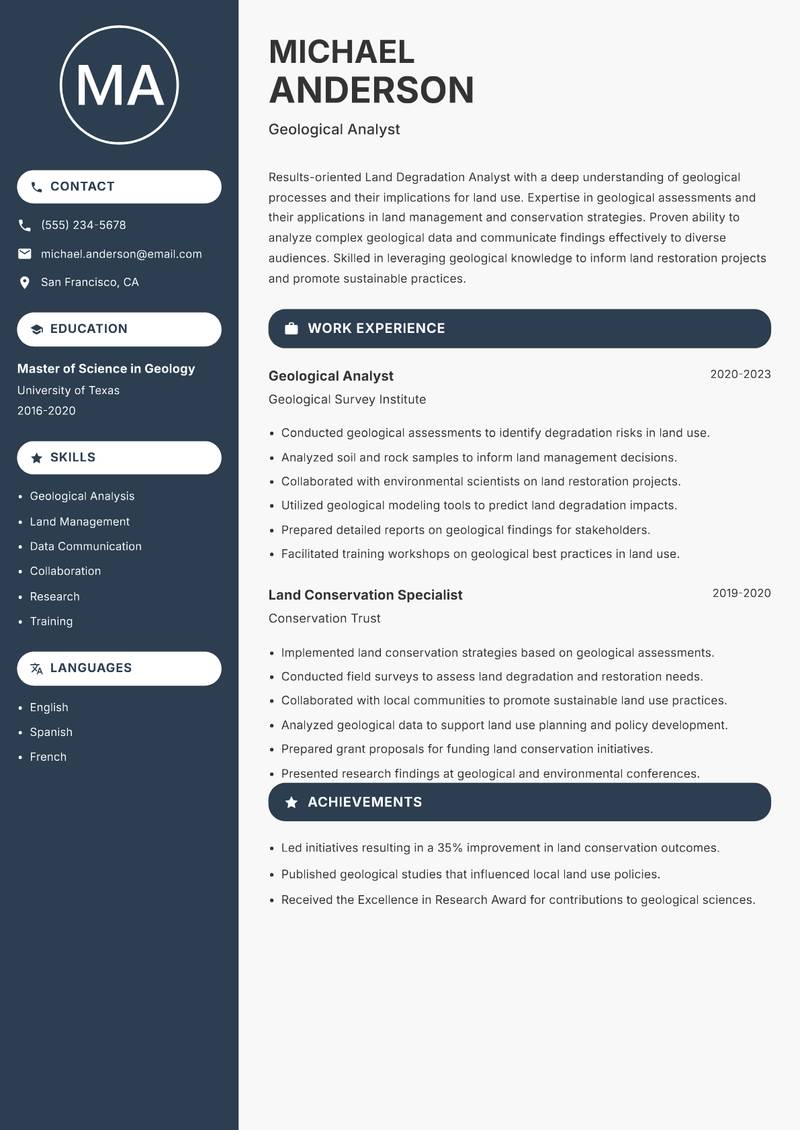
Compact
Use Template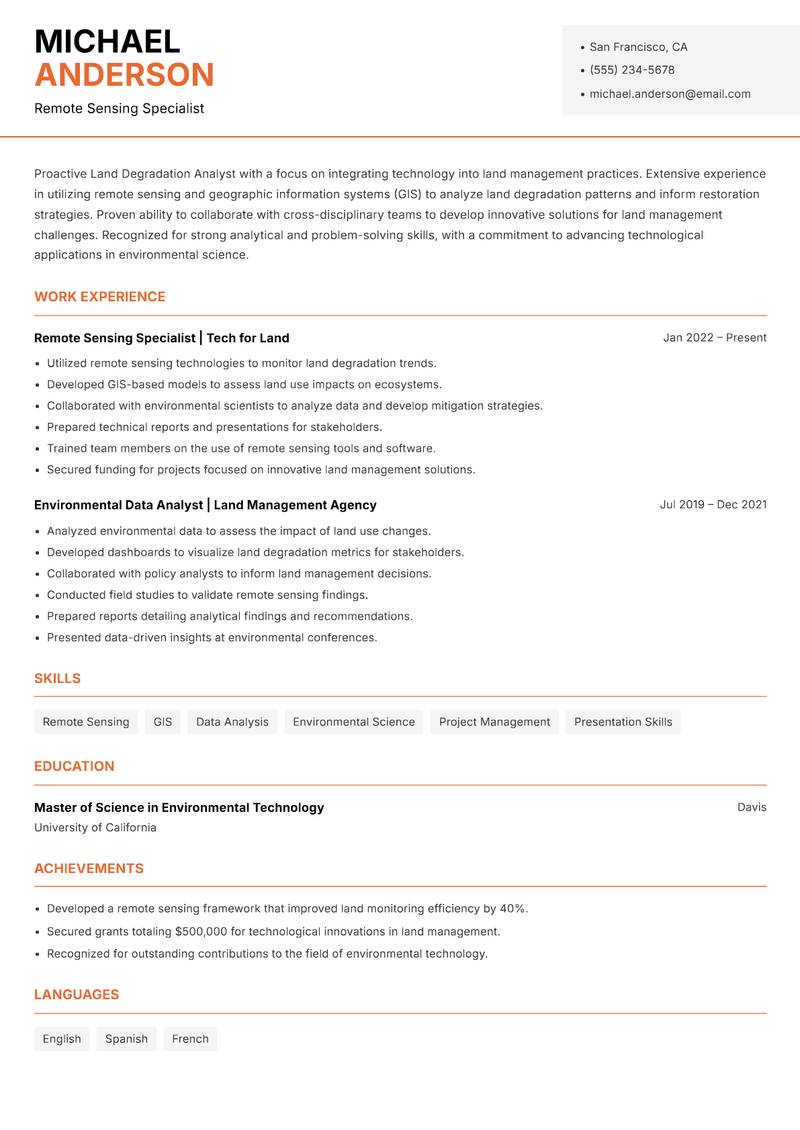
Modern Professional
Use Template7 Real Land Degradation Analyst Resume Examples
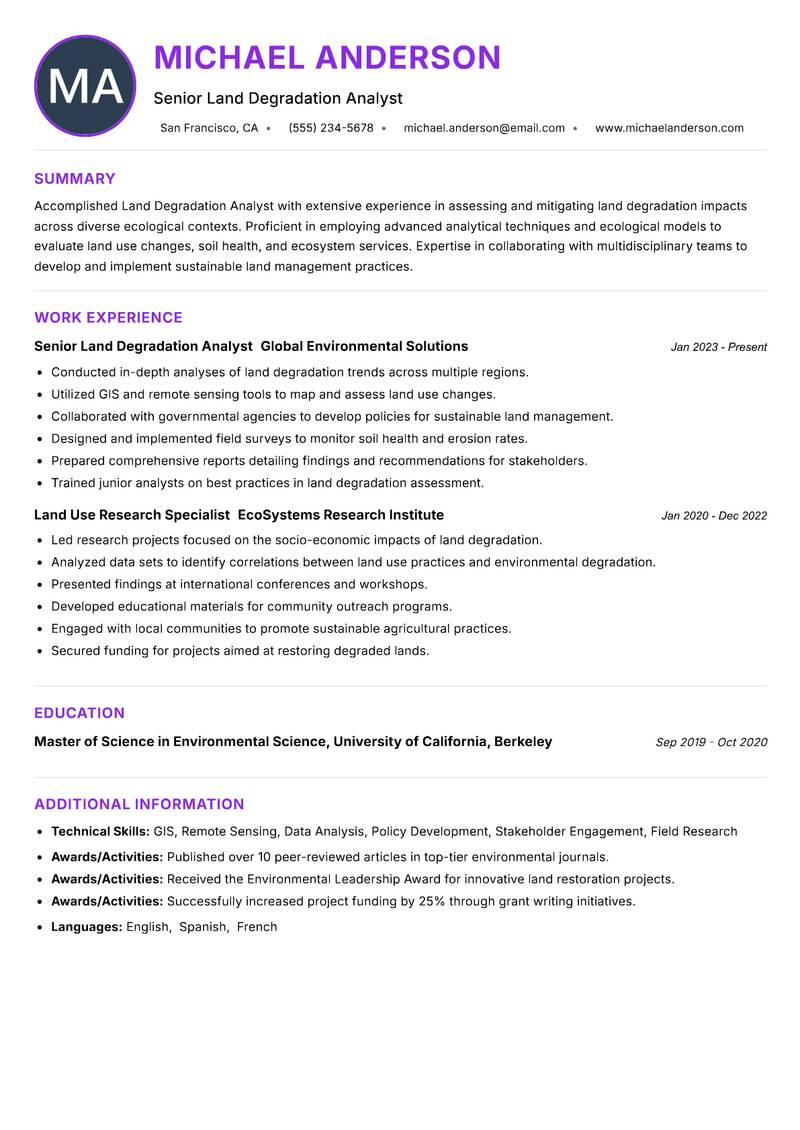
Senior Land Degradation Analyst with 8+ Years Experience
Summary: Accomplished Land Degradation Analyst with extensive experience in assessing and mitigating land degradation impacts across diverse ecological contexts. Proficient in employing advanced analytical techniques and ecological models to evaluate land use changes, soil health, and ecosystem services. Expertise in collaborating with multidisciplinary teams to develop and implement sustainable land management practices. Proven track record in conducting comprehensive field studies, utilizing remote sensing technologies, and advising policymakers on best practices for land conservation. Committed to enhancing biodiversity and ecosystem resilience through innovative solutions and stakeholder engagement. Recognized for contributions to international research initiatives and publications in leading environmental journals.
Description:
- Conducted in-depth analyses of land degradation trends across multiple regions.
- Utilized GIS and remote sensing tools to map and assess land use changes.
- Collaborated with governmental agencies to develop policies for sustainable land management.
- Designed and implemented field surveys to monitor soil health and erosion rates.
- Prepared comprehensive reports detailing findings and recommendations for stakeholders.
- Trained junior analysts on best practices in land degradation assessment.
🏆 Key Achievements
Land Management Consultant with 7+ Years Experience
Summary: Dynamic Land Degradation Analyst with a robust background in environmental policy and land management strategies. Specialized in utilizing quantitative and qualitative methods to assess land degradation and formulate actionable mitigation plans. Demonstrated ability to lead interdisciplinary teams and engage with stakeholders to drive sustainable practices. Adept at employing cutting-edge technologies in data collection and analysis to support evidence-based decision-making. Recognized for exceptional communication skills, facilitating effective collaboration among diverse groups. Committed to fostering environmental stewardship and advocating for policies that promote ecological balance.
Description:
- Conducted comprehensive assessments of land management practices across various sectors.
- Developed tailored strategies to combat land degradation and enhance land productivity.
- Facilitated workshops to educate stakeholders on sustainable land practices.
- Utilized advanced modeling software to predict land use impacts.
- Coordinated with local governments to align projects with regional sustainability goals.
- Monitored and evaluated the effectiveness of implemented land management strategies.
🏆 Key Achievements
Agricultural Land Analyst with 8+ Years Experience
Summary: Strategic Land Degradation Analyst with a strong emphasis on sustainable agriculture and soil conservation. Extensive experience in conducting agronomic assessments and developing strategies to promote soil health and productivity. Recognized for innovative approaches to land rehabilitation and restoration, emphasizing stakeholder collaboration and community involvement. Proficient in analyzing agronomic data and applying findings to enhance land use efficiency. A proven leader in advocating for policies that support sustainable agricultural practices and mitigate land degradation effects. Committed to advancing knowledge in soil science and land management through research and education.
Description:
- Conducted soil health assessments to inform sustainable agricultural practices.
- Developed integrated land management plans that prioritize soil conservation.
- Collaborated with farmers to implement soil restoration techniques.
- Utilized data analysis tools to evaluate crop yield impacts on soil quality.
- Presented research findings to agricultural stakeholders and policymakers.
- Secured partnerships with local NGOs to promote sustainable farming initiatives.
🏆 Key Achievements
Urban Land Use Analyst with 6+ Years Experience
Summary: Innovative Land Degradation Analyst with a focus on urban development and its impacts on land use. Expertise in assessing land degradation in urban settings and developing adaptive strategies to mitigate adverse effects. Proven ability to analyze complex datasets and engage with urban planners to promote sustainable land use policies. Adept at utilizing technology to enhance data collection and analysis processes. Recognized for strong project management skills and the ability to lead cross-functional teams in high-pressure environments. Committed to advancing urban sustainability and enhancing the resilience of urban ecosystems.
Description:
- Conducted assessments of urban land degradation and its socio-economic impacts.
- Collaborated with urban planners to develop sustainable land use strategies.
- Utilized GIS technology to visualize land use changes and degradation patterns.
- Engaged with community stakeholders to gather input for urban development projects.
- Prepared analytical reports to support policy decisions regarding land use.
- Monitored urban growth trends and their implications for land sustainability.
🏆 Key Achievements
Climate Change Analyst with 6+ Years Experience
Summary: Dedicated Land Degradation Analyst specializing in the intersection of climate change and land management. Extensive experience in analyzing the effects of climate variability on land degradation processes and developing adaptive management strategies. Proven expertise in utilizing climate models and ecological assessments to inform land use decisions. Recognized for strong analytical skills and the ability to communicate complex scientific information to diverse audiences. Committed to advancing climate-resilient land management practices and fostering collaborations among stakeholders. Actively engaged in research initiatives aimed at understanding the impacts of climate change on land ecosystems.
Description:
- Conducted assessments of land degradation linked to climate change impacts.
- Developed adaptive management strategies to enhance ecosystem resilience.
- Utilized climate modeling tools to forecast land degradation trends.
- Collaborated with researchers to publish findings on climate and land interactions.
- Engaged with policymakers to advocate for climate-smart land practices.
- Facilitated workshops to educate stakeholders on climate adaptation strategies.
🏆 Key Achievements
Geological Analyst with 8+ Years Experience
Summary: Accomplished Land Degradation Analyst with a deep understanding of geological processes and their implications for land use. Expertise in geological assessments and their applications in land management and conservation strategies. Proven ability to analyze complex geological data and communicate findings effectively to diverse audiences. Skilled in leveraging geological knowledge to inform land restoration projects and promote sustainable practices. Recognized for a proactive approach to problem-solving and collaboration with interdisciplinary teams. Committed to advancing geological research and its application in the context of land degradation and environmental sustainability.
Description:
- Conducted geological assessments to identify degradation risks in land use.
- Analyzed soil and rock samples to inform land management decisions.
- Collaborated with environmental scientists on land restoration projects.
- Utilized geological modeling tools to predict land degradation impacts.
- Prepared detailed reports on geological findings for stakeholders.
- Facilitated training workshops on geological best practices in land use.
🏆 Key Achievements
Remote Sensing Specialist with 7+ Years Experience
Summary: Driven Land Degradation Analyst with a focus on integrating technology into land management practices. Extensive experience in utilizing remote sensing and geographic information systems (GIS) to analyze land degradation patterns and inform restoration strategies. Proven ability to collaborate with cross-disciplinary teams to develop innovative solutions for land management challenges. Recognized for strong analytical and problem-solving skills, with a commitment to advancing technological applications in environmental science. Engaged in research initiatives that promote sustainable land use and enhance ecosystem health. Dedicated to fostering partnerships that drive impactful environmental change.
Description:
- Utilized remote sensing technologies to monitor land degradation trends.
- Developed GIS-based models to assess land use impacts on ecosystems.
- Collaborated with environmental scientists to analyze data and develop mitigation strategies.
- Prepared technical reports and presentations for stakeholders.
- Trained team members on the use of remote sensing tools and software.
- Secured funding for projects focused on innovative land management solutions.
🏆 Key Achievements
Key Skills for Land Degradation Analyst
ATS Optimization Tips
Increase your chances of getting hired
Use Standard Headings
Use common section titles like Experience, Skills, etc.
Include Keywords
Add role-specific keywords from the job description
Keep it Simple
Avoid complex tables, images and graphics
Save in Right Format
Use PDF format unless otherwise specified
Land Degradation Analyst Salary Insights
Average Salary
$70,000
per year
Salary Range
$55,000 - $85,000
per year
Top Paying Cities
Los Angeles, Seattle, Houston, Dallas, Boston
Source: Glassdoor, Payscale, Indeed (Updated August 2025)
Everything you need to write a great Land Degradation Analyst resume
Strong Action Verbs to Use
Resume Writing Tips
- →Highlight experience with specific soil analysis technologies like GIS or soil profiling tools.
- →Include examples of collaboration with non-profits or government bodies on land management projects.
- →Showcase publications or reports you have contributed to regarding land degradation assessments.
- →Quantify achievements in previous roles, such as improvements in soil quality metrics or project outcomes.
- →Tailor your resume vocabulary to mirror industry terminology, emphasizing terms like 'agroecology' and 'land use planning.'
Common Mistakes to Avoid
- ✕Failing to mention specific software or methodologies relevant to soil analysis.
- ✕Including generic responsibilities instead of quantifiable outcomes or contributions to projects.
- ✕Neglecting to update certifications or training relevant to soil and water management.
- ✕Using outdated or broad descriptions that do not reflect the nuanced aspects of land degradation.
ATS Keywords for Land Degradation Analyst
Land Degradation Analyst Career Path
Relevant Certifications
Career Progression
Entry-Level Analyst
This role involves gathering soil samples and conducting field surveys to collect data on land conditions.
Mid-Level Land Degradation Specialist
Responsible for analyzing data trends and contributing to project designs aimed at soil restoration.
Senior Environmental Consultant
Leads projects and provides expert recommendations to stakeholders regarding sustainable land use practices.
Project Manager for Soil Conservation
Oversees large-scale soil preservation initiatives and ensures compliance with environmental regulations.
Director of Soil Health Programs
Directs research and policy initiatives related to land management and leads teams of analysts.
Land Degradation Analyst Interview Questions
What methodologies do you use to assess land degradation? +
Discuss specific techniques such as remote sensing, soil sampling, or GIS tools.
Can you give an example of a project where you successfully mitigated land degradation? +
Detail your involvement, including the strategies employed and results achieved.
How do you stay updated on regulations related to soil and water management? +
Mention specific resources you follow or industry organizations you engage with.
Describe the role of stakeholders in your projects. How do you engage them? +
Explain the importance of collaboration and offer examples of stakeholder interactions.
What are common indicators of soil degradation you monitor? +
Discuss specific soil health metrics such as nutrient levels, erosion rates, or organic matter content.
How do you prioritize projects based on land degradation risk? +
Detail your decision-making process and the criteria you consider when assessing risk.
About the Land Degradation Analyst Role
By combining field data collection with advanced data analytics, a Land Degradation Analyst contributes to sustainable land management practices that protect soil integrity. Utilizing tools such as GIS and remote sensing, these professionals assess the extent and impact of degradation while collaborating with various stakeholders, including governmental agencies and local communities. Their insights help direct restoration strategies and inform policy decisions that promote ecological resilience and land productivity.
Frequently Asked Questions
What are the primary responsibilities of a Land Degradation Analyst? +
They assess soil conditions, evaluate degradation impacts, analyze data trends, and recommend sustainable management practices.
What educational background is typically required for this role? +
Most positions require a degree in environmental science, agronomy, or a related field, often with advanced studies preferred.
What are some challenges faced in land degradation analysis? +
Challenges include dealing with data gaps, variations in land use, and the need for interdisciplinary approaches to problem-solving.
Are there opportunities for career advancement in this field? +
Yes, roles can progress from analyst positions to senior consulting or management roles, often leading teams or directing projects.
What role does technology play in soil degradation assessments? +
Technology aids in data collection, analysis, and mapping, improving precision and efficiency in monitoring land health.
More Resume Examples You Might Like
Related Career Paths
Other roles candidates for Land Degradation Analyst positions often also consider.
Will this Land Degradation Analyst resume pass the ATS scan?
Upload it and get an instant AI-scored compatibility check with specific fixes.
Check My Resume →
Pair it with a matching cover letter
AI drafts a first version from your job title and strengths — edit it live, then download the PDF.
Write My Cover Letter →
Written by Nohaya Career Team
Reviewed by HR Professionals · Updated August 2025
Ready to Build Your Perfect Resume?
Choose from 1000+ professional templates and land your dream job.
Create My Resume Now